Dental check-up appointment with AI: What patients can expect

5
minute read
•
March 2, 2026

Key Takeaways
- AI analyzes dental X-rays in real time, helping to detect more than 18 dental conditions, including cavities, bone loss, infections, and failing restorations.
- Examinations are more thorough, with AI helping catch early-stage issues that can be difficult to spot visually.
- AI-annotated X-rays give you clear visual context, making diagnoses and treatment recommendations easier to understand.
- Your dentist maintains full control over diagnosis and treatment, with AI acting only as a supportive tool.
- AI analysis happens instantly in the background and does not extend your appointment time.
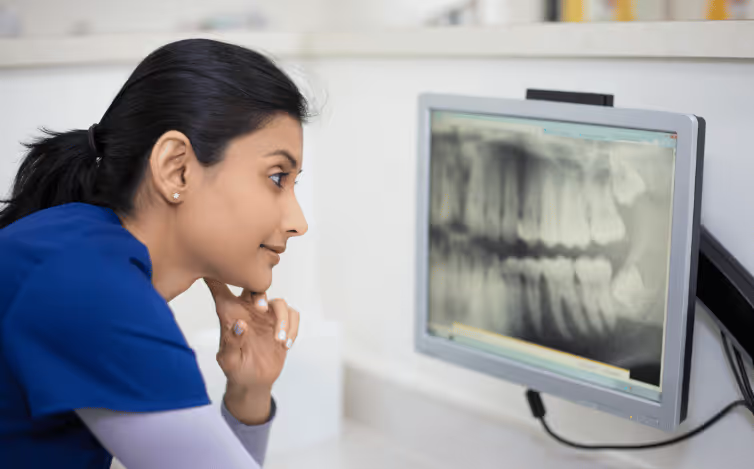
When you visit a dental practice that uses AI, your checkup still feels familiar, but it’s supported by technology working quietly in the background. During your appointment, artificial intelligence analyzes dental X-rays in real time, helping to identify potential issues with greater consistency and detail. Your dentist remains fully responsible for diagnosis and treatment decisions, using AI as a second set of eyes rather than a replacement for clinical judgment.
This guide explains what you can expect during an AI-enhanced dental checkup. You’ll learn how AI supports the examination process, what conditions it can help detect, how it improves communication through visual evidence, and why AI-supported checkups represent a meaningful step forward in dental care quality and patient experience.
Understanding AI in dental checkups
AI used in dental practices relies on computer vision to analyze radiographs. It examines each X-ray at a pixel level, looking for patterns associated with dental conditions such as decay, bone changes, or infection. This technology runs automatically during your appointment, providing dentists with immediate insights without disrupting the visit.
Rather than changing how care is delivered, AI strengthens it. By consistently and systematically reviewing every image, AI helps ensure that no area is overlooked during radiographic evaluation. The goal is not automation of care, but more comprehensive support for the dentist’s clinical assessment.
What happens during an AI-enhanced dental checkup?
An AI-supported visit follows the same structure you expect from a traditional dental appointment, with added analysis happening behind the scenes.
Standard examination procedures
Your appointment begins with a review of your medical and dental history, followed by an oral examination by the dentist or hygienist. If your visit includes a cleaning, that process remains unchanged. X-rays are taken as needed based on your history, symptoms, or routine care schedule.
X-ray capture with AI analysis
When X-rays are captured, AI analyzes the images within seconds. This happens while you’re still in the chair and does not add time to your visit. The analysis runs automatically, requiring no extra steps from you.
Dentist reviews AI findings
Your dentist reviews the original X-rays alongside the AI-highlighted findings. The AI does not make decisions or diagnoses on its own. Instead, it draws attention to areas that may warrant closer inspection. Your dentist considers these insights, along with your clinical exam, before reaching a final conclusion.
Patient consultation and education
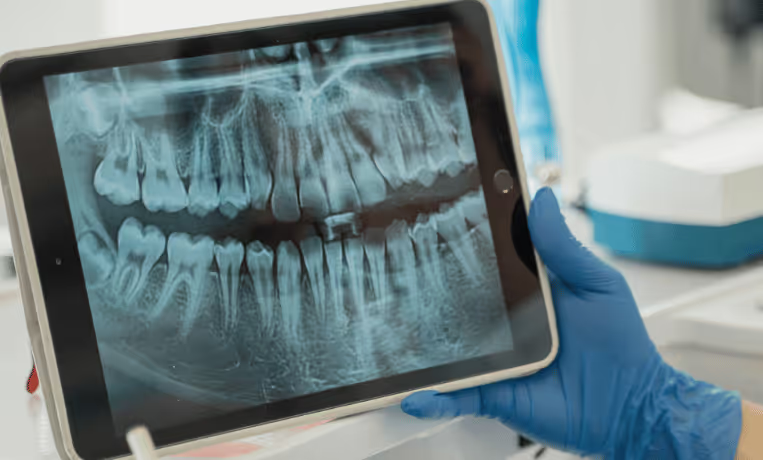
Your dentist then discusses the results with you. Using AI-annotated images, they can show you exactly where potential issues appear on your X-rays. Seeing visual highlights often makes it easier to understand what’s happening and why a treatment may be recommended.
What conditions can AI detect?
AI supports dentists by identifying a wide range of dental conditions that commonly appear on radiographs.
Cavities and tooth decay
AI can detect both early-stage cavities and more advanced decay, including cavities between teeth that are hard to see. Identifying decay earlier often means simpler, less invasive treatment options.
Periapical radiolucencies and infections
AI helps flag signs of infection near the root of a tooth, which may indicate the need for further evaluation or treatment. Early detection can prevent infections from becoming painful emergencies.
Bone loss and periodontal disease
Changes in bone levels are a key indicator of gum disease. AI helps identify bone loss patterns that suggest early or progressing periodontal issues, supporting timely intervention.
Calculus and tartar buildup
AI can highlight calculus deposits on X-rays, including buildup in areas that are difficult to assess during a visual exam. This helps ensure more thorough cleanings and better management of gum health.
Faulty restorations
Existing dental work, such as fillings or crowns, can deteriorate over time. AI assists in identifying signs of failing restorations that may allow decay to develop underneath.
Impacted teeth
AI can identify impacted teeth, including wisdom teeth that may cause problems later. Early detection allows your dentist to monitor or address these issues before complications arise.
Benefits of AI-enhanced dental checkups
AI adds several meaningful advantages to your dental visit without changing how care is delivered.
Improved diagnostic accuracy
AI consistently reviews every radiograph, helping catch subtle findings that might otherwise be missed. This supports more accurate diagnoses and helps reduce the chance of overlooked issues.
Earlier disease detection
By identifying early-stage changes, AI supports preventive care. Catching problems sooner often leads to less invasive treatment and better long-term outcomes.
Nothing overlooked
AI systematically examines every tooth and structure visible on an X-ray. This comprehensive approach provides confidence that the evaluation is thorough.
Better patient communication
Visual annotations make it easier for you to see and understand dental conditions. Instead of relying only on verbal explanations, you can view highlighted areas directly on your X-rays.
Consistent quality care
AI provides the same level of radiographic analysis for every patient, regardless of appointment time or provider, helping maintain consistent diagnostic support across the practice.
How AI improves patient understanding
One of the biggest benefits of AI during a dental checkup is its ability to improve communication. Instead of relying only on explanations, your dentist can show you clear visual evidence of what’s happening in your mouth.
Visual evidence of conditions
AI highlights areas of concern directly on your X-rays. You can see exactly where a cavity, infection, or bone change appears, often with clear outlines or markers. Being able to view these findings makes dental conditions easier to understand and less abstract.
Before-and-after comparisons
When previous X-rays are available, AI helps dentists compare past and current images side by side. This allows you to see whether a condition has progressed, stayed stable, or improved. These comparisons help explain why treatment is recommended now or why monitoring may be appropriate.
Simplified explanations
AI-supported images help dentists point to specific areas as they explain findings. Instead of describing issues in technical terms alone, they can show you what they are seeing, which often reduces confusion and helps you feel more informed.
Increased confidence in recommendations
Seeing objective findings highlighted on your X-rays can increase confidence in treatment recommendations. Many patients find it reassuring to know that both the dentist and AI identified the same areas of concern.
Treatment planning with AI insights
While AI does not decide on treatment, it supports dentists by organizing and highlighting information that helps guide planning.
Prioritizing treatment needs
When multiple issues appear on X-rays, AI helps bring attention to each one so nothing is missed. This supports a structured treatment plan that addresses urgent problems first while accounting for preventive and long-term care needs.
Referral identification
AI can help flag findings that may require specialist care, such as root canal treatment, advanced periodontal therapy, surgical evaluation for impacted teeth, or complex restorative work. Your dentist uses this information to determine whether a referral is appropriate.
Preventive care opportunities
Because AI is effective at identifying early-stage changes, it often supports preventive treatment. Catching issues early can mean simpler procedures, lower costs, and better long-term outcomes for your oral health.
Cost and insurance considerations of AI dental checkup appointments
Patients often wonder whether AI changes the cost or insurance coverage of a dental visit.
No additional patient fees
In most practices, AI is built into the standard diagnostic process. You are typically not charged separately for AI analysis, just as you are not billed separately for other diagnostic technologies used during an exam.
Insurance coverage
Dental insurance generally covers exams and X-rays regardless of whether AI is used. AI functions as a support tool for the dentist and is not billed as a separate service, so coverage usually remains the same.
Value through early detection
By identifying problems earlier, AI-supported exams can help reduce long-term costs. Preventive care and early treatment often avoid more complex and expensive procedures later.
How Pearl supports AI-enhanced dental checkups
Some dental practices use AI systems such as Pearl’s Second Opinion to support real-time X-ray analysis during checkups. Second Opinion is an FDA-cleared AI tool that assists dentists in interpreting dental X-rays, highlighting areas where common conditions such as tooth decay, bone changes, and infections may appear.
When you get X-rays, Second Opinion runs in the background and provides dentists with consistent AI-based image review while you’re in the chair. Your dentist then considers these AI insights alongside their clinical examination and professional judgment to make a diagnosis or treatment decision. This means you benefit from an extra layer of review and clearer visual information without adding time to your visit.
By turning complex X-ray interpretations into annotated visuals that your dentist can show you, Pearl’s technology helps make your care more transparent and easier to understand. It supports communication between you and your dentist, so you can see the findings and why a specific treatment may be recommended.
Conclusion
Dental checkup appointments at AI-enabled practices combine familiar care with advanced technology. AI analyzes X-rays in real time to help detect more than 18 dental conditions, including cavities, bone loss, infections, impacted teeth, and failing restorations. Throughout the process, your dentist remains fully in control of diagnosis and treatment decisions, using AI as a second set of eyes to support a thorough radiographic review.
For patients, this means earlier detection, clearer explanations through visual evidence, and greater confidence in treatment recommendations. AI-enhanced checkups improve accuracy and consistency without adding time to appointments, helping deliver higher-quality care and a better overall patient experience.
FAQs
What conditions can dental AI detect?
Dental AI can help identify cavities, bone loss, infections near tooth roots, calculus buildup, failing restorations, impacted teeth, and other radiographic findings that support diagnosis.
Will AI replace my dentist?
No. AI does not diagnose or treat patients on its own. Your dentist remains fully responsible for all clinical decisions, with AI serving only as a supportive tool.
Is AI-enhanced dental care more expensive?
In most cases, no. AI is typically included as part of routine diagnostic care, with no separate charge to patients.
Is my dental data safe with AI technology?
Dental AI systems are designed to follow strict privacy and security standards. Patient data is handled in accordance with healthcare privacy regulations, and AI tools are used within secure clinical systems.
About the author
Dr. Mike Barniv brings a wealth of dental experience from over two decades in full-time private practice to his role as Vice President of Clinical Affairs at Pearl, a company leading global dental AI innovation. Before joining Pearl, Dr. Barniv served as VP at Delta Dental of Idaho, where he oversaw claims, utilization management and the strategic implementation of AI technologies. In academia, Dr. Barniv served as an assistant professor at the University of the Pacific School of Dentistry in San Francisco, CA, where he was also the director of their AEGD residency clinic. In his current position, Dr. Barniv leverages his comprehensive dental knowledge and experience in both clinical and administrative realms to enhance Pearl's commercial, clinical, and institutional endeavors. His unique perspective, combining hands-on dental practice with expertise in dental education and insurance sector innovations, positions him perfectly to advance progress toward comprehensive integration of AI across the dental category.