How AI-powered image analysis is enhancing radiograph interpretation
5
minute read
•
January 5, 2026

Key Takeaways
- AI image analysis revolutionizes radiographic interpretation by using advanced algorithms to identify anatomy, detect pathology, and measure dimensions with precision that supports faster, more consistent clinical decisions.
- Multi-modal analysis extends beyond traditional visual review, allowing AI to evaluate bone density, soft tissue relationships, and anatomical changes across multiple images and time points for comprehensive diagnostic insight.
- Enhanced workflow efficiency reduces interpretation time and administrative load through automated findings, standardized reports, and intelligent case prioritization.
- Clinical validation confirms improved outcomes, with studies showing AI-assisted image interpretation reduces diagnostic errors, increases detection accuracy, and improves treatment planning consistency.
Artificial intelligence is reshaping how you interpret dental radiographs. Traditional visual review is limited by time, fatigue, and variability between practitioners, but AI changes that by analyzing every pixel of every image with precision, speed, and consistency.
Through deep learning and computer vision, AI systems extract more diagnostic information from radiographs than the human eye can detect alone. They identify structures, quantify measurements, detect disease patterns, and generate reports that support your expertise, helping you make faster, evidence-based decisions with greater confidence.
Understanding AI-powered radiograph analysis technology
AI radiograph analysis uses deep learning neural networks and computer vision algorithms trained on large, annotated imaging datasets. These systems process image data at the pixel level to recognize anatomical structures, detect pathology, and calculate key measurements such as bone levels, lesion dimensions, and root lengths.
Each algorithm layer performs a different function. Some segments analyze anatomy, while others classify tissues or identify abnormalities, and additional layers measure distances or changes in density. The results are combined to produce annotated images, probability scores, and diagnostic suggestions that help you confirm findings quickly and consistently.
In practice, AI tools complement your clinical judgment rather than replace it. They handle repetitive, data-heavy analysis, freeing you to focus on treatment decisions and patient communication.x
Core capabilities of AI radiographic image analysis
AI systems enhance what you already do by adding computational accuracy and automation to your diagnostic workflow. These capabilities improve both the quality and consistency of radiograph interpretation.
Automated anatomical structure identification
AI can automatically label teeth, roots, bone structures, restorations, and landmarks across periapical, bitewing, or panoramic images. This ensures every area is reviewed systematically and accelerates the diagnostic process.
Pathology detection and classification
Machine learning models recognize a wide range of abnormalities, including carious lesions, periapical pathology, bone loss, and periodontal changes. Each finding is categorized by type and severity, helping you prioritize patient needs.
Quantitative measurement and dimensional analysis
AI provides precise measurements of bone levels, root lengths, and lesion sizes. Quantitative data support objective assessment, help track progression, and inform surgical or restorative planning.
Image quality assessment and optimization
AI can evaluate radiographic quality by checking for under- or overexposure, motion artefacts, or improper angulation. When needed, it flags retakes or enhances image contrast to improve diagnostic visibility.
Temporal comparison and change detection
By comparing new images with previous ones, AI highlights changes such as bone density loss or lesion healing. This enables earlier intervention and better monitoring of treatment results.
Multi-image integration and 3D reconstruction
Advanced systems can synthesize information from multiple 2D radiographs or process cone-beam CT data to build 3D visualizations of anatomy. This provides a more comprehensive understanding of complex cases.
Automated report generation and documentation
AI tools generate standardized diagnostic reports with annotated images, measurement tables, and summaries. These features save time, improve communication for referrals, and create clear records for patients and insurers.
Clinical applications across radiographic modalities
AI analysis applies to nearly every imaging type used in dentistry. Whether you’re reviewing intraoral, panoramic, or 3D scans, AI provides faster, more consistent interpretation while supporting better clinical decisions.
Intraoral radiograph analysis
AI enhances periapical and bitewing imaging by automatically detecting caries, assessing bone levels, identifying periapical lesions, and evaluating the quality of restorations. It ensures no structure or surface is overlooked during interpretation.
Panoramic radiograph evaluation
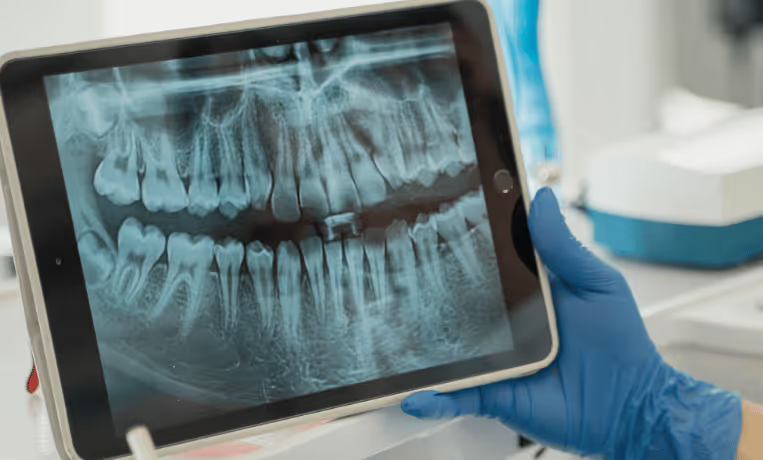
For panoramic images, AI can identify pathology, assess impacted teeth, and evaluate jaw relationships across the entire dentition. Automated annotations and measurements make panoramic reviews more comprehensive and less time-consuming.
Cephalometric analysis
AI automates landmark identification, calculates angular and linear measurements, and generates cephalometric tracings used in orthodontic assessment and treatment planning. This reduces variability and improves analytical accuracy.
Cone beam CT (CBCT) image analysis
Machine learning models process CBCT datasets to support implant planning, airway evaluation, and pathology detection. They provide accurate 3D visualizations of bone quality and anatomical boundaries that aid surgical precision.
How AI image analysis enhances dental workflows
When integrated into your imaging systems, AI simplifies radiographic review and speeds up your daily workflow. It automates routine analysis, prioritizes findings, and reduces time spent on documentation so you can focus on complex cases and patient care.
Rapid preliminary screening and triage
AI can scan new images instantly, identify urgent findings, and flag high-priority cases for review. This helps you allocate time efficiently and respond faster to clinically significant changes.
Standardized interpretation protocols
AI systems apply consistent evaluation criteria to every image, ensuring comprehensive coverage and uniform diagnostic standards across clinicians and sessions.
Reduced documentation time and administrative efficiency
Automated reporting and pre-filled templates reduce manual charting and documentation time, helping you spend more time on clinical discussions and less on paperwork.
Enhanced teaching and case review
AI-generated annotations and measurements are valuable in clinical education and peer review. They make it easier to compare interpretations, discuss findings, and maintain consistent diagnostic quality across the team.
Integration with clinical workflows and practice systems
Adopting AI image analysis is most effective when it seamlessly integrates into your existing imaging and diagnostic workflow. The goal is seamless integration that strengthens, rather than interrupts, your daily workflow.
Most modern AI platforms connect directly with leading practice management and imaging systems, allowing radiographs to be analyzed automatically as they are captured. This eliminates manual uploads and ensures results appear in the same viewer you already use. AI overlays and annotations can be reviewed alongside the original image, so interpretation remains intuitive.
To get the most from your system, train your team to understand AI outputs and integrate findings into treatment planning discussions. Establish clear protocols for when to review AI suggestions and how to document them. These habits build trust in the technology and ensure consistent, clinically sound use across providers.
Clinical validation and real-world performance
AI image analysis is supported by an expanding body of research confirming its diagnostic accuracy and reliability. Multiple peer-reviewed studies and clinical trials have demonstrated that AI can match or exceed human performance in detecting dental pathologies such as caries, bone loss, and periapical lesions.
Pearl’s Second Opinion, for example, is the first FDA-cleared AI system for real-time pathology detection in dental radiographs. Its clearance was based on large-scale clinical validation showing significantly higher sensitivity and specificity compared to unaided human interpretation. Independent research has also found that AI assistance increases diagnostic consistency across practitioners, helping reduce false negatives and missed conditions.
In practice, these outcomes translate into improved patient confidence, stronger documentation, and higher diagnostic quality across your team.
Future developments in AI radiographic analysis
AI radiograph interpretation is advancing rapidly. In the near future, expect deeper integration across imaging types, richer predictive analytics, and expanded use of 3D data. Systems are being trained on larger, more diverse image datasets that improve generalization and enable the detection of increasingly subtle pathologies.
Emerging models will combine radiographic data with clinical records and intraoral scans to create a full diagnostic picture for each patient. You can anticipate real-time treatment simulations, automated comparison across modalities, and even early detection of systemic conditions visible in oral radiographs.
As these technologies evolve, the role of AI will continue to expand from assistance to partnership, providing clinicians with data-driven insights that enhance both diagnostic accuracy and workflow efficiency.
How Pearl leads innovation in AI image analysis
Pearl is at the forefront of dental imaging AI, developing systems that enhance diagnostic precision and operational performance. Second Opinion delivers real-time pathology detection for caries, bone loss, and periapical lesions, providing instant visual feedback within your imaging software.
For broader operational insight, Practice Intelligence complements radiograph analysis by linking diagnostic data to clinical performance metrics, helping you understand how imaging results influence case acceptance, treatment planning, and practice efficiency.
Together, these tools help you move beyond manual interpretation toward a data-driven workflow that improves patient outcomes and consistency across every provider in your practice.
FAQs
How accurate is AI radiograph analysis compared to human interpretation?
Clinical studies show that AI radiograph analysis can equal or exceed human diagnostic performance, particularly in detecting caries, bone loss, and periapical pathology.
Can AI radiograph analysis work with existing imaging systems?
Yes. Most platforms integrate with major dental imaging and practice management systems, allowing results to appear directly within your existing workflow.
Does AI replace the need for trained radiograph interpretation?
No. AI complements your expertise by flagging potential findings and providing measurements that support, not replace, your professional judgment.
What types of pathology can AI detect in dental radiographs?
AI systems can accurately identify caries, bone loss, periapical lesions, calculus, and other radiographic abnormalities across both intraoral and panoramic images.
How long does AI radiograph analysis take to generate results?
Most AI systems process images in seconds, allowing near-instant review and integration into clinical discussions during the same appointment.

About the author
Nick Garrison is an experienced marketer, communications leader and multidisciplinary creative. He is the Vice President of Marketing at Pearl, an AI company specializing in diagnostic and business analytics solutions for the dental industry. Prior to joining Pearl, Mr. Garrison led communications for the Santa Monica-based adtech start-up GumGum. Earlier in his career, Mr. Garrison worked as a screenwriter and producer, before leaving Hollywood to found and lead a successful college and graduate school admissions consultancy. He received his bachelor’s degree from Harvard University.