Maryland bridge dental code explained
5
minute read
•
October 27, 2026
Key Takeaways
- A Maryland bridge is billed with a D6200-series pontic code plus resin-bonded retainer codes for the wings.
- Retainer wings use D6545, D6548, or D6549, chosen by material, not the D6700 crown codes.
- Each wing is reported separately, so a standard two-wing bridge lists the retainer code twice.
- Pontic codes are the same as those used for a conventional bridge.
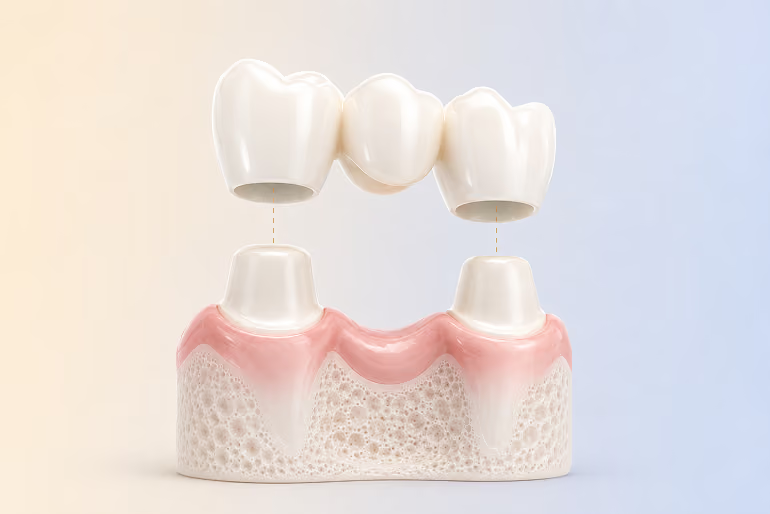
A Maryland bridge, also called a resin-bonded fixed partial denture, is a conservative way to replace a missing tooth. Instead of full crown preparations, it uses a pontic retained by metal or tooth-colored wings bonded to the lingual surfaces of the adjacent teeth. Billing one uses fixed prosthodontic CDT codes: a D6200-series pontic code for the replacement tooth plus resin-bonded fixed prosthesis retainer codes for the wings, with the exact codes depending on the retainer material and design.
The coding differs from a conventional bridge in one important way. The retaining components are coded as resin-bonded retainers, not as retainer crowns. Applying conventional bridge crown codes to Maryland bridge wings is miscoding, because the restorations are fundamentally different in preparation and coverage.
CDT codes for Maryland bridge components
Each component of a Maryland bridge is billed separately, using codes that reflect the component type and fabrication material. A complete Maryland bridge replacing one missing tooth with two retainer wings includes a minimum of three separate procedure codes.
Pontic codes for Maryland bridges
The pontic code is selected based on the pontic material, and it matches a conventional bridge. Examples include D6240, D6241, and D6242 for porcelain-fused-to-metal pontics, D6245 for a porcelain or ceramic pontic, and D6205 for an indirect resin-based composite pontic, depending on the material actually used. These aren't the only options, so match the code to what was fabricated.
Retainer wing codes
Maryland bridge retainer wings are reported using resin-bonded fixed prosthesis retainer codes from the ADA's CDT code set, with the correct code depending on the material and design of the wings:
- D6545: Cast metal retainer wings, for resin-bonded fixed prosthesis
- D6548: Porcelain/ceramic retainer wings, for resin-bonded fixed prosthesis
- D6549: Resin retainer wings, for resin-bonded fixed prosthesis
The most important rule: each wing is reported separately. A standard two-wing bridge lists the retainer code twice, or with a quantity of two on the claim. Pair the wing material with the pontic sensibly: D6548 wings with a D6245 pontic, or D6545 wings with a D6240-series pontic, and never reach for a D6700 retainer crown code, since those describe the full-coverage crowns a Maryland bridge avoids. Keeping that distinction clear is the same habit that keeps any code clean, like the D2740 dental code for a single porcelain or ceramic crown.
When is a Maryland bridge the appropriate treatment choice for coding purposes?
The clinical reason for choosing a Maryland bridge over a conventional bridge or an implant affects not just treatment planning but the documentation that supports the claim, so record the rationale clearly in the patient record. A few clinical situations commonly support a Maryland bridge indication: replacing a single missing anterior tooth in a young patient, where large pulp chambers contraindicate full crown preparation; cases where the adjacent teeth are unrestored or minimally restored and full crown preparation would be disproportionately destructive; a medical contraindication to implant placement; and interim tooth replacement pending a definitive implant-supported restoration.
That documentation matters most when the plan would otherwise cover a conventional bridge at a higher benefit level, and the Maryland design is chosen for conservative clinical reasons. The plan may require an explanation of the treatment choice to process the claim correctly, and a clear clinical note answers the question before it's asked, one of the practical benefits AI brings to documentation.
Insurance coverage and documentation for Maryland bridge claims
Maryland bridges are typically classified as a major restorative procedure, the same category as conventional fixed bridges, so most plans apply the same coverage percentage and waiting-period requirements to both.
The documentation most plans require includes pre-treatment radiographs demonstrating the missing tooth and the condition of the adjacent abutments, clinical notes documenting the indication for a resin-bonded rather than conventional design, the laboratory prescription and invoice confirming the material and retainer design, and, where required, a pre-authorization identifying all units with their correct codes and tooth numbers. Tightening this documentation is a reliable way to reduce denials and improve collections. On submission format, the pontic is identified by the tooth number of the missing tooth, and each retainer wing by the tooth number of the adjacent abutment it's bonded to.
Benefits of correct Maryland bridge code usage in your practice
Correct Maryland bridge coding pays off across billing accuracy, clinical documentation, and revenue.
Accurate procedure classification
Using the correct resin-bonded retainer codes and D6200-series pontic code ensures the clinical record reflects the conservative resin-bonded design rather than misclassifying it as a conventional fixed bridge. It distinguishes the minimal-preparation wings from full-crown abutment restorations for accurate case categorization, supports tracking suited to the longevity considerations of a resin-bonded bridge, and establishes a clear record for any necessary repair or replacement.
Streamlined insurance claims
Applying the correct Maryland bridge codes reduces the rejections caused by code mismatches and facilitates accurate reimbursement under the plan's major restorative category. It supports pre-authorization requests that accurately describe the resin-bonded design rather than a conventional bridge, and prevents the documentation and reimbursement risks of applying conventional retainer crown codes to Maryland wings.
Accurate revenue capture
Correct code selection ensures each component is billed at the fee schedule rate for the procedure actually performed. It supports accurate fee-to-reimbursement analysis for resin-bonded bridges across your caseload. Distinguishing wing codes from conventional retainer crown codes in your fee schedule and billing workflow keeps that analysis meaningful, and Pearl AI supports the timestamped clinical records that accurate coding depends on.
FAQs
What dental code is used for a Maryland bridge?
A D6200-series pontic code for the replacement tooth plus a resin-bonded retainer code for each wing: D6545 for cast metal, D6548 for porcelain/ceramic, or D6549 for resin. Each wing is reported separately.
What's the difference between a Maryland bridge code and a conventional bridge code?
The retainers. A Maryland bridge uses resin-bonded retainer codes (D6545, D6548, D6549) for its bonded wings, while a conventional bridge uses D6700-series retainer crown codes for full-coverage abutment crowns. The pontic codes are the same for both.
Does dental insurance cover Maryland bridges?
Typically, it is a major restorative service in the same category as a conventional bridge, with the same coverage percentage and waiting period. Pre-authorization is common, and clear documentation of the conservative design helps the claim process run smoothly.
How many CDT codes are needed to bill a Maryland bridge?
At least three for a standard design: one pontic code for the missing tooth and two retainer wing codes, one for each bonded abutment. Because the wings are reported separately, the same retainer code often appears twice on the claim.