Bridge dental code: Billing for fixed bridges
5
minute read
•
August 26, 2026
Key Takeaways
- A fixed bridge is billed with one CDT code per unit, not a single code for the whole appliance.
- Retainer crowns use the D6700 series; pontics use the D6200 series; both are chosen by material.
- The most common error is coding abutment crowns with single-unit D2700 codes instead of D6700 retainer codes.
- Fixed bridges are a major restorative service, usually with a higher copayment and often a waiting period.
Billing a fixed dental bridge isn't a single code; it's one code per component, and that's where most errors start. The most common mistakes are failing to code each unit separately or applying the wrong code to the retainer crowns versus the pontic.
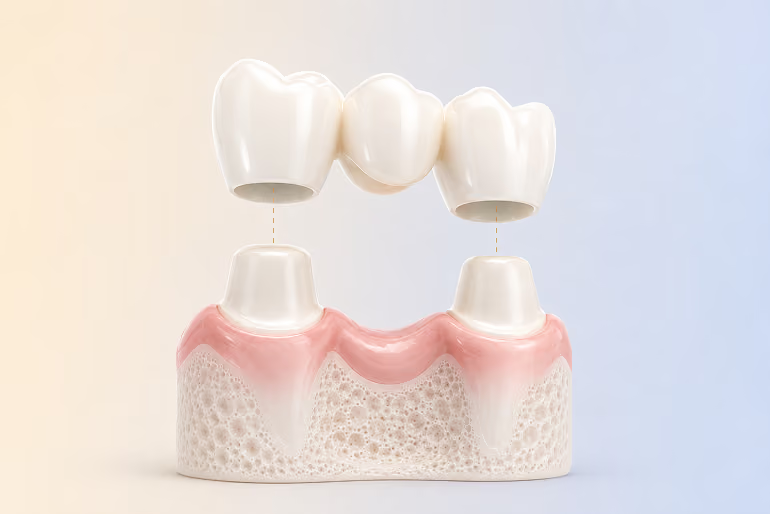
A fixed bridge is built from at least two retainer crowns, coded as abutment crowns, and at least one pontic, the artificial tooth that fills the gap. So, a standard three-unit bridge, one pontic between two abutment crowns, is billed with a minimum of three separate procedure codes. Here's how to choose each one and submit the case cleanly.
CDT codes for fixed bridge components
Each component of a fixed bridge is billed separately, using a code that reflects both the component type (retainer crown or pontic) and the material it's fabricated from. These come from the fixed prosthodontics range of the ADA's CDT code set, and the key is keeping materials consistent across the bridge.
Pontic codes
Pontic codes fall in the D6200 series, and the correct one depends on the material. The most common in modern practice are D6240 (porcelain fused to a high noble metal), D6241 (predominantly base metal), and D6242 (noble metal) for PFM (porcelain fused to metal), plus D6245 for all-porcelain or ceramic. Cast metal pontics use D6210 (high noble metal), D6211 (predominantly base metal), and D6212 (noble metal), and D6214 covers titanium.
Retainer crown codes
The abutment crowns that anchor the bridge use retainer crown codes in the D6700 series, again by material, and this is where miscoding tends to creep in. Watch one distinction closely: D6740 is the all-ceramic retainer, while the porcelain-fused-to-metal retainers are D6750, D6751, and D6752.
- All porcelain/ceramic retainer crown: D6740
- All porcelain/ceramic pontic: D6245
- Porcelain fused to metal retainer crown: D6750 / D6751 / D6752
- Porcelain fused to metal pontic: D6240 / D6241 / D6242
- Full cast metal retainer crown: D6790 / D6791 / D6792
- Full cast metal pontic: D6210 / D6211 / D6212
Because these bridge codes sit right beside single-unit restorations in daily billing, keep them clearly separate from a standalone crown code, like the D2740 dental code for a single porcelain or ceramic crown.
How to bill a complete fixed bridge
Billing a complete fixed bridge means submitting a separate code for each unit, identified by its tooth number and position, so the total number of codes equals the total number of units in the bridge. For a standard three-unit bridge replacing one missing tooth, each abutment tooth receives a D6700 retainer crown code matching the material, submitted with that tooth's number, and the pontic space receives a D6200 pontic code matching the material, submitted with the number of the missing tooth.
The common error here is submitting single-unit crown codes from the D2700 series for the abutment crowns instead of the D6700 retainer codes. That's miscoding, because the D2700 codes apply to single-unit restorations rather than crowns that are part of a fixed bridge framework, and it's a reliable way to trigger a denial. Some plans also have specific requirements for multi-unit claims, such as bridge indicators or sequential unit listing, so reviewing the plan's rules before submission reduces the risk of rejections.
Insurance coverage and preauthorization for fixed bridges
Fixed bridges are typically classified as a major restorative procedure, so most plans apply the highest patient copayment and, in many cases, impose a waiting period before major benefits are available. Most also require pre-authorization, which typically includes the proposed codes for each unit, radiographic evidence of the missing tooth, the condition of the proposed abutments, and sometimes a narrative explaining why a bridge is the treatment of choice over an implant or a partial denture.
Two points matter here. Preauthorization approval isn't a guarantee of payment, and the claim submitted after delivery must match the preauthorized codes and tooth numbers, so a design change after approval may require a revised preauthorization. Watch the missing-tooth clause too, since many plans won't cover the pontic if the tooth was lost before coverage began, something that a clear pre-treatment estimate surfaces early.
Benefits of correct bridge code usage in your practice
Correct bridge coding pays off across billing accuracy, clinical documentation, and revenue.
Accurate procedure classification
Using the correct D6200 and D6700 series codes for each component keeps your clinical records true to what was done. The record reflects the specific restoration type and material for each unit, distinguishes abutment crowns from single-unit crowns to ensure proper case categorization, and supports accurate tracking and recall for bridge maintenance, thereby establishing a clear longitudinal record for any future repair or replacement.
Streamlined insurance claims
Submitting the correct retainer and pontic codes with accurate tooth numbers and material designations reduces the rejections caused by code-selection errors. It routes the claim cleanly into the plan's major restorative benefit category, supports preauthorization with a clearly itemized unit breakdown, and prevents the reimbursement risk of using single-unit crown codes for abutments or defaulting to a generic pontic code regardless of material.
Accurate revenue capture
Correct code selection ensures each unit is billed at the fee schedule for the specific material fabricated, rather than a simplified default that undersells the work. It supports accurate fee-to-reimbursement analysis for bridge procedures across your prosthodontic caseload, the kind of production pattern a platform like Pearl's Practice Intelligence is built to surface. Pearl AI supports the clear, timestamped records that accurate coding depends on.
FAQs
What CDT codes are used to bill a fixed dental bridge?
One code per unit: a D6700-series retainer crown code for each abutment tooth, and a D6200-series pontic code for each replacement tooth, both chosen to match the fabrication material and submitted with their own tooth numbers.
What's the difference between a pontic code and a retainer crown code?
A pontic code (D6200 series) covers the artificial tooth spanning the gap. A retainer crown code (D6700 series) covers the crowns on the abutment teeth that anchor the bridge. Both are billed separately and selected by material.
Do bridge abutment crowns use the same codes as single-unit crowns?
No. Abutment crowns in a bridge use D6700 retainer codes, not the D2700 single-unit codes. Using a single-unit code for a bridge retainer is one of the most common miscoding errors.
Does dental insurance cover fixed bridges?
Usually, as a major restorative service with the highest copayment tier and often a waiting period. Pre-authorization is common, and it's worth checking the missing-tooth clause before treatment.