Using AI for better denture design
3
minute read
•
August 14, 2025
Key Takeaways
- AI dental RPD systems improve denture fit, esthetics, and speed of deliver
- These tools use real clinical data and machine learning to streamline the design process
- AI denture design reduces adjustments, enhances comfort, and boosts case acceptance
- Technologies like facial mapping, occlusal modeling, and stress simulation now support daily dental workflows
Artificial intelligence is reshaping prosthetic dentistry. With tools trained on thousands of clinical cases, AI dental RPD design systems deliver dentures that fit better, look more natural, and require fewer adjustments. You no longer have to choose between accuracy and efficiency; today’s technology offers both.
This isn’t just a step forward. It’s a complete shift in how dentures are designed. Traditional RPD fabrication often struggles with fit accuracy, personalization, and turnaround time. AI addresses these challenges by using biomechanics, facial analysis, and smart automation to create designs that improve outcomes for both clinicians and patients.
What is an AI-designed removable partial denture (RPD)?
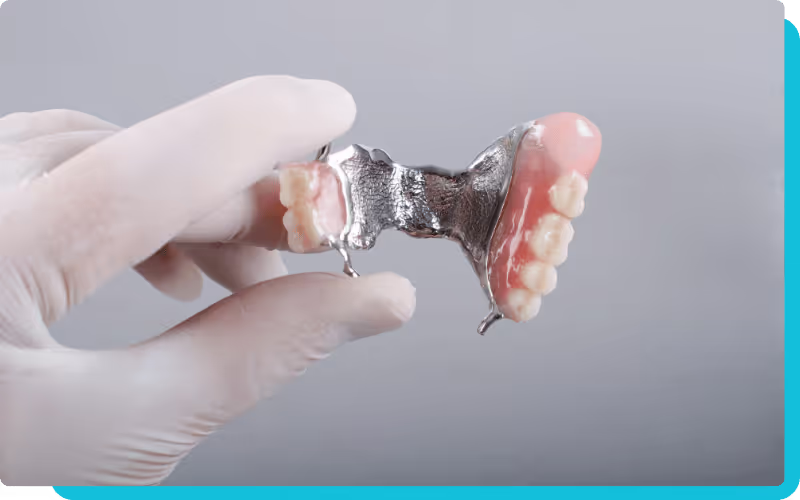
An AI-designed removable partial denture is a prosthesis planned with software that uses machine learning and digital design logic to support decisions such as arch classification, framework design, and component selection. In prosthodontics, AI is being used to improve accuracy, efficiency, and reproducibility across prosthetic design workflows, including removable cases.
That is what makes it different from a fully traditional workflow. Instead of relying only on manual interpretation and technician experience, AI-assisted systems can analyze digital impressions, identify patterns from prior cases, and generate design suggestions earlier in the process. The clinician and technician still make the final decisions, but with more structured digital support. Current evidence is promising, especially for framework planning and digital removable workflows, though broader clinical validation is still developing.
How can AI be used for better denture design?
AI can support denture design by making digital workflows more consistent and easier to personalize. In practice, its strongest value today is helping teams interpret scans, classify edentulous patterns, support framework planning, and reduce manual trial-and-error within a digital workflow.
Improve anatomical fit
AI-assisted design tools can help identify landmarks, classify arch forms, and support more consistent framework planning from digital impressions. That can improve the accuracy of the design's match to the patient’s anatomy before fabrication begins. Digitally fabricated RPD frameworks have also shown encouraging clinical fit and durability in published follow-up data.
Support more personalized esthetics
For prosthetic cases where appearance matters, AI-supported facial and digital analysis can help guide tooth arrangement and visible design choices. The goal is not just to make the denture fit, but to help it look more natural for the patient’s face and smile. Reviews in prosthodontics suggest that this is one of the more promising personalization areas for AI-assisted design.
Optimize occlusion and bite function
AI can also support occlusal planning by helping teams systematically evaluate jaw relationships and design choices within a digital workflow. That can improve balance, reduce trial-and-error adjustments, and create a more stable prosthesis, especially in more complex cases.
Speed up denture production
One of the clearest advantages of AI-assisted digital workflows is speed. When classification, design suggestions, and framework planning happen inside connected software, the path from scan to final prosthesis becomes more predictable and less labor-intensive. Reviews of AI in prosthodontics consistently point to reduced design time as one of the most practical benefits.
Reduce adjustments before delivery
When fit, framework design, and occlusal relationships are planned more consistently upfront, fewer surprises show up at delivery. That can mean less chairside adjustment, smoother insertion appointments, and a better overall patient experience. Digital RPD reports support this direction, although more large-scale clinical data are still needed.
Key AI technologies behind modern denture systems
Modern AI denture systems bring together multiple technologies to deliver results that far exceed traditional methods. These tools work in sync to optimize fit, function, and esthetics.
Facial recognition for smile design
Facial mapping software analyzes thousands of reference points across a patient’s face. This data helps AI suggest tooth shapes and arrangements that align with a person’s natural symmetry, smile dynamics, and expression patterns. The result is a more personalized and natural-looking denture.
Digital impressions with machine learning
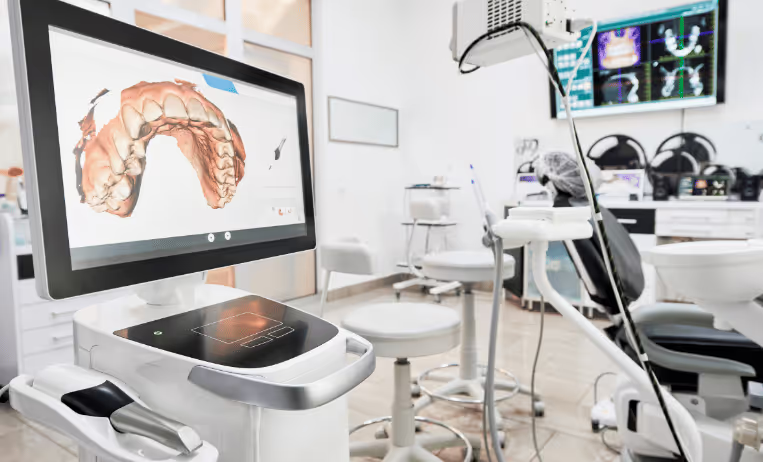
AI models interpret 3D oral scans to detect key landmarks, soft tissue zones, and pressure distribution patterns. These systems adjust for patient-specific tissue characteristics and generate accurate borders and relief areas that enhance retention and comfort.
Stress simulation for durability
Using physics-based modeling, AI can simulate how a denture will perform during chewing, speaking, and daily wear. These simulations guide design decisions that improve structural strength and reduce the risk of fractures or warping over time.
Occlusal pattern recognition
Neural networks analyze how patients move their jaws when eating and speaking. Based on that input, AI systems create occlusal schemes that balance bite forces, prevent interference, and reduce adjustments later on.
Benefits of AI denture design for your practice
AI-assisted denture design can improve more than the prosthesis itself. When implemented well, it can improve clinical consistency, streamline workflows, and enhance the patient experience.
Clinical benefits
- More consistent framework planning and fit assessment
- Better support for complex design decisions
- Clearer digital records for communication between the clinic and the lab
- Greater reproducibility across cases and team members
Operational benefits
- Faster digital design workflows
- Fewer manual design revisions
- More predictable communication with the lab
- Better use of clinician and technician time
Patient experience benefits
- Better comfort and stability when the fit is more precise
- More natural-looking outcomes in esthetic cases
- Fewer adjustment visits in well-planned cases
- Greater confidence when patients can see a more personalized design process
How to implement AI dental RPD in your practice
Bringing AI into your denture workflow doesn’t require a complete overhaul. A step-by-step approach helps ensure success without disrupting productivity.
Train your team on AI systems
Start by providing hands-on training for your clinical and lab staff. Focus on both the technical side of the software and the clinical reasoning behind it. A shared understanding helps your team work confidently and consistently.
Upgrade compatible equipment
Evaluate whether your current setup supports AI integration. You may need to upgrade intraoral scanners, workstations, or imaging displays to handle higher-resolution files and real-time rendering.
Update digital workflows
Review and adjust your current clinical protocols to support AI tools. From patient intake to final adjustments, streamlining each step ensures a smoother transition and maximizes your return on investment.
Connect software systems
Make sure your AI platform works seamlessly with your practice management software and scanning tools. Good integration reduces errors and makes it easier to track progress, designs, and patient records in one place.
Training requirements for AI denture design tools
Successful AI implementation depends on more than just software. It takes targeted training and workflow adaptation.
Expect to invest 15 to 25 hours in training, including technical sessions on digital impressions, AI settings, and clinical interpretation of AI-generated designs. The most successful practices also train their teams on how to adjust workflows to take full advantage of what AI can offer. This shift supports better efficiency across both clinical and lab processes, not just chairside tasks.
Common challenges when adopting AI denture design
AI can improve denture workflows, but adoption is rarely effortless. Knowing where the friction points are makes implementation much easier.
- Learning curve: AI-assisted design still requires training and judgment. Teams used to conventional workflows often need time to trust the software and understand where it adds value versus where clinical or technical experience still leads.
- Initial investment: Digital denture workflows may require software, scanner, hardware, and training upgrades. The long-term payoff can be strong, but the upfront commitment is real.
- Integration complexity: Not every platform fits smoothly into every practice or lab workflow. Before adopting a new system, it is important to understand file compatibility, handoff processes, and the extent of redesign required for your existing workflow.
- Resistance to change: Some clinicians and technicians may be skeptical, especially if they already have a workflow that feels reliable. Early pilot cases and clear team training usually help build confidence faster than a full rollout all at once.
- Over-reliance on automation: AI is a support tool, not a substitute for clinical or technical expertise. The strongest results come when digital recommendations are carefully reviewed and combined with sound prosthodontic judgment. Current reviews make that point clearly.
Final thoughts
AI is more than just a new tool for denture design. It solves real problems that have challenged prosthetic dentistry for decades, like inconsistent fit, slow turnaround times, and esthetic limitations. By embracing this technology, you give your team more confidence, your lab better data, and your patients stronger, more natural-looking results.
Integrating AI into your denture workflow means staying at the forefront of digital dentistry. It helps your practice deliver faster service, more predictable outcomes, and a better patient experience every time.
As platforms like those from Pearl continue to evolve, they offer not just new technology but a framework for better decision-making, more consistent outcomes, and scalable growth in prosthetic dentistry.
FAQs
Will AI replace the need for skilled dental technicians?
No. AI can assist with analysis, classification, and initial design suggestions, but skilled technicians are still essential for quality control, customization, material decisions, and final fabrication. The current evidence supports AI as an aid to prosthodontic workflows, not a replacement for technical expertise.
How does AI improve denture fit?
AI systems analyze 3D oral scans and pressure patterns to define accurate denture borders and contact zones, improving comfort and retention.
Can AI integrate with my current dental software?
Many AI platforms are designed to work with leading practice management and imaging systems. Always check compatibility with your current tools before implementation.
Does AI help with complex or hard-to-fit denture cases?
Yes. AI is especially useful for challenging anatomies by simulating functional movement and suggesting design modifications based on stress zones and pressure mapping.
What types of dentures benefit most from AI design?
AI is especially promising for removable partial dentures, where framework design, arch classification, and occlusal relationships can become complex. It can also support full denture workflows, particularly when digital impressions, esthetic planning, and facial analysis are part of the case.
How does AI improve denture esthetics?
Using facial mapping and smile design parameters, AI customizes tooth selection and arrangement to suit each patient’s facial structure.
Is AI denture design more cost-effective over time?
Absolutely. Reduced chairside adjustments, faster lab turnaround, and higher patient satisfaction often lead to stronger profitability in the long term.