It’s not just about diagnosis: How DSOs are actually using AI
4
minute read
•
July 23, 2026
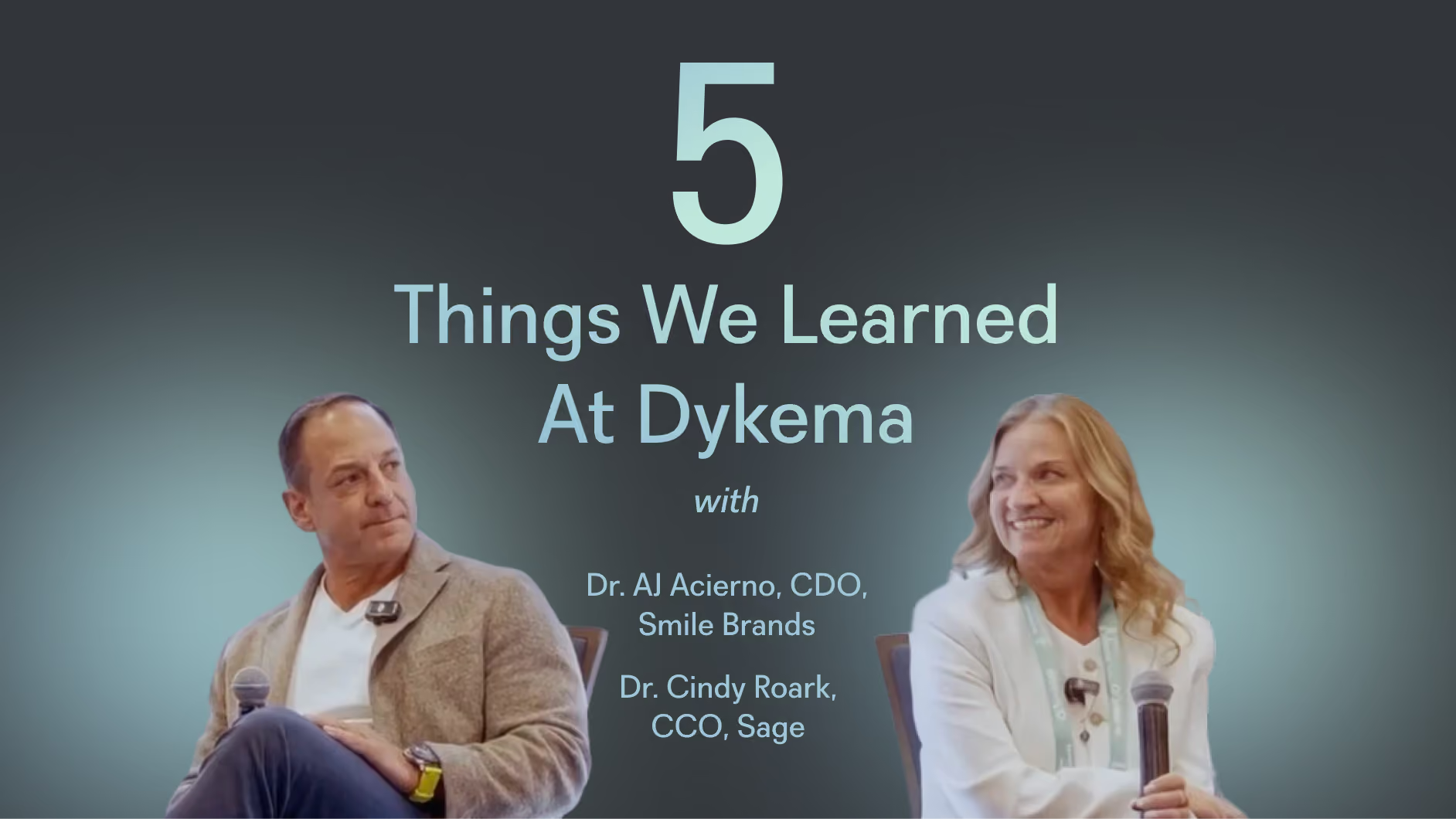
Smile Brands' chief dental officer and Sage Dental's chief clinical officer sat down for a candid fireside chat on adopting AI across their practices and the conversation went well past the usual "AI is transforming dentistry" talking points. Smile Brands Chief Dental Officer Dr. AJ Acierno and Sage Chief Clinical Officer Dr. Cindy Roark walked through what years of pilots, data, and clinician pushback have actually taught them. Here are five things we learned during their talk at the Dykema DSO conference in Denver, Colorado last week.
See the full event recording here, or embedded below.
1. "Embedded" is the whole game — optional AI is dead AI.
Smile Brands spent a long stretch as what Dr. Acierno called "the kings of pilots," testing tools before rolling them out at scale. The lesson that stuck: adoption doesn't happen unless the tool is built into the workflow rather than offered as a choice. "If you're using AI and you're not having it embedded, it's pretty much worthless," he said. Sage reached the same conclusion from a different angle. They routed scans through dental assistants, who were more eager to adopt the technology, before doctors ever saw them, removing the decision point entirely rather than hoping clinicians would opt in.
2. Sage ran a genuinely rigorous pilot — and the metric that mattered wasn't diagnosis, it was claims reimbursement.
Dr. Roark described an 18-month pilot built like a real study: a high-producing office paired with a low one, a busy office with a slow one, a tech-eager young dentist paired with a reluctant veteran. Sage then compared three cohorts — no AI, a competing AI product, and Pearl — across years of patient data. The finding that moved leadership wasn't just that AI got more patients to say yes to treatment. It was that Pearl's output held up with insurance carriers. "It's not all about money, it's about patient care," Dr. Roark said, "but two things were happening." First, patients couldn't parse grayscale x-rays on their own, and claims tied to AI-flagged treatment held up better on reimbursement. For an organization where, in her words, "no money, no mission," that was the number that made the case.
3. Sage now makes doctors explain in writing if they want to skip the AI recommendation.
Perhaps the most concrete policy to come out of the conversation: at Sage, a provider who wants to deviate from the AI-driven standard of care has to file a written explanation for why. Dr. Roark framed it not as a mandate for its own sake but as a response to what the data showed: claims were more likely to get clawed back later when AI wasn't used. "It flipped the behavior and it flipped the script," she said, describing pushback from clinicians unused to explaining their decisions. The policy reframes the request: not "you must use this," but "tell me why you didn't."
4. The panel thinks skipping AI diagnostics is on a path to becoming malpractice — and insurers are already ahead of dentists on this.
Dr. Acierno raised a question he says he's been asking colleagues for months: at what point does not using diagnostic AI become malpractice? His answer, in effect: soon. Dental schools are moving fast: he cited a figure of 88 dental schools set to implement AI next year. That means new graduates will expect the tool to be there. He also pointed out that insurance carriers are already building profiles of individual dentists' and hygienists' treatment patterns, using them to inform reimbursement, well ahead of where most practices are in adopting the same data discipline for their own benefit. Both panelists also noted that skeptical, veteran clinicians who claimed not to be using the tools often turned out to be among the heaviest users once the data was checked.
5. The next frontier isn't diagnosis — it's collapsing diagnosis, treatment presentation, and financial presentation into one moment.
Looking ahead, both panelists pointed past the x-ray itself. Dr. Roark flagged agentic AI and CBCT interpretation (for conditions like sleep apnea) as near-term opportunities, along with a broader shift toward prevention. She cited non-drilling treatments for early-stage decay as an example of AI surfacing problems dentists previously had no way to act on except waiting for them to worsen.
Dr. Acierno went further, predicting that ambient listening and voice AI will soon generate multiple treatment plans in real time inside the room, and that already emerging insurance auto-adjudication will collapse the financial conversation almost entirely, calling it "nine months out, eleven months out" rather than a distant vision. The stakes go beyond margin: moderator McKenzie Fagen, Pearl's VP of Enterprise, shared that her father's heart condition was missed on an earlier MRI that already contained the evidence, a case she used to underline that the technology's upside isn't just EBITDA, it's catching what a rushed or tired set of human eyes misses.