
Why we have AI in our practice
And how it’s helping our practices and patients grow
Transcript
Hello everyone and welcome to this webinar. It's called AI we have AI in our practice and how it's helping our practices and patients grow. I'd like to welcome our three panelists. If I can ask you please to introduce yourselves starting with Kunal.
Hello, everyone. My name is Doctor Kunal AI. I'm a principal dentist at Melior Dental based in Leeds. I bought the practice in February twenty twenty three.
It's a full surgery practice. We are a mixed practice with fifty percent and a chest fifty percent private.
I've been working with or have actually introduced Pearl to our practice since last year when I bought it. In terms of my work itself, I've done a MSC in dental implantology, PG diploma in clear AI therapy. And to complement my implant work, I'm doing a diploma in oral surgery at the minute.
Thank you. Amanda?
Hello, everyone. My name is Amanda Bassi Duke. I work for Dental Care Perth. It's the center of excellence for Clyde Munro up in Perth.
I have special interest in orthodontics, both fixed and removable, which I have a PG diploma in. I'm currently doing an MSC in restorative and aesthetic dentistry, and I've been using Pell for about a year now as well.
Thank you.
That's gonna be hard to follow that's gonna be hard to follow now.
AI, guys. My name is Harpinder Dugan. I'm a principal dentist, at AI House Dental Practice. We have two sites, one in the Cotswolds, specifically Hook Norton and another site in Buckingham. And I am trying to specialize more into the implant AI, and I've been using Pearl dot ai just over a year possibly. And I must say I'm reliant dependent on this on a daily basis. It's very, very helpful.
AI.
I do agree with you.
Thank you for all joining me. I'd like to also thank Pearl for sponsoring this webinar.
I am going to quickly do a small demo of the software so everybody has a little bit of an understanding for it. I could just share my screen.
This is what it looks like.
It is on a website, so it's cloud based.
And once you take an X-ray, it will appear into second opinion.
You will then be able to view your patient's X rays on the system with the AI detections on the X-ray.
This is probably the most amazing toolkit we have, the button that allows patients to engage in conversation, to start to understand their treatment plans, their tooth morphology, and we're gonna take it from there. I will now ask our panelists to answer some questions to help us to understand software a little bit better.
So how is it that you use AI in your practice? So, again, if I could just go with Kunal, please.
So AI, I use it for note taking. So I use Kiroku for my note taking.
I use Pearl for my x-ray. The reason why I chose Pearl or why I use Pearl in my practice is, previously, when I was working as associate AI different practices, what I found is that every dentist perceived an x-ray or looked at an x-ray in different manner. For me, where I would have thought, okay, this needs a filling, another dentist. If the patient went to another dentist in the same practice, their response would be, actually, I don't think it needs a filling.
So in my head, it's like it gives the it it just messes up with the patient's brain. It's not so do I really need a filling AI do I not need a filling? So when I bought the practice, I wanted something there that no matter who the patient is saying, they always get the same result.
So I found Pearl. I did I AI through a few compared to, Pearl's comparatives, looked at that. But what I found with Pearl is that I found it more interactive.
What what I mean by that is having the system in this in the practice helps each dentist to give you the same treatment plan. And it's not just a treatment plan, it also helps with the engagement.
So I can show the image AI like you you showed it just now in different the patient gets a better idea of where the problem lies, why the problem lies. So the way I explain it is if it's on the occlusal surface, that's because you're not brushing. If it's on the side to the interproximal, that's because you're missing areas not flossing or using interdental brushes.
And then showing the percentage, that helps to me to with my treatment plan, with the patient understanding that how deep the problem lies.
So AI would say if a percentage is showing more than fifty percent, my explanation my treatment plan to the patient is they will try with a fling. There's a there's a chance possibility that it's mainly a root canal. And they understand the patient understands it better. The, they there's there's much more of a positive rapport build up, builds up, the trust builds up, and AI just seems like everyone in the practice is singing for the same hymn sheet there. So now I AI can send it to my hygiene unit, my therapist, or another dentist in the practice, and they will all will agree with the same plan.
Okay.
And just to show everybody what you meant by the percentage, if I just hover over that detection, it's actually breaking it down for us to let us know how how much of that is in the lab.
AI jump in there. So the way I would explain that to you is the enamel is twenty seven percent, so it shows that the back the bugs have fenestrated or burrowed through the enamel into the dentin. And when it's seventy three percent, that means that it's very close to the nerve even though on the x-ray because an x-ray is a two dimensional image where the tooth itself is three-dimensional.
It's giving us an idea that it's very close to the pulp which is that purple zone, which increases the chance that the tooth may need some further invasive treatment.
Mhmm.
Thank you. Amanda, how are you using Pearl AI in practice?
So I always say that I probably have the most educated patients in all of Scotland.
I work in a practice that's quite technologically advanced. We have scanners in almost every room. So I use Pearl on my PrimeScan that's facing my surgical chair. So every patient gets to see their x rays. So I would take my x rays as part of the early bits of my checkup appointment and I will do my entire examination. And I sit with the patient and we look at the screen together and I just say, let's have a chat.
I absolutely love Pearl because what it shows the patients and just like Connell said, is that it shows them how deep the decay is. It's very difficult when you're looking at a sea of gray. We've taken we've had years to look at this. We've had years training on this, but a patient and most patients have no clue what we're talking about. They can understand depth.
This is where the pulp is. This or this is where the nerve is, which is what I say, and this is where the bacteria is, and that's the distance.
It's now the patient's the patient now has the decision. Am I going to intervene, or am I gonna leave it alone? And then I can tell them, well, every single time you wait, we can monitor this three months, but you will see that percentage grow. So what Pearl allows me to do is put the onus on the patient on whether or not they want me to intervene. It's no longer me trying to explain to them, well, you have this mystery decay that I can't really tell you where it is or show you where it is. They can see it because pearl marks it in fuchsia pink.
And I love that as it gets deeper, the color gets deeper. So if you go could you go back for me, please?
Of course.
If you see the lower right four, that's fully enameled decay. And I can say to the patients, a lot of people ask the question, well, doesn't it make you hyperreactive and you just wanna go fill everything? I say to the patient, you have that decay on the lower right floor because you're not flossing. You know, you're not be you're not able to clean that space adequately.
I will then equip my patient on how to clean that space. We'll use a tipi brushes. We'll use a fluoride toothpaste. We're gonna use floss. I'll check it out again in six months' time or in a year's time.
If that's not remineralized, then we can go and intervene. AI the patient is aware that it's the lack of adequate oral hygiene within that space that's caused this. So it's fully on the honest with the patient. I always say to patients, what I do in the dental practice is five percent of the job. What you do on your day to day is another ninety five percent, and Pearl shows that. It picks up on things. I never I never before using pearl discussed AI enamel to my patients.
Now no one walks out without me telling them every single spot that they are not flossing. And they're better for it. They come back for their checkup appointments and they ask me, Amanda, how is it doing? Can I see the x rays? What does the AI software say? You know, because they're interested. They understand.
AI Pearl has the most amazing, amazing tool. And for me, it's where it says printout because I just print it out and I give it to them, and they're counting their teeth as well. So you can print out all the reports. And I have my patients counting their teeth.
So they know between tooth number seven and eight, I have a hyper AI spot there. I just need to floss that area. Between tooth number seven and because Pearl also can detect, tartar between their teeth as well. They're aware that that spot is prone to tartar.
Okay. Or calculus.
I need to clean that more adequately. That's a spot I'm frequently missing. The our dental hygienist loves the tool because she can show them the tartar. She can show them the bone loss as well. And she says to them, if you don't clean this, that three millimeter between your lower right five and six is going to become deeper. And because of that, you're going to keep on having gum problems, you know. So she she uses it in a way that I would never have even used it.
So she she can now explain periodontal disease that even a lay person can understand to a greater depth. It's a tool that I feel like everybody should be using. My practice is so much more elevated.
Even the ability to show the periapical pathology Mhmm.
As well because Pearl can't highlight that. Pearl picks it up. It's very difficult. I had a patient in a few weeks ago.
She was a nineteen year old patient, hadn't been to the dentist in thirteen odd years, came in with thirteen sites of decay.
No no knowledge about dentistry and the importance of denture is significant. How would you begin to explain that to a patient in a mixed practice? I'm privileged that I even have thirty minute checkups. A lot of dental dentists don't have that. But even with that, with someone that doesn't understand the language or the importance of oral AI, how do you begin to explain thirteen AI of decay?
Pro that printout was extremely crucial in that appointment because in a very little amount of time, I was able to pass across the necessary information.
And she was able to take that home and explain it to her family so that she could then proceed with treatment.
That's what Pearl does in day to day for me.
And as I say, picture speaks thousand words. And it's true it's true here because the patient engages better. The engagement of the patient is much better. They're motivated, and they understand where to focus more.
Yeah. Am I understanding this correctly, Amanda? So you use this with every patient?
Every single patient.
K. What about you, AI? Do you use second opinion with every patient?
I use it with every patient. And AI Amanda does, after a checkup, I will go through the x-ray with every single patient. And I so I will make them sit next to me, and I will go through each individual tooth, and I will show them the depth of the of the pink shade.
Like, the deeper it goes, it means it's penetrated further. So which means it needs some kind of if you want to if you're proactive, you wanna save it. If you're reactive, then obviously, we can let it progress further. But the higher chance of it, it'll need more invasive work. So the bolt in your call, what would you like us to do? But before we do anything, it's best to understand why this happening.
Mhmm. Thank you both. So now, AI, tell us how you're using it in practice.
I I think I think, I'd like to just share how I actually stumbled upon Pearl dot ai in in a in first instance. I, my dental chair, it it someone else broke it. No one told me who did it. The chair broke, and the circuit board on the chair had, one of the fuses had had basically fried.
So the chair was able to go, back and forth, but it wasn't able to go up and down.
So I've got it happened on a Tuesday. I've got patients throughout the whole week, and then AI in my mind, I'm thinking, how am I gonna get this fixed? Because the engineer can't come out till Friday.
Anyway, so I manage back and forth. I you know, I sorry. I'm back and forth with the chair.
AI taking x rays and I'm looking at the x rays and I'm talking to it with the patient. I'm thinking to myself, I'm sure there's something wrong with these x rays. I'm sure there's some pathology somewhere.
How am I gonna get this chair fixed? My mind is actually focusing on, on the AI and get this chair fixed.
So that evening came home and I just went on Google and I just went, I'm sure there is something AI related that can assist with x-ray, you know, diagnosis helping with diagnosis. And so I I stumbled upon Pearl AI, and I sent you guys, like, a message and went to sleep. And the next day, someone I think, Rabia, you you contacted me, and we arranged for a sort of a demo. And after the presentation, I AI I I need to implement this into practice and see how this would work because we are all open to human error. We are not perfect. We are not hundred percent all the time. And I find that with using Pearl and all the associates and the hygienists using it as well, from us, I think, from one aspect of a safety net for us to not miss anything totally is a game changer.
Because what I try to do with patients is that I use it for every patient. And if I'm doing, a new patient and, AI, taking bite wings, I will assess the X-ray myself first, and then I will tell the patient there's another thing I'd like to show you is an AI assisted software that helps to read x rays. Immediately, sort of the ears perk up, eyes go, what? You've got an AI software to do this?
You put it on the screen and, yeah, I miss sometimes I've missed lesions.
And, you know, and that is what PEL AI is is really helping me to do is pick up on these things before they become a problem. Helping with patient education AI you guys have all said.
From an informed point in consent point of view as well, you know, you are showing the patients exactly what's going on. AI mineralization, I never spoke about that either either. You see the lesion, well, yeah, it's probably gonna stay there for a little while. AI progress. We'll see what happens.
But now you've got these images. You've got it in in illustration method. So here here's here's a copy of it. Take it away. Decide what you'd like to do.
I know peace of mind. I've recorded everything, and I've got an assistant, you know, assistance to do that. So for me, it's total, total game changer. And AI and I'd really, really encourage dentists to use this.
And so it triggers perspective also helps.
Hundred percent, one hundred percent.
I agree as well because people underestimate how solitary dentistry is as a carrier. You're you're sat in your surgery alone. You have to diagnose and treat.
And it's a very high stress situation because patients come with all sorts of baggage as well. And you have to decipher all of these things on a daily basis. It's just it's it's relaxing to have something, you know, something there.
That just tells you I'm not quite sure.
Very happy mood. You're gonna have like, as we have young families, we got kids, we know what kids are like. You you come into work AI, sometime you may just miss things.
Whereas with the AI there, it can help you to identify things that you may may just so, okay. AI. I can't I can't see anything. You quickly just have a look on the x-ray. But with the AI there to to help you, you you won't miss small carries or things that you can have a discussion with the patient.
AI it. With with within this profession as well, it's you have to be at one hundred percent one hundred percent of the time. There is no off day. There there is not a second for you to switch off. So this in itself massively helps. AI surprised people that don't use it. I I I have had I AI don't know if, Rabia, if if you've got a a AI that can also also show sort of the widening of the periodontal ligaments as well.
Not something that I can so what we could do is show that in a demo. So if anybody is interested in seeing Pearl in full action, then I would highly recommend that we book in a demo for you.
So on that note, we'll move on to the second question if that's okay with everyone.
And Yes. I'll start with Amanda this time. So how is the use of second opinion beneficial to your patients, and what have your patients' reactions been like towards the software?
AI love seeing the older generation witness Pearl for the first time.
It's almost they're AI dentistry is they because they can compare it. They have that years of comparison. They're like dentistry has completely changed. And I find that they're a lot more trusting.
It's funny because you have all these years of study and you say something and they don't believe it. But then they see it on Pearl and it's yeah. That's hundred percent. So I find that there is so much more uptake.
And I've had the privilege of being able to talk to some university students as well and demo what Pro can do for them, and they're absolutely amazed. And they'll all tell you they all say radiographs are probably their weakest point.
So for them, having this tool available to them to be able to interact with the patients and even understand dentistry as well and, I guess, the progression of decay and all of that is and to communicate with your patients is amazing.
I I also find that I've been having a lot more uptake in treatment. A lot of people that were on the fence because they couldn't really understand what was going on, I find that they're a lot more willing to be like, do you know what? I've seen that six months ago. It was there. And now it's there and it's even deeper.
Can you intervene before it becomes a root canal because nobody wants the dreaded root canal? I think I think being able to like separate the two parts is probably one of the best things Pearl has probably done for them. So I'm I'm finding a lot more uptake in treatment as well. A lot of my patients are going from becoming a lot more reactive, and they just want to nip it in the bud before it gets any worse.
That sounds really good. And you, Habindo? What are your patients saying?
I mean, very similar to Amanda's kind of approach to as well where the the the feedback, sorry, is that she's given. It it is where you're showing the patients via her.
Because you can you could explain it in the past without AI when we weren't using the AI software, and you're trying to educate or give an x-ray crash course to the the patients. But the moment you start showing them illustrations and the colors, I mean, it's it's totally sort of a game changer for us.
The ease in understanding, the ease that they have in making informed decisions, the ease that they can actually see what the percentages are showing and what the progression is AI, and you can explain the the journey of how what carotaries will progress and what it would lead to if we don't treat it in terms from an education point of view. It is brilliant, and patients are very receptive. And and like Amanda said, it's for the older generation, it's, oh AI gosh. I can't believe it's progressed dentistry progressed this much.
So it's great.
That's really good. And Canal?
I agree with both of them because what I find is the older generation, when they come in, they cover our we just had dentists at schools where they just used to drill, fill, next one, drill, fill, next one. They never understood AI, and most of them say, we were just we just had a filling because they wanted to do a filling. But now seeing technology there, they they they're quite impressed. Like, this is how far the industry has come. And when they see in colors, they have a better understanding with the older generation, with the younger one because they're so used to into the well, most of their life most of their most of their life they spend on in social media, Internet.
So using seeing these tools helps them to understand what state their teeth are, and it helps with the uptake. Because now, like Amanda said, patients hate the word root canal. So they're being reactive about it. They're being proactive about it. They're having those treatments before it becomes quite invasive.
So AI definitely say it has helped with the uptake of treatment and the engagements that we gain with patients.
Okay. That's really good to hear. And have you had any patients now? It has been a year since most of you have been using it. So you've had patients that came in a year ago, have since returned. Have they been interested to compare the X rays that they had previously?
So the AI I get patients asking me the other day, I just last week, actually, they go, oh, it was a perio patient. Can you show me how much bone has changed over AI? So they could see the measurement because the last time they even remembered that it was about three millimeter. So where is it compared to that? So they're talking numbers rather than just a black and white image, which if we were not dentists even if as a dentist, we sometimes don't understand what's what what is this? It's just a black and black and white image.
But now with measurements there, they can it's physical numbers. They love numbers.
And they can see, oh, yeah. Last year, it was three millimeter. Now it's four millimeter, so there's been a change. Or it's three point two, so it's a small change. So they under they have a better understanding of what is happening with their own teeth.
Mhmm. We don't have to sell anything. They are understanding, and it just makes their treatment or giving our options much, much easier.
That to me indicates a behavioral change.
They're now more welcoming Absolutely.
And involved in their own treatment planning.
Yes. We're not no longer seen as a butcher because that's how they used to term the old dentist.
Yeah. That's brilliant. Oh, thank you for sharing that.
I, we'll move on to the next question. This one is a little bit of a long one. So I'll possibly break it up for you guys. So first of all, has using second opinion benefited your business growth?
So, Habinder, if I could start with you this AI.
Yeah.
In short, definitely.
A few reason why. So you have one, the identification method.
So for example, just touching on sort of the caries.
As humans, we're we're prone to we're not wanna we're not, we're not perfect.
And lesions that get missed, you know, go AI is helping to identify them. You are then able to establish a sort of a treatment plan.
And of course, in that you're not missing anything because the patient experience is being well received.
There's an ethical component to it as well, but Yes. Because you're not you're not you're not, because a lot of patients AI I you know, I've seen as well that the perception that they had of dentist in the past was they're just trying to make a quick buck. They're trying to make money out of me.
Yeah.
But but exactly. And but but when you say to him, look, the evidence is here. Yeah. What I'm showing you is this requires treatment or is was up to you if you wanna leave it alone, but this is what could possibly happen. And it's just that you AI you're leaving it in their core. AI know.
I found much more AI, and so so have the associates.
So now the second part to that question is, could you please share any data or personal observations on how Pearl AI has impacted the efficiency of your patient's workflow and whether it has significantly altered the way your team collaborates on patient care?
Are you frozen again?
No. That's to you, Rabinda.
Oh, sorry. To me. Yes. So so sorry. So for me, in terms of how we are, collaborating with each other, so there are of course, you'd be referring, cases to other colleagues.
For example, if I was to refer to the hygienist, I I think in terms of a hygienist prescription, it's even more detailed than it has ever been. For me, that I've noticed that as as as a massive difference. And then, of course, the hygienist is able to then bring up the, the software with the patient and say, of course, you know, I've been AI.
All these sites, we can clearly see this this sort of target deposits here, you know, you know, under the gum here. These are the areas that we're gonna focus on. It's so much more engaging for the patient. Mhmm. They understand why it's not just gonna go go in for pain. They actually, you know, registered what we what's being done, why it's being done, and for the benefit of themselves. So from that collaboration point of view, massive difference.
Thank you for sharing that.
Like, they they they they appreciate that as well. It's not just the can you clean this for me. You know, it's it's it's AI more better.
Better communicating to.
Sorry?
I think hydro stroke therapist, they are much better at communicating.
Their communication Oh, making massive much, much, much miles better than us dentists.
Like oh, yeah. Yeah. And that's sort of it's such an invaluable, you know, players to the team.
And it makes their life easier at the same time because oh, now that therapist there's more intakes of therapists just because before they were just hygienists, now they're doing therapy. So Yeah. They haven't had that exposure to cavities or they're not so confident doing fillings. But having the tool there, they know exactly where to drill. They know how much and they can work more efficiently.
I think another member of the team AI was saying, I think another member of the team worth highlighting is actually the treatment coordinator.
Mhmm. The treatment coordinator just being able to show the patients because obviously, I give the pay I give her on the patient massive treatment plan and all I give them enough time in the surgery to ask all the questions And they forget or they don't ask it, and they get into the treatment coordinator's room, and they suddenly remember fifty thousand questions that she can't answer. Or they're asking, which tooth is it? Well, she just brings up Pearl, and she can show them which tooth is lower right six because she is dentally trained, at least to some degree. So all she has to do is just point. This is the tooth Amanda was talking about. So I think that that's also an invaluable tool even in the hands of the treatment coordinator.
Completely agree. Yes.
Yeah.
They seem to have a different relation with the treatment coordinator. They just think because they're not dentist, they can speak freely. They can ask anything and everything.
It's not in a clinical it's a less clinical environment. Environment. Yes. Yeah.
I love that you've added that in there. Sorry. The treatment coordinator being part of that workflow.
It's really important that we learn to pass the baton onto other team members. So thank you for saying that, Amanda.
I I just wanted to make a point about, is is some important feedback that I had from my hygienist a little while ago. And she said, she when she worked at other practices, she never felt as involved as a team. Mhmm. But because we've been using every in every surgery, everyone's got access to the software. And because the prescriptions are so detailed now, it's it's a team effort.
Patients pick up on that. Patients pick up on that as well.
Yes. And so do you also have your nurses involved in that workflow?
Oh, one hundred percent. My nurse well, my nurse so some of our nurses at the practice we work in are radiographically trained. So they will take the x rays. And before I will come into the room sometimes, they've popped it up. You know? The screen is showing with pearl.
You know? So they can see. The patient's already looking at it. Obviously, they're not trained to have that conversation with the patient. But the patient's already staring at the screen and wondering, what's that? You know, they're already engaged even before I walk through the surgery.
And the nurses feel more confident, AI from my side, my nurse feel more confident because she can just open she didn't have to look at the x-ray. She just opened second opinion. And she goes to the patient before I walk in that this is where we're gonna be working on. And she knows exactly AI, obviously, as we mentioned at the early part of this webinar that we, as dentists, make human error. So AI a deal will be marked as a MO, but we always go on the second opinion before drilling to the pay so that then so that I my nurse will correct it if I've marked it wrong or anything like that.
It's so important to have our nurse.
Efficient.
Yes. So important to have our nurses involved in the journey and to use their skill sets.
A teamwork.
Yes. A hundred percent.
Yeah. So, guys, thank you so much for joining me today on this webinar.
I want to thank Pearl for sponsoring us. I have had a few questions from the audience, if you wouldn't mind answering those for them, please.
So the questions that have come up is how quickly can you incorporate second opinion or Pearl into practice?
Straight away.
It takes five minutes to learn.
Straight away. Straight away.
So once it's installed, it's pretty much available to you to use straight away.
Yes.
And I it's I think it's important to add to the I think it's important to add that it is cloud based.
So, I know this was asked previously, but another thing that I do is AI actually take the X rays home. I do a lot of my treat I work four days in clinic. So I do a lot of my treatment planning at home.
So I have the OPG, their radiographs, all of that when I'm doing my orthodontic treatment planning. A lot of my orthodontic treatment planning happens out of the office. So because it's cloud based, I have access to all that.
I use it as part of my day to day treatment planning tools. So if, for example, you don't have, you don't want your patient to turn around and look at the screen, you can have it on your iPad and show it to the patient on your iPad because it is cloud based. You just need the website, your username, and password, and it's available to you everywhere.
Yes. As AI evolving, like, initially, when I got to it, I could only use it on my computer at work. But over time on my iPad, now now AI even can view it on my on my iPhone, which makes it easier.
And that it is a new feature that's being made available to you guys. So I'm glad you've mentioned it. It's now available to you on iPad and phone. So that's really good to hear.
Do you think it will replace the dentist?
Absolutely. Well, unless the AI grows arms and learns how to drill and fill.
But it might be The economics is there to be embraced. It's there to be embraced.
We shouldn't be we shouldn't be scared or threatened that it's gonna replace us because all it's doing is it's making us more efficient.
It's it's making our workload easier, and it's giving us more time to speak to patients, build our rapport with them.
Whereas in the background, we can do our notes. So AI know we talked about earlier, but we can do our notes through different application of AI.
So we can make that AI.
Because let's be honest, stress level these days, everyone has a very high stress level. There's a lot of things going on in the background. You can miss things. But just to give you that peace of mind, having an AI to support you can help you to just identify the little small thing that you may miss on a day to day basis.
Especially Friday afternoon. Right? And and if I could add just what Kuna was saying, it's, AI recently in the the news, there was an article about AI assisting for cancer diagnosis as well.
And of course, we're just talking about teeth, but, obviously, the cancer so AI changing things.
It's it's coming back to the patient experience as well. So you are able to pick up on things before they become an issue.
And it's it's not gonna replace us. It's just gonna make us more efficient and more effective at what we're doing and more effective at having a conversation and discussion with our patients, making sure that they're so much better informed than they have been before, but with the assistance of the software. And I think it there needs to be naturally an embracement to the changes that are coming with AI.
Don't fear it. Sort of acknowledge that it's it's gonna be there and and try and incorporate as much as you can into your like, it it is. Of course, life is stressful. I mean, work is stressful.
What what make can make life a bit easier for you? And, yeah, AI is helping.
Well, they are generation.
They don't wanna use phones, but everyone uses an iPhone or some kind of smartphone these days. So we don't have to be scared to use something. And like you mentioned, the cancer, I believe it's to do with the on the BBC that was talking about the breast cancer where That's right. These lab analysis showed that, x number of patient only have forty four, but the AI picked up eighty eight. And what that did is it shortened the treatment where patients used to have their therapy for months and months, it's shortened because it was picked up at such an early stage.
How how many lives can this save?
Five days.
AI mean, lives can this potentially save?
Yes.
You know, thanks to AI and the speed of it as well as speed of diagnosis. Incredible incredible where it's gonna go.
I only hope. There's only one suggestion AI I've made in the past, Rubia, and then you're gonna you're gonna hate me for this. But I I would love it if Pearl dot ai was able to implement something that gave us a a kind of a AI template, whereby after the next phase taken, for example, it can assist with the grading. It can assist with sort of identifying things that are there.
And as a clinician, reporting and you then Because we are lazy people.
I don't AI I don't wanna put it like that.
But but you know you know how AI how Kuroku AI you you mentioned. I've also used it as well. So an element of that with Pearl dot AI.
Yeah. Yeah.
AI like to see some kind of collaboration.
I'm not saying curiosity.
You have to sign it off.
Yeah. You need to sign it off.
Of course, you need to sign it off.
And and one more thing is if you were taking sort of bitewings two, three years later, if there was a way to naturally compare the, the fact that that's coming, that that's an upgrade that they're working on. I have to I am happy with that.
I am happy with that.
Yes. It will help the intervention AI also help the patients.
Absolutely. That changed.
As a company, Paul, are very onboard with taking feedback from you guys. So if you have already reported this to them, then it will eventually come into play.
I hope Spoiler spoiler.
Yes.
It it takes amazing.
It takes time.
But, yeah, I think you put your suggestions forward.
Oh, yes. So as we can see, this collaboration with AI of notes taking application would be very would be beneficial because at the moment, I'm not sure if I should be saying AI my most of the notes are done by my nurses because now they can just click buttons. Mhmm. If they're having this integrated with Corocu or, I don't know, whatever care stream or whatever apps people that people use, having integrated so they can pull through the data, AI, how can they said, would be brilliant.
So we can spend more time with patients talking rather than spending time behind the scenes typing notes.
That's a very good point. We will take that on board. And just the last question that we have here is how accurate is it?
So if you've been listening to me during your trainings, you will know.
So, yeah, so I'll just jump in here. So, obviously, we know artificial intelligence is something that is based on data that is provided.
So the more data it gets, the better it becomes. So I would say over twelve months, it has progressed. It has progressed in a better way. This the success rate is more now.
Before, I believe it was in the eighties. Now over twelve months that I've been with we're using Pearl. I've seen the the personally, I've seen the accuracy is much, much better in terms of AI things even with OPT, with PAs. AI I believe it's somewhere in the region of ninety to ninety five percent.
We're at ninety three percent.
Yeah.
And AI at Sorry. So I was gonna just and add to that. I would say it surprises me how accurate it is and its ability to learn as well. So the more feedback you give it, the better it becomes.
And how quickly they upgrade and implement that, it's it's a little bit creepy. But I find, like, even its ability to because as humans, we will struggle with I don't care how good your x-ray taking skills are. You will take an x-ray that overlaps. The contacts will overlap. And you know that that's extremely challenging to read. Pearl doesn't have that problem.
I find that Pearl can read even when the contacts are overlapping.
It it's it's shocking how, like, how effective it is and how efficient it is at reading. Because we just see well, I think the study showed that we can AI, well, about ten shades of gray, probably can identify to the hundreds.
Yes.
Well, that's yeah.
That's it. That's it. That's it.
So it's yeah. It's amazing. So efficiency wise, I would say I I know you said, generally, you're looking about ninety three. I would say I'm probably about ninety eight percent.
One hundred percent.
Yeah. I think that's because error and I'll tell you the most the error that I've seen. So it's not decay.
The error that I've seen is when a patient comes in and they have a lot of periodontal ligament widening due to periodontal disease and possibly some occlusal effects, it struggles to find out where the bone ends because it just takes it all the way down to the apex, which which is a I think it's a valid error of what AI reported.
But that's like the most recent error that I've seen. Because when there is that a lot of space between the tooth and the bone, literally the tooth's almost floating within the alveolar socket, it's struggling to find out is that is that the bone level or does it just go all the way to the apex?
And which I reported and I'm sure I'll go back in about a month and it will all be gone and fixed. So decay identification, I don't see problems anymore, Pearl.
Earlier on, maybe more so.
It's important also to recognize that even if it was a hundred percent accurate, we're still the experts. We've still got to be able to recognize the false negatives and positives that the system may be showing and edit them off prior to sharing them with patients or adding them to treatment plan. So thank you for sharing, guys. Kunal, I think you were just about to say one more thing.
No. I AI just saying that as now as you mentioned, there's still a computer, but it will never take away that human human intervention. Mhmm. AI, you cut you will always you're always gonna view it. You're always gonna take take look at the AI. But end of the end of the day, it's what you what you perceive us to be correct.
Like, it's it's ever evolving. There's always gonna be changes. Like, we are progressing towards the OPT, like I raised it with you a day where I was looking at a wisdom too.
It it didn't picture the end of the apex of the wisdom tube on the on the nerve. But over time, that has been corrected. So as more data, as more the good thing with Pearl is the team behind it are there to look at things, and they are always happy for feedback and making changes.
But you don't find with a lot of companies these days. They just develop a software, let it out.
Yeah. I mean, I mean, what what what Amanda and and Kun have said, I mean, we we have to remember that this is just a diagnostic tool. You know, ultimately, you are you're responsible to check what highlights are clinically, what what they're saying, you know, so what they're looking like, what they present as.
So but I I still I still feel, you know, one hundred percent sure that I believe everyone should be using AI, nothing else. You know? But they should be using introducing this into their practice on a on a daily basis.
What what are we showing tool to have?
Yeah. And as an Yeah.
Don't take it blindly, but use it as a interactive tool to discuss things, to and to engage the patients so they can make have a make a more of an informed consent rather than just take your words blindly.
And part of associate as well. So this is I know both of your principles. But coming from an associate point of view, I I don't think I would work in a practice that didn't have pro. Because for me, it shows that I'm in an environment that is technologically advanced.
You know, that they're on board with the direction that the world of dentistry is going.
Well and it just gives you that added security.
You know, that what I'm seeing is what all my colleagues are seeing. So I think it's it's something that's so important to implement. And I always say that for the cost of it, it's it's one filling.
You know, it's one filling.
I If you're private.
Yeah. Well yeah.
So it it just shows. It's one patient, let's say. Even if it was under the UDA system, it's one patient. And it just shows you that you're in a team that cares about that patient journey.
Yes. I AI just interject that. Like, what people think is to in to install or employ the pearl application to your practice.
You don't just have to be a practice owner. Even an associate can do it. It's much easier. All you have to do is get the get the sign up from your practice, owner that you're gonna install this.
There is no data breach. There's nothing like that. So it's easy to install that even as an associate. The whole practice can gain benefit from it.
But a principal would have to agree to it though because it is installed onto the folder where all the X rays are stored.
And so at some point, people may want access to it.
Mhmm.
Yeah. But yeah. So you don't don't don't just have to be a principal. You can also be an associate as long as you've got the approval from the principal.
Yeah.
Guys, I wanna thank you all for joining me. It's been a pleasure speaking to you all and finding out a little bit more about how you're using second opinion in your practices.
I wanna thank Pearl for sponsoring this for us and to FMC.
Yes. Enjoy using Second Opinion, and I look forward to seeing you at some point soon. Thank you.
Thank you, guys. Thank you. Thank you.
See you later.
Meet Your Host
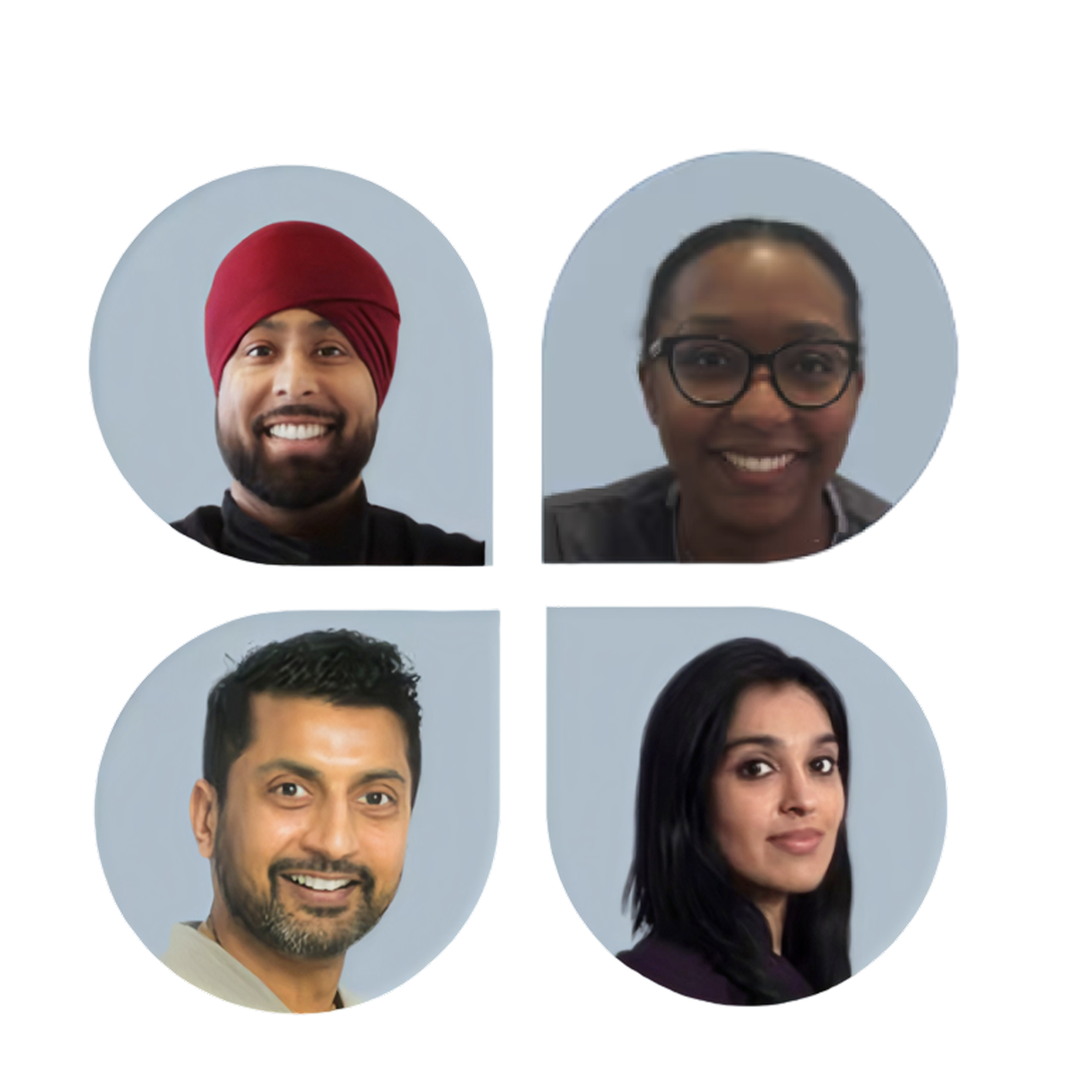
Dr. Kunal Rai graduated from Charles University, Prague, in 2015 and earned a Master’s in implant dentistry in 2021. An Invisalign advocate, he specializes in cosmetic restorative dentistry and mini smile makeovers that help patients gain confidence. Dr. Amanda, a self-proclaimed “ultimate dental geek,” is pursuing a postgraduate diploma in orthodontics alongside a Master’s in restorative and aesthetic dentistry. She is a certified Invisalign Comprehensive and Suresmile provider and a member of the British Dental Bleaching Society. Dr. Harbinder Dewgun is a 2019 recipient of the Houses of Parliament’s “Best Young Dentist Award” and specializes in implant and orthodontic dentistry, including Nuvola Aligners. He also advocates for patient care reform and mentors the next generation of dentists. Robiha is a dental hygienist, mentor, and mental health advocate with nearly three decades of experience. She has worked with brands including Oral B, Listerine, and Colgate, and has been twice shortlisted for Best Hygienist of the Year, in part for her work with nervous patients.
Done learning and want to get started?
Book a demo