
Sweet Talk
Turning Seasonal Sugar Advice to Realistic, Constructive Conversations
Transcript
Beautiful. Beautiful. Yeah. Beautiful.
A very good evening, everybody, and welcome to Sweet Talk. So this is the Halloween edition. So I'm Sophie Lovett from Pearl, I'm absolutely delighted to be joined by the one and only Doctor Kunal Patel, who is the principal and owner of Love Teeth Dental Group and Love Teeth Kids. So tonight is all about turning seasonal sugar and advice into really realistic and constructive conversations. So we've got about forty five minutes and that's going to be followed by fifteen minute Q and A, but it's going to be a really good webinar today. Feel free as we go along to put any questions in the Q and A box at any point during session.
And so we'll pick up on those at the end.
So we've got Halloween coming up this Saturday and we've got a lot of festivities on horizon the next few months. So the aim is to that you leave with the advice that you can use during this sugary season.
So if we go on to the next slide to look at the webinar topics. So here's just how the evening is going to run. So we're going to be starting with the science of seasonal sugar and then it comes the playbook of Halloween festive season, timing, brushing and a couple of alternatives to sweets too. So after that, we will move the conversation into the chest. This is the bit I'm excited about because this is where Doctor Kunal is an absolute pro and Doctor. Kunal will be showing you how to use Pearl's second opinion and a little bit about sugar bugs as well, which is specifically for kids and turning those x-ray findings into chairside conversations. And then we'll finish with the takeaways and the Q and A.
So if we go on to the next slide and I am going to be introducing you to Doctor. Kunal. So I've had the privilege, the absolute privilege of working with Doctor. Kunal for some time now.
And he is the principal and owner, as I mentioned, of Love Teeth Dental and Love Teeth Kids. So Love Teeth is the one stop smile destination. So six practices based in around Surrey and they're absolutely stunning. So if you're ever nearby, you have to go and check them out. And Love Teeth Kids, it's actually based in Worcester Park in Surrey as well, which is equipped to provide children and teens with healthy smiles. It's absolutely gorgeous.
So Doctor. Kunal really is and has been at the forefront of dental innovation, a long standing Pearl user and one of our key opinion leaders. He really does bring together the latest tech and absolutely stunning surroundings and exceptional care to give a really, really standout patient experience. Let me tell you, it's like no other.
So he's going to be perfectly placed today to talk about both prevention and advice and then that conversation in the chair, as well as how he uses tech to assist him. He uses a lot of tech. So just moving on from my bit before I pass over to where, you know, who everyone's here to see. So just to introduce you to Pearl's second opinion.
So Doctor.
Kunal has been using Pearl for some time. He will be talking you through this in a bit more detail.
So, Pearl is assisted intelligence and it's there to help clinicians review radiographs. So, it's being used across all of Doctor. Kunal's Love Teeth practices and it's integrated natively in most, if not all UK major imaging systems and practice management systems. So Doctor Koonaw will show you how he uses that and how he communicates that to his patients.
And I just want to stress, though, that second opinion is just that a second opinion, but it's there to support your clinical judgement and the conversations with the patient. It absolutely doesn't replace you. It's there to work with you. So I will pass you over to Doctor Koonaw, who everybody's here to see.
And thank you, enjoy.
Thank you Sophie, that was an intro. I've not had one as good as that so thank you very much. I'll buy you a chocolate bar next time I see you. So thank you everyone and thank you for joining us. There are three things I would like to leave with tonight. First, to understand how the frequency, quantity and timing of sugar consumption can influence caries risk. Second, to be able to give practical balanced advice that helps patients make healthier choice when their sugar intake rises.
And thirdly, to recognise the role we play as dental professionals and how tools such as PERLS Second Opinion can support behaviour, change and preventive habits for lasting oral health.
The word to hold on to there is balanced. This is about a plan not a ban. So we know it's Halloween season so we're not banning the sweets, not banning all the sugar but it's about being balanced.
So let's see if I can go through that with you guys today. So part one, how seasonal sugar habits affect oral health. This webinar is about making those conversations easier and more effective. Whether you're speaking with adults or kids, better communication can help encourage regular visits, improve patient retention and reduce gaps in the diary.
With Halloween upon us, we've given this section a spooky thing. I was supposed to dress up, Sophie decided not to dress up so I didn't dress up either. It was supposed to be all Halloweeny today, thank God for that, but we thought we'll keep it professional this evening. So the science is serious.
It is speedy time but we have to make sure the science behind the sugar and the decay and we're serious about it. So let's begin with the science behind why this conversation really matters.
First, the scale of the problem in England in twenty twenty four-twenty five.
Twenty one thousand one hundred and sixty two children aged five to nine were admitted to hospital in England.
That number, every time I see it, it just blows my mind that twenty one thousand children were admitted to hospital for tooth decay in England. Across all zero to nineteen year olds there were more than fifty six thousand hospital tooth extracting episodes which is up fourteen percent from the previous year.
And 51,200,000 was spent on decay related hospital extractions. These are England figures from OHID and Royal College of Surgeons of England. Scotland, Wales and Northern Ireland published their own data, so we're only talking about England here.
Behind every one of those numbers is a child and often a general anaesthetic unfortunately, I'm off school and a worried family.
Tooth decay is largely preventable, which is exactly why the conversation we have in the practice matters more than anywhere else.
This is also where Pearl's second opinion fits in really well and I'll show that later on. It colour codes a multitude of dental pathologies directly on the radiograph. So disease such as bouquet can be seen and shown to the patient early and in a way that the patient can relate to and makes it really much easier for us to communicate with the patient. It's all nice and colourful rather than the grey but the whites that we used to point on the x rays.
So if we look at the seasons change in three things at once, okay, so why does this matter more at this time of the year?
We have to think about the seasons change three things at once, right? So first, the frequency. Sweet treats are more readily available this time of the year and they're eaten more often during the holidays.
Second, the quantity.
Think bigger sweet balls, more parties, more sugary drinks and edible gifts.
My son only went back to school six weeks ago and every weekend he's been going to two birthday parties, that's cakes, sweets, this time of the year every weekend is full of kids birthday parties and it usually happens around here.
The bigger halls make more sugary drinks, edible gifts, all these things work on the quantity side of things. And then if we talk about the routine, last nights can, late nights, sorry, can lead to parents rushing or skipping the regular brushing times. And Halloween isn't the only date in the diary. Look at the sugar diary calendar. We've got Halloween this Saturday, bonfire night on the fifth, Diwali in the same few weeks time, then Christmas and Easter.
It continues to go and so habits we build this week can be used again and again through the year.
So one note before we move on, many families celebrate with sweets and gifts as part of their traditions and Diwali is a good example, old no, that's how I became nice and chubby. Our advice shouldn't be to stop those traditions, it should be to plan around those traditions.
So the Stephen the Stefan curve is one of the most beautiful graphs for understanding sugar and tea.
When we eat or drink something containing fermentable carbohydrate the pH of that pack falls within minutes.
It then recovers slowly as our saliva buffers the acid.
While the pH is below the critical level, is around 5.5 for enamel, demineralisation outweighs remineralisation.
Once it comes back up, repair can happen.
So a word of caution, this curve is illustrative. How long recovery takes depends on the food, on the saliva flow and a plaque itself. But the message holds, Every sugar exposure is an acid attack and each separate exposure restarts the clock every time. I hope that makes sense. It took me a while to get my head around that. I remember at university it was taking a while to figure that one out.
So now let's put that idea to work. Same four sweets, two separate evenings. In the first, the four sweets are eaten throughout the evening.
That's four acid attacks and the pH stays low for a longer period of time. In the second, the same four sweets are eaten in one sitting. That's one acid attack, one pH dip, and then recovery.
This isn't a new idea.
The victim I think is, but the vitamin study, let's go with that, carried out in Sweden in the 1940s and 50s found that sugar eaten between meals and in sticky forms gave the greatest increase in caries. So the message to land with patients is an encouraging one. We can often keep the sweets and change the pattern.
So how much sugar is too much? In The UK, the advice from SACN is that free sugars can make up no more than 5% of the daily energy intake.
Free sugars are the sugars added to food and drink, plus those in honey, syrups, fruit juice and smoothies.
The NHS turns that into numbers so nineteen grams a day for four to six year olds, twenty four grams for seven to ten year olds, thirty grams for anyone aged 11 and over, adults included.
That's why the title says one can of sugary drink can use a whole day's limit.
It's crazy.
A standard three thirty millilitre can of regular Coke contains roughly 35 grams of sugar. That's more than an adult's limit, let alone a child's one.
Remember also that fruit juice and smoothies count as free sugars and the NHS advises limiting them to one hundred and fifty millilitres a day.
As clinicians we're showing this to inform, not to shame the patients, it's about making the numbers meaningful and helping families understand how everyday choices add up.
On part two, the Healthy Halloween Playbook.
This is about timing, brushing and swaps that adults and children can actually adopt.
The brushing advice in this part follows delivering better oral health. The National Prevention Toolkit for England from OHID. Remember guys, Sophie's looking at the questions so any questions during this presentation put them in and we've got some Q and A time at the end which we'll go through.
So don't be shy, ask some questions about sweets.
So not all sweets are equal, so our advice can be more specific than avoid sugar.
In the higher risk groups we have Bloody Pops, Bold Sweets, Toffee and Chewy Sweets, Sour or Fizzy Sweets and Sugar Drinks my favourite, literally all of them. It's really bad.
They stay in the mouth for a long time, they stick to the tea or keep the black pH low for a longer period of time and sour and fizzy sweets can be erosive as well.
In the lower risk group it's still sugar but chocolate and anything eaten quickly in one sitting with or after a meal does less harm and for better choices water, sugar free gum for older children and adults and non food treats. A nice way in this conversation is a question at the bottom of the slide.
Did you know that some sweet treats carry higher risks? It asks permission and shares the information without lecturing the parent in the room or the child. So let's plan a treatment window.
This is a single most useful practical method of the evening.
Plan a treat window. Saliva flow is the highest at meal times, So sweets eaten with or straight after a meal are less harmful than sweets eaten between meals.
So the plan is simple. Agree the number of sweets in advance, eat them in one sitting, then take the stash out of sight so there's no grazing. In my house we just put them high up and all my little hobbit children can't get to them. Families can hear this as they plan rather than a ban and that makes it far easier to follow. It doesn't help that many loosen up midgets as well, so none of us can get to them.
Families will almost certainly ask should we brush before or after the sweets? And I want to be upfront that the evidence here is limited.
What delivering better oral health advises is brushing at least twice daily with fluoride toothpaste, lasting at night and on one other occasion.
Brush all the teeth surfaces for around two minutes and spit out without rinsing so the fluoride stays on the teeth for longer. There's no strong evidence that delaying brushing makes a difference to caries or that everybody needs to wait after acidic food.
The advice to wait is a caution one. That's where it's just us using our common sense and it relates to erosion. That's why we say it. So my advice is don't make timing a barrier.
Here's what to tell families. Don't skip bedtime brushing. That's a must. Even if you're tired, you can't miss the bedtime brushing. Brush after the last treat, then have water only.
And after sour or acidic sweets waiting thirty to sixty minutes is sensible if it's practical but never at an expense of bedtime brushing itself.
Here we go, everyone ready for Saturday? Here's how it all comes together on the night. Five steps. Number one, dinner first. Let's get them home. Oh, they're on half term this is Saturday, so let's just feed them.
Dinner first, a full stomach means they're gonna eat less hopefully in the evening anyway.
Number two, out and about. Take a water bottle with you and no snacking en route.
Step three, the drink window and agreed number eaten in one go.
Number four, water.
Drink water, then no more food. Number five, the bedtime brush. Two minutes fluoride toothpaste and spit rather than rinse. For children under seven, an adult brushes or supervises them.
That means a smear of toothpaste for the under threes and a pea sized amount for three to six year olds.
Spot did not stop.
Here are four ideas that suit different children and all of them reduce the staff without banning the farm.
Choose and swap. The child keeps a few favorites and swaps the rest for a small toy or activity.
For my son that would be time playing priblins. The switch witch.
The witch collects the sweets overnight and leaves a gift in their place.
That's when the auntie can come over. Blame on the witch auntie that comes over and steals the sweets.
Donate or buy back. Give the extra sweets to charity or to a practice buy back event where there's a donation to charity and a small reward.
And the treat box store the rest in one box with a small portion at meal times only. You don't need to promote all four, choose two or three that suit your patients and share them in your own channels.
So we do quite a lot over our social media at this point, so stories giving our followers little bits of advice. They like that and that's how you keep your engagement on your social media really well because little tips and advice like that get shared around and you can help with your followers.
Right, alternatives to handing out sweets.
These are the greenhouses, you may get eight okay just a bit of a warning. And what if you're the one handing out the treats? This is for practices, staff and patients who will be answering the door on Saturday evening. There's a long list of alternatives to treats: stickers, play doh, pencils, erasers, bubbles, glow sticks, temporary tattoos, small toys and bouncy balls and for dental audience a mini toothbrush and timer.
If can buy it, why not? Stickers and play doh are the options highlighted by the Faculty of Dental Surgery at the Royal College of Surgeons in England.
Two things to bear in mind check for small parts if there may be small children under drink and non food treats also suit children with allergies, which is actually a better alternative, which is an idea behind the Teal Pumpkin Project.
Adults, you can celebrate too.
So we slip up in predictable ways. So let's pair each habit with a simple fix.
Sipping sugary or acidic drinks all evening, drink with a meal then have a water between drinks.
Finishing the children's leftovers, yeah that's what dads are for. The same three window rule applies with meals and in one go.
The staff room sweet bowl, keep it outside and offer it at set times not all day long. Good luck with that one.
Skip brushing after a late night always brush at bedtime When you come home after the galas that we've got coming up, try and get a toothbrush in your mouth before you pass out on the bed, it's always key. For high risk adults it's worth considering high fluoride toothpaste either 2,800 or 5,000 parts per million, which is available on prescription in The UK, we all got the Durafat. Delivering better oral health covers it is suitable for.
So sweet talk.
Part three is the chairside discussion. So far we've covered what to say, now it's about how to say.
Every appointment is a chance for a short prevention conversation, in line with the NHS approach of making every contact out.
And the principle for this part is a simple one guide, don't lecture.
This is how I'll do it.
A simple framework for these conversations is OARS, which comes from the motivational interviewing.
So O is for open questions.
What happens with the suites after a trick or treating? It invites the family to tell you rather than answer yes or no.
So that question goes down really well, so literally patients are there and just ask them what happens with the suites after trick or treating?
You really need to encourage your patients to talk rather than you do most of the talking.
A is to affirm. It is great that you're already thinking about this.
R is to reflect.
Evenings are busy and brushing slips that shows you listen and S is for the summarise. So the plan is a few with dinner and then brush. That leaves the family with a plan in their own words.
One more tip and this is where Pearl's second opinion comes in. Go and then ask.
Bring the radiograph up on screen so that you and the patients are looking at the same image before you start talking.
Let's go through the little dialogues that work.
Small changes in wording make a big difference. Instead of do not let them eat sweets' fry, let's plan when they have them.
So this is a good screen to take a little photo of.
You must cut out sugar instead.
What would work in your evening routine?
Sugar is a... Is bad for your teeth.
How about how often matters more than how much?
Halloween ruins teeth, be the devil. Say it how it is.
Try a few with dinner then a good brush, it's a great plan.
Notice that each of these was a try phase.
Notice what each of the try phases does, sorry. It opens a plan instead of closing the conversation and it keeps the family in charge of the decision, that's also in keeping with the GDC standards for the dental team and communication and consent.
And again, here's where the Pearl second opinion can help.
Start from the image, not from the blame. Let's look at your x-ray together. What do you notice?
So remember, pride is always the key here when you're good communication with your patients.
Part four, divider.
That brings us to this part, show don't tell. We've talked about a conversation, now let's look at a tool that can help you start it.
Taking you from the radiograph all the way to the conversation.
This is how I do it. So here you can see the x-ray what Sophie showed you an example earlier on. It's a familiar scene. A dentist points at a grey shadow on the radiograph and says 'that's a cavity' and the patient nods along without really seeing it.
We've all been there, we're pointing, the patient's pretending that they see something. It's like when you go for the first baby scan and the doctor's saying yeah you see that on the baby scan and you're like yeah me and Lucy never had a clue. I think up to our third scan we finally saw something. It's the same thing as these x rays, I promise you.
The patient hasn't got a clue and the patient's nodding away. So that's where Pearl's second opinion came into play and it was a game changer for us at Love T. This is when communication with our patients hit another level. So what does second opinion do?
It highlights findings right on the radiograph in colour. On the colour key we have the calculus, the incipient caries, progressed caries, notable margins and periapical radiolucencies. So instead of pointing at shadows you point to colour coded findings and the patient sees exactly what you see.
That shared view makes it much easier to agree to a prevention plan. Pearl really is a game changer when it comes to patient communication.
And once they do this for our baby scans and they you know Pearl AI goes to second opinion on baby scans and they can like you know do a blue for a boy and pink for a girl sorted. That's where it's at Pearl. Right, next Assess the findings. So step one belongs to us as clinicians. Before anything is shown to the patient, assess the radiograph yourself alongside second opinions AI detections.
Using your own clinical judgment and make any adjustments that are needed.
Pearl second opinion is just that a second opinion. So you as clinicians are still the first and primary decision makers.
The AI gives us a second look. The decision has to always still be yours.
Hover for the detail. So step two is to show the findings.
Hover for more detail and explain what the color means. Green for calculus, yellow for incipient caries, pink for progress caries, purple for overhangs and margins, and blue is for periapical radiolucencies.
The AI also uses a traffic light system to highlight bone loss with green, orange, red indicating increasing severity. Hovering over an area of decay goes its estimated depth as a percentage.
This helps you explain how far it extends through the enamel or if it has reached the dentin, how far it has progressed towards the pulp.
It is a super cool feature.
Step three, this is when the patient goes,
This is where you switch to tooth parts. The patient presentation tool. This is my favourite part.
Sharing the different parts of the tooth in colour makes the x-ray easier to understand. When the patients have no pain or sensitivity, it can be difficult to explain why treatment may still be needed.
This helps them see what you're seeing and understand the reason behind your recommendation.
Seeing isn't just believing, it's understanding that can give a patient more confidence to move forward with necessary treatment.
It's also the moment a plan can start to feel relevant. It's no longer just an abstract advice.
This view is where when we were at Loft Heath and we brought it in, it's what started changing everything because we were actually educating the patient. The different parts of the two, then showing how it progresses through. So my golden rule when I speak to a patient, say the white areas and the green areas above the gum and they're the areas that a patient can see in their mouth.
The blue and the pink are hidden underneath and they're the bits that we don't want to ever see.
So the decay when it's in only the white area can heal itself. Good oral hygiene, good brushing, flossing. However, once it hits the green that's when you need a filling. And then I switch it to the pathologies and I say which one shall we go through? So you see the incipient ones there, they're great, you can use Vovadis or something or Durafact just flossing away. That's an excellent tool. I think Vovadis is called Curos, what's it called now?
Curodon. It's Viridis but they've got Curodon.
That's great for these incipient ones.
Curofac flossing is great but just educating it to the patient in that way is the game changer. You can't just show them these areas and just let them figuring out. Really speaking to them in their words makes the biggest difference.
Right, so compromising.
So let's compare.
Comparing is crucial to understanding, right? So comparison mode puts the current and previous x-ray side by side so patients can see for themselves whether something has progressed or stayed stable.
That helps them see why it's best to act rather than to wait and honestly when you put these next to each other and the patient seen only in six months it's grown that much they're definitely getting that filling and this time around because they didn't go around for it the first time you had an extra 50 pounds no I'm kidding, it's the same price.
Patients can see for themselves whether something has progressed or stayed stable. That helps them see why it's best to act early rather than wait and early lesions can often be managed preventatively which brings us back to everything we've covered tonight on sugar frequency, brushing and fluoride.
Step five is to send them home with it. You can generate a QR code that gives the patient the key details to take away.
You just ask the patient to scan it on their phone and it comes up and they've got it.
The alternative is to print a PDF with the same key details. Imagine taking a car to a garage, getting a clear report showing what needs attention and why. It would make the recommendation much easier to understand. These reports do the same for the patient. Help them feel more informed and confident about their treatment options.
They're also useful to take home and share particularly if someone else is paying for the treatment.
This works incredibly.
Alright, let's have some fun.
Let's meet the sugar bugs.
So is there an animation with this? I believe there is.
Is that the next one?
Oh, who's that sugar bugs animation? Okay, fine.
Sugar No, it's on this plot on the next slide.
Oh it's on the next one, okay cool. Got it, sorry.
So second opinion is now available for kids. A grayscale radiograph means very little to a young child. That's where the sugar bugs come in.
So sugar bugs takes up from grayscale radiographs there is to playful interactive images.
For your youngest patients you toggle sugar bugs on and the findings become friendly cartoon characters. So a child hears you have a few sugar bugs rather than cavities. That's a much gentler way to start a conversation with a child and it gives parents a simple story to repeat at home. Underneath the caries are still highlighted in pink and yellow so the clinical information is unchanged.
The references for sugar bugs are ten and eleven in the appendix so we've got something at the end don't we?
It will go on the last slide. Okay, so let's pull parts three and four together into a two minute chairside script you can use this week.
So number one, show. Bring up the radiograph, switch toothpaste, the moment patient presentation tool. So how do we do this? Two, ask what happens with sweets at home and then listen.
Three, offer one tip, just one.
The treat window, swapping for a prize or keeping the stacks outside. That works in my house, very poorly. Four, agree on actions. Summarise the plan together in the family's own words.
One tip and one agreed action is far more achievable than a list of 10.
That's the whole conversation and it fits into minutes.
Halloween is prompt but these habits matter all year.
Brush twice daily with fluoride toothpaste, last thing at night and one other time during the day.
Keep sugary food and drinks to meal times with water between meals.
It's also a good opportunity to discuss when the patient should return. Based on the individual needs you might say following these tips will help protect your teeth through the sugar season and beyond.
Let's book your next review so we can check how you're getting on.
Regular visits give us a chance to review progress.
Right, let's go through our takeaways. So we've got KFC, MacDonald, I'm stuck in the lane going. I don't do any webinars. I'm far too many webinars.
Okay, let's finish with three things to remember. Number one, plan a treat window. Within a meal it won't go and not sit or nibbled all evening. Number two, brush at bedtime after the last treat has been consumed.
Use fluoride, spit rather than rinse and don't skip even if it's late. Number three, advice becomes habit through conversation. Show, ask, offer one tip and agree on one action.
Pearl's second opinion helps you communicate the full picture in colour. If you remember one sentence from tonight's webinar, make it this one. Frequency and timing matter more than quantity.
Thank you. I'll hand back to Sophie for your questions. Hopefully we have plenty or we have none.
Thank you very much for that. If you just move on to the next slide, so we can have the QR code. No, yeah, that's the one. So just I'll let you into a bit of a secret.
Doctor. Kunal was not very happy with me when I suggested doing this webinar title because he thought we might be vilified by people who want to consume sweets during this season. And actually, you know, we're all surrounded by the advice, the information as clinicians, non clinicians working in the industry. We know this all, but I think every time we hear it, you know, Doctor.
Kelly now put it so beautifully in terms of how he presented the presentation that is actually a bit of a reminder of how and when we all know it. We all know the advice, but often we don't follow it. So I personally really appreciate you kind of going over that because certainly for me, it's given me a few pointers that I already knew about, but certainly don't follow. Particularly the kind of treat window.
I felt the massive amounts of sweets I ate just before this webinar and haven't had any water since really affecting me there. Thank you very much So for have to have that before. So we have some questions in here. If you would like to keep some questions coming as well. We've got some really interesting ones now. We've got one here, Kunal, about the evidence for brushing immediately after. And I know that on researching this webinar, the evidence for when to brush is actually really kind of there's lots and lots of different studies, you know, coming out of The UK and let alone the rest of the world.
Do you have a stance on that in terms of when to brush off for having consumed sweets?
Yeah, I'm the same. What I'll say to my patients is we need to think about the acid, any way to neutralise it. If you go and have some milk and some cheese right after, you can probably brush soon after.
So that's one way, but they do say after having something acidic you've got to wait at least thirty-sixty minutes. If you can't as a parent, which we usually can't, and if they've had something naughty at the end of dinner, like some orange juice or a dessert, what we tend to do is just give them milk and cheese, I don't know if that's something from the grandparents that have passed down to us but we were told that's a good neutraliser, which I believe it is, from the mouth, try and get the pH back to neutral and then they can probably brush a bit sooner rather than waiting the recommended thirty to sixty minutes after something naughty.
That is really good advice and I also like what you said as well during the webinar where you mentioned that if for whatever reason you can't wait, it's much better to brush before bed and absolutely not skip that.
So thank you for that advice. And I'm sure we'll all be over for the Patel cheese board as well. The board. The milk and cheese board. So here's another one as well about brushing and actually mouthwash, which I mean, fan not fan. I don't know. So how many minutes after brushing can you use a fluoridated mouthwash?
Controversial. We've all seen that with controversial. So We've all seen the adverts on TV, 99.9% of bacteria removed by mouthwash. I think that's a personally, I don't think it's true because what that would you remove most of the bacteria from your brushing, So what I say to my patients about mouthwash is if you've got the extra money to buy a mouthwash that's great and use it for freshness of breath purposes really. Don't think it's an alternative to brushing or any other way of cleaning your teeth, just use it for freshness of breath unless it's prescribed for a particular reason like coarse ill, but if you're getting a mouthwash and you think it's cleaning your mouth and you do want to use it then a completely different time to brushing altogether because the toothpaste sits on the teeth a lot better than a mouthwasher.
So my advice is to my patients if you want to spend the money, go for it. If you've that extra few quid, for freshness of breath purposes is the only reason why you really need it and if you want a completely different time to brushing to another part time of the day.
I really like the way that you communicate things. I think you do it in such a nice and simple way rather than kind of complicating the language, which can sometimes ostracize people and people just sometimes don't know what you're talking about, right? But actually, I really like the way that you deliver that.
Very, very helpful. Thank you. Now we've got quite a long question here, but actually one of my favourite questions I've seen. So Pearl AI looks like a really good tool. I promise you this isn't a plant by the way.
Do you see a role for AI radiographic assessment tools such as Pearl in special dental care, special care dentistry, particularly for patients with additional needs where caries diagnosis can be challenging? And have you seen any evidence of improved diagnostic accuracy or clinical outcomes in this particular patient group? So, when we're talking about patients with special needs or additional and the role of a communication tool there.
So, you probably have a bit more data on it. What I can reflect on is how we've used that at Loved Tooth Kids, so Pearl were amazing and gave it to us at Loved Tooth Kids because children practice and we implemented and we thought, 'would this really work?' and actually because at the kids clinic we have a really calm approach and there's no adults around, we have many special needs or send children that do attend.
It's a great tool and the clinicians that I have at our clinic do use Pearl's second opinion and they find it really useful because it's colours and the children can see this, they relate to it, it's a lot more friendlier than a greyscale and for us we find it has worked really well and love to keep kids with using second opinion to annotations. In terms of the data and things, I'll hand it over to you Sophie if there has been anything that Pearl have done in seeing if there have been studies where it's been useful. Don't know, but we are studying and it hasn't.
Yeah, I mean, I think we did a study with you actually, a case study, so well worth reading.
And yes, so we actually kind of put this back to the clinicians because sometimes clinicians don't put on the colourful toothpots and I put it back on them and we say, have you ever been for an eye appointment? Right? And they show your eye and you put a blob on an eye. What on earth does it mean?
So you mentioned that colors are the calming and that calming presence. Absolutely. But the fact is knowledge is power, whether it's working with special educational needs people, whether it's working with adults, children, whomever. Isn't it better when everybody's just informed?
I like to know what I'm paying for. And you often have people say, well, can't feel it. So actually, do I believe what you're saying? Because I can't read a dental radiograph as a lay person.
So, we do have some evidence so I can get back to the person who wrote this question on the actual data on that as well and how it has helped. I love that question. It was really nice.
So we have a couple more questions come in, but feel free to keep them coming.
So how do you explain early decay or any decay I guess to a patient who says it doesn't hurt?
So that's where sarcopenia comes into place. You either point to a grey area on a grayscale x-ray and try and think the patient can see these different shades of grey or you hit the button on second opinion, it highlights a triangle in colour and you say to the patient do you see that colour there?
And then you turn it off and they'll see like a slight difference in the grain and you turn it back on and say look that's what is helping you see.
It doesn't hurt, the reason why it doesn't hurt now is because the nerve is over there and it hasn't reached it yet, however it's already broken through the enamel, it's now in the dente, this is how far it weighs from the nerve, and I promise you once it goes to that point it will hurt, and at that point there'll be a root canal and you'll be in my chair for a lot longer with a microscope in your hand, in your face, for hours on it.
That's how I explain it. Say to the patient, look I'm not going to say anything, you see that? And this is where it gets to.
It's all about educating them, letting them see for themselves.
It's the number one problem we've had as dentists, just from the previous question. Sophie said, is they don't believe us, they say it doesn't hurt, do I need it? I don't need it.
That's where the comparison tool in second opinion comes into handy. So if it's a regular patient, twelve months later you take another x-ray or six months and they're seeing it get bigger because once it's hit dentin, it's getting bigger and whether the patient didn't go for it at that point or it was just an enamel and now it's hit the dentine, they will go for it. At Luv Teeth, I promise you, I'm not even just saying this, our uptake in treatment is soon as somebody sees that, the only other barrier left is finances. That's the only reason why a patient wouldn't go ahead with it.
It's not because they don't believe us, they do believe us. It's going to be finances or fear. Fear we've taken out of the question because we offer sedation and all of these factors, so we've minimised that. And then it's just the financial side of things, and if they can't, then we'll phase it if we need to, or we have financing the ways to pay.
I think the whole wraparound that you offer to adults and children in terms of, you know, the kind of treatments and everything that you do for them is exceptional with station and with the communication.
Would you say then that those who haven't would you say that there's people who wouldn't have accepted treatment then if they hadn't have seen it in a way that they can announce?
Yeah, I've been a dentist for a while, okay, so about sixteen years now.
And there was a time before second opinion was around. And now when I think back, I wish for the first ten, eleven years I had second opinion there, because there's so many patients I could have educated and shown and communicated better with then, which I ended up I remember I'm still thinking about career the number of root canals I had to do, because the patient didn't believe me when I told them that they needed a filling or extractions or crowns that ended up in crowns.
It really does make a difference and patients definitely see it now. A lot more uptake in treatment happens with the visual communication that we have.
One thing I've noticed as well is, in terms of the advice that you've given and your kind of reflections on your journey as it were in terms of acceptance and how that's improved and how you know all of the different things that you've added and the technologies that you use.
I really, really admire about you is the honesty that you have. You know, you are a dentist who also likes sweet sweets. So I actually think that that is you tell me a lot. I've seen you eat sweets as well and I think that's really good that you're, you know, the conversations that you're having particularly at this time of year and with seasonal things that you're kind of not scaremongering.
We're all human, right? And I think the human element of that is great. So we've got a couple more questions come in. I'm a dental therapy student and I was given diet advice to a patient the other day.
She drinks tea with cow's milk and my supervisor said that having regular tea during the day increases caries risk. I always believe that milk has natural sugar, but doesn't increase caries risk. I'm not sure if.
Are. I mean, yes, I think we see it in children, don't we?
Children that have milk through the bottle. Milk does have sugars that can still attack the teeth.
It's true. I I think that guy's just a grinch if you're gonna stop someone having tea all day long with milk. Maybe he just likes black tea.
Yeah, your supervisor doesn't like you having breaks. That's her.
There's two factors. One, he doesn't like you having breaks and two is the budget for buying milk. He's been told to time off the budget fairly.
Probably. Yeah.
But actually, it goes back to the advice again that you said, whether that is milk within lactose or whether that's sugar that's in lactose or whether that's sugar in tea, you're better off to have a tea with four sugars once, right, throughout the day, four separate teas with an individual sugar.
But yeah, maybe that's a reflection on the supervisor not wanting you to have breaks. Well, I think that's all the questions that have come in.
Doctor. Kunal, you're an absolute superstar.
Again, I think we knew a lot of this stuff, but actually putting it in terms of the conversation you're having, that education has been so helpful.
And you've reminded me, so thank you. I'll be thinking about you every time I go meet sweet and cursing So your that's all from us. Please do scan the QR code and that will allow you to book a live session in with myself for a demo on Pearl AI. As I said, we integrate with most imaging or PMS systems either natively or standalone. But that QR code is a direct link to my calendar. So feel free to scan that.
And other than that, that's good night from me.
Good night from me and thank you guys.
Thank you Sophie. I enjoyed doing that when she brought sweet talks to me, was like, oh, I actually really enjoyed it and guys honestly if you're not using Pearl AI's second opinion it will help you in many areas not just for patient communication but in your own confidence in the dentistry that you do So the junior dentists that come and work with us at Lupte, this is really helpful to them to just build their confidence when talking to patients. Put that demo in with Sophie and thank you very much guys and good night.
Have a lovely Halloween. Good night.
Happy Halloween. Yeah.
Beautiful. Beautiful. Yeah. Beautiful.
Meet Your Host
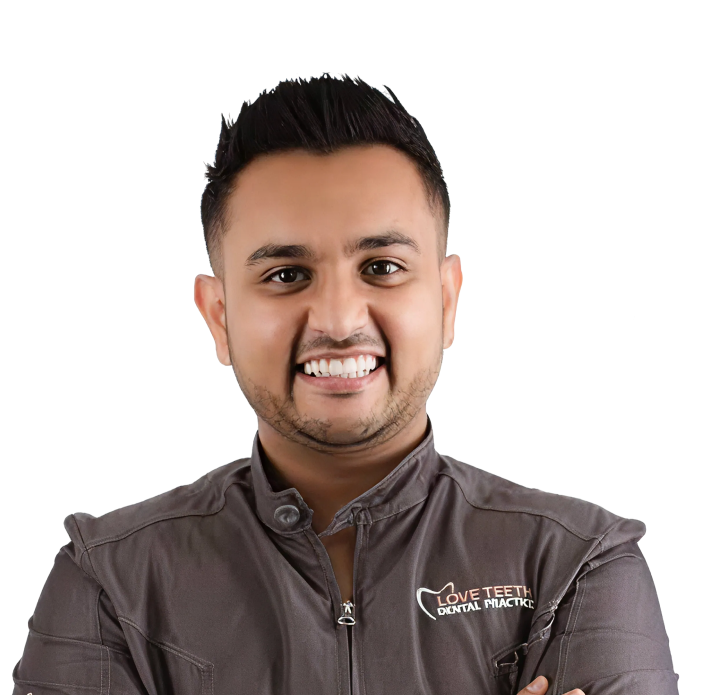
Dr. Kunal Patel is at the forefront of dental innovation. A longstanding Pearl user and key opinion leader, he brings together the latest technology, stunning surroundings and exceptional care to create a standout patient experience
Done learning and want to get started?
Book a demo