

Top Metrics to Track to Optimize Practice Performance
Transcript
This is an exciting topic this evening.
We're gonna talk about top metrics for really optimizing your practice performance.
For myself, I have been able to learn a lot through, different ways of how practices were tracking metrics, and I am Sheela Roth, head of clinical education at Pearl. I am excited to have, Tranise Nagran here from SodaCloud as we are doing this webinar with our partners. And I'm gonna turn it over to her so she can share a little bit about her background and, how she got to SodaCloud as well.
Thank you, Sheela. Well, I'm an account executive here at SodaCloud. AI a former dental assistant about five years under my belt working with DSOs AI Aspen Dental, Greenberg Dental down in Florida.
And working my way into software has been amazing opportunities to speak the same language to dentists, clinical staff, just the whole operation teams altogether. So I'm really excited to cohost with Sheela here and get that dynamic of that clinical and also operations in metrics to really share with your practices here today.
Excellent. Thank you, and happy to have you here.
Always a pleasure, Sheela.
Let's dive in and talk about our top metrics to track for optimizing practice performance. So we have all heard this statement, I'm sure. If you want it, measure it. If you can't measure it, forget it.
When I was a hygienist, and I started moving into the front office and management, the doctor would always ask me for metrics. And I'm like, well, I don't know. I don't have all the metrics. I mean, it's just looking better.
The new patients are going up. The existing patients aren't canceling, and he's like, that's not how we measure. So I had to take a step back and start learning.
That is so true. Right? If we really want it, we have to measure it. This is a prime example of another thing I do terribly.
I wanna lose weight, and I wanna be fit, and I don't wanna get on a scale. So I have recovered from these concerns that we all share. But it is true that as I started, really kinda diving into what metrics are gonna be something we need to track, that's when, my role as the office manager and ultimately as a consultant really kind of took off because I started remembering that, yeah, we really do have to track what we want to grow. So tonight, we're gonna talk a little bit about the challenges that we're currently facing in dentistry, using technology to help and help not only in the practice, but also to track these metrics for you.
And then what key metrics really should we be focusing on? There's so many things that we should be tracking every day, and it's important that we're tracking the right things. Right?
And then ultimately, we'll end with how we're focusing on enhancing case acceptance and what key metrics is your team looking at and also some areas we can share to help improve your overall practice growth.
So let's talk about the current challenges in dentistry.
We could probably talk about this by itself for, probably about eight hours.
But, really, this was an interesting study we just learned from a, a poll we did with office managers.
And I thought it was very exciting to hear, believe it or not, that seventy five percent of practice managers said that ensuring schedules are full and meeting that production is the goal of their, year for twenty twenty five. So and also the top challenge that they deal with. And we know that because patients, right, cancel or patients don't schedule when we want them to. But how can we really focus on streamlining scheduling?
And, again, this was a very high percentage when we did this study, but it's nice to know that this is where the teams are focusing because this is what really does two things that we'll talk about tonight. Really takes the best care of the patient and ultimately, is the best for your practice. Right?
However, we have a big problem with staff shortage.
And we know this is not only in the US. This is international, and it does not discriminate between assistants and, associate dentists, front office members, hygienists. So, ninety five percent of dentists are having a really hard time finding hygienists, and eighty seven percent are hiring are having a challenge with hiring assistants. So that's huge. Right? And we need to find ways to help them out.
This is kind of a great picture of how I felt when I used to track all the metrics and trying to run a practice at the same time.
And this is what we want you to leave tonight getting away from. Because, really, when we think about the metrics the doctors are looking at and the metrics the front is looking at, and overall, how are we able to run our practice, be with our patients, and find the ability to say, at the end of the day, what can help us track the things we need to do so that we can spend more time with our patients. Right?
So how do we have time tracking?
I think it's important to start thinking about using technology to optimize daily operations. Now many of you have done this with, you know, different services that are on the market that will find solutions for you to track daily production, unscheduled dentistry.
And if we take a step back and we think about this, fifty two percent of companies worldwide are really focusing on finding ways to be more productive and finding digital solutions.
So this is not just in dentistry. This is across the world. Right? And when we talk about the metrics of daily operations, thirty five percent of dentists have implemented AI in their practice, and seventy seven percent report positive outcomes from its use.
And so that's really impressive to know as well. When we look at metrics and AI and systems that will do, simple mundane tasks for you, we'd look at how AI has already improved patient communications with chatbots, with automated reminder systems, scheduling treatment. So you have systems that'll populate patients AI at three o'clock and you say, oh, great. I have these twelve people that wanna come at three o'clock and they're due for hygiene.
Right? And AI is helping us do that.
Workforce management where there's all kinds of ways for AI to go through and review resumes for you and pick out those key metrics you're looking for. And, ultimately, when we take the best care of our patient, we always see revenue and increased growth.
So I I do want you to kinda keep in mind as you go through this webinar that, when we are talking about AI, really, you are always going to be the one driving. Right?
So let's dive into the key metrics to optimize practice growth. We're gonna go through quite a few different metrics here and, again, encourage you to, comment and open up the chat so that we can get to know you, and maybe you have some great metrics you wanna share with us.
So this was one of my favorites, and, this is a hard one to track.
When we think about the number of patients that we actually do exams on, compared to the number of patients that are actually in the practice, this was one thing that I I wanna share with you that became a big game changer for the practices that I used to consult for. And what I mean by that is there may be sixteen patients in hygiene, but the doctor sometimes was stuck. Right? And this happens on a daily basis where, oh, tell Bob I'll see him next time. He's good.
Right? And, yes, we know the patients love you and wanna see you doctors, but also there's unscheduled dentistry that they need to kind of get a status check. Right? Is can Bob wait for another, you know, six months?
So what I found in the beginning was the best way for us to be really mindful of opportunities was, were we actually doing exams on all the patients that needed them? Right? And in fact, some practices are doing drive by complimentary exams on additional patients that are maybe coming every three or four months because they're finding that by being able to track the number of exams versus the number of patients in the practice, are they being efficient and effective with those opportunities, and are they taking the best care of the patient? In fact, a lot of AI, I remember I'd have, like, the prophy one, prophy two cleanings.
And so the first time we're trying to not do a big scaling and root planning. Right? But they haven't been in for a little while, but they don't really have gum disease. So we bring them back for a second cleaning.
And on the second cleaning, and these were a lot of new patients, we would do a quick drive by doctor exam. Now, obviously, we're not billing an exam that day, but the patients would wanna ask the doctor questions AI, hey. I was interested in whitening my teeth or straightening my teeth. Right? And they finally came to the dentist. They got everything taken care of, and and that exam opportunity brought in a lot more revenue than we had planned.
So the first metric that I think is important is, are you maximizing your opportunities?
Are you able to be mindful of all of those exams, and are you making the time to do those exams for those returning hygiene patients? Right? Because the more hygiene visits we check, the more doctor exams we do, the more restorative opportunities we lead to. Right? So I think that's really important.
Now we know that the quality of dental care does begin with an accurate X-ray analysis, and I think it's important to be mindful that sixty four percent of patients have no idea what you're actually showing them on an X-ray. Right? So how do we get the patients to say yes more often?
And remember, I wanna let you know, this is not say yes to more production or extra things. This is say yes to what doctors are already recommending. Right? I remember, again, as a hygienist, always the patients would come in and we talk about it in the morning huddle. You know, again, I use Bob a lot, but Bob's here today at three o'clock. He has an unscheduled crown, and we'd have to revisit that with him. And if they were to accept the dentistry when we recommended it, wouldn't it be less invasive and less expensive?
And those types of opportunities lead to more retained patients that stay in your practice and refer.
Right? So when we think about how do we focus on, exams, we think about using AI to help enhance that patient experience so that they understand the dentistry that you are recommending.
Now I wanna turn this over to, Tranise because she's gonna talk about the way that SOTACloud can really focus on tracking some of these exam metrics for you. So, Tranise, share with us a little bit about that.
Absolutely. Thanks, Sheela. So Exam Analytics is a powerful tool that allows clinics to take a look at the amount of images taken per day, average retakes taken per day, how often we're using the intraoral camera, and then exams per day overall. Has six step oh, it has a, few different time metrics on as far as the amount of data that's ported in here, but the ultimate goal is to reduce the wait times.
When we have patients in the chair and, for example, Bob's coming in for an endo treatment and we're having to go ahead and take a a PA of that apex, how many retakes are we taking to go ahead and capture that apex? For FMX series, do we have a set time frame that we wanna go ahead and make sure that we continue to meet so that we could speed up the patient flow? You know, we wanna have satisfied patients coming into our office. So having to wait on X rays and retakes can really impact the schedule, and that's what we wanna help avoid.
So as far as the exam analytics, the key takeaways here is average time per X-ray, making sure that we at least have a set time that we can continue to exceed the expectation for the schedule, and then really hone in on the amount of retakes taken per day. Maybe there's some opportunities for improvement for the clinical team. That that lead that does lead us to our next point, which is step analytics. Go ahead, Julia.
We could go to that next slide.
Now although we have exam analytics that's tracking the entire office and, of course, definitely beneficial for multilocation groups, this does tie into having each team member have a set metric here as well, giving the average it takes a individual to capture an image.
Helpful because if we have lead DAs taking a look at this as well as hygienist, we can see some opportunities for improvement, tips and tricks on helping the team.
And also to the point of short staff, if we have temporary hygienists, temporary DAs, we can really see their performance metrics and determine if we wanna continue to bring them back into the office, increase that patient increase the output and positive retention altogether.
Wow. Well, I'm impressed with this because I know in our practice, we're always wondering why patient or why team members weren't taking intraoral photos, and how often were they taking those, and how long did patients take, in those exam times, and how long was the FMX? To your point, it would be somebody could do it in six minutes, and somebody could do it in, you know, twenty one minutes. So we were able to kinda think about, if I had this, it would be much easier for me to track.
And learning out as a DA.
You know? Coming if I were to have something like this from when I first started to where I am now, much more confident, there's been a long road of me learning different tips and tricks on how to get there. So it's always opportunities for everyone to continue to grow with the practice.
And I love this one because I would kinda think it would be fun to make a game out of it. Right? Like, I would wanna be the competitive one that's like, I don't want any retakes, and I wanna be quick. I wanna do it right. But I think when we work with our employees, right, just like children, it's true that, like, we're all humans are happier when we're rewarded.
And, instead of, like, you have the most retakes, maybe we reward someone with, hey. Susie has the least amount of retakes. Congratulations, Susie, and that's motivating. So I love this. I think this would be great. I wouldn't wanna be on there because I still overlap.
So I don't I'm glad I'm not in there. I don't know.
But this is in my days.
But you know?
Yes. But it's nice because have we ever been able to track these in the big in the past? No.
No.
So it's nice that you have the ability for your team to know how to improve.
Okay. So what about tracking unscheduled opportunities, and how does that help us optimize our practice growth and ultimately our patient outcomes. Right? So, in practice intelligence, this is Pearl's, feature that allows your team to really focus on, an entire radiograph review and cross referencing that with your practice management system.
So think about your day before you ever arrive to work. Pearl's practice intelligence system will go through all of your patients' charts, and they will identify every patient in blue here that has unscheduled or AI opportunities. So first of all, unscheduled treatment. Second of all, if there's something on the radiograph that we don't see a treatment code that will actually satisfy that concern, like a small cavity perhaps is on the radiograph.
But inside of the treatment plan, we don't see any areas that would take care of that. We're gonna predict that there's an AI opportunity. Do you wanna actually keep an eye on that, or do you wanna move that to the treatment plan? And then we're also gonna look at patients that are overdue for hygiene or if they're miscoded and look at your radiographs.
So the important part to know about those mundane tasks is that before you show up to work, every patient on your schedule is going to have a full audit, a full chart review, allowing your teams to then individually focus on their own patients.
And I remember as office manager going back looking through every single chart for the next day. What who needs X rays? Who needs probings? Who's overdue for hygiene? Who has outstanding dentistry?
And the fact that this is done for you allows your front office team to do more important things, which is spending time with your patients, presenting treatment, allowing for those case presentations, following up on those patients we haven't been able to reach back out to. So this is how we encourage teams to use AI and use different systems that will do things for you so you can buy back your time.
So in addition to the schedule, we're gonna give you a provider road map for each day. So, again, you see all of the patients on the schedule and you're able to dive straight into each patient. You're gonna see unscheduled. You're gonna see AI opportunities that are undiagnosed.
But now each provider has their own morning huddle, and they're able to AI, as for myself, I used to go to work half hour early and find out, you know, who has unscheduled dentistry, who needs probings, who needs X rays. I don't have to do that anymore. Right? So I know that when my patient comes in, like you can see here, and this is for hygienists and doctors, that I have Ervin coming in for some scaling and root plane today, but we also need to do the scaling and root planning on the other AI, and there's some crowns and all kinds of things we need.
So it really makes your day much faster.
I think when we look at opportunity tracking, we can track that throughout the day, and you can also track it here where you can go back and look at unscheduled crowns, unscheduled fillings, per doctor. And that's been really helpful for teams to fill their day.
So how about tracking production opportunities by specific type and specific provider to optimize your practice growth. So, again, allowing metrics to kinda help you keep a temperature on the practice, right, is when we look at this example, it's gonna show you. You can click into per treatment or per AI, and you can see which providers are, scheduling more dentistry versus which ones are not and what type are they scheduling, you know, endodontic treatments or periodontal treatments or restorative opportunities. And you can also watch your production, and this is treatment scheduled not only per provider but per treatment type. So another great way to track your metrics, you can look at last year and this year. You can track trends. All kinds of different ways to, again, measure those things that you're really trying to focus on, and this will track your production per provider for you.
How can we how can tracking referred patients optimize practice growth? So this is an this is one of my favorites in SodaCloud. So I'm gonna turn this back over to Chernice and share with us a little bit how they're doing this here.
Yeah. So we have a streamlined approach when it comes to referral tracking. The workflow itself minimizes the amount of clicks to get through a referral altogether, but you have the opportunity to actually see of which patients, you have referred out to to which provider.
Also, in real time, you get the actual status, whether they're active, pending, or archived, and you always have the ability to cancel out the access. But for the most part, it streamlines the approach of having to, figure out where all of your referrals are, the statuses.
We even have a communication line within the dedicated portal that you can actually communicate with that provider as opposed to having the office manager or front desk consistently call to see if the patient had gotten seen. So we wanna go ahead and make sure that if you're sending out these referrals, whether it's to be to a specialist or a lab, that you're seeing this in real time and that you're actually getting the appropriate statuses to follow-up on your patients and provide the quality care. Also improves the relationships that you have with these specialists because now you have something that's modern, fast tracking, allowing them to communicate on their time and still allowing you to complete that service between the two providers and accommodate the patient altogether.
I don't know how I ever tracked patients I referred out besides printing a huge report and going line by line by line and having no idea, right, where they're at, where they're coming from, how many referred out last month, did the crowns come back. We would get the referral slips back from the doctors, but then they would sit in a folder until we could evaluate them and get the patient in finally. So I love this tool. This is amazing.
Yeah. And to that point too, we have the the portal that's completely HIPAA AI, so you'll have flexibility of knowing that it's encrypted. You're gonna have full faith in the fact that these referrals are being sent out appropriately, and now you have the analytics to back it up and service that patient.
Now on the flip side here, this is actually showing our file share tracking. More specific to labs when you have CBCTs, when you have the iTero scanner for the STL files, you can actually create a digital link. You no longer have to export and then go ahead and have it downloaded onto a hard drive and send it out or even having to use AI to send things out. You have a one stop shop in SOTA Cloud where you can actually share these files.
Again, CBCTs, that is one of the most common files to be sent out on a hard AI. Now it's digitalized. It's automated. We're getting these directly to these labs, to these referral specialists in a timely manner, and it saves time.
Also have a dedicated space for you to track everything and make sure that we're following up consistently and making sure that we, of course, again, service the patient in a timely manner. You don't have to wait days or weeks to go ahead and have this sent over, finalized, and then sent back. We actually have that communication line giving us real time statuses.
I love this. So much easier to take, like you said, the very best care of the patients and for your front office teams and your doctors to be able to track where your patients are.
Yeah. We we definitely encourage the front desk and operations to keep track of those analytics so that this way, they have a AI approach as to where the patient is and where they should be.
I love that. Okay. How can enhancing case presentation improve our case acceptance? Right? Because, really, at the end of the day, we want patients to hear what we have to say as clinicians, and we would really love for them to accept what we would what we are recommending. Right?
But I do think, myself included, standing in front of black and white images, is slowly becoming a thing of the past.
So when we talk about patient communication, like I said earlier, sixty four percent of patients, I think this is probably higher, do not understand their radiographs during a dental consultation. Right? And using patient friendly images not only infuses trust, but lets them really kind of be, involved.
You know, what is the light pink thing? What is this dark pink thing? What's the purple? You know?
And you're explaining here, you guys all know number thirty, but now you can explain to the patient that we need to take care of this tooth before you might need a root canal. And this is a reality now. It's not just that fear factor. Right?
It's this cavity, this pink dot is getting closer to this purple nerve. And I think that's really what makes sense to the patient. Right? When they're looking at black and white images, they don't understand what you're talking about.
And I remember as well trying to explain to people, this little tiny white thing that's hanging off your tooth, No. Not the enamel. No. Not the filling, but this little thing here.
This is calculus. Right? And they're a new patient looking at me like, I just want my basic cleaning. And I'm thinking, no.
We're gonna be great friends. You're gonna be here four times. You're gonna have what we call a deep cleaning. Don't worry.
It's gonna be great. Right? And I remember just walking through those presentations thinking these poor people. But it's really challenging to explain incipient lesions.
Like, we're gonna keep an eye on this tooth, and we're gonna floss, and we're gonna do some fluoride.
But this tooth is really the most concerning, and we're gonna probably need to put a filling on this one because as you can see, the cavities turn different colors.
That means we need to fill them because they're darker and they have moved more into the next portion of the tooth.
So, really, we look at this simple slide knowing that case presentation, can change from night to day. And that's one metric that's really important to be tracking is case presentation, is one thing, but case acceptance amongst your doctors, especially if you have multiple doctors in your practice, and also amongst your front office teams. Right? How are they doing with, really measuring their own case acceptance and how much treatment are they getting scheduled back on, the schedule?
So being able to find ways to really enhance the case acceptance is the key to patient care and office productivity.
So when you're seeing the, the numbers that Pearl sees here with using AI on your radiographs during that chairside case presentation, we can see these very rapid increases in overall case acceptance from root canals to fillings to scaling and root planing, restorative treatments, implants, and crowns. And, again, just to simplify this, it's just showing patients X rays and color that they're finally understanding. Right? We've all probably sat there and circled things on X rays, not only for insurance companies, which these images are great for, but also AI used to hold pencils up on my radiograph showing you, like, where the bone level should be and where it is now.
And I don't have to do that anymore.
Right?
Exactly.
So I do think that, using AI has been a big help. Now one thing that's really exciting to me is our partnership with SodaCloud because inside of Pearl's second opinion, it's very easy to use because we're already taking X rays. Right? We're already showing patients X rays. And now we just click a button and it pops up in our screen. But the nice thing about having a native integration is it pops up inside of your own imaging system.
And so SOTA's done an incredible job building this wonderful integration. And what does that mean? It means that you're gonna have your regular images ready to go, but now you have the option of having Pearl inside of soda cloud. So you have you can see this image with your black and white.
You can push a button, and all of a sudden, you can see the AI findings overlaid. So you'll be able to see caries and that additional breakdown, and you'll be able to see that if they're a light pink lesion, it's in the enamel. These darker pink lesions have progressed into the dentin. We also have notable margins, calculus, bone level measurements with different severities, as well as, periapical rate and lucencies.
This is our favorite tool, which is our case presentation tool, which is tooth parts. And this is where we really AI take the the clinical side of things and turn it patient facing so that they're able to use these images chair AI to make sure the patients understand what we as clinicians are recommending. So, again, natively embedded inside of soda cloud. Zero workflow change, except you do have to push one button. So I know that could be challenging, but SOTA's done such a great job making it easy for them to, again, have a seamless integration and no change management. So, AI, I'll turn this back over to you if you wanna comment on that, and then we'll move over to the next slide.
Yeah. One of my favorite parts about our integration is that you can share these annotations with your patients through our secured portals. So not only are you educating them in the chair, but you're bringing that also to a section where if they may not have accepted treated treatment right then and there or even if they have, they still have reference back to these pinpointed areas, again, opposed to those black and white images.
That really does tie into our newest integration with I Corps Academy.
Best part about this is that you can send your while the patient's in the chair, you can, of course, go through these videos that are showing pretty much by keyword or even the, the dental codes, videos that are servicing any kind of treatment. You have oral surgeon oral surgery, endo, even for pediatric groups where earlier today, I was showing a video on sealants and then the post op for that. So it's educational videos after you've already recommended your treatment showing the patient exactly what they're gonna be enduring during the service and then also videos on post op treatment. So really educating the patient while they're in the chair, having them better understand the full treatment and actually visually seeing it because Pearl's taking it to a whole another level. Now they have some additional videos going through the entire service, And, of course, that gives more, acceptance for cases altogether.
So not only can your AI annotations be projected in that patient portal, but so can these videos that overlay into that, really bringing the treatment altogether so that they understand exactly what they're signing up for and they're ready to go.
To our other point, we have device health here as one of our metrics in Civic Cloud, which is really exciting because, Sheela, I'm sure you could resonate with this where we have offices with multiple different sensors.
And sometimes we have sensors that do work, and sometimes we have sensors that don't, or we just have our favorites.
With that in mind, all of the sensors or hardware will be configured in this dedicated space where you can actually track, when's the last time it has been seen, used, the last user that have utilized this particular device. You know, every now and again, if we don't like a specific sensor as clinicians, we tend to hide it in a drawer. So those those common you know, when's the last time it was seen or the last user that used it, it's really helpful to identify what happened to that sensor.
But what's most important is if you do work with a local IT, which most of our clinics do or a third party, SOTA actually has built in here, anytime that you run into a snag with a sensor. If you're capturing and it's misfiring for whatever reason, if it runs into that error, we'll actually let you know what the error is and provide some hints on how to fix it. Of course, we have a dedicated support team to help you out, but through these metrics here, it's allowing you to speed up that solution and make sure that if you're running to it into an issue with a sensor, if you have IT that's available, let's go ahead and fix this right away. Also, just keeping in mind if we're consistently running into an error, how often that error is populating, and maybe we need to change out our hardware. Maybe take out that sensor from the drawer and see if we could find something new.
Those stories are too familiar, Trenice. And I remember also serial numbers. Like, I get on the call. They're like, Sheela, can you call, you know, whoever?
And I'm like, I'm on the call. They're like, can I have the serial number? I'm like, oh, boy. Where's that?
Right? And then when is the purchase date? And when is this? And do you have a warranty?
And I'm like, AI have to call you back, which that already makes it a four hour event.
To mention, you know, when we don't have all the information and how costly it is to have a sensor down, right, for half a day or for a day or you end up, proactively purchasing extra sensors when you don't need to.
So this is just a phenomenal way of tracking things, very AI, and I wish again, I need to go backwards and go into practice because it's would have been so much easier than having a notebook with all of my sensors that I would never be able to find and gone are the days of paper. So I really this tool also. You guys have so many great ways to help teams track stuff.
Thank you. I mean, that's what we wanna do. We wanna empower clinics to really utilize these features and streamline their approach when it comes to, you know, AI when it's it's in regards to device health, just metrics on staff performance altogether. These metrics are here to utilize so that this way, you make the most out of your day. Again, these are the last things that you really need to worry about, especially when it comes to sensors. And then I find which ones that we have in the office that we're sharing the only one, this is a big help.
Couldn't agree more.
So we're gonna end with this last little, part here about insurance verification success, and then we'll do kind of a recap of our, key points and what you should be measuring in your practice.
Really kind of one of the biggest pain points in a practice is insurance verification and the amount of time it takes.
What we have found is that a lot of teams spend a lot of time on RCM and just organizing the information before the patient comes in. Right? So when you look at, again, these statistics that came out of our our, front office survey, you can see that, obviously, thirty five percent said that it was very time consuming.
Seventy three percent of practice managers struggle with insurance related complexities.
Is it verified? Is it not? I have to call.
Let me check the insurance. I remember when we were doing same day dentistry, it was always this sweet spot. If we don't get the information to that patient soon, it was like the hourglass flipped and they were done. And that was very similar with, like, you know, cosmetic type purchases.
And we felt like, okay. We gotta get them the numbers because that's how they're gonna make that decision. Right? And if we're behind on insurance verification or these types of things, then we miss out on those opportunities.
And then thirty nine percent were the ones that said that they were focusing on, wow, streamlining it for twenty thousand and two zero five. So I got a little air there, but they'll probably still be having problems with it when we're not here. So, anyway, the point here is how do we help teams assist them in this terrible thing that we have to deal with on a daily basis with verifying insurance.
So Pearl's automated insurance verification will actually go through, and we will verify all of your patients on your schedule over the next ten days.
How we define success by that in a practice is were we able to deliver these treatment plans to the patient before they left. Right? And when you go back and you look at all of the patients that you didn't recommend treatment on because you couldn't get the number, those are really expensive missed opportunities.
So how do we think about managing that? First of all, we need to find a way to make sure the insurance is verified ahead of time. And second of all, we need to make sure that we get those, sorry, doctors, exams done early in the appointment so that the front team can have that time to do those treatment plans. Right? And tracking how many patients walked out the door without scheduling the treatment is another great thing to really focus on because we can look at that as a way to improve that metric.
The nice thing too you have is inside of pre check, you have a very detailed summary here. So this is made specifically for office managers and treatment coordinators.
This is a small sample of what we do, but we will pull in directly from all of the insurance companies that you're going to the websites for, and we're gonna pull in downgrades, missing tooth clauses, sealants, fluoride, coordination of benefits.
What else? It goes on and on on the upper left hand side. And then one thing that's very specific to Pearl is we have the ability to give you tooth specific history. Pulling those from EOBs allows you to have a more, transparent conversation with poor Bob where we have to do, you know let's see.
What was it? Tooth number seven. We just did this in twenty twenty one. We're not quite sure if they're gonna cover it.
We now have the ability to look here and say, it's gonna be three hundred dollars or we know it's covered. That's a completely different conversation than we're not sure, Bob. We'll let you know when the insurance gets back to us. Right?
So finding ways to infuse trust back into your practice, and really it comes down to also making sure that patients have that really transparent information in the beginning. No one likes to get the, oh, sorry. The insurance is not paying as much as we thought. Right?
People don't like that in dentistry.
So we hope today that your teams have learned really kind of different ways that we can overcome the challenges in dentistry, how we are able to use, technology to track these metrics, how we were able to think about how many exams are we doing, how is our production per AI.
And then I'll let Tranise chime in, but, like, tracking your staff members and how they're doing with radiographs and those key metrics that optimize your practice growth and, ultimately, how are we tracking case acceptance. Right? How is that going per doctor, and do they need extra additional, help? AI, for me, when I was working with, building associate practices, Doctors are incredible, but a lot of the newer doctors that came out of school haven't had time to really focus on case presentation.
Right? In fact, one doctor was a great story. She was so phenomenal. And I said to her, I'm like, hey.
Can you tell me there's a lot of treatment that we see as cavities, but you're not actually recommending? And she's like, well, I kinda wanted to give it, like, six months to a year. I don't wanna be the bad guy.
And I thought, oh, you need to be the bad guy because you're gonna be the bad guy if the patient's cavities get bigger. Right? And it was just this little thing that she started to to focus on. She's like, yeah.
You're right. I was trying to, like, build that patient trust. And I said, you will, but we need to focus on really what's most important to the patient. So tracking that case acceptance is also very valuable.
And I hope tonight, you've found ways to use technology to free up some of your time with those chart audits and tracking these metrics so that you can do what you love most, which is spend the time with your patients and deliver happy smiles to happy people. So, Tranise, tell us a quick review too about how using SodaCloud can help them track metrics.
I think the best part about SodaCloud tracking metrics is that it's automated. It's something that's already happening. It's just a matter of you checking it. And if you can check it and compare it to your schedule and see if there's any opportunities for improvement, We're already working hard towards that.
We're rewarding our team members. We're gearing up to have a busy schedule throughout the day, and we're able to exceed those expectations. It's all about the patient at the end of the day. So when you have something that's automated on the back end that's continuously teaching you how to improve to meet that expectation.
Just it's a full circle moment for all of us.
Absolutely.
Well, we, again, hope that you enjoyed this presentation, and we invite you to create some time in your day to have a bit of a quick customized demo with Pearl or SodaCloud or both, to figure out how this is best gonna serve your practice and how you're able to focus on, again, relieving your team some time and encouraging your patients to have the dentistry you're recommending and not having it scheduled the next time or the next time, right, with insurance verifications or automated schedules. And we'd love to have your team join us for a quick demo and, just walk through some of these key features.
We know every practice is different. So, again, if you can scan the QR code, great. We'll leave this up for you while we, answer some questions from the teams, and let's get started. I think Kimberly, she is our director of, partner growth.
If she's still here, hopefully, she is. She will be joining us to help us with some questions. So Kimberly, take it away.
Hey. No worries. There was a few, so we wanna make sure we get to them. There was a question, Tranise. This one's for you. When speaking about the links of all of the, materials that can you, that you're sending, can you speak to the encryption? Or I'm guessing there's gonna be questions about the HIPAA compliance, and the X rays as well as notes, or what else can you send to specialists through that link?
Yeah. So if you're going through the workflow of sending out a referral, you have templates that you can create that are customizable. We even have AI generated templates altogether, and you can bring in notes individually for the the images altogether, all encrypted, HIPAA compliant.
And same is true when you're actually sending the the generated link. So you have two different workflows, whether you're file sharing and you're just sending a generated link. You're actually taking a step further with manually creating that encrypted email and what have you. But if you go on the initial workflow where you're sending it out through the referral process, it's altogether. It's a few clicks to get to where you need to be, but it allows you to put in all the customization that you need to send it out to the lab or the specialist.
We just wanted to provide some options just in case certain labs, certain specialists like, you know, their own designated portals so you could send out that link. Or if you wanted to utilize ours, you have that flexibility.
That's incredible. What a what a an incredible tool.
Alright. Our next question is for Sheela. Can you speak when we're speaking about pre check, can you speak about the accuracy of the insurance verification?
Absolutely. So the nice thing to know is with the AI algorithm, we're going to be improving your insurance verification by at least twenty percent.
Because we're able to say, okay. You said Kimberly, k I m b e r l y or l e e, and we're gonna say, did you mean this? Right? So we're able to pull in more patients and make sure that we are also letting you know, hey. The subscriber ID isn't accurate, or, hey. This person's actually been terminated.
So not only are you seeing the fact that we're using four different clearing houses to grab this information, but we're doing this for every single patient, every single time they come in, and, again, every night. So that's what improves our accuracy rate.
Amazing. That's great. There's a follow-up question to that. Does insurance verification auto populate into most softwares, update the estimates themselves?
How does that work out once we have that information?
That is the North Star. That's the dream. Right? So that we can say, okay. Kimberly needs a filling.
It looks like it's verified. It was this amount minus the downgrade, add the fee schedule, and away we go. Not yet. But, ultimately, someday soon.
So it's a great question. I think it's important for all dental teams to know that we need automation, right, above all else as dental teams. So I think that's a great suggestion, and I do think that's where AI insurance verification is heading.
Awesome. I'm just doing a final check here. I think I had got them all, but now is your chance. Put them in the in the box right now if you if you still have some pending questions for us. I've also made it a little easier too if you're watching us tonight from your phone. I put the links to actually click on to book the demos with both of the both Pearl and SodaCloud in the chat, so you can click on those as well to if that's a little easier for you.
There's nothing else coming in? Everyone else, no questions.
Excellent. Here we go. Where do does Parole get their lots of questions about the insurance verification. Where does Parole AI get their data for insurance verification? What are those clearinghouses?
Oh, yeah. So we use AI, Change, Avelity, and Dental Exchange, and we'll grab the information directly from the practice management system. So once we've integrated inside of your practice management system, we're gonna pull everything directly from there and go to the websites for you, and then we'll give you that summary per patient per day.
Perfect. Does that work, doctor Chung?
Okay. Sheela, oh, yes. Perfect. We got a thank you. So Yeah. You answered it perfectly.
We appreciate it.
Alright.
Appreciate it. That's all that's been come in. Yeah.
Well, excellent. Well, great questions.
So thankful that everybody joined us this evening.
Meet Your Host
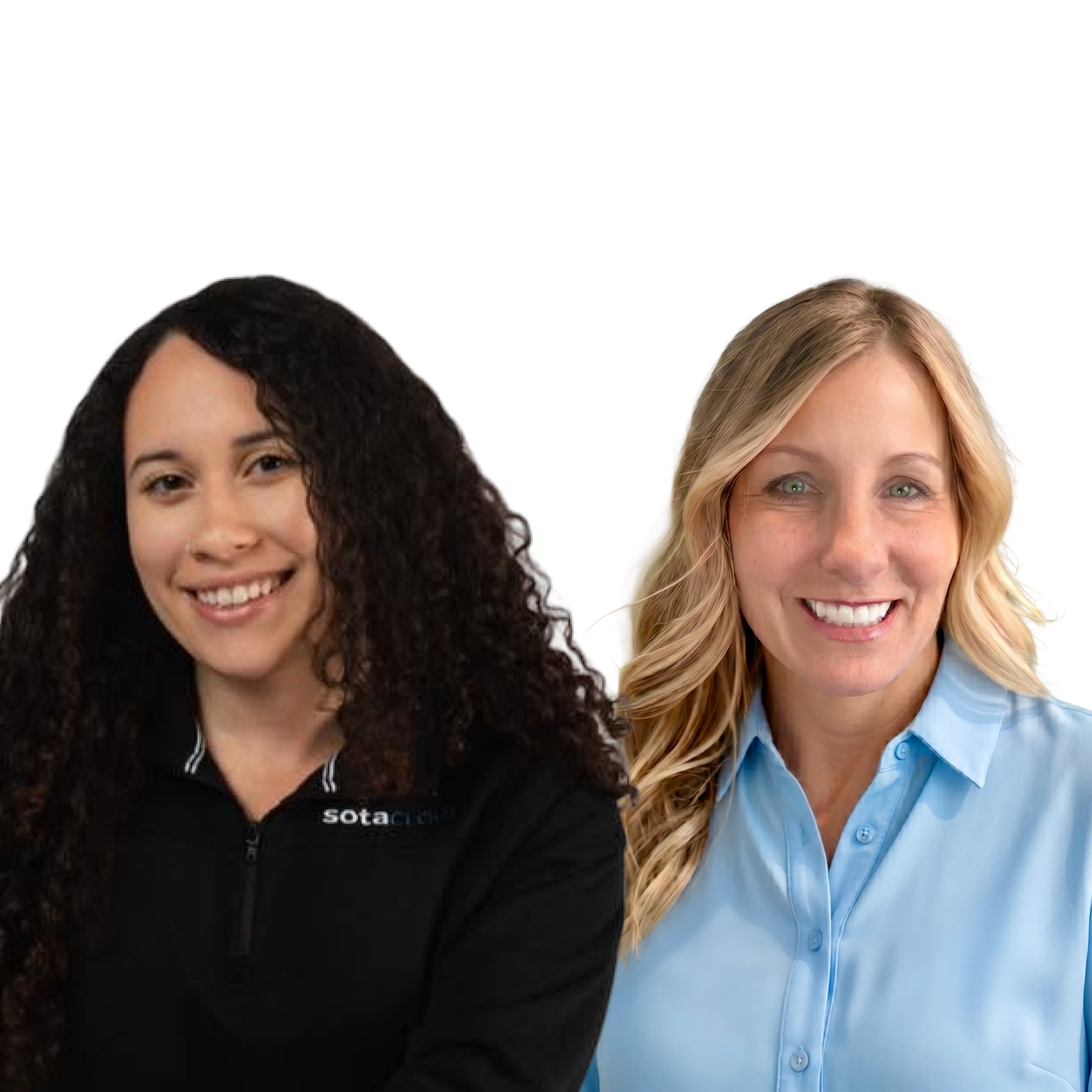
Treneice Negron is a former dental assistant turned account executive for SOTA Cloud. With a strong clinical background, she's dedicated to demonstrating how SOTA Cloud enhances workflow efficiency, streamlines operations, and equips dental organizations with essential tools to deliver exceptional patient care. Sheela Roth is an experienced dental practice management expert, thought leader, and public speaker. As Head of Clinical Education at Pearl, a dental AI company, she leads a team focused on practice transformation and improving clinical performance. Before this, she founded and led Absolute Dental Business Solutions, a practice management consultancy. She holds a Bachelor of Science degree from Loma Linda University and is a Registered Dental Hygienist.
Done learning and want to get started?
Book a demo