
The Ultimate Playbook
For Hiring, Training, and Retaining a Winning Dental Team
Transcript
Hello, everyone. Thank you so much for joining us.
We are so excited today to talk about one of the most important topics that's really affecting all dental practices, across the world. We used to I used to think this was just an issue in the US until we started speaking with some of our global partners, and this is really a a worldwide epidemic with needing to hire teams and then ultimately needing to retain them. So we are going to have doctor Wu walk us through this incredible, webinar on how we're going to not only find team members, train team members, but also retain them. So lots of information going on here today. Just gonna give you guys a couple minutes to jump in. I know we've got some people on lunch hours as well as some people just getting started in the morning. So let's give it another minute or so.
We will be taking a lot of, questions.
So if you can start with putting inside the q and a, we'd love to know a question here is how many people in the audience are struggling with hiring, training, or retaining staff members?
I'm guessing if we took a poll, it would be a hundred percent, But AI love for you to try out that q and a. Doctor Wu's gonna be sticking around at the end to be able to answer some of these questions.
So let's jump in and get started.
I am Sheela Roth, head of clinical education at Pearl, and very excited about this session. I remember managing a practice myself, and this is one of my biggest pain points and blockages to practice growth.
So I would love to hear from you guys in the q and a if you are struggling with any of these topics.
Eighty percent of dental practices are reporting staff shortages, and about ninety five percent of dentists are reporting significant challenges in recruiting hygienists.
Eighty seven percent of dentists find it challenging to find dental assistants, and sixty three percent of dentists are struggling finding administrative personnel. So this is a wonderful topic.
This challenge affects all of us. It affects patient care and practice growth. But this webinar is going to work with your teams. You will get some information today from doctor Wu to be able to leave this webinar and move directly into some resolutions, attracting the right people, setting them up for success with this, structured onboarding and training program, and most importantly, keeping them engaged, motivated, and excited so that they can treat your patients well.
We know how expensive it is to, have staff turnover.
So without further ado, I am going to interest introduce you to doctor Wu. That's my rhyme for the today.
He is a true leader in digital dentistry and practice growth.
He earned his DMD from Tufts and completed his residency at UCLA with advanced training in implants, veneers, full mouth reconstructions.
He's also lectured in many conferences, including Yaqui Dental, Texas Dental, and is the owner of Emerson Dental, a multispecialty practice in Massachusetts.
A champion of technology and continuous improvement, Doctor Wu engages in cutting edge tools like Pearl dot ai, additional companies like Vola and Curve, and he's here today to share the systems and mindset behind building a high performing team. So, doctor Wu, we're so excited you have joined us again today. I will turn it over to you and look forward to hearing how you can help our teams today.
Thank you, Sheela. It's always exciting to be here. And, again, I know that some of you guys are starting your day. Some of you guys are at lunch. So let's say breakfast, brunch, lunch. If you guys are eating, let's, you know, get your food ready, heat up your microwaves, and, I'm here to motivate you for the next hour. So a little bit about, the playbook about hiring associates, but not just associates, team members.
As you see in the picture there, we invite all of our team members to be part of our story. So I'm here to tell you all about that.
Now, obviously, before we begin, the one thing I wanna disclose is, you know, I am an adviser and ambassador with Pearl. So there is commercial support AI by Pearl.
The CE is also, with joint CE Zoom. I have they have no relevant financial in information to disclose.
And again, my success is partners with the companies I am partnered with, and their success is my success.
And one last minute disclosure I'm gonna tell you all is I'm gonna practice what I preach. I am also looking for employees to join, and in the next ex in the next upcoming months, I'm gonna be looking for the next general dentist to join our story. So I thought I'd make that an announcement in this webinar. And at the end of this, I will have my email address. So if you're an associate dentist and you're looking to join a practice, I am looking or if you have friends that are looking.
Now our goals for today, I always set goals, crush them, and repeat them. Now last time when I gave this webinar, it was Thursday AI, and I was competing with Thursday night football.
This time, I'm gonna be, like I said, competing with breakfast, lunch, and depending on whatever time zone you're in.
Now my goal is, as always, is to educate, to entertain, and inspire you. So, hopefully, I achieved that today.
I'm gonna give you guys a little introduction about myself.
We're gonna talk about my dental journey, and then I'm gonna get into the nitty gritty of what kind of dentist are you or dental office are you. We're gonna talk about mission statements, vision statements, and values of your practice and the people that work for you.
How do you evaluate talent? And then hiring, recruiting, and retention. And then at the very end, I wanna leave it to questions and some final thoughts.
So just like Sheela said, she gave me a little introduction. I'm not gonna go through the nitty gritty, but I am a tech forward dentist.
So I've integrated Bola, Curve, software, and Pearl in the last five years, and I went from a server based, Eaglesoft to cloud based software.
And, really, I'm always looking for businesses and partnerships, that they're practice Kaizen, continuous improvement.
In my life and my career philosophy is to find companies that share that same value.
Now a little bit about my journey. Like Sheela said, I graduated, at Tufts in two thousand five. I did my residency at UCLA.
And then that point, when I started my associate journey, I associated in a prosthodontist office. Now, unfortunately, for him, he went through some life challenges. And very early on in my career, I was forced into a decision to either buy a practice and start my career as a owner or look for another job because he had said to me he was dead set on selling the practice.
So in two thousand ten, four years into my associateship, I took over the practice. It was a small practice about million dollars in revenue, five chairs, and I was focused on growth and adding technology. So from two thousand ten to two thousand fifteen, I went from, you know, one doctor practice to adding all the different specialties, and we quickly grew into eight chairs. In two thousand fifteen, I added a second general dentist.
And all the way through two thousand nineteen, we actually added, a second location right before COVID, unfortunately. So we've had our challenges.
But currently to this date, in two thousand twenty five, we have eight associate dentists. We have we have, endo, perio, and pedo, and I have currently have twenty six employees, and we're doing about four million dollars in revenue.
So that's my history.
Now my question for those of you in the room that are hiring or looking for places, what AI of office do you want to work at? Now here's example of two different offices. I don't think there's too many offices that are using traditional X rays, but that probably dates myself. But, you know, when I first started, there were a lot of offices that where we had to develop X rays and the old AI traditional X rays. So you can have that kind of office, and you have to understand what kind of associates are you gonna attract if that's what your office is like. Or are you gonna be a cutting edge office, like, that has Pearl AI, second opinion, digital X rays, and also all the other digital things? Or are you a CEREC office?
So if you're gonna attract those kind of top tier talent, then you gotta understand you're gonna wanna make your office function that way as well.
Now, also, are you is your schedule oriented office? Are you a flexible office? Are you a small family office? Or are you gonna be more corporate run? There is no wrong answer with that, but really that's something that every office should consider of knowing who they are and what kind of thing they're they're trying to attract.
An analogy I like to give is like cars. There are all sorts of different cars there out there. You are you gonna be the Porsche of dental offices? Are you the BMW of dental offices?
Are you gonna be high price? Are you gonna be high quality? And you're gonna have all the most expensive mid tintable materials out there.
Those are things for you guys to think about and also advertise in your advert ads when you're looking for associates.
So like attracts like. The same goes for staff, doctors, and patients. Another analogy I often relate to is restaurants. Dental offices are like restaurants.
They all serve food. They're just at different price points and different experiences for the patients and for the people who work there. You could be a high end restaurant or AI of office, or you could be the McDonald's. And there is nothing wrong because they both serve function, and they're both serving people, you know, to eat.
Now a big thing AI we talked about earlier is mission statement and why statements.
Really, if you really had to slim it down, it's the question that I want you to think about is, what do you do?
Yes. I mean, I know the obvious answer is you're doing dentistry. But more than that, like, what gets you guys up in the morning? What's the purpose of the company? What do you stand for?
Now throughout this process, I'm a open book. I'm gonna share with you what it's like to work at my office and and what my wife's wife statement, my mission statement, my vision statement, it's all written out here. So I'm gonna go through it line by line with you guys.
So the mission statement and the wife statement. Why? Why does doctor Greg Wu and all of his doctors and staff get up in the morning?
Well, my white statement and I wrote this all AI, and it's important the people who are at the top, the owners, the the directors, they should be writing these things out.
So our white statement is to create smiles with everything that we do so that everyone can enjoy their journey through life. It's that simple.
Our mission statement at Emerson Dental is the goal of our practice is to provide the very best dental care to our patients so that each is able to achieve and maintain optimal health throughout their lifetime.
We are dedicated to treat each patient as a whole person with emphasis on preventive dentistry. We treat our patients the way we we ourselves wanna be treated with compassion, gentleness, and personal attention.
We strive to deliver excellent quality and attentive care to each patient who joins our practice.
Vision statement. So what's a vision statement?
A vision statement basically is what you're gonna tell people where you wanna be in the future.
So and what goals are you gonna set for yourself? I say this to everyone.
Dreams without goals are only dreams.
So if you have things that you're trying to achieve, if you're gonna try to grow your practice and you say, I wanna become a eight chair practice or twenty chair practice, that should be in your vision statement.
So what is your practice? Where do you see yourself in five years? Where do you see yourself in ten years?
So for our vision statement, in the next three years, by two thousand twenty eight, we will become a multi location, premier multi specialty dental practice in the Greater Boston area by exceeding the expectations of our patients.
We wanna become the category consultant in multi specialty practice operations, become an original that other will AI to copy, fully integrate all digital technology, provide an integral part of patient's total health care, provide a caring atmosphere for both patients and staff, provide timely and efficient care, function as a team to maximize use of resources, advocate for quality dentistry, and make health promotion a patient's priority.
Now we get into values. For those of you who have obviously interviewed, there are some companies that list their values. Some companies don't. They don't even know who they are. And so if you going back to what I said earlier, if you're gonna attract like people, then list them out. What are your values? Here are some samples.
Obviously, accountability, accuracy, composure, consistency. Are you a patient focus office? Do you value speed? Do you value your willfulness?
It that's the culture of your office. And every office and AI visited lots of offices, and I've talked to a lot of doctors over the AI years. They all have their own culture and their own values.
So all I'm asking you guys is to write it out. And so I have mine written out. I have five company values slash cultural values in my office. And people that align with my values, they fit in great, and we feel like it's not even it doesn't even feel like work. And those that do not align with my vision and my values of the company, they usually have a difficult time where we can't we have difficulties in working together.
So the five company values, I'm gonna start, you know, honesty. Honesty is a big, value in our company.
Transparency throughout the organization of key decisions. Honesty is the first chapter in the book of wisdom.
Creativity.
Creativity inspires ideas, and ideas inspire change.
Creativity is just intelligence having fun. Now in the fifteen or so years I've owned my practice, I can share with you there have been a lot of changes. You know, we've integrated CEREC. Like I said to you earlier, we've integrated, cloud based software, integrated Pearl.
So we are constantly involving. And so when there's news things that come out, I always tell my staff and my doctors, like, hey. Let's look into this. I I enjoy the creativity.
The other value is leadership. If you're and it's not leadership AI I'm looking for fifteen office managers. I'm gonna define leadership for you all.
If your actions inspire others to dream more, learn more, do more, and become more, you are a leader, John Quincy Adams. And those are the type of people that when they're with me at Emerson Dental, the sky's the limit on where we can go.
Other company values, efficiency.
Doing better than what's already being done.
Efficiency is intelligence being lace lazy. Challenge the status quo. And I see that happening with all the companies that I partner with. They're always looking to be better, faster, more efficient.
And this is probably, for me, the most important value.
Fun.
Play to win, but enjoy the but enjoy the fun. So often we become so focused on the finish line that we fail to enjoy the journey.
Choose a job that you love, and you'll never work a day in your AI.
Confucius.
And, really, I truly believe that, and I wanted you all to know that the people that I choose to work with and they choose to work with me, it's that's a big that's a big relatable value that I wanna make sure that we have.
Now all of you guys are gonna ask me next, well, how do I find those people? How do I attract them? You know, where where do you want to work? And we're gonna talk about recruiting, vision and values AI, and then retention, mentorship, and growth.
Now there was a TikTok video craze where everyone was looking for a man with in finance, trust fund six five blue eyes. If you guys have not seen it, I thought it was a really funny thing. But I thought about that video, and I said, well, isn't everybody doing the same thing when they're looking for associates? They're looking for someone who works hard, productive, expansive procedures, perfect dentistry, and people skills.
So it's like dating. You're never gonna find the perfect one. You're finding the right match. They're just perfect doesn't exist. And I have talked to a lot of managers, doctors. They're like, well, I just I just find that right person.
It's not the right person. It's the right person for you.
So now the question is recruitment. Where do you look?
Well, going continuing with a dating analogy, you know, how do you meet your someone from anywhere?
You know?
Now AI I'm gonna date myself. I'm forty eight, so I'm before the age of, like, Tinder and Match dot com. I mean, when I was dating, it was more like I have a friend. I know somebody. I wanna introduce this person. I now there's more expansive ways for you to meet people.
You know, with all of the Internet and the access of, cell phones and social groups AI.
Well, I would say the same thing for finding associates. I mean, back when I was in dental school, it was dental schools, a couple job boards, and then networking through my professors.
I think it's expanded from there now because they got Indeed, Jodi Jod postings, study clubs, social media, dental nachos.
You know, and, again, good old networking still works. There's six degrees of separation.
Headhunters, there's dental sales reps too. Dental sales reps are probably one of the biggest ones that I think are overlooked.
They go and travel to thousands of different dental offices. And if you're associate and or someone who's looking, they see and meet associates all the AI, and they also see owners all the time. So they they're kind of AI the ultimate matchmaker if you ask me.
But the biggest thing is if you don't ask, if you're looking for someone, ask. Ask anybody. Hey. I'm looking for associate. Do you know anybody that's looking? Because if you you can't win the lottery if you don't buy a ticket. And I wouldn't be following my own advice if I don't mention that I am also looking for an associate to join us, like I said earlier.
Now hiring. The screening process, hiring process.
Like I said, step one, you need to let everybody know that you're looking. So ad placement, whether you're gonna put the ad in Indeed, on a Facebook post, you know, on your LinkedIn.
That those are easy ways because, you know, there's minimal cost. Then it comes to networking. Ask your network. Hey. I'm looking for somebody.
And then we know that you're gonna connect at some point. Maybe you have an introduction email.
And then you're gonna eventually schedule a phone call or interview.
So you make sure that at least the process goes through. So step one, do they pass the first phase, the second phase?
And then AI I always say the live interview is kind of like the ice cream on top or the cherry on top of the of the ice cream. It's like, if they meet you meet them, and then you you can have conversations and you kind of align.
And, really, the working interview is more the very final stage of you just wanna make sure they get along with your team and every everything meshes together.
And for me, I'm always looking for the right the right attitude versus competent.
The right attitude is more important to me. Will over skill. Now there are people out there that are very skillful, and I I don't doubt that. But if they don't align with the values, it becomes bigger trouble than it's worth.
And so one of the questions that I always like to add the ask the clinicians is yeah, so your clinician that you interview is is ready to go, obviously skilled. But there are things that in your practice that you have preferences. Are you a EMACS office? Are you a Zirconia office? Or are you a CEREC office?
You could put a most talented doctor in front of me, and the doctor might say, I hate CEREC. Okay. Well, you know, I am a CEREC office at Emerson Dental. And so, you know, that's not gonna match. Even if they're super skilled and they have a full following of patients, they're gonna come and join the practice. It doesn't work with our workflow.
So it's important for you to identify what you are and also what they are. Are you a prophy endo doctor? Do you try to do endo ahead of AI, or you avoid endo? There are doctors that are like, you know what? I'm gonna try to avoid the endo. I'm gonna put a big filling. I'm gonna put Dical.
And there isn't a right or wrong. It's just their AI. Aligner treatment preferences. Perio thresholds.
Do you tend to be more aggressive of, like, hey. You know what? I just wanna put them on three month recall and a little bit more teetering towards scaling roof planes, or are you gonna be like, yeah. You know what?
We can do a five unit prophy and, you know, bring them back for a second appointment.
And then there's aesthetic preferences too. For those that do crowded crown designs, especially if you have an in house lab technician, these are things to think about.
And, again, I can't have the answers for for you. For the ones that have their own practices, you should list those out or at least have a framework so that someone who's applying to your office knows what they're getting themselves into.
Now evaluating talent.
There's different personality tests out there, cognitive tests.
If you guys didn't know, the NFL teams spend thousands of dollars, millions of dollars, because I know the NFL draft is coming up. I'm a big sports fan. And I'm gonna tell you, they used to do a Wunderlich test. They used to use a Wunderlich test to to evaluate players up till two thousand twenty two. They just recently got rid of it. But I still I wonder because I think it's a great idea.
So Eldon Wunderlich created a Wunderlich test in the nineteen thirties for a swift, reliable tool for measuring cognitive ability and problem solving skills.
And I know that in the NFL draft, the quarterbacks, they utilized it especially because they're making quick decisions, and they use it as a measuring stick. Now was it the end all where if you had a high wonder lit test, you were gonna be an excellent quarterback? Of course not. It's no different than for the dentists out there in the room that if you did well on your national boards or a DAT meant automatically you're gonna be a successful dentist. It was just a evaluation tool. And I what I'm getting at is the more evaluation tools out there, the better it gives us a guide of if someone's gonna predictably be a fit or not a fit.
Now there are different ones out there. Obviously, I we talked about Wunderlich.
There's also Drake assessment, predictive index, disc profiles, and Briar big Briggs AI personality test.
I've always wanted to create my own, the wound Wunderlich test.
AI joking aside, but it is something that I've always dreamed of doing.
So I wanted to share with you guys my my test results. I thought it's a good way for you to see. This is my Drake assessments, and Drake does something where they talk you answer a series of questions, and it measures your dominant dominance, your extroversion, your patience, and your conformity.
So just just to give you an idea and also another tool you can do and use for when you're interviewing people. Now years ago, right before COVID, I integrated all of my staff from doctors to assistants to hygienists and front desk. We all took Drakes. And the reason we did that is it it allowed us to kinda see the inner workings. Or for those of you who are sports fans, I call it like a scouting report. It's like preferences, communication styles, you know, and and where people would be in roles that would be successful.
You know, you don't put an extrovert in the back room where they're in the lab and they don't talk to people. The extrovert's not gonna be happy. And you don't put the introvert at the front door welcoming people. Can they do the job? Of course, they can. But that's not always their comfort level. So, again, putting people in the right roles where they can succeed.
I have also taken and I like I said to you guys, I've taken a ton of these different personality tests. This is the predictive index. This is my predictive index, and my pattern is a creative analytical.
So AI, surprise. That's why my values that my values align with people who are creative.
And I can again, one thing I love about predictive index, it talks about if you can someone who can adapt to single tasks or multiple tasks and their morale, and they give you a little summary in there.
And for those managers out there, I love how it gives you management strategies, needs independence and autonomy, control own work and life. That's always been true of me, and I've been managed by other different managers, and those micromanagers and I do not ever get along.
You know, and I need a variety, change of pace, and different work activities, and I need the kind of security that comes with some certainty.
And when I've gone through these different personality tests, AI I've I can tell you the truth. They're all very similar. They're all fairly accurate accurate. They do have little nuances that are different, but I don't think there's one better than the other. It's just if you're gonna use one, use that, and I would say that would be your your screening tool.
And for those who are curious about my Briggs Meyer, I am a commander, which is a ENTJ for who the those of you have taken it.
You know, commanders are bold, imaginative, strong willed, and always find a way or making one.
Now something that I want to tell you, obviously, there's no foolproof tool because if there was, Tom Brady, one of the greatest quarterbacks out here, would not have been a sixth round draft pick.
But, you know, one thing that I'm really excited to talk to you guys about is Pearl's Calibrate.
There's nothing I don't think there's any company that has something like this. It is a great tool to evaluate your clinical skills on identifying X rays and decay pathology and, you know, it's clinical calibration across your AI organization, and it's obviously powered by AI.
Now I got a hint on hint I had a hint hunter offer me an associate, and the title was experienced incompetent general dentist dentist.
And the first thing I thought when I saw that email was the author decided that they were competent and experienced, but how would I know that? That's just words to me. And the second thing I thought was, how do they know that they're actually competent?
And the logical answer is they don't. So, you know, was there is there a test out there that we could find that? And I think that Pearl calibrates on the beginning of that. And I'm really excited to see where this goes because one of the conversations I've had with Pearl is getting it to the next level, not just the x rays, but having more in my these are just per proposal ideas that I've had is having set questions, you know, treatment plan off the x rays as well. Not just identifying and diagnosing x rays, but being able to treatment plan off it and making so that you know what kind of treatment plans these doctors would do.
And also identify the need to retake films.
You you know? And then time. Time does matter. Measuring the decision speed, and then also the quality of the the decision.
And lastly, I could I definitely see there's gonna be a home for this in DSOs and universities where you have very big, large number of people, and it kinda calibrates large groups. My my office, although large to most private offices, not nowhere near some of those fifty location practices out there or universities.
Now retention.
Why would you stay at their office? What what's what's their what's their AI?
I mean, what I tell all my associates, this is why you should stay. We are always gonna be on the cutting edge of technology.
Anything that's new, I'm gonna look to integrate it. And so we're gonna always provide what we what my admission said. We're gonna provide the best quality of care.
Now, obviously, people stay and retain stay in their jobs for a variety of reasons.
Anything is possible.
Office culture, technology, camaraderie, money, growth, and it's different to for every person.
Employees value different things. So you need to find out what their ice cream is. Otherwise, when there's no ice cream, like the picture shows, then nothing's possible.
And a little funny thing about that is, you know, people always ask me, what's the magical contract? Do you offer bonuses, perks, percentage?
I said, there there is no magic formula because it really depends on the person.
Now a little fun story about the anything's possible. The reason this picture came about, I I actually saw it in social media, and I laughed because AI wanna say about a month ago, Pearl and Pearl and Curve are seamlessly calibrated, but there was a software update, and Pearl wasn't connecting with Curve. And my most senior hygienist, who was usually one of the more slower ones to adapt technology, came to me and was AI, my my my my pearl's not working. My pearl's not working.
I'm like, woah. Woah. Calm down. And she said to me, no. No. I I I need it.
I I I use that every every morning or before every patient. I like to screen through it, and I like to show the patient how Pearl's second opinion identifies pathology. And I I I looked at her. I'm like, well, you can just go there.
I mean, because she's she's older than me, and I said to her, well, you can just diagnose it, and the doctors can just diagnose it. Oh, it's not the same. It's it's, like, it's just nice having that tool. And it just goes to show you that technology is a great thing, but when you lose it, you you realize, like, you know, that you how much you miss it.
It's I always tell people with second opinion, it's like it's like my GPS. Even though I know where I'm driving to, I just like to have it as a safety net. And that's what how she explained to me. She's like, no.
I just I just like having it there, so I make sure I don't miss anything.
Well, final thoughts, guys. So, again, talking about me being a sports fan for baseball, because we're now in baseball season, there's something called a five tool player. What does five tool player mean? Well, that's a generational player. That once in a lifetime talent.
That's a baseball player that hits for average, hits for power, has arm strength, has defense, and has speed.
And why am I bringing this up? Well, I truly believe in that with dentistry too. What about dentistry?
What's a five tool dentist look like?
Well, I'll tell you what I think a five tool dentist should look like. A five tool dentist is one that has clinical speed, clinical accuracy, personality, because we're in the people business, and we deal with people every day, and people are attracted to other people.
Appearance and presentation skills. And now and then that matters because we're in the health and beauty industry. And so nobody's gonna wanna go to a dentist with two two missing front teeth. You have to look at certain way. You gotta practice what you preach.
And then communication skills.
How do you communicate? What's your communication style?
And that there is my perfect dentist or future dentist. That's my daughter with her pearl cap. And I was telling her about how back in my day, my professors used to say, okay. Put your thinking caps on.
And she stole my baseball cap, and she told me, oh, I got my thinking cap on. And I'm like, no, Bill. There's no more thinking caps anymore. Now we got AI caps because we don't need to think anymore.
But, anyways, all joking aside. So now you found your perfect dentist, and you're ready to win your champ championship.
But no, not not so fast. Because do the superstars win championships?
Not really.
Now I'll tell you the story of Michael Jordan. He he was the best player in basketball for years.
And it wasn't until he had a team that he started to win championships.
So you could find that perfect five tool dentist. It doesn't mean that you're you're gonna have a awesome team. And that's something to really think about, is team building is that important. He couldn't embrace he couldn't win championships until he embraced to work with his team and teamwork.
And talent wins games, but teamwork and intelligence wins championships.
Michael Jordan.
And, again, I'm a Gen Xer. So before the days of technology, they we used to have these books called choose your own adventure where you flip to page fifteen if you'd made one decision, and then you flip to page forty two for another.
So one of the things I always like to end my webinar topics is, you know, what should AI what should be my next webinar topic for those out there? And please, you know, put in one, two, three, or four.
You know, some one of the topics could be accident AI, how I integrated pediatric dentistry in my office, because there are not a lot of offices that have a pediatric dentist and adult dentistry. And the reason why I say that, it's it's probably one of the most difficult specialties to because treating children is different than how you treat adults.
My my other topic, cost versus price.
For those of you who didn't know, if you look at link if you connect with me on LinkedIn, six years ago, I did a webinar with my CPA, and we talked about numbers, all KPIs and all those things. So happy to do that and do a part two with where we're at today.
Number three is to share with you all, three years ago, I March twenty second two thousand twenty two, I suffered a stroke, and it flipped my whole business life upside down. I soon exited out of clinical care, and I took a more administrative role in my office.
I am currently three years post stroke, and, I'm happy to do overcoming adversity, topic and what to do when everything goes wrong. And I I'm happy to tell that story.
If there there's people there's interest in listening to that because I everything in my office changed. I was the main producer in my office, and I had to pull myself away. And I quickly had to hire associates and move things forward from there. And, I'm very grateful for the team that was still there with me, and we came with a game plan to transition everything.
And, obviously, number four, my favorite. Doctor Wu, your topic choice suck. What would really be revolutionary would be blank. And I'm happy to hear that. And please put your comments in the chat so that, Sheela can record and tell me what we should talk about.
And another shameless self promotion here. For those who have really, enjoyed this and you're ready to dive deeper, there's a online summit that myself and Cassie Tallon are gonna be hosting May thirtieth. There's a QR code, and we're gonna go over recession proof workflows, lean, scalable systems, clinical KPIs, that buyers crave, culture strategies that retain top talent. We got a little bit taster here today, and you we're gonna give you a private coaching session with me and Cassie and access to recordings and a digital workbook and a supportive community with like minded, leaders out there.
So thank you all for joining me on your lunch hour or breakfast for some of you.
You know, this is my email, my LinkedIn, and my Instagram handle. And, again, my QR code for my upcoming, online summit. That's an all day summit.
Happy to connect with all of you, and thank you for joining me on this. And right before this, I was a little bored, and I know this is a big fun thing. Everybody's making action figures. So I I I literally right before this, you'll you'll laugh. I I I was making these little action figures. So because I was waiting for us to get started.
Well, of course, you did, doctor Wu, because you always make everything fun. So I love that.
Well, I have to live by my values.
Absolutely.
Well, thank you so much for all of your information, and we're gonna go through some questions and answers. I know some of you have raised hands. Feel free to put your questions directly into the q and a, and we can ask doctor Wu. So, doctor Wu, here's the first question for you.
If you had to choose one thing, what is the most effective way of recruiting a talented dentist?
Network.
I'll I'll say this because if it's some if if it's a friend of a friend that recommends me something, I'm more inclined to trust it. And I'm also more inclined to say yes. It's no different than a dentist. For those of you who are dentists, how do you get it the what are your best patients? There are always referrals from another person.
That is a great point.
And Catherine also had a great statement, which I appreciate, is even though we are all struggling trying to find staff members, when I was hiring for my last practice, I'll share a little bit about that, but you start sometimes compromising a little bit. And I think you learn very quickly that that's not the avenue that's gonna really pay off. So her comment was that, you know, they're really struggling with hygiene, but they're not going to hire until they find the right fit, which I think is very commendable.
One thing I remember was and, doctor Wu, you actually alluded to this, and I thought it was really important here, was that you talked a lot about when you get to the final interview, you are focusing on that's where I'm trying to find out how do they meet with my team, do they get along. You've really done a lot of the assessment. So when you bring them into the office to try things out, you're looking for attitude and personality.
So I thought that was important. A lot of times, what I've seen practices do is they'll just jump straight into, great. When can you come down? And they come on in and their their hours don't match up.
The what they're looking for doesn't match up. And I think it's it's a waste of time for both parties. So, can you share a little bit about your interview process over the phone? And then I also wanted to just share my screen for a quick invite for the teams too, if you don't mind.
Yep. Absolutely. And then just to so you want me to stop sharing here? Yes, please. Okay.
One of the things I did not mention in the the webinar here is because of COVID changed this. But back when I was hiring, I used to have, we used to take the person out to lunch when they came in for the observe observation slash working interview. So if they were an assistant, my assistants took that assistant out to lunch. If they were a hygienist, the hygiene team took the the hygienist out to lunch. If they were a doctor, me and whatever doctors were available would take that doctor out to lunch. Now you may say, well, AI lunch?
Because we talk about privileged personalities.
I did not want I mean, yes. I'm happy to buy them lunch. It's not just about the lunch.
AI wanted to see how they interacted with my team, But more so, I wanted to see how they interacted with the waste wait staff and how they treated other people and what their communication style is too. Mhmm. That was very telling. And, you know, yes.
They they made it look great on paper, but I'm sharing this with you. There are some people that lost their jobs or lost their chance at the job from lunch. It was, like, just it was that simple. Now the one rule that we had was no office managers and no decision makers would go into that lunch because it wasn't a interview.
It was just getting to know them. And, obviously, when they came back from lunch, my first question was, okay. How did it go?
That is such a great idea. I love that. I remember doing that with one candidate as well. And, one of the people that was having lunch with us was actually one of the decision makers.
And the doctor didn't know that because he thought, oh, well, this is just the assistant. Right? But she had been our guru for the last ten years, and he really, treated her poorly, ignored her, talking mainly to the hiring dentist, didn't really acknowledge her, and our dentist didn't hire him because of that. So I love what you're saying, and and they really are part of your family.
Right? You're spending forty hours or more with these people, and we wanna make sure that they're treating everyone very well.
It's important too with recruiting. We talked a little bit about, having the latest technology.
Now this, we invite you to scan this code if you're interested in seeing how Pearl can help your practice. So schedule a demo for your team, sit down, figure out radiological AI is.
But eighty seven percent of patients prefer to go to the dentist that has the latest technology. But the other interesting part that most associates comment on is they're looking for doctors to work for with the latest technology, and they're looking for mentorship. Right? And I think that's very valuable.
So with having more technology, you're probably gonna recruit even more effective doctors.
And you spoke a little bit about Pearl's Calibrate tool. I think one thing I learned very quickly with consulting was when we hire associates, we're bringing them into our home. Right? And some of the doctors I was working with were concerned that, well, if I ask them too many questions or if I do too many tests or if I if I tell them how to do certain things, you know, I don't wanna scare them off.
I felt the exact opposite because we wanted them to feel very similar to the owner doctor and full have full autonomy. But if you take a silver filling and you look at it, for example, and it's still in the occlusal surface, right, are you gonna fill that? Are you not? And there's different philosophies. So I guess one question I like to wrap up with is once you get a team member on board, can you talk a little bit about how important it is to support them with your philosophy as well as how are we really going to provide this employee with the ability to grow and retain them?
No. That's a great question. And one of the things that I've always done again, COVID changed things, so we got away from it, and now things are kinda getting back on track, is we used to do monthly study clubs just amongst our doctors. We used to bring up cases, and we would talk about it.
Like and I would have the younger associates. I'm like, hey. You got the driver's seats. Show me cases that you've been doing.
Let let's talk about it. What's good, bad? It's no judgment. It's just pure learning.
And, that that's and with Pearl dot ai and Calibrate, I mean, it enhances that even more. Like, how do you read this? How would you treatment plan this? You know?
And then we even talk into that. We even go further and talk about how oh, this patient was a really phobic patient now, and how do you treat that? And one of the things I tell my, young doctors that the more phobic the patient is, the more predictable we have to do with dentistry. The more we can't say, I'm gonna try this filling, and if it becomes, deep and it turns into a root canal, well, it is what it is.
Those phobic patients don't want that. They want done once and done. Get it done. So it may seem to you that doing a root canal on a medium sized cavity is aggressive, but for that patient, they're like, you know, numb me once.
Done. Okay. I'm I'm good.
So That is such a great point.
Well, those of you that would like to comment on additional webinar topics, feel free to put those in the chat.
And I wanted to say one thing about, second opinion. The colors the colors are a game changer for patients.
I personally, when I first integrated Pearl, I was like, oh, okay. That's cool. That's cute. I never thought that the pit all the patients don't talk about it.
They're like, oh, that's really cool. So that's what the tooth looks like. And I was like, oh, okay. I guess I guess the colors do matter.
I felt I felt like Dorothy from Wizard of Oz. But, you know, when they when they go from the black and white world to the the color.
I love that. That's a great point. I I remember just to kind of echo your sentiment there was when I learned that there's two different colors of cavities. Right?
There was a light pink for just in the enamel, and then there was a darker pink as it passes through the DEJ. So it really kind of allowed us to think about especially as being a hygienist, okay. These are the these are the areas that AI know the doctor's gonna come in and confirm, but I can start talking about, are you drinking five Gatorades a day during soccer? Why do you have all of these lesions?
Let's talk about fluoride, stuff like that. So I love that about Pearl. And, really, if we have a tool, and this is why I came to Pearl, that's gonna allow patients to understand what we see as clinicians, then we all win. And I think that that was the moment.
It looks like I have an extra question here. Let's see here.
Okay.
Oh, of course. Somebody would like to have your webinar, doctor Wu, because it's great. I appreciate you bringing that up. We are going to be sending out the webinar, so no problem if you were late.
Hot topic for hiring, training, and retaining. Doctor Wu, I cannot thank you enough for putting this together for us. You are your practice is so incredible. I've had the honor of working with your your team, and, I just love what you do. So having you on is always a blessing for us. We appreciate your time, and we look forward to seeing you very soon.
Thank you, Sheela. Thank you, everyone, and and thank you, Pearl, and thanks for always making it fun, Sheela.
Take care, doctor.
That's that's why I've always I've always said AI do every webinars you want, Sheela. I'm in.
Thank you everyone for joining us. We're very thankful you took the time, and we look forward to seeing you on our upcoming webinars. Thanks so much, and have a great day, everyone.
Meet Your Host
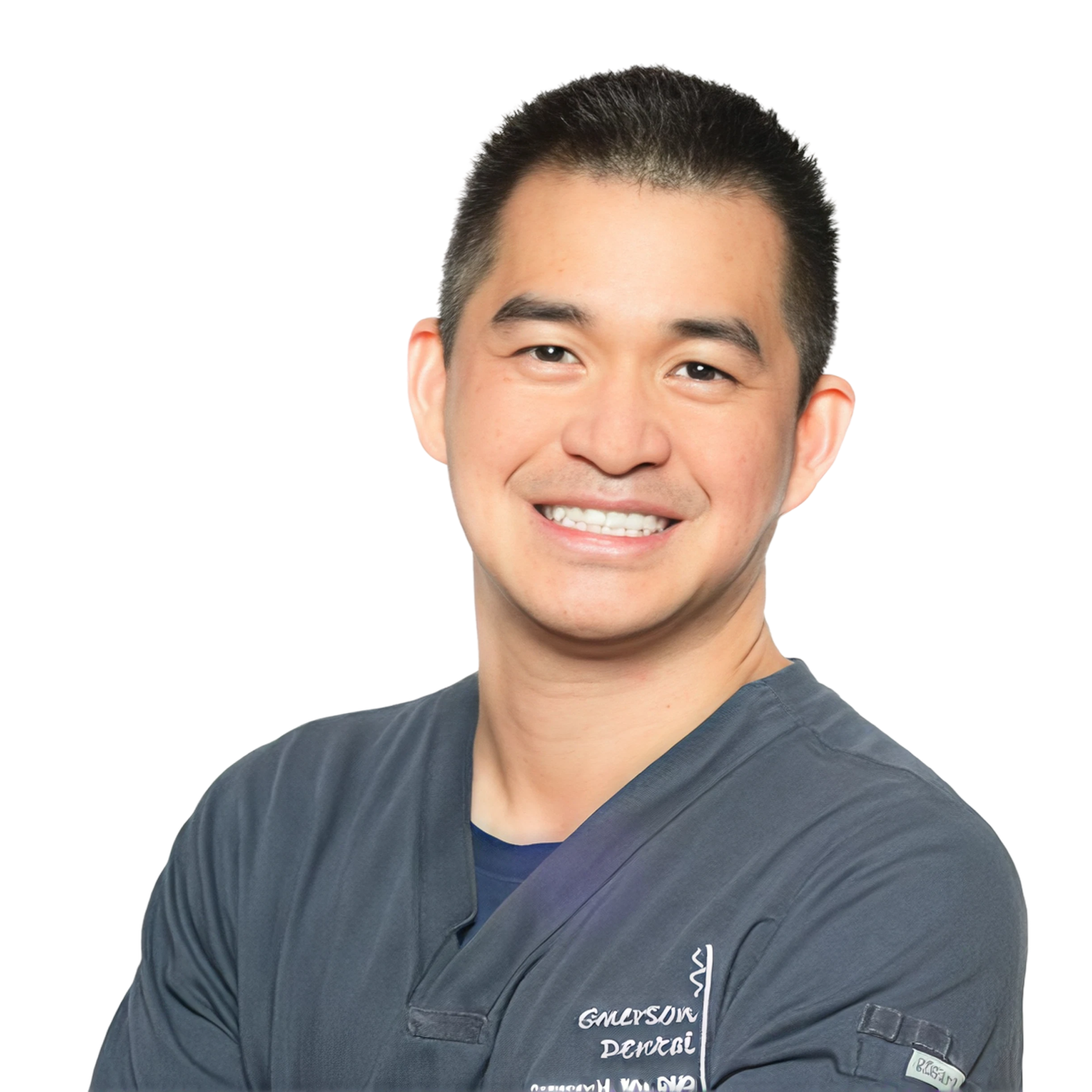
Dr. Greg Wu received his DMD from Tufts University School of Dental Medicine. He completed his Advanced Education in General Dentistry Residency at UCLA which included advanced training in implants, veneers, and full mouth reconstructions. Dr. Wu has lectured in multiple courses at the Yankee Dental, Texas Dental Conference, and Ontario Dental Association since 2008. Dr. Wu completed Henry Schein’s Dental Business Institute and was featured in June 2019 Dentaltown Magazine article on an “Own the Business side of Dentistry” Dr. Wu is the clinical director of Onsite dental care providing mobile dentistry to the assisted living communities across New England.
Done learning and want to get started?
Book a demo