
The Ultimate Guide to Pearl AI
Revolutionising Dentistry
Transcript
Hello. Welcome.
So welcome to our webinar called revolutionizing dentistry, an introduction to Pearl with doctor Neil Mehta. Thank you, Neil, for joining me tonight.
Thank you, Rabbiha.
I'm just going to bring up the next slide. So doctor Neil Mehta is a practice owner. He owns two practices, one in Wiltshire and one in Essex. He's also the founder of LocumLoom. So if you haven't heard of LocumLoom, then please look them up.
He is also an educational supervisor for newly qualified graduates and very much passionate about charitable work, which I'm sure you'll tell us more about as the webinar goes on.
So I just wanna find out a few things from what were your thoughts on AI in health care before implementing it into your practice?
Well, I'm an advocate for the integration of AI and anything that makes our life easier, more consistent.
And I have good friends and family who are in the medical field currently and doctors currently implementing AI into their practice, using it on a daily basis, help with AI of MRI scans, X rays, aiding clinical notes, speeding things up, and making it essentially better.
And it makes them better clinicians overall. So I'm so glad that, you know, dentistry is progressing in the same manner, and Pearl can now offer me some of the same benefits.
Amazing. And why did you introduce Pearl to your practice?
Well, I'll leave that down probably to Joe, who's a very good friend of mine.
And he knows that with, Locum Loop, which I'm a founder of, we're constantly trying to improve our platform by integrating AI to help read documents, check GDC statuses, do everything just to make the process a lot quicker and easier, and more effective. And so he introduced me to Pearl, and I saw the benefits that AI could apply to my practice as well. So that was it, really.
Amazing. What issues were you trying to solve when you brought Pearl on board?
Well, I mean, I think, like, all our clinicians, we want I wanted to allow my patients an ability to understand their own x rays finally. I mean, I now feel I'm able to bring them that similar level of understanding, and I'm able to now educate them, which I did before, but, you know, Pearl just enhances that. When my patients can visualize what's going on with their teeth, they are more AI, and I'm sure with all the other clinician out there, that they're to invest in their own oral care.
Mhmm. Also, in turn, I feel that they have more trust in you as a clinician.
Most of the times, we show an X-ray that maybe of early dentine caries that can be visible to us as clinicians and dentists, but not to our patients unless it has progressed significantly.
I mean, Pearl shows you and will show me the estimated percentage of caries progression into the enamel and then dentine. And as we all know, AI, a picture is a thou is worth a thousand words. So, you know, it's it's the best tool to help your patients.
Additionally, you know, within my practice, I wanted to give myself and my team more confidence when reading our own X rays. You know, we've all had, as dentists, I'm sure everyone listening right now has had those watch areas, on SOE or r four, and we're just like, oh, I'll just put a watch because I'm not sure if it's into dentine or, you know, is it early enamel carriers or is it creeping into dentine? And, you know, you're often questioning your own clinical judgment no matter how experienced you are as a clinician.
Now, you know, it allows me it gives me and the other dentists within our team that confidence, that we're watching and then also filling the right areas.
So yeah.
It's and it's a really good tool to just have there to help the, educational side of things.
So patients learn in different ways, and to have that visual aid there really brings them on board with treatment planning as well. So we'll talk about that in a moment anyway. But your my next question to you would be, what were your needs when you brought Pearl in?
I mean, you know, it's kind of following on from the last question slightly, but, you know, AI wanted to always my aim is to always improve my patients' confidence and help educate them, especially with your new patients. But, patients can now see the anatomy of their own teeth, you know, their bone levels, the exact, you know well, AI, but estimated measurements, separate tooth parts. So Pearl enables me to show the enamel, in a different color, the denti in a different color, the pulp, and then the fillings. And it's so user friendly that you can it brings the understanding of the patient to your same level.
You know, in my opinion, educating patients and making sure they understand is the single most important thing in dentistry.
Essentially, we all get taught at uni, communicate, communicate, communicate, but, you know, we need help and, you know, to communicate properly, and I think Paul Paul gives you that. I mean, I've been training foundation dentists for about six years, and I'm passionate about that and teaching younger dentists. And often, a lot of the focus is on, okay, can you do that crown prep right? Can you fill that composite?
How can you do but it's not on how to actually let's get down to the basics, which is how can I diagnose caries on an X-ray? So my first tutorial is always diagnosing caries.
And if you can't diagnose, you simply cannot be a good clinician.
The thing is Pearl there, we all recognize AI is not hundred percent accurate. And but what I love is that I am able to within Pearl, it gives me that chance to there's buttons to add pathologies or edit the X-ray, essentially teaching Pearl and AI to become even better.
So how how has the system changed your practice so far, and how have you integrated it into your practice?
Well, you know, I think with all all of us dentists and and clinicians or hygienists out there, we have a a set, patient examination or most of us try to have one. So I always start, obviously, with examination, intraoral, extraoral, X rays, clinical photos. If I have, new patients or I'm trying to do before and after patients. And now what I've done is I've just integrated Pearl into that workflow or that patient examination.
So any dentist gonna should not showing every x-ray to a patient is not, in my opinion, educating them and giving them that confidence in your ability because and AI is just another addition to building that confidence in your patients. So what I'll do within my structure going specifically to Pearl is that I will, show them the two parts section of Pearl where we can engage in those deeper conversations and get patients to understand x rays on the same level as you, showing them the morphology AI we say it went through before, the enamel, the dentine, the pulp. And then you have patient examples where you wanna show them the distance of the filling from the nerve or how close the caries is from the nerve.
So, you know, Pearl helps you show that to your patient.
Once I've gone through the that, I will then generally focus on perio or, the perio side of things where I'll look at the bone levels and, you know, we're able to show them in three different colors, white, yellow, orange, which can be changed, but it's generally AI is up to two point five millimeters, yellow is two point five to four millimeters, and orange is over four millimeters. So we can build that overall picture for our patient where we're, you know, showing caries, and then we're going through to the perio side as well of things and explaining how important oral hygiene is as well. Mhmm.
How long did it take for, Pearl to be implemented into your practice?
Well, you know, it was it was very straightforward. I would say, it's cloud based.
Perl works with most softwares AI Examine Pro, and it's an easy integration. You know, Perl allows you to view the X rays real time and also from home if you ever need to. So, you know, very, very simple cloud based system integration.
So it can be done within a week or two. So which it was in our practice. We decided to go ahead, and and it was done very, very quickly.
Are you using second opinion to discuss any cases at your practice meetings?
So at the moment, we currently don't do it at practice meetings, but often, many of AI, I find myself having second opinion up, and discussing a case with a colleague.
Should we fill this or should we not? It's creeping into dentine or is it not, or second opinion right here.
So, you know, obviously, that's basic caries, but, obviously, other morphologies or periapical lesion.
So, yeah, we we often go into each other's surgeries and often getting pearl up with it just to see what it says as well.
But it sounds like you already involve your staff quite a bit, but that's my next question. How do you involve your practice staff with secondary?
Yeah. So, I mean, you know, the team was all involved from the beginning. I think, you know, we've always believed in our practices that we would like to involve our staff with, you know, the intraoral scanners, the CBCT scanners, and and also, obviously, Pearl is there so that they get excited when we implement new technologies and see we are constantly investing and and improving care to our patients. So, you know, the clinic clinicians and nurses want to work in practices that essentially are ahead of the game. And most of all, the dentists, you know, they wanna have, the dentist associates within your practice would want to wanna see that you're constantly investing and making sure you're the best best practice out there, really.
And so, Neil, a question on the side here. How long are your appointments? How do clinicians manage to use second opinion within that appointment time?
So it really varies. But, you know, I mean, our appointment length is normally, for examination, could be fifteen to forty five minutes depending on whether existing patient or new patient or, you know, so it would really depend on how how long the the patient's in the chair for. But, again, going to the fact in a second opinion, it allows you you know, it does speed up the process slightly because number one, you're spending less time explaining to your patient, okay, there's decay, there's that, there's this, increases confidence building in your patients. So, again, it's reducing time as well. So you tend to find that patients understand things a lot, lot quicker.
So it sounds like you're using it a lot with your patients. So what is your patient's feedback when they're looking at second opinion?
I mean, you know, anyone that knows you're using AI or anything to better what what you're, anything in practice, They love it, essentially. They they see that we're using the latest technologies. You know, you've got your internal scanner on the side, and then you've got, you've got second opinion up. And they know that you're trying to provide the best care possible. You know, some new patients will come to see me, and they will often say that I'm sure it happens in everyone's chair, that they often say they've never been shown their x rays, let alone in such detail.
And I think it's the most important thing is second opinion is great for your existing patients, but even I would say probably even more important for your new patients, where you're trying to gain that trust, strain, gain that confidence, because it's the first time they're meeting you. So, yeah, I mean, patients have always commented that they never knew what they were being shown before in many times, and they just had to take their dentist's word for it.
So I know that you've shared some case studies with me where Pearl has really made a difference to supporting your treatment planning for patients. So I'm just gonna go on to that. If you could just discuss that in more detail, please.
Yeah. Well, I mean, this is just just one case out of many, but you can see here, there, for example, the upper right four, where I was showing this patient that came in to see me as a new patient and said, okay. Well, look. There's how deep the caries is on an upper right four. The upper right five, you can see it's in enamel, maybe just about creeping into the dentine.
But, you know, even even looking at the lower right five, you can see the PA when comparing the PA to the bitewing. You can see just how accurate it was that, you know, normally, we we use bitewings to diagnose caries, but, obviously, PAs can can help.
But you can see the difference between both the x rays and how just how accurate Pearl was.
So I think in this case, the most of it was, you know, getting that patient to understand how how gross some of the caries lesions were, and that he just took treatment straight away. I mean, he was a student as well, and he was like, listen. Even though it was a private student for a patient, it was private as well. And a student, he said, okay. Well, listen. I've gotta get this sorted because I can just see, like, firsthand how bad it is.
And so that color difference there made a huge impact on your patient knowing that you've got that light pink is your incipient caries and that darker pink is your, progressed caries. He noticed the difference between the two, or did you Yeah.
I mean, I think that, you know, when you show your patient the the difference and you can see the color difference, he was very, very, you know, it would brought the level of understanding to him to the same level as me, like we've said before. And yeah, I mean, he he he he could then trust me as a clinician straight away to carry out his treatment and knew that I was doing an ethical and the right treatment plan for him using everything possible to make sure you had that treatment plan sorted and his teeth, essentially.
And so how quickly did he book his next appointment?
Until he could afford it. Oh, I'm happy. Yeah.
Because, pay the plans at your practice.
Well, we do, but he wanted to pay us then. Yeah.
Okay. That's good. So how do you see Pearl as an investment to practice rather than an expense then?
I mean, you know, it's firstly, I think we need to kind of put it the first thing is is an investment in the health of your patients. You know? Obviously, that is the the first thing that us as clinicians should really be doing is, you know, investing in the health of them. But, also, looking kind of from a financial point of view, it is also an investment financially. You know, more patients the more your patients understand, the more likely they're gonna uptake that treatment plan. So if you're showing them this and they can firsthand see how bad it is or what what, you know, what impact it's having on their teeth, they're gonna uptake that treatment plan and, and essentially go ahead with treatment. So it is gonna benefit you financially as well.
It's a bit like a before and after Invisalign simulation, I would say. You know, if you show them the potential results, they're more likely to go for their treatment.
So a bit like Pearl, you know, you can you can AI show them what what's going on within the mouth. I mean, like, our treatment coordinator actually said, I mean, one monthly subscription cost is similar to the cost of a filling. So if you really compare that, it it really does make sense that people do invest in something like Pearl to to make their practice better.
And you've answered my last question, really. Like, how how does it support you in patient education and then treatment conversion?
So it's Yeah.
I mean AI mean, when I'm telling my patients they need a filling, I'm now being backed up by Pearl, essentially. It's kind of there behind me or in front of me, backing me up as a clinician. So now a patient has two sources telling them the same thing.
You know, the confidence will naturally of the patient will naturally increase the uptake of your treatment and and, like we said, the revenue.
And how many times I'm sure the clinicians listening out there, taking a clinical photo and their patient then says, oh, I didn't believe how big that filling was or how little tooth there was. But, you know, Pearl does what clinical photos do, but even more, you know, you enhance your and that awareness leads to more uptake.
And, essentially, you get better increase return you increase your retention in your patients as well in the process.
Definitely.
So I'm going to stop sharing this screen for a moment and just come on to a different screen just to show some of the features of Pearl.
And in fact, you've probably been using them since we last spoke, the new features AI the compare mode, the printout, and the adjustable measurements now.
Yeah. I mean, I think those all that adds to AI that you can you can actually I didn't actually know until we had showed me that, which was, the fact that you can actually print it out or create a PDF for your patient where you can give it to them if you really want to, but, you know, store it on your records or show them or give it to them to go to take home with them.
So yeah.
So here we go. Let's share this screen.
So up here, we have the compare mode, which isn't active on this patient due to the fact that we don't have other X rays to compare to. But when you have X rays from the past six months ago, a year ago, you're able to bring them up side by side and review them together.
The printout mode here is to allow you to put a PDF document together.
So if we just generate that report maybe it won't let me do it whilst I'm on a webinar, but it will bring up a PDF document that allows me to share with my patient via email.
So download it and send it across to them on email.
Let me just quickly hang on to it this way.
There we go.
Can you see that?
And then we also have some of the things that people are already using but find very useful is our space bar that takes away the detection so that you can review your X-ray whilst you're still in second opinion.
And then, of course, our edit tool, which allows you to either delete things or add on things to the X-ray. As we all know, AI is not a hundred percent accurate, and so we must appreciate that we are the expert.
And it's just there to help AI us as clinicians, but it's more of an educational tool for our patients.
K.
Was there any feature on here, Neil, that I've missed off that you really enjoy using?
I know the end of the love the ruler.
Not sure if you can show the comparison mode, but from like, when I'm doing it, I'll show my patients the their X-ray maybe three years ago to to the X-ray taken today. So I'm able to show them the progression potentially of enamel caries into dentine or so that's that's a great feature.
So they're not the same X-ray, but maybe we can just pull up two X rays.
And then you have the toolbar on each side so that you can show the patient the progression of that caries lesion or whatever may be going on on those X rays.
So, Neil, thank you so much for your insight into how you're using Pearl. We have got some questions, so we're just going to have a look at those. So what is the cost of Pearl? Is it a onetime fee or subscription based? So you're able to decide whether you want to pay annually or whether you want to just do a month on month roll on subscription.
The cost is two hundred and seventy five pound per month.
You may find sometimes there are some offers on.
Bitewing radiograph example, there was clear carry.
Okay. So just to answer this question, so someone picked up on some carries on the upper right seven and the lower right molar. Why didn't Pearl pick up on this? Really good question. Just what I said a moment ago, AI is not a hundred percent accurate, and so it is going to miss out something sometimes.
It's, picking up on a lot more gray matter than we would be able to with our human eyes.
It's just the way it's being trained, and it's still progressively being trained all the time.
But, again, with that as well, I would say that that is a very good question. Even when I was sharing that with AI, I said, you know, there's there are it is missing couple of elements here, but you will find and and in most cases, it's pretty it it's pretty much accurate, and it's it's very, very good at well, helping you diagnose. But in that case, yeah, you're right. It didn't pick up everything.
Does it work on OPGs?
Neil, do you have it working on your OPGs? I'm done. Using it? You haven't tried. Yes. It does. So it works with Bitewings, PAs, and OPGs.
I know that someone's gonna ask about CBCTs. It is in the pipeline. We don't have a date yet as to when that will be.
So you work in three places. Do I need three separate subscriptions? It is per clinic.
And is there an installation charge? Yes. There is an installation charge, but if you speak to your sales representative, they may be able to sort something out for you.
Right.
That's it.
Neil, thank you so much for joining me.
More than welcome. Thank you.
I hope you continue to enjoy using Pearl and Second Opinion. And, we look forward to hearing more from you in future.
Thank you very much. Take care.
You too.
Bye bye. Bye. Bye.
Meet Your Host
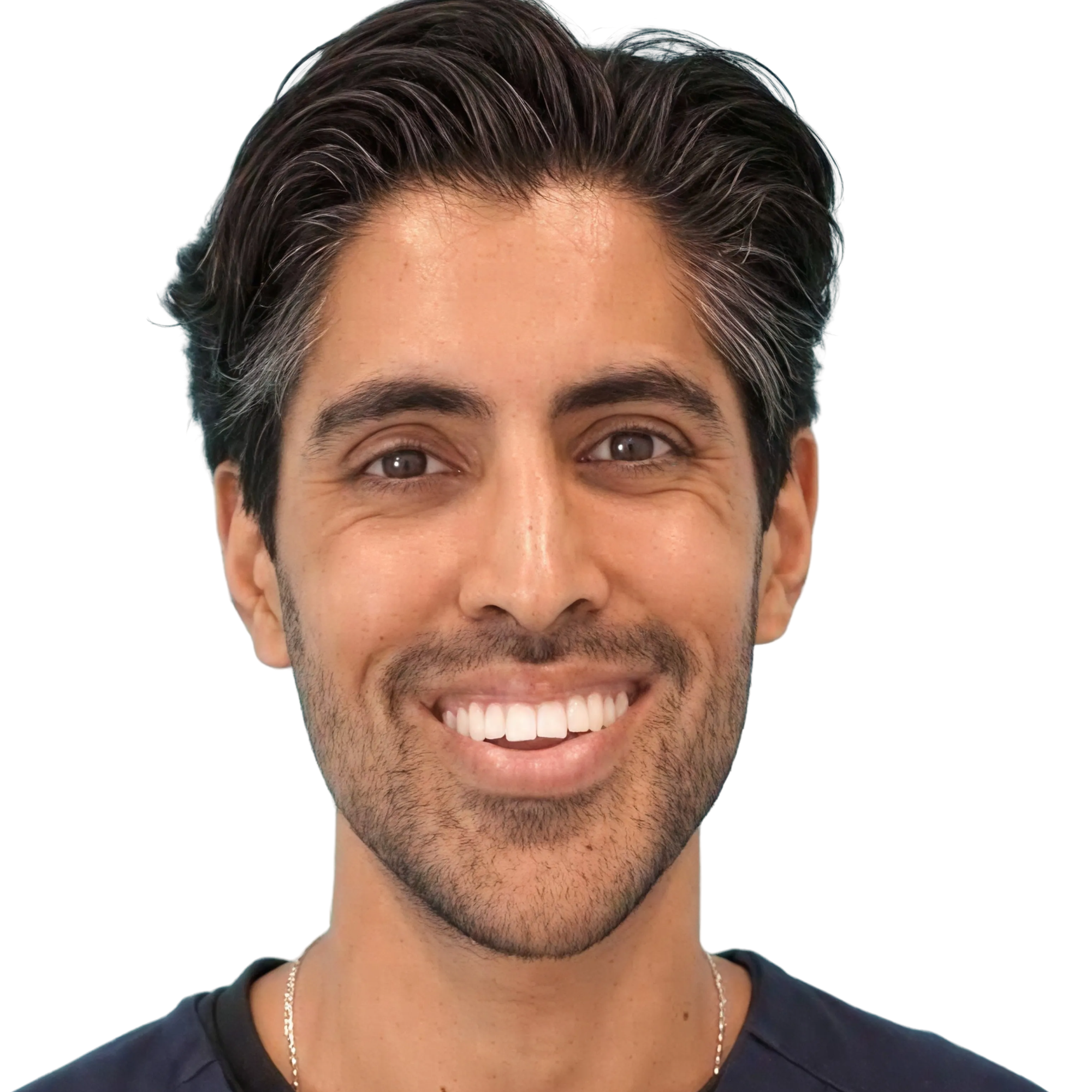
Dr. Neal Mehta is a speaker, educator, practicing dentist, and implant surgeon focused on orthodontics (aligners), general dentistry, and cosmetic dentistry. He has been a foundation dentist (FD) trainer for six years and is an expert in the business of dental practice ownership. Dr. Mehta co-owns two Salisbury dental offices, where he practices alongside his brother and father. As a practitioner, Dr. Mehta strives to continually expand his knowledge and the services he provides in the interest of his patients and the success of his practices.
Done learning and want to get started?
Book a demo