
The Intentional Practice
Smarter Systems, Stronger Teams, Better Care
Transcript
Let's dive in today. I'm Sheela Roth, head of clinical education at Pearl.
Thrilled to welcome you all to today's webinar. And we know dental care isn't just clinical. Right? It's human, and sometimes it's the biggest barrier to growth.
Meaning, it's not just the technology or the capability.
Sometimes we just fall into these routines, and we think, what else can we do to make our practice more productive or make our day smoother? So here's the question I want you to think about as we kick things off.
Is your practice running with purpose, or are we just on autopilot? Right? And I know when I was running a practice, I had to always consistently bring it back to the basics. Right? We're here to treat people and give them the best possible experience because that's really what's going to be your retention and your walking advertisement for all of your patients that come through your practice.
So today, we're going to explore how communication, team alignment, and intentional patient experiences can really kind of reignite the passion and drive better results for your teams — from stronger collaboration to, we all know, case acceptance being really the cornerstone of practice growth — and also move into an energized finish to this year, where we all try to just make it through each day. Right? We know this is a tough time for dental. People that don't know dental are like, what's wrong with you? It's like, I'm seeing ten times the amount of people in the next sixty days than I've ever seen all year. So we wanna make sure you walk away today with that energy you need to take you through the end of the year, and then January. Right?
So I'm really thankful that Miranda joined us today. I'm excited to introduce Miranda, who loves doing this work. She is a hygienist, also has a master's degree, is a standout leader in dentistry for over twenty years in clinical care. Right? Do I have that right?
Yeah. Clinical and administrative. Yep. Over twenty years. That's true.
We are getting old. I'm sorry. We are just getting old. Yes. Administration, coaching. She's the director of education and lead practice coach at ACT Dental, which is an incredible organization that's helping dental practices meet you where you're at and grow your practice to the next level.
She helps build team alignment, profitability, and really just kind of moving through better education and smarter workflow. So I was really excited to bring Miranda on today as well, to really kind of help teams that are stuck or ready to move to that next level. So she brings incredible energy and practice strategies — get ready to be inspired. Miranda, the stage is yours.
Thank you, Sheela. It's so nice to see you and to be here, and I appreciate the kind words about ACT. We love Pearl, so this is just the perfect combination for us to be together today. And I believe that most of the people that listen to your webinars have a lot of the similar values, challenges, and probably practice successes that the clients that we work with have. So it's a great opportunity to just share a little bit of exactly what you just mentioned. I love the word intention versus autopilot.
Again, after over twenty years in this world of dentistry and in private practice, I myself have fallen victim to autopilot at times. I think everybody does. If you jump in a Facebook forum right now that is relative to dentistry, there are people who are living in autopilot, and most of what that turns into for us is this kind of dulling of the passion that we have for this profession. And I'm a firm believer that dentistry is one of the best career paths you can go into.
I believe that our auxiliary positions are instrumental to practice success, and you can have a really fulfilling, enjoyable career in any of those roles. And whenever I hear people not going down that path, I think to myself, we need to reignite, because there at one point was this desire, and there was this passion, and there was this intention behind the way that everyone showed up in the dental practice. And when we do show up with intention and with this enthusiasm for care, we are going to elevate the experience that our patients are having, and then we get to feel that in return, and we really move out of that autopilot zone and back into customizing our conversations and thinking about every patient that walks through the door as a unique experience and opportunity to make an impact and serve somebody else. So we're gonna cover all that kind of in one hour.
So we'll just jump right in.
Sounds great.
Awesome. Well, you did ask me where I was from. So I work with ACT Dental. I am a lead practice coach, although most of my time now is spent in the position of director of education.
So spreading webinars, podcasts, blogs. As you can see in the images here, working with dentists and the dental community in person to really share some of these experiences and learn and grow together as well. I do live in Virginia Beach, Virginia. So if anybody's not familiar, we're over on the East Coast and just above the border of North Carolina.
I was just talking with someone earlier today who is from Tennessee, and I said, I do like to say that I am a southern girl. I think that right there above that line, you know, that equates me to being from the south. I actually love it here aside from the rain we're having right now, because it's a beautiful place to be. It's a beautiful place to live, majority of the time.
I have two Fox Red Lab dogs that are my four-legged children, and I have three two-legged children. We love to play beach volleyball. All three of my kids, and then my husband and myself, all play volleyball, so it's a big part of our life. And we really do try to get out and enjoy the beach and the outdoors and the water as much as we can before the weather starts to turn this time of year.
And a little small introduction to my path here. As Sheela mentioned, I started in dental hygiene. My uncle was a dentist, and I worked in his practice a little bit in high school while he was encouraging me to explore dental hygiene as a profession. I loved it, and so I dove right in.
I worked clinically for about fourteen years chairside, and then part time just a bit as I transitioned into the administrative realm, where eventually I was a practice administrator for a multi-location practice before stepping out into some speaking and consulting and coaching. And so I feel like I've been able to see a lot of aspects of the dental profession chairside. Like, what is it like to be in the trenches? And I always joke, I've never been an assistant, and they kick me out every time I try. I'm not good at it. I bow down to dental assistants. You have a very unique and very special role in the practice.
But I do believe that being able to see what it's like to be a team member, and then being able to see, from a dentist perspective, the business of dentistry, and how do we marry these things to where we all feel good about what we do at the end of the day.
And we've just joined forces with another organization that Pearl is familiar with, which is SmileSource. So just this year, ACT Dental Coaching and SmileSource have merged, and we are all one big happy family now.
And I really say that truthfully. I've enjoyed meeting everyone from the SmileSource team, and the clients from the SmileSource community are fantastic. So now we're all working together to continue to protect and help private independent practice thrive. That's our goal.
We have the BPA, the Best Practices Association, which is a place where people can come and feel supported and inspired in a positive way. So you could join on your desktop. You can scan the QR code. We do have a mobile app.
But when I was just mentioning Facebook groups, I enjoy trolling Facebook groups, because it's really interesting to see what people have to say.
However, I don't love participating in Facebook groups a lot of the times, because it's just kind of negative. Heaven forbid you put a case up, you ask a question, because, man, they're gonna jump right on you — versus being a part of a community like the BPA, where it's full of learning opportunities and resources, downloadable tools, and videos, but it's also full of these chat forums that even have role-specific opportunities that are really positive and engaging and supportive places for us to share, and, again, try to reignite that passion that we all have for dentistry. So what we're gonna do today is, in a very short time, try to encroach upon the topic of intentional communication.
And I'm gonna focus in two pretty key areas, with our objectives being an introduction and understanding of the four types of primary patient communication styles, and how we integrate strategies for co-discovery. So when we're talking with patients chairside, how do we go from being that teacher-student to being a co-discoverer with our patients, so that they can be a bit more bought into what it is that we're experiencing together, and what we're seeing and what we're diagnosing — which actually fits perfectly with the Pearl concept, which is why I love to be able to do this with you guys today.
We wanna talk about a little bit how that autopilot can really create stagnation in the practice, and how our language and the way that we communicate can set the tone and really elevate the experience that the patient is having, and how we build trust and really make for a more positive experience.
And with that being said, I love this picture, because my husband is a real estate agent — it's at least a part of his role in life. And many of us have bought a home in the past, and I want us to think about our practice and the way we deliver care in the same way that you would the experience of trying to buy a home, in the sense that you might go and look at five houses that are in the same general community. They're in the same school zone.
They are approximately the same square footage. They probably have similar neighborhood accessibility. Maybe they're even in the same neighborhood. But there's this one house that had fresh-baked cookies in the oven, so you had that smell when you walked through the door.
They had the yellow front door and the beautiful potted plants, so there's this color as soon as you approach the house. And maybe they had a walk-in closet that was an addition that had been added on. So at the end of the day, when you've gone and you've sought out all of these different experiences, this one house keeps coming back to you as something that delivered a little bit more, that set itself apart, and is ingrained in you — that, like, that might be the one. And so we wanna think about how can we create intentional experiences with our patients that help to differentiate our practice from every other practice down the street.
Most of us could Google our location and, within a few miles, find multiple dental practices. And so what is it that we're doing, or how we're treating people and making them feel, that's gonna set us apart from everybody else? It's gonna leave that yellow door image, that fresh-baked-cookie scent, in their memory, so that they wanna keep coming back, referring their friends, and really trusting in what we do.
I believe that the very first piece of creating this type of intentional experience is understanding the people that you're communicating with and how they wanna be communicated with. So if you wanna stand a chance at influencing people, you have to start by understanding them. There's a whole series of books around this — one is Crucial Conversations, and the author has multiple books that function in different ways of communication. And I just love this phrase, because most of us are looking through our own frame.
We're thinking about how we approach life, what happened to us this morning, our history, past experiences. And if we're only looking through our own frame, and we're not intentionally — we're gonna bring that word up so many times — intentionally paying attention to the person on the other side of the conversation, and trying to understand what they need from us and where they're coming from, we'll be able to make a much stronger impact than if we're constantly looking through only our own frame.
And so a great, easy way to systemize and do this is to think about the concept of DISC. And if nobody's heard of DISC before, it's very simple. It's an observable behavioral communication-style mapping that helps us to see these four basic types of communicators.
D stands for dominant or direct. I's are influencers — they're very much people people, very engaging and charismatic. S's are steady, calm, harmonious people.
And our C styles are compliant, conscientious, very analytical, and methodical thinkers. And all of our patients are comprised of a little bit of all of these things, but they typically have one style that is dominant, or stands out the most, that they prefer to communicate in and to be communicated with. So we're gonna just dive in a little bit, touch the very surface layer of DISC, and then we'll transition into how we can use this and apply it into co-discovery.
So some really cool facts: the first studies of grouping observable human behavior into the four styles were recorded way back in Hippocrates' time. So this has been going on forever. It started to be researched later on, and in 1928, William Marston wrote the first book and published it — Emotions of Normal People — where these four types were truly identified as D, I, S, and C.
And I thought it would be fun to just throw out a little quiz for you — it's interestingly enough, you can start to observe, and it's pretty defined for most people by the age of thirteen, exactly what your DISC, or primary communication style, is. And some say that it's as early as six years old that you can really start to identify what it is about these individuals and what their communication style is. If anybody has kids — again, I mentioned I have three, they're teenagers now — all three of them have a very different approach to communication. When I parent them, I have to parent them a little bit differently if I'm providing feedback or I have a request of them. If I can understand where they're coming from, I have so much more impact on the outcome than if I'm trying to approach all of them exactly the same way.
And another question I have for everyone is just, can DISC styles ever change?
And the answer is yes. However, it is very rare, and it really only happens when there's a major life change — major, almost like the word "traumatic" comes to mind.
But I think about myself — I'm a dominant influencer, I'm a DI. And in the past, when I was younger, I was more of an ID — they're very close for me, but the I used to outweigh the D. And then, in life, as a mother of three now, and I'm in a leadership position, and I've been in leadership positions now for about a decade, my D has started to climb and outweigh my I just a bit. And it's because I have to be a bit more direct and decisive and dominant in these life-changing roles. And so it can change.
It is just very rare.
A couple of things to think about when we're thinking about being intentional in the way that we communicate.
And the number one thing is, let's learn ourselves first. So as you're listening to this, if you've never heard of DISC before, try to clue in to what things do you feel like might say, "this is a little bit of who I am." And you can always go and do some free assessments online. You could pay to have a more complex assessment if you get really curious. But the important thing to think about is, once you know where you are, how do you match your patients intentionally?
So, basically, when you look at this map of DISC, there's a horizontal line. And our D and I, our dominant and influencer styles, sit above that horizontal line. And everyone above that horizontal line, we're looking at their pace — they're a bit more fast-paced.
They have a sense of urgency. They have a more bold personality. They tend to be — oops, sorry — they tend to be a bit more outspoken and dynamic.
Think shoot-from-the-hip. Think quick to respond. You ask a question, they have an answer. Now, below that horizontal line, we're looking at our C's and our S's, and they tend to be a bit more thoughtful, methodical, a little calmer, slower paced, careful in their response. So think of someone who you're asking a question, and they maybe don't respond right away.
Now, if you also are a C or an S style person, that's fine, because you're still processing as well. But if you're a D or an I, and you're above that horizontal line, you might wanna jump in and fill the space. An important thing to think about here, in terms of pace, is that with our patients, sometimes we do need to provide that space for them to process before we just keep moving forward.
And there's also a vertical axis on this scale, and the D's and the C's fall on a task-oriented side, meaning they're more questioning. They're logic-focused. They tend to be more objective or skeptical or even challenging.
And everyone on the other side, our I's and our S's, are more people-focused or emotional decision makers. They tend to be more accepting, people-focused, empathetic, and receptive and agreeable. It's important to think about the quadrants of this as we move through the different styles.
Now, at the very end of this presentation, I will have a QR code so that you can download the PDF of these slides, because I'm gonna be moving through these pretty quickly. And you can learn a lot just by looking at each of the elements of what each style prioritizes, what they're motivated by, what their fears are, and then things that you may notice, or weaknesses or limitations that might show up. So just to share — with a dominant style, they tend to be very motivated by power, authority, and competition. And their greatest fears — and I think this one's really important when we're thinking about intentional patient communication — are around loss of control, being taken advantage of, and vulnerability.
I mean, there's hardly a more vulnerable place for many people than the dental office, so it's important to think about what their fears might be once we analyze and determine our patient styles. When we think about our I's, they're very much motivated by social recognition, group activities, friendly relationships, being a part of something.
And you may notice charm, enthusiasm, optimism. However, their greatest fears are the opposite of that — social rejection, disapproval, loss of influence. So if you have an I-style patient who loves to come see you, and they like to share the photos from their daughter's wedding, and then all you do is mention that they should be flossing more — they're the ones who are like, "oh, that hurt deep, my hygienist yelled at me about not flossing." We know you've never yelled at anybody about not flossing, but because they feel that personal connection so deeply, they'll feel a bit of social rejection or shame if they feel as if you're disappointed in them in any way. So it's important to think about those fears.
When we think about our C's, they're motivated by expertise, perfection, attention to quality, attention to detail. They do not like sloppiness.
If you don't know the answer to something, they'd much rather you answer by saying, "I'm not sure, but I'll find out for you," than just making something up or kinda winging it. You'll lose trust with a C-style patient if you do that, and then the answer is wrong in the end. And you're gonna notice their fears are criticism of their work especially, but criticism in general. So using objective data versus subjective opinion, when we're providing feedback or options to our C-style patients, is the best way to go.
When we look at S's, they're very motivated by a stable environment, sincere appreciation. They really love trust and connection. They need reassurance. Their greatest fears are loss of stability, change, loss of harmony.
I often say, maybe you're moving your practice, and it's only a mile down the street — it feels like no big deal. And to some of your patients, it won't be. But to your S-style patients, that's a big change, especially if they've been coming to this location for twenty years.
They do have to process that change in a much different way than somebody who maybe lives above that energy line, in our D and I styles.
It's interesting that these styles are distributed across our population differently. We all have a little bit of everything, but the majority of the population sits in that S realm. So most people, most patients — if we just match the general population that comes into your practice — are probably going to be in that S realm. Very agreeable, very accommodating. They're gonna go with the flow. They're not gonna ask a lot of questions or wanna rock the boat or upset or disappoint you.
The next most popular style is our C style, our conscientious style.
Those, again, are slower paced, thoughtful, methodical, and they're going to bring questions. So they're gonna be the ones that are a little skeptical. They might ask you a lot of questions, which for us can be really hard. So when we go back to autopilot versus intentional communication, we have to think about the fact that all of us in dentistry struggle with time.
And if we don't have the time to give space to a C style's questions, they're not gonna be able to trust us and say yes in the end. So we have to be able to think about our S's — we need to reassure them, we have to make sure we have built trust with them before they're gonna say yes.
And with our C styles, we have to be able to create the space to answer the questions and make sure they feel confident in us that we are the expert in making sure that we can take care of them the way they need to be taken care of.
The next most popular style is our I style. Again, those are our charismatic, outgoing, people people.
And for those styles, what we need more of is the social proofing. Many of our patients have experienced this, and they love it. Before-and-afters and testimonials really speak to an I style. Not as important to someone like a C style, but for an I style — knowing, like, if you're just starting to do whitening in your office, you bring them in and say, "Missus Jones, we want you to be a part of this exclusive group of really important patients that are trying this new whitening product with us.
Would you like to join in?" Like, kill two birds with one stone — they get to be a part of something super cool in your practice, in this exclusive VIP club, and also they get to do something that helps with vanity. I's tend to have a bit more concern about their appearance.
To do whitening — absolutely, they're gonna be all in, and then they're gonna go out into the world, and they're gonna spread that message for you. And then finally, our D styles — this is the smallest group of people.
It's the smallest population you might experience. Usually, you know them. You can think of people right off the top of your head, because they tend to be very direct. They tell you when they can come in.
They let you know they're important, and that their schedule trumps your schedule. But the great thing about a D is that you do always know where you stand. You don't have to guess. With an S, they might go along with it because they don't wanna upset you.
With a D, they're gonna say yes or no, and you know exactly where they stand on the matter.
In the slides, I do encourage you later to stick around for the QR code, because you can download the PDF. We take a much deeper dive into each of these styles. We talk about how to communicate with each of these different styles very specifically. We talk about ways to do and not do communication with each of these styles.
When we're looking at a D style, for example, we wanna provide alternatives in choice and decision making, so they still feel a level of control. If we come in and tell them exactly what to do, it won't land well. When we're looking at some common occupations, we have that listed here for you too — they typically are authoritative or leader positions.
When we're looking at communicating with an I style, again, we wanna talk about people and their goals. Don't dive into the facts and figures — that's not gonna really resonate with an I. But do ask for their opinion, and leave space, maybe even create some boundaried space for how much time we have to talk about the personal things. "You know, Missus Jones, I reserve five minutes right at the top of our appointment today, because I wanna hear about your daughter's wedding, and then we'll jump right into your services today." That way we've created that boundary, and the conversation doesn't dominate our whole hour together.
So, again, common occupations for an I — we're looking at entertainers, sales and marketing, realtors. This is Kirk Barron, our owner and founder. He is a podcast host.
We do a podcast — I'm a co-host with him today. Very outgoing, charismatic individual, very passionate about the world of protecting private practice. I'm grateful to be able to work with him and for him.
Communicating with an S style — again, these are our steady folks. We definitely wanna make sure that we present our case logically, softly, and non-threateningly. If we come into a conversation with an S style with too much of a position of power, or being demanding, sometimes even in our body language, we just wanna soften ourselves and make ourselves a little smaller. We wanna mirror what they're presenting to us — that's a great way to make sure that we're connecting with an S style. Some common occupations for an S are things like teacher, healthcare, therapists, administrative assistants — anyone that's in a customer-service or caretaking role, because this is a very service-oriented, empathetic person who's concerned about others, oftentimes more than themselves.
And when we're communicating with a C, I've mentioned a couple of things here around presenting specifics — make sure you don't say "I don't know," but that you will get them the information. A C really loves a clear action plan with steps and timelines. That's gonna make them feel really confident that there's a process for this, and that this process has been proven successful. That matters so much more to a C than something like before-and-after pictures.
Common occupations of a C-style patient might be an engineer or an analyst or a scientist — anything that is, again, very methodical, and where precision and quality matters.
Interestingly, there are a lot of dentists that are C style, especially specialists. And it's because of that attention to detail and that need for that very critical eye, and not saying, "good enough is good enough." Could you imagine if all of us functioned from that mentality? So there's a lot of really strong C styles, or at least a secondary C style, in a lot of the dentists that we see in our community.
So we just kind of sped through a really high level. If you think of an iceberg — like the tip of the iceberg — there's so much more under the surface that could come to fruition around DISC. A lot of teams have built full systems in their practice around DISC.
Myself — we used to have it even on our new patient forms. We had a DISC note at the top of that call intake form. And just based on that phone call experience, we would try to gauge perhaps what style of communicator our patient was. When the hygienist brought that patient back for their first visit, they then were able to take that to the next level and either confirm or deny the initial assessment.
And we would record it in our practice management software, so that everyone who communicated with that patient moving forward would know their preferences in communication. And while I'm a very fast-paced, direct communicator, I would know with an S in my chair that I needed to slow my pace. I needed to soften my tone. I'm six feet tall, so I would lower my operator stool, and I'd lean my shoulders in and maybe put my hands right between my knees, just kinda soften myself in a way that would make them feel like I'm less threatening or intimidating.
With a C, I might sit up really straight and make sure that I appear very confident and cool, calm, and collected, and that I thought this through, because that's what they were needing from me, and then, of course, giving them the space for questions. So you can actually systemize this. And so it ties right into that concept of being intentional. When we're on autopilot, I'm gonna talk to every single patient exactly the same way.
I'm gonna present my exact self, in my truest form of communication, to every patient. I'm not gonna modify or customize. And I'm gonna say, "see you in six months for your prophy," "see you in six months for your prophy."
Instead, I can intentionally create an experience in which I adapt and modify my style to meet the person who's looking through a different frame than I am, and then also customize the treatment that we're recommending or discovering together. And that really takes us to the next element of the webinar. And I love this picture, because I do believe that, unfortunately, a lot of times in practice, this is how we deliver communication with our patients. And while we may not feel like that's what we're doing, it's how the patient often feels.
When we're not using co-discovery, or connecting with the patient to actively engage together about the health, or the lack of health, that we're seeing in their mouth, they tend to feel like this teacher-pupil scenario.
And oftentimes, because we know what we know, we will jump right in to right the wrong — you know, the wrong thing they're saying, the wrong thing that they're doing. "Let me be the expert, and let me tell you, patient, how you should be doing this differently, because I know better than you know." And I have sat in the provider chair and done that myself. I can remember the early years of me as a dental hygienist — I graduated top of my class, and I got a lot of awards, the Colgate Star Award and the SADHA — I can't remember all of them now, not the Golden Scaler, mine tended to be more academic.
For those of you that got Golden Scaler, congratulations.
But, yeah, I went out into the world as a baby hygienist just thinking, "I am so smart, and I know so much about dentistry and what people need to be doing, and I'm just gonna change the world." And I realized really, really quickly that most people didn't really wanna hear what I had to say. And then I started feeling jaded, because I care about it more than they do. And, eventually, I happened upon a practice where all of our continuing education — it was a fee-for-service practice, so they had to differentiate.
All of our communication and education was built around open-ended questions and co-discovery, and making the patient a part of the experience. And it changed my world as a clinician. It made me recognize that I was being this teacher talking to a pupil, whether I realized it or intended to be or not. And so co-discovery is really the key to taking us out of that element and bringing the patient into the fold. If we just think about what these words mean — "co," the prefix, comes from the Latin word meaning "with" or "together," implying a joint action or partnership.
"Discovery," through that word "discover," means to uncover or to reveal.
So if we put them together, co-discovery is just combining those two words and suggesting that it's a joint process — an active partnership in uncovering or revealing something together.
So I like to think about this as, instead of the problem, the issue, the disease, the diagnosis, whatever it may be, sitting on a table with me on one side and the patient on the other, instead we're figuratively sitting on the same side of the table with this issue in front of us, and we're working together as a team to ensure that we both understand what's happening and the impact of the outcome, and developing a process or a plan for what we need to do. How can I help you? And, patient, what do you need, what do you want? And then how can we make this work together? So when we're sharing what we're doing as we go, and why — what is that outcome going to be — we're gonna have a greater level of case acceptance and trust that's built between us and the patient.
We're gonna create expectations for active patient participation. They're not gonna just lay there and watch HGTV in my op. We're gonna work together, at this healthcare visit, to learn about their health or the absence of that health.
Using imaging to speak for you — whether it be photographs, or, again, we're here with Pearl today talking about what AI and the X-ray options are with this overlay software — makes a huge impact in patients being able to understand what we're doing. If somebody tells me I need something fixed on my car when I go to get my oil change, I don't trust you. I'm a D — I'm skeptical.
Right? That's my first thing — I'm gonna be taken advantage of. That's my fear. But if they can bring it to me — they can take a picture of that frayed timing belt, or they can show me where my rotors have worn down.
And anyone who's into cars is probably laughing at me because I don't know the exact terminology. But when I can see it for myself, it makes all the difference. I'm like, "yeah, sign me up."
I don't wanna drive around like that anymore, running that risk. But without being able to see it, how do we know? And our patients are no different.
Our communication technique needs to be intentional toward their style, and we need to ask open-ended questions. Because data shows that when we share in decision making in medical and health situations, it's gonna lead to a significant level of case acceptance and accountability — the patient owning that disease process just as much as we do.
A lot of times in dentistry, unfortunately, we are viewed as this kinda sleazy car salesman you see over here in this image.
And we hear it a lot. "I saw the doctor's pictures in Cabo last week — did I pay for that vacation?" Or, "oh, you got new TVs, I see — I guess my last crown paid for that." They say things without really realizing that we have feelings too, and we're here to serve and take care of you. We are a healthcare industry.
This is not the same as sales. Now, are we selling our practice? Are we selling our doctor? Are we selling these services? I mean, yes — ultimately, this patient is a consumer of the service that we're offering.
But what we're really trying to convey is trust. We really have to get to a point where — this other image you can see — there's just this blind trust between the practitioner and the patient. And it's developed over time by intentional communication.
When they can have experience after experience where we've proven that we can be trusted.
Can we prove it?
That's the biggest factor for somebody to go from, "I'm not sure," or "are they taking advantage of me," or "do I really need this," to, "absolutely, I can't imagine not signing up and saying yes," because that outcome is exactly what I'm looking for. So we can use co-discovery, and some of the tools that we have at our disposal, to make sure that we are focusing not just on what we see, but on what the outcome is that they're gonna achieve by addressing whatever this challenge is that we're finding together.
There's a lot of ways for us to incorporate co-discovery in private practice, and most of these you'll see are geared towards the clinical operatory. But we're gonna take a look in just a minute too about how there are some avenues for admin to use this as well.
But we look at things like photography, intraoral and extraoral photography.
I can't imagine a practice that isn't using photography. I've seen them, and I look at case acceptance numbers and say, like, no doubt — because the patient can't see what you see. Same thing with our radiographs. When we're not elevating the radiograph conversation to something that they can understand — and we're gonna go through in just a minute some of the funny things that people experience when they look at X-rays — but photographs and radiographs, when we orient our patient properly, can be hugely impactful. We don't have to say nearly as much, because the image speaks for us.
The same thing when we look at periodontal charting.
So a lot of times — I'm a lead practice coach, I go in, I observe at really great offices. Most of the clients that come to ACT for coaching are really great offices. They're doing so many things right, and they're just trying to see how they can do things a little bit better.
And one of the things that we observe is periodontal charting, or periodontal evaluation, happening without engaging the patient in that conversation.
So having something as simple as some periodontal graphics, or an image that's laminated, that's very simple, like the one you can see here — "Patient, I'm gonna be using a ruler, I'm gonna be putting that ruler right in between your gums and your tooth." And I used to always say, "just like in between your finger and your fingernail, there's a little space there. If everything's healthy, it's gonna be comfortable, and you're gonna hear numbers that are somewhere between one and three."
"I need you to help me out, patient — I want you to be listening for any numbers that I say out loud while I'm recording this periodontal charting that are above a three, so four, five, and up. I just want you to be listening while I'm doing this."
And then I also just mentioned that it's generally comfortable, as long as everything is healthy. "So I'm hopeful that this is gonna be very comfortable for you." Again, we're social-proofing that health means comfort. I'm looking for health, I'm not looking for something — cha-ching, cha-ching.
"So I'm looking for health, I'm looking for comfort, I hope this is comfortable, and as long as everything's healthy, it will be."
"However, I need you to help me out, patient — while I'm doing this evaluation, while you're listening for those numbers that are above four, or above three, I also want you to be feeling for any areas that are tender or uncomfortable." Because any hygienist that's listening to this can tell you they've had a patient say, "well, of course it hurt, you were stabbing me," "of course it bled, you were stabbing me."
If we can put the narrative that we want in our patient's mind, in their mind, before we get started, and we make them an active participant in that evaluation process, the co-discovery piece just comes naturally at the end. Right? Because then we sit the patient up and we say, "hey, tell me a little bit about what you heard and about what you felt."
Because they were focused on those two things, with that directive from you. And now they're gonna be able to basically diagnose themselves and say, "well, it did hurt a little bit here, here, and here, and you had a lot of fours, fives, and sixes." "Wait a minute, what does that mean?"
"What do I need to do?" And there's just less we have to do from that teacher mentality.
I love disclosing solution, I love using mirrors as much as possible. Digital scanners are great. And you can use photos and digital scanners, or you can use them in lieu of each other.
But let's talk about X-rays here for just a minute too. It's really important, when we're using these for co-discovery, to really hit on a few elements. We wanna orient the patient to what we're looking at — they have no idea.
We wanna ask open-ended questions, not "I see here, I see here, I see here," but "what do you see, patient? What questions do you have about this image?" And let them actually process it for a moment.
We wanna affirm anything that they're asking or pointing out, even if it's not exactly right — "oh, good insight, thank you for your curiosity, let me actually show you what it actually is." But we're keeping them engaged by affirming them in the conversation.
We do have to leave some room for questions and silence. Again, some of us are very outspoken, and we're quick to talk.
I actually used to tap my foot in my operatory. I would ask a question, and I would silently tap five times, so that I could get five solid seconds of think time for my patients. Because, if you go back to earlier in this webinar, most of our patients are S and C styles, which fall into that below-the-horizontal-line axis, where they're slower to process, they're methodical thinkers, and they really need the time to work through to generate an answer or to generate a question. So we have to give them that silence.
We wanna guide them versus educate them. And so what I love about Pearl is, with our X-rays, we can do exactly that.
When we look at this picture, I can look at this and tell you so many things. Right? Because I've been doing this for so long. Somebody who just graduated from dental hygiene school or dental school, they can tell you so many things too, because they had to, to get that A and get out of their program.
But a patient has no idea. They don't have the training, the expertise, the eye that we have. And even we, as clinicians, have a limited eye, because we are limited to the range of gray in which our eyes can see.
Most of our patients are gonna look at a dental X-ray, and they see something like this. They're just like, "what are we even talking about?" And most of my patients tell me it looks like toes. And I know, if I was in a room — because I talk about this in live room education with people as well — the number of laughs or raised hands that say, "yes, exactly, that is what all of my patients say."
Now, I don't see it, I don't think it looks like toes, but our patients sure do. But in the same breath, I look at X-rays every day.
But when I go to see my husband's broken clavicle, I don't know what they're looking at. It's a completely different outlook. And so what's really great is being able to use technology like this AI technology to support the co-discovery process. Being able to — again, no HGTV is on my patient monitor in my op — I want the patient seeing and experiencing what's happening with their own eyes. So we can display those X-rays on a patient-facing screen. We can pull the software up and make the shades of gray become more alive for the patient to really be able to understand what's happening.
We can orient the patient to what we're seeing. When we look at this particular image in this overlay option, being able to say, like, "the purple is the nerve of your tooth, and where the nerve lives. The white is the outside hard surface that you can see.
And then that gray area in between is just below that — it's the soft surface." I used to always talk about M&M's — the hard outer shell, and then that soft chocolate center. They're able to understand and experience in a different way when we are able to provide this elevated level of understanding through color and technology.
When we are talking about that periodontal assessment, hygienist — you're able to actually see the measurements. So talk about your C-style patients, the second most common population that there is. They love to see that data. When you can actually show them the objective measurement of what's happening, and then we have that highlight of the calculus, or that splinter of bacteria that's just below the gums contributing to that bone loss, there's a whole different level of buy-in from our patients than just trusting us that our timing belt's wearing down.
We're able to use this to look together and say, "hey, patient, what do you see here that you have questions about?" And in this particular image, they're probably gonna ask what that big pink circle is, and we're gonna have an opportunity to share with them — "with your permission, is it okay if I share with you what that means and what that looks like?"
There's so many options to what the software can provide. And the really cool thing is that when we're doing these case presentations, we're looking at the same thing now. We're talking about the same thing now. I promise you, the majority of the population — S style, there's some statistics that say it's up to sixty-nine percent of the population —
They're going to look at the X-ray, the plain X-ray, with you and nod along. And they're not going to speak up about what they don't actually see or understand. They're going, "oh, yeah, doctor, I see that too, oh yep, that makes sense, I get that too." And they're going to schedule, and then they're gonna call after hours, when they don't have to have conflict, and cancel their appointment. Because they didn't actually see it, and they don't understand. But when they can see the image with the overlay of AI, they're able to be looking at the same thing that we're looking at, with maybe not the same depth of understanding, but a better level of understanding.
And our administrative team can really do this too, when we lean into the ability for the software to present the treatment with the same style of images. So in the past, it was really hard, as an administrative team member — especially, I mean, I had a clinical background, but I worked with a lot of team members that did not — and it's really hard for them to pull up an X-ray and explain anything to a patient. Or somebody's calling in to ask about their treatment, and they're trying to pull it up and decipher what's happening. But a lot of our admin team members see dental X-rays just like our patients do, because they're not from that clinical trained world.
And so having the ability for treatment presentations, insurance claims, email correspondence — all of these things to work through the software and provide that same level of clarity, and taking these muffled shades of gray into something that is real and makes sense to them — and then they can actually have that delivered to their inbox. They can show it to their spouse. They can reference it again when they get home, if they are the type of person that needs more time to think.
So I know we're getting close to the end. And, like I mentioned, this is the tip of the iceberg, there's so much more beneath the surface. But a few key elements of open-ended questions that can help you in this co-discovery process — you have your X-rays pulled up, you have that Pearl imaging software pulled up and overlaid over your radiographs. And you're saying things to your patient like, "what I'm looking for is — what do you see here? What's your understanding of what these pink areas are? What's your understanding of what these yellow and red lines are down here?
What concerns you about this? Would it concern you if...? What questions do you have? If there were a way..."
That's my favorite segue. When you're having these open-ended questions with these radiographs, and someone's starting to ask you questions about, "well, what do I do?" — "well, if there were a way for us to manage X, Y, Z problem that we're seeing here together, would you like to hear about it?"
More often than not, they're going to say yes. The language that we use matters. Value-building language elevates. The terminology that we use elevates.
Autopilot language is, "you're due for," "I see here," "you should do this," "it's our policy that we do that."
Elevated, value-building language is intentional. We have to really stop and think about what are the appropriate questions to ask, or the appropriate words to apply, to add that trust and that level of value to what we're trying to communicate to our patients.
And then we have to just stop, and we have to be quiet, and we have to hear them. This is my daughter — I love this picture because of her beautiful blue eyes. She's headed to high school next year.
So this is an older picture, but I can't get rid of it, even though she has marker on her finger and, yes, a dirty fingernail. But that just proves that I'm a real-life human being and a very busy mom, and I didn't notice it until it was too late. But you know what, she's so adorable.
Just look at her little eyes. We do have to be quiet, and we have to give the silence and the space for them to think, for the patient to ask the appropriate questions, to feel comfortable and not forced or rushed. So when we ask those open-ended questions, just remind yourself — count to three in my head, count to five in my head.
It's okay to be quiet for just a moment, and give that space to the patient, to where they can really help us understand where they're coming from.
Because intentionality, and really understanding where someone is coming from, is learned from listening. It's not learned from talking. And so I often say, if we're talking more in an appointment than our patient is, that's a problem. We wanna be asking questions and getting them to open up and share with us what they think could be potential solutions, or understanding of where we're going.
So being helpful is my most favorite thing to be. I have core values at ACT Dental with coaching. We talk about core values as the foundation of every business. I have personal core values that are really important to me, and one of them is "be kind and helpful always." And every night at dinner, we sit around the table together, because that's where we are in life. We ask each other, "what did you do kind or helpful today, and what was your favorite part of the day?" And if my kids struggle, or one of us struggles, with answering "what did you do kind or helpful today," we put an emphasis, a call to action on each other, to say, "hey, if it's that hard to think of something, tomorrow we have to do better." So being helpful is my favorite thing to be, and I encourage you to reach out to me for any help or support or further understanding that you want to have about these topics.
My email is right here — Miranda at ACT Dental dot com.
You can also scan this QR code — I mentioned to you that we would have a QR code available so that you could download the slides. If you scan this QR code, you'll be able to fill out just very basic information, like your name, your email, and probably your role in practice.
And you'll be able to download the entire presentation. You can take it back, you can share this with your team, you can dig a little deeper into DISC if you want to.
There's a few elements there around co-discovery that I didn't dig all the way into, just for the sake of time. So feel free to download, scan that QR code, download these forms. If you're having trouble, just email me, let me know.
But if you just have questions — if you wanna know about coaching, if you wanna know about DISC, if you wanna know about me, about volleyball, what it's like to live in Virginia Beach, anything at all — I'd love to hear from you. I love making new friends, and dental friends are my favorite friends. So just email me at Miranda at ACT Dental dot com, and I'll be happy to reach out and support you in any way that I can.
And I think that's all I have for now. Sheela, I don't know if we have any questions, or if you wanna take over share, and we can wrap it up.
Wow. I feel like I need you to redo that all, and then we could take, like, an hour for each segment, because that was so, so helpful. I loved hearing all about those personalities, and it is so important for us to be mindful of those personalities when we are presenting, right, our dentistry and also talking to our patients.
One thing I wanted to share here is another QR code, if you're interested in your team having a demo with Pearl.
What I loved most, Miranda, about what you were saying — well, everything — but what stuck out to me the most is when we're presenting, it's an awkward moment a lot of times. And as humans, we start to fill this empty space, and we just keep talking. We're like, "do you see the cavity? Do you see it? Do you see it? Do you see this gray area?" You know, like, this little incipient lesion in between two teeth is danger, but then, like, two millimeters over in the pulp is healthy.
Right? So I totally second what you were saying, that the patients will be "yes" in the office, and then they'll call back and cancel after hours. You're spot on.
I remember that happening all the time.
What I just wanna share with the team here is, reach out to Miranda and the ACT team, the SmileSource team, because it is so important to be able to have support.
And that's number one. Number two is also thinking about the time you buy back with AI is a huge gift. It is not gonna replace us, but it's going to augment us. And on simple radiographs, it allows that pause, because you're now looking at an image.
You're explaining with a lot less words and a lot less time, and you're able to pause, and then they can now see it. You're not giving them a radiology course and an anatomy course. Right? Right.
They see white teeth, and they see red in between, and they know there's probably a concern. So that's why I think having AI be able to help with case presentation has been a huge value-add. Additional features that I think teams should look into, especially as the end of the year comes in, is how do you use AI in general, how do you use it for insurance verification, or, you know, daily chart audits, that kind of stuff, so that you can be with humans more often, whether it's your staff or whether it's your patients?
We didn't go into dentistry to do all of these mundane tasks, and I know that there is a camp of people that fear AI. But as you look at ways to embrace it, it really does bring back the time to build those relationships that build your practice. So I love your conversation about "pause," because the patient's still processing. Right?
We've already looked at the image, like you said — in two seconds we're like, "oh, you need a crown on thirty, there's an incipient lesion on, you know, number three, some scaling and root planing." And they're like, "is that an X-ray of my tooth or my toe?"
Right.
So I really love that.
Pauses at that time.
Right, exactly. So I think that that's a huge win there.
Again, love that you were here with us today, so thankful for all of your knowledge from all of the years you've spent really kinda honing these skills, and you know what works. We all do. And sometimes it takes a few minutes to get a refresher course on it — it really comes down to being that human and getting behind the eyes of the human you're presenting the dentistry to.
So I love the DISC system, I love that you went through that. We used to have little colored stickers on our paper charts. Right?
Oh, nice. Yes, yes — for that.
Yeah, to help people. It's so good to systemize it.
Well, I mean, that's a coach's dream, is that everything's systemized in a practice. And, yes, you can even systemize communication styles of your patients and use that every day, even if it's as simple as a Post-it note when the doctor's walking in to do the exam, with the big letter on it.
I think they're a D.
I think they're an I. Like, just something as simple as that can make a world of difference.
Absolutely. I remember — I used to be like, "small or big," like, just give them a little bit. They're ready to go.
Yeah, I was like, go all in, you gotta pull up the whole scan and stuff.
Because someone like me, I just need to know how much time is it gonna take and how much money is it gonna cost. Like, I'm either there or I'm not. And if you go into too much detail, I'm like, "whoa, whoa, whoa, why are you trying to sell me so hard?" You know? But then somebody else might need all of that, and think, "how could you make a decision without all of that information?"
You're spot on there — it is so true.
Well, again, thank you so much for taking the time out of your day. We know how busy you are, we're thankful to have you here and share your knowledge. Look forward to having you back next year.
For those of you that attended, thank you again for being here and spending your time with us. We will be sending out this link to everybody. You'll have the recording, you'll have Miranda's code so you can download the slides, which will be very helpful.
And don't forget to visit hellopearl.com — at the bottom you will see webinars, so this will be living on our website as well, for any of you that wanted to watch it again.
Thanks again, and we look forward to seeing you. Have a great end of your year, and we'll see you all next year.
Thank you so much. Bye.
Bye, guys.
Meet Your Host
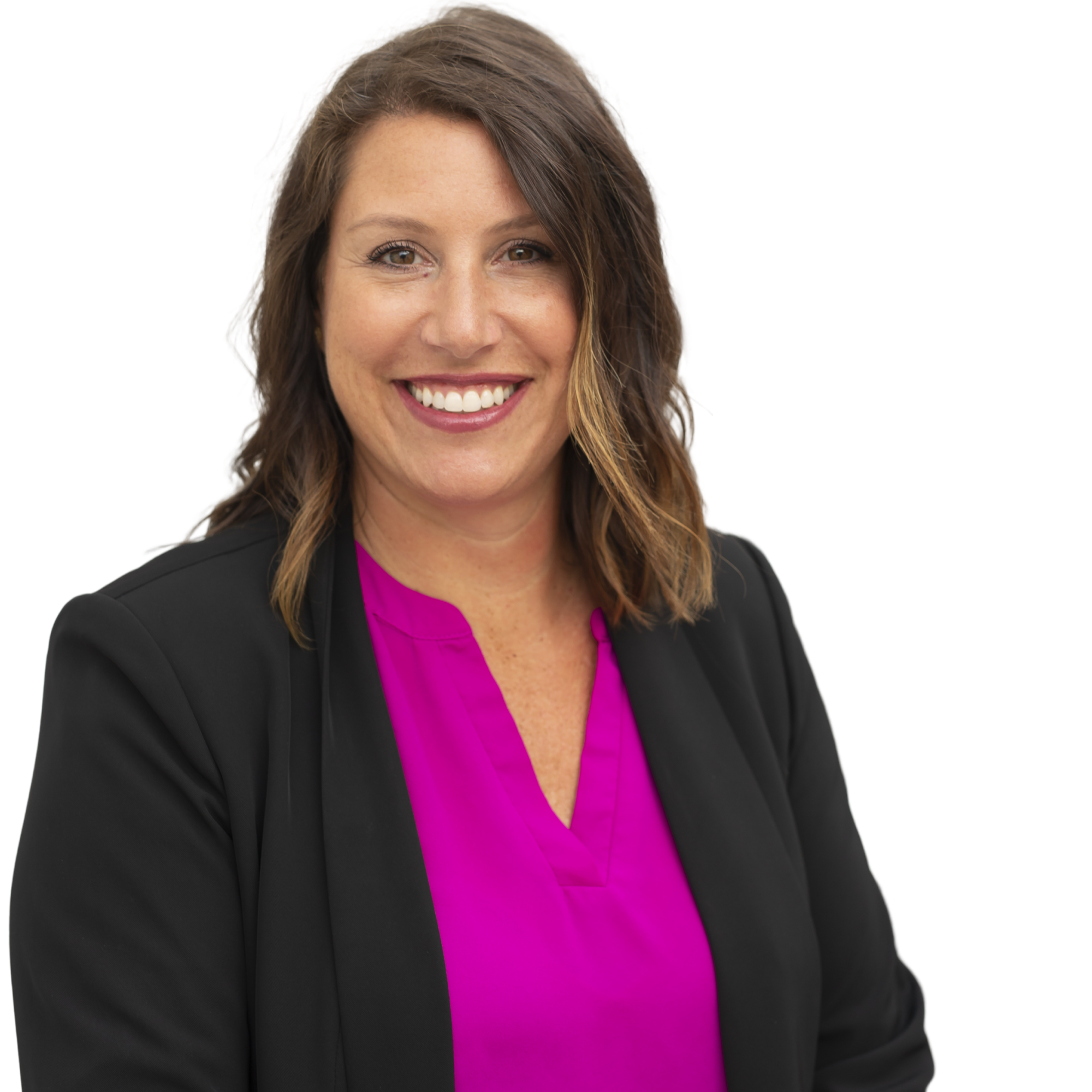
Miranda Beeson, MS, BSDH is a dental industry leader with 20+ years of experience in clinical care, education, and practice coaching. As Director of Education and Lead Practice Coach at ACT Dental, she helps dental teams build aligned, profitable, and fulfilling practices. With expertise in communication, team development, and business strategy—plus certifications in DISC, Driving Forces, and Emotional Intelligence—Miranda is a trusted coach and engaging speaker. She lives in Virginia with her husband, three kids, and two dogs, soaking up the sun whenever possible.
Done learning and want to get started?
Book a demo