

The Future of Dental Workflows
How Paste Dental Transformed Case Acceptance
Transcript
Hi, everyone. Welcome to our webinar. Thanks for joining. This is doctor Alan Clark, and my name is Ashley King, and I'm from Pearl. I manage our international relationships, including our partnership with Henry Schein One and Dentily.
So this is very fitting for me to be here today as well.
In this session, we're going to be discussing how PACE Dental transforms our case acceptance using Dentley and Pearl. And with that, I'm going to hand things over with doctor Allen so we can kick things off.
Ashley, thank you so much, guys. It's really great to be here.
I trust you've had busy days. So to turn up this evening is a privilege, of ours that you chose to spend a bit of time with us. And, hopefully, the information you're going to hear and everything that we're gonna discuss is gonna be super useful. So a little bit of background on myself. So, my name is Alan, doctor Alan Clark. I am based in Belfast in Northern Ireland, but I do some work right across the UK and also in the US now as well.
I'm the AI and clinical director of Pius Dental in Belfast. So I bought the practice. It's about four years ago now, and we set it up during COVID. We did a major rebrand, and we really took, a very different approach. We wanted to engage a younger audience with our practice with dentistry.
We wanted to create a brand that would have a really clear identity, and we wanted to use technology to the best of our ability to, ensure that patients get just great health care outcomes. And my interest also is in marketing and branding. So I, have written a column over the last few years for dentistry magazine, on tech and trends, where dentistry is going, how to keep up with that, and pulling information from what's happening in the US into the UK market and how we really uplift the UK sense of dentistry.
Our our practice and as I said, a lot of my interest is in branding and marketing. We've we've had a really disruptive brand. We've been really conscious to engage with Gen z and millennials in all the ways that we approach clinical care.
And for us, then that has meant taking a very tech focused stance. So if we're talking about how we're future focused practice in our marketing and also on our online presence, in our emails, every way that we correspond and communicate with our patients before they enter the clinic, then we need to back that up with what we do in the clinic, how we prove what we have talked about.
And so for me, communication is really, really vital. I also, I'm the founder of an organization called PACE Presents where we took, globally, a lot of the leading dentists from around the world and a lot of the American celebrity dentists to Morocco, Marrakesh last year to do a high level mastermind. And all the teachers and the leaders, how do we bring them together to learn from each other and to really push our industry forward? And we're launching an online course called the Ultimate Associate as part of our Project Piest where we've been working with young dentists, young students, and doing a student roadshow across the country, from Belfast to King's, all across the UK, in twenty twenty five. And a lot of that for me has been chatting to young dentists about all the skills that they need to succeed in this profession. The clinical skills are so vitally important.
But, also, it's about how do you build true relationships with your patient.
How do you communicate effectively?
And how do you build a trust and rapport using the technology and the things and the tools that we have available in twenty twenty five? Dentistry for me has changed. I graduated in twenty twelve. It's such a changing world and a changing field, and we wanna be right at the heart of that. So I'm so pleased to talk about Pearl. It's a product that we've used a lot in clinic, and it's become foundational in our workflow.
Our goal, as I say at Pius, isn't just great dentistry, but it's about creating a great and powerful connection with our patients. And AI, and working with our integration with Dentalea is part of the journey that has helped us deliver that in a super, super strategic way.
So why do we need to evolve? I wanna cover a lot of topics on this. And, actually, I just wanna take a moment to say a lot of what we focus on tonight is about the concept of AI diagnosis. So what is it whenever we learn at the same time with patients?
So if you guys have any questions, Ashley's gonna be here on the call and can flag anything to me. Anything that we wanna pull, and discuss as we go through, it has to be super collaborative learning because as you guys are learning about this, it it's becoming part of your psyche in that moment. And for me, it's really important that we kinda learn together. No questions are too stupid and nothing is off limits.
So what we have AI in dentistry and certainly working, looking at trends in dentistry, patients want clarity and they want trust.
If they have something wrong with their health, the first thing they're going to do is Google it. Whenever we look at gen z and millennials, so many patients and so many of this generation are tech forward. They're gonna look at that first before they seek the opinion of a professional.
So for us as a dentist, really, our rule has been flipped on its head. It's not that paternalistic coming and giving the information and expecting someone's gonna trust it and listen. We really need to prove that with every patient interaction.
Throughout that, we actually build trust.
Diagnosis can be hard to explain without visual support. So seventy five percent of patients are visual learners. So how do we convey the information that they need to make the decisions for their own health? How do we give them access to that rather than gatekeep it like our forefathers did?
And, actually, how do we be just as open, and accountable to them? Because, honestly, that's what they're here to find from us. They want the information. They want us to be as transparent as possible.
So how can we do that in a really safe way?
Associates. AI I'm a practice owner. You may be an associate yourself. You may be a clinic owner.
It's really difficult sometimes in presenting cases and feeling like we're not selling.
We none of us went into dentistry to become salespeople. Far from it, we went in to give great health outcomes and to give amazing information to our patients.
But AI, we feel like we're just gonna shaft people because they think we're AI to sell, and we're not. So how do we really give across the information to let the patient make the best decisions for themselves, without that fear of selling?
For us, we wanted to make the patient journey better. We wanted to streamline the process, and we wanted to be super relevant and transparent to our patients. So we wanted to use technology to the best of its ability to allow us to do that. So we asked the question, what if we could make diagnosis more visible, more confident, more collaborative, and, actually, for me as well as an owner, more standardized?
How could I ensure that a patient coming at AI AM on a Tuesday is getting the same level of care and diagnosis from a different clinician at four PM on a Friday? Or if we have a husband and wife coming in for new patient examinations at the same time and they're seeing two of my associates, How do we ensure that they get the same level of care and the same level of professional diagnosis? So those are the questions that I wanted to ask. AI gonna chat through tonight what the patient journey looks like, how we use the technology, and, actually, how that has impacted our patient's results, and the AI, work life balance, and workflow of our clinicians and associates at Paist.
So we, it was really one of our first moves. Whenever I took over my practice, we moved to Dentley.
I wanted a cloud based solution.
And, actually, it's been part of our workflow with its automation. So if it's something that you're looking for just as a practice management software system, I I can't recommend it highly enough. That's something that we have used from day dot.
But, Pearl for us is a product now we've used. We were one of the first I think we were the first clinic in Ireland to use it, certainly, and one of the first in the UK. And I was really keen. A lot of my colleagues in America and friends who I work closely with were finding that, you know, American dentistry sits a little bit ahead of the UK.
Patients were ringing in their practice looking for a clinic. Hey. I was in a clinic where we used AI. We used Pearl in California.
Now I've moved to Austin and Texas. Do you guys use Pearl? And suddenly, even if the clinics hadn't heard about it, they were now getting questions asking them, do you use this technology? They so they had to go back and think, is this something that we want? What's that gonna do for us? And why are consumers and patients now being conscious of this?
Well, if you don't know about Pearl, Pearl is integrated with Dental Vision. So it becomes a real time application within your software ecosystem. So it's super straightforward. You take a radiograph. And within about twenty seconds, you have an AI overlay which starts to show you how caries may be present in their AI.
Shows periapical periapical pathology, bone level measurements. It shows any subgingival calculus. And one of the most important things for me is it shows caries and it puts a number a numerical value to that level of decay. Is it incipient?
Is it ten percent in the enamel? Has it moved into the dentine of the tooth? Or what does that mean for us? So it highlights pathologies.
And as we take this process, for me, I very much take an approach of AI diagnosis with my patients. So what is co diagnosis? Well, in PACE in Belfast, we, we try to do comprehensive dentistry. So we wanna look at their mouth.
We want to look at where their teeth sit in their mouth. We want to look at the structure, the function, the aesthetics, and the biology of their mouth, and we do that exploring with the patient. So we're very we spend a lot of time communicating to the patient exactly what we're doing, and we use a lot of technology in our workflow so that they can access and find the information as easily, but also as, easily understood as possible. So as I said, within about twenty seconds after we've taken an x-ray image, we have an AI overlay, which shows us a lot of lot of information.
And we chat through this with the patient and talk about, well, listen. This is what we're seeing, and this is what this means. Often, there'd be lesions that I personally may not have noticed before. But actually with this, it allows me to take a super preventative approach with my patients.
And I would really encourage you, if you're if you're a user of Pearl already or if you're someone that's thinking about dipping your toe into the water. This isn't just diagnosis for pain or diagnosis for, a problem that you're aware of. We actually do this a lot with our new patients because this adds value to our clinic, to our workflow, and suddenly patients are getting access to information that they would have never received. We can give them a snapshot of their health from a super preventative approach, fast forwarding AI.
So they can see things that may become issues down the line that, as clinicians before, I certainly wouldn't have noticed. Now the diagnostic capabilities always rely with me, the clinician, and my associates. So that's the thing. That's you're never lowering your skill set.
Instead, you're actually honing the information that you use to diagnose. Diagnose. So this becomes part of your toolkit. And we may say to the patient, listen.
If we find some incipient early lesions, well, then that means that we're going to start to use, you know, high strength fluoride toothpaste. We're gonna use Icon DMG. We're going to use a biomimetic material to try to heal as quickly as possible into your mouth so that we can stop the decay where it's at at this moment in time.
It's important for us because if that patient sees myself or one of the other clinicians, we still have that ability to use our brain to diagnose. But instead of not having a full picture, suddenly, we can get access to information way sooner. And for me, that's boosted our case acceptance. You know, I'll give you figures in a little bit on the talk, but it is super significant because, actually, patients now, for the first time, have access to this information and start to they see the information at the same time as we do. We share everything on the screen with the patient in real AI. So it becomes very powerful.
If we look at how things were in our clinic and my workflow before, we were using verbal only explanations.
And there was elements of uncertainty where we would say, well, listen. This may be an issue. I'm unsure about it. Let's monitor it for a while.
Maybe we'll really radiograph it in six months again. We have very much a clinician led discussion, so we're still following that form of paternalistic medicine where we maybe turn the lights off. We stand at the front, and we present to the patient our findings. But with AI, what we have really AI is it shifts the dynamic of discussion.
So instead of us feeling like we're selling or saying, hey. Listen.
We need to look at doing a AI. We need to look at doing a filling. This is why. We say, right, well, listen.
What what is important to you in the future? Do you wanna keep your teeth whenever you're older? What does that mean to you? How does it impact you day to day if you were missing teeth?
And the patient can reflect on that. And then we can say, well, actually, look. Here is the radiographic image, and we can see that there's several lesions here that the computer is flagging. And so we can discuss that and say, well, hey.
Have you had any sensitivity there? Okay. That's really interesting that it's flagging something there. Let's take a closer look at that.
And, actually, it becomes a method of visual storytelling. So instead of us communicating, paternalistic sense of, you know, this is treatment, and we need to do it. Actually, for me AI, it's actually co diagnosis with the patient. Hey.
Let's look at this together. What does that mean? Okay. Well and we can start having a discussion about it.
Patients are involved in the discussion. And for us at Pius, we find that our case acceptance jumped AI eighteen percent from the get go. And and that's across our associates. So everyone noticed a major uplift and patients feeling more informed, and feeling part of the treatment acceptance journey.
We were seeing an increase in treatment uptake. We were also seeing a more smooth, let's put it a a a flow within our work, rather than just our kind of set workflow, but it was a smoother conversation with patients. We were able to follow a dialogue.
We at Piax have a photo studio built in. So for a new patient consultation, we bring them in. We take a series of photographs. We take an intraoral scan.
We take some AI wings, some other x rays, radiographs if they're AI. And then we bring all this information together and discuss this with the patient. And we take a bit more time than normal for new patient assessments because for us, it's really vital to build that rapport and build the trust with accessed information. I always stress, and whenever I'm talking about branding and marketing that for the new Gen z audience, there's an inherent suspicion towards health care.
They've grown up in the generation where their parents were in debt. They'd overspent, and they were paying things off on credit cards, on finance schemes, whether it was cars, houses, holidays.
They live through their parents living in a recession and having to deal with that. So they have this hustle culture built in. They want to be treated fairly. They know that they need to make it a little bit on their own.
And, actually, from a marketing perspective, those patients are fervently loyal if they buy in and understand what you're communicating and ultimately trust you. And it's more about trust building with patients, I think, than anything else with some of these tech tools. People can get really scared of tech. I know some of my colleagues initially were scared.
Why am I gonna use this? How is this gonna affect my diagnosis? Is it accurate? Is it gonna get better?
Am I gonna get false positives? What does that look like for me and my workflow? And all those things came up. But, also, whenever they started to use the technology, they stop they suddenly started to see the relationship change with the patient.
Because, actually, you were discovering something together. And instead of you saying, hey. I think this is what you need, and they think, well, Flip, they're here to sell me as much as they can. It became a, well, this is what we're finding.
Does that make sense to you? How do you feel about that? Okay. Well, then if you trust me, I can give you definitely some solutions, and let's see what it looks like.
Let's see what's important to you now. Let's see what's maybe important in a year's time.
Those patients that you've spent the time building trust with, those millennial and gen z patients are gonna be major advocates for you in your clinic and as you market and increase your brand presence.
If you get a gen z person who loves your brand, loves the fact that you've taken time with them, you've built trust and rapport. They're gonna be your raving fan for years. They're gonna go off, put it on their social media, and say, listen. I had a great experience with this dentist.
Guys, you should go there. It's a form of social proof, and it's because they're having an experience and AI able to see information firsthand like never before. So for me, it it has been a game changer in our clinic. And whenever we surveyed patients, nine out of ten said that they felt way more informed about their their clinical choices.
It reduced discussion time with our associates because the information was presented visually. And as I said, seventy five percent of people are visual learners. And associates reported an increase in confidence with just decision fatigue. If they've been working a five day week, they're AI, it's three PM on a AI.
As dentists, we can make mistakes, and it's not through a sense of being, you know, ill prepared or not knowing our stuff. It's just simply with the number of patients that we have to see, we can get AI, and sometimes our eyes fail to spot things. So second opinion with Pearl, through identity is a great check. It's a great way of thinking that I'm not just a hundred percent sure in a diagnosis.
Let's put it through Pearl. Let's see what it says, and it comes back and it reaffirms what we're thinking. We're like, okay. Well, it's saying that.
And I think that. The patient's experienced sensitivity. Let's do something about it. Whenever you say that to patients and you show them this, they immediately want to go for the treatment.
We I have very, very few patients who will, you know, say, listen. I'll leave it or I don't agree. Whenever the information is presented super clearly to them, it's a no brainer.
So what can you do next about it? Well, I think it's really important that your practice understands the technology.
In our ultimate associate course, one of the modules that we teach, is about how you work with your team and how you work with your dental assistant or your nurse. And I think for Pearl, it's really important to start with team training, not just the tech setup.
We know that so many products are on the market. You buy them. You start a subscription. You try it for a while.
You don't get into the way of it, and you forget about it and go back to your own work your your old working ways. But with Pearl, I have to be honest, it was one of the products that we started to use, and we saw the benefit really, really quickly. But we built it into our workflow, and that means that the our chairside assistants, our nurses, were able to bring up the images after we've taken the X rays really quickly. We can start talking through it.
We've already bought in value because our front of AI team of you know, whenever we see a new patient, we'll give them a practice tour, talk about digital X rays or three d oral scans. The fact that we are one of the first practices to use AI technology, all of those things add value to the patient's experience. They set you apart. They understand that you've taken the time to invest in this because, ultimately, you care with with them and what their experience and their health care journey is like.
But the team also understands what the technology is. That helps me because my front of house understand what we're doing and understand the value in it. My chairside assistant understands that, hey. These these caries lesions, let's start noting those in the charting.
If there's any medical legal issues, we wanna be ahead on that. We wanna know that we've done everything properly, that our team has worked cohesively.
And so it it just builds a sense of trust. It builds it with our patients because they can see the problems. They know what's coming down the line. We can do a treatment estimate.
So the budget jury wise, they know that they can afford it. And it builds it into our workflow for all our patients rather than just someone who has a dental issue, dental opinion. Actually, it becomes a selling point for our practice as to what the new patient flow and new patient journey looks like. You can build it into your workflow where patients are coming away saying, oh my goodness.
I went to this new dental clinic.
You'll never guess what they did. I've never seen this before. Have you heard of this? Suddenly, they're talking about it.
They're talking about it with their friends. They're talking about it at yoga class. They're talking about it over coffee. And patients are gonna become your best marketing tool because we all know that a word-of-mouth referral is golden in this industry.
It's golden to get patients to wanna come back and to refer their family and friends.
So treat treat this like a practice builder. Treat it like a communication tool. And even if you're not flagging Aries, if you're not flagging things, it can be a great baseline to show a patient, actually, do you know what? You're in really good health.
You've got great bone levels. Yeah. Two millimeters down here, there's a little bit of subgingival calculus, but we know that you see the hygienist regularly. Actually, they're you're seeing them today, so they're gonna deal with that.
I'm gonna flag that to them and say, oh, distal's the lower right four. There's a little bit of calculus. We've seen it on our radiographs. It's been flagged by second opinion.
Awesome. Let's get that dealt with. And it shows the patient that you take a preventative stance and you take a health care first stance before just treating injury. AI think that's really important because as we look at wellness brands and as we look at your own reputation in the industry, we want you to be seen as someone that puts prevention first.
We want you to be seen as someone that that really values that.
I've written here I suppose I wanted to to give a little bit of of a quote rather than just looking at the team, but, actually, AI has this impacted down on me as a clinician and my workflow.
And it's really been just the way that we communicate with patients Once we had buy in from our team, once we could see the financial benefit, and we could see actually how patients were more informed, and we could take a better preventative practice approach. It actually made my life easier because I didn't have those awkward discussions with patients. And I could say to them, well, listen. Like, let's find out together as of what your health looks like in this very moment.
And then from that, let's make informed decisions. And if you've built that trust and you've built that rapport with your patients, then, ultimately, the patients are gonna come back to you and say, well, listen. What's your advice for for me for my health? What do you think I should do?
And I think anything that we can do within our workflow to aid communication, to build rapport, to add value to that patient's experience, is not only boosting our practice revenue, your own bottom line at the end of the day, but it's increasing the way, that patient views you and your skill set. They're more likely to trust your decision making, and to question it less because you're coming to them with open hands and saying, listen. Here is as much information as I can give to you, and I'm willing to do it. And it's up to you what you do with that.
But as AI think we look at health care and as how it evolves, you know, younger generations, as I've said, take a a real wellness first.
Physical health, mental health, sexual health, all these things, you know, join together to to to really show what health and wellness is for them. And if we can be the person that gives them information and gives information into this mix, then I think it's super valuable.
And it's a privilege for us to be able to use technology and to be able to be ahead of the curve, as to what's coming down the line. And I wanted to finish on the the the fact we're gonna open it up, with Ashley in a few minutes to some questions. But I just wanted to finish on if you can be a communicator that is open and you can really place value and trust, in the relationship that you build with your patients, then that is far better than any spend that you put on marketing. It's far better than any printed material, anything that you put on social media.
It's that one to one relationship. So instead of being someone maybe that's out there that's heard about technology and AI and how it's coming to disrupt the market or change the way you work. It's important for us as health care leaders to take ownership and to really take the technology and take the tools and be early adopters so that we can create the story that AI it, that we can continue to use our professional ability to diagnose using now a filler information set, a more forward thinking information set, and, actually, a a bigger information set where we can give, lots of knowledge to someone who can't get it and who doesn't know how to get it.
And if we can be the person that gives it to them, and shares that freely and openly with them, then we're gonna build trust like never before.
So, Ashley, if you want to see if there's any questions and things, I would be so happy to discuss. And if there's anything anyone has that they wanna talk about, that is open.
And, yeah, it's a great question.
Thank you, doctor Allen. We have a we have a lot of questions coming through, so we're in luck.
The first question that we have is about the case presentation.
So someone asked, are you actually showing the patient, the Vision AI output? And another person asked, can you walk us through, like, a role play of how you would have that discussion with the patient?
Yeah. Absolutely. So first off, a hundred percent. We in our surgeries, I don't know if you can actually see behind me, but we have, like, monitors right in front of our chair which share, with our, with our computers.
So whenever we take our video graphs, we use, little sensor plates. So within about five to ten seconds, we have the image. And then in about twenty seconds later, we have the AI overlay. And then we I will go through and talk through exactly what that shows.
So it will show if there's any caries into the dentine, into the enamel. It will put a percentage on it. If there's anything in the enamel, I'm gonna have a a discussion and talk about AI we're gonna take a preventative approach, and maybe that means biometric dentistry, AI resin infiltration. It might mean a small filling, or it might mean high strength fluoride.
If it's into, the dentine, then I'm gonna do a larger filling on it, because I don't want to to let it grow and progress.
And we're gonna look at their perio health. We're gonna look at bone levels, calculus. We're gonna look at if there's any IOPAs, if there's, anything that we wanna flag that's, causing problems and part of the diagnostic pathway for that particular patient. But I should caveat most of what I'm talking about is, like, just across the board for examinations.
If we need some bite wings, this is always gonna be part of it. And, Sue, how does that integrate into our workflow? Well, new patients come in. If they need some bite wings, we're gonna flag those.
We're gonna take some photographs in our photo room, and then we're gonna present all the information together. So we're gonna look at our three d scan. We're gonna look at our photographs. We're gonna talk about their smile design.
And as I said, we're gonna ask open questions. So we're going to talk about what do they see whenever they look at their AI? What's important to them? Do they wanna keep their teeth whenever they're older?
Because saying yes to one thing is often saying no to something else. You know, they they come in and say, well, I don't wanna lose my teeth. I don't want a denture. Okay.
So then that's putting them open to having implants and bridges because they don't wanna have a denture or have missing teeth.
And, again, whenever we're looking at, their radiographs, a key part of it is our diagnosis, but our diagnosis being mirrored by the visual display. So we can actually, as well, segment the tooth into different parts so we can look at different layers.
And it becomes a really great communication tool because then they start asking a lot of questions just like you guys are doing here, and it becomes this collaborative. Well, what do you think of that? Oh, that's a cool cool thought. Well, maybe that means this. And then we start crafting a treatment plan together, and we can use our professional ability to push it in the right direction that is ethical and prudent for their own health. But, ultimately, they have a say and control as to what they do with it because they get all the information, and then we can guide them to make a great decision for their health.
Great. And that leads me into the next question, which someone asked, do you think this is actually allowing patients to understand the treatment better, and do you think this is causing them to come back to you even more frequently?
It's definitely letting them understand the treatment better, and there's no question because they start interacting with it from the get go. They wanna know what that means. What does that percentage mean? Well, if it's into the enamel or the dentine, what does what does that even is that even important? And so it opens up the discussions for us about the rationale for treatment and what we're proposing and what happens also if we do no treatment, what's gonna happen?
And another great feature is we can look at the radiographs that have been taken from a period of time before, and we can say, well, actually, listen. Six months ago, this is what it flagged, and it was twenty three percent in the enamel, and now it's forty six percent in the enamel. So we can see that there's a change. So, actually, we know, predictably, there's gonna be a future change, so we need to do something about it. Think it's really taking the focus for us to a more prevent prevention focused practice. So we're not necessarily increasing the recall visits if we're finding that the recalls need increase for a perio reason.
Okay. Fair. We may do that, but it's definitely increased our case acceptance in terms of the patient's understanding more about their health and then being willing to go for fillings. So instead of, you know, a blind checkup where we call out lots of numbers and we say, okay.
Hey. You need three fillings. And then they get away with a treatment estimate of, you know, we're a private practice, so it's several hundred pounds. And then they think, flip.
You know? Every time I go to the dentist, it costs me money. I don't even know what these are for. Like, what is this?
Like, we don't do that at Piaist. It's very much, hey. This is a picture of your health, and then let's plan what the treatment looks like. So there's five lesions.
There's two of them that we think, actually, we're gonna monitor those. The other three, we definitely need to treat, and this is why. How do you feel about that?
And then the patients have a say in it. And then the patients go away knowing, okay. Here's a picture of my health, and this is what I need to do to make sure that it's on the right track.
Thank you, doctor Allen. We have another person asking about bone level specifically and comparing bone levels over time.
So we can pull our video graphs that have been taken over the last few years, and we can look at bone level measurements specifically on that to see if we've got any change.
And we can we can easily then overlay that and show that to the patients in our treatment plans, to show them why perio treatment's important, what we're gonna do about it. Or if they have had perio treatment, maybe the bone levels are static, but, actually, we can see, recession, or we can see that, actually, the the gums are healthy now. And what does that mean? And we know that we don't have pseudoparketing or we have stability.
And so it just gives us a much broader tool to be able to communicate all of these things. Whether it means treatment or not, the patient is way more informed about their own health and the snapshot in time every time that we have access to this data. And it's a great resource for us building that up.
Great. Thank you.
Okay. So we were talking about patient acceptance, and I know you mentioned a little bit about your setup. I have a specific question around the best equipment and tech layout when you're presenting to patients.
I love an intraoral camera as well. I didn't mention that. I literally intraoral camera take pictures of everything. So every wear lesion, every early area of demineralization, I take a picture of it because that is something that a picture, again, speaks a thousand words. If I do a small filling on someone in that appointment, I take a picture before, I take a picture afterwards, and we can show them exactly what we've done. So they see value.
A tech setup.
I just love to be able to have a TV screen in front of the patients. Every surgery here has it. I use an intraoral scanner a lot, and we want to be able to maintain scans over a period of time.
So whether I'm using the scanner to show their mouth or with the intraoral camera, I use both.
With our radiographs, I like to be able to have that information in front of them, and I like to be able to pull all of this together as quickly as possible.
We do a lot of cosmetic treatments, so we actually spend a bit of time and money to set up a specific photo studio. So if we have a new patient, all new patients get a series of nine images, which then are shot in the raw because that's what the American Academy of Cosmetic Dentistry kind of wants for case presentations.
We then have our front desk team process those photos, and then we put those onto an AI. And, the patients can see those within about ten minutes, and then we talk through and we can smile design on that. So we've got an iPad for smile design. We've got a screen in front of them for our radiographs and intraoral camera views, and we have our three d scanner.
And, ultimately, whatever setup you have, it's just about communicating really well and giving the patient as much information as you can. And taking time to do it, I think, is the important thing. Sometimes in dentistry, we rush. You have a a new patient for ten or fifteen minutes, and, honestly, you don't get to the root of the problem.
So what my advice would be is to take time with new patients and to build rapport, to take time to explain things.
And your treatment cases, the value of it, and your case acceptance will soar.
Thank you. And, also, someone asked which intraoral camera are you using?
We are using a Carestream. I don't know the number of it at the minute. It's a Carestream one, and it's great great picture quality. And, yeah, love it. Wouldn't be without it.
Wonderful. Okay. Let's switch gears a little bit here. I've seen a few questions come around about accuracy.
How important accuracy is to you and how you're handling things like false positives or false positives?
Really important. And I it's something that I stress, particularly in the ultimate associate course. And whenever I talk to young dentists that you need to be the diagnosing clinician, you are there to diagnose. And, it you know, it's a flip side because we always get the we always get the thing of the skeptical associate saying to me, but, hey. If we get false positives and we drill in what's you know, we've done something wrong, like, we can't trust the technology, then the flip side of that is we now know that some of the, the dental law partnerships are actually using technology like this to assess in cases. So, actually, it's really important to hone your levels of skill set to be able to use this technology really responsibly as the sample size increases. And AI noticed the technology has improved so much just like all forms of AI and will continue to improve and is has really become the baseline in how we standardize care.
But, yeah, you need to be a really shrewd person to diagnose and simply use this as part of your toolkit alongside all the other information that you previously had that you were comfortable making a diagnosis with. Now you've got even more tools. And so as you diagnose, it becomes so much easier, but, ultimately, you are diagnosing.
Great.
Going back to patient acceptance and treatment planning as well, are you taking a certain approach when you're integrating AI into your treatment plans for for emails as well? Or how are you also, like, covering yourself? Someone's worried about, misdiagnosis, so making sure that you are, covering yourself legally.
Yeah. So so it's really important. So I have actually, a a background in medical on ethics. So it's really important legally that you are giving the patient informed consent for all the treatment that you're doing.
And your diagnosis has to be robust. So you're you're talking through if you're doing a treatment letter to a patient, you're saying, well, based on my findings, this is what we AI, and you can explain what tools you're using to find it. But, ultimately, it's your own clinical judgment. So irrespective of AI or not, that is only one tool in the toolkit to form your clinical judgment.
Your treatment letters are always based on your clinical judgment that you're you're giving to the patient and then the treatment options that you're presenting to them for that. And second opinion is really well named because it as a tool from Pearl, it it is giving you that second pair of eyes on something.
But, ultimately, you you you're not gonna trust any one diagnostic tool as we're taught on its own.
You you take a you take a a reading of different findings if the patient's not having an EP and or sensitivity or is the patient having PM sensitivity, tenderness on AI.
They may have swelling. They may have a history of a deep filling, and suddenly, they're having a tooth that's keeping them up at night and it's progressing. And whenever you take a radiograph and Pearl shows there's periapical pathology on it, Well, you can then use that as an image and screenshot that and show that to the patient. But, ultimately, your diagnosis isn't coming from Pearl. Your diagnosis is coming from you as a clinician. So you could either send that radiograph with an AI overlay or not, but still you're communicating the same information.
You just want to do it visually, and you want to have the patient as involved in the discussion as possible. So there's so many ways that you can present, you know, your your your sort of treatment outcomes or your your written communication. You know? I I think the AI fear that you need to be slightly more careful with is if you're dictating notes or using an AI to generate your treatment letters, you really also need to be checking that at the end to make sure that, that is, you know, completely accurate to your thinking and what happened in that appointment.
And, again, that's not on on you to check that and on all of us to make sure that we're using it responsibly.
But whatever visual way that you want to present it, ultimately, you're still coming to the same diagnosis yourself as a clinician. AI I think that's really important to to underline. And, yeah, you can you get false positives? Absolutely.
Can we make misdiagnoses ourselves? Yes. And if you look at the data, AI diagnosis is far more robust now than actual clinical variance between dentists. And so that's something to bear in mind whenever we look at this from a legal perspective too.
Great answer.
Okay. Next question is about building rapport and communicating without AI jargon. So I'm sure there are patients that come through that might be a little hesitant when it comes to AI. How are you approaching those patients?
What's your what's your thought there?
I think if you if you have a sense of your clients and your patients, you know how to phrase things. So one patient you're gonna be super familiar with because you've built a really good rapport. Someone else you're gonna be slightly more professional.
Someone else, you're gonna be laughing and joking with because you know them super well. And and it's just the same for AI. If someone's really engaged in the technology, you know, sometimes it's a numbers person, then they want the percentages. They wanna know exactly how much caries is there. What does that mean for them? What are their treatment success percentages?
What's the failure what's the risk? What's the risk of reinfection?
Someone else just loves a pretty color, and they are so happy to see that there's different colors there, and this means this, and this means that. And it's for them, that's opened up a window of opportunity and discussion, and they suddenly feel like they're involved like never before. So I think there's an element to tailoring your response always to the patients that you know and building on the rapport that you have. And, yeah, if you'd if you're scared of AI jargon, don't use it.
We the only AI jargon we really use is to say that we use AI, and they say, oh goodness. What's that? And we can talk about it. But, ultimately, that doesn't form too much of the discussion.
It's actually what's the information that we have in front of them, and and is this gonna be useful to them to make a decision, and what does that mean?
Great. Someone also asked, what is the ultimate associate course?
So yeah. So it's a course that we're we're gonna be launching. I'm gonna be launching as part of our PS project PSD ecosystem, where where I'm teaching. It's an online course where I'm teaching, dentists from all over the world, really, as to all the skills in communication to be a great associate, to be the ultimate associate. So what are all those things that you're not taught at university?
You come out of university.
You've got the clinical skills, but you don't really know how to apply it. So you you see lots of courses out there that want you to learn to do clear aligner therapy, composite bonding, no prep veneers. Well, what's the real route map to that? How do you actually communicate and case present to your patients?
How do you spend strategically?
How do you look at your budgets and think, hey. I'm an associate, and I wanna get from a to b. How do you financially plan for that? How do you work with your team?
How do you upscale your nurse to make your days more productive, to make your work work life balance better? How do you take photographs and then use the photographs to communicate with your patients? And how do you have a presence in social media? How do you create your own personal brand?
And how do you become someone that people are asking for, ringing up that they specifically want to see you? So all those skills that make an associate just a great dentist, I'm gonna be teaching and giving you lots of resources, in the next few months. I don't wanna just share the release date just yet.
But it's gonna be a super exciting thing, and there isn't anything like this on the market to be able to really give you a roadmap to success.
That sounds great. If I was a dentist, I would say sign me up for right now.
Okay. We have someone asking about their what advice you would give to someone that's an associate at the practice.
They're working with a lot of old school dentists.
You know, they're set in their ways.
They wanna stand out.
Now what?
Well, the ultimate associate course is no fan of that. And there's there's yeah. Yeah. But, I joke, but, actually, for you to we we look at whenever we do that course, we we start that with vision planning for yourself.
So where do you wanna be? Where are you now? And where do you wanna get to? And if it's a question for you of how do you get those dentists to wanna bring technology into the practice, how do you want them to you know, if they're kinda old school and they they'll throw their head up and not want to use Pearl, how do you get them to buy the technology so you can access it?
Or how do you yourself wanna progress your career? And, you know, we have associates that use Pearl. We have practices that use it.
What do you want to do that elevates the experience that you give to your patients?
What do you wanna do that progresses you as a clinician? And there's so many aspects to that. What advice would I give? Well, the more that you can learn about what's out there, the more that you can communicate this to the team, the more, as time passes, that consumers are directly asking for this technology to be used, I think the problem solves itself.
But the fact that you're here in the webinar is a really great step, and, hopefully, some of the information that we've been able to share has been useful. And, Ashley is very happy. There's a QR code, and people can book in demos. So if your principals are gonna be keen after you talk to them about it, there's definitely ways for us to hook you up to the ecosystem and see if it's something that actually not just yourself as an associate, but your principals could see a real benefit to.
Being a clinic owner myself, whenever you can say that you can really tangibly show patients wanting to accept treatment and to, accept the fillings and to get cases over the line. Most practice owners are very keen to discuss it.
Great. Thank you so much for answering those questions. We had a lot come through.
And as doctor Allen said, if you would like to book a demo with us, please feel free to scan the QR code right there.
We appreciate everyone attending and asking great questions. We appreciate the, involvement here. So we hope everyone has a wonderful evening, and thank you again, doctor Allen.
No problem. Thank you. Everyone have a great evening. Thank you so much for
Meet Your Host
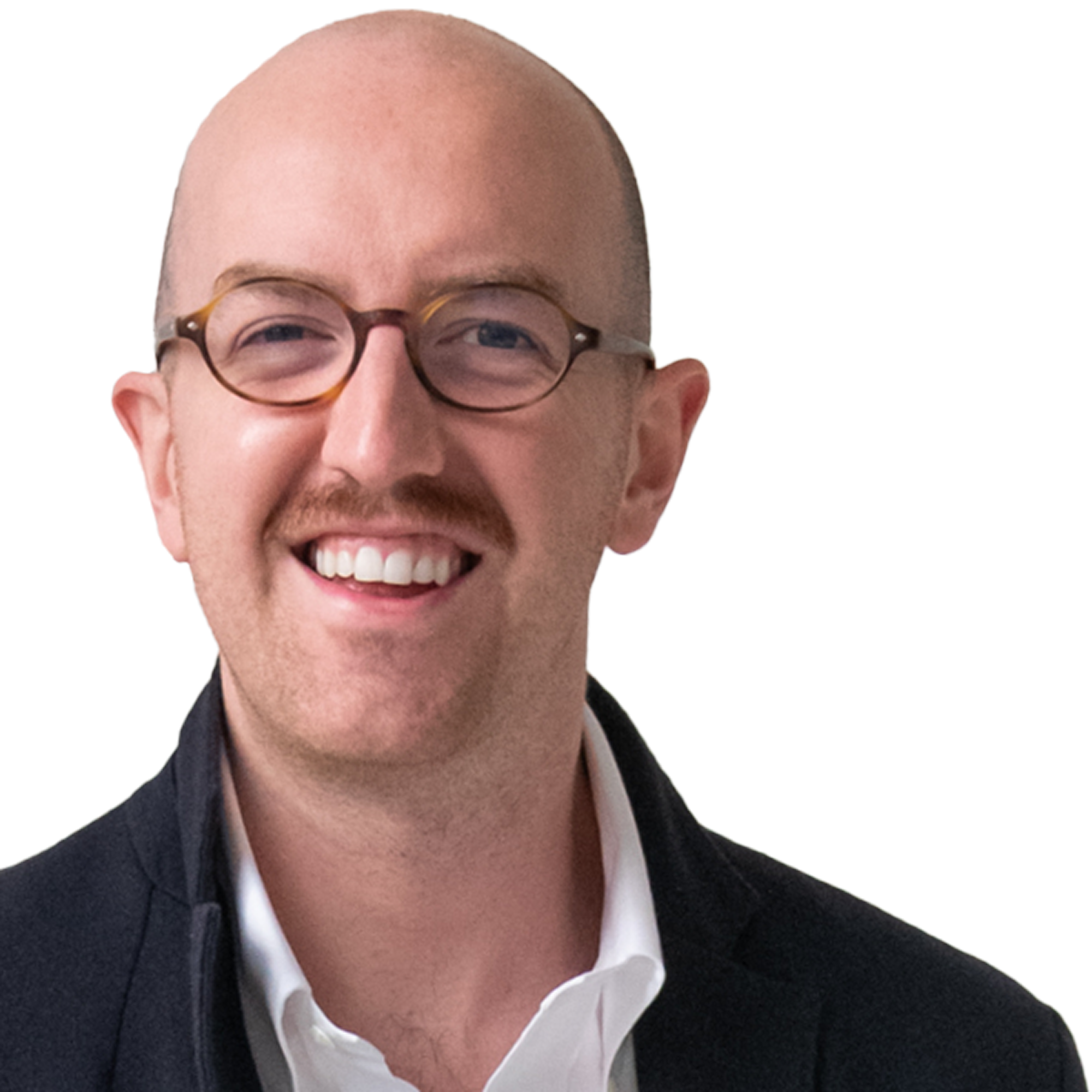
Dr. Alan Clarke is a leading dental branding expert, cosmetic dentist, and educator. Founder of Paste Presents, the highest-level dental mastermind in the world, and Paste Dental, he’s reshaping dental marketing and branding. As a key opinion leader for Pearl AI and brand ambassador for Figs, Dr. Clarke bridges technology with aesthetics. With an LLM in Medical Law and Ethics, he brings a unique perspective to the dental field. A sought-after lecturer, he teaches cosmetic dentistry, marketing, and branding across the UK, Ireland, and the US. His expert columns in *Dentistry Magazine* cover the latest in dental technology and trends.
Done learning and want to get started?
Book a demo