
The Broken Practice
Why Modern Dental Practices Are Working Harder, Earning Less, and Burning Out Faster
Transcript
We are really excited to dive into this really interesting topic that I was really happy to hear when Doctor Snyder and I started working together.
Really, this topic is very unique — what if the very formula that once made these dental practices successful is now the very thing that is holding them back? Right? And that's really an interesting concept, because today's dental practices are navigating rising overhead, staffing shortages, declining reimbursements, increasing patient expectations — forcing many dentists to work harder than ever, while some of you are seeing diminishing returns.
So in the webinar today, "The Broken Dental Practice Model: Why Working Harder Isn't Working Anymore, and What to Do About It" — we're going to explore the traditional model, break it down, and see how leading practices are embracing smarter workflows, stronger patient communication, and AI-powered technology to improve efficiency, increase case acceptance, and build a more sustainable future.
So, to guide us through this conversation, I am honored to welcome Doctor Snyder, an internationally recognized educator, clinician, author, and entrepreneur. Doctor Snyder is a former UCLA faculty member and co-director of the first comprehensive two-year postgraduate program in aesthetic and contemporary restorative dentistry. I don't know if you guys know, but I think it's like 1% of people getting into UCLA right now for dental school — so, very impressive school. He currently serves on the faculty at Aesthetic Professionals, has authored numerous publications and a book on contemporary restorative and cosmetic dentistry, and consults with many of the leading manufacturers, helping shape the materials and technologies used in practice today.
Beyond his clinical and educational contributions, Doctor Snyder is also the founder and CEO of Miles to Smiles, a nonprofit organization dedicated to providing dental care for underserved children. Please join me in welcoming Doctor Snyder. So we'll have you take it away, and thanks again for spending time with us.
Thanks, Sheela, I appreciate it. Welcome, everyone — I hope you had a very fruitful, productive day, without too much frustration and stress. Sheela had asked some people to comment in the chat function, so make sure you're there — I wrote in there, so I'm gonna be watching to see if anyone's asking questions or posting anything. Please feel free to use that for what it's worth.
But I just got done doing a consult — literally just walked out five minutes ago, sat down, and here we are. I've got two different offices — one in Laguna Niguel, California, and this one I'm in today, in Las Vegas. I bounce back and forth between the two, as well as spending time on the road lecturing and doing other types of fun adventures along the way. But, yeah, I was at the CDA convention talking to Sheela about a lot of stuff that's broken in dentistry, and the trajectory I see the dental industry heading on.
So the conversation — why don't we talk about this? Because I think a lot of dentists know it's happening and feel it, but aren't sure what to do, or who to listen to, or what could even be changed. And so, with that, I wanna push the envelope in everything I do, and most of the time people call me crazy, which is fine — I like it, it means I'm onto something.
When they said I couldn't open a fee-for-service dental office from scratch twenty-six years ago in Southern California, specifically Orange County, they said, "You're crazy." And I said, "No, I'm gonna open a fee-for-service office and do everything my way." And here we are twenty-six years later, and everything's gone fine.
Fast-forward to last year — I said, okay, I'm gonna push the envelope, because everything in the world has changed, technology has changed, it's made it easier to do many things than before. And with all the different changes happening inside dentistry that we're gonna talk about, I said, what if I built an office that was one chair, no employees? And people were like, "Wait, what? That won't work." Right, because the instant knee-jerk reaction to anything that is not normal is to say it won't work. But what if you could actually make it work? What if you could put in the right strategy, the right systems, that actually work extremely well — maybe it even works too well.
And here we are a year later, and the proof is, yeah, it worked, the same as it did twenty-six years ago with my philosophies back then. The strategy I implemented, the systems I put in place, they worked — they still work to this day. But with all the new things changing in the world and technology, what if we could make it even better? And that's where I said, instead of having a five-chair office, what if we made it one chair and eliminated most of the people, if not everybody?
So that's kind of the premise of this program — we're gonna talk about how the industry is not doing well, how we do have problems, and how what I perceive as the traditional model that's worked for all these years is no longer going to work. Now, it may still be working to some extent, but if you're truly being honest with yourself, you might recognize that parts of it are definitely failing.
So, dentists nowadays are packing their schedule with as many patients as possible into the day and spending less time with patients, but at the same time trying to do everything — dentists are now "super dentists," right, trying to do aligners and root canals and implants and periodontal surgeries. They're trying to do everything to keep it all in-house, in order to be profitable. Well, if we're being honest, you might be good at some of those things, but others — if it was your family member, you might send them to a specialist. And so you go, okay, so there are potentially dentists out there who are more concerned with making the money than doing right by the patient. That's unfortunate, but I think that's where dentistry has gotten to, because of many different factors.
Number one, the traditional model is broken, and therefore people are scrambling to try to make it work. But to scramble to make it work, and to do everything, is basically a recipe for burnout and frustration. And I know more and more people are talking about that on social media — "Oh my gosh, I've got all this debt," or "I can't make enough money," or "I need more patients," or "I need to do a new procedure, what should I go learn," or "I'm not making as much as I should be." There's a lot of this going on these days.
I don't read slides verbatim, so hopefully you're reading that — but to be the practice that sees a ton of patients every day may not always be the correct solution to the problem, because, again, that's potentially a recipe for burnout. And you start to step back from all this and ask strategic questions — why am I having these problems, what is the underlying reason, what could I do to address those, as opposed to just doing more of the same thing. If you keep throwing more onto the fire, it doesn't mean things are gonna get better and go away.
And so that's where I've always questioned things and stepped back and said, what if you did it differently? Hence, I would never tell anyone to build a single-chair office — but if you took the strategies and systems that made this work for one single chair, and extrapolated that into your own practice, regardless of how many chairs you have, regardless of whether you take insurance or not, regardless of how many employees you have — the strategies and systems, there are aspects of it that will work in any office that could make you more profitable, more successful, in potentially less time, and with less stress and frustration. You can pick and choose which aspects to implement.
Now, if you're crazy enough to say, "Dude, I wanna do one chair like you did" — okay, certainly that can be done, to that crazy a level. But anywhere from there to the, I don't know, fifteen-chair practice, all of this relates. Okay? So don't think that it doesn't. I did it intentionally, on purpose, to prove that everything I said could be done, and that you could implement any of these into your own business situation, regardless of where you are in your practice.
And so, normally, I would run an AI function here that would come in and you could type in where you're from, and it would plot all this. But in order for that to plot, you'd actually have to go into the chat and write out what city and state you're from. And I know most people are afraid to interact, chatting and whatnot — but if you were to do that, the AI would actually put in this information. Crazy where things have gone, that now you get this automated map of the world, plotting where everyone is on the different parts of the planet. I point this out because this is technology that's not dental-related — this is just modern technology implemented in many different ways. I point it out because there's a lot of technology, including AI, that I use in a single-chair office to make it work extremely well. Thank you so much for playing along — Pittsburgh, Pennsylvania, that's awesome, thank you.
So what I was saying is, oftentimes in dentistry, we get focused on just doing more dentistry, implementing more dental procedures or techniques or technology, when there's a vast plethora of business systems, strategies, materials, devices, and software we could be implementing that are nowhere to be seen inside of dentistry. And yet, you, as a dentist, are a business — you're in the business of selling dental care, healthcare, oral care, removal of pathology, freedom from pain, and all the things we provide. But at the end of the day, you're a business. So when you start looking at the big picture and saying the old model doesn't work, you can't just hang your shingle on a wall and expect insurance to give you enough patients to be profitable. Now, granted, if you're in some rural little town, I know people for whom it still is that way, but for many, it's not. And even those people would say, yeah, they're starting to drop some insurance plans because it's hard to be profitable, because of what insurance has done.
So recognize there's a whole slew of things you could implement outside of the dental world, if you were to go there. Now, for the same token, everyone's got a problem — I don't care what business you're in, I don't care if you're an employee or an associate — in any industry, in any business, we all have problems, we all have frustrations. Every day there's something new. Every problem is a gift, if you look at it that way, meaning you learn from problems. If you choose to avoid the problem, the problem will just continue to show up every day. And I consider the dental business model nowadays — seeing as many people as possible and taking insurance — a recipe for burnout and frustration.
Now, think in your own mind, with where you're at in the world — there is no other situation like yours, yours is unique to you, and yet you have something inside of you that you're not happy with, right? What is that one word that describes what you're feeling right now in your business? Because you know you have one. The question is, would you ever share it with someone? Because none of us wanna share our pains or problems — we hide those. "Oh, everything's going great, everything's fine," and yet we know inside that's not true. So ask yourself, what's the one word that defines what you're feeling right now about your practice? Overwhelmed, underpaid, chaotic, stressed, stuck, tired — what is it? Put it in the chat if you're willing.
I would say these are things I hear on social media all the time, more than ever — stress, right, "Oh, I got stress," everything. Exactly, right, everything is a problem nowadays. Here's the beauty of recognizing that you have the stress, that everything is the problem — the question is, what do you do about it? Do we just keep doing the same thing and hoping it gets better, or do we eliminate the thing that's not working? That is the big strategy behind change. But most of us are afraid, or unwilling, to do so. So, again, I appreciate you taking the time to write those and to bare your soul and say, "Hey, things aren't perfect, I have stress, everything is not ideal."
If you ask most dentists — the ADA says 90% of dentists are on some level of insurance plans. Once upon a time, insurance paid really well — as we all know, they keep lowering the reimbursements. And so you go, "Well, for me to pay the bills and put my kids through school and everything else, well, I gotta see more people, I gotta do more production, and potentially I need more staff to handle all the insurance stuff and handle all these patients." And so you're building this bigger machine, based on the fundamental principle of insurance paying me something. Now, as they pay less of it, you keep making a bigger machine, thinking, "Oh, this will do it" — there are smaller and smaller margins as the machine gets bigger, and as this gets bigger, it even gets more chaotic.
Yeah, exactly, right? So what do we eliminate? Most people don't wanna hear "eliminate insurance" — I'm not saying eliminate all of them, maybe certain ones — and that scares people, right? "If I do that, all my patients will leave, I won't make any more money, I'll go bankrupt." I hear it all the time.
I have never taken insurance — doesn't mean I'm better, I'm just saying the underlying problem that everyone is stressed and frustrated and burned out and disappointed with is the model insurance has created, and that model used to work. And the insurance company knows how well it works, such that when they used to compensate extremely well, dentists all went in and said, "Yeah, let's do this." They're smart enough to understand that, by paying you less and less nowadays — in other words, peanuts — you're too afraid to do anything different in the strategy of your business, that they own you. You are in a prison — a self-imposed prison, built by you — and you think the insurance company has the key, but they don't. The door's been unlocked the whole time, and you allow them to tell you what to do.
Again, don't take this the wrong way, but this is a reality — if you think about it, you're like, yeah, they tell me what I can get paid. Now, granted, you can try to do things that aren't covered by insurance, but at the end of the day, they kind of dictate fees and what you get to do. And furthermore, the patients who come in on insurance are educated to think that insurance covers everything, and so therefore there's the argument and the problem between you and the patient, or the office and the patient, as far as what's gonna get covered by my insurance. "Well, if they don't cover it, then maybe I don't need it, or I don't want it." It becomes this vicious, karmic loop of problems.
And because most dentists are afraid to stand up and say "no more," the insurance company knows that, so they'll just keep lowering your rates, and the dentist, for the most part, just keeps taking it — hence the frustration, burnout, and problems. So you go, "Man, with all the decline of reimbursement, and the overhead continuing to go up, and all this crazy inflation, and staffing being such a big problem, trying to get an employee nowadays and then trying to train them on top, because you're trying to do everything" — this is why you get burned out and frustrated.
Look at the size of the rock this guy is pushing — that's you, you're trying to push a broken old system uphill. It's not gonna work the same anymore — you have to shift in some capacity. Again, I'm not telling you to drop everything, but if you recognize this, this is the problem that needs to be addressed. There are many ways to treat that — maybe there's a modification, where maybe some of the low-performing insurance, where the patients who actually pay you cash out of pocket are compensating for the ones you're losing money on, on the low-level insurance plans.
You start to do this strategically and find that you're losing money, bleeding in certain areas, and profitable in others, and the two of them wash each other out such that you're barely getting by. You start to evaluate this and go, "Wow, it's interesting." And the deeper you dive into it, you go, "Wow, he's kind of right — we are having to see more, we're trying to do everything, it's chaotic, we're trying to build something bigger, we need more people, we can't find them, they're not trained properly." All of these things come back to that one concept — the existing strategy, the model we're using, worked well at one point. It no longer works as efficiently as it used to. It is broken, but it's still working to the extent that you can pay the bills — but it is a problem you can see.
I was just looking at a question over here — someone asked a great question in the chat, please ask more, I'm gonna address that as we move forward.
But if you look here, you have a comfort zone and a risk zone. Most people, once they get to a certain place and are making a certain level of income, are comfortable — they don't wanna change. Other people are struggling and not comfortable, but the risk of being more uncomfortable makes them not wanna move, either. So you're in different places in life, in business, and all of them have a risk in moving forward, and all of them have a comfort zone in staying where you are.
The question is, how do you build in the strategy and system so that, even though it might be a little uncomfortable to move forward, you've mitigated the risk as much as possible, so the odds are in your favor, because it can be done? And it takes time to have these conversations and figure out what's unique to you, to make everything ideal for what you wanna achieve in life and in business and for where you live — but it's all possible. It's not a dogmatic thing where everyone has to do the same thing — it could be, but that's no fun, no one wants to do the same thing as everyone else, you wanna be a unique individual.
But most people allow the fear of change to own them. Hence, most people are afraid to go out of network until the fire gets so bad underneath them that they have to move — literally, the credit card bills get so high, or the debt gets so high, that something has to get so bad that they finally jump, and then they recognize, "Wow, I should've done that years ago."
So every practice has a certain problem within it, or many problems, as some people had said earlier. So you start looking at this list I've kind of formulated on the left — these are things I hear from different people, whether on social media or in my teaching groups. A lot of times dentists come back and say, "Well, if I could just diagnose better, or if I could get more people to say yes to case acceptance, or if I could do bigger treatments, or if I could learn no-prep veneers..." If you heard everything I just said, it was all based around the concept of doing more dentistry — diagnosis, case acceptance, more procedures, buying the latest printer, whatever it is. It keeps saying, "Let me just force more dentistry into the business." That doesn't fix the problem, is what most people will tell you — and maybe you've seen this.
What you have to recognize is that the whole business model needs to be revamped so it can work more effectively, and just implementing a new technology, or improving case acceptance a little bit, doesn't necessarily change everything. There's a bigger fundamental there. Yeah, exactly. As someone says, dental insurance is a coupon you get two thousand dollars a year for — it's very small, in the big picture.
We had someone the other day, it was a twenty-thousand-dollar case, and she was saying, "Well, can you find out what my insurance is gonna cover?" I think she had, like, fifteen or eighteen hundred. I said, "Better solution — I'm gonna give you that fifteen to eighteen hundred, even if you don't have the full benefit for the year, because we're halfway through the year. I don't care if it's nine hundred, I'll give you the full fifteen to eighteen hundred." Now that money is removed from the treatment plan I just gave you — the treatment plan just dropped, we no longer have to talk about it. I'll happily print you a super bill, you can submit it and see if you get anything back. But at this point, the conversation is gone — mitigated in two seconds.
But yet, think of the dental office — usually the conversation becomes, "You have a cavity, we'll have you talk to the people at checkout, let's talk about what your insurance is gonna cover and what it's not gonna cover." Instantly, you're creating barriers and problems. You create a lot of the issues you have in your business because of how you communicate with your patient. If you communicate in such a fashion that they actually want what you're offering, most of the time money never comes into the equation. Sounds weird, but it's true — we typically create many of our own problems in our dental businesses.
And, again, there's a lot of concepts in this program tonight that we can go way deeper down the rabbit hole on. But if you start thinking this way — and maybe it doesn't feel comfortable, maybe you say, "Snyder, you're wrong" — but I'm telling you, if you embrace these concepts and go a little deeper on them, you will recognize that I'm actually onto something. It's something I've been doing for my whole career.
So, on the far-left side, where we talk about dental things — what if we change the leadership and systems, what if we change the type of patient who comes into our office, what if we change the marketing? These are all part of strategies and systems and messaging that start to create better opportunities with different types of people, or help existing people understand why things have to change.
Now, look at this — I mean, someone already pointed it out, thank you for that — if you look back at the seventies, people got about a thousand a year, and now they're getting, like, fifteen hundred, maybe two thousand. And you look at inflation and everything else, and you go, well, people should be getting over eighty-one hundred dollars a year in their insurance, but they're not. Why? Because insurance's job is to keep the money for the shareholders — Delta Dental's CEO, of Minnesota, I think, gets forty million a year. And that's a nonprofit company. Don't get me started, but they're not out to help anyone, they're out to keep your money. And that's where all of us, as dentists, unfortunately haven't done our job well, to educate the public on how big of a scam dental insurance is. And since most dentists are afraid to get out of dental insurance, it continues to roll on.
But the bigger picture — not only is the patient getting less and complaining to you, when they should be complaining to themselves and the insurance company — you start looking at how it impacts you. Dentistry as a whole is making less every year. That's interesting, isn't it? Now, maybe we already knew that — granted, there are exceptions, certain GPs doing just fine, okay — but if you take everyone in the bell curve, the majority is declining. That's a problem. Inflation's happening, dentists are making less, and insurance is paying less. Where are we going to be in the next five to ten years if you keep staying on the same broken model? How much are you gonna be making? Can you survive? Do you have to get rolled up with other offices? Do you sell off to a DSO and become an employee? Not that there's anything wrong with that, but you decide — the time to think about it is now, not later.
So, oftentimes, when we think about — I talk about this in Legion, my teaching facility, online, live, in person, etc. — I call it Legion, we talk about battles. There are three battles for patients. But when we think of patients, we typically focus on just delivery — what can I deliver, what can I learn more of, what can I buy? If you notice, we try to break it down into threes to make it simple, but only one component of that triangle for patients is delivery — the other two are attract and convert. Meaning, if I can attract the right type of consumer and get them to say yes and move forward with care in our office, I get to deliver. Well, guess what — if you can do those other two extremely well, delivery becomes easy.
And you go, "Wait a minute" — think about it, it's a business. If I can do a better job at marketing, if I can do a better job at communication, we can get more people to move forward with treatment. You can literally make it rain the type of patient you want, the type of procedures you wanna do, if you actually focus on two things outside of dentistry. And I'm not telling you you have to go learn marketing, but you might wanna learn some aspects of it and know how to qualify who's doing your marketing. But nowadays, with AI, you don't need a marketing person anymore — AI can do it all for you, it's crazy what you can do because of AI.
And so everyone lands typically on delivery, but if you think about it, there are other aspects that are more important and become very obvious and brilliant when you start to see things differently. But oftentimes we're so mindset-locked on one focus that we can't think outside the box and say, "You know what, he's right, I can potentially see less, do more quality, get paid better, if I change certain strategies and systems."
So the reason these are triangles — we call them trifectas — is because all of the sides have to balance each other to give it its strength, shape, and size. Triangles are very strong, but if you only focus on delivery, the attract and convert sides are weak, they fall down — things don't work well. You have to focus on all three sides.
But for the same token, we're talking about patients — patients in the practice is one small component of what it takes inside a business. Here's "patients" again — that full triangle — take that full triangle, that's actually one side of another triangle called "systems." Within systems, it's you, and it's the employees, as well as those patients. So, again, focus on you, and the training you have, both in dentistry and outside; focus on the employees being trained to handle things properly; but also the patients. And yet we focus all our attention typically on the patient — and it's even bigger than that. You take "systems" out of the middle of this triangle, and you go, "Systems — that's part of success." To be successful in any business, you have to have a strategy, with systems and execution.
How far back do you go from the problem to figure out the solution? Most of us don't — we just keep trying to throw more into the equation, hoping it makes a change. But what you find is there's a gap — a gap between where you reside, wherever you're at in business right now, and the future, where you could be. There's a problem in between — that distance between the two is the gap. That gap is where you find success. How do we get from here to there? The success comes in what you build to achieve that.
How do you reverse-engineer? "I wanna be in such and such place a year from now — what's that gonna take, who do I have to become, what do I have to learn, who do I have to hire, what do I have to implement to get to that place?" Not, "Hey, if I just keep doing more dentistry every month, I hope to get somewhere" — no, I need a plan to get to exactly where I need to be. And that's how I think when I build things.
So when I built this office — where am I gonna be a year from now, how much money am I gonna be making, who are the patients, how many hours am I there, how many employees, what technology has to be in place — all of these things have to be thought out ahead of time. And every business is different, based on what you want. Every week there are goals that have to be achieved. And yet, within that, there are frustrations and problems that still happen — and those problems are gifts, because, as soon as I see a problem, I go, "I need to eradicate that problem so it never happens again." So the gift is, here's the problem, go find the solution so you can eradicate it. If you keep eradicating problems, it's not to say they all go away, but a lot do, and you'll find something new you've never seen before. The problems happen far less, and now it starts to feel like, "Wow, I actually have the dream practice I wanted." Isn't that great? Isn't that what every dentist truly wants?
But every week, you have to fight for something instead of being comfortable — you have to fight to get what you want by the end of the week. Hence, I call it "the weekly war." Every problem is a gift of opportunity, not a frustration. They are stressful, but as soon as you eradicate one, you feel good, you build fortitude — "If I can do that, I can do something else" — and you propel yourself forward, your mindset changes, you can see how to create better opportunities. But unless you're pushing yourself, or there's a group of people pushing you to move forward, helping hold you accountable, sharing their wins, sharing their losses, and everyone's taking bits and pieces to implement in their offices — that's how you propel people forward to create what they've always wanted.
But it starts with being honest — and you were already honest earlier, and I appreciate that. When you can recognize, "Yeah, things aren't right, I want things to be better, how am I gonna get there, well, I need to share the problems" — "Hey, I don't like this thing about this employer, this office, or I don't like this insurance" — share the problem so someone can give you a gift or ideas that help you find a gift. Someone could say, "I can just buy another widget, another printer or scanner" — that doesn't fix the problem, I can tell you right now it doesn't. You have to understand there's a bigger picture behind it that needs to be addressed, and that's where being honest and sharing becomes important.
So extreme ownership — to stop lying and candy-coating things, to say, "This is the problem you gotta resolve," and to bare yourself to the world — there's nothing wrong with that. None of us are perfect, we're all learning, we all make mistakes. But once you do, it's like, "Wow, what a burden off my back" — and someone gave me the answer, and now I'm farther down the road.
So it starts with getting the right type of people — I said earlier, "attracting." Who are you attracting? You say, "Well, I take everyone, I do everything." Really? Because most businesses don't do that. If you have a strategy where you know exactly the type of person you want, and the exact type of person you don't want, then it becomes easy to position your marketing so you're getting who you want, and less, or none, of who you don't want. Wouldn't that be great? But part of that goes into you, your business, your strategy, your marketing, your message — maybe that has to change nowadays, because the industry has changed, and there are a million different messages you could have. Every office can be unique.
Let's face it — my office here does cleanings. When you're, well, everyone does cleaning, cleaning is cleaning — no, it's not. Ours is an "oral detoxification session" — something totally different, that someone's like, "What? What is that?" But then you have to truly make it feel different, look different, and have a totally different experience — and yet it's still a cleaning. I may say our cleaning is enhanced, or different, or better, in many ways, and I'll point that out to the patient. You can take any simple thing that every office does and make it unique and different, so people value it — that becomes a unique selling proposition.
What does a patient perceive, from the marketing, to walking through your door, to experiencing the front office, to experiencing the back office? All the things that happen in that time — from software, communication, interactions, to technology, the communication of what each thing does by each team member or you, the dentist — all of those become critical to the experience. So if you think about all that, that is unique to you and only you. But if you look the same as everyone else and do the same as everyone else, you're just shoppable, because you're a commodity.
So if you think of a unique selling proposition — what your business does best, what is unique about you, what your customer (the ones you want, not the ones you don't) desires, and what your competition doesn't have, or that you could build that they wouldn't have — that becomes your specific unique selling proposition. From there, you look at your unique value proposition — what do you do really well, what does your competition do really well, and what does your customer need and care about. If you can find these areas, you can start to craft a very unique message — and it's exactly what we've done in all of our offices.
But most of us — I'm not picking on anyone — if your strategy is just, "Hey, we just take insurance and open the door and hope people come, and I'll try to do everything for everybody," that's not really a good strategy. It used to be, but it's no longer. So you go, "Okay, then if I'm gonna plan things, how about I get more patients to do what I want?" I want them to want what I'd like to do more of — if I don't like doing pediatric dentistry, I'm not gonna put ads out there saying I treat children, and I will turn children away. But you have to figure out what that is.
Part of it is also adding innovation to change things — people haven't seen things that maybe you could offer, what is that, and so you're creating a desire, as well as that unique selling proposition. So, like, here, nobody's at the front desk, you never wait — you walk right past what looks like a front desk, and go right back into the operatory. Well, who likes to wait for appointments these days? Nobody, right — we wanna get seen instantly. Well, what if you changed the way the model worked, so people never had to wait? Just one of many different systems inside the business.
What about people calling in and talking to someone on the phone? Well, I don't have as many people up front to answer the phone — so what could I do? Well, maybe I need to add something that could answer the phone — is that a virtual assistant somewhere else on the planet, answering the phone? Is that a new AI front office answering the phone? There are a lot of different ways you could make that work, based on the systems and strategies you wanna implement. So, for my office here, there is no front office — AI answers the phone, or I have a virtual assistant somewhere else that answers the phone. I just streamlined the office by one employee.
Well, how else could I streamline the office to remove more employees? You start looking at things, and go, "Wow, there's a way to fix every problem we have in the dental business." And patients, they don't buy dentistry. Yet, most of the time, when we talk to our patients, we tell them, "Oh, well, you've got a cavity on the mesial, number fifteen." I'm amazed when people walk in and tell me the teeth numbers — like, "Where'd you learn those?" "Oh, the last dentist told me." I'm like, why would I even go down the rabbit hole and explain surfaces to a patient — "mesial number fifteen has a cavity" — pointing to a radiograph they can't even perceive?
You're trying to educate them so they'll make a decision — but education doesn't typically make a decision. If you learn communication and psychology, you'll recognize that, typically, what you're doing is not necessarily moving the needle forward. Now, you get lucky with many patients who just go ahead with trust and say, "Okay, we'll just do it" — but nowadays, more people are having questions and concerns, and the way to communicate effectively is totally different than what the majority of dentists do.
And, again, we train on these things for weeks, if not months, in some of our training programs — "How could you communicate more effectively to get pretty much everyone who walks through the door to say yes to care?" Because it can happen, but you have to learn that strategy and skill — it wasn't taught in dental school. Hence, the only thing you know is to educate them on what's there and hope they make the right decision. But they're not buying on that — they're buying on clarity, urgency, trust, and belief. A lot of that is emotional — and you're talking with logic, as opposed to talking with emotion. They are two totally different things — people make emotional purchases, they don't typically make logical purchases.
So if you're telling someone they have to do something, the first knee-jerk reaction is to pull back and say, "What? I don't want that." Versus, you position it in a way that sounds appealing, and now they make their own decision — "I want that, I'm gonna figure out how I'm gonna get that." Two totally different concepts in how you communicate to make something happen. So, creating a concept in someone's mind, framing it so the patient understands the concept and translates it into a reason to move forward, is based on your communication skills and the communication skills of the whole office.
To deliver more dentistry means changing the systems and implementing better communication — between everyone at the office, from the front office to the hygienist to the assistant. Everybody has to be on the same page, and yet you recognize there's usually a huge communication problem in the office — a lot of patients fall through the cracks. And you go, "Well, yeah, that's usually because there's no clear strategy or system for each person to follow, so that nothing falls through the cracks." And, again, if we're being honest, we recognize that, and go, "Yeah, you're right." But we also know that 98% of offices don't train their staff, because they're too busy trying to see patients to make money.
So you back up and recognize that these are all things that just about every office does. And when you embrace that — "That's a problem, let's fix it" — things get so much easier. So I mentioned AI a few times here — the front office implementing AI, AI on the website to talk to people, AI on the phone to talk to people. AI is not the strategy — AI is the weapon, it is the operating system. The strategy is how we're gonna put everything together. So, again, AI is just one tool, it's one weapon — it's the whole battle plan, the whole strategy, that becomes important.
So, figuring out how to change the broken model, where the pieces are broken, implementing change to make it better, that runs more efficiently, maybe with less people — because, let's face it, with all the different AI systems out there nowadays, you can truly run an office with less people. I'm proof of it — there are no employees.
Now, for the same token, you may understand what's happening, but the patient needs to see it. When they see problems, the conversation changes — you don't wanna be backpedaling, you wanna have everything out front, ahead of them, before they think of it, you wanna have already addressed it. Doing so creates less pressure, more trust, more clarity — there's more emotional involvement when someone can see and understand things, as opposed to just being told. And let's face it, patients typically can't see something on a radiograph — a lot of times they'll just say, "Yeah, whatever," unless it's really bad, like a huge hole, which you didn't even have to point out — they probably already knew the hole was there.
So, again, where else am I implementing AI? I probably have thirty or forty different AI systems running, but one of the main tools is for people to see things — when they get in the operatory, they can see certain things, like a radiograph, but they don't understand it. So, creating clarity and confidence, where they understand what's in front of them, becomes very helpful. It's not me making a decision — they can see it right in front of them, and make a decision based on what they see. So in diagnosing, you're saying certain things you can't always share, but being able to create a different type of light or illumination, such that they see things differently, makes it easier to see than it had been previously — that's basically what you get with an AI system helping with diagnosis.
So inside Legion, where I talk about strategies and systems, communication, psychology — and I can teach you everything about cosmetics and occlusion, restorative dentistry, all that stuff — but if you don't have a platform with good strategy and good systems, it doesn't matter if I can teach you clinical stuff. It's everything else beyond that that truly creates an amazing opportunity for your business to thrive.
So I talked about being in the operatory, because dentists are always like, "Well, what can I do in the operatory to make more money and see more patients?" Streamlining it, making it more effective and efficient, means the patient has to see and understand things faster and easier than ever before. If you're gonna move quicker, you need stuff that works quicker with you. So, from taking the X-ray to an actionable movement of a patient means we have to implement something different.
Now, for a patient to see an X-ray like this — heck, even a little eight-year-old understands what's going on here. You can point it out and say, "What do you see on there?" And they can point out things — "Well, this thing right here, why is it on one tooth versus the other ones? Well, that must be a cavity." It becomes so simplistic that even a youngster can perceive what's happening. But it's bigger than that — now not just cavities, but gum disease, open margins, periapical radiolucencies — all of these things become very easy to identify for anyone.
And it's not you telling a patient they need something, and them being skeptical — it's, "I don't have to say a word, heck, my assistant took the X-rays, you can see, they're all right here, take a look at them." And, to some extent, you may say, "Well, what does that mean?" Well, there's an actual menu on the side that tells you what each thing is — it's gotten that amazing, and everyone knows what AI is nowadays, so you can say, "Yeah, we use AI technology in our radiographs." So not only can you describe what's happening, the patient can describe it, any employee can describe it, and everyone can come to a conclusion faster and easier. "Yeah, there's things going on here, we need to talk about how we're gonna fix them" — versus traditional modalities, using a radiograph and a little number-five explorer to try to find something that oftentimes gets missed. Now it becomes game over.
And since a lot of patients haven't seen much of this yet — especially, like, in my office here in Vegas, a year in — people are like, "Oh my god, the technology you have, this is crazy, no one's ever shown me this before." It's a game changer — now is the time to be the trendsetter and move the needle. Because not only can you say, "Okay, well, if I dropped a couple of insurance plans, that means I have to do something different that's perceivable" — I have to explain why it's better to be out of network, and why we can do certain things and have technology — you explain it however you want, and the patient's like, "Oh my god, I want this." It's an eye-opener, it's a game changer, and it emotionally hits them in ways they've never seen before.
For you to say, "Oh, for years we've watched teeth" — watch and what? They usually don't get better. But now, to quantify things, and for the AI to say, "Hey, there's a little cavity here, it's 62% of the way to the dentin-enamel junction through the enamel" — that's something you can decide if you wanna watch, if you wanna use some Curodont or some MI Paste or whatever you want to treat it with, or maybe do a filling — have options. And if you're watching it, you can see the number potentially get worse, or maybe even get better, and it becomes a conversation tool with the patient.
The same with looking at calculus, where they can finally see where it is and what it is, or see where the bone loss is — it's all been mapped out and color-coded, so green's obviously good, "So what do you think of the yellow and orange ones?" "Those must be bad." Right — again, it's the conversation, how you frame the question so the patient comes up with the answer, and they already know it — "Well, that must be bad, I guess we gotta do something." "We don't have to do anything, but I'm here to help you if you'd like." "Yeah, I want help." Again, it's how you ask the question for the conversation, as opposed to telling someone they have a problem that needs scaling and root planing.
So this becomes a huge tool for communication, in the sense that you and the patient are on a better wavelength, and the rest of the team can see it and have conversations with it as well. You can blow these up and have them in different types of illumination, so patients can see different aspects of it — you can see the old traditional radiograph, hard to know what anything is for a layperson, and then you highlight it with AI and start asking questions, and, "Oh my goodness, I can see all kinds of stuff." It becomes interesting.
Furthermore, changing it so they can perceive things in a totally different manner — again, with the lighting of it, it's night and day, it makes it even more obvious to understand where you're having problems. And patients become quicker to understand — "Yep, let's get it done," it's no longer, "Well, I don't know if I need it or not." Nobody told them anything — they saw it, they came up with their own conclusion. And from there, to monitor things — if you're gonna watch something, let's watch it; other stuff has to be removed, and they can see why and what it's causing.
So it becomes very interesting, not only for the patient and the communication, but also because there's a lot of stuff we miss as dentists — so being able to find more work becomes beneficial to any of us. If you're saying, "I'm frustrated, I worked too hard, I see too many patients, I don't make enough money" — well, okay, so if I implemented a system like this that eradicated many of the problems, so I could do more dentistry, and it's helping patients at the same time, why wouldn't I go down that road? It becomes a win-win for everybody. And if you find it earlier, then it's a faster, easier, one- or two-surface filling.
So where I'm talking about communication, framing the mindset of a person to lead them down a pathway — I call it leading them down a corridor. There could be five corridors, but my questioning takes them down a certain corridor, and they're gonna get to a couple of doors — I want them to open a specific door, and based on my line of questioning and the systems I implement, that becomes the fuel. So I'm framing them to get them there, and giving them fuel, something like AI, like Pearl — and they see it and understand it, and it's easy to take in, and, instantly, they're emotionally triggered in a manner we call "fire." So, if we frame, we feel, we get fire. You can implement this into many of the things you do.
But most of the time, we don't step back from the dentistry to figure out a better business model, a better strategy, a better system to get people to say yes and move forward. Because it becomes effortless — you actually treat the people you want and do the dentistry you wanna do, as opposed to doing it for someone else's model.
Now, when people don't understand what's going on, or don't feel trust, they typically come up with objections — and this is anything in life. Think about it — you walk onto a car sales lot to look for a car, and someone comes up and says, "Hey, how can I help you today?" And you're like, "Oh, I'm just looking" — first thing everyone on the planet says. Well, obviously you are looking for cars, otherwise you wouldn't be on a car lot — but you don't want someone to push you into something you don't want, and therefore your knee-jerk reaction is to give them an excuse.
Patients are no different — if they don't feel comfortable, or don't feel something's necessary, or maybe it's too expensive, they're gonna give you an excuse. You can see many of them over here, and that's not all of them — we've got at least fifty of them in one of our books, and how you'd respond to each, to offset their concern and get them to say yes and move forward. It becomes a conversation, back and forth, to get them to want to move forward, by being better understood, and you doing a better job of explaining something. At the end of the day, they get to decide, but you need certain tools that allow people to understand things better, to move more effectively with less friction.
It's a value problem, that no one communicated effectively to get that person to want something.
I've had numerous patients say, "I want that, let's move forward," never once asking what the fee is. I even recorded one of them, it's in one of my lectures — it's amazing, I've done it in front of other people, where you're like, "Wait, you never went over the fees." "Yeah, why would I? They said they wanted it." So when they get to the front desk, they get it, and they're usually never coming back and saying, "Oh, I don't want it now." Once someone is sold on something they want in this world, they will find a way to make it happen. But we, as dentists and dental offices, oftentimes screw it up by putting a limitation in there and telling them "this is reality."
So the new practice — diagnosis, communication, systems, implementation of AI, and executing it regularly, seamlessly, without problems — creates success. That's why I've broken it down this way — look, we've proven it with one chair, now take components of it and implement them into your practice, and you'd be amazed what you can do. But it's a scary thing.
And you start looking at the daily questions you should be asking of yourself and your team — "What did we diagnose today, what was accepted from that, what was delayed or put off, what was missed, who needs follow-up, what opportunities are there?" All of these are holes in the bucket, leaking every day, because these are opportunities — these problems are the gift. "What was diagnosed?" "I don't know." "Did we miss anything?" "Maybe." "Well, they put it off." "Why'd they put it off, was that the conversation, or they didn't understand it, they didn't have the value of it?" All of these things are problems that oftentimes we just sweep under the rug and go, "Well, they weren't ready, I guess," or "they were gonna go talk to their significant other" — those are all excuses with a solution that most of us won't come up with, we'll just say, "That's just the way it is," and move on to the next page. Because we're too busy — and being busy is not the same as working on the business. Working in the business is not the same as working on the business. Finding time each week to work on the business becomes critical.
But there's a tool for all of these problems I'm pointing out. You say, "Well, Snyder, you have no employees." Yeah — well, what if I had an AI technology that allowed us to see things we wouldn't normally find? Everything that's unscheduled, undiagnosed, tied into X-rays, perio charting — all of this is tied together, so I can get a daily report. I don't care if I've got two people who come in to work with me for the day, and they come up later while I'm still with a patient — they can have the report right in front of them, they can see exactly what's going on.
What if something happened every day that put this in front of you, with no mistakes — pulled right from AI, out of your existing software, not a front person who was late getting coffee and forgot to pull the report, or missed something on it? It's done seamlessly, so you always have ideal information in front of you — unscheduled care, undiagnosed, untreated, X-rays that were needed, people who need periodontal probing, maybe something that was miscoded, that shouldn't have been a prophy but was perio maintenance. All of these little things are your business bleeding opportunities and bleeding profit.
And you go, "Wow, so yeah, I can do that." "Yeah, I can do it for you, I don't need an employee." But yet, what's the number one problem in your business? Most people would say it's typically employee frustrations and problems. Why? Because they're not trained, they're overlapping, thinking other people are doing it. And so you go, "Yeah, you're right — all the problems we have in the office with employees are usually due to a lack of training, a lack of accountability, and a lack of goals they have to achieve every day." There are systems and strategies other businesses outside of dentistry would use for these things.
So you think of the future practice — "Wow, this becomes interesting, there's a lot of things I can implement, I don't need all the employees I think I need." Many offices are overstaffed, and a lot of people say they need more, and I'm saying no, I can prove to you I need less. My office in California has three employees, my office in Vegas has none. Anything is possible.
Let's take it a step further — I've been talking about Pearl's AI here, as far as diagnosis in the operatory, and the front office creating basic printouts for the day to show opportunities. But what about, if you do take insurance — think of how many hours you waste on the phone with a team member, or multiple team members, trying to figure out what a person is covered for. You probably burn through a lot of money trying to find out how many peanuts you get. And you start looking at that and go, "You're right, what a waste of time." Okay, what if all that time could be used to communicate more effectively, to get more people to show up in the office and say yes to care, as opposed to wasting it on this? Well, Pearl does that for you — it can go out and find your eligibility and benefits and verify them, such that, where I just said you're saving numerous hours every day, based on the size of your practice and number of employees, you go, "If I'm saving that much time, now I don't need that employee, or I can repurpose them to something else." You see the model change, because of this amazing AI technology, like the Pearl software I'm talking about.
You go, "Man, I don't need to get another person up front, I just need to train the one I have better, and have her start pulling reports and doing things with AI, and letting it talk to the insurance companies." But at the same time, the perio department — how can I streamline that? Well, I don't need an assistant for periodontal charting, because you can do perio charting now with just a headset or a microphone in the room, and Pearl will chart it for you. Well, that's one less employee, again. So do I need all the employees in my office? No.
For the same token, charting — charting takes forever. What if Pearl listened to every conversation — hygiene room, consultations, fillings, whatever — and could go ahead and write everything up for you? I don't have to write my notes up, it's already all there, I'm on to the next patient. Also, it documents things you might not normally write down, so now you're held protected legally should someone come back and ask you something — it's right there, it transcribed what they said, it transcribed what I said, so it holds up well.
So you start looking at how you could implement AI as weapons, so you have fewer employees, less overhead, more profitability, even if you were still taking insurance. That's why I said in the beginning, you don't necessarily have to remove all your insurance, you can use different pieces of what I'm talking about. You go, "Wow, okay." So maybe you dropped one insurance, maybe you got rid of a team member, and you implemented something like this, and you go, "My god, we're substantially more profitable." Then you go, "Okay, well, what other problem can we eradicate?" It becomes a lot of fun.
But what holds us prisoner? Fear — "Oh, I don't wanna do that, it might not work." Well, you'll never know it'll work unless you try. And let's face it, nothing fails until you give up and stop. So you may have a setback, you may have to course-correct, you may have to change a few times, but so long as you persevere through the problems, you will win. And let's face it, there are other people, like me, out there who will show you things that have worked — then you go, "Well, if they did it, then I can probably do it too," which makes it easier to have less fear. When you have a group of people doing it at the same time — "Oh yeah, we're all doing it together" — it becomes a lot easier.
So I pointed out many different strategies and systems, but also, you start looking at Pearl and other AI, and you go, "Man, he's right, some of these things are truly better for the practice, to be more profitable, but at the same time, it's better for the patient, because they're truly getting a better benefit, because I've seen stuff that I've missed" — same as all of us could probably say, we're not perfect. But to have something that helps hold us accountable, and say, "Hey, look, we saw this, do you agree, doctor?" — you can agree or disagree when you see something, but at least you're recognizing something you may have missed.
So Pearl is giving you all this visual clarity, diagnostic support and intelligence, but it's also creating an opportunity for patients to be more involved than ever before, and to say yes. But also, it's bigger than that — it says, "The business is different in this office, they understand things better, they're state-of-the-art, the latest technology, they communicate differently." All of that goes into the experience — the patient feels comfortable and trusted. That becomes a huge value — that's part of your unique selling proposition in your strategy, it's also part of your value proposition.
So most of the time we keep talking about doing more dentistry, and you realize, wow, there's so much bigger happening here — if we spend a little time on it, it's amazing how the whole business changes, and everything can become a lot better. So I will challenge you to do three things this next week. Don't just leave and go, "I heard some cool stuff" — like the majority of people, you go to a CE program, feel good for a couple days, maybe try something, then you're back to your old, stale, broken system. What I would tell you to do is leave with an action plan — pull out a piece of paper and say, "I'm gonna do something." Start with something small, something you know you can make happen, and that gives you momentum — "I did it, okay, what's the next thing?" And you check the next one off the box — "Okay, I'm gonna challenge myself and go a little harder on something." You keep taking away these problems, and they are true gifts, and everyone starts getting happier, saying, "Well, what are we gonna do next?" It creates this movement and excitement.
So what I want you to do is diagnose, in your office, the things you're missing or watching — go through an audit, how much stuff is sitting there missed? Most of the time, you're gonna have a million-plus in revenue sitting there, diagnosed and not treated, or undiagnosed and not actually dealt with. From there, think about communication — what does the patient hear, and what do they say back, and what do you do when you hear that objection? Usually you just go, "Okay, call us then," or "we'll wait for you." No — that's not what you should be doing. You should be asking the question, because, obviously, they didn't understand something well enough, because they're leaving instead of saying yes. That's on you. That's a hard thing for people to understand, but if you truly embrace that — "You know what, it is an opportunity, they hit the ball, it went right by me, I didn't do anything about it, I'm supposed to hit the ball back" — well, how do I learn to communicate effectively, to get the person on the other end to understand? Maybe it's an explanation — "Hey, maybe I didn't do my job well enough" — that is gonna be a problem; maybe we need to circle back and have another conversation about something I missed, or something has to happen with the conversation, so they feel comfortable, heard, and want to move forward.
From there, audit your systems — how many people are falling through the cracks? What is the follow-up strategy, who's doing it, when is it happening, how often? A lot of people need to be hit on the head four to six times, they would say — now it might be eight to ten times before someone actually does something. So what is that system, how could that be modified? You start looking at some of these things each week, and it becomes interesting how much things could change.
Now from there, say, "Okay, what if I challenge you for seven days" — think about it, someone who says, "I'm gonna watch it," or "I wanna think about it," or "does my insurance cover it" — start to count how many times you heard that during the week. That is a problem — that is your gift. Start writing down those objections, and start figuring out what the communication is that we're gonna ask back, to try to open that conversation while they're still there, to get them to move forward with something they truly need. This is something we do on a regular basis — where is the problem? Because if I can find that problem, there is a gift.
And from there, see what AI can reveal. If you haven't looked at AI right now — everyone's on the bandwagon for, like, a printer, "Okay, my lab has a printer, they can do it cheaper than me, I don't need an employee to run a printer, because my lab technician, who's paid way less, does it for me." But everyone's like, "Oh, I gotta get a printer" — and no offense if you have one, don't get me wrong, but if it fits your strategy, great. But that's why I look at AI and go, everybody needs better diagnosis, everyone needs better communication, every business could be more efficient and effective with the type of daily printout for the huddle that it has, as well as streamlining systems or repurposing employees' roles. You look at that and go, "Wow, I should at least go talk to them and figure out how that could impact my business." But at the same token, heck, I'm on social media, you can reach out to me anytime and ask me questions too, I'm an open book.
But you've gotta build the systems around the technology — don't buy the technology and then think, "Oh, if I get the technology, I'll figure out my systems later." No — figure out the strategy and system, and buy only the technology you need. The old model is broken, it's not working — so what is the new strategy, the new system, and what is the technology that fits into the system and makes it work? I can tell you, AI diagnostics is where it's at, because it frees up all the time. And if you're dealing with insurance, it still does all that — so it truly makes things better, if you're kind of tiptoeing around some of the insurance plans still.
Now, from there, you can always do more, and you know it — we all can. You can do more, you were built for more, you were created for more, and you're capable of more. The question isn't whether you can — the question is, will you? Today is the day — draw a mark on your calendar, put it on paper on the wall, but choose some action today to remove the frustration and stress, to choose growth, to choose your future, to stop waiting, to stop wishing, to stop hoping things will get better, because none of those will change anything. You don't need another year to change — you need a decision. You can do more, you can become more, you can achieve more. There are people like myself, there is a legion of people who will push you to do things you didn't think you could, and hold your hand so you can get there — but you have to make a decision. Today is the day you make a decision. Your future depends on what you do right now. Winning your war is up to you.
Now, with that being said — I've told you how AI is changing things, how we've implemented Pearl and phones and other things, how Legion can teach diagnostics, didactics, cosmetics, and all the strategies, systems, and communications that don't even get talked about inside the dental world. But we keep pushing the envelope — I'm not done, in the sense that we're actually putting in an AI front office. McDonald's has them, a lot of companies have it — what if we had something in the front office like these, that was a virtual person who could do pretty much anything any other person could do, and I no longer have to have an employee there? You say, "Wow, that's futuristic." I say, no, it's here now — it's in hotels, it's in restaurants, it's in other places. I keep pushing the envelope, and people say, "Oh, it's not possible" — I'm telling you, it is all possible. And the cool thing is, since no one else does it, everyone starts talking about my office. Anybody can do the same things I do — I'm a dentist, just like you, I am no different.
Now, with that being said, I'm pushing the envelope again — end of July this year, we are releasing our own AI platform. You wanna think about strategies and systems like I would, or like famous people, Dan, or Tony Robbins, or Andy Elliott, or anyone you could think of — but, primarily, this is my brain and what I built and what I do. What if you could ask questions about strategies and systems and instantly get answers? You're like, "Wow" — and then you can implement.
We're releasing this, and it also does marketing — it'll post your social media, it'll track it, it'll make it better. You start looking at communication skills, marketing, content creation, social media posting, ad optimization for spending, post timing, automatically — you look at this AI that's out there, all bundled into this, and you're like, "My god, I don't need a marketing person, I don't need other people, I just have to say go, and implement." That's where things are going, and I focus on the business and bring it into dentistry. Nobody else is doing that.
So, hence, I've brought up a lot of things we're doing here in the little amount of time we had. You've obviously got my web address at the bottom, there's also a QR code here — if you wanna learn more about what we're doing, I've got three years of podcasts with tons of information, it's free out there. We also do free stuff on Legion, as well as plenty of courses you obviously pay for — crazy experiences, whether it's seven days or a year, to transform and change things. And that's why Pearl partnered up with me — because I am moving the needle to disrupt and make things different and better. And I'd love for you to join me, to implement any little aspect of what I've done, or go on your own path and make something better from what you've learned. So I hope you found something very valuable tonight — I look forward to answering questions next.
Excellent. Wow — thank you so much, Doctor Snyder, that was very beautiful, really makes us realize there are things we need to be thinking about. So let's jump in and answer some questions.
There's a lot we talked about with in-network and out-of-network, and I really do think most dentists feel that that becomes the ultimate freedom, right, where they get to make their own decisions, they're not worried about insurance, they don't have those headaches. But I think the biggest headache is, to your point, the fear of getting out of network. So there are some questions in here about how do you do that — and I know that could be a whole other webinar, but how do you do that quickly and efficiently, and did you find that a lot of patients still stayed with you? I know you didn't actually do insurance, but as far as people moving out of network, or dropping insurances — what do you recommend?
So, like you said, I personally haven't had to drop — but I've had clients inside Legion who have dropped, based on what we discussed and did, and anyone can do it. And, yes, you would think, "The grass is greener, it's perfect, everyone pays you money, you can do everything you want" — nothing is perfect, everything has its problems. If you are out of network, that means — the majority of people are used to going to a dentist who takes insurance, 90% of dentists take insurance — that means the huge problem is, you and your team have to communicate effectively to get people to say yes to coming to you outside of their insurance.
So, yes, you can drop your plans, but if you can't communicate effectively and create value, and you don't have a unique selling proposition that people like, respect, and are willing to pay for, then they just go, "Well, you're just like any other dentist, we'll go elsewhere."
So it's a bigger picture than just saying, "How do I drop it?" It's, I've gotta refigure what I'm offering, I've gotta figure out how we communicate that, how the experience is different, so people are like, "Oh my god, I'm so overwhelmed, I will never go anywhere else." Then it becomes a very simple, systematic kind of experience — "We're gonna now drop insurance for these reasons" — and that's where you start creating videos about why you're dropping it, where the problem really exists, sending out emails, having conversations, letting them know and feel comfortable that nothing's gonna change — if anything, everything's gonna get better. And where we, as dentists, think, "Oh, it's gonna be more money, so they're not gonna stay" — you'd be amazed how most people don't care about the money at that point, if you've done everything else correctly. Now, if you lose a couple people who only cared about insurance, well, they weren't really yours in the first place.
But, bigger picture — Kodak actually did a study, you can look it up on Google, I think it said you're gonna lose about 30, 35% of your patients if you raise your fees 10%, and you'll still be more profitable. So at least the fear is a little quelled — you're like, "Wow, okay, I could lose a lot and it still wouldn't be a problem." But this is a big, long conversation about how you'd do that, and every practice is different — I don't do anything dogmatic for anybody, I say, take the concept, let's pick pieces of it and implement it into your business situation, where you wanna be a year from now, five, ten years — let's figure out what works for you, because dogmatic doesn't work for everybody. Most of the time, you'll try it for a week or two and say, "It's not me," you don't have a vested interest, and you just go back to your own ways.
I love that — yes, I definitely think it's one of those things everybody needs to decide upon their own and then jump into. And I think, to your point, don't fear anything, right — and one of the things in your book here, I started reading it and actually had to put it down, because I'm like, "Oh no, I don't think I'm ready for this" — it really went right to your soul, like, "Yes, you can, what are you thinking, you're able, why not?" And that was, I think, by page two — I thought, this is a life-changing book. So I definitely think everyone should reach out to Doctor Snyder. Is this on Amazon?
It's not currently — you can only buy it on my website.
Okay, and remind us the website.
LegionDentist.com.
Perfect — I would highly recommend you guys take a closer look at this book, and also reach out to Doctor Snyder. When we went to CDA, he gave a lecture and was doing a book signing, and it lasted for hours and hours. It was really impressive to see, honestly, Doctor Snyder, how helpful and engaging you were, answering any question, from the new dentist coming out of school all the way up to the very seasoned doctors who've been following you for a long time. There's a lot of dentists out there speaking about a lot of different things, but I do think your story is very unique. So if you're on this call now and interested in talking to Doctor Snyder about the next moves in your practice, I highly encourage that — we'll be having him back on more webinars, and we'd love for you to reach out to us at Pearl to find different ways to dive in.
It's an easy thing to do, to just start with radiological AI, right — people always ask in the chat, "How do I get started with AI?" I'm gonna let you answer that, but, really, just start with a tool that lets your patients really see what you see, and then you can move into voice-automated charting, insurance verification, and the morning huddles, to buy back your time so you can spend it with your patient. What do you think is the most effective change you have made in your practice?
Pick one? Wow — pick one. You know what, I always tell people, spend more time with the patient. Instantly — I always try to do the opposite of what everyone else does, and most people are like, "Wait, that's crazy" — and anytime I hear "crazy," it means I'm onto something, because patients actually want someone who cares and spends more time with them. So think of it as being your mom, dad, sister, child in the chair, whomever, and treat them that way. If they were new to my office, I'd be proud of my brand-new office, I'd be like, "Let me show you all these cool things, let me tell you what's going on" — you'd spend so much time with them that they're overwhelmed, and because no one else does that these days, they're like, "Wow, I'll be here forever, I'm gonna tell everyone, because no one does this anymore." And then you start showing them things like Pearl, where it's — I don't have to say a thing, "The orange thing there, is that a cavity?" "Yeah, let's talk about that" — it's almost brainless nowadays, they're telling you what they're gonna have done. "Yes, I'd like to order one of these fillings, I'd like to get my teeth cleaned." It's that systematic and simple — but you still wanna have the conversation, explaining that we have the latest technology, so we can find things earlier than ever before, so you can spend less time in the dental office and keep more of your money for other things, but at the same time not have discomfort and pain. All of those things I just said are framed in a manner that's emotional, around their time, their money, other things — and they're going, "I'm in the right place, and yes, I am gonna do it earlier, and I don't want it to hurt." They're thinking all of that, just because of what I said. So you go, "Wow, if I actually took the time to learn communication psychology and sat in the room longer with people, I'd get more people to say yes." And I've had numerous dentists inside my Legion group do the same, who were on HMOs and Medicare, and they're outperforming every other dentist, and people are paying out of pocket — everyone's like, "How are you doing that?" It's like, I'm not talking about the money, I'm spending time with them like they were family — they come to their own conclusion about whether they wanna spend the money.
Yep, that's — I mean, it's always been there, right, that's really always the magic, it's always been spending time with the patient and making sure they really understand the recommendations and how to get past their concerns. So we could chat all day, but I should probably let you get back to all the other things you're doing this evening — we're so thankful to have had you share everything with us. We look forward to seeing you in the very near future, and thank all of you who joined us tonight for the Pearl webinar, and we will be in touch soon. Thank you, everyone.
Meet Your Host
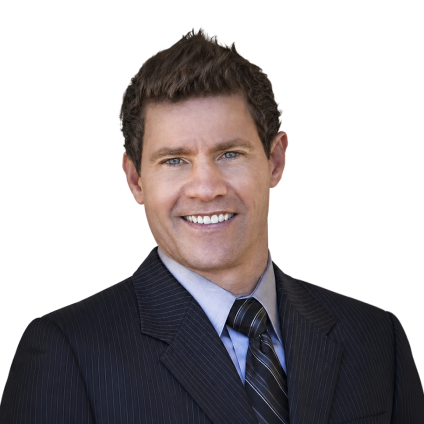
Dr. Todd C. Snyder earned his doctorate in dental surgery from UCLA School of Dentistry, where he later co-developed and co-directed the first comprehensive 2-year postgraduate program in aesthetic and contemporary restorative dentistry. Trained under some of dentistry's most sought-after leaders and at the prestigious F.A.C.E. Institute for gnathological and TMD disorders, he has refined his expertise in high-quality aesthetic dentistry and full mouth rehabilitation. Dr. Snyder lectures nationally and internationally on dental materials, techniques, and equipment, serves as a consultant for numerous dental manufacturing companies, and has authored articles and a book on contemporary restorative and cosmetic dentistry. He is also the founder and CEO of Miles To Smiles, a non-profit mobile children's charity serving indigent and underprivileged children.
Done learning and want to get started?
Book a demo