
Smart Scheduling
How AI Can Fill Chairs, Boost Profits, and Save Time
Transcript
I'm very honored to be with all of you. Thank you for taking the time. This is an extremely exciting topic in dentistry, and I am gonna jump in in just a moment.
Little bit of background about me, fellow hygienist in the field twenty five years now, and I was lucky enough to become an office manager. And from there, started a consulting business and been able to really, take all of those learnings that I've been taught and have taught others and brought them to Pearl as the, director of clinical operations.
So it's really exciting to see, what's happening in dentistry.
And my goal today is that you leave realizing how effective AI can be for you in your daily workflow and to save your team some time. So I'm going to go ahead and share my screen and we're going to jump in and get started.
So today, I wanna cover a few topics. What is AI? We hear about it everywhere.
AI in dentistry, what can we do with that? AI chairside with our patients.
How is it helping us with planning, and what is the future of AI? We also wanna encourage you to state that there's gonna be a special offer at the end as well as, we'd love to hear some of your questions.
So what is AI?
Basically, there's computer systems that can help us with problem solving, making decisions, and all kinds of things that we're doing in a daily basis in our workflow, and you're gonna hear all about AI today. But most importantly, we're going to really make sure that we're cross referencing how we're going to use AI from a dental hygiene perspective.
One of my favorite things is when people talk about AI and they oh, it's the Terminator type of AI, and this is more of a generalized AI. This is what people think AI looks like.
We're going to really focus today on, how it's in how we're using narrow AI to really help with reading radiographs and streamlining workflows. So basic examples would be teaching robots on how to play chess. That's a little more our speed, and we don't have to worry too much about the Terminator coming anytime soon.
We use AI every day.
You probably are not aware of all of the times that AI is working throughout your day, with computer vision, in surveillance, in automobiles, natural language processing, you know, when you're using Siri, and also in all kinds of different ways for reminding us that, hey. There may be fraud on your account. So I want you to start to think about the helpful parts of AI, and we're going to move into how that's really helping us in dentistry.
So when we look at hit the history of dentistry and we look at where dentistry has been and where it's going, we can think about the days of when braces were a big thing, and now we have aligners, you know, where silver fillings were a great thing to do, and now we have composites. Fluoroid was great. The drill, implants, those are incredible.
But now we're really seeing how AI is revolutionizing dentistry.
So it's exciting time in dentistry.
We see how dentistry, changes very slowly. But now with AI, it's really kind of on a warp speed. We envision that it's gonna become part of your daily workflow. You you come in the door and you turn on air, water, suctions, and AI, and that's really what we're starting to see as the field continues to migrate in that path.
We all know that the quality of our dental care becomes really crucial for the patient, and it begins with the accurate analysis of radiographs.
So this is part of our daily workflow.
I was really surprised to see this statistic where one point four billion dental X rays are captured just in the US per year. That's a lot of radiographs. That's a lot of us, sharing radiographs, evaluating radiographs, and analyzing them. So we see that dentistry is responsible for a large majority of radiographs.
And these are some interesting statistics.
Ninety one percent of adults from ages twenty to sixty four have cavities, and twenty seven percent of adults, same ages, have untreated tooth decay.
Interestingly enough for the population, sixty seven percent have subgingival calculus.
And we see that still the highest rate here, seventy one percent of adults over sixty five have some form of periodontal disease.
Now we are lucky enough as dental hygienists to really have, if you think about it, the most time in the health care field that we get to spend with our patients over any other field. When you think about you don't go to the doctor typically twice a year for an hour, right, for a consultation or your nurse or any type of medical field unless there's concerns, of course. And as hygienists, we get to do what other clinicians wish they had time to do, which is spend the time with the patients talking about their teeth, talking about their health. And it's very impactful what we do as hygienists.
So when we look at radiographs, it's interesting to see all of these statistics.
But when we look at clinical inconsistency in dentistry, there's a lot of studies that show we're still not really hitting the mark, and this really affects trust in the marketplace.
So forty three percent of cavities in X rays go undiagnosed, and twenty percent of cavities in patients that are diagnosed are not actually cavities.
We also see that forty nine percent of periapical radiolucencies and X rays are also undiagnosed.
So if you stop for just a moment and you think we are all excellent clinicians, we all take a state board, but there's also life that happens. Right? Whether you're a doctor and you're jumping from, you know, anesthetizing for a prep and doing an exam or even a hygienist when we're really mindful of having so many patients and so much we do in the amount of time we're given, it's really incredible to see that the clinical inconsistency is still there in dentistry.
And having patient trust is that foundation to accepting the dentistry that the doctors and the hygienists are recommending.
So that is crucial for us to be mindful of when we're approaching our case presentations and understanding that patients in the chair still have this distrust in dentistry that unfortunately is a huge epidemic in our in our world.
We have these studies that I'm sure you've all seen, and it still exists today whether you see it on the news or you read it on any kind of social media that people will still go to different dentists and get a different diagnosis. Right? So we've done studies at Pearl. We've we've sent out one FMX to lots of doctors, and there's, you know, treatment plans that range from thirty dollars for some fluoride all the way up to, like, thirty thousand for a full mouth rehab.
And you can see this Reader's Digest study where, this patient, well, he was a reporter, went through and he went to fifty different dentists, and he got a different diagnosis. So it's not surprising that we have these concerns, in the field, and it's important for patient retention and really for clinical satisfaction that we really AI of bridge that gap. And I really want you to see today that AI and dentistry is going to be a huge help for you. So huge help for you.
So this statistic, again, I'm trying to give you enough to paint the picture to understand that this is really a concern that forty percent of Americans still distrust the dentist.
And when we looked at a lot of studies done by Ora Pharma, there was one that talked about AI did the patient who sat in my chair for fifteen minutes and agreed, yes, I need scaling and root planing, or yes, I see why I need to floss, and I understand I have cavities, but yet went to the front desk and didn't schedule.
And the real answer was they didn't completely understand, and they didn't really have faith in the diagnosis.
So I want you to pay attention to this statistic.
Sixty four percent of patients, sixty four percent say they do not understand their X rays during a consultation with their dentist.
And all of us who do show X rays, I think that's very important because you are infusing trust. And quite frankly, after doing it for twenty years, I thought I was really good at it until I saw this statistic and until I actually went to the front desk and said, did she schedule the route planning, or did they schedule those fillings? No. They're gonna think about it. And we can't take all that onus, but we can move into a field that using AI will help show patients what the clinicians can now see. So due to these two glaring statistics, I'm really excited to walk you through how AI is going to really help improve the clinical accuracy.
It's going to strengthen your case acceptance, and it's really going to build and bring the patient trust back into the marketplace.
Now remember, we just want the patients to accept the dentistry we're recommending.
So that's really the goal at the end of our appointments. Right?
When we look at, ways to use AI, we've done a study in our FDA trials, and we noticed that if the doctors are looking at the images alone without AI versus the doctors looking at the images with the AI, There were different diagnosis done, of course. But what we found is when they looked at the X rays with the AI, there were thirty seven percent more early disease detected.
And this is a win win for the patient and for the clinician and for the overall practice. Why? Because we can get the dentistry done earlier that they need. They can build trust by understanding it. They see what the clinician is seeing, and now they can have their intact tooth structure much longer.
But what happens when we do recommend the dentistry and they're not accepting it? Not that that's ever happened to anybody, but we do see that there are areas that we need to be mindful of.
So we're gonna walk through a couple things in just a moment here, but what I want you to see in this image here is really the impact of all of the work that we do as hygienists and dentists coming down to that pivotal moment where the patients are trying to understand what we're explaining to them and how using AI chairside with the clinician, the assistant, even the front desk, has been a huge improvement for case acceptance for those patients to accept the dentistry you're recommending. We all know how much time we spend, discussing scaling and root planning, or discussing, you know, why doctor do I need to have a new a crown?
Why can't you just replace the filling that has a cavity around it? And now when you see this colorized case presentation version, they're able to understand, oh, okay. This makes sense. I wanna make sure I do get the dentistry AI it's smaller, or I do wanna make sure that we can try to arrest that bone loss and those areas of concern in an earlier phase.
So you can see this being a full team approach, and I really believe the future of dentistry.
So we probably think about Sheela.
I cannot do one more thing in the amount of time that I'm doing on a daily basis in dental AI. Right? In your hour or your half hour, whatever you're doing, there's a lot we do. There's a lot we're responsible for with each patient, and then it resets again every thirty to forty five to sixty minutes. And so I'm excited to share with you today that we're gonna give you some tools that will bring back time within your scheduled appointment.
For most clinicians, I hope it's still true, we go into dentistry because we wanna help. Right? We wanna spend the time with the patients. And I think hygienists by nature are really incredible educators and dentists. And a lot of AI, what we try to do is show them more pictures, and they're looking at you AI waving your head and change shaking their head, whatever it may be. And sometimes when I see patients really not understanding, then I'll get my graphs out and my probe out, and I've probably already lost them. But now when we have the ability to use AI chairside, it's a completely different case presentation.
The nice thing here is that AI works within seconds, so there's no workflow change. What we do is we'll analyze radiographs in real time. And a few interesting pathologies that are being detected within seconds is decay both incipient remaining in the enamel with a lighter pink to make sure we're talking about fluoride or more flossing or remineralizing. AI progressed through and into dentin. That's a completely different story. You can talk about two different colors of cavities and how one we may watch and check again in six months, and one, it's probably time to move into treatment. Now as hygienists, we don't diagnose, but we definitely spend the most time with our patients, which is a great way to set up for that exam for those doctors.
The exciting part is you can see calculus circled for you.
You don't have to explain to a patient anymore. This little spur should not be here. Do you see this little white box? And you're hoping they can come along on your journey. It's going to be identified by an unbiased AI second opinion.
There's gonna be notable margins. Those are areas that we as hygienists can look at for the doctors and the doctors can be mindful of and the patient understands, oh, there's a spot there. I need to be really careful flossing.
And, of course, the periapical radiolucencies are very valuable, both from a, you know, clinical review as well as when you're explaining something to a patient. It's hard for them to see a darker area at the root tip.
The bone level measurements are incredible. Not only are they helpful to hygienists to alert them that I'm going through a periodontal maintenance appointment. All of a sudden, I take X rays, and I see yellow lines. Those are areas of caution or concern.
Although these are completely customizable, it allows you to say, okay. The white lines, the areas that are within limits of healthiness, my patient is probably fine. I'm gonna spot probe. When I see yellow, it's going to bring an alertness to my mind to raise that clinical excellence with a patient.
And, also, again, when we turn that image back and have it forward facing, the patient can see the difference between the healthy white lines or the more concerning yellow lines. What do we need to do? Is it scaling and route planning? Is it more consistent recalls?
How can we best help our patients, and how, as clinicians, can we be the best clinicians possible.
So we're looking at presenting dentistry to a patient, and I would just have you kinda take a close look at this. A lot of us go, you know, left to AI, and we're looking for interproximal cavities. Has hygienists we're seeing is their calculus here? I know when I take my first X-ray on a new patient, I'm looking at it and I'm thinking, am I doing scaling and root planing, or is this a simple X-ray? They haven't been in for five years. And this is the image, believe it or not, that we, as clinicians, do an incredible job reviewing in seconds. Right?
However, our patients don't see that. Right? They don't see that calculus on the distal of thirty. They might have a concern with, you know, number thirty mesial, of course.
Maybe that's why they came in. But, also, what happens when the AI takes that to color? That next level to expedite the radiography view for you when you're moving so quickly through your day and also pointing things out. You know, from a hygienist from a hygienist perspective, we're very mindful of how the periodontal health is for the patient.
But also, we are mindful of, do I need to talk about this patient with flossing, with cavities?
And even in this image, it's great to let them know that we need to work on flossing, and this is why. Here's some areas of concern. So in real time, you will see this analysis and, again, unbiased second opinion built into your radiographs to be able to share this with your patient and also for you to be able to review X rays more consistently.
Of course, my favorite is our tooth parts section, and this is where the time is being given back to you as a clinician because you're not having to go through talking about all of the different black and white images and the calculus spurs and where the bone is and where it should be. I used to hold, like, a pencil up to where, you know, the bone level should be and where it is and what we need to do. And and it's a really interesting concept, believe it or not, for hygienists to explain periodontal disease to patients. Right?
They don't feel it. They've never heard of it. They can't see it. They're just here for their basic cleaning.
And that really, if you look in social media and you look at the concerns from the patients, a lot of comments come through, majority of them, about scaling and root planing or deep cleanings. And I went to the doc. I went to the dentist, and I had to do these deep cleanings. I'm never going there again, but in reality, that's what they needed.
So trying to, again, bridge the disconnect between the real patient concerns and making sure the patient understands that, that's where the AI can help them.
So we're gonna do a little bit of a game here in just a moment. But when you think about how much time you spend looking at each radiograph, it's different for hygienists versus doctors, but it really is a lot of time, especially if you're looking at a FMX, especially if you're looking at a brand new patient. And so I keep emphasizing time because I feel like one of the most concerning things in dentistry is our lack of staff, which makes us have to do even more individually or even as a group. And so how can we use AI to do things for us so that we can protect the time we have with our patients so that they have an incredible experience and they stay retained in the practice and get the dentistry done that we want them to get done?
So here is my question for you guys. If you'd like to play along, I'd love to see your answers in the chat. I kinda gave it away a little bit earlier, gave you some cliff notes there, but can you look here and tell me how many pieces of calculus, how many sites do you see that have calculus on this radiograph? Very quickly. Okay.
All kinds of people chiming in.
Okay. So I'm gonna move through the answer here and see if you got that right. So all of you that played along or even didn't comment, there are four four areas. In fact, when I was practicing and we put AI in at one point, I was really sad to see the distal of fifteen light up on one of my patients. So, yes. Unfortunately, that does happen sometimes, but it's really great to see how fast this is going to appear for you when you're using this chairside for your own clinical review.
Okay? And what about on this one?
Take a couple minutes.
We can see that the time we're spending, we're not even zooming in. We're not even adjusting contrast as most clinicians will do for caries, But also as hygienists, a lot of times, we'll zoom in or, you know, go a little closer. So the amount of time you're using there, can really probably be cut in half. So there's that one tiny spicule if you are able to see that that, and it does pick up a lot of very tiny little pieces. This is a great way to, again, check ourselves, raise that clinical excellence, and really make sure that the patients are taken we're taking the best care of them.
Okay. So we look at this X-ray. You know? We go around. We take four AI wings.
How many times a day? We had a dollar for every time. Right? We'd all be retired.
But, quickly, what do we do as hygienists, and how can we help our doctors?
Like I said, we get to spend a lot of time with our patients. But in this radiograph, we can see a lot of things happening.
Is there something going on in a proximal? Are there any areas of concern here? What can we talk about when this patient has an X-ray up before my exam? Right? And I think we can talk without diagnosing about areas for, you know, fluoride application, about concerns that might be occurring, about something that might be getting larger and progressing into that darker color. So we're really kind of working closer as a team by using AI to help show these areas of concern to both us as clinicians, but also, again, more importantly, to our patients.
So when we bring this into what does this look like chairside, I think we can see the same workflow that exists, except it's enhanced with AI.
And this is the the real time educational objective and quantitative analysis that's occurring for you to infuse trust back into your patients and also for you to be able to see additional things that maybe you didn't see before. You know? Especially, I know when I was working with new hygienists, they said, you know, nobody ever taught us to look at in between the teeth. We were always focusing on the gums.
So it's really great for me to start seeing areas of concern pointed out because now I'm a little more mindful about discussing fluoride or discussing more flossing when it pertains to teeth even if there are healthy gums. So we're really kinda elevating that excellence in the hygienist being that co but not diagnoser, and being able to be very mindful of our patients' overall oral health, from not only the periodontal AI, but also from the clinical side. So this is really powerful. When I was practicing that hygienist, my doctor would always say, Sheela, I don't have time to do so much in inside of that exam.
Please have the X-ray ready to go. And if there's something outstanding that we already recommended, make sure that radiograph is up and you let me know where that patient's at. Like, do they wanna schedule? And I think that was really actually empowering for me because when my doctor came in, I would say, okay.
Well, doctor Penrod, you know, Bob's here. He said he's ready to get that crown done, and also there's an area on the right side that I'd like you to take a look at. I think there may be a cavity starting over there, but we wanted to get your opinion. And that's really been a helpful attribute, and it's also AI of fun as a hygienist.
So I guess the question becomes, who benefits most from AI, the clinician or the patient?
And if I got to answer although the answer is both, I really think it's the patient.
I really think patients seeing what we see and understanding what we're recommending from a different perspective now will allow them to be healthier, will allow them to save money, and will actually ensure that they return to your practice and get all of the dentistry done in the future.
So we talked a lot about radiograph review. So doctors can have hygienists be very, very helpful in this area for exams. We talked about hygienists saving some time in their day, especially with those root planings. I I just kinda remind myself of those flip charts with all of those different stages of, periodontal disease. But what about, preparing for our day? I know when I used to go to work, I would go about twenty five minutes early, before I saw my patients, and I would say, you know, whether I did we did a morning huddle or not, it was who needs X rays, what's their medical history like, do they have unscheduled dentistry, how can I map out my day?
And I think, again, that was at least twenty minutes each day for me, and it was a really, important task because then I was able to be more present with my patient and I could allow for, am I taking an FMX, or am I taking bitewings?
Do I have unscheduled dentistry that I need to take a new X-ray on? Do I have to take an intraoral photo?
So for me, this was the best way to take the very best care of my patient.
Not to mention then you spend twenty or thirty minutes charting in between every patient, not literally. But there's a lot of time in chart reviews. There's a lot of AI features out there now too that will save you time with automated probings, automated, chart notations.
There's call bots, right, that pop up on your screen. There's there's, AI for confirming. There's a lot of ways that AI is helping with the hygienist.
But for time saving, I think that's the most valuable thing we can do.
So allowing AI to review your entire patient chart every time your patient makes an appointment is extremely important for the clinician, for the patient, and for the practice.
And so when I arrive at work and I know that, AI can provide this full road map for my day, it's gonna tell me which patient needs an FMX, which patient needs AI wings, which patient might have a miscode of prophy. Did I accidentally get the the SRP patient scheduled into a prophy, or should they be a forty nine ten? Or did we go from a forty nine ten to a zero one one zero?
So if if we can use AI to help our day and help make sure that everything is in order from the billing to the necessary radiographs to even for doctors.
Where are my patients on my day that are already scheduled on the doctor's side that need cleanings?
That's hard to do when you have a big practice or even a small practice and you're focusing on your own day. You're not mindful of what's happening over here on the doctor's side. However, when you get an opening, you can click a button and your whole schedule will be color coded on patients that are overdue in the doctor's chair, and they're available to have a cleaning today.
This is important for us to be mindful of those same day cancellations, and also, most importantly, filling our schedule with same day dentistry.
I remember, when one of my doctors went to a seminar and he came home and he this is about ten years ago, and he's like, we're gonna work on same day dentistry.
And I thought AI as a phobic patient, that was the scariest thing I ever heard because I have to, like, prepare the night before, which is funny, right, being in the field almost thirty three years this year. And I thought same day dentistry sounds scary to me as a patient. So when I first started recommending, you know, I would see on the doctor's side, I would notice that, you know, doctor Penrod had an opening at this time, and my patient had some fillings. So in the beginning, I would say, Bob, would you like to stay for your fillings today?
And he'd be like, woah. I can? You guys can take care of that? And I was pleasantly AI, and this is when my mind shift went into, AI.
We're really in a convenience centric environment, and patients want to complete the dentistry they can and save themselves that trip.
So imagine if your entire team is aware at eight AM of all of these unscheduled opportunities, and they are distributed per provider, we can not only plan for our own day, but we can also be really mindful of protecting cancellations, having same day dentistry opportunities, and most importantly, taking the very best care of your patient by saving time.
So in, AI and practice intelligence, one of Pearl's products, we will actually take all of the radiographic insights, and we will marry that with the practice management system to colorize an entire opportunity based schedule. And we have all kinds of additional features that work with patient details and call sheets and opportunity funnels.
I think the important thing to know here is that, there's so much information in our practice management systems. But how do we distribute all that information to the people that really need to know? You know, if I'm in the chair with head down cleaning teeth, do I know that this person had unscheduled dentistry that's coming in next and they there's a cancellation happening next?
How am I mindful of making sure that we are maximizing the patient experience with which ultimately maximizes your entire practice experience.
So we talked a little bit about how Pearl's helping your teams really look at all of your patients, look at all of the opportunities.
And in our, performance scheduling, not only will we look at your live images, but we'll go back eighteen months, and we'll look at all of those radiographs before the patient comes in for the day.
We'll take it a step further, and we'll look in the chart, and we'll say, of all of the cavities or all of this the tartar that we have found, do we see those codes that will actually help make sure that we have a diagnosis for the patient?
If we see that there's cavities and there's no treatment codes or there's a lot of calculus and they're in a prophy, we will alert that to your team in a way that your doctors can take a closer look. So I think that's really valuable to know that there's unscheduled, and then there's opportunities that have gone undiagnosed.
So this is a great way for your team to be mindful of those areas. Again, ex excellent clinical care produces excellent production.
Again, using AI for all kinds of existing workflows allows the team to move into a more productive day and time saving. So when I've worked with, our customer service side of things before moving into the clinical side of Pearl, it was really exciting to help office managers see that let me show you a list that we could give you of patients that fell off your schedule, last week for crowns. You can use those patients to fill the schedule this week. Or even when you're doing recall, one of my first jobs as a hygienist, as a dental assistant was AI would call all the patients and try to get them back in. Right? And they're like, Sheela, we'll call you. Right?
But now with using AI, you can actually make sure that the patients that have the most clinical areas of concern can get back in your chair sooner. So this allows your team to be mindful of, wow. These five patients have a lot going on. Let's call those guys first and get them back in the chair.
So patient printouts are an incredible new feature.
I think the trifecta there is a lot of us will present dentistry as office managers with the the patient printouts giving them the cost estimate. It's really nice for them to have this patient friendly understanding of, okay. You're giving me the printout that says the two surface comp filling, whatever those ones are that I used to hand out all the time. But now we can actually have them hold that printout and see the areas of charter or cavities or concerns that we wanna make sure that we take care of before, it gets to that next point. Like, we don't need them getting root canals, or we don't need fillings moving from two to three surfaces. Right? That's not in the best interest of the patient's oral health or in their, you know, financial perspective.
Moving into submitting AI radiographs for claims has been a huge adjunct to increasing the reimbursements and decreasing the denials. In fact, one DSO I was working with in Texas said, hey. We've been taking screenshots of your images and sending them in, and we're we're not getting denials anymore. And I thought, oh, that's an interesting perspective. So we've really taken that to the next level, so that your team can do that much easier. And especially in those scaling and root planning, claims, they really wanna see those bone levels.
So in fact, that AI is actually there for them. They're, decreasing those AI, which is nice to see. And, again, emailing correspondence to patients. There's a lot of patients that leave the practice with these bigger treatment plans. And I remember, you know, emailing out phase one, phase two, phase three. But if I had an email, I would love to insert an image for them to understand. Like, let's do the cleaning, then let's do this crown, then we can do the fillings.
Just, again, bringing that patient perspective into these explanations that we're consistently working with on a daily basis.
So one thing I will leave you with, from AI is a lot of times, there's a lot of different products on the market that will give you all the information that's inside of your practice management system. Right? They move from here's all of your unscheduled dentistry, and here's all of your balances, and here's all of your overdue patients.
But one thing Pearl does differently is here is an entire overview of your practice from a radiographic perspective.
How do I look at this and build this into my practice? Well, I'll tell you three ways. Number one, same store growth has been huge for for offices using Pearl.
They're able to, you know, look at those days and say, do we need to bring a periodontist in? Do we need to bring in an endodontist in? Right? Can we keep our patients in our practice?
How is our referral system doing? There's a lot of ways to use our radiographic insights for building your practice, recovering your patients in a very effective quick way. What's unscheduled? Let me go into the unscheduled scaling opportunities and fill Susie's two hour hold tomorrow.
And then lastly, working on how do we work with staffing and adding more hygienists. Right? When we can look at our whole practice and say, wow, there's a lot of bone loss or there's a lot of caries, Maybe we do need another associate. Maybe we knew do need to increase our recall.
So it's really nice to have data that we've never seen in dentistry before.
Where are we going in the future?
Right? I think AI is only going to get better and better CBCTs.
My favorite is going to be when we can help patients understand what happens if they don't do the dentistry from both a caries perspective and a periodontal perspective.
So it's really gonna be very interesting for us to look at those e one lesions and see what is what is the AI predicting that to look like in six or twelve months, and what's gonna happen with the bone loss right now in the next six to twelve months, twelve to eighteen, whatever the case may be. So I think that's gonna be a huge help for, again, clinicians with diagnosing as well as, for our overall patients.
Treatment planning.
My goal one day is to help, the AI as we continue to move into this field and say, hey. There's some calculus. Would you like limited or full quads? And I can click a button or it'll actually just pop it up, and I can click yes.
One thing to know about AI is it's that second set of eyes. It's more the copilot. Right? It's not telling you what to diagnose.
It's pointing out pathologies, and it's up to the doctor to be able to make that final diagnosis.
But why not have help? Why not have ways to streamline these things that are happening throughout the day and make it simpler and easier?
As a coordinator, I remember going in with my doctor, and we'd have about five or six, exams per hour. And he would be writing on a sticky note AI, okay. Patient one, there's a two d o, patient three, patient four. And it would be great if they could just click this in, and they would already know exactly where to go and treatment planning would be done. So if we can find ways to, give us back time, we can really focus that time on our patients.
We're working with also learning about real time claim adjudication. Imagine working on your patient saying, okay. Well, it looks like I think we're gonna need some scaling and root planning in a small cavity, and we click a few buttons, and all of a sudden, we know exactly what the insurance is gonna pay, and they can pay it on the spot. So that would be a a huge help, completing that full revenue cycle management so there's no more concerns about collecting money, distrust in the dental field.
The insurance said they would pay one thing and they paid another or or vice versa. So that's gonna be very powerful.
I do wanna make sure that I close here and save a few minutes for some questions.
I hope you understand that the value of AI in dentistry, is going to really enhance your patient care.
Less time we have to spend reviewing radiographs or reviewing chart charts, excuse me, is more time we can spend explaining the necessary dentistry, answering the questions that they have. You know, even, as a dental assistant, I remember that doctor would walk out of the room and say, excuse me. Do I really need that? Would you do that? And we have that extra time in the front office.
Excuse me. I apologize. The front office will have so much more time not having to audit every chart. Right? They can be helpful in presenting more dentistry even faster in the day, maybe helping more same day dentistry.
And, again, it all comes down to raising that clinical level of excellence.
So I am going to make sure that you guys see. This code is here if you'd like to scan, and we'd love to share these abilities with you and your team. Takes a few minutes to integrate into your practice, and you could be up and using Pearl within twenty four to forty eight hours.
So I'm hoping that you found this very valuable and that you find ways in your practice to have AI do some of those clinical tasks or regular front office tasks that you don't have to do anymore so that you can spend that time with your patients.
I'm going to open it up for questions, make sure that we have some time to, answer any questions about AI, about Pearl.
Anything I can do here, to answer those questions?
So, I mean, I'm a big fan. This is amazing technology.
But and I'm just wondering, how long do you think it'll be before it'll become standard of care if it's not already? I mean, I know so many offices that are using it. It's but, it seems to me that it should be the standard of care. How how long do you think it'll take before it it will be?
Well, that is a great question, Janet. I appreciate that. You know, I think you answered it because I really believe that this would be a standard of care. Why not have that second set of eyes to be able to point out these areas of concern?
If we saw those statistics earlier that said, you know, two percent of cavities go undiagnosed and and one percent are actually or even ten percent are actually, not real cavities, then I would think that it might be a ten year mark here. But I really would say that in the very near future, if not currently, this should be the standard of care in the practices.
Yeah. I agree. Thank you. Mhmm.
Okay. Good point. So it's an interesting perspective. When I started at Pearl, both clinicians and patients were asking, and, Chandra, thank you for this point here, is that patients and clinicians think that AI is going to take the place of humans. Right? Well, the good thing is AI is nowhere near perfect.
We've all seen, Siri. Some of the things you tell Siri, you have to make sure you really spell check.
When I was in my friend's Tesla and there was a person walking across the street and they were walking backwards, right, instead of forward, we know that there's a lot of time before we ever really move into, concerns with that general AI, where the terminator's coming. I think the interesting point here is we are already adopting AI as humans, and I think having the ability to use AI in a very positive way to reestablish the time we need with humans is really the goal of Pearl. So you can spend more time with your patients, you can diagnose as accurately as possible, and you can share the necessary treatment with them so that they accept the dentistry earlier and more often.
I do think it's important for people to understand how AI works and how it really is that second set of eyes.
Again, the one takeaway here, guys, for me would be to be mindful that, AI is here to stay. It's been in medicine for a very long time, but having it in dentistry is really going to be that one easy technology you could incorporate to buy back that time. Please keep a lookout for additional webinars as we continue to move into how we can educate the entire dental team for using AI in their practice.
And thank you guys so much for coming today. We look forward to working with you and being in your practice AI.
Meet Your Host
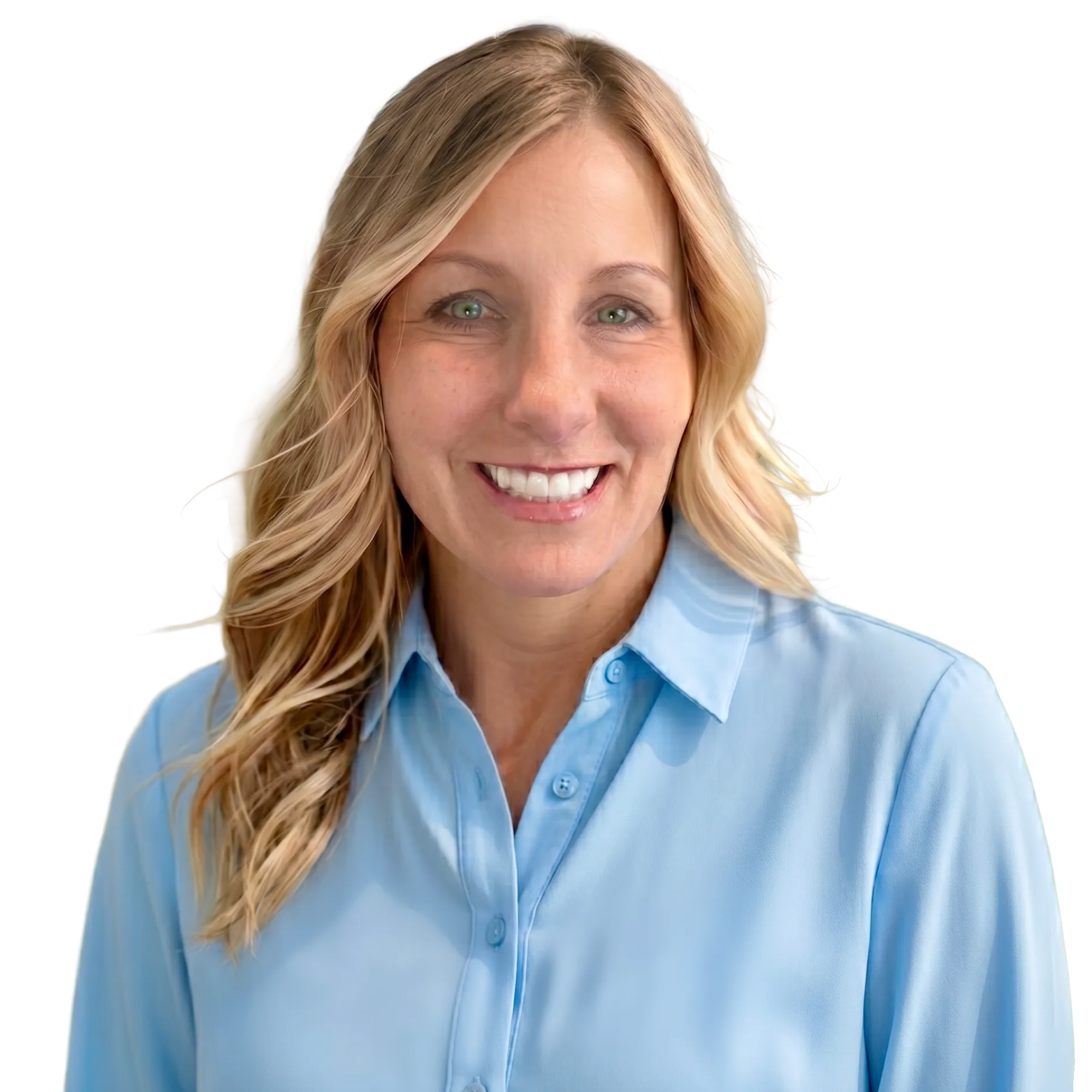
Sheela Roth is a dental practice management expert, thought leader, and public speaker. As Head of Clinical Education at Pearl, she leads a team focused on practice transformation and clinical performance. Previously, she founded Absolute Dental Business Solutions, a practice management consultancy, and served as an office manager, leading a team of 50 to grow a dental practice with 2,000 monthly hygiene visits. She holds a Bachelor of Science from Loma Linda University and is a Registered Dental Hygienist.
Done learning and want to get started?
Book a demo