
Quantitative Dentistry
Optimizing patient care with AI and Salivary diagnostics
Transcript
Okay, everyone.
Hope everybody is having a nice morning or a nice evening for those of you joining us in Europe or other parts of the world. My name is doctor Kyle Stanley.
I am one of the cofounders of Pearl and the chief clinical officer.
I'm really, really excited for our webinar today.
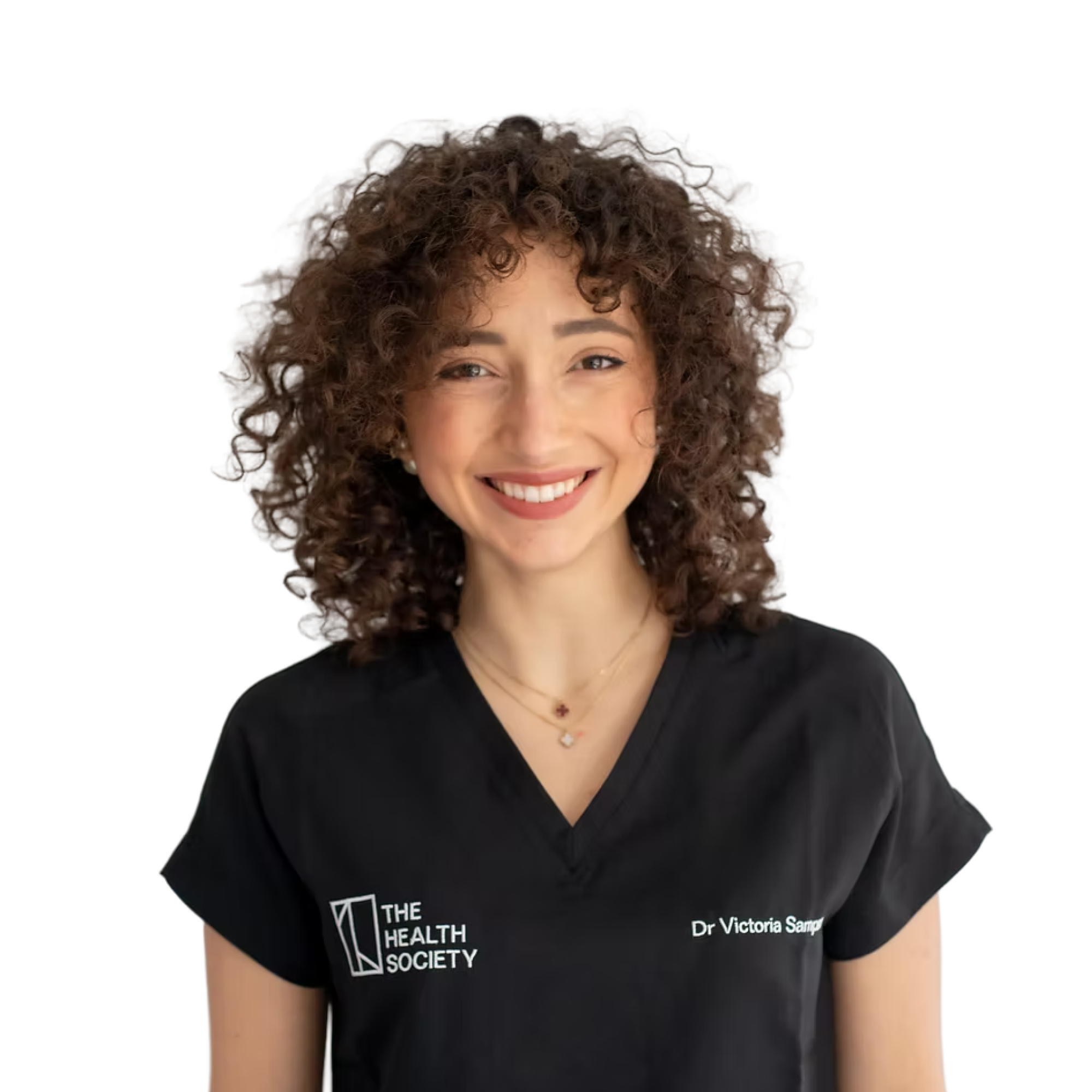
We have doctor Victoria Sampson on, and she is really one of the brightest young minds coming out of the UK. I've seen her speak before, and, you know, I've seen her research. And she's incorporating what I really think is one of the big futures in dentistry, which is bringing the mouth back into the body. For some reason, a hundred years ago, the mouth separated from the body, and she is helping us bring this back by incorporating into her everyday practice things like salivary diagnostics, microbiome testing, artificial intelligence, really into everyday practice. And I think this is really the future.
She's won a ton of awards. I'm not gonna name all of them, but she was voted Forbes thirty under thirty in science and health care. She runs clinical AI, and I think that you guys are really gonna enjoy what she's gonna talk about today.
So, Victoria, thanks for having us, and the stage is yours. Make sure everybody to type your questions into the question and answer. And afterwards, we can go over them and have a little bit of a conversation. So now the stage is yours, Victoria.
Alright. Well, thank you very much for the introduction.
And yeah. So I'm gonna get started. So what we're gonna be talking about today is, quantitative dentistry optimizing patient care with AI and salivary diagnostics. So the objectives. So what we're gonna be really talking about is why quantitative data is the way forwards for dentistry and what actually is quantitative data.
And then also looking at what are new innovations that are allowing for this quantitative data and for this data driven care to to happen.
And the impact of this quantitative data, on our ability to detect diseases for individualized and personalized care and also improving our treatment outcomes for our patients.
How we can apply artificial intelligence and salivary diagnostics to daily care. It sounds very kind of intelligent and smart, but it's super easy when you get used to it.
And how to communicate that quantitative quantitative data to our patients to grow trust.
So the first what I really wanna start with is why do we need to go and start using quantitative data and where has health care gone and and, you know, what's the future? And the best way to see where the future is is to see where our past is. And so we actually, I think, need to look at all of the generations that have come before us and their attitudes to health, but also their attitudes to to service, to care, to even their own lifestyles.
And so this is kind of like a little bit of a timeline of all the different generations from the 1920s up until now. So let's go into a little bit more detail. So the first ones we have are the Greatest Generation. That's the name that has been given to them, not a name I gave them, although they are great. But it's so they're born pre nineteen twenty eight.
The defining events for them were the Great Depression and World War two. And what made them kind of this has really made them very formal, very selfless. They're very cooperative because with World War Two was all about, you know, every man joining in for for the fight and just kind of all getting in together and cooperating. They became extremely selfless, and there was not very much fun really during those times. So they were very formal.
And their health attitude was completely doctor knows best. No questions asked. If the doctor told you that your leg needed to be chopped off, the leg was chopped off. You know, it would there was nothing else, there. They were extremely loyal to their providers, and they very much appreciate traditional medicine.
And another thing about the greatest generation is that they don't ever complain.
They never question things.
You know, even if, you know, they are in slight pain, they won't really say much about it.
So they're a very kind of quite calm generation.
And then, up comes the silent generation. And so they are really, really silent and very quiet. And they're defining events where the depression, World War two, but also the atomic age. And then we're also starting to get some television as well. And the characteristics for them are that they are very respectful for authority, they're very loyal, and they like to work hard and just stay quiet. And so this has kind of transcended with their attitude towards health because they, again, think doctor knows best, very loyal, and they only like traditional medicine. And they're the ones, again, who will not be complaining.
They'll never ask or kick up a fuss. And if they're in pain, they will, you know, bite their tongue and go through with it and not say anything about it.
Then we have your baby boomers. So they were born nineteen forty six to nineteen sixty four. The defining events were the cold war, civil and women's AI, and the baby boomers are kind of, as you can get from the name, they were, you know, they they were really trying to shake things up. They were inquisitive, optimistic.
They're really competitive and driven, and they constantly were asking about things. They were the ones who were protesting, about AI.
And they really, you know, they think that the doctor knows best, but they really are looking for providers based on your reputation. So they will actually, you know, talk to their friends and get recommendations from their friends.
They're not really into the Internet or anything like that. But if their friend goes to a doctor and loves them, then they'll go to that doctor too. And they're very loyal to that person afterwards.
So for that, for the baby boomers, word-of-mouth is extremely important.
But, again, they still believe in traditional medicine.
And then you've got your generation x, nineteen sixty five to nineteen eighty. Their defining events were the Vietnam War and MTV. And so this is where we start to, you know, see a lot more television and the Internet starting to get involved. And as a result, they've become quite individualistic and independent.
They're getting, you know, information from all around the world. They're starting to watch MTV. They're allowed to see different countries and their fashion and their style. They're very flexible as a result.
They're quite skeptical of authority.
And they're digital immigrants, which means that they were not born with digitalization. And so they've actually had to learn and grow accustomed to using the Internet, watching TV, etcetera.
Their health attitude is that they they want to know a lot of information and they want very knowledgeable providers. So they're the generation who will be asking a lot of questions. There may be a little less loyal to their providers. So, you know, if they move, they're going to move doctors as well. Whereas with the silent generation, even if they were to move, they will still travel two hours just to see their old doctor. But still, they're very much into their traditional medicine.
And then we get onto the millennials.
And the millennials, the most defining event for them was the computer and the technology boom, and the advent of the World Wide Web. So the Internet really, they're extremely tech savvy, they're optimistic, and they kind of they want to make a change and make an impact in the world. They like to collaborate with other people. But the nickname for the millennial generation is me, me, me, me. So they kind of think that everything is centered slightly around them.
And so their health attitude is they want really easy and open communication with their doctor. They wanna be able to understand everything.
They don't want any, you know, medical jargon.
They are slightly more distrustful of their providers, and that's why they need that communication, and to understand what is going on.
And they also think that the Internet knows best. So now we're seeing a transition from doctor knows best into Internet knows best. So often, these the millennial generation will have their appointment with their doctor, and they will get all the information, and then they'll double check it on the Internet as well, before they make their decision about whatever treatment or procedure that they're going ahead with.
And then you've got your your Gen z's.
So they were born AI ninety six to two thousand twelve, and they're defining events were nine eleven, war on terror, Iraq and Afghanistan wars, and of course, the great recession.
And because of these, they have a huge distrust of systems in older generations. And what that means is they actually kind of blame their the the generations before them for the recession, for the wars, for terrorism. They blame everything on the generations before them. They kind of think that if it wasn't for, you know, the baby boomers not taking care of their finances, then we wouldn't have had the recession.
And so that makes them quite distrustful.
They're very shrewd consumers.
They come up they complain a lot. They have quite high expectations of what they want.
But interestingly, they're digital natives, so they were born into, you know, having a phone, a computer, you know, a camera. They they they know the Internet very well, and they're multitaskers as a result. So, you know, I'm I'm a Gen Z and I'll have my phone and my computer and I'll also be listening to something and talking. And so we're very multitasking.
However, our health attitude, so we've gone from doctor knows best to internet knows best to now patient knows best. And so the Gen Z think that they know everything. And that's partly because they were born with the internet and anytime they ever had a question, they would just Google it on their phone and get the answer quickly. They wouldn't have to go and search an encyclopedia.
And so they're extremely influenced by the Internet, and, you know, things like TikTok and, you know, Reddit and all these other types of apps where they can ask questions.
And now we're starting to also shift from that traditional medicine where, you know, it's a lot about your what medications that you're meant to be taking and a lot of focus on, pharmaceuticals to holistic health and actually preventing things. So the idea that lifestyle is very important.
Gen Z are the ones who are exercising more. They're starting to think about their diet and their nutrition.
And so this is where we're starting to see a little bit of a shift and a change in health attitudes. And then you've got your generation alpha.
And I don't think we have any generation alphas with us today, but they were born in twenty twelve and onwards. So they're still pretty tiny.
And their defining events are Trump and Brexit, COVID-nineteen and potentially maybe another recession coming.
And their characteristics are they are completely dependent on technology.
They were born and raised with technology and they probably know how to unlock an iPad before they know how to read a book. And so as a result, they are pretty opinionated and passionate.
And part of the reason why is because they're able to express their emotions online from a very, very early age. So before they can even vote, they're able to say what they think, and someone's listening to them. But as a result, one of the negatives, and it's partly to do with COVID, is that they're very physically isolated and they are not maybe the best at socializing and they need a little bit more support. Their health attitude is kind of to be determined. We don't a hundred percent know yet. But, based on the millennials and the generation, Zed or Gen z, you're thinking that they're probably going to be very, you know, into their personalized health care, into prevention, and, again, patient knows best.
So the reason I'm talking about this is because we all need to start understanding that the new generation and the new type of patient is one who wants to optimize their health. So there's this AI of new trigger or this new keyword going around, which is the health optimizing generation. And this is a combination of your Gen x, your millennials, and your Gen z. So, basically, anyone who is about thirty five, or actually forty years old and younger. And so these people are now, you know, they're I'm sure, you know, if you're all in a lecture, I would make you put your hands up. You know, how many of you have gone on one juice cleanse before? How many of you have an app on your phone which will tell you, you know, how many calories you've eaten or how many steps you've taken?
You know, how many calories have you burnt, your AI? And for them, you know, health is wealth. And so all of a sudden, these people are starting to prioritize their health over everything else. All of it, you know, we're starting to see less patients smoking.
We're seeing patients who are wearing their wearables. So they're all wearing, you know, a Whoop or an Oura ring or a Fitbit or an Apple Watch. And this is again to track their health constantly because they want to take care of their health and to to take it into their own hands because, again, patient knows best is what they think. Again, a lot of them, they start to change their diets. We're seeing a lot more vegan, gluten free, dairy free.
And so, yeah, we're seeing a really big trend, where physical activity and prevention is extremely important. And these patients again, they want things that they can track and the only way that you can really track things is using artificial intelligence and quantitative data.
So how do the health optimizing generation approach their healthcare?
So there was a study, that was done. And what they found was that it's better in general to take care of your own health than to go to a doctor. And so this, you can see here the total population. And we're seeing basically a rise with the Gen Z, Millennials and the Gen X. And so approximately about twenty eight to thirty percent of patients think actually it's better to take their health into their own hands and they don't necessarily need a doctor.
So we also know that they prefer to avoid problems by leading a healthier lifestyle. So again, prevention is extremely key now.
Now this one, this was another study that was, done by Ernst and Young. And again, what we're seeing is that these Gen Z, these millennials, so these health AI, patients, they would prefer to communicate with their providers through video conferencing. So telemedicine is now becoming extremely important. They'd rather have a consultation online before they actually go and see the doctor because they think they don't really need to see the doctor.
And on top of that, there's a much higher rise in patients who want to record their own health indicators. So again, that's where we've got your your wearables and your trackables, so they can track their diet and their nutrition, their blood tests, and they want access to all of their data.
So the future of health care is really fueled by generational change. So if we really wanna know what the future is, we need to think about what do the generations want. And from what we can see, they want telemedicine.
They want to be driven by prevention. They don't want to have a cure anymore. They actually want to avoid having the problem in the first place. They want holistic health and wellness. So lifestyle, nutrition, etcetera. These things are becoming a lot more important for these types of patients.
And they're realizing that it's a lot more than just, you know, taking care of yourself. There's, you know, there's sleeping, there's stress levels.
You know, there's a lot more than just exercise and eating well.
And patients are extremely kind of reliant on transparency, and they want to know exactly the costs and risks of everything to understand their conditions. And the reason why is because they think that patient knows best. And because of that, they wanna know everything that can go on. I'm sure every single one of you has had a patient who has gone online and searched the surgery before they've had it done.
Or, you know, they've they've Googled pictures of a root canal, just to see what it is before they get it done. And we're also seeing that this generation, they are tracking their health indicators through wearables. They want easy access to their data and constant access to their data as well. And these patients are preferring quantitative data over qualitative data.
So they want numbers. They want their blood test results and to see what's high and low and to actually start to change those things through nutrition or, you know, speak to a nutritionist about it. And they want to make the ultimate informed decision. So this is where the whole patient knows best.
The only way that we can allow them, you know, to make that informed decision is by giving them all of the information and the data for them.
So really, it's personalized and precision medicine.
So how do we just deliver personalized and precise dental care? So the answer is quantitative dentistry.
And so this is the traditional way that we diagnose and manage disease at the moment in the dental chair. So, you know, if a patient has inflammation, the way that we are able to diagnose that is we essentially poke the gum and then we see how quickly it bleeds, and how much it bleeds.
Now, in my opinion, it's extremely subjective. It's quite inconclusive.
You know, if you have a patient who smokes, they might have inflammation, but they might not bleed on probing because they're a smoker or it depends on how hard you're jabbing their gums.
So, you know, I don't really think that's a very good marker of inflammation for a patient.
Periodontal disease. So at the moment, we measure pocket depths. And again, it's quite subjective, to, you know, dentists can measure the same pockets and come up with different measurements. You can get false pocketing.
You can get gingival hypertrophy. So, you know, I'm sure every twelve year old at the moment has some sort of pocketing, but that's not true periodontal disease. It's just false pocketing.
Historical periodontal disease. So the way we know if a patient ever suffered from having gum disease is we look at their X rays and we see if they have had any bone loss. And again, that's you know, we don't know whether or not it's still active, if it's progressing. A lot of the time patients, because they're quite disloyal and they're traveling around and seeing lots of dentists, it's not often that you have a patient where you can track all of their X rays and see whether or not that bone loss is getting, you know, worse over time.
And even if we were able to, we don't have at the moment very much, you know, the the tools to be able to measure the difference in that bone loss.
Then the risk of periodontal disease, so we look at family history and we look at risk factors, But, again, it's quite unreliable, and it's all reported by the patient. So, you know, you don't wanna listen to every single thing a patient always says sometimes.
And lastly, decay. So the way that we diagnose decay is we go through radiographs.
We do visual inspection, and then we also sometimes can use caries dye. But, again, this can be extremely subjective and quite inconsistent, between different dentists.
So this is what I propose should be a better, way of diagnosing and managing dental diseases. So this is a quantitative way. So if we want to measure inflammation, the best way to do that is to look at inflammatory marker levels. So actually your saliva releases inflammatory markers, and you would be able to just go and measure, the inflammatory markers in the saliva. It's very quick, it's easy, and it's painless.
If you wanna look at the periodontal disease, so the activity and how severe their perio is, then we can look at, certain enzymes in the saliva. So there's an enzyme called, activated matrix metalloproteinase eight, otherwise known as AMMP eight, and that basically shows you collagen breakdown. And again, this is a saliva test or, you can put it in the periodontal pocket, and it will tell you the exact collagen breakdown that is happening at that moment in time in that pocket. And that again is something that you can track, and you can monitor and try and get it back down to zero.
You can also do microbiome testing, and this will allow you to actually understand what the cause of that patient's periodontal disease is and also allow you to give personalized care to the patient afterwards. So it's not just, oh, take some antibiotics, but more, okay, we're gonna give you this antiseptic and this medication or do x AI zed because you have these bacteria in your mouth. So it's AI. You can get real time results.
And of course, most importantly, it's quantitative.
And then if you wanna look at the historical periodontal disease, then again, you can look at microbiome testing. So there are certain bacteria which may be more indicative of a history of gum disease as opposed to active gum disease.
And then what I think is really, really cool is actually measuring bone levels between X rays and using artificial intelligence to to measure the differences between, you know, an X-ray, which was taken six months apart to see whether or not you've got bone loss. And I don't know about you guys, but for me, if I didn't have the artificial intelligence, I definitely would not be able to tell the difference between six months, or a year of bone loss because, you know, it it should be hopefully quite slow. So we're talking maybe a couple of percent. But with the artificial intelligence, you can actually get a much more precise, diagnosis and a measurement as well. And again, it's quantitative.
With the risk of periodontal disease. So for some patients, I will do genetic testing on them and look at their kind of predisposition to, inflammation so we can get base pair mutations, genetically. So we're born with those mutations, which will mean that we are much more likely to have inflammation.
And in the kind of, in the mouth, what that means is if, you know, for example, if I was to start smoking and to not take care of my mouth and I have those specific genetic based pair of mutations, then I am at a much higher risk of periodontal disease than a patient who doesn't have those mutations. And that's me, by the way.
So, it's a lot more, kind of accurate. You don't necessarily have to rely completely on the patient's history with that. And then lastly, decay.
So we can actually now start to detect, decay using artificial intelligence, and you can assess the depth of the decay as well, and measure that.
And then, of course, you know, we still need to do some visual inspection. And, again, the best thing about that is it's quantitative, but also it's easier to communicate to your patient if you're able to give them a percentage and say, hey. Your decay is, you know, sixty percent into the, the dentine now when we're very close to the nerve. And so, you know, we need to act fast.
They understand that more than, oh, do you see that kind of light grayish line? Yeah. That that's the beginning of the decay, which is close to the pulp. It's it's difficult for a patient to understand, and I think sometimes we forget that.
So for the salivary diagnostics, the way that we can AI of make it quantitative, so the different tests that are available is we can do microbiome testing to check for bacteria, we can look at inflammatory markers, enzyme markers, and genetic testing.
Now I'm gonna zoom through these, but these are some things that I do use.
So oral microbiome testing is something I do on a lot of my patients, And, basically, it's a microbiome test that, assesses for the top fourteen bacteria in the mouth. And these bacteria are associated with periodontal disease, decay.
We also actually look at Candida, so for fungal infections.
And some of the bacteria that we're looking for is not actually completely for the mouth, but also for gastrointestinal problems too. So we can actually even start to pick up problems elsewhere in the body and maybe refer that patient elsewhere if needed.
So the advantage of oral microbiome testing is for me, it helps me diagnose, dental disease, and also the cause of that dental disease. So what bacteria does that patient have? And depending on what bacteria they have, you know, how aggressive should I be with my treatment? If they have high levels of some of the really pathogenic or really dangerous bacteria in their mouth, I might be more inclined to be quite aggressive with my treatment protocols as opposed to a patient who doesn't really have bad bacteria in their mouth or, you know, it it's kind of okay, then I might, you know, leave it and or just stick to the good old, you know, prophylaxis and, you know, a a hygiene, for example.
And this has definitely helped guide me.
It also means that if I need to prescribe antibiotics, I know exactly what antibiotic would be the most effective for that patient. So you start to, you know, avoid having any, kind of resistant, strains for antibiotics.
It also allows me to help monitor treatments. So what's amazing is I can do microbiome testing over a couple of, you know, years, maybe every six months or so, and then I start to create graphs for my patients where I can show them, the levels of their oral bacteria and how things are changing and allows me to monitor their treatment and to see whether or not it's effective or not. But it's also extremely motivating for the patient because, they have something that they can track. And patients, honestly, sometimes I'm like, you don't need a microbiome test.
You know, we did one six months ago. Your mouth's perfect. I don't need to do anything. And they're like, no.
Like, I want to pay extra just to have that microbiome test to measure and to see what's going on. So again, these patients, they want that data and they absolutely love it. And lastly, it's to evaluate treatment outcomes.
So I'm finding it very useful to see what treatments are effective, and what treatments are not. So for example, recently, I've realized that there's a certain type of hygiene treatment that, I was doing on one clinic, and another and we were doing a normal hygiene in another clinic. And the clinic that had the it's called guided biofilm therapy.
The patient's microbiome tests and their results were much better than in the practice which didn't have the guided biofilm therapy. So I was able to kind of come to that conclusion, only by doing microbiome testing and having quantitative data that I could track and monitor and measure as well.
And here's an example of me tracking and monitoring. So you can see here this is an example of a patient.
And so we did two, microbiome tests.
And, oh, the dates are wrong, but, basically, they were six months apart. And you can see here, so on the, left, so the left bar on each bacteria, was the kind of the baseline, and the second bar is after six months of treatment. So you can see with, C rectus, we weren't very good to be fair. Nothing really changed. But with AI nodatum, we completely eradicated it after six months. Your Fusobacterium nucleatum, again, pretty much eradicated. Lactobacillus finished.
P micro went up a tiny bit, but P anaerobias reduced. P intermedia eradicated.
P nigger sends reduced, you know, so you can see all of this and okay. Fine. We had one bacteria that went up ever so AI, but generally, we had an incredible improvement in this patient's oral microbiome.
Pretty much all of their pathogenic or bad bacteria were removed, which was great. And this patient was over the moon and super happy. And for once, I think the patient actually understood what we were doing in the dental chair.
AI think sometimes, us dentists, we don't always understand that patients can't understand what we're saying, you know, because it's it's a language that we speak all day every day. But for a patient, if you start telling them you've got pocketing and you've got bleeding on probing and you've got bone loss of approximately thirty percent, but, you know, I'm just measuring that with my eye. The patient doesn't really necessarily trust you, and they have no idea what you're saying because what the hell is bleeding on probing and pocketing to the average person? But if you were able to show them a graph and say, look. You have high levels of these bacteria, and they're highlighted in red, and you can see that's bad, and we've gotten you from bad to good bacteria, then the patient understands that, and they can track those types of things.
So you can also do inflammatory marker testing.
So again, we were saying you can look at your interleukins.
So these are inflammatory markers. You can also look at other markers AI tumor necrosis factor, prostaglandin e two, CRP, and lipopolysaccharides.
So these, I wouldn't go for every patient, but if a patient has really bad periodontal disease, or if they're suffering from other, you know, systemic diseases, then I might be inclined to do some inflammatory marker testing as well.
And then DNA testing, this is definitely not for everyone, but some patients love it. You know, I'm sure everyone has heard of twenty three and me, and everyone wants to know where they're from and their roots. It's pretty much the same thing, and patients love it. And they wanna know whether or not they are at a high risk of periodontal disease and also if they're at a high risk of decay.
So interestingly, it it can look for base permutations, as I was saying, for inflammation.
So basically, if you are at a higher risk of inflammation and how your body reacts to to stress and to trauma. So some people when they put their body under stress, not much happens. Other people, a tiny bit of stress, and they, you know, release a flood of inflammatory markers, and they're they just get inflamed very quickly.
And then with sweets and with decay, we've actually realized now that genetically some patients, need more sugar to feel satisfied.
And so those people are usually the ones who are have a sweet tooth. And they're also the types of patients who have a higher risk of decay as well.
So I'm one of those and I have a massive sweet tooth. And it was quite nice to know in a way that, okay, yes, I do love chocolate and, you know, I I try and limit myself, but it's it's my genes talking too. And it means that I'm able to control it a little bit better as well.
So this is quite good for prevention and some patients really like it as well.
And what's also good is that we know that periodontal disease is not just bacteria or poor hygiene. It's the kind of connection between poor hygiene and bacteria and the patient's host immune response to that. And so this kind of puts the two together.
And then we get onto the radiologic, artificial intelligence.
So, you know, okay. Great. We've talked about the AI, but what about in the dental chair? The patient's there. They're having their checkup.
What we can start to do with artificial intelligence is actually detect the pathology.
We can measure bone levels, and we can also assess, depth of decay as well as mapping the teeth. So what that means is you can see on the right hand side, the this lovely doctor, and he's pointing out things to his patient. And you can see all the little pink squares. So I think we have a zoom up or later on, and I'll show you what that diagram really means. But what, Pearl has done is they've created this incredible kind of software which uses artificial intelligence, and it AI your, dental x rays. And, the reason why I think they did this, and correct me if I'm wrong, Kyle, but, what I found really interesting was that most of the time, there is very, very poor, kind of, agreement between dentists and even with ourselves. So even for myself, I know I had a patient yesterday who, came in for a checkup last year, and she had bit of decay.
And I don't think I'd really picked it up a year ago. And then to yesterday, I had her in again. I was looking at her X rays taken from last year. I was like, how do I not see that? Like, how you know? And I'm not sure if it was because AI missed it or because maybe my eye was not very well trained.
You know? So it happens to all of us. It doesn't matter about how experienced you are, but every single dentist will miss some sort of decay, or they'll miss some sort of pathology.
And if you can have something to support you and be kind of your your little secret best friend on your shoulder whilst you're looking at that x-ray, it will definitely help you. And so this study on the left, what they, they did is they they got one hundred and thirty six dentists to review one single patient's full mouth OPG.
And the dentist basically created their own treatment plan. And the results showed that fifty one point five percent of those dentists, detected no caries.
And actually, thirty nine point seven percent saw no recurrent decay and forty eight percent saw decay. And so what we're saying is basically that there was absolutely no, agreement between these dentists, not even fifty percent. So less than fifty percent agreement between these dentists on the simple, is there decay or is there not decay?
And then what I think is even more shocking is the cost of treatment. So, sixteen percent of dentists were treat costing, you know, they were treatment planning for three thousand to five thousand dollars of treatment.
And, and then thirty seven percent were doing five hundred to one thousand dollars worth of treatment. So we have a variation between three hundred dollars and thirty six thousand dollars. And, you know, no wonder a lot of patients think that we are not, you know, worth trusting or that we're trying to, you know, scam them for money. And it's not actually I I don't think we are. I think the problem is that there's a very big variation on what dentists think should be treated and how it should be treated.
And artificial intelligence allows you to kind of try and, try and kind of control that variability and, convert qualitative diagnostics into quantitative.
And so the study on the right hand side, what show they did here is AI had three dentists, actually two dentists and a maxillofacial, radiologist.
So they had these three dentists, and they looked at all of these x rays, eight thousand seven hundred and sixty seven x rays.
And basically, there was only, four point three percent unanimous, detection of caries. So the other ninety six percent of the time, there was at least one dentist out of the three who didn't agree. And again, you know, we're talking about AI a radiologist, I would assume would have would be very, very on point. And that shows you that it's not to do with your experience or how good of a dentist you are, but it happens to absolutely everyone. And we need to actually accept that we're, you know, we're human and there's human error and actually have something to help and support us.
So you can see here in this little video, so it will actually map out where the decay is.
It will show you where calculus is, and it will also actually show you the different parts of the tooth. And I find that really useful for communicating with patients, because it's much easier to say, hey, can you see, you know, the the red, the green, and the purple or blue?
And, you know, your decay is into the enamel, which is the blue part. It's much easier than, you know, fifty Shades of Grey, basically, which is what we're doing at the moment. Now, what I really, really like is the quantitative side of things. So you probably have gotten the gist that I like numbers a lot, and I'm very quantitative.
And so for me, the most important thing is the fact that you're able to measure the depth of the decay and create a percentage. So you can say, hey, you know, mister Smith, you've got your your decay is now eighty percent into your enamel.
That's more than two thirds into the enamel, and I would recommend that we do a filling now.
And also you can then measure it between different appointments. So if the patient did not go ahead with treatment and they forgot, then you can, you know, a year later and they come back and you say, hey. You know, if you've come last year, your decay was only thirty percent. But now that you waited a year, it's actually sixty percent.
And that will show patients that, you know, what we're we're not lying. This is actually real stuff. And as I was saying at the beginning, with the generational change, the new kind of health optimizing generation, they love, quantitative data. They want very good communication, and they wanna understand everything.
And I think that with artificial intelligence, we are able to communicate that very well with our patients. And it's extremely it's unbiased and say, hey, it's not me. It's the artificial intelligence that's saying it. So, you know, you if you don't trust me, you must trust the artificial intelligence at least.
So it's extremely consistent as well.
So also, we can see that when you combine the dentist with the artificial intelligence and or pearl, thirty seven percent more disease is detected.
And that's not AI, that's actually just diagnosis, which means that we're often actually under AI, decay and problems. And again, with the generational change, these patients want prevention and they want to avoid problems before they happen. So we need to be detecting at the right time.
So you get more true positive detections than, just with a dentist alone.
And it's far more consistent as well when you pair them together. And I really want to kind of reiterate that this is not just for the patient.
This isn't to replace the dentist and their diagnostic capabilities, but more to act as a best friend for the dentist.
So again, you can see here that when the dentist and pearl are combined and they are this two man crew, you can get far better AI of diagnosis of bone loss, calculus caries, you know, AI periodontal ligaments.
You can even measure, you know, marginal deficiencies of crowns. So it's really incredible. It's an awesome tool to have.
And for me, I have a special interest in perio. And so for me, periodontal disease is very important. And one thing I was struggling with was measuring bone loss and, being able to create numbers for that. So now I have an a way of being able to, measure the bone loss and then track it over a couple of years and see whether or not their bone loss is getting worse or if it's stabilised.
So the measurements are specific down to one hundredth of a millimetre.
So that's definitely far better than my eyes can see.
And again, with the decay, you can also detect that. And so this is what I AI saying with the close-up. So you can see seventy seven percent into the enamel and twenty three percent into the dentine.
So this is really, really great for a patient to be able to see, and there'll be a hundred percent conversion, in for in my experience, anytime I've shown this, if a patient's a bit off, you know, on the fence, the moment I show them this, they're coming in tomorrow for their filling.
So they really start to trust you. Now you can also use artificial intelligence to, evaluate for osteoporosis. So this is another company. And what they've done is they have, basically found there's a connection between the bone density of your mandible. So there's a specific area around the mental foramen.
And that bone density is around ninety eight percent the same as the bone density of your hip.
And so they basically created this algorithm which will then, AI the bone structure of the mandible when you're taking an x-ray and then detect a patient's risk for osteoporosis based on the, on the bone density of the mandible. So it's pretty awesome.
And this again is just to show you that, you know, your X rays, can be analyzed by artificial intelligence and actually bring out so much more than the human eye can.
So overall, the kind of way that I see quantitative diagnostics, in dentistry working is that you do all of your diagnostics, you do your saliva testing, you do your x rays using artificial intelligence.
And that allows you to create a dental treatment, and some prevention.
And that will be AI because it's all based on quantitative data, which is specific to that patient. And you can also potentially do some medical screening and prevention as well.
And then altogether that basically ties in for patients. So they have personalized dental treatment, medical treatment, nutrition, and also supplements as well.
And so if we kind of zoom into this a bit more, what that means is sort of step one, screening and diagnosis.
We do salivary biomarkers. We look at their inflammation. We look at the bacteria in their saliva.
You know, some dentists are starting to do blood tests in clinic.
They're, you know, looking for vitamin deficiencies as well. And then you're taking your X rays as you normally would, but you're using AI software to supplement your diagnostics.
You're doing a diet history and your family and social history.
And then you might also start to do a little bit of medical screening as well. So you might do some diabetes screening, looking at their HVA one c, maybe their osteoporosis screening using the, the software I was showing you earlier and even some vitamin testing. So this is where we're starting to see everything's holistic and all joined together.
And then this will allow us to create a personalized treatment plan for the patient. So not just, oh, brush better and floss more, but actually, you know, a mouthwash, which is specific to that patient's oral microbiome profile and which bacteria they have present if they need a mouthwash.
Then I personally will always give them a probiotic mouthwash afterwards just to supplement the good bacteria and to kind of stabilize the oral microbiome into a nice balance.
I do guided biofilm therapy. So this is the hygiene I was telling you about, which, seems to be very beneficial for the oral AI.
And then toothpaste recommendations as well, not just, oh, yeah, any fluoride toothpaste works, but actually, why do they need it? What type of toothpaste would be best for them?
And for me, it's like a prescription. You're prescribing something to that patient, and they're much more likely to actually go and buy it if you tell them to get that specific toothpaste. Again, TP brushes, and then also targets given to the patient. So because we all like to monitor our data, and to actually measure it, you need targets.
So we say, okay. Well, you were at, you know, seventy, for your, you know, levels of bacteria, and we want it to go below twenty. So, let's reassess in six months. Let's make sure that you're doing your oral hygiene well, and we'll we'll check-in again in six months and do another microbiome test.
And so this gives the patient again a lot more compliance and a lot more motivation.
And then you can also give them nutritional advice based on their microbiome profile as well and any supplements if you feel like you need to.
And then monitoring. So making sure that you're doing retesting of their inflammation, of their bacteria, of their enzyme markers, and also reviewing their oral hygiene recommendations because things will be constantly changing.
So overall, I think that, you know, in conclusion, the future of health care is AI and it's precise. And the only way that we can make health care personalized and and precise is by making everything quantitative, by having numbers and monitoring a lot more than what we're currently doing. And this drive or this kind of move is driven by generational change. And for me personally, it's my patients who are driving me to do this. So it's my patients were like, hey, doc, can I do a microbiome test or can I do, you know, are you gonna start doing blood tests? And they want the data. So we need to listen to them and give it to them.
Quantitative data is far easier to understand and track than qualitative data, not only from a dental perspective, but also for the patient themselves.
And if you've got lots and lots of data, the only way that you can track it is using artificial intelligence.
And this will allow you to also communicate best with your patient and to build trust with them.
And diagnosis analysis is being fueled by artificial intelligence.
And so, you know, we need to basically continue with that. So lastly, you know, patient knows best. That's the world that we're living in, and, I don't have a problem with that. I think it's great. But if the patient knows best, they need to be making their decisions based on, the correct knowledge and data. And the only way they can truly understand what's going on in their mouth or their body is by having, quantitative diagnostics and things that they can understand.
So thank you.
Great.
Victoria, that was awesome. I was taking notes frantically, and we're gonna get to some questions. So, write your questions in the question and answer box, please, and we'll get to as many as we can. First, I've got some comments and some questions of my own.
I love how you talk about the generations. I personally love treating the AI generation. They're the best. They, you know, you can give them an injection and, like, in the palate, they don't say anything. It doesn't even have to look good. It just has to kind of fit, and they can eat with it.
I like that you talked about quantitative diagnostics because you think of when we go to a doctor, the first thing they say is, well, let's get a blood test. You know, you say, I'm not feeling good. They feel around. They go, AI don't know what it is. Let's get a blood test.
And I think by doing these type of tests, it's, again, gonna bring us back to looking like real doctors. Right? No one thinks we're real doctors for some reason, but, this really allows us to look at to be perceived as how the medical community is being perceived. And I also like what you said about, prescribing toothpaste.
Right? Usually, it's just like, yeah. Get some toothpaste. But if we know what the problem is, then we know how to solve this.
Yeah.
Genetic testing to show inflammation. This is so big for me. And, you know, if anybody knows me, you know, I'm big on mental health. But in dentistry, we have a lot of, we call them failures in dentistry. In medicine, they call them, revisions.
But we'll do something AI five percent of the time we do it right. And five percent of the time, it doesn't work. And we don't know AI. And it causes all of this strife in our practice, and patients want their money back and this and that. But what if we knew, like, hey. These five implants that I placed, it's because they have this genetic marker.
Yeah.
And I love this because it gives us information before we even do something. Right? That we may say, hey. You're not a candidate for this. Yeah. But also, I think from a mental health side, the patients can own their own problems.
Yeah. Yeah.
I love that. And, you know, you talked about diet. I think we're also gonna get into even, like, muscle activity.
Like, you know, this crown, I'm having problems with. Well, yeah, your masseters are two inches AI, and it's different than a, you know, this little ninety six year old woman who has these tiny little masseters.
It's just individualized patient care. I'm I'm so pumped up about this. Knowing the antibiotic that's effective, this seems so so crazy. Right?
Like, we just are like, oh, yeah. You have this infection? Here you go. Take this antibiotic.
Total yes.
Yeah. And that's why we have so much, antibiotic resistance now.
Yeah. I mean, so so good. Guided biofilm therapy. Are you doing that with glycine?
No. It's with erythritol, actually.
Erythritol. Okay. Because I know some people I've heard doing it with glycine. I've heard some with erythritol.
So So the the studies have shown that the erythritol guided biofilm therapy, is far more effective, for the oral microbiome because it's anti adherence, it's antimicrobial, and it's it's it's, yeah, really good stuff.
So I thoroughly recommend.
Yeah. I first heard about that from, my Portuguese cousin, Miguel Stanley. He told me about this a long time ago.
Let's see. Oh, what's the difference between salivary diagnostics and oral microbiome testing? Are those the same thing? Are those different?
No. So I would say, salivary diagnostics is like the umbrella term and oral microbiome testing is a type of salivary diagnostics.
Got it.
Okay. We're having a lot of questions about price.
So, you know, what is AI what are people paying for this? What are you paying for this? Or, you know, what is the what is the patient paying for this? Some people you know, we have people from all over the world watching this, so some people are talking about insurances or government programs. Can you just elaborate on some of the prices if your patients are paying out of pocket or how this works?
So for the oral microbiome test that I'm using currently, it's, the test itself is a hundred and ten pounds.
And then, which is, you know, quite pricey. So that's why I don't do it for every patient, only for my perio patients or someone who requests for it. And then the enzyme marker type testing. So that's the AMMP eight.
That's about twelve pounds, ten to twelve pounds. So, again, it's it's it's affordable. And for me, if the patient has really high levels of collagen breakdown and they've got periodontal disease, then that's justification for them to pay that a hundred and twenty pounds or so for their microbiome testing.
Okay.
There's some questions about the AI that I may be able to answer.
Someone was asking, do you need specific imaging equipment? And the answer is no. It it works on your, you know, your your regular AI or regular pericordellusis, your regular panels, etcetera. So it's just taking DICOM files or JPEG files or wherever you store the images and, analyzing those images.
We have a question.
Can you list some of the companies you use for salivary testing and biomarkers?
Okay.
So for my microbiome testing, I use Invivo.
So it's I n v I v o.
And then and if you're in America, they don't deliver to America. So I use my perio path if you are in America, and then Europe in vivo.
Then the enzyme marker testing, so the AMMP eight is by a company called Dentoagnostics.
So it's AI diagnostics, but dental.
And then what else?
The DNA testing is DNA smile.
And, again, if you want more of this, you can just message me, because I might you may not have gotten it right. But, yeah, you can message me if you want the and I'll send you the links for them.
What's the best way to get it in touch with you?
Instagram. So, it's at and then d r AI doctor Victoria Sampson.
Great. Someone's asking about Purge mouthwash you're using.
It's very specific to each patient. So it's, it's personalized based on their microbiome profile.
So Wow.
Very cool.
Yeah. So, you know, sometimes I'll use Corsidol like a chlorhexidine mouthwash, and it works. But, sometimes it'll be hydrogen peroxide. Sometimes it's even salt water.
It's very, very dependent on their bacteria.
So we have a question from the UK saying, do you think Pearl can be used in both NHS and private practices?
I think so. I think that one of the problems that, NHS practices have and being, I have, you know, worked on the NHS myself before is you have very little time, and that means that you're more vulnerable to making mistakes. And, you know, as I said before, you know, the AI or Pearl is never there to replace the diagnostic abilities of the dentist, but it's there to support them. And for me specifically, you know, if you have ten minutes to do a checkup and take your x rays and do your treatment plan and do your clean. Like, you need some help there. And, that's where, actually, I think Pearl works even better on the NHS than it does with private.
Because you're you have these doctors that are rushing through things, and they're they really need this assistance.
Exactly. They need the support. And then from the private perspective, I think that trust is a much more important, part of that, you know, dentist patient relationship because a lot more money is involved. And so I know my patients, you know, if they're going to be spending a lot of money, they wanna know why. And so that's again, where the AI in Pearl allows you to to see the the the the disease and for to for you to be able to communicate it properly with your patients.
Yeah. Love that. At what stage of the disease do you do microbiome testing? Healthy or disease states or both?
Both. So I don't I I'm not gonna be running or you know, I I won't ask a very healthy patient, you know, twenty something or all if they wanna do a microbiome test, because I don't think it's going to change the way that I treat them. But if a patient has periodontal disease, then a hundred percent, I would I recommend that they get a microbiome test.
And if they, like I said, they wanna do it themselves. And I'm getting a lot of young patients coming, and they just they want a microbiome test, and they're healthy.
It's just it's like the twenty three andMe of the mouth. Right? They just wanna know. They just more data is more helpful for them.
Yeah.
Okay. How about this one? And AI this is a this is a great question.
Using saliva testing, how can you tell which teeth or sites are contributing to the disease and need focused treatment?
And so, yeah, that's a good question. So with the, oral microbiome test, it is at the moment, it's a saliva test. So it's a full mouth AI swish, and then you spit it out, which means that it's generalized.
With the enzyme marker test that we do, it's actually AI to the pockets of the patient. So you put a, like a strip, into the, implant, or the, you know, pocket.
And then you are able to see this the collagen breakdown surrounding that specific tooth.
Our next development with the microbiome test is to do the same and to be able to actually put strips into the pockets to see exactly which bacteria are present. But the thing with the oral microbiome is that because of the saliva, the bacteria is often traveling AI far. And so, you know, a saliva test is quite easy, to do. But, no, we can't say, oh, you've got Fusobacterium nucleatum on your upper left seven. I I can't say that, but but, you know, it gives us something.
Yeah. There's a question here that I will answer that's talking about if the AI is finding thirty seven percent greater, disease, how can the patient trust that and know that the AI was not trained to over detect caries? And it says, you know, what was the gold standard used to train the AI? Well, the the AI is trained by thousands of doctors around the world.
And for example, on our FDA trials, what you have to do is have multiple unanimous decisions. So it's not like I say it's caries, so then it goes into our training data. No. It has to be approved by multiple doctors that that will approve one specific lesion, for example.
The other thing you have is the AI has no incentive to overtreat.
I do have an incentive to overtreat. Right? Us doctors have financially driven diagnosis.
We make more money the more we diagnose.
And it's unfortunate because sometimes patients come in with things that we're just finding it and we're the bad guy or the bad girl. But, the AI has no financial incentive to find more things, which is why we've seen a lot of doctors enjoy using it because it allows them to still have all the autonomy, but it removes them a little bit just slightly enough to where they can build that trust.
AI don't know if you have any any comment on that.
No. I think you're you're a hundred percent right. The artificial intelligence doesn't make any gains from AI either.
Right.
And if I'm correct, the, you know, the the beauty of AI is that the more X rays that are processed, the stronger the AI becomes and the better it is at detecting pathologies. So it's actually getting stronger and stronger every day.
Yep. Every day. That's right. It's a good question. Do you see any impact from considering the social determinants of health prior to an oral exam?
Sorry. Do you see any impact from social?
Yes. A hundred percent. I think that, a lot of the time when we're doing a met a a kind of a new patient exam, we skip out a very important part, which is the social determinants. You know, the and I think, like, me personally, I I try and cover them in a subtle way, you know, as in, AI, are you working or, AI you have a family? Like, you know, you're AI and it's not even to establish those social determinants, but also just to build trust with the patient.
But I would say that it's definitely something that you should be aware of. And particularly, if you're looking at risk of, disease, then social determinants are, extremely important.
Yeah. Great. Well, Victoria, this was awesome. For everybody, if you're interested, there's an offer if you take a photo of this little QR code, and, you can find out more about what we do at Pearl.
Victoria, thanks for coming. Thanks for sharing your knowledge. There was a there were a lot of, like, great job, great presentation, thanks so much, that I didn't read, but know that, everybody was having a good time and enjoying what you're doing.
I'm so honored to know you and to, you know, have you as a colleague that's really helping our profession continue to evolve and get to the next level. So thanks so much, Victoria, and thanks everybody else.
Thank you very much for having me.
Okay. Bye bye.
Bye.
Meet Your Host
Dr. Victoria Sampson is general practitioner and research known for her work in developing salivary diagnostics, microbiome testing and incorporating artificial intelligence into every day care. She is a scientific advisor, board member and clinical lead of multiple dental companies globally. Victoria has published numerous papers, both in the UK and internationally. Her most recent publication in the British Dental Journal is the most cited and viewed article the journal has ever published.
Done learning and want to get started?
Book a demo