

Proven Strategies
To Detect, Communicate and Treat Early Decay
Transcript
I am Sheela Roth, head of education at Pearl.
I am thrilled to be joined by doctor Kim Cooch, CEO of Oral Biotech, and Jennifer Wolfenbarger, VP of business development and strategic alliances.
Before we begin, I wanna set the stage with one question.
What would change in your practice if you could identify and treat early decay before it turned into a cavity.
The other thing is once we know we have a high caries patient, what do we do with them after we have filled the cavity? Right? And we've all seen that in our practices. So that's what we're gonna be exploring today is how to detect early disease, communicate that effectively with patients, and, really, as our whole industry has moved towards implementing minimally invasive care protocols that improve the outcomes and simplify your workflow.
It is my pleasure to introduce our speaker. I will let Jenny speak in just a moment here. But, doctor Kim Cooch, a trailblazing dentist Inventor and educator who has shaped modern preventative dentistry graduate from University of Oregon School of Dentistry, holds not seven, seventeen patents, is internationally recognized speaker, past president of multiple dental organizations, and the host of the chart topping podcast, contrary to ordinary.
I also learned about some new books I'm going to read, why me and balance, available both on Amazon and carry free pro dot com. As CEO of Oral Biotech, Makers of carefree, doctor Kuch continues to lead innovation and preventative care with more than forty two years in clinical practice and his impact on dentistry is truly remarkable. I am so honored to do this webinar with you tonight. Before we give you the floor, I'm gonna turn that over to Jenny and have her kick us off, then we'll jump right in.
Thank you, Sheela.
And I just wanna welcome everyone. And as Sheela said earlier, my name is Jenny Wolfenberger. I am VP of business development, strategic alliances here at Oral Biotech, and we're at Disciple.
Thank you for joining us. We're excited to be partnering with Pearl to bring you this collaboration between doctor Kuch and Sheela Roth.
Tonight, they're going to be sharing with you simple, effective ways that you can integrate prevention and minimally invasive care into your daily workflow. So we're so glad you're here, and I'll hand it off.
Alright. Well, thank you. Thank you both for those kind words and the introductions, and I will open up our program. Does everybody see the slides?
Got it.
The magic worked. Alright. So tonight, my part of this program is to talk about, basically caries risk assessment. How do you detect those early lesions and then how do you make the decisions on what kind of process do you go through to treat them.
Okay. And let's try the and it's not moving.
Here we go. Okay.
So you heard my introduction. That's, I've got a non a nontypical dental history. And, oh, by the way, in case you wanna know, I broke my neck on September eleventh, and I broke c one and c two, and I'm healing. So I'm wearing this fancy network for for three months, and I'm I'm I'm doing well. And, anyway, just wanted to let you know that what's happening there. So in a nice topic, we're gonna start with Carrie's risk assessment, and then we're gonna talk about, you know, when to remineralize, when to restore, how to do that, like, what are the treatment protocols for that for those early lesions, and then we're gonna get into, like, how does AI enhance that diagnosis and make us better at what we do. So let's start with Carrie's risk assessment.
This is a patient actually you know, all these patients you're gonna see were actually patients of mine. You know, I came here to my practice.
She had been to her previous dentist. A year ago, he'd placed six anterior porcelain crowns, and a year later, two of them are completely gone. And, you know, if Bob Barkley were alive, he would look at this and say, the house is on fire.
And but we see this, and it's really important for us to understand that we look at a mouth like this as as dentists and hygienists, dental assistants. We look at this and we see cavities.
We need to look at this and see disease.
And that's the greatest challenge for us. But what I want you to do is I think our first inclination is sit down and go, how many cavities and where are they? And then we start already thinking about how are we gonna restore those? You know, how are we gonna solve this? Because we're problem solvers. But the most important question to ask when you see a patient that has a decay is why?
Why do you have cavities? Because if I can figure out why you have cavities, I figure out how to help you stop getting cavities and become decay free for life. And if I don't even ask that question, you're gonna continue to get cavities until you run out of teeth or die. So dental caries, when we talk about it, it's a biofilm mediated, diet modulated, multifactorial, non communicable, dynamic disease resulting in net mineral loss of the dental heart tissues.
Basically, it's caused by a biofilm dysbiosis.
The diet plays a major role, is multifactorial, it's not communicable in the traditional sense, like it's not a communicable disease. Nobody's going to sneeze and you're going to get a cavity sitting next to them.
But that biofilm is transmissible and transmitted from mother to child, primary caregiver to child within the family unit.
And we have a tremendous amount of science on this. This is put together by a group of researchers. Everybody got their favorite words in. This was like definition by committee.
And this is the person that really influenced, I think, my education around dental caries absolutely the most. And this is Doctor. Philip Marsh. He was at Leeds University and he published this.
I want you to look at this. He published this in nineteen eighty nine.
He worked on early biofilm models and they've challenged the biofilm model with sugar. Then what they found was if they artificially kept the pH at neutral, there was no change in the biofilm, but if they allowed the sugar and the acid to take an impact on the biofilm, it changed dramatically and within ten days it already converted to a cariogenic biofilm. So the conclusion is not sugar itself, it's actually the pH that's causing the change in the biofilm.
I met Phil twenty five years ago, followed his research, and was like that really set me on the pathway to where, to where I ended up today. So why is pH so important? Because in the mouth, every time you eat, your mouth becomes acidic, your teeth demineralize. This is a dynamic process that goes on and on every day, and then it remineralizes after you eat and your mouth, you have enough saliva that raises the pH. Even some of the biofilm bacteria help raise the pH to protect the teeth and then they remineralize. So you've got this you know, ecological balance going on in the mouth. If we go back to the Stefan curve, you know, from school, if you look at the blue line here on the chart and consider that to be the critical pH of enamel which is generally about five point five.
So you wake up in the morning, your pH in your mouth is above five point five, you have breakfast, it drops well below. In about thirty minutes in a normal healthy mouth, pH recovers. You start to remineralize again.
The calcium phosphate go back into the enamel. Then you have lunch, it drops, you lose calcium phosphate out of the enamel. Then thirty minutes later, you start to remineralize, and you do the same thing at dinner. If you're on the East Coast and you just finished your meal right now, your teeth are starting to remineralize.
You're starting to recover from that acidic episode. If you look at this graph in its entirety, there's more time above that blue line than there is below the blue line. So you're you're you have homeostasis. You're healthy.
You don't have tooth decay. It's as simple as that.
Now, if you just snack twice during the day, John Featherstone's research indicated that it dramatically increases your risk for dental caries. So just adding those two additional acidic episodes, increases your risk for dental caries. And now if you start to look at the area above the line versus the area below the line, you start to realize, oh, it's maybe not quite imbalanced like it was. And then you've got the patients that are taking medications or they're getting older and they don't have the saliva output that they had.
You you have the patients that are taking one, two, five prescription medications, and we know the number one side effect of almost all prescription medications is dry mouth, some more so than others. But you take that patient that doesn't have enough saliva, and it doesn't take thirty minutes for their mouth to recover. It may take a couple of hours because they just don't have enough saliva. The pH of, resting saliva is six point seven five.
Stimulated saliva, so you're eating your stimulates saliva pH is already about eight, and so it's your body's already trying to protect your teeth while you're eating. But But this could take hours for that to occur, and maybe some people, they, you know, they don't ever really get back into good remineralization.
Then you take the average American who's taking, an average of two prescription medications per day. They're eating twenty three teaspoons of sugar per day. Those are averages. And we don't eat three separate meals.
We we graze. You know, our diet today, we graze, we eat all day long, typically. They're eating at their desk at work. They're eating their car, driving to and from work.
They're eating at their kids' game practice. They're eating when they get home. They're snacking before bed. You know?
I mean, that's how we eat today, the average person. It's a recipe for disaster. You never get your mouth never has an opportunity to recover. And so that's why we see all the tooth decay that we see today.
That's primarily it. The challenge we have as dental professionals is we need to stop looking at this disease as cavities. We need to start looking at it as a whole person disease. Where the environment, behavior, genetics, diet, all of that plays a role.
And it's it's truly a whole person disease. Not just a series of cavities.
So one of the first places to start is with caries risk assessment, and the way to do that is with a caries risk assessment form. This is a form we developed over a period of twenty years using John Featherstone's validated research, and we tried to simplify it.
And we got the patients to fill it out and self report their risk factors.
Two things about that is like you take that out of the hygiene operatory so you're not impinging upon that hour, precious hour of time that we've already overloaded with too many things that need to be accomplished.
And when somebody self reports A symptom or a sign or, you know, a risk factor, that has a lot more impact than you looking in their mouth and saying, Oh, see, it looks like you've got a dry mouth.
And the patient says, No, I don't, you're done. The conversation is over. You are never going to convince a patient, I don't care what you do, you're never going to convince a patient that they have something they don't perceive they have. However, if they tell you, yeah, I recognize I have a dry mouth, now there's the expectation on their part that you're gonna talk to her about, yeah, what are we gonna do about that?
Right? Is that part of my problem? What do we do now, doc? And my good friend John Coys likes to say the caries risk assessment form is like playing Columbo.
The value of this form, we all want to get to the bottom and circle the diagnosis. Is it high risk? Is it moderate risk? Is it low risk?
We all want to come up with that diagnosis.
When the value is why we've got the dead body.
Now I wanna know who done it. Right? For me, it's like, you're you see the cavities in the patient, that high risk patient that we talk about? I wanna know why.
You know, who done it? And so that QRS code here, you can take a picture of that. That'll take you directly to this form. You can download it and print it off, use it for free, modify it, do whatever you'd like to do with it.
But, and you can there are fee codes for that as well.
Please use it. If you have a standardized form, you get to the point where you can start approaching those open ended questions and try and get that information from them. This form is simple. The patient fills out the part above the line in the center and is self reporting their risk factors saliva, diet, the biofilm.
If they only have green answers on this entire form, they are low risk by definition. If they have at least one risk factor, by definition, they're moderate risk. And if they have any of the disease indicators like new visible cavities, progressing radiographic radiolucencies, active white spot lesions, or a decay history, like they've had two or three cavities in the last two to three years, any one of those makes them high risk, and by definition they become high risk. But when we talk about diagnosing the patient, and we got the form, you know, the patient carries it in to the hygiene operatory.
You know, we said the hygienist typically is the first first line of, you know, defense, you know, for the for this patient. The caries diagnosis, we wanna diagnose it hello because if we make this complicated, it doesn't get it doesn't happen. Like, the the the more complicated we make this, the bigger the challenge is trying to incorporate it into your daily practice. And so one of the things that I worked on early on was it was we made it way too complicated, and we needed to make it simple.
And if you think about patterns, we as human beings are we identify, we see patterns, we look for patterns. That's who we are.
This was a study that we did, a clinical study that we did at CariFree. Six practices spread across the United States. We had over twelve thousand caries risk assessment forms that had been filled out, self reported by patients.
Sixty three percent of the patients self identified they had a dry mouth. Fifty five percent identified that their diet was a challenge.
About fifty percent of them identified that they had a biofilm issue. We know that when we talk about the population at whole, that genetics play about a nine percent role on the population. Now for an individual, that could be eighty or ninety percent, but if we look at the population at large, we know it plays about a nine percent role. So it's not huge, but it's there as a factor.
But at the end of the day, dental caries is all about pH. If you have those prolonged periods in your mouth of low pH and you have irreversible mineral loss, you have dental caries. And if you don't have that, you won't get this disease. It's as simple as that.
I want you to think about this for a second. We're gonna look at kinda what those things, what those patterns look like. But I want you to think about this for a second. Sixty three percent of your patients probably have a dry mouth.
Seventy percent of them are taking at least one prescription medication per day. Sixty three percent of them on average in this survey reported dry mouth. If you walk into a patient, a new patient, you never looked in their mouth and you said, Oh, I see you've got a dry mouth, You'd be right two out of three times without even ever looking at the patient. Those aren't bad odds when you stop and look at it.
So what do these patients look like? Well, typically they have a lack of saliva, there's dry tissue, they're taking medications, and they identify it sometime during the damn night. They feel like they have a dry mouth. This patient came to me, she was in her early 40s, she suddenly started developing two new cavities per year, and she been decay free until about three or four years prior to that.
Her previous dentist and hygienist told her that she needed to brush and floss better. I want you to take a good look at this photograph because this is what we're taught to tell people. Oh, you got cavities? If you're gonna fix this with a brush and a piece of string.
This woman She has a zero plaque index. She doesn't need to brush and floss better, but take a good look at this photo. What don't you see?
There's no saliva. I had to pry her cheeks off and then it's easy to take a photograph like this. Typically you have saliva bubbling between the teeth and pooling and it's hard to get a clean shot like this. This woman had no saliva.
She was taking two prescription medications for anxiety and depression, one of which is extremely, causes, you know, a severe dry mouth. So this wasn't a function of her home care. This was a function of the environment based on the medication she was taking. I want you to take a good look and imprint this one in your brain.
This is what sugar looks like in the mouth. You'll see cavities just everywhere. You know? It's like you'll see them on, you know, the class five on number twenty seven.
You'll see if you see cavities on the mandibular anterior teeth, you've got a really severe high risk caries patient because those are the most protected teeth in the mouth by saliva. Those are the last men standing. If there's only six teeth left in the mouth, which ones are they? If there's only two, which ones are they?
We all know that. Right? So, when you see cavities spread everywhere, that's from sugar. If you see a lot of cavities in between the teeth, and approximately, that's from sugar and solution, and we're now we're talking about sugar sweetened beverages.
But you you look into a mouth like this, and I immediately go, I know I'm gonna talk about diet. Right? And I've got the form here filled out, but I know that I'm gonna ask some, you know, open ended questions. You know? Tell me about your diet. Tell me what an average day typical day looks like for you. Tell me the kind of things you like to eat.
Biofilm, if they have if they notice plaque buildup on their teeth or if they you're using a carry screen meter, which measures just bacterial load primarily, then you know that you've got a biofilm issue. Right? Typically, you see that plaque buildup on the teeth. So that's pretty easy to recognize as well.
I want you to take a quick look at this. This is a young person. This was published, this data was published in about twenty thirteen. We identified that the ELISAzyme, a mutation on the ELISAzyme, the the ELISA two gene, causes decay only in the mandibular incisors.
So if you ever see this, and when I I literally read this study two weeks before this patient was referred to me by a pediatric dentist. And when I read this study, I thought, nah, I don't buy that. It just doesn't pass the smell test. I've never seen that. I don't have a hard time buying that.
This patient two weeks later, this patient walked into the door. Took one look at her, looked at her mom, and I and I said, she's got a mutation of a lisozyme on her lisel two gene. And they looked at me and thought I was, like, you know, the smartest man in the in the universe, but it was literally if they come in two weeks earlier, I'd had no clue. But I've seen this three times now in my practice. So just file that one away. That's a genetic issue. But at the end of the day, we always come back to pH.
So then we get into treatment strategies like, what do you do for these patients? What if they're low risk, moderate risk, high risk? How do we handle that? Right? The big question comes into when do we restore?
And this is I gotta tell you, AI plays a major role as we get into this topic now. And and it plays a major role in I mean, Sheela's gonna talk to you about this, but it plays a major role in identifying early lesions and it plays a major, major role in the patient being able to see them and understand what's going on.
When I had my CT scans and the X rays, they used an AI program. I mean, that's standard of care. And I actually got to sit down with the radiologist and go through it. And of course, I've got a lot of experience looking at X rays, but maybe not necessarily cervical X rays.
But I could clearly understand what was happening or what had happened in my neck. The same is true for your average patient when they're looking at these X rays that we, you know, we even the digital ones. We put on a big screen. See this spot right here? Well, when you can highlight and demonstrate it to them, it it's very, very impactful, I have to tell you.
One of the things we need to the the the defining line between restoration and remineralization is is it cavitated? If there's a hole in the surface of the enamel, the bacteria are able to invade the teeth. If there is no hole in the enamel, the bacteria haven't invaded the teeth necessarily, and we have an opportunity to remineralize it, restore the tooth without a drill. Now as we look at some of the data on some of these studies, and this was done, they actually used, orthodontic separators in between the teeth for a week and then separate the teeth and look down, they can actually see whether it's cavitated or not.
The interesting thing about this is that the E1E2 lesions, most of those are not cavitated. So when you see what we used to consider the classic bored lesion, most of those, a significant majority of those are not cavitated, which means you have the opportunity to repair those by remineralization, and even true with the D1 lesions. If we look at data, this is data from yet another study that was published in twenty twenty two.
Those enamel lesions in the outer half of the enamel, the e one lesions, only two percent were cavitated. So there's a lesion that I would hesitate to put a drill on. Right? Ninety eight percent of the time I know that it's not cavitated. I'm gonna try some renormalization strategies with that first. Cure it on, nano hydroxyapatite and fluoride, etcetera.
The e two lesions, that's where it's penetrated all the way through the enamel. Only ten percent of those are cavitated. And Here's where it gets a little bit tricky. The D1 lesions, that's a third of the way into the dentin radiographically, Thirty five percent of those were were cavitated.
That means that two thirds of them basically were not cavitated, but the, you know, the challenge is but a third of them are.
Right? So you have to use your professional judgment at this point based on their caries risk, based on your history of the patient, based on the patient's desires and needs.
Am I going to open that up or am I going to try remineralization first? The progression of the disease. If you have some history with this patient, you know, maybe it's not a good idea to wait six months or you have a kid that's getting ready to go off to college and you may not see him for three or four years. You have to make that professional judgment.
There is it's coming.
It's coming. I I I I promise you it's coming. The day is coming when AI will be able to tell us with with a high degree of sensitivity and specificity whether these lesions are cavitated or not. And when that day comes, in my mind, that will be the biggest advancement in dentistry since radiographs in the first place.
Because now I'll be able to sit down with a high degree of confidence and say, this is cavitated and we need to do a filling, or nope, it's not cavitated, we have an opportunity to remineralize it. When you look at the D2 lesions, forty one point five percent were cavitated in this data, And by the time you get to d three, that's the inner third of the dentin, eighty five percent of them were cavitated. And we all know that if you wait that long, you could well be doing a root canal. You could have some, full vitality issues.
So, somewhere in there in that gray zone, we need to make a decision on when do we when do we drill, but also recognize that we can identify these lesions earlier, particularly the ones that we have an opportunity to remineralize. And so on occlusal lesions, we have the ICDAS caries classifications, there's seven, stratifications here, the zero, one, and twos don't need any treatment. Typically, we'd recommend sealants there, but three fours threes and fours, you're probably gonna do a little exploration of the tooth, maybe provide a a preventive resin restoration there. But, obviously, five and six cavitated lesions, you're gonna need to, like, place a restoration.
The ADA Council on Scientific Affairs Said here's the protocols, here's the ideas on how to treat dental caries medically. Treat the disease from from chemically, not from a using a drill. And they they list thirty eight percent silver diamine fluoride, which I'm sure you guys were all using, Sealants, five percent sodium fluoride varnish.
Acidulated phosphate fluoride gel, I don't think many people are using that today, but then a five thousand part per million fluoride toothpaste or gel, and they recommended against the use of basically MIPaste for treating the disease.
So let's go back to the treatment strategies. Let's go back to our risk factors and how are you gonna look at this. So I I think of I'm gonna present five different strategies to you here tonight. There's a couple more I'll I'll mention.
But sodium hypochlorite, we need, an antimicrobial strategy. Sodium hypochlorite resets and restores the biofilm. It has a high pH. We're trying to get that pH back to a healthy biofilm.
And pH neutralization, we know that raising the pH changes the biofilm, just like dropping the pH changes the biofilm. Nano hydroxyapatite, there's a flood of this material on the market. I'll talk about it briefly and kind of help you understand, maybe sort through some of the materials that are out there.
Fluoride has been around since nineteen forty five and the benefits are well established. It's also probably the hottest controversy in the public's mind right at the moment in dentistry and particularly community fluoridated water.
And then xylitol, which we know has an impact on on the bacteria as well. You know, we talk about pH neutralization, and it's like pure water has a pH of around seven. You know, at five point five, enamel starts to demineralize.
You know, most of the things we eat and drink and a lot of oral health care products are acidic and many of them are below the five point five pH. So, one of the things I started working on when I talked worked with Philip Morris twenty five years ago was I'd like to have a product that was alkaline that's going to help drive that pH back and correct that biofilm. And so we created the first, at that time, the first alkaline oral healthcare system.
It's challenging to get shelf life stability out of an alkaline product, but we've we've figured it out after four years on a team of engineers.
So one of the things we know, this was a study done at Intertek Laboratory in London, an independent test, standardized test where they would take a biofilm model, treat it treat it with a real health care product, and then challenge it with sucrose, and then see what happened. And so the carry free five thousand gel here, raised the pH of the biofilm about a half a point up to seven point seven three. And after twenty minutes of continuous sucrose challenge, the pH was still at seven point two two, whereas the control, dropped to five point two six in that twenty minutes, which is, you know, below the critical pH of enamel.
Jorgenslautz started publishing work on using sodium hypochlorite back in, the early 2000s, for treating periodontal disease, inflammation, gingivitis, bleeding, probing, all of those kind of parameters and plaque level. And I've I've I've used chlorhexidine, povidone iodine, etcetera, but I really didn't get the results I was looking for until I turned to, like, sodium hypochlorite. And so it's safe that we've been using it for forever. And one of the challenges that's been raised on antimicrobial rinses was that it reduces the number of bacteria that are nitrate nitrite reducing.
And so it reduces the amount of nitric oxide coming from the mouth, which is about twenty percent of the body's nitric oxide, which nitric oxide relaxes the smooth muscle cells in our blood vessels, and so it lower helps lower our blood pressure. So by putting a patient on an antimicrobial rinse, what we've seen in a lot of the research is that a lot of those rinses increase the blood pressure even just after, like, using it for seven days.
So I have data. I did research through the Forsyth Institute of Harvard back in two thousand eight through two thousand and ten. And I went back to look at my data because I wasn't interested in that at the time. I was interested in, can I control the mutant streptococci and the lactobacillus?
Can I help create a healthier biofilm? When I went back, was very interesting. What I found was that not only did it not decrease those nitrate reducing bacteria, it actually increased the levels of them. So we ended up with a much healthier biofilm as a result of that.
So I would tell you that I I never published that data, but I've got it. And when we talk about nano hydroxyapatite, the first question, the most important question to ask is not what percent do you have, etcetera. The most important question is where does it come from?
Because the only nano hydroxyapatite that's been tested and studied and proved to be safe, there's a second one now, but the only one that's been proven to be safe and the only body, the governing body that's regulating it right now happens to be the European Union, the Committee on Consumer Safety.
And they looked at it, so we know that there are no needle shaped particles in this. They are typically rod shaped. And we now know also that, like Spherical shaped particles that come from like eggshells, those particles actually invade and have more cytotoxicity like in renal epithelium, that was a study, than say needle shaped particles. So the biggest concern is where does it come from and what are the size and shape of particles? You know, not the percentage. That's not as important in that factor.
And we talk about fluoride. It's It's really important to recognize that fluoride is not a remineralizing agent. It's an anti caries agent. Now it plays a role in remineralization, but it's not a remineralization agent. It's not considered that by the FDA. It's actually considered an anti caries agent.
So what does it do? Well, the fluoride is the strongest negative charged small ion in the entire periodic table, and it has a strong attraction to calcium ions.
So it's highly reactive.
It does four things in remineralization. It reduces the microbial acid production of the biofilm that happens to be potentiated by xylitol. It accelerates remineralization by attracting calcium ions into the field.
So it's like the fluoride present is attracting calcium ions, which also then attract, in turn, phosphate ions, and we get this remineralization process, and it acts as an accelerant or a catalyst.
It enhances remineralization by increasing the degree of crystallinity in that remineralization process. So you have a higher density of the remineralization than without it. And it makes the enamel, you know, the last and and not the least, it makes enamel more resistant to demineralization. So the critical pH of hydroxyapatite is five point five. The critical pH of fluorapatite is four point five. So it makes the enamel more resistant to demineralization.
Now the hot topic and and we don't have time to to get into all these controversies, and I've But just understand that we have a lot of fluoride available. It's a bit it it's virtually in everything we eat and drink, and it's in all of our oral health care products. I mean, you can fluoridase everywhere. We're using varnish.
We're you know, etcetera. It's in the water. And the question has been raised. Well, with all the other fluoride, do we still need fluoride in the water?
Is that even a valid thing today? And, this comes from the CDC, and this was in twenty twenty three. They still estimate that about that the Florida community drinking water reduces the decay rate in the United States by about twenty five percent every year. So it still plays a role in our drinking water, but it does come with a systemic risk, and, you know, and we're we're all aware of those.
Fluoride and Xylitol, I I said they it potentiates that. So Xylitol is a great strategy to use alongside fluoride. It's it's great by itself. Xylitol chewing gum, Xylitol mints, etcetera, and we have some great research on that. There's a lot of data on Xylitol and how it impacts this disease as well.
This was a product we ended up making, the Progel five thousand. It has five thousand parts per million fluoride. It has a proprietary amount. You can't just mix because of the attraction between fluoride and nano hydroxyapatite and the calcium there, you can't just mix the two together.
There's a very narrow specific window that you can mix, that we did the research on to figure out what that is. But when you mix that and you hit that, it's magic occurs, and you get great remineralization results. And the pH is pH of nine, and it's sweetened with xylitol. I think it's twenty eight percent xylitol, has a low abrasivity, and it's it's not a designer toothpaste.
This is something that we designed from the ground up based on all the research, and then we do our own research on it and test it for efficacy, to make sure that it works. This This is one of the pilot studies that I did, and we actually published this back in two thousand thirteen. But through the Coit Center, the research center there, we started working with them hydroxyapatite and saw deposition immediately, on artificial lesions. This was in bovine enamel.
And then this was, again, remineralization using standardized protocols that we use at the industry for testing microsurface hardness and remineralization results. And we got to seventy three percent micro surface hardness, in just three days, with this gel. And if you wanna look at just this is an SEM study we did earlier this summer at Oregon State University in the chemistry department. On the left, this bovine dentin, and this is we have applied in the same protocol throughout.
This was our kind of our we had a distilled water control, then we had this for comparison. This is a five thousand part per million, gel that's on the market. And those are the opener dental tubules you see there. In the center is the same protocol.
This is the carry free ProGel five thousand, which has a proprietary mix of fluoride and nano which by the way is from Nano XIM Fluid Nova. We were their first customers, first people in the United States to use that. We use the medical grade of this, by the way, as well. And then we figured out how to get that Nano XIM to to a concentration of ten percent.
You can see the remineralization results there. That you'll see that product introduced about mid next year. It's almost through, completed stability testing.
So we talk about treatment protocols then. Again, we go back to the risk factors drive your protocols.
Right? So, you know, if they if they don't have a biofilm issue, I'm not putting them on an antimicrobial agent. That that's a waste of time. Know, if they don't have a dietary risk factor, there's no point in me discussing, you know, how can we help modify your diet to make it safer. So those suspects drive your treatment strategies.
If they have a dry mouth, you wanna talk to them about hydration, staying hydrated, and neutralizing the pH of the mouth, stimulating the saliva, xylitol mints, xylitol gum. Make sure the water they're drinking is neutral.
About half the bottled waters are acidic and have a pH of right around four. That's for shelf life stability. So just make sure that, you know, if they're drinking a lot of bottled water, tap water is the safest, easiest thing to drink, but just, you know, help educate them on that. The diet typically comes down to either their, eating too much sugar or they're eating too frequently.
And so you can, you know, get that by asking the questions and then just help them come you know, help them create some ideas on how am I modifying that. It's okay. If you're gonna have the the sugar sweetened beverage or if you wanna have a a candy bar or whatever it is, have it in conjunction with a meal. Have it at one time.
Eat it, get that acidic episode over with, and let's get the mouth back into recovery. Don't nibble on the big bag of m and m's all day long. Right? You know, I'm I if you're gonna have the m and m's, you know, I'm not gonna stop you. That's great. But do it all at one time. Get over with.
The biofilm, it comes down to do they have a high plaque load? You're gonna wanna use an antimicrobial strategy. For me, that would be the sodium hyporthorite, the caries free treatment range. And some of it may be home care.
Right? And so it may be a matter of sitting down and helping them become more effective at their brushing and flossing. And if they've got it, you suspect a genetic issue, everything else, you can't, you you come up to a zero on, you just want them to understand wellness and trying to support a healthy environment in their mouth. So the patients with low caries risk, are the DO-601s.
These are healthy people. They don't have cavities. They don't have risk factors. You literally don't have to do anything for them.
They're healthy. You just wanna keep them healthy, and I want the patient to know about risk factors so that when they come in a year from now on their exam, I'm going to ask them, Is there any change in your medical history? Is your diet changed? Are you taking any new medications?
Has anything changed? Because that could dramatically affect your risk for dental caries for for DKA. So, you know, I'm gonna offer them a varnish, fluoride varnish. I'm gonna offer them strategies that have, you know, pH xylitol, nano, fluoride.
And if they don't like fluoride, I'm gonna offer them one that, you know, has a pH xylitol and nano without fluoride. You know? And we have a natural rinse, again, that is, very effective on the biofilm and, doesn't have fluoride in it.
Now this is the person that has at least one risk factor, and you really wanna help them mitigate their risk factor. So you kinda target their risk factor. I'm gonna recommend seeing them twice a year. I'm gonna recommend a fluoride varnish both times.
I'm gonna recommend That, you know, fluoride gel, that, the the carry free probe gel five thousand. If they're if they're fluoride averse, I'm gonna recommend a carry free gel that doesn't have fluoride in it. And, again, I would recommend the Naturals rinse if they're adverse to fluoride. For the high caries risk patient, these are the people that have cavities.
I'm going to see them four times a year. They're going get a fluoride varnish every three months. That seems to be the peak of the activity and benefit from fluoride varnish. Again, I'm putting them on a five thousand part per million fluoride gel unless they're aversed to fluoride. In that case, I'm gonna use one that doesn't have that.
I may or may not use the treatment risk depending upon, whether or not that they have a high bacterial load in their mouth.
I will or will not use silver diamine fluoride depending upon how many cavities, where they're located, the wants and desires of the patient. Are we trying to phase out treatment, etcetera? So but that's a possibility. And then I'm gonna do the behavioral coaching with them targeting their risk factors again to see if I can help them become decay free. Help them understand what's driving their disease and then being able to see if we can get them decay free.
So we're gonna save the questions for the end, I just wanted you to know, take a screenshot of this with your phone.
Sheela's going to come on here in a second and talk to you more about Pearl and AI and what that can do for you, particularly for these caries patients.
But there's an exclusive offer, a carry free with the code PERRL fifty. You get fifty dollars off on your first order or whatever. You could schedule a training webinar, for free just to learn more about what we talked about tonight and how to implement that in your practice. And with that, Sheela, I'm turning this over to you, and I'm gonna hit stop share so you actually can't.
Oops.
Excellent. That was so incredible. And I am beyond thankful that we have this recorded because there was so much information in there that I can't even, begin to digest it. So everybody on the call, you will receive all of this information.
And stick around because we are bringing doctor Kuch back to answer the questions. There's a lot of questions in the chat and in the q and a. Feel free to dump them in. We will bring him back in just a minute and walk you through how to go about questions like the MI PACE and how to really I like what you said is that the risk factors drive the protocols.
And so I'm gonna share with you kind of a interesting story.
This is my really great best friend, Sheree, and her daughter, Kendall.
And I actually messaged her tonight, and I'm like, you're still okay if I share your face across the world tonight. Right? And she said, yes. If it's gonna help stories Patient's great.
But I feel like this is the perfect patient that, tells the story that we're talking about.
And as a hygienist myself, working with patients for many years before I started into practice management, these were always the stumping patients, meaning, didn't accept enough treatment and even possibly were questioning the diagnosis.
And then the third part is once we do decide to treat patients, how do we navigate through changing their behavior and coming alongside them so that we don't have a repeat of this scenario. Now I wanna take a step back for just a moment and tell you that my friend, Sherry, had brought Kendall into our practice and we call her Kate Stewart, but I'm going to tell you she gave me permission to share this. And she said, your practice is crazy. They told Kendall she has a ton of cavities.
And I said, well, we're not crazy. I've been there twenty five years. They're great doctors. What do you mean?
And so I met her at the practice and we walked in and she saw this image.
And I said, this is what the doctor sees. This is what you see. Okay? Now the good news here is with Pearl happening in real time, You don't have a delay, and you have a built in second opinion.
I think it's really powerful that the colors change based on that enamel lesion versus those lesions that are moving into D1, D2. So this was a big eye opener for step one, which is accurate diagnosis, and then in step two, we'll move into correct treatment planning. Right? So it's really important that we know that we have a lot of arsenal. We have caries risk assessments. We have a lot of products.
But we were talking before the call started, doctor Kuch and I, and as many years I think we have over seventy five years combined, which is scary. But cavities are still here.
Right? And what are we doing to really move past this phase where we have all kinds of patients that still have cavities? And once we do decide, are we just gonna fill number thirty, distal, or are we gonna fill any, what happens to Kendall in three years? And I think that's the most important conversation here is assessing the risk, making sure we can present the dentistry so the patient can be alongside on this journey.
Right? It's one thing to just move over to you have ten cavities or you have two cavities, and I'll see you Tuesday. But a patient like this could struggle with this lifelong. So having AI for us to be able to have that second set of eyes, you know, AI doesn't get tired, right, And to turn it to the patient education side.
It's a big win for patients to be able to see what you're seeing. And this isn't just for new patients. Right? This is for your existing patients. And I remember again walking into all my appointments, and I would look at all this unscheduled dentistry, I'm thinking, why are they not getting these teeth filled while they're small?
You know? Or why are we putting off this scaling and root planing? You know? And it's unfortunate circumstance that our patients still have a hard time understanding what we're explaining to them And we all, I think, agree on this call that there's still that distrust in our dental space.
So as you look at incorporating AI into your your daily workflow, I wanna let you know after working with thousands of practices and my own team alone that it's a simple switch. You know, you turn it on, It's able to work in real time, and it's really one area that doesn't get tired. Right? We all are aware of diagnosis fatigue.
I thought it was interesting that doctor Cooch brought up these different caries levels, these e one through d three lesions in that classification, and I'm excited to share with you guys today that this is coming out in Pearl to provide additional areas for you to navigate through your images with more data to make those definitive decisions and when to decide to wait and remineralize. So we're very excited with our clinicians we work with at Pearl to be able to make sure we're in complete alignment.
And keeping in mind that AI is not here to ever take someone's job. That's a lot of the questions we hear, but it's here to provide additional set of data.
And again as you navigate through those millions of X rays that clinicians do on a daily basis.
And as we look back at the history of modern dentistry and we've seen the technological advances that have truly pushed our industry forward, we're at a new dawn here of almost full adoption into AI. My fourth year here at Pearl, in the beginning, it was, I don't know if I need AI. And now when I meet people at conventions and stuff, the question is, well, which AI company am I going to use? Right?
So I think that's very interesting. But you guys have all seen this, and it's interesting. The statistics are pretty similar to what we talked about with cavities and dry mouth, but sixty four percent of patients don't understand what we're showing them on radiographs. And we are all guilty of standing in front of an image.
And I used to hold a pencil up to talk about bone levels when I was discussing scaling and root planing. And it's really a wonderful addition to have, again, not only images to help you provide more information as you move through your own decision making process as a clinician, but to be able to have that conversation with a patient.
And the silver lining here in adopting technology, as I've seen over thousands of practices, you're buying back time.
And that time is spent on things that we love to do, which is establish those relationships with our patients. And I think that's the interesting part that people don't talk about with the addition of technology because we're also a lot of You know, we fear technology, and we hear about it in the media. It's gonna take our our jobs and stuff. And what I want to let you know here is think about ways to create using technology where it's going to do some mundane tasks for you and also, you know, chart audits, insurance verification, and stuff.
But, ultimately, here, when you're able to show a patient an x-ray in color and you see about a three to seven minute savings of time for yourself as a clinician, that's when you can talk to your patients and find out what is holding them back. What questions do they have? Right? And, again, as much as our industry has really changed, we still have the statistics that show that there's a lot of inconsistency in the diagnosis.
So I think one that's very interesting is that twenty percent of caries diagnosed are not actually caries. Right? And remember that the AI can see thousands of shades of gray, whereas the human eye can see closer to hundreds of shades of gray. So I think that's valuable when you're looking at navigating through those radiographs.
One of my favorite things as we wrap up and move into questions here is being able to share with pediatric parents. Right? I remember when my son first got a cavity as a hygienist, I've had a heart attack, but I slowly moved on.
But a lot of times patients would say or parents would say, well, their the teeth are just gonna fall out, so why are we putting a filling in? Right? So again, as we move into full alignment with clinicians, we're moving into fun things like sugar bugs and cavity bugs and patient education and parent education. But, really, this picture to me is what it's all about because all of the things you invest in in a daily basis, it's all about making sure the patient understands what's really going in on in their mouth so that they can make that informed decision And earlier they make it, and the more often, the better.
So I wanna make sure that I do invite you to Scan this QR code. of these questions that we have received, and let's go ahead and see what I have here for my questions.
So let me stop sharing for just a second.
Okay.
Here we go.
I'll put the code back up in just a couple minutes, but let's start. Are you ready, doctor? This is gonna be Yep. Questions.
Fire away.
Okay. Number one, why is m I PACE not recommended for remineralization?
Okay. So, what I said was it's not recommended for caries treatment.
It can be used as an adjunct to fluoride for remineralization. But if you go to the Cochrane report, which is our our most pure science, the most unbiased science, and they do systematic reviews of all the published literature.
They they just don't just isn't data to support it.
Love it. Okay. Now here's another question.
Yep.
Can you do too much fluoride? We get asked a lot from patients. Can I suggest the high fluoride such as carry free and the fluoride rinse if they are moderate and high risk?
Yep. Yes. And, the other thing that I would say too is, particularly, you have to be concerned about fluoride exposure primarily with children, like if you're using fluoride varnish.
If you really wanna be careful with your dose The research that's been done shows that there's an increasing benefit up to four times per year, but actually then there's no additional benefit beyond that. So they do it five times a year, six times a year, ten times a year. There's no increasing benefit beyond just doing it four times a year.
But in terms of, is it safe?
Yes, and actually that's a very interesting question because one of the topics is, the controversies today is certainly around community water fluoridation and the systemic risks that come with fluoride. Right? Well, you're in you're actually ingesting fluoridated water, so you get those systemic risks. Primary well, number one is, fluorosis on the teeth that we all identify, but number one is, interfering with the TSH and t three thyroid hormones, and that occurs down to a water level of about point five parts per million, which is below, what we're putting in the water at point seven parts per million.
And then it it appears to be dose dependent. The delayed development of neuronal cells, so like in developing brain cells, it delays development and may end up with a lower IQ in in children.
But that appears to be dose dependent above about one point five parts per million and below that, there is no correlation in that relationship. But, obviously, those are concerns that we have, that fluoride has that effect or impact in the body. So one of the questions that I've had this year is, well, what is the systemic so let's forget the fly to the water.
Let's just say we have because it's available in our toothpaste and in our gels and rinses and what have you, well, what's the systemic impact of just using a fluoride toothpaste? Right? What is this you know, we're using a topical, and the benefit from fluoridated water is primarily topical anyway. So you're getting the topical benefit of the water on the teeth, but then with the systemic exposure, whereas you could get the topical benefit using the toothpaste or the rinse. And then, well, what is the systemic exposure?
I did a small study with twenty people from age six to seventy. I put them on a non fluoride toothpaste product for two weeks. I measured their urinary fluoride levels, then I put them on a fluoride product, an eleven hundred part per million over the counter toothpaste for two weeks, and there was no significant change in their urinary fluid levels.
So what tells me is we're not ingesting a lot of fluoride from that, so it appears to be safe. Now that was a small study, small sample size of twenty people, And we were using urinary fluoride, which we tried to collect at the same time every day in the morning, but obviously, didn't and that was the only variable was no fluoride toothpaste, no fluoride toothpaste.
So it appears the magnitude of your systemic exposure to a fluoridated oral health care product is is minimal if to nonexistent.
So, so you could safely use that. So do you need to worry about putting people on a five thousand apartment? Yeah. As long as they're not swallowing it, you know, or you know? But when you get below about the age five, children tend to swallow a lot of stuff. You know, it goes in the mouth, goes down the throat.
So, you know, you have to be careful with fluoride, particularly in young children, just in terms of overall exposure. But, anyway, I hope that answers the question.
Excellent.
It's a great question, by the way. It's all we should be asking.
There's a lot of great questions in here. So one additional question real quick is, is carry free available in Canada?
Yes. It is.
Okay. Great.
So, there should be yeah. There's the if you'll contact the company, it's available in Canada. Distributor there is National Dental, and, yeah, you can get all the products there.
Excellent.
Okay. Some people are partially compliant. Oh, we all know that.
They wanna use high fluoride toothpaste once a day, then another toothpaste as well to get that clean feeling. What are your thoughts?
You know, I don't have a problem with that. If they're using a toothpick well, be careful with that clean feel because a lot of the, toothpaste on the market, particularly the whitening toothpaste, have an an RDA of, like, two fifty. I mean, they're the maximum FDA allowable limit. I think the ADA's recommendation is under two hundred. So you'll actually wear the enamel off the teeth if you use those consistently.
So you have to be careful with those. If you wanna use one of those, like, once a week, that's probably you know, or once a month, that's probably safe.
But if he is just one that has an RDA of relative abrasive index, somewhere around seventy.
Once a day, that's you're not gonna do any damage shouldn't be doing any damage to your enamel. And we know the the bristle brush plays you know, the hardness of the furnace of the bristle plays a a role in that as well. But Yeah. If they did that, then I would use, like, the carry free gel at night, right before they went to bed, spit it out, leave the rest on their teeth, and that's how they get the best benefit from that. Yep.
Okay. There's a question here about what are your thoughts on using the product Curadot Plus Carry Free Progel five thousand?
I think that's a beautiful plan.
Okay. So the thing that you need to understand about Curidon, that is just a self assembling peptide.
And that p eleven dash four goes down inside of the penetrates into the, you know, porosities in the lesion. And creates the infrastructure that then the crystallites the the nanocrystallites of hydroxyapatite or, the the ions, depending on again, it's probably a combination of both, but are attracted to and actually then assemble to create that remineralized enamel. But so Cure Knot by itself doesn't remineralize anything.
It still has to have, calcium phosphate.
To remineralize the enamel. So using a product, elevated pH like the carry free Progel five thousand that has fluoride that's gonna accelerate it. It's got a nano hydroxyapatite that's the most biomimetic size to remineralize teeth with, that's like, as far as I'm concerned, that is, like, the perfect recipe.
Excellent. Okay. Let's see. There is one more question here.
So nano hydroxyapatite You know, I stumble over that all the time.
Particles, have toxicity depending on particle shape, Question mark. Can you cite the research articles that show this?
Not off the top of my head, but I can if you'll send an email to me, I'll get those to you.
Perfect. Absolutely. Yeah. And the obviously, the concern was originally was needle shaped particles because we know that they penetrate soft tissue, have the ability to travel throughout the the body, actually.
So that's always been a concern. And I think it was two thousand nineteen that they actually determined looking at different shapes on renal epithelial tissue that actually spherical shaped particles penetrate had a greater penetration than even needle shaped and created more cytotoxicity. But I can I'll get that. If if whoever asked that question, if you'll email me, I'll I'll get you the that those studies for you to look at.
Thank you. And great question, Cheryl. Kimberly, our wonderful cohost here at Pearl, our director of partnerships, has also put in the chat doctor Kush's email. So we also have the website was put in for Carina who asked about Canada.
And I think the questions are finally slowing down, which is good. Although, we're here all night, people, so feel free.
Yeah. These are great questions, by the way.
Great questions.
Okay. We also have put your email directly into the webinar chat for everyone.
And, again, great news. This will be recorded. Would recommend you share this, take notes, dissect it, order some products. Right?
I know I'm gonna do that with my practice, but I guess the The the last thing I would say here is what would be the number one thing you would start with Tomorrow in a practice where you identify high caries patient that we've all done these interesting protocols, like I was telling you earlier, that we feel like we've been taught. But what would be the one thing you think you would change? Would it be the risk assessment? Would it be changing that first prod?
I I would start with the Carrie's risk assessment form.
And not that that's the end all, but it it directs you to open the the quest you know which questions to start asking.
Is it a dietary risk? And it could well be a combination of diet and saliva. It could be a combination of all of them. But, but being able to target in then your questions to understand what's causing their disease.
From there, everything else is logical and just flows. But you've got to have that right diagnosis from the risk assessment form and to be able to ask the right questions. You You know, it's like, I had a patient, I'll share this one patient story with you really quick. I had a patient referred to me.
He was a veterinarian, mid forties.
The the man was an ultramarathon runner.
He was a specimen. I mean, this man walked in, he was like six six one and probably weighed a hundred and seventy five pounds. I mean, he was zero body fat. He was running a hundred miles a week Training.
Right? I mean, I I looked at him. I was just like, wow.
Okay. He started developing like when he started this running, started developing like five cavities, new cavities per year. Before that, he'd been decay free.
I, you know, so his dentist referred him to me. They were both frustrated, couldn't figure it out. They referred him to me, so I sat down with him and I said, well, you know, tell me about your diet. What does an average day look like for you?
So, I mean, he's got like a Mediterranean diet. He's like, everything is like ideal, and I'm like, wow, this is really interesting. So I'm thinking, so you run like twenty miles at night after work, yeah, and I'm like, rain or shine, pretty much. I'm like, okay, so you must carbohydrate load.
Mean, don't you need a carbohydrate load? I'm not a runner like that, but I would think that you're doing something. Oh, yeah. I have Goo, which is a product for runners, and it's like, I'd never heard of it.
He goes, I have Goo. I eat five packets a day. I keep it in my clinic pocket. And he literally was squirting all day long five packets of Goo in his mouth.
And I'm like, I have no idea what this is, but this we're we're getting somewhere, and my assistant was a runner. She goes, I have a pack of that in the car. And I'm like, stop the press.
She runs out. She gets it. She brings it in, and I read the label, and it's like dextrose.
So it's sugar, oil, sugar, some water, and some electrolytes.
And, well, this is frosting.
And, you know, with electrolytes. It's like frosting. And he looks at me like his eyes were this big, but it's healthy. It's for runners.
And I said, yeah, but look at the ingredients. This is like this is how you make frosting, for crying out loud. And it's like, what do you think would happen if you ate a little packet of frosting or frosting like continuously all day long? And And he goes, I get a lot of cavities.
I'm like, yeah. You would. You get, like, five a year evidently. And he was like he was like, that's it?
I'm like, that's it. Like, that's all it's gonna take. And but then it it was like, well, what do I do? I said, well, is this possible?
Could you eat all five packets at one time an hour before you run and then rinse your mouth out with, like, tap water just to get the pH back. Oh, yeah. He did that and became decay free.
Right right back to be you know? So it's You know, he was just doing some one little thing wrong, and I see that a lot with patients that if you just correct that one thing, the difference between health and having, you know, chronic tooth decay. But they don't know. Right?
And so that's where we have the opportunity to help them. And so I think for me, that one thing is start with a risk assessment form. And you don't have to start with every patient, you could start with every new patient, or you could start with you know who the high caries risk patients are in your practice, you know who they are, you know them by name, start with them. And then kind of work it into the practice so that it just becomes everyday standard of care.
Everybody gets one once a year because their risks change over time.
So that's where I'd start. But after that I mean, once you have that right, the rest of it is easy to sort out. Right?
I think you're spot on in taking the time to do that is our job, but also the gift to the patient. Right?
Yeah.
Back to Kendall, we figured out that she was eating Altoids because she went into a a new job after college. And once we stopped those right? Right.
That's all it took.
Pretty much the chewable goo to your point.
Yeah. Exactly.
I love this reminder, though.
We've we really have to slow down and get behind the eyes of the problem and not continuously treat the symptoms.
Yep. Exactly. Because, obviously, that approach we've been doing for the last hundred and hundred and fifty years, and it's not working. Right? It's it's not working.
Absolutely.
If it worked if it worked, it would work. And you and I wouldn't even be here tonight.
Right? Exactly.
Nobody would have tooth decay, and we wouldn't even have this topic.
So, anyway Well, I am so thankful that, and honored to be able to spend this time with you and everything you have shared with us tonight.
It's changing lives. Even coming to this with a broken neck is impressive, So thank you for that. We we wish you lots of healing. Keep in mind, those those of you that are on this, call, you will receive that webinar. But also on hello pearl dot com, there's a lot of additional educational resources. We will be doing webinars all of next year. And if doctor Kuch lets us, we will be bringing him back as well.
I'd love to. I'd love to be back.
Topic. Yep.
And please feel free to reach out to us. Either one of us, we'd love to help you in any way we can.
Yep. If I could be a resource and, Sheela, thank you so much.
Just being able to be here and share that. I know I shared a one day program in forty minutes, so there's a lot of material there. But, but I hope that it just sparked the interest of like, yeah. This is doable. And, I mean, there we have thousands of dental practices in the in the country now doing this, like, every day. So it's like, it can be done, and it's it's wonderful. When you can help patients like that, it's life changing.
That's a great statement to end on.
You so much, doctor. Thank thank you to all of you who attended, and we look forward to seeing you all on the next webinar. Have a wonderful night, and we'll see you soon.
Bye bye.
Bye, everybody.
Meet Your Host
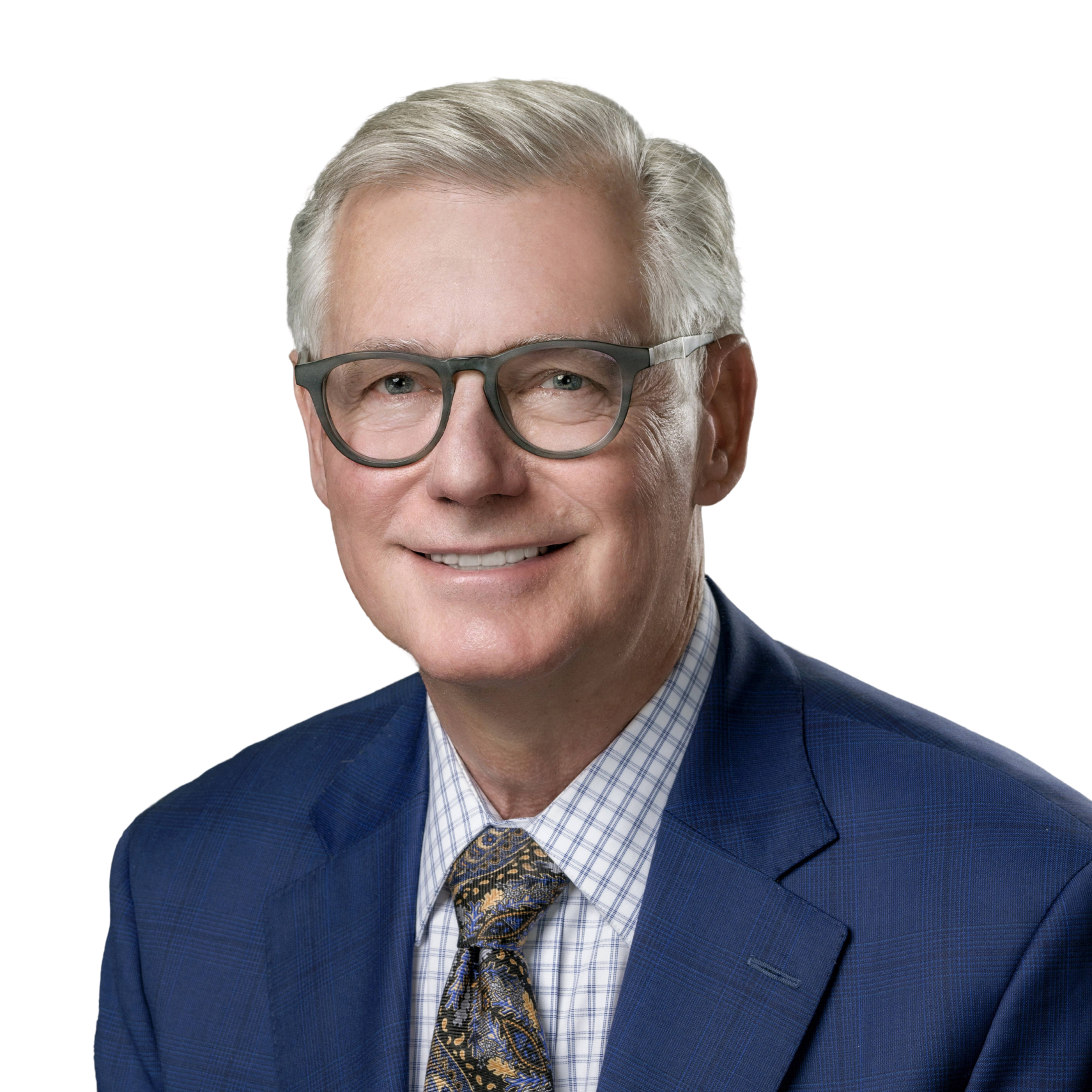
Dr. V. Kim Kutsch is a trailblazing dentist, inventor, and educator who has made significant contributions to the world of dentistry. His journey began with a DMD from the University of Oregon School of Dentistry and an undergraduate degree from Westminster College. Holding seventeen patents, his innovative creations have transformed dental care. As an internationally recognized speaker and past president of esteemed dental organizations, Dr. Kutsch has inspired countless professionals. He has authored numerous articles and textbook chapters, sharing his expertise and shaping the field. If all of that was not enough, Dr. Kutsch also hosts a chart-topping podcast titled ‘Contrary to Ordinary’ where he explores the stories of extraordinary people. As CEO of Oral BioTech makers of CariFree, he continues to lead and innovate. With 42 years of clinical practice and a role as a mentor and scientific advisor, Dr. Kutsch's impact on dentistry is immeasurable.
Done learning and want to get started?
Book a demo