

Profitable Prevention
New Techniques for Proactive Patient Care & Practice Growth
Transcript
Profitable prevention and new techniques for patient care, preventative care, and even practice growth. As a hygienist myself and the head of clinical education at Pearl, there were so many times where I was hearing my doctors, let's let's wait on these lesions, let's watch these lesions, and it's always a question mark in my mind. What can we do better for our patients? So, we're really excited to have doctor Lohman here today to walk us through, her firsthand experience and how she's going to focus on giving you some trips tips and tricks.
I am also joined today, by Tranise. So we'll get started with the kickoff with our partners, from SodaCloud. We're delighted to have them here today. So, Therese Nagan, go ahead and give us some little bit about soda, and we will jump into introducing doctor Lohmann.
Good. Thank you, Sheela, for having me as well as you, doctor Lohmann.
My name is Tranise. I'm an account executive here at SOTA Cloud, which is one of the leading cloud based imaging softwares in the market. Reasons why is because it has a open platform for all major practice management, and it also has, integrations with any sensors, intraoral cameras, and panoramics.
On this webinar today, you will see a native integration with Pearl, so you could use it directly in SOTA Cloud.
Say goodbye to toggling between two different windows. Mhmm. I'm a dental assistant myself, so I really appreciate how the program seamlessly integrates and provides a overall good understanding for patients and the clinicians.
We will have a QR code at the layer, later in this presentation, so feel free to reach out in the chat or, utilize the QR codes in between.
Without further ado, let me introduce the amazing doctor Lowman, cofounder and clinical director of Apex Dental Partners and formerly a faculty member at Texas A and M College of Dentistry, currently serves on peer review committees for the Texas Dental Association, leader of several dental forums and patient empowerment programs. She is an active peer mentor and patient advocate, and her work really aims to bridge the gaps between patients and providers through really emphasizing education, informed decision making, and the interdisciplinary approach to health care. In addition to all that, she was seeing patients all morning, has patients this afternoon, goes home to an incredible family. But we're really thankful to have you here, doctor Lohman. So we'll turn this over to you and look forward to hearing few from you on the next forty five minutes.
Thank you very much. I will share my screen, but Tranise said everything I was gonna say about soda, but I will add more to it because it's in my program.
And, Sheela, thank you so much for that. You guys gave me a wonderful introduction. I really do believe conversations are important, and so this is just a conversation about how I treat, oral health and in a preventative measure. I'll give my own little spiel.
I am a mom of two children, rambunctious, spunky, very fun, nine and five. I'm very busy. I'm a wife to my best friend, who is David Bowman over there. I'm a practicing clinician at Dallas Dental Group with two of my favorite providers, two of my colleagues, equity partners in my pro in my practice.
I became a type advocate. It's thyroid eye disease. I've been living with chronic health disease for twenty six years. I know you're asking how when I'm only twenty six years old, but I'm actually forty.
And I am cofounder and clinical director of Apex Dental Partners, and we are a dental support organization that focuses on providing high quality practices to support so you don't feel alone. So if you've ever thought about partnering with or thinking about group practices, we're happy to hear from you. But today, I'm here to talk about prevention and how I've made being a health care provider in prevention profitable, but also giving my patients excellent care.
Disclaimer. I am being paid for this time. However, this is genuinely my belief and my true philosophy that elevates my patients' care with the confidence of being a preventative health care provider.
I believe that you build trust through education. I think an educated patient is a smart patient. Smart patients make informed choices, which ultimately allows them to take ownership of their own mouth. So my goal and what I define as success is for you to leave here in the next thirty five minutes with some kind of pearl, to enhance your approach to patient care, and I'm happy to take questions.
So where do we start? All of us on this call who are our health care AI, and I believe a health care provider is anyone who is in my practice, those who pick up the phones, the administrative professional role, to those who deliver the care. So I personally started as a student doctor where they taught me Gordon Christiansen, the foundations in two thousand eleven, and then I became a doctor four years later. You're taught so many things, and you're trying to find your own way, and that's okay. But when you know better, you now need to do better or you are going to potentially do someone harm. So I was taught to be a restorative doctor.
I, on my own journey, became a preventative health care professional. Dentists have a stigma of fixing teeth. I want to change that to being AI am the primary care provider of the oral cavity, and I need to have conversations with my patients about the oral disease and how to guide them to the best, solutions.
So here's a little bit about my journey. It is a long one, but I have decided to no longer make excuses in my life. I have choices, and I honor those choices, or I figure out why I made those choices now. And it's through adding skill sets in my practice with the tools available to me today through patient education.
It's through leadership and development programs. I graduated from guiding leaders program, which is a AI program for female professionals.
And then I created a program based on my awareness to our dental support organization to support our doctors called the Apex Catalyst Program.
And ever since then, which I feel, since twenty twenty three, I became that health care provider to my patients and my team members that has measured success.
I used to see numbers as defining my value, and now I see numbers as data to see if I'm being successful in my patient's message or my patient's hearing my message. So how do I know I'm being successful?
I actually looked at the numbers without emotion.
My case acceptance has doubled. My daily production has almost tripled now based on these past numbers.
My efficiencies and systems and processes in place, I no longer put doubt that this won't work in my practice because my hygienist won't do it or my the perceived lack of time. I stick true to what I believe, and I trust in the science. And now my team has seen the last two years increased team engagement, increased team happiness.
We're all one team. We get one reward. By giving our patient promises and honoring them, we have seen the success financially. So I feel empowered with less stress to deliver the care every day to my patients, and I wanna share some pearls with you today. There's kindness and clarity. Nothing clarifies like measurements, so trust in that.
Here is the fun foundation of where I found out, I was not trusting in whether I insert science, whether I wasn't trusting in the products, maybe I wasn't trusting in myself.
A lot of that comes with awareness, and then it follows through action.
We always tell our patients what they need to be doing, and we know every six months they may forget. Most of them do.
We teach our patients how to floss properly. We teach them how to use the Sonicare properly, and they remember for a while.
But when you involve a patient, they learn and take ownership, and that is what this next thirty minutes is gonna be about. Prevention and partnership through the support and guidance from our health care professionals and all of those people who support us, like SodaCloud, Pearl, AI, any vendor that you use is a supporter, and they help patients, our team members and our colleagues. So trust is a very big word. Everyone says we want our patients to trust us.
You know, the doctor Oz's, Google doctors, it breaks our trust a little bit because a lot of negative people type in, like, a keyboard warrior.
But if you stay true to yourself and you have that integrity and you build confidence in your skill set and you learn, you're an avid learner, you're committed to giving your patients the sincere, most consistent advice you can give them without minimizing it, that builds trust. And, luckily, I have tools available to me today that I'll share with you that you can help patients build that trust by them seeing it. Seeing is believing. These are the two main tools that I use every single day to help build my patient trust and help my communication with my team to my patients, ultimately giving my patient promises to case accept what I recommend or prescribe to them.
I use the iTero machine and Pearl dot ai.
Do you guys remember when we didn't have blind spot monitoring in our car? You would be AI, and you would be hoping and praying that the car didn't run fast. But now with the blind spot monitoring tool, you know you don't even have to look to your left side that there's a car coming. So now you can confidently wait in your lane and change lanes in different ways that makes sense for you to go where you're going.
Maybe slow down a little bit. Maybe they need to slow down a little bit. But blind spot monitoring tool is a standard. It has saved lives.
Without it, we actually would be in more car accidents to this day. I consider Pearl, the blind spot monitoring tool, to my practice and to my patients.
So this is a general overview of what Pearl can do for you, and patients see a lot more things in color than black and white. So if you can notice from that upper left side, if you see a periapical radiolucency, we traditionally would say, can you see this dark gray area? Can you see this black shadow?
And most of our patients would say yes because they trust us. But this aids in trust because they can see blue. So it can share with them, like, this is in your bone.
Notable margins turn purple. I don't love when I see my own notable margins, but I honor it because it's the best we could do in the situation provided. But it shows that there may be something suspicious going on and and double check it.
It. I love the color coding in periodontal disease because white is healthy. Yellow means, hey. Take a look.
This is getting worse. And orange, I like red, but red scares people. So orange means, like, this is becoming, a destruction pattern, and it's now becoming irreversible. We need to be addressing that sooner than later.
The lower, photos calculus, you can all see that when you see that bright white fin, we see that fin, and patients may be able to see that, but they don't see the fleck beside it. That's what's unique about the AI is it shows you that there's a fleck here. You should look at it, and it may have been missed without that extra pair of eyes.
Impaction, third molars, it shows the patients in yellow where there's areas that they need to be focusing on. My specifics talk the rest of the time will be talking about caries and how I educate my patient on the periodontal disease. I love the pink, and I love the degrees of where it's in the, where in the tooth is it. It's not perfect. I have a couple of ways to show you how to help your AI learn more, and, that's it later in the talk.
The coolest part is that lower right side where it has the three tooth parts. I love the three two part three tooth parts because I share with my patients the what is going on with their tooth right now and how the disease process is there, and the color representation helps them see the layers of their teeth. So one of the amazing things, Trini stole my what I was gonna talk about, soda cloud, but I love especially being, a practice that I work three days a week, I'm able to help my patients on the days that I'm not here because my dental assistants can be taking X rays. And through soda cloud, I can have access anywhere, which is amazing because I could be on vacation.
Don't look at your phone when you're on vacation for work, but I do.
And I can tell a patient AI, hey. Yes. That's an abscess. We need to go send you to the endodontist, and I can be making money and helping my patients while not actually being in the practice.
So that's one unique thing about SOTACloud, and I love the user friendly nature of it. So happy to talk about that. For those of you who are a part of a dental support organization and potential vendors, this has helped, bridge the gap between all of our practices that may be using different practice management software or different sensors, which has been one of the reasons we really love SodaCloud. And Soda in general is the, ability to use multi, different equipment that we have without having to buy new equipment.
So, it's a really wonderful product.
The workflow, everyone asks how do I bring it in. You know, you're gonna go watch a CE, and then they're gonna say, doctor Lohman is gonna do this again, and she's gonna change what we do.
When you know that this is an incredible product, then you need to start building value with your team members. So I told them I'm not gonna make everybody use it just yet. We're gonna create a pathway, create the value, and I'm gonna share with you why it's important. So if you're wondering how we're gonna adopt it, it is not helpful to just use it in your doctor office.
That is not what it's meant for. Yes. It's great if you need a second opinion for yourself, but it's for patient education for them to understand their oral disease state and their the oral health, to be honest. So I started off with all my new patients and limited exams.
I started explaining that the tooth has three layers. It has the harder outer layer, which is the white that you'll see.
Think of that as a hundred thousand rods. I'm a visual person, so I'm gonna show you. I tell them it's a hundred thousand rods packed together. I explain to them that it's the hardest tissue in your body stronger than any bone.
Then I explain the second layer is dentin. It is the soft part of your tooth, and think of it like a blue kitchen sponge that has holes, absorbs material. It's very temperature sensitive, and then the light purple is your nerve. The nerve supplies your entire tooth with life. So imagine how I used to be able to explain that was this, lighter white, this darker gray, and then do you see the gray dark shadow as your nerve? I spent way more time trying to educate my patients without Pearl, so I save a lot of time and a lot of energy.
So I show my tooth map zones. I explain decay. I talk about the bone measurements. And then depending on what else is going on with the oral health, I'll go, and talk in more in-depth.
This is also a unique way that when you use AI use it through SodaCloud, and you open it up and it automatically puts the annotations on them. But as a provider, it does not and will not take away my job because I have to be a critical thinker. Because X rays show one version, Pearl dot ai helps you see more in-depth, and then you use your clinical judge judgment and your intraoral exams to evaluate, does this need treatment?
So this just aids the patient in explaining, do you see that dark pink spot?
Do you see that that's decay?
And then explaining what decay is. I'm not gonna spend the next twenty minutes talking about decay because we all know what it is. But this helps the patient visualize there is something wrong with my tooth. I don't have to blindly trust my doctors anymore. So if you look over there, it has the AI view right over here. I always toggle that off, and I turn it off to make sure that it's not cervical burnout, that there's not, the the anatomical of the tooth that's making that area shadowed. So this is a second opinion for me, not the the first opinion, and then I make the last choice.
This now shows the patient again, I'll go back and forth. This is traditional X rays with AI, but this is patient education.
With patient education, you can start seeing that that second layer of your tooth, that spongy layer, it's going to go to the nerve. That's why it needs to be treated immediately. It shows urgency versus blind trust.
Here, I will talk about products of prevention. I have been using Silver AI for over ten years now. When I first used it, everyone thought I was crazy until the ADA gave it the seal of approval, which I I approve of the process that you need to go through in order to get those seal of approvals.
But this for you for you communicators who like to know the science, I'm not gonna go into depth. But silver diamine aids in prevention by placing the liquid solution AI, and then it has an ion exchange where the silver acts like an antimicrobial and kills that bacteria. And then the diamine and the fluoride attached to the natural minerals of the tooth to then support the tooth to stop the decay from progressing further. It could take up to one to two to multiple uses. It does turn the surface black, but it's great for those patients who don't care, the older patients, those leaking margins.
If you're a preventative doctor that doesn't replace everything, this can still be a prevention technique that aids in their care without waiting and watching.
This is a patient of mine, seventy two year old female. She, was in chemo, and I used silver diamine on her.
This shows on the upper left side where the decay was. Again, disclaimer, most people would crown that tooth. Some people would do a large filling. It's your dental AI approach.
So we did silver diamine. She was in the middle of treatment. This is the AI off. So, again, most people would be able to see that's going into the dentin.
I don't have a color visual representation of this. I apologize. But six months later, when she was on over the counter fluoride and Clinapro five thousand, you can see that it is no longer detectable with the AI. So the silver diamine, trusting in the science, and now I have confidence through AI that is helping my patients just makes me more empowered to be a preventative doctor. So I will tell you six months later, the tooth did end up being crowned, but this patient, when she was in a very emotional state, had an option that didn't break the bank when she was already having so many medical bills.
This is an incredible product. I always get very excited about this product because when I first heard about Cure Not Repair, I laughed at the vendor, who told me about it. I said, you can't rebuild enamel. They taught me that in dental school. What's great about technology is we're trying to figure out how to bypass the challenges of breakdown of enamel.
This product is a product that will regenerate enamel by throwing off hydroxyapatite through an ion exchange, specifically with the self assembling polypeptide p eleven four. So that is my son on the lower right side, eight years old, two white spot lesions.
And I told them I was not going to talk about their products because I don't even know if it works. Actually, it was just more self doubt in Leila's head.
We all need to try the products in order to trust it, but we also have to understand patient compliance, the oral environment, xerostomia. All of those things affect the efficacy of the drug, so or the medication.
So this is my son. We did the protocol. We can talk about the protocol later, but that is six months later. The lesion is harder.
It is stronger. The enamel has been rebuilt. So for those of you nerds out there who like to learn, here's a visual representation of what happens at the lesion level, and then there's an ion exchange between the product. And then once the ion exchanges happen, it throws off hydroxyapatite, which is a natural mineral in the tooth, and then the scaffold builds the enamel regeneration.
Don't believe me? Well, I've been using it for almost over two years now, and these are patients of mine. This is a thirty six year old male, healthy, maybe drinking some carbonated waters, sodas, coffees.
And, traditionally, I I didn't put that traditional X-ray without the AI, but most people wouldn't have detected that based on my first X-ray. The next X-ray, when it was overlapped, you actually could see it through traditional. But with AI, it shows the depth in two different ways. This is the exact same tooth, and some people would have gone to this middle X-ray and done a filling on this healthy thirty six year old male.
What do we know as practitioners is when you start doing restorative, the pathway over years goes filling, breakdown of filling, larger filling, crown, crown to potential root canal, root canal fails over time due to clenching and what other resource or what other patient's doing. Then it goes to implant, then implants fail, then it goes to all in four. So why don't we protect the enamel? Because I can guarantee you patient compliance is never a hundred percent.
So I will still need to do that filling later. I will still be doing that crown later.
But building trust through education with the tools like Pearl builds confidence, and that patient can see it. Because what you can see in that last X-ray is it has rebuilt and regenerated enamel, and it's no longer detectable with the AI. So I can be a confident, competent clinician with preventative measures, and that patient who's thirty six now sees that I did the noninvasive way, minimally invasive treatment to treat his condition. And now he refers family, friends, everybody. But it's because he doesn't have to blind trust me.
So this is a thirteen year old boy. Is there a question, Sheela?
We do have a quick question. I would love to get your input on this one. It's about the silver diamine. Yes. The question is, can the silver diamine or advantage arrest be recommended to be done on class three or maxillary anteriors, or would it be, too dark? And then also if you're familiar with the the codes that they use, we can share those at the end for billing that out.
I actually have it on another slide, so I will show you the codes. I will tell you it is too dark on anterior teeth. However, I have patients who don't have the money to do fillings, and I explained to them the way that the tooth looks right now versus me arresting the decay. I can do a glass ionomer on top of it so it looks like a gray versus brown or black. So I think it's just what your patient expectations are.
I would never put it on somebody who is focused on aesthetics. I would tell them they need bonding, crown, veneer, if it's be if the cavitation is that deep. But I have had patients, you know, a thirty year old female who was in a fire who does not care about appearance at all, and we put it on her AI, and she's been years with arrested decay, that's not activated. And we put it on, every year at her hygiene appointment just to make sure that the bacteria stays arrested because every time you eat or drink anything, it washes it away over time, because that part of the tooth is softer. So I would not recommend it on anyone who expects it not to be black. I've put it on kids, and then we did a glass AI sandwich technique, in front of it. If the mom was okay with a light gray, If she was not okay with a light gray, then we did traditional restorative.
I will share with the CDD codes afterwards because I have all of them laid out. Thank you.
So this is one that kind of wowed me. This is a thirteen year old boy who, hears the traditional X-ray on this right side. I turned the AI off, and most of us clinicians would see that. But some of us might think it's cervical burnout or maybe an eruption pattern, based on the degree of the lesion, but no one, including myself, didn't catch that one.
And I pride myself on knowing incipient lesions. So with the AI turned on, I was able to show the mom he has two cavities, and most people would try to do a filling on that. But I thought to myself, based on the eruption of number fifteen, I won't get a good seal on that. That's causing this kid to have more problems later.
If you do what I'm gonna recommend to this patient, maybe we can, with new minimally invasive techniques and technology available to us today, save enamel. And in six months with him doing one application of cure on repair, flossing twice a week because of expectations with the patients, Compliance is a big part of it. He only brushes manually and act mouth rinse daily.
This is six months later.
Cure don't repair can actually continue working for up to nine months based on the studies, and it was no longer detectable. So now this thirteen year old boy has more time to go get decay other ways, but not today, not on my watch. Even in the best of hands, I wouldn't have gotten a great seal on here, and I know what happens when there's not a great seal bacteria lead. So this is a noninvasive way to treat decay, understanding that patients are going to not be compliant when he's eighteen, nineteen in college. So I'm not worried about getting paid today. I'm worried about building the trust and the value of why they need to keep their oral health happy and healthy so that they can keep their teeth stronger and longer.
These are my patients.
This was a patient, fifty eight year old, bit down pain. I you know, most of us can see a little bit of AI PDL.
Patients, you know, don't really know the difference between trabeculation and that gray shadow. How wonderful is it that I use a a tool like Pearl so they can see that blue shadow. And now I can explain what that j shaped lesion is and then make my recommendations for treatments and go over those options with her. I just added this to my, tool because, again, AI is not perfect, but it's great to have a second opinion.
And why wouldn't I want the AI to be smarter than me? Because it's wonderful. I don't have an ego. This one showed a periapical lesion.
No trauma. We can all see that that deep cavity is, you know, pretty close to that whole porn. And then this is me turning the AI off. This is me editing the AI saying this is actually not accurate because this is the other representation of the tooth.
And, again, you know, you may say that there's a break. There's this going on. No temperature sensitivity. Nothing going on.
So I removed it, but it still keeps it there for me to double check next AI, is this actually an infection? I did all the testings. It tested normal. Everyone who's gonna say, oh, what should I do?
I'm not judging dental philosophies. I'm just showing you how this is so unique for patient education and how I can teach the AI to be smarter for me next time I help a patient.
As practitioners, I have found myself sometimes minimizing conditions because I know I will help my patient later when it becomes a problem. How about I help my patients not have that problem? That is what early detection and early prevention means to me. Being a health care AI, a preventative health care provider of the oral cavity is faster detection, early prevention, and giving those patients the trust and building ownership of their health based on their habits. So I like to use the dental health scans.
All my patients get them yearly. And, again, I'll have a workflow in the second. But I tell them, based on what's going on in the position of your teeth, my concern is that you're gonna continue breaking down enamel. Here's how I'd recommend the treatment. I treat with aligners. I show them recession, and everybody is happy to keep their teeth where they don't hopefully need dentures later. Again, always happy to have the dentures available, but how about I prevent it from happening?
I believe recall our hygienist, it would help them a lot because this is the color indicator dots that show you when when you're in the middle of prepping a crown, numbing a patient, delivering a night guard, and you're going in to make that patient touch recall exam. They're valuable because they're the ones who refer people to you and they've stayed in your practice. But now you know, hey. Take a second look.
There's a marginal discrepancy once you learn the colors. Oh, doctor Lohmann, there may be a cavity. Take a double double check that. So I consider it a blind spot monitoring for our recall, and our hygienists, once they learn the codes, they actually can start the conversation confidently because they'll have color representation where they don't need the doctor to explain it all the time.
The patient will see the color so the doctor can just come in and confirm it or decide to do something different.
This is seeing I think dental health scans see from the doctor's point of view. It allows the patient to take ownership. Again, I start very small.
I used to go in and tell everyone to go do everything when I say when I say it, and then the team or my allergist died. So now I come in with a strategy, and I say, let's do this for all new patients. Let's give them a new experience, and let's do this for limited exams. After my restorative procedures, I would do dental health scans because they broke something for me to restore it anyways.
It might be the position of their teeth. We all know caries is the number one disease in the oral cavity right now, then it's periodontal disease, but the third one is malocclusion. So I tell my patients malocclusion is your teeth are not in the right position. And what that means is is if your teeth are not in the right position, it can cause gum disease issues.
It can cause, not great compliance because they can't get between those teeth. So straight teeth, a benefit is pretty. Straight teeth, cleaner teeth gives you a healthier oral cavity, which also helps your oral health systemically because everything is linked most things are linked to the biofilm. So you can see on that right side of my protocol, how to identify it.
I'm not gonna go into detail. But how did I change from being restored a doctor was by being intentional and having conversations by being a health care professional a preventative health care professional.
Here is the CDT codes.
I just wrote how to identify early noncavitated cavitated lesions. With Pearl dot ai, it's helped me tremendously to change the trajectory of my prevention protocol. Same with the dental health, and I love that it's integrated with SOTA because of the ease and the user friendliness from my teams is awesome. So the c d c d t codes below.
Thirteen fifty four is what I used to use for cure dot repair before it had a code for itself, but that is for Advantage arrest, silver AI.
Thirteen fifty five is different preventative medic medicaments, and, I think we use that more for microabrasion, microdermabrasion, different types of other preventative services.
D two nine nine zero is not on here, but that's Icon resin infiltration.
And then d twenty nine ninety one is the new CDT code for cure, not repair specifically because it regenerates through hydroxyapatite mineral.
And I have seen, reimbursement rates from insurance payers, for both of those. When I first started doing Silver AI, there was zero reimbursement rates, but they started realizing the benefits of prevention. It saves them money. So now they're actually covering thirteen fifty four, some people AI a hundred percent.
And then d two nine nine one, between fifty to eighty percent, sometimes a hundred percent if they have a great, insurance reimbursement. I always recommend the standard fluoride varnish, is a standard to prevent oral disease and help rebuild teeth. If they have, an issue with fluoride, I do nano hydroxyapatite or hydroxyapatite AI Jen's oh, yeah. I'll go back one more just because, where I'm at, I treatment plan, and I charge ninety five dollars a site.
I used to charge a hundred and fifty when I didn't know if the product was gonna work, and it costs, you know, the cost benefit analysis. But now I chose ninety five dollars per site. That's just for anyone who wants to know, I recommend you do a UCR evaluation of your ZIP code and be between the eightieth and ninetieth percentile of your UCR. That's just my professional opinion.
I have two more slides, but, nobody wants two of Leila's ask my husband. He does not think that everyone needs that. So I just recommend AI never compete with anybody else. I compete to be the best version of myself each day, and that has helped reduce the stress of judgment, self and pure judgment, be unique, be you.
That's who they're coming to. And I set myself apart by doing handwritten notes for people, who are in the hospital, for people who've had babies.
I did post op calls myself for five years, and now I have a trusted team that does post op calls with anyone who gets any procedure done. Because even if they are the patient that has a lot of problems, I'm still gonna have to deal with it at some point. I would rather them to think that I not to think, to know that I am a proactive doctor. I'm gonna fix it anyways. I'd rather know you have a problem and know that I care. So you need to be the change in the world or no one will do it. So how do I change health care providers to be preventative health care professionals is by taking this time with me today.
They teach you how to be restorative doctors, be health care professionals who prevent oral disease from happening. I was the dentist of the last man in the iron lung and for four years, and it was awesome but challenging.
Thank you for taking the time. That's my personal email below. Happy to give you my cell phone also. But prevention is building trust.
And in my organization, with my doctors, I have created a partner in prevention series to help them with team implementation, how and what verbiage to use with the patients. So I'm a provider who loves prevention. I could talk your ear off it all day when you come to dinner with me. I love talking teeth.
I don't turn off. So please know that I truly mean it. Reach out to me if you have any questions, comments, or concerns.
I'm done, Sheela.
Wow. Thank you so much, doctor Lohmann. That was so informative and so many things to consider, so many questions.
I loved a lot about what you went into with having the second opinion inside of SOTA Cloud being a seamless workflow. I think sometimes when we adopt new technology, it's very challenging. We see you know, as clinicians, we see, like, wow. This is great. And as doctors, we think about, wow. This will be helpful. And then we get stuck in, oh, I gotta train my team, and I gotta train my staff, and so and so may not use it.
So I guess the question I would say because I've implemented this in many practices, so I'm a little biased. But it seems very seamless, and I would like to hear kind of your thoughts on how your team first felt about it, because I think that's an important topic to discuss.
Yeah.
AI I change anything new, including myself, AI, had an idea of how easy it was gonna be, and I didn't really imagine the learning curve.
I did take, like, a, like, a four to six week learning curve of I'm a I was a Dentrix user in my practice management software. I'm Open Dental now. And when you change the different practice management softwares, you just get angry for probably four to six weeks. Mine was three months.
And then once I started building the confidence and doing the same thing, learning it, passing that learning curve, I wouldn't go back to it any way before. So there is a seamless integration, but the learning curve is to share with your teams that AI promise you, this is going to be better in the long run. Let's keep trying it. Let's work out the kinks.
So that's why I was giving you the workflow strategies because if you start with a little bit of workflow strategy, you're telling them, guys, I've thought about this. There's going to be a learning curve. Give me three weeks, and we'll work with our representatives for a seamless integration because they're a white glove service. So both you, Pearl, and Soda have incredible representatives that give you that white glove service that gives me the confidence that when I have a problem, I know who to call.
So, that strategy has helped me, and now I love it because my patient will call me.
I do give my patients my cell phone. My husband doesn't love it. But they'll call me like, hey. I have a toothache.
Well, I don't have to go into the practice. My dental assistant can take the X-ray. I'm in the middle of a meeting. I can look it over.
My dental assistants, if you teach them properly, can do some testings for me, like tapping, biting, and giving me some information. And then I make the clinical judgment, but it's great because with Pearl and that easy integration that I'm not even in my practice, I can say, yep. Let me go send you to the root, anodontist. I can give them a seamless white glove service through the tools I use in my practice.
And now my patient has an incredible experience, and they didn't have to pay two hundred dollars for it. We we we didn't even I don't even charge exams when my dental assistant does it. I do the X-ray, and then I send it. So I believe in the long game in making money, and that's building trust and value in my patients, and I can do that seamlessly with, SodaCloud Imaging and, Pearl.
I love that. It's a great answer.
Also, you talked a little bit about your case acceptance doubling. And I know for me, when I was seeing patients, you know, as clinicians, we see it. We I always say this. It sounds really funny, but, like, you walk down the hall and you can see the patient monitors up and you're like, oh, that needs a root canal.
That needs a crown. That needs scaling. And you go back to your operatory. But I love how you talked about you're saving some time when you're, explaining, you know, treatment with AI and with these these patient friendly images.
So my question is as far as, like, how the case acceptance really doubled, can you share a little bit more about that?
So I don't know if you've ever looked at your case acceptance numbers. Mine was based on feeling.
It's like my patients like me. They come back. They accepted my treatment. I looked at my unscheduled list and just assumed that I'm still at a fifty to eighty percent. Industry standard for case acceptance is between, I think, twenty to forty percent. And to me, that was shocking because how are we only okay with forty percent of our patients doing what we prescribe?
And it was because they did not maybe fully understand it. So what Pearl has helped me do, is when I pop it up there, I'm not spending fifteen minutes talking shades of gray. I'm bringing that color to life, and then I'm telling them the pink is decay. Decay eats your tooth. Here's how we treat it, and they just accept it because they see it. So seeing is believing.
So my case acceptance doubled just based on understanding how I would talk about it with my patients, how what verbiage would I use with Pearl, and I I flopped a little bit. Took me a couple of weeks. Still tweak it every day.
And, now it's just seamless to me. Again, I've been using Pearl for over a year now, and everything just seems easier in color because patients understand color. They don't understand shades of gray. And sometimes with gray, there's ambiguity. With color, there's no ambiguity.
Absolutely.
We do have, you know, the QR codes here. If you are interested, I would definitely recommend take a moment to scan those. And every practice is different. Right? So I think it's important for you to set up some time to talk to Soda, talk to Pearl, see if this is a good match for you.
There are some questions I do wanna address, because you went into such great detail about, the silver diamine and such. Let me get those questions up here.
I will I will add that anytime you bring any technology into your office, if a strategy is important, and Pearl and SOTA both have already strategized how to implement it. And one of the, challenges I used to have when someone came to me with something new, it was, do I trust it, and are they gonna make my life easier?
And it it may it's a little harder before you get easy. And I think that if you come through that lens, that perspective, that the workflow is gonna take a minute, just awareness that it's gonna take a couple weeks, maybe a month, I promise you the change will change your life on stress, but you have to be willing to just push yourself a little uncomfortable to do it. And, again, you have people like me. Pearl has other people that you can talk to. Soda has other users you can talk to. We're gonna tell you the truth, because what there's no point in lying about it. You're gonna figure it out at some point.
Yeah. I agree with that too. You had a great point about this is not only a a tool that lives in the doctor's office. And I think sometimes as clinicians, we we love technology.
Right? We love new things, and we get a nice fancy new tool. But I used to call them doctor hoarders. Right?
Because I would talk to my teams, and I'd say, well, what do your patients think about Pearl? And they're like, my patients, I just I just use it in my own office for my exams. I I turn on my x rays and I look at Pearl, and then I go do my diagnosis. And I said, oh, well, call me back and let me know what your patients say when you turn on the tooth parts.
And that that was really the game changer you were talking about today.
And that that's been a huge win, and I love what you said about this is really an educational tool.
So I do wanna make sure that the questions Yeah.
I see one question that says what's those top benefits of SOTA. For me, I have a multipractice, organization.
And so SOTA Cloud Imaging helps, a, streamline those offices, but it also is used with any, sensor.
And I like it basically because I can go home and still look at the X rays and be able to have access to it. So it's the ease of, availability for information for me. So SodaCloud and Soda is the digital solution for our company and my practice. It's it's I love it.
And I'd like to add as well. Thank you, doctor Lowman.
So the cloud pretty much has well over a hundred plus integrations. So integrates with all known, practice management softwares, integrates with any sensor, intraoral cam, panoramic.
Soon enough, we're gonna have three d capabilities, and one of the best features is that it does have a native integration with Pearl. No need to pull between windows, and you have that seamless, accessibility to it, being able to share it with patients and practitioners.
So that this way, everyone's on the same page about what they've seen in the office and how they could go ahead and utilize it at home.
And I will I will pony off, Ternice, because not having to put so many window applications up, it's so nice to just being like, it's popping up. We turn it on. We go through the same native integration. And I didn't understand what native integration was until I actually understood it, and that just means that you're not having to pop up several screens.
So it doesn't I I see another question here. It doesn't integrate with iTero, but you can download those scans and actually import them into SOTACloud with our patient files, making it a shareable document. And then as far as CBCT, we're only supporting two d imaging at this time with opportunities to, import CBCT scans and share them, but we will be having three d capabilities soon to come within, end of February into March.
Excellent.
Okay. Some clinical questions here.
There was a question, and I don't know if this is your area, doctor Lohman, or maybe your office manager, but the d twelve o six Yeah. Is varnish, and then the d twelve o eight is Yeah. Chloride.
So, excluding varnish. So there was a question about, like, I guess the real question is, which one do you feel most confident? And I think you addressed that, but can you restate that?
Yeah. I like again, I thought the twelve o eight was fluoride varnish, so I apologize if that was wrong.
But I like varnish.
Specifically, I'll plug in the new three m clear. It's been a game changer in my practice.
I used to use Flormax, still do at times, but I believe fluoride, varnish is the standard. And this is the one that is clear, tasteless, pretty much tasteless, and you only need fifteen minutes to not eat or drink anything. So in my practice, I save enamel every six months, understanding that if they don't do home care, then that's the best thing I can do for them. So for thirty dollars thirty dollars, they can save their enamel more based on their everyday habits.
Great.
So what I wanted to walk through real quick here was that, these incredible advantages of having AI in dentistry will not only save you time, aid in trust AI doctor Loma was saying, but also really see that patients are more educated to make better decisions. And that means they're accepting the dentistry earlier and more often, which is a huge win and kinda why we all went into dentistry. Right? I think it's important to know that Pro second opinion can be used with multiple different imaging systems. Although AI will say having it natively integrated really eliminates that painful workflow, and so does integration is so simple.
Working with their team, being able to have it very streamlined because they understand the user, from a very workflow perspective. They know how fast it is for us when we're reviewing radiographs and how we need to have one or two buttons in order to access everything we need. I would also encourage a demo with Pearl to really understand how this can work for your practice. There's additional features with, practice management integration where we actually have, you know, color code your entire schedule with, AI insights and all kinds of things with, taking it full circle and verifying insurance.
In addition to that, Sodo does have I just learned over the last couple months incredible features for, you know, referrals and streamlining. You know, hey. I referred out something for endo. And it's for me in my old practice when I managed, it was AI, where are those thirty five people that we referred out?
And how do I get the crowns put back on? And there's a lot of things that both companies can really offer to be able to help save you time. We know in dentistry, every second is so crucial and so important. So I just wanna make sure that you guys have that time.
We don't want this to be a sales pitch. That's why we actually brought doctor Lohan on because it's a super user who's using this every single day. I love doctor Lohman that you also have offered to have people reach out to you because sometimes you want that real one on one when you're talking to, thinking about these purchases and talking to a doctor. Tranise, was there anything else you wanted to add or doctor Lohman before we, kinda put up that QR code for the CE?
I was just gonna say AI understand the business of dentistry. I've I've got multipractice locations. And so if you don't have a strategy, it's gonna be a very expensive tool. But what's great about both those companies is they have an implementation process that you need to follow.
If you don't follow the process and you say, I don't really need to do that middle part, it actually is disruptive because that's how they've trained on the seamless integration. So if you're gonna spend the money, which I do believe is worth it, demos are important. But the once you say yes, which I recommend, is, following the implementation process that's recommended from the companies. They don't make it up.
They don't wanna make more work. To be honest, if they could just hand it to you and make it seamless, everybody would do it. So utilize the representatives and letting your team know that everybody and every vendor, even our labs, everybody is a supporter. They're not a detractor.
The person that makes it a detractor is the person making the choice to decide that they're detracting. So make better choices and be a preventative health care professional, and thank you for having me. I don't know if Tranise has anything to add, but I appreciate you guys having me here.
I sure do. Thank you, doctor Levin, for that. Only thing that I would have to add is I would definitely encourage doing a demo with SodaCloud. As doctor Lohmann had mentioned, it's, effective in the office.
It allows for seamless integration with exactly what you're currently using, whether it's practice management, hardware, what have you. There's a lot of good things coming with SodaCloud. I see that there is a question about pricing. Pricing does depend on a few factors.
If you do go ahead and demo, I'd be more than happy to help you with any questions you have.
Excellent.
Okay.
So I wanna make sure that you do have a moment to ask us those last few questions you might have.
Please go ahead and click on this QR code.
Register your name. You will receive your CE directly via email, and you do need to have the CE code pearl.
Make sure you kind of jot that down.
And all of you that are in attendance will have this recording sent to you directly as well.
Are there any other questions that Can we share the recording?
Yes. Like, the recording will be shared. Alright. And I'll share it with you too, doctor Lohman as well. And so if anybody has any other needs besides that, Tranise, any other questions that you're seeing?
No. Not from my end. I think the only nope.
Excellent.
Okay. Well, I will leave this up here another minute. I do wanna thank everybody for attending. We know how valuable your time is. Doctor Lowman, thank you so much for sharing your experience with us. We look forward to seeing you many more AI, just really kinda helping the clinicians learn new tips and tricks. And I hope everyone has a wonderful day, and we look forward to seeing you in the upcoming webinars.
Thanks. AI, everybody.
Have a great day.
Meet Your Host
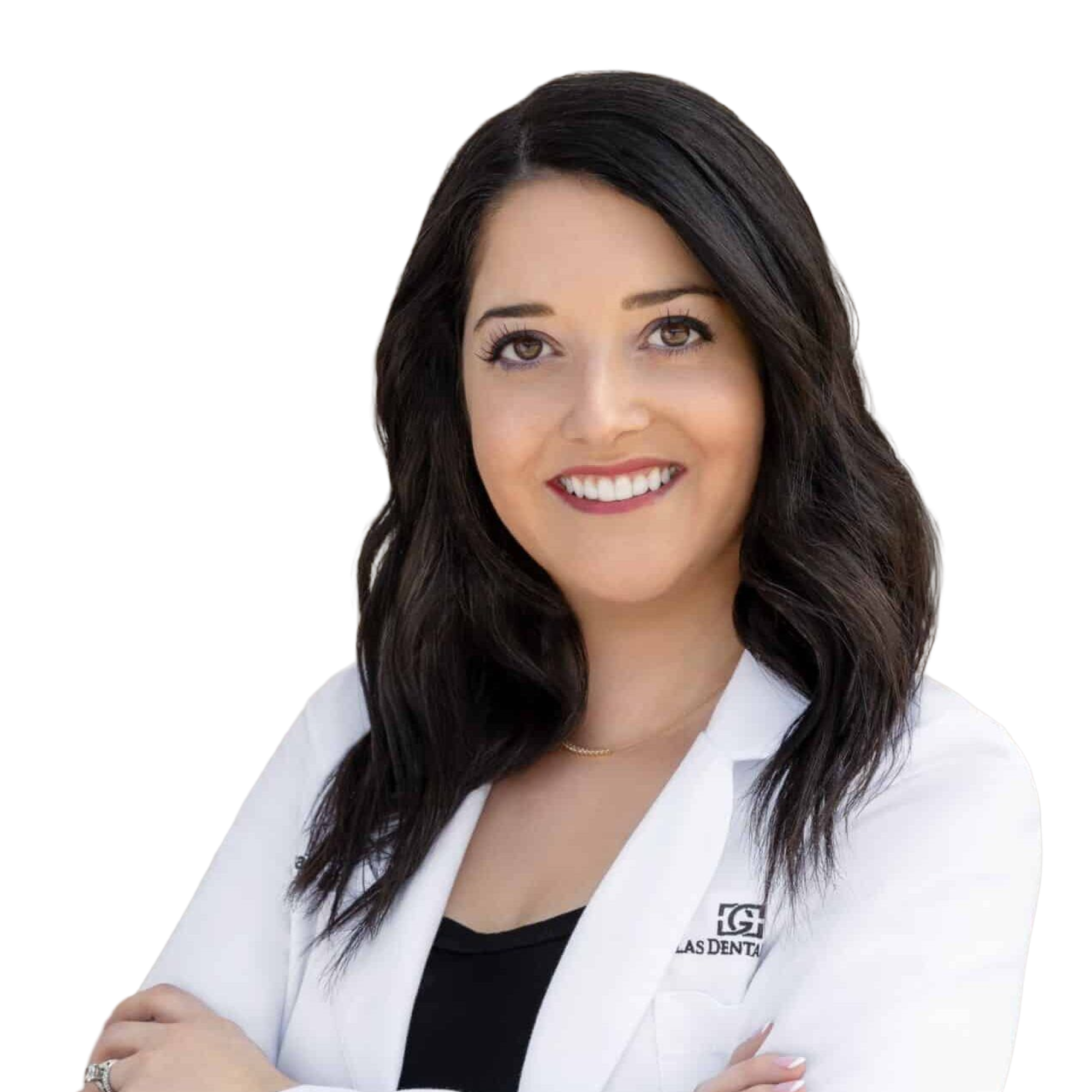
Dr. Layla Lohmann is the co-founder and Clinical Director of Apex Dental Partners. A former clinical faculty member at Texas A&M College of Dentistry, Dr. Lohmann serves on the Peer Review Committee for the Texas Dental Association and continues to see patients in private practice. A leader of several public dental forums and patient empowerment programs, she is an active peer mentor and patient advocate. A vocal proponent of preventive dentistry, Dr. Lohmann's work aims to bridge gaps between patients and providers through emphasis on education, informed decision-making and an interdisciplinary approach to healthcare.
Done learning and want to get started?
Book a demo