

Mastering the Art of Getting Patients to Say Yes
Transcript
Thank you guys so much for joining us, especially when you have lots going on in your life. We're thankful you chose to spend time with us. Today's webinar, Mastering the Art of Getting Patients to Say Yes, is going to be a wonderful webinar with doctor Kaufman. The session is dedicated to giving you practical, powerful strategies to really focus on getting the patients to say yes.
And we're not talking about selling more dentistry or increasing production. We really just want them to say yes to what you're recommending and make sure it's not feeling like we're selling that. You know? Patients are very concerned about that these days.
I'm Sheela Roth, head of clinical education at Pearl, and thankful to be here today.
Thrilled to cohost this webinar with our partners from Plan Meca.
And have you ever felt like a patient completely understood the treatment they needed, but then still said no. Right? And they walk up to the front desk, and we think, AI are they not actually scheduling? If that's happened to you, you're not alone, and this webinar is really here to change that. It is a pleasure for me to introduce doctor Kaufman, excuse me, our featured speaker today. He's not only a respected clinician with more than thirty years of experience in personalized dental care, but also a nationally recognized author, educator, and a thought leader in restorative and cosmetic dentistry.
As a proud graduate of UIC, College Dentistry, doctor Kaufman runs a family practice that has become a model for excellence in one of my favorite topics, which is patient centered care. He lectures internationally, serves on advisory boards, and holds fellowship status with Academy of General Dentistry.
When he's not treating patients or teaching, you'll find him hiking, cycling, or cheering for the Chicago Bulls. I think you even worked out, you said, today, doctor Kaufman. So very active.
Doctor Kaufman is going to walk us through how to confidently present treatment plans, handle common objections, and build the kind of trust that turns patients that say, I might think about that too. Let's go ahead and schedule it. So, doctor Kaufman, thank you so much for joining us today. I will turn it over to you. Thrilled to hear you walk us through this presentation today.
Thank you, Sheela.
Let me advance this board.
Hold on. Got a little technical issue going on here.
There we go.
So it's nineteen ninety one in the spring. I'm in dental school. I'm in a lab.
It's about three, four in the afternoon.
I decide to call up a good family friend who's the head of security at, the Chicago Stadium, home of the Chicago Bulls at that time, the Chicago Blackhawks.
And I say, hey. Can you get me into the game tonight?
He says, sure. Just come in, park in the usual spot, and I'll meet you. So I head over to the stadium about seven o'clock that night. It's about ten minute drive from UIC.
And, he meets me, and I get escorted all the way up these catwalks on the inside of the Chicago stadium to the highest point.
And he takes me to the cameraman's cage, and a folding chair is there for me. And I sit down, and I get to start enjoying the Eastern Conference finals for the Chicago Bulls.
And I was fortunate during these this time to be able to do this on many different occasions.
And I was fortunate because relationships have been built with this family, the head of security.
That was through my father who was also a practicing dentist. But let's fast forward from this era to this one. It's two thousand and ten, September, first week of September.
I get told I have two patients in the chair.
They're brothers.
They're here for a consult. You need to go in the operatory too first.
I said, okay. I recognize the names, but, you know, what's the chances of this guy sitting in my office?
So I go and I speak to the brother, and he tells me AI need all the dental treatment done in four weeks.
I said, well, how long has it been since you guys have been to the dentist? And I find out about ten years.
So I do my we do a full exam. We do a comp exam on all our patients when they come into the office. And I find out that this brother needs scaling, rip planing, extractions, work that's gonna take me longer than six weeks. But his younger brother, just simply needed, some extractions, some caries control, and he wanted cosmetics. He wanted a new smile.
So can you do it before, the photoshoot?
I said, I will do my best to get this done before the photoshoot. So my team came together, and we executed getting him in with specialists that he needed to see, getting him back in the office.
And what started out as this relationship being built with me and these brothers led to a situation where they were offering us tickets to Bulls games, front row seats, but more importantly is I built a relationship with their family.
And a lot of what I'm gonna touch on today is relationship building, building trust, explaining to patients, what they need on a level that they can understand, find out what's really important to them. That's what I'm really gonna walk you through because I've always found that we have to build the relationship first and support it with data, documentation, which you'll see me do, and everything else will fall into place over time. So I know we're limited on time.
I'll move ahead. I'll show the obligatory slides of a my family. It's my blended family. That's Jill and me in the middle. We're actually gonna be getting married in July.
Very excited about that. And then, our kids and our, two doggies, as well.
As Sheela mentioned, I have, lectured nationally, internationally. I consult with many dental companies and entered dental advisory or dental product shopper, part of SmileSource, a private practice network of, dentists.
One of the best decisions I made about ten years ago was joining SmileSource.
If you wanna find out more, please reach out to me regarding SmileSource as well.
I practice here in the Hyde Park, Bank building in Chicago, south side of Chicago, few blocks from the University of Chicago, wide birth mix of, dental patients, socioeconomic backgrounds, very diverse demographics.
Simple front door and our waiting room, and this is our reception area.
And you'll notice AI got a tooth walking through the door, but I've never had a tooth walk through the door of my dental practice.
We all have people, and that human touch has just been paramount, in building trust for patients to really understand that we care. And showing that you care, it it there's always been a golden ticket and just being honest and giving patients options to get them the treatment, they need.
We have nine operatories within the practice. We have long hallways. We have three private rooms.
And the team that supports me has been with me a very long time. Our oldest employee has been with me forty two years.
My head dental assistant, she's been with me twenty two. I have another hygienist, twenty four years. Another employee, my business manager, fourteen.
Doctor Minkowski, who's standing there, in the middle. She has been with me, twelve years, and I have found that our team stays because they really are invested in our core values of a practice.
And over the last thirty years, I mean, there's been a lot of changes within the profession. It has a constant everywhere as you're we're always gonna have change.
And the biggest change has been this, has been, the social media.
It's really easy today for dentists to get blasted and get bad reviews.
And I I just pulled something out by random, that I that I found out there on Facebook.
It's not not to say anything bad about this dentist.
But here's a national chain of dentists just getting ripped by one person, and it it's really unfair.
But I can't pick on them. I can pick on myself a little bit too because, you know, we've had bad reviews.
And all of us as dentists have probably had a bad review, and we're, you know, we're kicking ourself or we're beating ourself up. You know, what did we do wrong?
What happened?
And I look at bad reviews as an opportunity to figure out where AI we can improve. What's gone wrong? How can we do better? And I'll dig into them to find out, you know, what we can do as a practice to get better.
But I want you to hone in on what you did AI, and I want you to share that with your team because what you're doing right, you're doing ninety eight percent of the AI.
And we have to build on this in our dental practice.
I went ahead and asked Facebook, chat GBT rather, what's the negative reviews we're all getting out there? And this is some of what come up came up.
Negative reviews of dentists on Facebook can stem from various reason. Important to consider both the patient's perspective and potential limitations of online reviews when evaluating them.
These are some of the common complaints. Poor communication.
I'm gonna talk about why taking the time to find out who this patient is, what they're about, what their values are can make a complete difference for getting a patient to say yes and to trust you, to get to where you know they should be.
There's insurance issues. Patients, didn't know they were out of network. They weren't told they were out of network. We've had it happen in our practice where a front desk person messed up.
High cost, unnecessary procedures.
Patients don't understand that the cost of providing dentistry has gotten is escalated and that AI we're losing money, especially if we're in some certain, PPO plans.
Poor customer service.
That that's a big one. Rude and unprofessional staff.
We don't tolerate it, but nor do we tolerate a patient being rude, to our team members as well.
Quality of care is paramount, and the one of the biggest ones I find is lack of empathy or understanding.
Some patients feel that dentists don't care.
And I have found that thirty years, the more I show a patient, how much I care, that's what they remember, and they refer patients back to us.
I was fortunate because of this man.
And that's my father. He's a World War two veteran, and I was brought up in a really strict household.
You know, and I was always told to give your best, help out others. Whining isn't gonna be tolerated.
Treat people the way you wanna be treated. And what I found from this man is the relationships that he built with his patients lasted for years. My dad's been deceased now five years. I still have some of his patients, and they still talk about him and the care that he offered, the stories of driving patients home.
If a parent, you know, couldn't pick a patient up, taking that child home, after work that day. Just going the extra mile will help our practices stand out and patients to believe in us.
I went and looked at, some of the things I learned years ago from, Kathy Jamieson and her group. Having great share side manner, always having attention to detail, that AI were artistic in nature, that were committed to science and a passion for helping others. That comes through and learning how to master dental practice management.
We train. You want patients to say yes.
You want them to understand your treatment, and your team has to understand where you're coming from.
And we do this by role playing in our practices, whether that's from answering the phone, whether it's handoffs for patients, whether it's, you know, how the patient is gonna be brought back into the operatory explaining to them what's the verbiage, how do we do it, what's gonna happen with that patient that day at that AI.
Because we want that patient to be as comfortable as possible in the dental chair.
Nobody wants to come see us. We are the dentist. We have a bad rap.
Pain, discomfort, fear.
So the more we can do to make somebody feel comfortable, the more they're likely gonna say yes to the treatment that we recommend.
Pankey said a fair fee is a sum of money for which a dentist can perform their best service of which they are capable, and the patient will pay with gratitude and appreciation.
We need to create a wow experience.
I always say the Ritz Carlton or the Nordstrom experience. Think of the your most favorite store that you go to and how you're treated.
That resonates with a patient. That will make them, you know, happy to return and to talk about talk about you and to give great reviews about your about your practice.
Again, patients love having a good relationship with you.
We ask questions AI, how can we best serve you at your first appointment when the patient calls up?
We ask them, is there anything else you wanted us to know before your first appointment with us?
Some of this is considered hot buttons.
I say find out what a patient values about their dentist, their oral health, questions about, you know, is it important just for chewing? Are they concerned about the cosmetic aspect?
Find out what drives that patient in terms of why they're there in our practices.
When we recognize the hot buttons, we know how to address the treatment plan and what we wanna offer to that patient, help steer us in the correct direction.
Those motivators, again, is it their oral health? Is it their function? Is there aesthetics?
Pain avoidance. Did they have a bad experience in the past with another dental office?
You know, a lot of AI, you have patients that and that they changed offices. They had they just had one bad experience AI created a ton of pain for them. Is it expense? Do you have the means and the ways to offer three different types of financing plans for your patient?
Are they about just prevention? They don't wanna get cavities.
Are is are they just strictly cleaning motivated? Find out what resonates with them.
How do you do that? Well, ask the questions.
It's just simple. What do you value most about your dental health?
And you have to listen.
Often, I'll go into offices or and observe and see what's taking place.
And the doctor is so busy talking, they're not listening to what's being said to them. We can always pick up keywords in that conversation.
Ask them what's important to them in the dental office, in a dentist that they're gonna be seeing for. Now what do you look for? What's gonna make you comfortable?
See if they're the right fit. You know, patients are interviewing us, these new patients, as much as we are interviewing them.
I call it the, patient interview.
I will ask questions. What questions can I answer for you today? Tell me a little bit about your past dental experience.
That's gonna tell you, you know, did they just show up to the dentist, for emergencies or when they're in pain or discomfort, or are they into regular care?
I'll ask them how they heard about our office. You know, a patient that was referred by a family member or a friend, you know, that's a that's a win right away because a lot of trust has already been established.
AI out how important their teeth are to them, how important their AI.
Ask them what they would change about their smile. Again, when we ask these questions, we need to listen to the answer.
Ask them what they're most concerned about treating first.
That will help steer you correctly as well.
Often, you know, if we overcomplicate, we present too much of a treatment plan to a patient, we can turn a patient off. They'll start running for the door.
We can tell a patient we can work as fast or as slow as you want.
We explain what the goals are. We explain to them why periodontal treatment is paramount. You know, we compare it to building a house. We gotta make sure that basement is in the right shape first. We take the time to listen and understand before we present treatment.
And what I learned many, many years ago, and I don't even know who that mentor was anymore, was this phrase. I'm sure a lot of you have already heard it. If you had a magic wand, what would you change about your smile and oral health? Great tool just to ask AI it, listen, find out what they want to change.
And it could be nothing.
When we understand what a patient values, we can understand how to best serve them.
I've followed this technique for thirty years. It has served me well, and it's just understanding who that person is. Remember, a tooth didn't walk into this dental office. A person did. A human did.
Sitting on the dental chair, we have comfort menus.
I learned this from a dental consultant many years ago as a way to how do you make that patient comfortable.
And simple, you you type it up, laminate it, put it on that dental chair. Can we get you a blanket, missus Jones? Would you like some ChapStick, bottled water?
We've been a new comm user in our practice now for, jeez, about fourteen years, to help patients relax.
That's something, you know, you guys might wanna look up. We offer neck pillows.
What is the difference here? It makes the practice stand out.
Did their last dental office offer any of these, options to them?
If we have time, we do, pre appointment interviews using telehealth.
Patients love it. They appreciate the convenience.
It's a way to find out who this pay person is coming into your dental office. I really found that COVID, when patients were coming in and I I needed to come in to be seen, I couldn't diagnose over the phone. But then when they did show up, they were just so much more comfortable coming into the office, because they got to know you, who you were. You weren't bound up.
You didn't have masks on and helmets on your head, and they were more comfortable. So when we can, we try to do telehealth calls, with our patients first just to try to get to know them. Again, these are AI quite probing questions we will ask. We'll ask, are you new to the area?
You just moved here. Do you have children?
Do you have pets?
We'll ask them, you know, what do you want like to do for fun?
We ask AI they changed that dental office. Why just schedule the appointment? Again, help to hone in on, you know, who this person is.
Again, this helps build the relationship. And make sure to make notes about who this person is so you can revisit, you know, hey. Did you take that hiking trip? Did you go cycling?
You know, make that human connection.
Very important question is, missus Smith, mister Smith, have I answered all your questions today?
And listen to what they have to say.
I'll explain to them what's gonna take place at that new patient appointment.
And when they're actually in the office, the dental system will review exactly what's gonna happen. But let's say you get an emergency patient in, and this happened to be a patient, who is in a wrestling accident at the University of Chicago. I didn't even know University of Chicago had a wrestling team. And this was about ten years ago.
Obviously, we can all see that number eight is fractured, and I don't have the, the before picture, unfortunately, of this, but we do have a CT. And when I AI to the patient and chair, I said, look, this tooth has to come out. We might be able to place an immediate implant today, and I said, let's take a three-dimensional image.
And this was taken, with Planmecas ProMax, and, obviously, the fracture is very clear to us. But I can explain to the patient what we're seeing in a in a side view, split view of the tooth, and help them understand, you know, this is the goal today is to place an implant on you.
And then we now we have a representation, an image for them to understand. But I told them the chances of us placing this implant are poor depending upon this plate of bone. We all can see there's a dehiscence here. I don't know if it's if it's visible to you guys, in in virtual land right now, but there is a slight dehiscence, of that buccal plate, and I told him about it beforehand.
So we, we flap this area open, and we could see the buccal plate was deficient.
And I told him, look. I said, we're not gonna be placing this implant today. I took out that remaining root. I, I grafted that area, placed a membrane in, and then AI did is I took this crown and I salvaged it.
So I could bond it back in place using seven and nine as anchors and send the patient home, looking like this. Unfortunately, I don't have the after pictures and why. The patient, parents found out this their son was wrestling. They were not happy about that. They actually brought him back to Minnesota, and he had his work finished up there. But this was same day treatment. Again, communication was established, and we just honed in on the one obvious problem that the patient came in for that day.
Photography.
All new patients coming into the practice are gonna get a full set of AACD photos.
This is so important, is to is to take these shots, get your team good at it, teach your team how to take really good photos. This was taken with a thirty five millimeter, digital camera. I know people use iPhones now and they get great results, but get really good photo shots. Make sure we're taken, with patients in maximum incisor patient.
We wanna see incisal edges. We wanna be able to talk about wear with them. We want clear occlusal shots, so we can explain what we're seeing.
But we take it a step further. We do intraoral scans on all our patients, coming in, when AI permits, especially if it's a advanced case. If we can do it, when they're in hygiene, we'll do it as well. This truly helps explain a story to a patient about what we are seeing at that AI.
And we review the IO scan.
And when the dental assistant has taken that scan, they leave it in the operatory, They want to leave that open so the patient can be looking at it when nobody's in the room. Because they'll start picking up on, hey. This doesn't look right or this looks good.
And when we review it with the patient, we review it with empathy and understanding about what we are seeing. We want them to grasp, but, you know, we're just not making this up. You know, you do have a problem, missus Jones.
Here's an example of a young lady who came in Destiny, autistic, twenty four years old, drinks six sodas a day.
And we took her photos, and we took her scan, and we asked her, you know, hey. What brought you in today? And I'm in pain. I'm in discomfort.
We asked her questions. Do you like your smile? No. I wanna improve my smile. I wanna be out of pain.
I wanna be interviewing for a job. And the the list went on in terms of what what she wanted. When I explained to her, look, you know, you're gonna get this comprehensive exam. We're gonna take a full set of X rays on you, and we're gonna go through, you know, step by step the treatment that you're gonna need.
And, clearly, she needs periodontal treatment. She's gonna need endo. She's gonna need to be put in temporary crown. She's gonna need orthodontics, but we had to plan it out for her accordingly.
Well, to communicate all the decay with her that was present, we've been using, Pearl's AI now for two years within the office.
And I'm showing you this view because this is the the view the patient sees with the the dentin in green, the crown in white, the decay in the deep red. And if there was any incipient decay present, she we'd point that out to her as well, in the light pink.
They say a picture is worth a thousand words. Well, maybe it's worth, you know, twenty thousand dollars depending on how you look at it.
But this allows for discovery for the patient to understand what you're seeing. We explained to them this is a second set of eyes for us. They start to say, wow. You know, I really do have a lot of problems going on.
They start to understand. And then we can show them as the scan as well. And the intraoral scan, we can point out. We all see the breakdown.
We all you and I, we all see the decay that's present here. We can talk about the, you know, tooth on there, that upper left side of hers that's gonna need to come out.
And, again, trust is being built during this conversation.
So the chances of them saying yes and accepting treatment, is increasing because of this. And we go through the scan in full.
Now on Destiny, we had to get her into post and cores. We did, root canals obviously on her. What we wanted to do is some in office milling as well, and I started milling her AI temps as we got it as we were finishing up the the the root canals.
And I showed her that, you know, her scan look. We're gonna prep your upper right side. We're gonna get you into these temps on the upper right. We're gonna continue to prep your teeth. I brought her in one morning, and we, knocked out, all the teeth that we have the root canals done on at this point in time, at least to give her ability to start smiling again. And then she's going through more root canals, and now she's gonna be going through crown lengthening this coming week.
And, again, we could show her the preparations, mildizole, on the Glidewell IO. And that's how she looked, the last time we saw her, before she went back to get the, more root canals completed, and she's gonna be returning, in two weeks for us to do the rest of the AI temps, because she'll have had the crown lengthening completed as well. Now I talk about pictures and driving patients to say yes.
This is from DedMats, at the time. Now they are clinic Clinician's Choice, but they have the what's called the LumiSmile program and the before and after results. When you can show a patient, the end result, what you're going after to improve their smile, the chance of them accepting it is gonna increase exponentially.
And by simply taking these before and afters, and getting them processed, patients can see, oh, wow.
You can close that gap. You can do veneers on me, and they're more likely to say yes. Or maybe they're gonna say no, but no doesn't mean no forever. It just means no today. I always, you know, think about, you know you know, maybe you were at that first dance and you were shy and you were afraid to ask somebody to, to to to go out on the dance floor or ask somebody out for that matter. Well, you had to take the risk. You had to take that chance.
And I've had patients we did these LumiSmiles on, and they show up a few years later and wanting that treatment done. They held on to that picture. They saved their money, and they were able to proceed with treatment. So we shouldn't get discouraged.
We need to put a a plan in place, explain the treatment. We phase the treatment always with, you know, addressing the perio first caries control and getting the patient where they wanna be and try to make allow them to be able to afford it in a in a timely manner.
Let me talk about Pearl. I mentioned it briefly. Obviously, they're sponsoring this today. We put this in the office two years ago, and now it's integrated directly with many of the softwares.
We happen to have Planmeca Romexus in our office, but it's available for other systems out there as well. And what's nice is having it native is I'm not switching back and forth, between screens. I have everything available right then and there in the Romexus platform.
You and I, you know, we can see, you know, decay here. We can see calculus. But what is the patient seeing? The patient, really doesn't understand anything until we explain to them, look. That light pink is gonna be incipient decay on number three.
And on number thirty there, that large area, that is a large area of decay, and chances are you might need a root canal when we go in there to clean it out. So we start setting the tone when we're explaining what we are seeing with them, and we will build the treatment plan up accordingly based on what we're seeing here.
We always make sure the screen is facing the patient, that they can see it. We get them on the same eye level with that screen so they can go through it with us.
We always have it highlighted with the, with the colors here, so they understand, the decay progression and what and what we're seeing, they're seeing, and it's complete understanding because I most of the time, Dennis, we've in the past, we didn't have these kind of tools.
Sure, we had photos, but now we have a second source of information, to show them. And when they started to understand that it's artificial intelligence, patients, AI, you know, lack of a better term, they're they're impressed by that, that you're using the latest and the greatest in in your office.
So, again, pull it up. Make sure that, the screen is facing them so you can start having discussion in terms of what the treatment is gonna be that we're gonna offer that patient.
It becomes from a, subjective to a very objective view where the patient can see these colors and, the data that's being generated off of these, X rays. It's night and day to them.
In the past, patients would see an X-ray, and this was all that was available.
And we could point out all that little area calculus on nineteen. We could show them a little bit that we AI we see on on fourteen or the dark areas. And the patients but in truth and reality, this is what they were seeing.
They don't understand any of it.
But if we can break it down and we can show them that, you know, you have some incipient decay and a decay that's now into the dentin, we can treat those incipient areas noninvasively, and then we unfortunately, the one that's into your dentin, we have to be a little more aggressive, in the treatment that's gonna it's gonna need.
So over the last eighteen months, I would say, we started using, Vartis' Curadont, within the office.
We explained to the patients that it is a minimally invasive procedure, and we are doing this in AI. We are doing this with new patients.
And I would say every day, we are doing Vardis in our office at this point in time. Simple to apply. It's, it's a no brainer, few minutes per tooth.
And then we send the patients home with this Puradont, Protect.
It's a gel, that we tell them to use at night before they go to sleep.
It can be also be used to fight sensitivity.
And patients are coming back, and we are starting to see remineralization happening.
When patients here see that, you know, they can trust you based on the X rays and the AI, the intraoral scans, that, yes, becomes an easier factor, to get.
And I'm gonna say it one more time. Remember, no does not mean no forever. It just means no today.
Doesn't mean no forever.
You wanna build trust, and the only way to build trust is to find out who that human is in the chair, sit down with them, explain what you are seeing in their mouth, in their oral health, and be empathetic. Yeah. Some patients we all know. They're healthy. They're clean. They're not gonna need advanced dental treatment. That dental appointment should be the the best dental appointment they've ever had in their life when they sit in your sit in our dental chairs.
They should be treated with kindness, empathy, all the way through that visit into our dental office.
Role playing with your team, training your team on how to do this.
And I say meet patients where they are at.
They don't always understand what's going on in their mouth. It's our job to explain that, and it's our dental team to under responsibility to also explain it. So that means as leaders of our dental practice, we need to educate our dental team in terms of what we are seeing.
Don't overcomplicate the treatment offerings to the patient. Try to explain in layman's terms what that patient is going to need.
They're not gonna understand the fancy terms. Some patients don't even want an explanation. They're like, doc, I trust you. Get it done.
Others are gonna have a million questions. Take the time to explain. Our new patient exams in our dental office are ninety minutes, whether you are fee for service or PPO, and we're both.
Thank goodness we're mostly fee for service. I'd say we're at seventy percent, thirty percent PPO.
That took time to get there, but we allow the same time because we want patients to return. We want them to know that we're the place to go to in our area. There's plenty of dentists, in Hyde Park, in Chicago.
We just wanna be different than the next guys. We use pictures. We use scans.
We use radiographs.
Now I say never judge what someone can afford. I remember when my first veneer case was cases, was twenty about twenty years ago, was on a Chicago Public School teacher, young, maybe two years into teaching. I thought she couldn't afford it. I thought she couldn't have the money. Told her the fee was gonna be ten thousand dollars.
Next thing I know, she's cutting a check. The check cleared.
And from that point on, I said, I'm never gonna assume what somebody can afford because we just really don't know what's in somebody's pocket or what they're willing to pay for.
They're interviewing us as much as we're interviewing them.
Get to know that human in the chair. The yeses come faster when we take the time to really get to know our patients. I say plant seeds because when we plant a seed, a forest is gonna grow.
And those forests are the families, their friends, which we all know are the best referrals and the ones that are really gonna, come back and see us in the future.
I ask, you know, what will you do differently in your dental practice, and how will you change the patient experience?
Once I have a treatment plan together and I've explained all the procedures, the patient can then meet with the dental assistant. My dental assistants are trained, to review the proposed treatment plans, the order in which we wanna do it, and to get started. Our admin team will then take over in terms of the financing, of how the patient's gonna pay for it and how we're gonna stay change it out.
I would challenge you to ask yourself how you're gonna change your dental team's experience, your patient's experience in the practice, and how are you gonna address training your team to be able to do that. Role playing, when we start implementing that, AI say with my first consultant eighteen years ago, made a huge impact. Got team members on the same page, and it doesn't have to sound scripted.
But you wanna make sure that you're communicating everything in the same way amongst your team.
What are you gonna do to elevate the patient experience when we're going out of our way?
You know, and I show the early basketball player earlier. What are you gonna go do to go out of your way to take care of that person? I remember leaving my dental office with maxillary AI, driving him to the team practice facility in order to make sure those, veneers were protected.
I remember going to his home, bringing him pet supplies when he just got a couple dogs and never had a dog in his life.
That made an impact. And what happened, is is a lifetime relationship, was built. And to this day, I can call, the brother if I need tickets to go somewhere. He remembers what I did for them back then.
Just like when I called up Tom in dental school and asked him to get me into all those playoff games.
It was because a relationship had been built.
Patients, when they're comfortable with you and they can trust you, the yeses the yeses to treatment will come. The barriers will come down.
I always say make sure you also have options for your patients to choose from, because not everybody's gonna be in implant case. Some patients are gonna be, you know, removable partials, and that's fine. Meet the patient where they're at in their thinking.
I'd like to thank you, for attending this. Big thank you to Pearl and Plan Mega for sponsoring today's webinar.
I don't know if we have any questions, Sheela. Hopefully, I didn't go too fast, but that's been, that's my messaging for you.
Thank you so much, doctor Kaufman. It's so important for us to stop and remember why we went into dentistry, right, which was to take care of our patients. And we've seen so much change in the last even five years that it's really challenging with lack of staff and insurance.
I won't go into that, but other areas of concern with insurances.
And, really, the core is that one patient at a time experience because that's what's building your practice. And it sounds like the time you've taken to really focus your whole team around this is what continues to build your practice after thirty years. So we're so thankful to you for joining us today. Let's open up the chat to some questions.
There was a question here about when you're using these visual images, how long does it take to see the AI appear, when you're taking X rays?
That's a great question.
I would say, you know, you're under thirty seconds to a minute.
We've been we've been cloud based. We've been Romexis based. It's real it's very rapid, turnaround time.
I know by the time, you know, when, an FMX is taken, within a couple minutes, I got everything out up from the AI. It's up and loaded.
Excellent. Yeah. It's important for we to communicate that we know how fast it is. Right? When you are taking X rays, reviewing X rays, you have a patient waiting, especially a toothache. So it's great to know that that does happen live in real time. And there are a couple questions people raising hands, but if you could jump those questions right into the q and a or the chat, that would be excellent so we can make sure that doctor Kaufman can answer those questions.
Tell us a little bit about your new patient experience. When you how do you do different, procedures from new to existing patient as far as case presentation? What changes there? Does anything change at all?
So new patient experience is, again, first, that human aspect, getting to really know that individual.
The dental assistant explains to them what is when they're brought back, and everything is gonna we we do handoffs, introducing who's who's gonna be bringing you back.
Everything is mister and missus. We ask patients how they wanna be addressed and called because that that's all psychological.
Once they're in the dental operatory, you know, explain to them we're doing an intraoral scan. We're taking a full mouth set of X rays. We talked about the head and neck exam. We talked about Veloscope or Visolite, the perio probings, the findings, and, you know, putting it all together, the photos that are gonna be taken.
It we tell them that we're gathering data today. Now if that patient is gonna have an overly complicated case or is gonna be a full mouth rehab, we, a lot of times, will say, you know what?
We are gonna bring you back and present a full treatment plan with you, or we can do it virtually online.
If it's an existing patient and we found something in hygiene, you know, we have mouth watch cameras in every operator. So we've taken photos of what we're seeing, of that area, what the findings are, what the what the patient is going to need, and we present it to them right then and there. And then, a lot of times we will get them scheduled, especially if it's if it's operative work, it's they're they're always getting scheduled for it. If we can do it that day, you know, we have extra operatory, we'll get it done that day. If the patient wants to do it that day, if they can stay.
Otherwise, we, you know, we explain the cost and bring them back in Excellent. Treatment.
Yeah. It's interesting to see nowadays with this very convenient centric world we live in. Right? Like, I could probably we talked about this morning, order coffee, although I'm not, and have it delivered here in ten minutes.
And when patients are in your chair, I remember when we first started doing same day dentistry, and I was hesitant to talk about it because I have dental phobia. So it takes me twenty four hours just to prepare. But when I started as a hygienist asking patients, you know, hey, Bob, would you like to stay today and get that crown done? They were very thrilled about that opportunity.
And I I was surprised, but it became a a real kind of state of practice where patients felt like they could come in. They could get the dentistry done same day. And I think that's an interesting perspective that you also have that to offer the patients.
You you you you have to make it convenient, because, you know, that keeps people coming back. You're you're you're servicing them. You're you're taking care of them. And I know sometimes it could be a hassle and, you know, nobody said dentistry was always gonna be easy.
It's hard work. You know? You wanna be successful and make a really good living. Some days are gonna be harder than others.
You you just learn to make it happen.
Absolutely. And I think there's an interesting statistic that sixty four percent of patients have no idea, and it may even be higher, but this is the latest research, what you're showing them on a radiograph. So, we also know that our attention span these days is about ten to twenty seconds, right, which is why we're all scrolling through social media and any any video longer than twenty seconds. Right?
We have to move on. And I think, that's really powerful message when we think about using visuals in case presentation because, like I started this, webinar with the statement is it's not about using visuals to sell more dentistry and find more production, which AI frankly you will because you're gonna see more shades of gray and other areas of concern that maybe you weren't focused on because it was a toothache and there's another area you needed to to look at. But being able to have a visual aid like this one, for example, even showing that area on number thirty, it could turn into a root canal, mister Jones.
So we really wanna make sure and it still might. Right? We gotta set expectations, but we wanna get started soon. There's a couple other areas we're gonna keep an eye on or to your point, use the cure dot for.
I think that's something we need to be mindful of as clinicians.
Doesn't matter how great of a presentation we give if they can't see shades of gray. So this has been very powerful for a lot of teams to focus on. I love the fact that with Romexis, you literally have your same exact workflow. And I know that a lot of times when teams are looking to move into AI or adopting a new system, they're worried about change management and, oh, what's it gonna take for my team to learn this?
But the reality is we're already taking X rays. We're already, reviewing and sharing X rays. So is there anything you would say about, kind of adopting AI or change management with using Pro second opinion or even further integrated into Romexis? What would you tell teams if they're thinking about that?
You know, I look at it like this. You know, we're all humans, the dentist.
You know? I remember being a young dentist, and my kids were young, and you're not getting a lot of sleep. And you're showing up the office the next day, and, you know, you're you're just not a hundred percent maybe not feeling as sharp.
And, you know, that would be great to have Pearl dot ai then because, you know, it helps direct you sometimes into something you might not have seen.
It shows up the same way every day.
We're humans. We just it's it's it's in our nature. We are not gonna be the same every day. You know, maybe you went out late the night before with some buddies.
Maybe you didn't get your coffee. Maybe the dog, left a mess for you. I mean, we we're stuck in traffic. I mean, we all have those scenarios.
This AI shows up the same for you, and it's such a great tool to communicate with your patient, one, what you're seeing, and two, really to make sure you're not missing anything.
Yep. Yep. I think well stated. We always talk about that diagnosis fatigue, and it is nice that the AI doesn't get tired.
I think it's important for everybody to be mindful of too that, the myth that AI is taking your job, is very untrue. And as you work with AI in any type of experience, whether using, you know, Siri or Alexa or navigation, we have seen the inconsistencies, but our world is moving towards, the person plus the AI is better and the clinician plus the AI is better. So I don't see any additional questions. It looks like you've answered a couple as you've been talking through this new patient exam.
AI want everybody to know that this is recorded and will be sent to you. Will also be on our AI, and we wanna thank you for spending time with us today, as well as doctor Kaufman for taking the time to put this presentation together and walk us through how you are always having more new patients, enjoying the patients that you have, and keeping them. And really thank you for reminding us to be patient centric and that that really is the ultimate goal for our entire dental profession. Right? So thank you again, everybody, for sharing. Thank you, doctor Kaufman.
Any last minute or words?
You know, just remember, that we're we're all human and do the best, to the people that that are are coming in in your door and the people that you're working with. We we all have a story to tell, and, we're all in it together. You know? That that's what I've really found. The better you treat people, the better you get treated back.
Kindness. Kindness.
Absolutely.
Absolutely. Well, thank you again, and we look forward to hosting you in the future, And hope everybody has a wonderful day.
Bye bye.
Likewise.
Meet Your Host
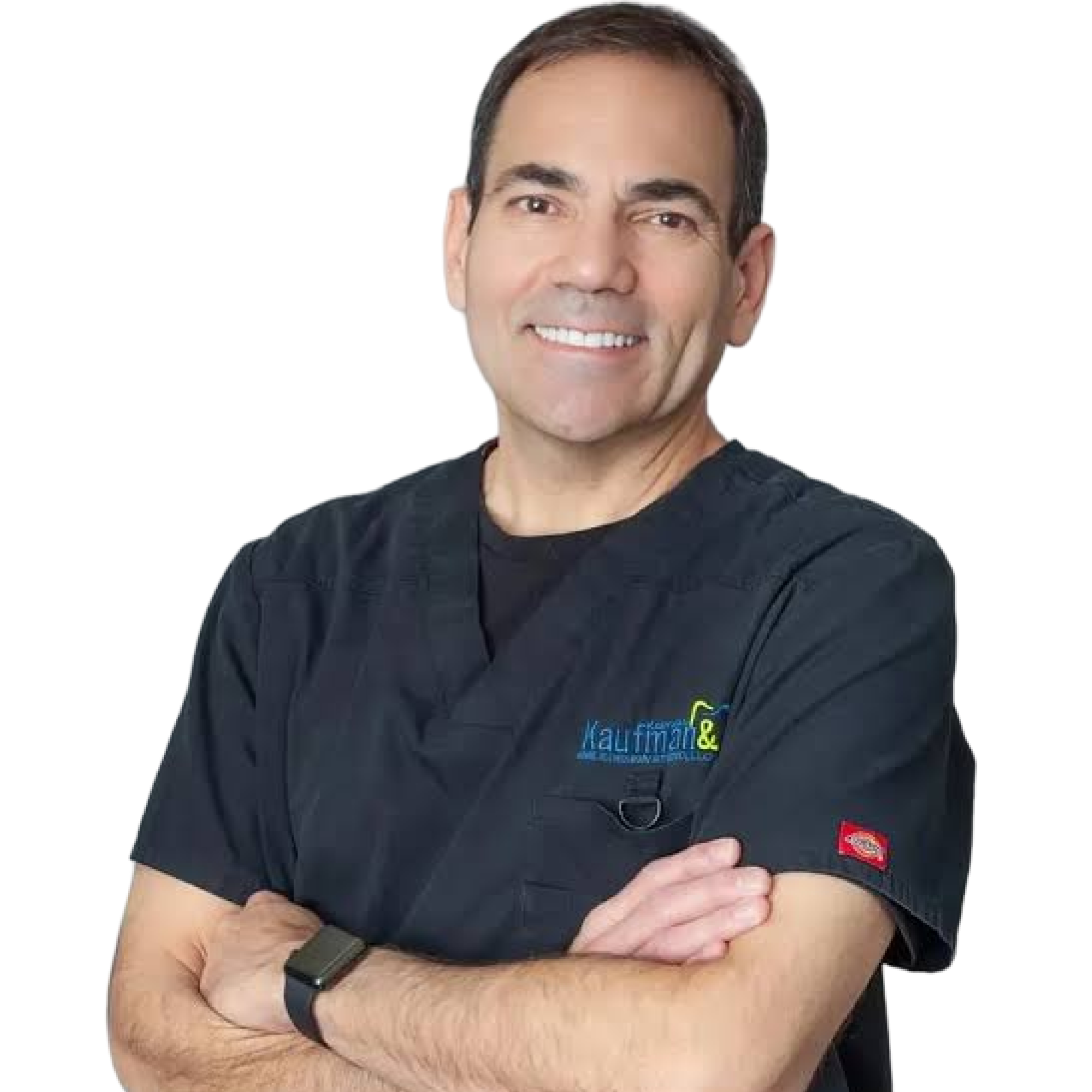
Dr. Kaufman is a nationally recognized educator, author, and practicing clinician with over 30 years of experience in personalized dental care. A 1995 graduate of UIC College of Dentistry, he runs the family practice started by his father, now a model nationwide. He serves on advisory boards, consults on product development, and has lectured globally for 15+ years. A Fellow of the Academy of General Dentistry, he specializes in dental implants, cosmetic smile design, and comprehensive reconstruction.
Done learning and want to get started?
Book a demo