

Mastering Chairside Excellence
Confident Case Presentations and Mentorship with Technology
Transcript
Hello, everybody, and thank you for joining our webinar today.
We are looking forward to this wonderful topic and our great speaker, doctor Banks.
We're gonna go ahead and jump on in and get started. So I wanna make sure that I introduce everybody.
We my name is Sheela. I am from Pearl. I am head of clinical education, by trade, a hygienist, and been working at Pearl for a few years.
Hiding with me, but along for the ride is Kimberly. She's the director of growth in our practice for partners I mean, in our practice, in our, at Pearl. And then also, we have our wonderful partner, Tab thirty two, which we're really excited to share with everybody, the new native integration. So Warren is here as VP of sales and marketing.
And without further ado, I will also introduce doctor Banks.
And excuse me.
He is here with his office practice manager, Samantha.
So we're we're very happy to have them here.
It was very interesting to read all about doctor Banks when we were first getting ready to meet. Lots of things you've done in dentistry over the past thirty years, especially working mainly in Northern Virginia, if I have that right, and joining the Blue Ridge Dental Group.
You went to school at University of Louisville, which is wonderful. Also got a master's.
And lots of fun things about you, enjoying outdoor activities, camping, and hiking.
I love that you, are enjoying cooking. I could use some of those recipes for sure. And we're really excited to have your expertise today. So we're gonna jump in and, thank you everybody for joining us on the call for the webinar as well as, again, our partners and doctor Banks.
So I am going to share my screen, and we are going to dive right in here.
Alright.
So today's webinar is really about mastering chairside excellence, confident case presentations that doctor Banks is gonna share some of his wonderful experiences with his patients, and also mentorship with technology.
So couple things we wanna talk about today is really as we as we work together here on this webinar is what is AI. Right?
How did it get into dentistry, and how is doctor Banks using this for assisting in diagnosis, how the native integration really is such an incredible way to remove any change management, and working through calibrating, you know, new associates, as hopefully, doctor Banks, you get to have more people take over for you, and and, you can share their your knowledge with them as well. We know that's really important for patient retention. And, really, what's the future of AI?
So we talk a little bit about, you know, you hear the buzzword in AI now. I mean, in dentistry, in this in medicine, in driving down the road, everything's AI. Right?
I remember watching golf one day, and there's a commercial about Tiger Woods AI, you know, tool that we could figure out how to get a good golf swing. So it really is, kind of a buzzword, but when we think about defining AI, it's basic. It's very basic. We talk about how we're really teaching a computer to do basic skills. I think it's important to understand that what most people think of AI is this scary take over the world Terminator type of situation, and this is more of a general artificial intelligence, not something we have to worry so much about now. When we think about radiological AI, we think about very simple tasks like caries recognition, right, and how billions of images have been put into a computer in order for that computer to also assist in understanding pathologies.
So similar to, you know, this computer was able to beat this this chess player, but at the same AI, couldn't really have this conversation with a patient about, you know, dentistry or cross referencing treatment plans and previous and all the things that dentists do in a day. So So we really talk about where AI is heading, and it's really to complement the dentist. Right?
We see in in AI in business and whether it's dentistry or even, the global impact of AI is almost three out of four businesses are exploring or utilizing AI.
And as we work through this webinar today, it would be great for you to kinda think about what simple things that, AI can do in dentistry for you so you can spend more time with your patients, as well as how AI kinda snuck into our world. Right? We didn't really get any notifications on our phones or anything else that AI was gonna start taking over simple things AI, for example, your facial recognition on your phone. Right? That's a form of computer vision, a form of AI. Natural language processing. Those of you using ChatGPT or even predictive data analytics.
We think about you know, it's nice that Bank of America tells us there could be a fraud on our account, but imagine a place where very soon we're going to be able to look at an X-ray from the past. We look at what's happening in the present, and then we can start thinking about how does that data help us make really informed calculations for predictive analytics. How fast is that decay gonna progress, right, past that DEJ, if you will. So I think we're starting to really embrace AI and be able to see, wow, how is this going to complement our lives and not necessarily something we have to fear too much. So in dentistry, we see all kinds of different ways that AI is coming in. Robots, you know, aligners.
I I say robots meaning, like, the implant placements.
AI for automated perio charting.
Some of you that have used AI with your appointments to eliminate some possibly.
There's a lot going on in artificial intelligence.
When it really comes to dentistry, we need to be mindful of where are we heading and how is this gonna complement us.
AI Banks, you said something earlier today that was really interesting too because you were talking about when we're diagnosing and when we're really looking at images, which we're gonna get into in a moment, you're talking about how it's kind of this assistive tool that you were you've been using. So can you share a little bit with us about how you've kind of focused on working with AI and how it's been working just briefly with your patient? Because we're gonna make sure we we hear from you as well as we move through today.
Well, I'm obviously going to date myself here.
But just today, I had a patient, in hygiene and took our regular bitewing radiographs.
And then we put it up on the screen. We have television screen in each room.
And I was reminding him how, you know, way back in the day, we took the little, you know, small X-ray film and put it on a light box and pointed there and said, see your cavity?
And they're like, yeah. Nope.
So then we got this big screen, and I've got it up here. I said, do you see your cavity right there?
And nope.
I said, well, we've got something new. We've got artificial intelligence that helps us show you your cavity. And so clicked on Pearl, and I said, yeah. Three cavities.
So it really does kinda bring it home for the patient of you know? Because before, they couldn't see it, and now they can.
Mhmm.
Yeah. I think yes.
That being said, I never fully trust it.
AI I've I've seen some things, like, if you have a tooth that's rotated or something and you're going through a less dense area, you know, the computer's still learning that not every radiolucent area is a cavity.
And Yes. So I always it's like AI have it off and see what I can see. I turn it on and see what it shows me, and then I turn it off again and go, yeah. It is there.
That's the the perfect, you know, workflow that you're describing, and we'll get into some cases today. But I love how you mentioned, you know, what AI does for us as clinicians and this bifurcated approach that what AI does for patients. Right? We all have gone into dentistry because we want to help our patients. And I remember as a hygienist walking by seeing, you know, I'd walk down the hall and I'd see a big X-ray on the screen and this huge, you know, cavity or this need for a root canal. I'm just so sad. And as clinicians are walking down the operatories and looking at screens, we all can see these things in seconds.
But the amount of time it takes to really kind of share that information with our patients, and the patients to understand what we're talking about. That's what we wanna do today is AI of find a way to enhance that experience so the patients are accepting more of the dentistry that the doctors are recommending and really kinda earlier and more often.
So as we dive into all the different places that we're seeing AI in dentistry, we talk a lot about, change management, you know, with scanners and workflow and all that kind of stuff. But, really, when we're looking at radiological AI, doctor Banks' story is spot on. How many times a day are we really talking to both existing or new patients that come in with interproximal lesions. Right? And to have it in color really takes that case presentation to the next level. So those pathologies that exist are periprocated lucencies, notable margins, great for hygienists to kinda feel around in there before you get into that exam.
And calculus is a great, pathology indicator as well for the teams that are, you know, trying to explain to a patient when they've never heard about calculus in dentistry. That's math. Right? And, also, when we're talking about, these case presentations for areas that patients are looking at black and white. And sometimes I remember thinking, the more I talk, the more they're gonna understand, and that was actually completely incorrect. So having color in dentistry has really been a game changer.
And, you were saying dating yourself, but I remember dipping X rays in those little processors. Right? So we probably did that. Right? Oh, no.
So we look at dentistry and we look at, you know, how did AI even get here. Right? In the history of modern dentistry, we can see really kind of these technological advances that have pushed our industry forward and really also shaped AI of the business side of, where dentistry is going.
When we talk a little bit about radiological AI, I think it's important to know that, this is happening live in real time. So you take images. You're able to have those up and ready for the doctor to come in and do those exams. We're looking at, you know, case presentation here with areas that we think about we struggle with as clinicians.
You know, I remember talking about which teeth we're gonna fill versus which teach we're gonna which teeth we're gonna watch, and why would I need a possible root canal? Right? Like you were saying, doctor Banks, do you see the cavity? And now they can see those areas, you know, in color.
And when we look at showing them their teeth with, you know, white, they're used to that. They understand enamel. They look in the mirror, and hopefully, they're flossing, and they see I have white teeth. Why are there pink dots now in my X-ray in between them?
So I think the the days of us still presenting dentistry with X rays is important, but now we have a new way to do that.
AI industry is really kind of incredible when you think about how many X rays we are responsible for on an annual basis and how we're really leapfrogging, medicine when it comes to AI.
There is another reason to be mindful of using, AI. And I think, doctor Banks, too for you, I mean, you've been practicing for a very long time, and trust is a big factor.
That's a good thing. That's a badge of honor. Right?
We know how many massages and things you probably had to get to stay in dentistry that long. So, with your expertise and you're seeing, you know, trust is always an issue for patients. Right? And sometimes it takes them a while to, trust your diagnosis. And, you know, we think about why do patients not accept dentistry.
And as a profession, we still have an unfortunate clinical inconsistency in dentistry that our patients see. You know, they go to another doctor.
AI had five cavities. I came to you.
So what do you think about having this trust issue that still unfortunately remains in our profession? And do you think showing the AI images kinda helps infuse trust? Like, for example, those light pink lesions, right, where you're not gonna fill those areas. There's there's decay still in the enamel.
How do you feel like AI is gonna help infuse trust back into your case presentation?
Well, first, I will say that I've had patients come in that went to another office, and they told them they had six, seven cavities. And I'm like, nope.
Nope.
And, of course, that was before Pearl.
Now now those patients actually might have cavities, but I think being able I mean, you're looking at every dentist, when they do an exam, they're subjective. We try to be objective, but we're subjective.
Okay? Just like you were talking about, it's right at the borderline. Should we fill it, or should we watch it?
It's a subjective judgment. Mhmm. So now you have something that's more objective, something that is taking the image. It's evaluating it objectively.
No judgment.
And it's just saying, this is what's there.
And so I think they're getting kind of that outside objective opinion, be it from a computer, that they're more likely to you know, if you're saying it and the artificial intelligence is agreeing with you, then you probably have more, trustability, if you would.
Yeah. I think you're right there too where patients have to understand, like, perceived value. Right? And we see that when we look at an X-ray.
But do they see that? And to your point, you bring up a great, perspective with it being very objective.
We won't spend a lot of time on this webinar today, but we could do a whole hour on diagnosis fatigue. Right?
Dentists it's really quite incredible what dentists do throughout the day.
Not only are you typically an owner, you're a manager, you're a diagnoser, you are doing the treatment. Like, if you look at medicine, right, and I go in for my knee, I'm gonna have someone, you know, take the radiograph then or the MRI, then someone's gonna read it, then they're gonna report to the doctor, then even possibly someone else may do the surgery. Who knows? But in dentistry, you're wearing all those hats, not to mention you've got crazy people like me running around.
I need an exam. I need an exam. Right? And so you are having to review radiographs very fast, very effectively, and we're humans.
You know? Did we eat lunch? Did we sleep?
You know? Is there crazy build coming through? And having the AI not needing to be worrying about, you know, subjectivity is a huge addition to our our space. You know?
I used to think about when I first started with Pearl, AI, spell check. Right? Underlines these little areas for me to take a closer look at. And I think about that with AI.
So when we look at numbers, there's a lot of data here. And these these, studies on our website, they talk a lot about the inconsistency that is still creating that distrust.
And the the one in the middle, the study in the middle is very interesting to me because we had three clinicians do a review of nine thousand images, and they only agreed on if there's actually a cavity, not if you're gonna fill it or not. And I think sometimes that's where people get stuck with AI. AI is gonna point out pathologies. It's not gonna treatment plan. Right? That's what the doctor's gonna do.
And when these doctors looked at these nine thousand images, they agreed four point three percent of the time through nine thousand images that there's actually a cavity there. And that is it makes sense to us as clinicians. We all can say, well, yeah, it's, you know, where we were where we were, taught and what we see and to your point, subjectivity.
But, also, they looked at the same images ninety days later, and they only agreed with themselves seventy percent of the time. Right? So it does it does really kind of show you why AI is really so well poised for the dental space.
A lot of studies here about, believe it or not, people think, well, AI is gonna diagnose more. Right? And we're seeing here that it's really the exact opposite where AI can possibly help assist in areas that might get otherwise missed, especially when we have such a, I I don't know. I think of dentistry right now as being AI of the most intense times because we don't have as much staff.
Right? And we have so many more patients usually, and there's so much going on. So we wanna AI move into, the trust side of things. In in this ADA study they recently just posted this year, this is still the number one reason patients stay with their dentist.
Right? And, unfortunately, we still have about forty percent of Americans that are not trusting the dentist. Now I think those numbers hopefully are going to consistently improve, as we become AI more transparent. So we have a no change management necessary, and we have an educational, objective, quantitative perspective on not only radiograph review, but also patient communication.
Now here, I wanna talk a little bit about, using this with your team. So have your hygienist been using AI at all with, talking about calculus, or have you been mainly using it yourself in the operatories? And what do you think about moving this into, using this with associates and helping them kind of understand how, you know, maybe you're looking at diagnosing or maybe helping them, even if they're younger, feel more confident. What are your thoughts on your team using AI and also how you're gonna work with a new associate you have coming in?
How long do we have?
Oh, you got the whole time here. You go right ahead.
Well, I've been talking to the hygienist more about I mean, we have a couple of them that we're fairly consistent in using it for, like, clinical attachment laws and help reinforce their, charting numbers.
Was talking to one today that we were looking through a patient's radiographs, and, you know, there's a block of calculus, and it highlighted it.
And then there's another box highlighted.
We're both kind of squinting, but there, but it's something that would easily have been missed as far as calculus.
Mhmm. And then I talked to the front office staff this morning about SRP claims being denied and things like that and suggested that, you know, next time you send that in and send in the the full mouth series, but then turn on Pearl and send it with Pearl marked.
And that's kind of like the preemptive strike. I mean, if the insurance companies are gonna use AI against us, we might as well show them that we've got something to fight back with.
And I think that'll stop a lot of, claim denials.
Maybe not from UnitedHealthcare, but Oh. Sorry.
No. After that claim that they were denying thirty percent that AI was denying thirty percent of their claims automatically.
So that was the only reason for that comment.
And as far as a new associate, I mean, I I'll give you two things on that. I think it will help them. I mean, they went to dental school. They took wards, I hope.
And, you know, so they have to be able to diagnose I mean, first two years of dental school well, all four years of dental school, you're diagnosing and treatment planning. So after a while, you've gotta learn some things anyway.
Then you get into practice and find out that you really didn't learn that much. But, anyway you know, I think it'll help a lot because even coming out of dental school when I did, you're constantly kind of second guessing yourself on things. Mhmm.
The only problem with that in dental school, you had time to second guess yourself.
When you get into practice and you're chasing patients, you don't really have that much time to second guess yourself.
And so this will speed up the second guessing and, you know, help clarify what you wanna do.
At the same time with a new associate, you kind of wanna give them their independence, obviously, and let them come and ask you questions if they have questions.
But at the same time, you don't just let somebody loose in the game yard and not occasionally look and make sure that everything's going well.
So it'll probably save me some time on that end being able to just kind of double check some treatment plans and make sure that, you know, everything's going the way that it should.
Yep. I think that's a great way to to think about that. There's so many ways that, you know, we can use AI in general, but, really, it's hard right now to find really good associates and hygienists and assistants in front office. But, really, when I was working in my last practice, it was interesting to hear how many associates were seeking clinical mentorship.
And that's really a nice thing to see, as they come out of dentistry, especially when they come out of school and they're thinking, you know, I I know they gotta jump in and pay bills, but the ones that seem to really stick and last in the practices that I've worked in are the ones that we're really thankful to work with doctors that, like yourself, doctor Banks, that could help them understand, you know, because they haven't opened so many teeth. Right? So they look at an x-ray. They have to drill the tooth.
It's just like with hygiene. You know? We we do scaling and root planning, and we can look back at the post op x-ray, and we're like, oh my gosh. To your point, there's more calculus still.
So I do think that it's a great way to AI and retain associates. But also, you know this probably more than anybody is it's important for patient retention. Right? That doctors like, if you if I come to your office and you do an exam on me and doctor Samantha over here does an exam on me next time and they're you know, they can be different, but it shouldn't be AI three fillings like you were saying versus no fillings.
So making sure that we're all kind of on the same page historically been has been a challenge in the dental space because it takes time to go through and find charts and examples.
And with, having AI, you can just like you were saying earlier, turn it off, look at the image together, turn it on, and see, you know, what areas that your team would like to move into.
I think when you're looking from a clinical side, we could all do some some quizzes here on how long it really takes us to review radiographs, but, we don't get to stop and just review radiographs like, somebody like a radiologist. Right?
Which would be nice.
Just close the door and look at all your X rays and then start, you know, moving into your preps and your exams and everything else. It's really on the fly. And we move through X rays much faster, when they're highlighted. Right?
And, again, is it perfect? No. Shades of gray in an X-ray, really by the AI, they're reading about five to seven hundred shades of gray. But the human eye is reading about fifty to seventy shades of gray.
So, again, some of you on our lunch hour, so we won't keep keep you too long here. But if we were to do some quizzes on how many areas of decay and took a poll, on this call, we probably wouldn't all agree. And remember, when you're looking at this image, we're not talking about the AI finding areas you're going to treat. We're talking about areas of pathology, pointing out areas of interest.
Right? Like, back to spell check. Some of those things, the spell check doesn't know the right word either, so I disagree. And And it's gonna be very similar to how you're looking at images.
Same thing for the hygienist. Right?
And, again, thinking about AI hygienist do a great job, but the patients don't see the calculus. Right? So we're really discussing no workflow change, just taking that treatment presentation from night, black and white images, today, lots of color. Right? So we talked a little bit about how you see AI, kind of helping with case acceptance.
Walking into an X-ray like this, makes a lot more sense for a patient, especially when we're talking about, bone level measurements.
You were saying sending those in as an additional additional source of documentation to decrease denials with scaling and root planning.
And really this was a perfect example that I'm sure we could all relate to on this call.
One of my best friends, her daughter went away to college and was seeing a pediatric dentist forever. Finally, after college, her mom decided I'm gonna take her to a regular dentist. I'm like, okay, Sheree. It's been, like, twenty years.
It's a good time. But she's like, yeah. She's come in. She doesn't have any cavities, but but she just wants to get her teeth cleaned.
So she took her to my old office. And, she called me and she said, what she's right. And she's like, what is wrong with your office? She has, like, nine cavities.
And I said, what is wrong with your daughter? No. I'm just kidding.
But, really, this is really when we look back at how many patients you're seeing in your day that you're discussing interproximal lesions or periapical lesions or calculus, and are the patients understanding what we're just talking about. Right? And we wanna make sure that this poor patient, Kendall, doesn't have the same cavities a year later. Right? So we need to figure out what exactly happened here.
So case presentation is really important, and those printouts are helpful. I'm not sure, Samantha, if you've used those yet, but even being able to send them directly to your patients, for when they walk out the door, sometimes we print them out or also when we think about moving into those SRP issues.
Again, case presentations where we've seen just AI being able to move through images, really fast and, again, calibrating those associates. Right? And looking at, wow. What does it look like when we open that tooth? Really, the bottom line here is case acceptance.
Pearl's not meant to have a doctor go in and diagnose more dentistry. That is not the goal. Right? In fact, we know that case presentation acceptance rates kinda drop off as the case presentation numbers increase. But what we all want is patients to accept more dentistry, and I think that's the value here.
So we talked about Pearl for quite a while, and now I'm really excited to step into the native integration with Tab thirty two.
Again, myself working in a space where the last practice I had, I managed twenty two hygienists. We saw two thousand patients a month in hygiene. One extra step into Pearl is very simple for them, but they didn't have the luxury also of working with tab thirty two where there's a native integration. And what that means is inside of the imaging system, the AI is already present.
So they wouldn't have to go I know a click of a button is not a really terrible traumatic thing to do in dentistry, but every click saves time. Right? So I'm gonna stop sharing my screen and pull up, kind of the magic of today's entire visit here talking about, how the native integration works. But I want to talk to you just doctor Banks, tell us a little bit about your experience with having AI directly into your standard imaging system.
And how is that going for you in practice?
When we first had the presentation on Pearl, that was Sam and I were there, and that was kind of, like, the big question that we're sitting in the back, you know, mumbling back and forth to each other of, okay. We're gonna go and have to look at these images and look at Pearl, and then we're gonna have to go back into tab thirty two and input the treatment and then go back to the images and back and forth like that. And how long is that gonna take? Mhmm. And so, honestly, if it were that way, I don't think we'd have Pearl.
But as soon as we found out about the native integration, it was like, oh, that okay.
Now it's not going to cost us more time. It's gonna save us time.
And I I just have to say this one thing. If if there's a dentist out there or a hygienist out there on virtually any operating system, X-ray system, if they think they're not already using AI, then they're wrong, especially if they're enhancing their X rays.
So anytime you hit that intent enhancement, that is a form of artificial intelligence.
It's filling in pixels in that radiographic image, and it's, you know, it's program has a spur programmed way of doing that.
So that's AI. You're already using it. So why not use it in color?
I love that.
Yes. I I couldn't agree more. And, having the ability to yeah. The cumbersome extra click is there.
But what we found in the standalone product is the nice thing is you're buying back so much time where you don't have to worry so much about discussing dentistry in black and white. And that time that you get back allows your patients to ask those questions. Right? Which is, why do I need this, and do I need to worry about this cavity and that cavity?
Now if you could just, nod your head that you guys are seeing my tab thirty two screen because I've had to switch over for a minute. Are you seeing that? You're not. Okay.
So let me share that. I wanna make sure that you're seeing my magic trick isn't working very quickly here, so hold on. I had I did just go to the magic castle recently down in Hollywood, but I didn't pick up any skills, obviously. So let me just grab this.
Okay.
Sam just lit up. Did you see that?
Oh, Sam. Did you wanna go to the Magic Castle?
I am the princess, but I'm pretty sure that I'm the princess before we meet the prince. Even though I'm happily married, I'm the cleaning princess.
Love it.
She she she visits Disney more than once a year.
I love it. I love it. Okay. So you are seeing tab thirty two now. Right?
Yes. Okay. So what I kind of wanna just lean into as you look at this quick little demo is really, to me, especially training teams and hygienists and doctors, is there's really no change management. You just open it up, and you can click off and on. I think the important things, to know is this is where you will view your imaging system.
And you can turn the AI off and look at your regular images, and then you turn the AI on. This colorful tooth part section here is really when you move this into the operatory. Right? One doctor I worked with when I first showed him this, he's like, Sheela, I don't need the cartoon teeth.
How do I turn that off? And I was laughing. I'm like, okay. Well, your patients need the cartoon teeth.
But it was really kind of a funny AI. Right? Because clinicians don't need this view.
But, really, we talk a lot today about what are our patients thinking and how are we able to really get them over the AI, and also the wonderful experience of cutting down on the amount of time it takes for radiograph review.
So as we kind of move into finishing up this webinar, I just wanna make sure that, you know, the team understands that this is in real time inside of your own imaging system, and there's no change in workflow.
In fact, you have this nice little legend here on the right hand side, but after any clinician looks at one image, there's no need to worry about any, manuals or training because it's it's it's very easy to follow. So it's exciting to have, the benefit here of bringing kind of two worlds together, and that's what we're really thankful for with our partnership with, with Tab thirty two. So I just kinda wanted to stop here for another couple minutes and see if there's been any questions, for anybody on the call, and also talk just a couple minutes about anything, Samantha, you wanted to add. Have you been able to maybe share images with patients on the way out, or have you been working on sending those images in with claims?
Yeah. So we we've used it a lot in our appeals process, because, you know, they'll be like, well, our AI says and we're like, well, our AI says.
And so we'll spin it around with that. The biggest thing for us, when they finally get out of the operatory to the front desk, they have all of this stuff that they're processing in our head, and it allows us to kinda get down on their level and use tribal language to say, if it if this pink stuff is in the purple stuff, that ain't good.
It allows us to keep it really simple for them. So not only do they trust the hygienist, they see them more than the doctor most of the time.
But then they trust the doctor, and then we are the icing on the cake whenever we are going over, their treatment planning to say, you know, you really should look into this. You know, the percentage that it's in your enamel, the percentage that it's in your dentin, like, we can kinda get them to understand the different layers of their tooth better.
And it just helps with the case acceptance that way.
That's that's exactly what we're all looking for. Right? Yep. Loving to have patients accept the dentistry and really before the patients walk out the door.
Right? We don't wanna have to call them back later. And there is that funny dental amnesia that they walk from the back to the front, and it's like, oh, doctor said I was good. Right?
And we're like, no. We heard what the doctor said.
No.
How many times have I overheard that?
Right? And then we run back, and we're like, doctor Banks, can you come to the front really quick? Because Mario here doesn't believe you. So I'm just kidding.
But it is really interesting when, the clinicians present everything. We feel like we're we're talking till we're purple, and they do need that extra step for the front to be able to say, yeah. Okay. So doctor said we're gonna move into these two fillings.
And, also, if they don't accept the dentistry, I I know that I used to print out, you know, these treatment plans, and they take it home and this two surf MO comp weird thing, and we'd expect them to call back when we they're home reviewing that.
But having that printout on top of it is also nice to see.
I think, oh, yeah. Go ahead.
Yeah. And we are we are about to come up on our six month plus of having AI. So it's really gonna allow us now that we have historical film along with this, to be able to say, hey. You didn't accept this treatment.
We treatment planned, two surface filling on tooth number eight. Now you're gonna need a crown. So now they're seeing it in color of, oh, the doctor was right. If I don't get this done, it is gonna cost me more.
So we are excited about having the historical film to be able to kinda give him that time lapse of, AI. The last six months that we saw you, here it was. So it's we are excited about that portion of it.
But, also, I know doctor Banks and I like, we did. We sat in Patterson's presentation of AI, and we're like, gosh. It's only AI like, we missed one filling in a month. Like, the cost would be you know, with having this would pay for itself.
And then, again, they're like, we're not integrating with tab thirty two. And as soon as it popped up on our computer, we were the first to be like, hey. Tab thirty two. We wanted it. So, we really enjoyed it.
There's AI, like doctor Banks said, like, obviously, he went to school. He knows how to diagnose more than a computer.
But that that's the judgment call.
And it's Right.
What are you gonna do with the information that they are allowing you to have?
Excellent. I love that. And so just love hearing from you guys because it really kind of paints the picture that we all, all the challenges that we're facing on a daily basis, right, which is just the patients understand what we need them to accept, and let's get it scheduled. Right?
So it's been really helpful to hear how you guys are using AI and also, really AI level set on what the expectation of AI is as we move forward into the future.
Pearl does have a stand alone calibrate tool.
Again, you can AI pop x rays in there. You can pick and choose what you would actually diagnose as an owner doctor or a senior doctor, and then you can actually send out emails to test associate doctors and stuff.
Also, moving through the staffing shortage, we think about how are we gonna I'm sure, Samantha, you would love sorry, doctor Banks. I'm gonna put you on the spot. Another person to help you with your regular tasks. But what if we could have kind of a virtual staff member? And, in practice intelligence, Pearl's second feature, we do have the ability for people to verify insurance, look through all the patient's charts, tell you, you know, which patients are due for x rays, and then also putting in kind of an automated patient road map for your entire team to follow for increasing same day dentistry or even decreasing cancellations.
Right? So I think the important thing is for us on this call to really think about embracing AI in a time where we can all use a second set of hands, a second opinion, to help ourselves and also to help our patients.
So again, I think the important part is the take home message is, especially in our FDA studies, you can see that Pearl plus the AI yielded kind of the superhuman experience, which is thirty seven percent more disease detected. That doesn't mean it was detected for treatment. It was for you to be mindful of those lighter shades of gray and the pathologies that are there. And you're seeing in a lot of the articles about AI in dentistry is, it's always gonna say that there's room for improvement. And I think that's expected.
What we should be thinking of, is there room for improvement in our practice? Should we think about using AI so that we are better together?
I wanna make sure that there is some time for those of you that are still on the call. And, again, most people are probably trying to finish up before their lunch hour or their next patients.
Are there any questions that, anybody may have for the pearl team, the tab thirty two team, doctor Banks or something like that.
Right. And breaking up.
Oh, AI think Sheela might be breaking up a little bit, but I I can step in and say that she was just wondering, are there any questions for the pearl team or the tab thirty two team or doctor Banks or Samantha?
We're happy to have some time to entertain those before you, head back to lunch there.
There's always a question about, you know, how the value or how the quality of the radiographs that are coming in. How how does, like what if there's elongation? What if there's whitewash? Doctor Banks and Samantha, what have you seen with regard to the AI instant feedback, actually, on not only the radiographs that you're taking, but how how Pearl deals with that.
If there's I'll I'll go we'll say elongation first.
Perfect.
You know, if you have a little bit of elongation, which, you know, indicates that you're not at a square angle, So it's not a AI wing. It's a periapical, let's say.
Then what I've seen most often is that Pearl will actually misidentify the fossa of a tooth, especially a premolar, that it's going through that thinner part of the lingual or buccal wall, but not both.
And it'll show that as a radiolucency and possible cavity when it's not.
So, again, you get you get back to your basic skills.
But, that and that's that and a rotation of a maxillary lateral incisor, then you're going kind of through that thinner area of the tooth at an angle, and it'll show that up as radio lucencies.
So, again, it's artificial intelligence, but you probably need to rely on your human intelligence some too.
No. Absolutely. That's what we've seen with teams. Sheela, I think your Internet's back, so I can let you take over.
But that's one thing that I've heard from teams saying that even the support teams, the hygienists, the assistants, they almost have more attention to the radiographs now because there's AI, and so they're very quickly to be like, oh, something looks right. Those detections seem really strange. It must be elongation. Let me retake it.
Or, oh, I have a little too much overall. Let me let me retake it. But, Sheela, I'll take back over because it looks like you're you're back with us. So thanks for letting me jump in.
I couldn't resist.
I just But but you're right.
I mean Yeah. We do tend to pay closer attention to it because it's pointed out. It's like, I'll go back and take a second look. Did I miss something?
Right. And especially if there's overlap in your films, like, it's a great coaching moment for the admin team and then also the clinical team to be like, hey. That's a non diagnostic film. Like, if Pearl can't diagnose it, we can't diagnose it. So it allows us to have those coaching moments where we may have missed it or the day gets so busy that we don't have that second AI to show us.
So that's what we're we're thankful for, for sure.
Awesome. I was actually just getting coffee. It wasn't the Internet. No. I'm just totally kidding.
I knew it.
Well, I wanna just kind of, leave you with a couple, key points here. And then, also, again, if anybody has any questions, I'm not sure if you anybody else wanted to add to what we have discussed here. I think it's interesting to think about where dentistry is going with AI and, again, providing just a little bit more data for us to be able to think about making the very best decisions.
Imagine a world where you can have these conversations with hygienists, I mean, with the hygienist having this conversation with their patients, and imagine the same thing of it moving through caries, like, into the next part of the tooth, like Samantha was saying.
Assisting in treatment planning. Right? Not telling you what to treatment plan, but once you decide, let it do the work for you and pop it into the chart. It's gonna be nice to see where, the diagnostic side of AI continues to go and also how it will help again with instant claim adjudication and most importantly, oral systemic, you know, concerns that we wanna focus on.
If those of you that are interested in looking into AI, this is a great, code you can go ahead and scan. But we do wanna make sure that, to Kimberly's point, if there's any other questions, I just wanna make sure that you guys know we're here for you. You can always reach out to any of us. And, want to also thank you for joining this webinar.
Thank you to doctor Banks for, sharing your wonderful insights and your time with us. And Samantha, thank you as well.
I think we might have a question here. No? Oh, perfect. So Kimberly is putting some stuff in the q and a.
Any other questions or last minute thoughts for us?
Doctor Banks, do you wanna wrap us up?
No. I just because of the two being integrated together, it I it just makes things so much easier and so much faster.
And like I said, I used to show people films on a light box and say, see the cavity, and nobody ever could. So now they can.
And it also builds that bridge between admin and clinical. There are so many times doctor Banks, we have our office right beside each other, so we're always yelling Sam and Bob all AI long. But to be able for him to come to me and, like, say, alright. Look at this X-ray.
And then I'm looking at him, like, okay. And then he's like, okay. Put on Pearl dot ai. I'm like, alright.
So I do it. And he's like, alright. Take it off. Now do you see it?
I was like, yep. So it's allowing the admin team to know what we're looking at too when it comes to X rays. So it's definitely building that bridge and marrying the two worlds together very nicely.
Excellent.
We love your insight. We're really thankful to have your team on today and, again, just sharing those those patient experiences and those challenges that we're all trying to overcome in dentistry. So we can't thank you enough for spending your time with us. We look forward to, doctor Banks inviting you back on for some more, interviews.
And, Samantha, you too. So thank you again everybody for joining. Feel free to also reach out to tab thirty two or, Pearl directly if, if you have some questions and some interest and get started with your AI today for yourself and your patients. Have a great day, everyone.
Thanks for having us.
Thank you. Take care.
Bye bye.
Bye AI.
Meet Your Host
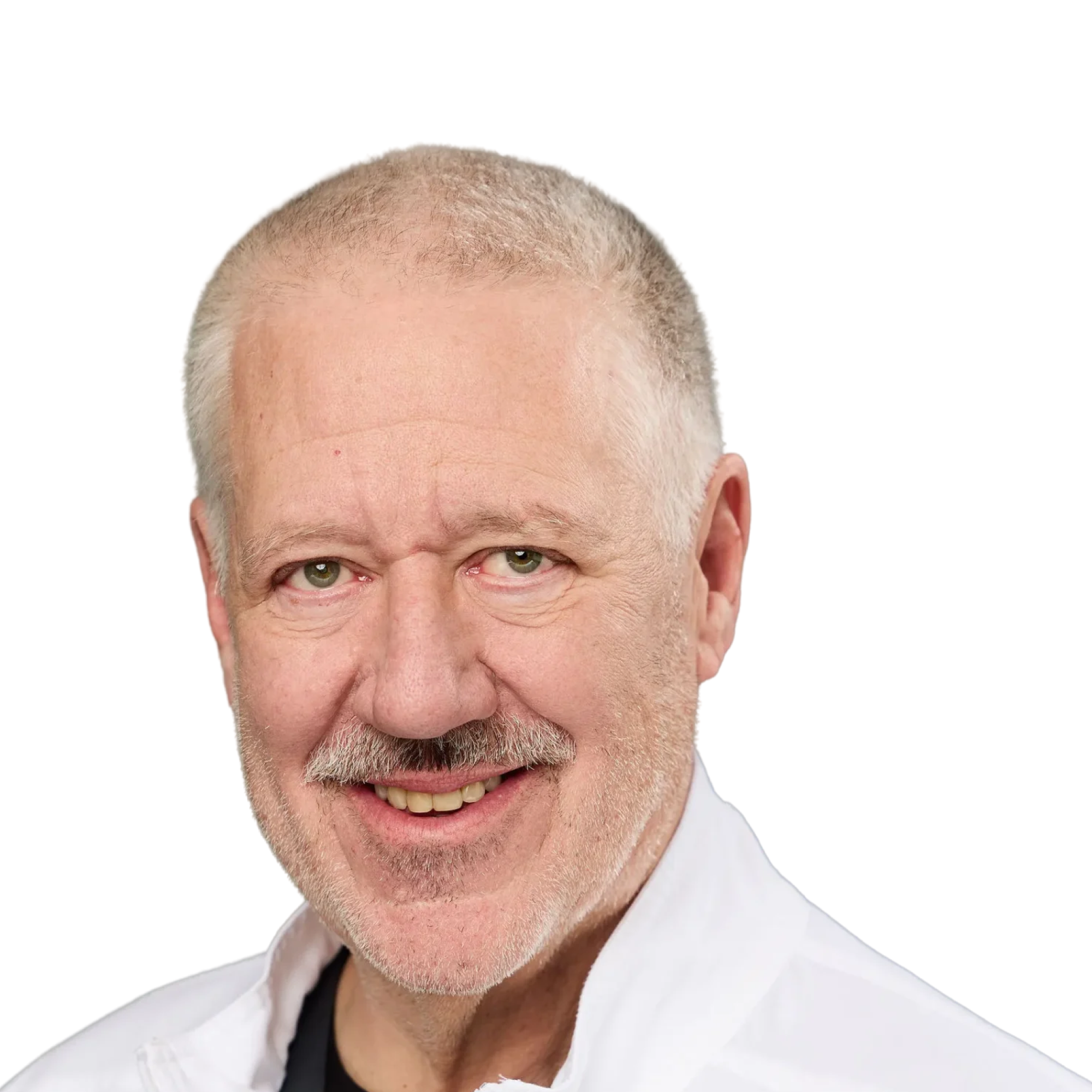
Dr. Robert Banks has been practicing Dentistry for 30 years. For 22 of those years, he owned two practices in Northern Virginia. Most recently, He practiced in Christiansburg, Va and is very excited to join our Blue Ridge Dental Group. Dr Banks has a BA from the University of Louisville, a MPA from Kentucky State University and graduated from the University of Louisville Dental School in 1993. When not in the office, Bob enjoys outdoor activities with his family like camping and hiking. But his favorite activity is practicing her culinary skills for this family. When asked what he is looking forward to the most with Blue Ridge Dental Group he said, “I look forward to being able to help people with their dental needs, particularly in the area of restorative dentistry, implants and Invisalign treatments. When you feel better about your smile, then you feel better about everything. I like knowing I can help people with their smile.”
Done learning and want to get started?
Book a demo