
What AI Means for Experienced Dentists
Hype vs. Reality
Transcript
So I am Sheela Roth, and I'm thrilled to have you join us tonight for this exciting webinar. We're joined by a very special guest, doctor August d Oliveira, who will be sharing his valuable insights on the role of AI in dental radiology.
Especially for experienced dentists and also those of you that are just getting started, we're going to go through and really kinda find out, is it really just the hype, or is it valuable in our workflow and for our diagnostics and for our patients?
So feel free to type your answers in. Gonna get the conversation started, and let's share a little bit about our speaker tonight.
So our wonderful speaker, doctor Oliveira, graduated in the top ten percent of his class at the University of Washington in nineteen ninety seven after completing a general practice residency focusing on everything. Here we go. Endodontics, implants, restorative. He went on to also lecture worldwide on cutting edge dental technologies, including CADCAM, CBCT, dental implants, and you were just sharing a minute ago about three d printing.
Mhmm. Doctor is a pioneer of CBCT guided surgery, an accomplished author, having published many peer reviewed journals as well as three textbooks. So tonight, he's going to take us behind the scenes on his high-tech practice to explore how AI complements clinical expertise, improves diagnostics, and builds patient trust. So without further ado, doctor, I'll turn it over to you.
The floor is yours.
Great. Hello, everyone. Thank you so much for taking time at the end of your day. I'm actually still in scrubs, but it's freezing in my office, so that's why I'm wearing a sweater. So I know you guys worked hard and, glad you could spend a little time with me and talk a little bit about AI. So, the very long title of this is what AI means for experienced dentists, myth versus reality, which is really long.
So, really, what I wanted to, kinda talk to you about, if you guys, know me or follow me on Instagram or on Facebook, I'm all about digital dentistry. But more importantly, I'm more about kinda cutting out the BS and what we use in our actual practice.
AI has been a buzzword forever, and I refuse to go on LinkedIn anymore because LinkedIn is just all a bunch of sales bros. And, we really started talking about AI maybe about seven, eight years ago, and no one really kinda knew what it was.
So what I really wanna do is just kinda give you some real world stuff, how I use AI in my practice, and, honestly, how much better, my life is because of AI and using second opinion.
So, just a little bit about my background.
Graduated ages ago, so nineteen ninety seven. So I've been practicing dentistry for about twenty eight years, and, I've seen a lot of changes. My dad was an electrical engineer, so I was always into tech and, got involved with CEREC. If you guys are familiar with CEREC, Chairside Milling, about twenty five years ago.
And I thought that was revolutionary.
And then, ConeBeam came along. I got a ConeBeam, probably back in two thousand and eight and really got excited about guided implant surgery. I I currently teach right now on guided surgery and three d printing as well as CADCAM milling. So I thought, cone beam. Now that is a new thing in dentistry, and that's gonna change dentistry. And then I signed up for Pearl, in January of last or no, July of last year.
And I gotta tell you, without embellishing, that has probably had the biggest impact on my practice.
You know, I'm totally into three d printing.
Three d printing has made an impact.
Having the ability to mill onlays and crowns and veneers chairside with CEREC, that's had a little impact on my practice, having a cone beam and doing guided surgery. But I I would have to say out of everything, having second opinion and having AI in my office, if you look at the bottom line, has kinda made the biggest difference in my practice. And we're seeing a ton of stuff going on, with AI.
And, you know, it's kinda hard to to sort out what is BS and what is real.
I just met with a a company yesterday about a twenty four seven AI chatbot on your website that will take your on call. We'll figure out the patient's insurance, information, give them all the necessary, info, help diagnose what their emergency is and schedule them.
And so that's awesome.
There's different companies out there, Mango AI, that have actual sort of call center like, chatbots that talk like real people. So, AI is definitely, definitely going to be a part of everybody's practice.
And so, I'm excited to talk about it today.
So just a little bit more. I've been a beta tester and a hardware tester for tons and tons of companies, over the last twenty eight years, most notably, three d printing. And we'll actually talk a little about about a case I did, with a three d printer called the Midas today.
And I am just a nerd in general. I'm really into AR and VR.
So if you ever wanna talk about, anything related to the metaverse, I'm your guy. So when I do lectures, I don't like to just talk at people. And most of the lectures that I do are actually hands on. Obviously, we can't have hands on here. So I've got the chat, thing open. If you have a question about anything during the lecture, don't wait till the end. Go ahead and post your your question, and I'll go ahead and answer it.
So what is second opinion?
So second opinion is an AI X-ray reader, which on the surface doesn't sound that exciting.
When I first got a second opinion, you know, it's funny. We have this sort of, like, well, AI is not better than me kind of ego play going on. And I post a lot on Facebook and Instagram, and I show a lot of what is real in the mouth versus what second opinion diagnosis. And I can't tell you how many sort of low self esteem dentists chime up and like, well, I could catch that easy. You know, I could see that.
And what I always kinda tell my patients is that, this is sort of like spell check. Like, you don't get mad when you're typing an email and, spell check comes up and says, hey. You misspelled though.
And so this is just another set of eyes, to help you in how you diagnose in treatment plan. So, one of the biggest things it does is it picks up caries. So just decay that is into dentin, and it can quantify how far decay goes within the two.
It picks up incipient caries, and we'll talk about caries that are limited to enamel and sort of what you can do about those. There's a really cool feature in the software where you can compare incipient lesions year after year.
Bone levels, I gotta be honest with you.
I don't think this is as cool as it looks.
These aren't actual perio probing readings.
These are simply, you know, measuring from the CEJ to the crest of the bone and how much bone you've lost.
Now it does open the conversation, into the patients. Interesting enough, most of the malpractice lawsuits, that are filed against dentists Are dentists not telling patients that they've had perio, and they can be treated by perio either by the dentist or by a specialist, and they end up losing teeth. So patients see a bunch of lines on the screen, and they say, why is this line white and why is this line red or yellow? And it just opens up and it allows you to tell the patient, hey. Look. What this is simply showing is you've lost bone.
And the real way that we can tell if you have active periodontal disease is by probing. And so it's just another way to educate your patients.
Calculus, this is a big one.
You know, it's I tend to when I look at X rays as a tooth driller, tend to not look at radiographic calculus, and this really points it out for you. So, again, it's just another way to talk to your patients.
I don't know about your patients, but my patients will, you know, go away for four years and then suddenly come back. And when they come back in, they're wanting just a prophy. And when we tell them, look. No. You know, you've got active periodontal disease. You need scaling and root planing.
You know, they wonder why. Well, you know, you've lost out on two cleanings a year times four, so eight cleanings. So we can't just do a regular cleaning. So I just tell them, and and, again, I use funny words in my practice.
I'm like, look. You've got a barnacle on your tooth of bacteria, and it is so calcified. You've had it for so long that it shows up on an X-ray. So it's another thing that we can can point out to patients.
The next is PA lesions. And one of the most surprising things, that I have found with Pearl is when we take an FMX, you know, I'm, again, focusing on teeth. And sometimes I completely ignore PA lesions. And, they show right up. The patient can see them really well.
And I, again, using layman's terms, is I say, look. You've got a cyst. You've got a pocket of pus on the bottom of your tooth, and you need a root canal. And they'll say things like, well, it's never hurt me.
And I'm like, yes. Because the pus is draining into your sinus or your pus is draining into your gums, and that's why. So, again, I think there's two factors for me with second opinion. One, it's helping me diagnose dentistry.
But two, it's a very visual way of showing patients what's going on in their mouth. And I can't tell you how many times or how many memes I've seen on Instagram where, you know, they'll, patients will talk about you'll you as a dentist or you as a hygienist or a dental assistant can see that decay so well on the X-ray. And then you point to this little kinda gray thing and see how this is a little more gray than this thing, and the patients just, you know, go glassy eyed on you. So this really helps you educate the patient and tell them, hey.
Look. You got a floss.
You've got all these things going on in between your teeth.
Open margins are another thing. And, you know, it's surprising, and we'll talk about actual numbers, in my collections that have changed since having second opinion as before. But I can't tell you how many, you know, open more margins or recurrent decay I've seen on recall. And I'm just like, yeah. The tooth's doing fine. We'll just keep an eye on it.
And this has translated into me doing so many crowns where before I would just kind of glance over it.
The colorization step, and I'll show that later when I pull up, second opinion, is probably one of the coolest portions of it. Again, patients are looking at X rays. We're educated on how to read X rays, and they just can't see stuff. So especially when I have a patient with an incipient lesion, I can pull up this colorized picture clearly denoting the difference between enamel and dentin. And patients know enough to know what enamel is and what dentin is. And I can explain to them. I'm like, hey.
These lesions are confined to your enamel. But if you don't start flossing, they're going to extend, and we are gonna work on them. So, again, one more tool that you have.
Preexisting conditions. This is great for my assistance. So when we have a new patient come in, we chart all the existing fillings, all the diff existing crowns and root canals, and it just spells it out for you. So it really, really makes it easy for you.
There is a AI enhanced visualization tool, that kind of can allow you to accentuate, how decay works. I gotta be honest with you. It's kinda worthless. I've never ever used it.
And finally, this does work on pans. So if you have a panoramic X-ray machine, we have a combined pan and CT, which is a fairly low dose machine.
It's a Planmeka Viso g seven. So we never really take PANS. I personally think PANS are kinda useless. So we do a CT scan if we need a CT scan or we do an FMX.
So, the what is the Dental AI Society, which I've never heard of, did a really cool study. So we all know that two dentists will never come up with the same diagnosis. Right? We're all so very different in what we see or what we treat, and everyone kind of uses the house contractor analogy.
I need a new siding, on the side of my house, and I got bids ranging from restaining it for six thousand dollars to ripping it out and doing, fifty thousand dollars worth of siding. And it's the same thing in dentistry.
Some people are, you know, just, you know, fix what needs to be fixed.
Some are into occlusal theory, and, you know, every patient is a full mouth patient. But let's take a look at some of these numbers.
So a hundred and thirty six FMXs. And the dentists were fifty fifty, whether there was new decay or not, which I think is pretty huge difference in how we look at X rays. So half the people said, yeah. You got nothing wrong. You're good to go.
Where there was recurrent decay, it was a little bit better. It was sixty forty.
And then as far as treatment cost goes, these treatment plans range, anywhere between, you know, a couple hundred bucks to thirty thousand dollars. So there's lots and lots of variability between how dentists look. And I don't think Pearl or Second Opinion is trying to standardize us.
I can totally see where this would be helpful in sort of a large group practice or a multi office mini DSO.
You know, one dentist thinks one way, another dentist thinks another way. It just kinda gives us sort of a standardization.
So I bought a Tesla. And, have your opinions, what you will, of Elon Musk.
I've gotta tell you.
I think this full self driving is probably one of the biggest technological advances to happen since the smartphone. So I'm in LA. I'm in traffic all the time, and I don't manually drive anywhere. If I'm going two blocks, I put on the AI assisted driving and let it go. And one of the reasons why is, you know, I luckily have not been in a major accident for a long, long time, but I have blind spots, on my old car.
People drive erratically. They text and drive at the same time. So this full self driving, which is all AI based, is really, really cool. And if you think about it, when you're driving, right, let's say you're full on, you are in it to win it, you are watching the road, you've only got two eyes.
And so the AI has six eyes. Basically, it can watch from the back of your car, from two sides of your car, and in the front. So it's not distracted. So I don't know if you guys remember the hoverboard dentist who got fourteen years in prison, for extracting teeth on a hoverboard.
And I don't think we're as distracted, as this guy was. But think about this.
I'll be, you know, really into a root canal, and my brain is just thinking about where that second canal is. And, of course, always at the wrong moment, your hygienist comes up to you and says, hey. Recall patient's waiting.
And then I run-in and I look at the X rays. And while I'm looking at the X rays, I'm most likely thinking about the root canal that I'm working on. So we are always somewhat distracted. Now if my schedule is slow, I sit down, you know, in my office with my big forty inches screen, and I can look at these sort of lesions, and kinda take my time. But it's the same thing. The AI of second opinion is never rushed. It's never, you know, distracted.
And I can't tell you how many lesions, that I have missed.
And I'm not afraid to admit it. I think that when we look at X rays, we concentrate on the center of the X-ray. Right? And it's what's in the periphery that usually gets missed.
And interesting enough, when you sign up with Second Opinion, they go back a year, and they analyze your patients for a year.
And every time the patient would come in for the recall, even if it wasn't their six month checkup, I would have to have this uncomfortable conversation with the patient saying, hey. We missed a tooth.
And so, you know, having AI and sort of framing it as, well, the AI is better than us, has been a really great sort of aspect and sort of convinced patients to accept treatment, where I had missed it before.
And, I've had some, posted some stuff on Facebook, and, a lot of people just sort of ask me, well, like, what do you do with a doubting patient? So a patient's like, hey. I've never had a cavity. Now all of a sudden, I've got four cavities. You know? It sounds like it's a money motivated thing, and it's not real.
Wait. You know? Tell them, okay. Well, we've missed this for a while. Let's go ahead and wait until your next set of X rays, and then we can compare the two.
And if that decay is truly there, it's gonna not only show up, in the X-ray, but it's gonna get bigger. And the fact that it's getting bigger is on you and not me.
So, again, it's an interesting vibe, that you have in the office. Now you're basically saying that the AI is better than you.
So this graph, was pretty humbling. So I thought to myself, okay.
Started in July of last year, and now we've come full circle to the end of July, or we're almost at the end of the July now. Now how much more dentistry did I really do? So I went back. I went into Eaglesoft, and I pulled up my actual numbers.
And they're actually kind of embarrassing. So I'm gonna share my numbers with you. And look. I am a one doctor office.
I teach a lot. And I actually had a really good few months before July, So this was not my yearly production for the year. But before Pearl, I did about eight hundred thousand dollars with my average month being somewhere around sixty thousand a month.
Now let's go to one year. And so at one year, I'm up almost thirty four percent. And I've actually gotten so busy lately, that I've added a dental assistant. And so this is real. You know, with CEREC, I cut down my lab bill. Right?
When I started doing implants, I've added implants to my practice, and that kinda boosts things maybe about ten or fifteen percent. But I've never had anything in dentistry actually increase my collections by this amount. So it's certainly really exciting.
So let's go on an actual case. And everybody, I know you guys are tired, but let's focus on the upper teeth.
So I'm gonna look at these teeth. And with no AI, I'm gonna say, okay.
Tooth number two underneath, that distal cusp, I see some decay.
On tooth number three, maybe I got an incipient lesion.
Tooth number four, looks like there's something, going on in the mesial and tooth number five. Right? And so if I turn on the AI, you can see how it's really outlined all these things.
So it really, really kind of just makes them pop. I'm old school, so what I do is I actually have a notepad, in my office. So I'll sit down and kind of write all these things down. But now check this out.
So let's look at the mesial of three, and let's look at the mesial of four. So both of those, yeah, are in fact incipient lesions. But if you look a little closer at the DEJ, I see a shadow definitely on three, and I see a little bit of a shadow on four. So to prove to myself if this was true, I started taking pictures mid decay, and I started posting them on Facebook.
So if we go to the next, this is the extent of the decay. So second opinion picked up, an incipient lesion on four mesial. I looked in the mouth, and I found that there was something cooking on the distal of four as well. But take a look at how far these incipient lesions extended into the dentin, so quite a bit. And a lot of people on Facebook don't read posts. These are not my final preps. I just remove the decay so that you could kind of see into the tooth and see what it looks like.
And so we went ahead and we restored these teeth with just basic composite.
And I always get asked, lately, I've been obsessed, by these cheap eBay rings. So anyone out there use Garrison?
I freaking love Garrison. Anything made by Garrison. And, I had a bunch of kids, and I had an assistant who, actually, Chad GPT helped me fire her, that was terrible.
And she kept throwing away rings. And a lot of the times, I don't pay attention to how much these Garrison rings cost. They're about two hundred dollars a ring. So if you're not opposed, I know it's kinda shady, to going on eBay, there's a company that's basically made duplicates of everything Garrison makes, and it's called All Seasons Dental. So I love their Garrison clone wedges.
They have their own rings that actually like more than the Garrison rings. So check them out. All Seasons Dental on eBay.
So here's another patient that came in.
And looking at the X rays, things don't look so bad. Right? So we can pick up. There's definitely, some decay on tooth number five distal. And in my initial treatment plan, that's all I kinda saw. I saw maybe there's something going on for a mesial, but I didn't really think that there was anything more going on.
When we turn on the AI, you can see, god, there's a lot of decay going on. So for for distal, incipient lesion on four, looking in the mouth and actually prepping.
Oh, actually, let me just go ahead and let me talk about this. So, I teach three d printing. I don't know if you've anyone have heard of the SprintRay Midas. SprintRay Midas has a, system that actually can print, with a sixty percent filled ceramic.
So this is meant for ceramic inlays and onlays. And I really wanted to do this on this patient. I love it for implant crowns because with implant crowns, we don't have a PDL. So having the flex of this material, makes it really ideal for screw retained crowns.
You've got these little cartridges. They're coded.
It kinda freaks me out because it reminds me of the squid game. But if you don't have a CEREC machine, you can buy a Midas for about thirty five grand for an intraoral scanner. It has an AI based, restorative system. You don't need to learn exocad. So it's a lower cost way of getting into it. So here's the decay that when we got into it.
And so, there was a fairly large composite on two, and I removed that.
The decay was fairly deep on tooth number two. We found decay on number three, mesial.
Tooth number four on the mesial and the distal and on five. So I really wanted to try out this Midas thing.
So we ended up designing this in exocad. Tooth number five actually turned out to be an onlay, and tooth number two ended up being an onlay. And so we did, four restorations. She needed a crown on number thirteen, and she had crack tooth syndrome. So what I wanted to do was print her a crown. I wouldn't normally use composite for a crown, but I wanted to print it, bond it, and see if it took care of her CTS, and it did.
And so here's the final restoration. Sorry. There's a little extra flash, on tooth number three. So we did a DOL onlay on two, an MOL on three. We did an MODB on four, and, number five onlay. It took us about two hours to do it.
And so that's all I have for you. And, actually, it looks like I am ready for the q and a. So, Sheela, are you still there?
I'm here. Yes. That was quick.
That's great.
Excellent. Well, thank you so much for sharing all that information. Great cases. And I'm curious to see, before I open this up real quick, what did your patients initially think when you were showing them AI images and teeth in color? Was it surprising? Was it exciting?
Yeah. Yeah. And, actually, you know what? Let me go ahead and do this. Let me just pull up second opinion and kinda show you.
So I pulled this up here.
I thought I had another window here, but I guess I didn't. Let's try it again.
Yeah. You know, it it's been one of the coolest, things for patient education. And so, again, you know, you you're younger than me. But when I started, in dentistry, we literally had film X rays that were about an inch long, and I don't even know how I looked at those.
And then we graduated to having fifteen inch monitors in the screen, and now we have twenty inch monitors. And in some of my operatories, I have fifty five inch monitors.
But, yeah, it it's little black dots on a black and white image. So what's really great is, you know, this is the patient that we did the composites on, is I can zoom in. I'm sorry. My mouse is acting a little freaky.
And what I like to do is I'm like, okay, guys. Let's do this. Let's go ahead. Sorry.
The camera's in the way. As I turn off the AI, And I say, hey. Can you see this here? And can you see this here?
And some of them say, yes. And some of say, no. But I just wanna prove to them that it's not just AI saying there's decay. There's actually something underneath.
And then when we turn on tooth parts, that really makes it happen. And I gotta be honest with you.
I think it it does give me a a better conversation with the patient.
I'm not a chatty Cathy or chatty Charlie. And so but I do like to talk about tech. And I think a lot of people are using ChatGPT, and they're using AI in their work. So I didn't have a lot of pushback with the AI.
I said, you know you know, AI and radiography started with breast cancer, exams, and they've moved over to where we're doing it. So on something like this, if I wasn't going to treat it, then I would say, hey. Do you see this white stuff here? That's your enamel.
That's the white part of your tooth.
It's like hair and fingernails. It has no nerve endings, but the green part is the dentin, and it's soft and the decay can spread.
So, so, yeah, it it makes it really easy for it to see. So we do have a question here. Pediatric dentist, are there any special features for pediatric patients?
I don't think so. Right? Do you have anything special for Pedo?
We do. It is coming out very soon. I'm glad that's like a planted question there. Right?
Mhmm.
We do have a really great feature. I'm gonna see if I can get that image up before the end of this webinar, but where you can actually pick a little cavity bug, which type you like, and it'll kinda peek out behind the the lesion there. So it have little eyeballs, and it's really it could be alarming, but I think it's great for education purposes. So I think that would be really a huge advantage for Pito, especially because you know, we're talking to kids with Pito, but we're also talking to the parents.
And, hopefully, they've been talking about cavity bugs since they've been born. Right? But I do think that making it a little more fun and I am I am no specialist in pediatrics, but I I do have kids. And I remember you've got about thirty second attention span, and they're adults now, and it's similar.
So so I think that would be a huge advantage. Obviously, the tooth parts are great.
And when you're talking to parents, they need to they really kind of need to be able to ask the question, well, aren't those teeth just gonna fall out?
Right? And that's a lot of the questions I used to get as a hygienist was, well, why would we need to fill those? Right? And you have to explain the entire process about why you have baby teeth. So great question.
I think that's important. I like how you talked about how you use a chairside. We get a lot of questions about accuracy.
So a lot of times, in the very beginning of Pearl, a doctor would purchase Pearl, they would say, well, I I beat the AI, so I don't need it anymore. I just wanted to see if I beat it. And I I did say, well, what did your patients say? Right?
And they hadn't used it with the patient, then they ended up keeping the tool. But I'm curious, for those doctors that are on the call, and they're wondering same thing. What would you tell them as far as, you know, the reality of AI not being a hundred percent accurate? And you're gonna see false positives or false negatives.
What is your opinion there?
Yeah. It actually makes me, look a little bit like a hero. Right? So I'll say, look. You know, I grew up with the Terminator movies. I don't completely trust AI.
And I also say, you know, it's just like spell check. Right? Sometimes it corrects what I'm writing and it corrects it wrong. So I say, I still have a job. And you know what I bought, which is really kind of funny.
So I got really into transillumination. So there's lots of these, you know, high intensity lights that you can shine through the teeth.
And I bought one. I think it was, like, five hundred bucks, and it act it sucked. It just did not work really well. So someone told me about something called a bore light, and let me just type that in.
Bore light.
If you go on Amazon and type in bore light, a bore light is used for cleaning a gun, and it's a really high intensity light. And it actually has a curved tip, just like our old curing lights that we had back in the day. So we just put a sleeve on it, and they're about eight bucks on Amazon.
So I have these in every room. So what I do is I say, hey. I don't completely trust it. So I'm gonna go old school.
I'm gonna take this really sharp explorer and jab your tooth with it. And if it sticks, then it's decay. Sometimes it's not decayed enough to get a stick. And so I shine the the more light.
I turn off the overhead light. I have the patient look with a with a little mirror. For some reason with flash photography, translumination just doesn't work.
But I also do that. And, you know, we talk about accuracy, with AI. So what I have found personally, and I'm just gonna be honest with you, there are a bit of false positives in the anterior.
Right? So if someone has number seven or ten with, like, a real pronounced lingual pit, it'll show up those lesions. If someone has really deep, you know, class five of fractions, those will show up. So it's not perfect, but I call it my dumb radiology assistant.
Basically, it's like someone going, hey, doc. Did you see that? Hey, doc. Did you see that? Did you see that?
And sometimes they're wrong, which is fine.
You know, you don't have to agree with everything that it says. And one of the cool things about it is, okay, you just tell the patient. Like, I don't know.
It's saying you have a cavity. I don't think it has a cavity. So let's wait a year. Right? Let's just wait a year and see. And if it's gotten bigger, then we're gonna work on it. So, again, you're the hero.
And so I think some kinda dumb dentists are like, well well, I'm better than it. Right? And it's like, well, okay. You know, slow down, cowboy. You know? No one's damaging your ego. No one's coming for your job.
But if you can make your life easier and, again, it's like my Tesla on full self driving. Right? You know, sometimes, you know, it, like, waits too long on a stop sign. And I'm like, oh, yeah.
I could totally drive better than that. But I have a chauffeur car. Right? So so, basically, I have for, I don't know what it is, three fifty a month, an associate looking at all my X rays.
So, yeah, it's great. You don't have to believe it all.
Excellent.
Well, I do think that's a great answer.
Also, I think a lot of times people wonder how long does it take to load an X-ray. Right? And so, I'll answer that myself, but mainly, you're gonna get that in real time. So you take a bite wing.
By the time you're ready to place the next bite wing, the analysis is already done. This overlay here is the two parts. It's sharing your screen. Right?
I think I switched back to you.
Yeah. Yeah.
So that's just one click of a button. And a lot of times, workflow is is really kind of the biggest barrier to adopting new technology, but we're already taking X rays.
Mhmm.
We're already viewing X rays. We're already sharing X rays. So now it's just a matter of clicking into another view. I like what you said about having it be spell check.
Right? Because we all know how to spell. But every once in a while, we move over and we think, oh, there's a e I there. And I feel like that's pretty common for what you said earlier about periapical radiolucencies.
Forty nine percent of those go undetected, which is a shocking number It's a lot. To think about. Right? So I think in closing, if there are any other questions, please feel free to to answer to ask them.
We will answer them. But I'd like to know just kind of if there's anything that you would say, doctor, for those teams that are kind of on the fence.
Should they go with AI? Is it expensive? Is there a learning curve? Is there anything you would do differently when you implemented it?
Yeah. Yeah. And, actually, if I could add one thing, one question I get asked a lot on Facebook is does it integrate with, you know, Eaglesoft and Dentrix and all that stuff? It does, but it sucks. So what we do is we just have our browser.
We have a little tab on the browser. We open up the browser, and the interface of Second Opinion is way better than anything I've ever experienced in Dentrix or in Eaglesoft. So it's a better X-ray browser.
So but to answer your question, if you're on the fence, I mean, you know, it's a lot of dentists, they they do this too with three d printing. They're like, I don't know.
That printer is five hundred bucks because we're different types of printers. Yeah. It's it's five hundred bucks. Right? You know, it's like two fillings. So, I mean, the thing about Pearl is it's not like buying a cone beam or buying a CEREC machine.
There's really no risk. I think it's, like, five hundred bucks to to have them install it and to go back over your old X rays, and it's three fifty a month. So I made an extra two hundred thousand dollars last year. Collections.
This is not production. This is collections. Right? And I spent thirty five hundred dollars or four thousand dollars on Pearl.
And so the ROI is great. But, if you don't like it, then you're out five hundred bucks. Right? The five hundred dollar setup fee.
So it's not gonna, you know, make you not retire and, you know, you'll have to work for five more years. It's like, it's five hundred bucks, guys. So it's not a a big deal. But but I will say, and and this does sound like a planted statement, that nothing has boosted my production more than Pearl in in my twenty eight years of dentistry.
That's that's a real great statement. That's the first I've heard from you saying that. So that's great. I think it's, to me, very obvious working with so many teams, and they see all of these different pathologies. And I like how you said too, you're the hero half the time. So Yeah. If we're not filling it today, we're planting the seed, and we're really kind of being able to revisit that next time.
We would invite you for a demo as well at Pearl. We'd love to have you click on this QR code and see if it's a good match for your team.
In addition to our second opinion, we also have practice intelligence where we'll look into your existing practice management system. And if we don't see a code that would resolve a cavity, we're gonna highlight that as an AI finding for you. So you'll you'll have a daily surfaced AI actionable items in our treatment plan, and we will verify all your patients as well over the next ten days. So if you think it's a good match, I what I love also about Pearl is it's month to month. So to your point, there's many things I when I ran a dental practice, we purchased all the time, and you're stuck for a year.
And we didn't like that. But I think for that fee and, really, for me, again, back to hygiene, the patient education side is really worth it in itself because we spend so much time explaining black and white and this triangle shouldn't be here. It's supposed to be just white. Or with the hygienist, you know, the bone level is supposed to be here, and you're holding pencils up compared to the image.
You you kinda look like a lit like a crazy person, really. So I really enjoyed using Pearl, before I moved transitioned over to, working here full time, but that bought us a lot of time to stop talking and listen to what our patients were asking about. And I think that really is what, led to more case acceptance. So, again, thank you so much, doctor, for joining us tonight and spending your time sharing about your cases.
And I really appreciate the the real organic feedback about all of the different features inside of Pearl and also other AI companies. It's nice to have somebody that will tell you the truth.
We look forward to having you on more webinars and Yeah. Also be on demand. So feel free to jump on hello pearl dot com, and at the bottom, you'll see a section for all of our on demand webinars. And those of you that joined today will also have this recording sent to your email.
And, again, thank you so much for taking the time to be here tonight, doctor, and all of you that joined us this evening. Have a wonderful night, and we look forward to seeing you soon.
Thank you.
Bye, everyone.
Bye.
Meet Your Host
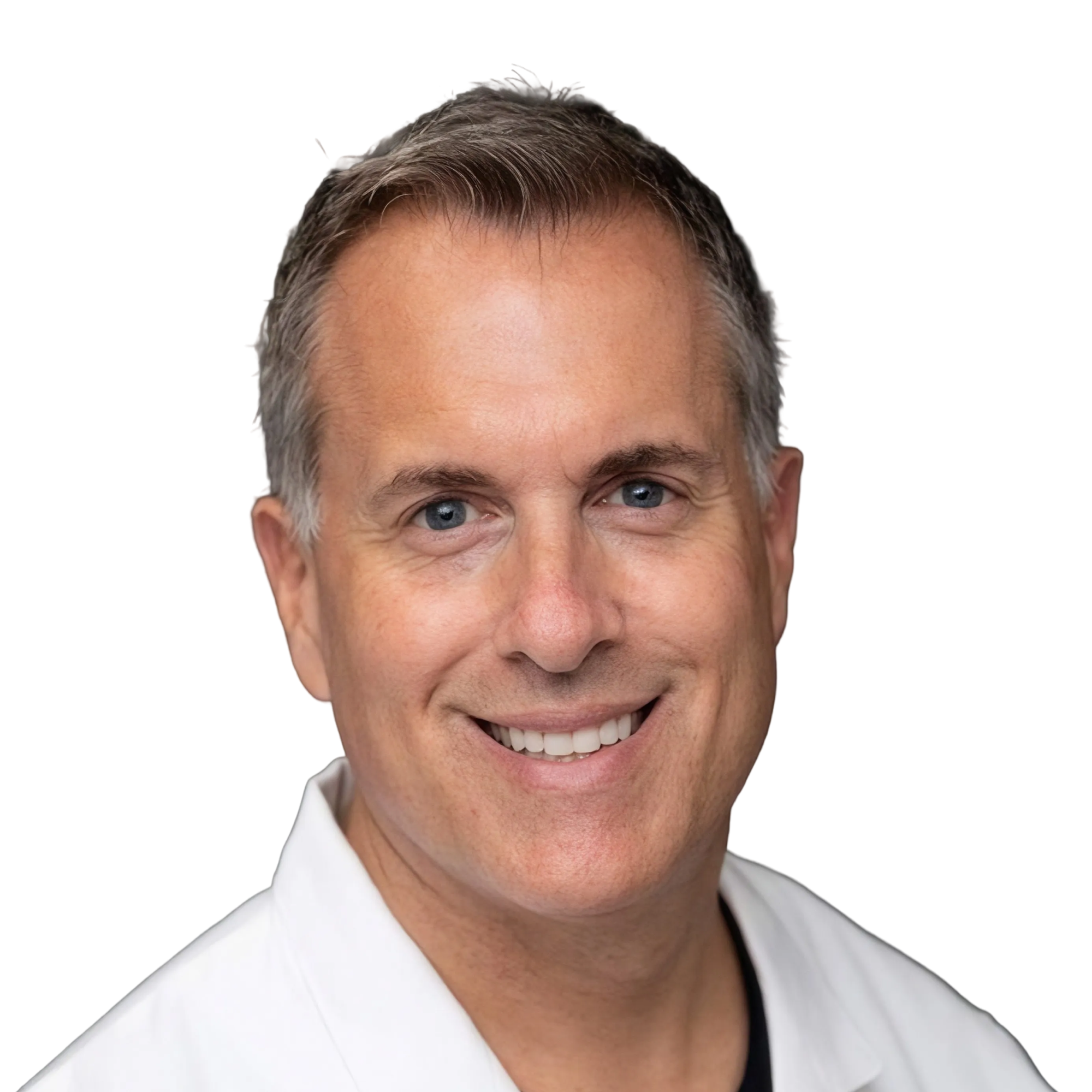
Dr. August De Oliveira opened his Encino practice in 2000 to bring expert, technology-forward dental care to patients in a caring environment. A 1997 University of Washington School of Dentistry graduate (top 10% of his class), he is a pioneer in CBCT-guided implant surgery. He has authored two implant textbooks and lectures at dental colleges nationwide. He is also known for putting anxious patients at ease.
Done learning and want to get started?
Book a demo