
The Ultimate Guide to Pearl AI - Episode 3
How Pearl AI is Shaping the Future of Dental Practices
Transcript
Good evening, everyone.
Welcome to this webinar with doctor Kunal Patel.
I'm going to ask that you share the screen, please. Okay. My name is Rabihah, your host. I am the customer success manager here at Pearl and a dental hygienist.
I have doctor Kanal that's going to share his journey with us in regards to AI.
Just wait.
So how is Pearl AI shaping the future of dental practices from doctor Kunal's point of view? So I'll hand it over to you, Kunal.
Hi, everyone.
We've got about thirty, forty minutes presentation today, and I'm just gonna run through my experience that I've had using Pearl and most importantly, the the software that AI have called Second Opinion.
It's a journey that started about two, three years ago, when we first were introduced to Second Opinion, and it absolutely blew my mind.
At LoveTeeth, we're all about patient experience, and this completely changed the game. Who am I? So I graduated in two thousand ten in the university in Czech Republic.
I worked as an associate for four years, and that's when I bought my first dental practice and renamed it Love Teeth Dental.
Three years in, I became an Invisalign Diamond provider, and that's when everybody wanted me to speak to them and just share my patient journey because I didn't realize, but the patient experience that I had created was something unique. And that's what excelled me from becoming a done provider from having done no basis within a year as a single provider.
That then led to me really looking into the digital workflow and patient journey that patients go through. And over the years, I've now added on software's AI, you know, in the last year or so, which has really changed the game. One of them, as I keep saying, is Pearl.
In the last two years, some of you may have heard of, I decided to go on a crazy journey and open a few squat clinics.
The proudest one of the lot must be AI love teeth kids, in which we actually use second opinion also, which is a great tool to share with parents and children, what tooth decay may look like, which I'll show you later on.
This year, we opened our very final clinic, for now.
Hopefully, my wife's not watching, but she thinks that's the last one. Probably won't be.
And let's begin. So what are learning outcomes that we're gonna go through today? We're gonna understand how AI integrates into core clinical workflows. We're gonna explore the latest technological innovations and take a deeper dive into Pearl's key features.
Learn how Pearl can impact your clinical outcomes and promote practice growth.
Basically, all three topics are going to be involved in the patient journey that I share with you today and that love teeth journey with myself.
So Second Opinion, that's the software. That's what it's called.
It's owned by Pearl, but you really need to know its second opinion. It's the world's most comprehensive a d FDA cleared real time AI diagnostic aid for dentists.
I was blown away, as I keep saying, because I truly was when I first saw that this software existed, and I had to get it in to my patient's workflow. Because I literally felt to myself, if I'm not using this tool and it's available, that maybe it's an injustice to my patients where they could be receiving better quality dentistry.
So the best way and, you know, we're all dentists here. We all go on courses. We all list to webinars. But the hardest thing that I find always and have found is actually implementing it into a workflow with our patients in the room.
It's great to know that these, you know, softwares exist, and these treatments exist, and these materials exist. But the hardest thing about any course or learning anything new is actually figuring out how to implement it in our patient journey. From in that checkup journey, where can we find the time to actually go through this journey? Or will this technology replace a conversation that you normally have with the patient?
And will it make it quicker, more understandable for the patient, and also increase your patient acceptance for treatment. So this is a little video of me in the clinic and going over how I would literally conversate with my patients about how to use Pearl, look at the X rays, intraoral scanner or iTero in my case, and back to this scanner.
Enjoy.
So, Pearl, second opinion, why it's so great for me is just the ideal workflow in order for me to diagnose my patients and have the effective communication tools available for me to be able to speak to them.
So, usually, I would have taken a AI ring.
It wouldn't have had anything on it. It just looks black and AI, an X-ray.
And I would be pointing to a patient saying, do you see that gray triangle there? Well, that's two fifty k, and that's a bit of cowardice.
And I know, just like most patients, they would be sat there going, having not a clue what I was pointing at. Rapija.
Is this Whereas now, with second opinion, it just made life so much easier.
And is on.
I first start off by explaining to the patient the different tooth parts. This is where I always begin, and I'll say the purple and the green are parts of the teeth that you can actually see in your mouth.
And I'll show them on the iTero after I've done scans and saying, this is this. And that's the parts of the teeth that you can see, the purple and the green. The blue and the red are hidden under the bone line.
You can't see that, and that's the roots and the nerves of the tooth.
So this part is the main part that I use when I'm using The purple is the nail, and the green is the dentine, the soft part of the tooth.
What this technology will show us with second opinion is where you have active tooth decay.
And tooth decay is sometimes barely visible to a patient, whereas with second opinion, it's highlighting in pink. And I'll say to the patients, you see the bits in pink, that's tooth decay.
So, guys, at any stage during this presentation, if you've got any questions, the easiest way is to go to the q and a chat box at the bottom and just chuck in some questions. Robbie here will be, watching out for your questions, and then at the end, we'll have some q and a's. So I think it'll be the best way to, go for this presentation because I'm sure you'll have some questions.
However, don't worry. You know, you can see quite a lot of it.
However, when the pink is in the purple, it's okay. We have good oral hygiene, good flossing, fluoride treatment, that can arrest, and that doesn't need a filling.
However, when you have the pink that goes into the green, that's unrepairable. We have to do a filling.
What I find is by just having a simple image like that, explaining it to the patient, this is what we see.
This is actively what is going on in your mouth rather than trying to show them in their mouth, oh, do you see this in your mouth? Or even on the AI.
If we see a shadow, we can then explain what that shadow actually means.
And what I find as a clinician, the take up of treatment is so much AI, but more importantly, the acceptance.
The patients understand that it's not a want, it's a need.
And in the future, if they decide not to go ahead, we take another X-ray, and we will be able to show them how it's increasing.
So for me, in their settings So think it's gonna be the norm.
Let's In order to So too far That bit is one of the most important parts that I just said there is this is how quick technology works, and this is how quick Pearl is. And that's why second opinion, I believe, is the best image AI imaging software here. Because in that video, which I've only filmed probably about eighteen months ago, I talk about in the future how you're gonna be able to compare two X rays and show patients with annotations and color how decay has progressed because they didn't undergo treatment. That feature is already here, and I'm gonna show you today. So, again, the main parts of that video that I really want you to do and show you was within a checkup, there's times where we'll really try and explain an X-ray and show the gray areas, which spent wastes a lot of time and spends a lot of your checkup time, especially if you're NHS clinic. Whereas now, it's highlighted in pink. If you look at this bottom right one here, the tooth parts is my favorite feature.
I say to the patient, the purple area is your enamel. The green area is your dentine.
That's the parts of the teeth that you can see. The blue and the pink areas are hidden. That's the root. That's the nerve. And what you can say to them is when you have tooth decay and it's only in the purple, it's okay.
You with good oral hygiene, we'll keep an eye on it. We don't need a filling just yet. However, when the tooth decay goes into the green, you need a filling. These conversations are so easy to have now with this sort of technology.
So if it's not part of your day to day, clinical workflow, speak to your principal and make sure he gets in for you or she. So another part that I really like and these are all the features, that are were already there, and I'm gonna show you two new ones today.
So another feature which I'm really, really, blown away by is when it does detect tooth decay, if you look here at the bottom, it literally gives you an estimate of the percentages of where that tooth decay is. So it will say, you know, it's eight percent in cementum, seventy four percent in the dentine now is broken through. So this feature is really, really great. It reads OPGs for you.
It will it will highlight teeth that impaction, perico radiolucencies, caries, notable margins.
You have measuring tools here.
The periodontist love this. And then even this one here, if you look at the top, second from right, it actually explains to patients what different parts of the tooth are. So it will say, that's a crown. This is a filling, nonmetal filling. This is a metal filling. This is a post. This is a root canal.
It's absolutely amazing the way this works. And the calculus detection here for hygiene uptake, it will literally highlight it for you as well.
So there are many parts of Pearl. And once you really get going with it, you will navigate yourself to the main features that are associated with the type of dentistry you do. Here at Love Teeth, a lot of our dentists are quite niche in the types of dentistry they offer. We've got the general dentist that uses software, which is amazing for the general dentist.
And then certain parts of dentistry, they'll then refer onto our specialist team, such as the endodontist, periodontist, and they then also use these features. We've got the oral surgeons. We so it is a great feature, a great technology to have, and it's actually more affordable than you may think. I'm not I'm not here to sell the product.
I'm just showing you how simple it is to use.
The two new features I'm really excited about. So in that video, I AI I'll speak to you about the compare tool, how one day, hopefully, they will have a tool that will be able to compare two X rays of the same patient six months apart, and it will show the patient how the decay is getting worse, getting better, is staying the same. So if you have a look here, this is the the tool that you'll have. So you've taken an X-ray.
It's there on in, your computer screen. And if you have a look, your X-ray will come up like this. Down the middle column, okay, you've got all of your tabs. These are your tools.
You go through them. The main ones that I would use is the edit tool here. This one here, you can pick on an item and change it or add a pathology or remove a pathology.
The measuring tool, you can play around with that. The tooth parts is my favorite. Okay. So tooth parts is the tool that really educates the patient.
And then you've got the features where we can now do a and b. So a and b up here, you'll now be able to click on. You'll then be able to go back in history, pick an X-ray that you may want, and then select it. Okay.
So I'll pick the wrong X-ray there. But, you know, you pick the same X-ray. Turn on tooth parts on that side. Turn on tooth parts on this side.
And now if you're not the same X-ray, you'll be able to say to patient, look. That decay is actually getting worse. Oh, no. It's that the nerve features like that, it is a phenomenal feature.
And now we've got the edit measuring.
So this is where you can move the measurements that you've done with bone loss that you think it might not be as accurate. And, actually, there's a pocket there, so it's actually a lot deeper than you may think. So that is the two main features that have been added. And this is just showing you the power that Pearl have, in innovation.
And the only focus is this feature. So all of the they're not they're not one of them, companies right now that are trying to go into all different parts of, AI technology. They're literally focused on this. So you'll see that they'll always be more advanced in AI, hearing detection, or radio reading than anybody else.
This is a great feature. So if you go back to this screen, and up here, there's a print option. It says print. But don't worry. You won't just print out a patient. It goes into a PDF.
And this was a great feature to give my patient. They'll come in for a checkup. So imagine our normal checkups. What what happens to a day to day, those that you were NHS dentist back in the day or still are?
Patient will come in. You quickly do a checkup. You say, AI is great. Show them some X rays.
See you later. Goodbye. The patient won't have anything to really go away with.
Maybe they'll have a little treatment plan, but nothing to really go back to their family and say, I really need this because I've got two fifty k here. Sometimes you then get that credit email when the patient will email in and say, please, can I have my X-ray sent to me? And you're thinking, okay. I'll send you the X rays, but how what do you know what to look at?
I bet you they're going to another dentist and ask them for a second opinion. You start sweating.
But this is a feature where you just literally click that print button. It will create a PDF, and you've got one on the left here without tooth pass. And this is just showing the tooth decay or the caries and the pathologies that are visible. And here, you can see that it literally is telling the patient what to and what's going on, and it's color coded.
On the right hand side is my tooth parts part, which it shows the patient how deep the tooth decay has actually gone. And remember, at the checkup, you've already educated them, say, in the white area, if the pink decay hasn't broken into the green, you're okay. You know, good flossing, good oral hygiene, fluoride, it may arrest. However, if it goes into the green like this, you're in trouble, and you're in lots of trouble if it hits the purple because that's when you get lots of tooth pain, abscess, endo is needed.
So you really can use the this tool or this software as an education piece. My team at my practice really enjoy it when I do lectures or teaching events. They get involved because it's a lot more easier for them to understand the the teeth and the things that we talk about in visual annotated versions.
So going back over these key features here, the edit tool is is great. One thing that I didn't go over is when you have this X-ray in this feature and you're talking to a patient, if you just hit the space button on your keyboard, it will remove the AI, and then you release it, and the AI will come back.
And that's a really cool tool because when you're showing the patient that gray area that you would have made them try to understand do you see that gray triangle? That's tooth decay. They never saw it, but now you'll be showing them that that was what I would have been showing you, and this is how it looks annotated.
Remember, send any questions for you guys, and I'll I'll grab them at the end.
So what are the overall benefits? I have gone through them, a fair bit there. But the main benefits that you're going to really receive from using Pearl is the standard of care.
It established a practice wide standard of care with machine learning technology.
Now I don't know if you guys work in dental practices which have different types of monitors and screens in each surgery or different window facing computers and things like that. Because I remember as a clinician, I really struggled working certain surgeries or certain, rooms that had sunlight at a particular angle of the day, and it directly shone on this computer screen.
Or I thought I was fancy, and I bought all my, associates touchscreen displays, which were glass.
These are not good for reading standard radiographs.
The grays look ridiculous. You can't even see the grays. The sun was shining on.
I I couldn't see X rays, at all.
And you have to think to yourself, that's a limiting factor. That that is human error that can, you know, take part when you're missing some tooth decay. And you will find that using tools like this, it will just give you that confidence. It doesn't replace you. But it gives you that extra confidence to say, do I think that's duplicate?
Yes. It is. It's giving you that second opinion, hence the name. And it works really well. So if you're, a principal, don't have to worry about getting these high definition X-ray reading map displays anymore because AI will really help you. If you look on the left top hand side, that's my kids' clinic there. And you can see there's a mother and daughter and our AI.
And they're actually able to now explain an OPG and things that are in the mouth, and it numbers the teeth and things like that. So it it's really an educational tool to which, obviously, for our patients to really look after their teeth, we have to we have to educate them, and this tool really aids in that. So the standard of care, as I said, practice wide becomes a lot more equal. And as clinicians, we all know some of us are better at doing certain types of dentistry than others. Some of us may not be the best at reading radiographs, but this now more or less evens the playing field.
Clinical consistency, again, improve consistency in clinical performance with always on automated clinical support. So, again, it's giving you that that bit of confidence that you we always needed when we doubted ourselves, when we doubted our eyes, or we doubted the quality of the AI. Because second opinion will actually clean up your X rays for you better than any tool that their software, that you currently use does.
Conversion retention. Now it boosts same day dentistry, treatment acceptance, and patient retention through better patient communication.
As we all know, those, that are really successful in AI to patients and, patients taking on treatment with you, the main the main thing that you have over maybe a colleague who doesn't serve as much treatment isn't that necessary that you're a better clinician. It's more that you have better communication skills.
And for donkey years, ten years now, I've been teaching in the dental field, trying to really get dentists, better at communicating with their patients and and and relating to the patients. But I really do find it is a really hard skill to teach someone communication.
Whereas tools like this really help dentists as well.
It really helps you in that communication side of things where you find that patients generally just don't trust what you're saying, or or you're a bit nervous within yourself.
This tool really helps you gain that confidence to have these conversation with your patients. And uptake uptake of treatment really does grow at an exponential rate, and you would be detecting things more than you ever did before. And interproximal decay, you know, it's it's hard to explain to the patient. But, you know, it will then lead on to patients taking extra care, improving their oral hygiene because they know that if they really don't want that filling, they need to floss. They need to see the hygienist. They need to use your fat and things like this, you know, and apply more fluoride treatment.
Oral health outcomes.
Elevate oral health outcomes by catching disease earlier and more comprehensively.
So it it's one of them difficult stories when you say to a patient, oh, by the way, I've just seen eight lesions interproxinally. It hasn't hit the dentine yet.
Because it's a new patient, and they're just looking at you going, are you kidding me? I've been going to a dentist for donkey years, and they've never told me about that.
This the AI will now highlight it, and you'll be able to show the patient and say, you know what? But don't worry. We're gonna keep assessing it. And then in six months' time, if it's still in the same place, then that's what you've been doing for all these years that has kept it away.
But early intercepts, as we know, is really important. And, you know, when you say to the patient, once it hits that part of the tooth, it will become painful. And if you don't want pain, let's, deal with that at this point. It's really important, and it helps.
Cutting edge care. Foster a reputation as a tech forward practice applying AI in clinical care.
Now, obviously, love to we're known to do use a lot of technology.
Our patients now in the local area know that we'll have digital scanners. We have digital X rays. We have TVs on the ceiling. We have old CT scan, OPG. We have all types of technology.
And patients do look for that. And if we look at the generation that are gonna be the patients that we treat now, they're all tech savvy generations. The generation that don't like much technology, you know, the Nokia phone generation, that's mine actually. Let's go deeper. The full mobile phone generate.
They're not so keen on technology, whereas the generation that we'll probably be treating these days are tech savvy. And if they know and they know how how strong technology is and important, they will look for practices that have cutting edge care. Because as I said right at the beginning, I do now feel that I am clinically more superior than other clinics because I've got technologies like this, and I'm giving my patient better dental care. And I truly do believe that technology like this will provide better dental care for our patient.
Thank you very much, guys. We got time for some questions now. This was us on Friday. Hopefully, I saw some of you that were there.
We won practice of the year, best patient care, HR friendly practice.
There's a QR code here which you can scan, and, it will take you into booking and demo with the poll team over here. Any questions, Robin?
Yes. We have two questions. If you just give me a moment, I will read those out. So the first one is asking if we're able to provide a video recording, which will be sent out to you at some point this week, hopefully.
And then the second question is we have a dental hygienist. Don't have any colors. How do I get the green and okay. So the second question AI can even answer. So Canal showed us a video earlier about tooth parts. So it's how do I get the color gone.
So you should have a There you go.
Bar.
So go, Raviya.
So this toolbar has a little tooth here, which is your seventh button down, and it when you hover over it, it will come up with two parts, And that's how we've managed to get those colors on those X rays.
K.
Any other questions?
AI and easy.
Yeah. Kunal, thank you so much. That was really, really good.
I AI, guys.
Didn't know how you were using it. Even though we know each other well, I found that really interesting. So thank you.
You're welcome.
We'll wait around in case anyone else has any questions. Thank you to everyone that has joined tonight. We have got one more question. How long can you go back to compare the X rays A year or two? Good question. Can I shall I AI?
Or Yep.
You go for it.
So I'll get this slide up.
Depending on what you've had installed at your practice, We call them historicals. They can go back as far as a year, three years, possibly a little bit more.
That's how far back you can compare your X rays. If you haven't had a historical done, then what you will start to do is build history. So from today, in six months' time, a year's time, you'll be able to look back to today and compare those X rays.
I hope that's answered your question.
If there are any more, we are going to stick around a little while.
We have Was there anything that you think I missed?
Not at all. You've covered absolutely everything. Yes.
Oh, thank you.
So this one's a little different. My SOE X rays lose quality after they are uploaded to Pearl. Who do I contact? Good question.
You can contact okay. So if it's SOE is this the native integration?
Do you have exact, So whoever that is asking the question, if you can turn on your audio, it might be easier Yes.
If you'd prefer rather than type.
I might have to give him permission.
Okay.
Let's have a look.
I'll try and find you.
Just trying to find you on here.
Oh, there you are.
There you go. So you can speak, Agnes.
Hello?
AI don't know if you can hear me. I have a pair for a year now.
Okay. And, initially, everything was AI. But over the last two or three months, I noticed that there is a loss of quality.
Okay. You can report know who should I talk to?
So on your second opinion platform, you have a help center, which is the question mark into the top right hand side. Sorry. We've we've got that area covered on this screen.
But that will take you to a help center where you go to request support and then technical support, and that's where you can report it. Do some screenshots of those X rays, please Mhmm. And share them on there.
In this video, you can you can roughly see it. Is that the back at the top right hand side there? That's it there. Right, Rabia?
Yes.
Top right hand corner. Perfect.
Thank you.
And it's it's really good because they, will you can upload that X-ray in particular, and they'll look into it for you. Any more questions, guys?
No.
Cool. And there is also the pearl cleanup feature here, right, which can help. Is it which one will Yeah.
The that one, the AI pearl The I.
Yeah. The pearl I, that really does clean up the X rays for years off.
So maybe try that one, Nishka.
Okay?
Yeah.
Should we get some dinner, guys?
Hold on. I think there might be one more question. No. I think we're done. Agnesca, you are most welcome to also email me if you AI.
And you need any help, I'll pop my email into the chat box for everyone.
There we go.
Kunal, thank you so much for joining us. Welcome. Very interesting, very useful.
I look forward to hopefully doing more webinars with you.
Have a nice evening, stay on in case anyone has any questions.
And also if you look to my top left side there is a QR code there that you can scan for a demo.
Thanks, Kunal. I'll let you get off.
See you later. Bye bye.
Bye bye.
Meet Your Host
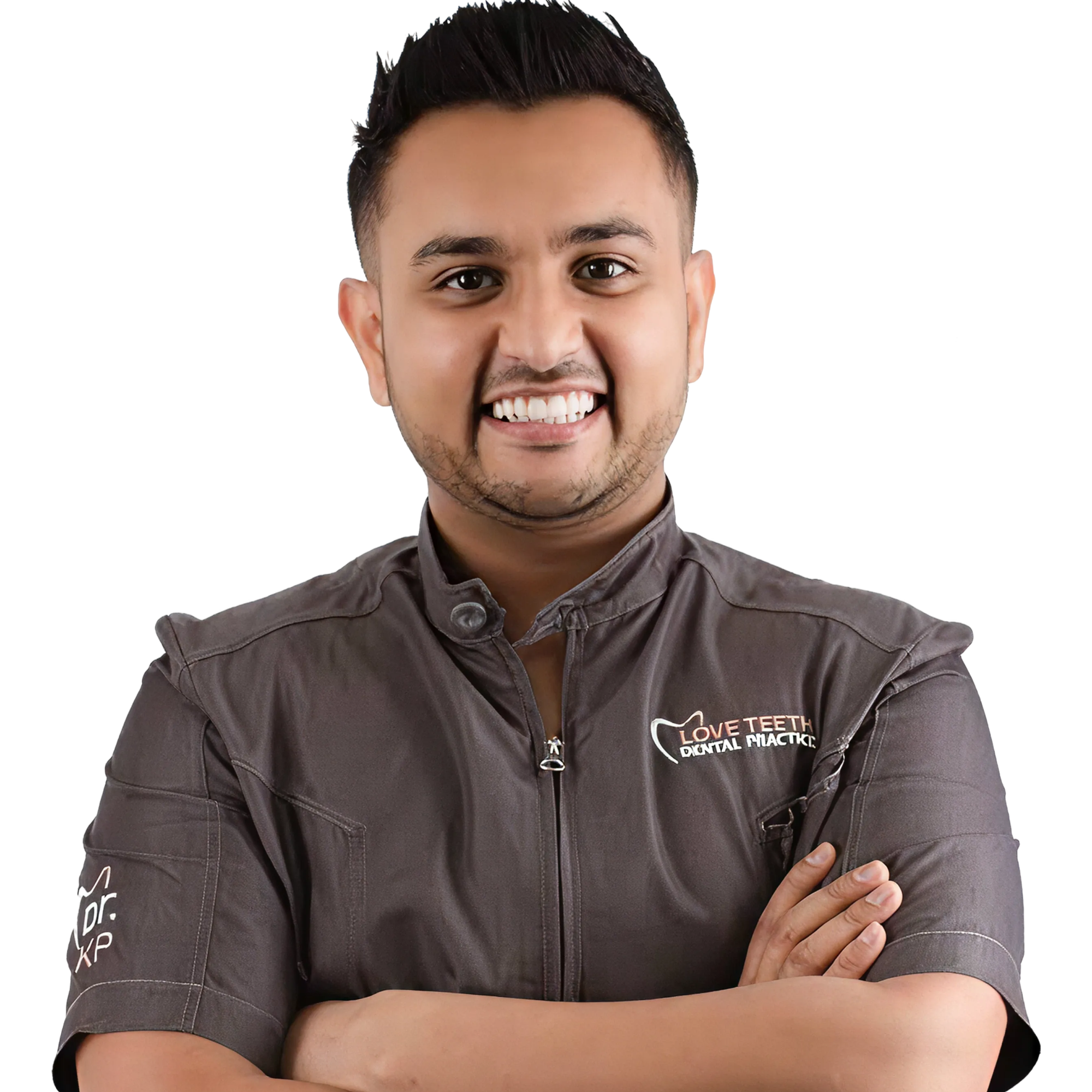
Dr. Kunal Patel founded the first Love Teeth clinic, which subsequently led to him becoming a leading authority in UK dentistry. He modernized the Cheam clinic with state-of-the-art technology and introduced popular cosmetic procedures, including Align Bleach & Composite (ABC), Mini Smile Makeover, and WeddingSmiles. His dedication to superior patient experiences established Love Teeth as Surrey's foremost clinic for dental care. Driven by patient satisfaction, Dr. Patel expanded the Love Teeth concept to surrounding areas, launching clinics in Chessington, Stonecott, and Worcester Park, home to Surrey’s first purpose-built clinic for children.
Done learning and want to get started?
Book a demo