
From Diagnosis to Treatment Justification
Clinician-Led, AI-Supported
Transcript
Good evening everybody and welcome to this evening's webinar. I'm Fiona from the events team and it's great to have you along with us tonight.
This evening we are going to be looking at using AI diagnostic aids in practice and I'd like to say a big thank you to our sponsor Hello Pearl for their support in bringing you the session.
So moving on to our speaker this evening, we have Nishan Dixat with us and, Nishan, I've just sent you the webcam request there so you can join us on screen.
Nishan is a principal and founder of Blue Court Dental based in Harrow in Middlesex and he'll be sharing with you how he is applying AI in his practice so you can see how it can support you with your diagnosis in yours.
Okay. Hi. Thanks. Thanks, Fiona and everyone at the BDA for and hello, Pearl, for hosting me tonight.
We have a bit of a fairly packed agenda of which I'll quickly run through first.
So today's webinar, the aim is really to to cover, a bit about Pearl. Hello, Pearl. So how do we apply AI in clinical setting to improve diagnostic accuracy and boost patient trust? Secondly, we'll we'll also see how AI contributes data that supports your diagnosis and proves your treatment case.
And lastly, we'll learn how to communicate AI supported decisions in a way that reinforces your clinical expertise and strengthens patient understanding.
So let me just introduce myself a little bit, tell you a bit about myself. I'm a general practitioner with a special interest in minimally invasive aesthetic dentistry.
I qualified in nineteen ninety four from Guy's Dental Hospital and worked in VT in Northwest London in one practice and stayed there for five years and joined another practice within Northwest London Around about two thousand, so April two thousand, I started my own practice, Blue Court Dental in Harrow. Initially, it was a single handed practice, then my wife joined me, and I expanded it a few years later to accommodate two further surgeries.
For the best part of ten years, I was involved with a group called the AOG, the Anglo Asian Ontological Group, where I was a membership secretary and, education director.
Thereafter, I became involved with the BACD, the British Academy of Cosmetic Dentistry, initially as a committee member and then moved on to the board as scientific director, where I pretty much organized the conferences and all the educational content for the academy over that time.
In twenty nineteen, I became the president and then for one year.
Currently, I'm working with the advisory GDP advisory group for Align Tech Invisalign.
That's me on a day to day basis.
So let's start. Let's get into this. So what is AI?
Artificial intelligence is simply a set of algorithms that work together to accomplish goals set by humans. Computer scientists train these algorithms by feeding them troves of data, a process known as machine learning.
The algorithms learn to recognize patterns in information, which ultimately allows the AI to accurately categorize and make predictions about how we show it.
AI has been used in medicine for some time to detect abnormalities in brain, heart, lung scans. It's been done with speed and precision. So why can't we have it in dentistry? You know, why haven't we been using it?
This is where Hello Pearl comes along.
It's been passed by the FDA, and it's it's focuses on real time radiographic interpretation.
And it's used globally in multiple many practices globally. Sorry.
So how did the X-ray evolution start? For me, it started with just traditional film using X-ray processes. Ironically, when I bought the practice in two thousand, the previous dentist had a dark room. Yeah. I know it's it's it's scary, but he was literally manually processing X rays, and that was in two thousand.
In two thousand and twelve, we went digital.
And in two thousand twenty four, we started using AI to supplement the digital technology.
So these figures were taken were given to me by Pearl. And so we look at the patient's perspective of their ideas of what X rays and their diagnosis and what they understand.
And from this, they they basically decided or well, not decided. They they found out that sixty five percent of patients don't understand their X rays, which is kind of understandable. Everything's black and white, and we're just looking at a few shadows here and there.
Of those, fifty nine percent don't trust their X-ray diagnosis at all.
They're just trusting what you say, and those that believe you will and those that don't will say that you're making things up.
And then seventy eight percent of those say they trust in the diagnosis is key to accepting treatment.
You know, at the end of the day, caries doesn't hurt, and it's a it doesn't hurt why we're drilling.
So X rays, everything is black and white, but, you know, sometimes things look better in color, I feel.
And this is where we come to Hello Pearl.
So it's goodbye to the grayscale and Hello Pearl.
So how did I really get involved with Hello Pearl? And a few years ago, I was at, Chicago mid winter meeting, and I first saw this software. Very intrigued by it, what it could do.
Consequently, I had a few demos from this company and from other companies, and we kind of went with Pearl. I just like the the the whole package that they were providing.
I I believe that we're we're a progressive practice, and we like to keep improving our patient journey and experience for our patients. We also wanna set ourselves apart from others, so we decided to take Hello Pearl on board.
And we've had it now for a year, and and patients absolutely really love it and really value that we've invested in them as well as, the practice.
So why diagnostics matter?
So even the experienced clinician doesn't always agree. So across if you take a group of twenty, thirty, forty dentists, they will all have, you know, there'll be a variation of what's what they see and what they don't see on X rays. And that percentage can vary as high as forty percent across dentists reviewing the same X-ray.
This impacts treatment planning, the case acceptance, and ultimately patient outcomes.
This is where I feel AI can really help. It brings in more consistency to our diagnostic baseline, reduces the error, and and hopefully the for the better for the patients.
How does the how does PERL Hello PERL work?
So HelloPearl basically analyzes the dental X rays. It takes it straight from your practice management program, your practice imaging program, detects multiple pathologies from caries, calculus, etcetera, and then it overlays the findings on the image, offering real time second opinion without disrupting our clinical workflow.
Multiple detect multiple things are detected, you know, like I said earlier, bone loss, multiple sorry, caries, calculus, periopical radiolucencies, and it really is very good to for them to understand what they're seeing.
As I mentioned already, the the the things that PELL can detect interesting as well, the the bow the crowns, the marginal issues of crowns, and ray restorations really, especially when they're not your own, it's very good to highlight.
So this is just really a snapshot of one of the X rays. It just shows a few things here, just the caries that it detects, the rate of progression. So it gives it as a percentage of how much of it is into enamel, into dentine, and, you know, do we need to intervene or not, and you can explain that to your patient.
So we have here, again, another synopsis of what PERL can show. This is the original X-ray in black and white, and then we start putting the putting it through PERL, and it shows us the the presence of calculus. It will show us the notable margins, so the overhanging deficiencies.
It will give you a percentage of the bone loss. It really helps patients understand what's going on in their mouth.
Here we got, the X-ray showing, a little pink lesion. It basically shows the early caries lesions. And again, we don't need to intervene on these, but, it makes patients, responsible for their own mouth and takes ownership of what's going what's going on in their own mouth really. Obviously, bone loss is a gain.
Periocle loop radiolucencies are highlighted, and just why we need to do certain treatments. We can explain it better through color.
This is the so like any technology, Pearl updates itself regularly, and now the the latest update is really good. On bitewings, we see figures as amount of bone loss, which we we have, but now we distinguish between caries, which is pink, and it's into dentine, and early caries is now yellow on the software. So the patients can really understand clearly the pink we may need to intervene, yellow we definitely don't need to intervene at this very moment, and they are aware that there's other possibilities of lesions that may occur later on in their life.
So PEARL is clinician led but AI supported, as they say.
Pearl Hello, Pearl is not about replacing the clinician. You're still you're still the decision maker in this process.
AI simply provides a set of second eyes.
It's consistent. It's tireless, and it's trained on a massive dataset.
It enhances your judgment, especially on those borderline cases.
So how will Hello Pearl transform your practice?
Shows it in a a number of ways. Really, we have, firstly, improved diagnostic accuracy, consistency and human reduced human error, enhanced workflow efficiency, cost effective long term investment, enhanced patient trust and satisfaction, scalability, future proofing your practice, better compliance and documentation, increased patient confidence, trust, and time efficiency. So I'll have a look at these in a little bit more detail and go through them one by one.
We start with increased diagnostic accuracy.
AI software can analyze X-ray images with incredible precision.
The accuracy rate is probably what Pearl is saying about ninety eight percent, and in my practice, I think that's pretty close to to correct.
It detects early caries, bone levels, as I said, helps patients understand their mouth. It really works with me. I like the word co diagnosis. It helps them understand and helps us explain things to them.
Really, what happens is you show them a lesion with early caries, you go through all the the diets and all the other necessary protocols that you may need to do, and and really most of the time, their their answer to me is, doc, what can I do about it? How can I how can I prevent this from getting worse? What are they what are the things that steps needed to do for me to to make sure I don't need anything, another fill in, etcetera?
So, you know, you're identifying details, like we said, that the few mice sometimes misses, and we all miss early caries in a hurry. We've got a busy day, a busy look, busy list, and and we're glancing through patients, especially when they're recall patients, and we've seen them on a regular basis.
And sometimes they do develop early lesions.
This kind of all encompasses in, I think, a better patient outcome, and it enhances the prevention side of your practice.
Consistency and reduced human error.
By showing them how much caries is into dentin, they understand really why treatment is necessary. So when you have a lesion that's a hundred percent into enamel and not into dentin, we know that we don't need to treat it, and the patients can understand.
And then you show them another lesion where it's probably twenty, thirty percent incidentine, maybe even more, and they clearly understand why action needs to be taken.
And then they also understand that you are monitoring other areas that are possible potentials for future treatment.
So the evaluations are pretty much consistent every time. The early lesions, you can take X rays at the necessary intervals, and you can overlay them and see how much progression has done. As long as you're consistent with your X rays, the PERL will be cons PERL will be consistent with its findings.
It reduces the chances of misdiagnosis, false positives, or misinterpretations leading to more reliable results. But you also have to go back. It just it's really just a second opinion, so you're you're always gonna go back and recheck those lesions clinically or in any other way if you have other sort of technology like the iTero, the Neri, etcetera.
The enhanced the enhanced workflow efficiency reduces the times required to manually review an x-ray, speeding up the process of diagnosis while spending more time focusing on patient care.
Streamlining this process improves productivity and allows you to manage higher patient volume without sacrificing quality.
Really, what I touched on earlier is about sometimes you we do scan X rays, and and we think things are okay.
But this what this does will it will it will scan it for you, and it will highlight areas that you need to have to come back to look at. On this case, it's like an overhanging fill in there that we may have missed out on on a clinical examination, recurrent caries, or or areas of calculus that the patients, you know, that we missed out on an X-ray and the patient needs to come back for more hygiene, need more attention in those areas.
Cost effective long term investment.
Expenses related to misdiagnosis or delayed treatments are reduced.
Early detection of dental issues prevents them from escalating into more complex costly treatments. This, I feel, is very important, especially when we've got early care or caries that we've missed, and then that progresses very rapidly into becoming bigger lesions, bigger restorations, maybe cuspal coverage, maybe root canals involved.
Sometimes you can detect, in this case, there's a periapical radiolucency on a virgin tooth, and that may may well be associated with a crack. And we you know, I can't remember this case, but I think it was a new patient that had some issues, and we we after the hygiene that needed doing, we kind of had to investigate the need of the crack.
But all those things, it's came up on an incidental finding on an X-ray, and we wouldn't have seen this necessarily, without taking the X rays.
And PEARL enabled us to highlight those areas very rapidly.
The enhanced patient trust and satisfaction.
Patients increasingly expect high-tech, cutting edge solutions in health care. Using AI shows that your practice is committed to providing top tier care.
Patients appreciate the precision and the speed of AI software, which builds trust and improves satisfaction.
They they they are seeing more of the AI. More of this tech is available for them to see on on various social media networks, Google platforms, etcetera. They know that technology is around, and they they do expect their patient their dentist to to encompass the technology.
And once you do provide them with the technology, they they do feel that you're investing in them as well. They they appreciate that you're putting everything back into the care of their their dent their dent dental health care.
Scalability. This is kind of a bit more appropriate to multiple practices and and having a bit more consistency throughout all the clinicians within the practice the practices. It's, you know, it's ideally, you know, for expanding practices that want to maintain efficiency and high quality care as patients' numbers increase. The software can handle increased amounts of data and patient volume without requiring additional staff, and and it's really just consistency. Especially if patients are seeing different dentists, sometimes happens in multiple practices.
There's a lot more consistency about the care that's being delivered and the the treatment plans that are being proposed.
Future proofing.
I believe AI is the future of dental care.
As the tech advances, early adopters will be in a better position to integrate new features and technologies that further improve practice performance.
Think you're preparing by adopting it now. You're preparing your practice for up and coming innovations, staying competitive in the market, and it's really just enhancing encompassing the technology that's there, embracing it really.
Patient confidence. Patients becoming more tech savvy and expect advanced cutting edge care. The new practices that have been that are coming up, Scott practices, they they all have to invest heavily in in the design, the technology to attract new patients.
The existing practices need to really copy them in a way or follow their lead and bring technology to their patients as well.
Patients will feel more assured knowing that AI is helping to ensure accuracy and the quality of their treatment.
And interestingly, seventy one percent will trust the dentist diagnosis if it's backed up by AI.
In essence, that you see the caries, you see the lesions, the AI sees the lesions, patients feel reassured that you and the computer are on the same wavelength or on the same page.
Better compliance. So AI helps ensure that diagnostic processes comply with the industry standards and legal requirements.
Keeps detailed records of its findings, reducing the burden of manual documentation while ensuring accuracy.
Also, with compliance, I'll explain this, just really on the patient's front, what's going on with their mouth on one of the case studies that I've got to show a bit later on in the presentation.
So how does this all this technology benefit in practice? It translates into faster, more accurate diagnosis, improved treatment planning, and a greater patient trust.
When patients see their dentist and and the AI aligning, they feel reassured. It builds confidence in the recommended treatment care that's being proposed.
It's it is obviously streamlined, and the accuracy, like I said, is is improved diagnostic accuracy.
So these figures were taken, given to us by Pearl on the survey. They they looked at a thousand US patients, and they came up with these these stats. So sixty three percent of patients are uncertain if their dentist is reading the X rays accurately.
Fifty five percent would feel more confident if another dentist verified their X rays, and eighty two percent prefer that their dentist use more most advanced AI diagnostic technology available. If it's there, we should be using it. That's what they feel. That's pretty much, you know, eighty eighty odd percent of patients want you to use it.
Looking at these figures and how it translated further.
So they took these figures, and they they realized that by using Hello Pearl in the US, twenty two percent increase in general dentistry and twenty nine percent in specialty dentistry referrals to other specialties. But looking at the individual treatments, I would, you know, looking at the routine fill ins, forty six percent increase in restorations and twelve percent increase in in hygiene treatments. Twenty four percent of implants, more implants are done.
Root canal treatments, almost twenty percent, and then you've got big restorative treatments like crowns as well.
Big increase in that. Patients can suddenly see a lot more on their X-ray. They understand a lot more from their X rays, and and it does lead to, an increase in production. And, ultimately, our bottom line has increased in a in a, in an ethical way as well.
But reality was that I've been using this for a while, and I saw all these figures, and I kind of really needed to understand how it works in my practice. And is it worth it, what's going on, and so I decided to do my own little audit.
I took, a hundred and forty five X rays, during a three month period of between October and January and analyzed them to, so just analyze them to what was found and what was missed.
So these were the results that we found. So there were forty four early caries lesions were detected, of which thirty two were initially missed by the dentist that was caught by Pearl.
So these thirty two, obviously, you know, of these, the twelve that were only twelve were noticed by the the dentist in in questions. So you look at it, there's a lot of early lesions that we're missing. Obviously, none of these needed treatment, but it's still a fair number.
The the outshot or the outcome of this was that there was an increase in sales of fluoridated mouthwashes and floss and other oral hygiene products plus hygiene treatments. More hygiene treatments were booked.
When we looked further, there were nine lesions that were missed completely, and they needed reassessment and restoration. So there's nine additional restorations that we would have missed that could have led to bigger treatments for the patients, possibly more bigger consequences later on.
Invaluable in that respect.
So this is my patient journey. How do I use Pearl in my everyday practice? We obviously start with a general clinical examination as we all do. We all know how to do that.
I will then take an iTero scan where I also use the NIRI technology that's near infrared technology to highlight any areas of concern. We will do clinical photographs, intraoral photos as needed, and then we take X rays.
From the X rays, we put it through Pearl grabs it, and then we can sit down and discuss the lesions.
So when I was talking to this, about this technology to other colleagues, there was a few simple questions that came up fairly repeatedly, and and I thought I'd just put them in now and it's, rather than have you ask the same thing, really. So how do I explain AI to patients in simple terms?
What I usually say is this software gives me a second opinion on your X rays. It helps double check what I see so we don't really miss anything.
There are areas once once I've taken an X-ray and I see lesions, that I may not have diagnosed initially, I will go back and double check them to verify whether they do need intervention or don't need intervention.
Is Pearl AI hello, Pearl. Is this hard to integrate into your daily workflow?
No. Not not at all, really. Hello Pearl integrates with our existing imaging systems. As I've mentioned, we use care Carestream, and it displays it in real time. It runs in the background. It doesn't slow you down.
It's cloud based, and no special hardware is needed.
You you do have that it's it just literally is fairly seamless. You know? As long as your, your, Internet connections are great, there's no real issue with that.
So let me just move on to a case study. This let me just sorry.
So this case, this is a young patient, thirty year old male called Dylan. Dylan was recommended to me by a friend for some Invisalign treatment.
He'd recently been to another practice a couple of months prior to this, had some X rays. These are the X rays from that practice, he had an issue with his lower left six.
It was repeatedly fractured over a six month period, repaired a couple of times.
He felt he kept saying it just doesn't feel right.
The practice that he was visiting has basically said there's nothing wrong, gave him a quick clean, and said, try some Sensodyne. His issues were with hot and cold as well, and he was left to to just use So he sought an opinion from me as well.
We did his examination, so his medical history was clear. Intraorally, extraorally, nothing abnormal was detected.
So we moved on to the the dental aspect, and he only had the one restoration, the lower left six, and you could see that it was breaking down from this X-ray. And we at that point, we'd requested these X rays, which took us a couple of days to get. Unfortunately, the digital quality, feel, was quite poor.
You can kind of make out a couple of lesions there already in the premolar upper premolar areas.
So, basically, what we did was we went through this with him, and we put it into Hello Pearl.
So suddenly, saw a few more things.
And, we went through this with him, explained that, obviously, there's a deficiency. You can see the box that the Hello Pearl is diagnosed, and you can see it clinically that there is a clearly a deficiency in there.
Some other lesions that are present, some are into dentine, some are not, and some are more of a case of monitoring. There's some bit of calculus present in some areas, so he needed a bit more hygiene.
We needed to do some restorations.
Looking at in a bit more detail again, you can see it in color. And and this obviously impressed him that he could just see a lot of different things. He knew there was something going on here, and and we eventually treated him, restored him where it was necessary.
And that's the OPG. You can just see the pearl can grab it. OPGs as well and bring it into into there, and you can just see quite clearly what it highlights, the nerves and any lesions that are picked up.
So we can pay basically say let me just go back. So with with him, we restored him fully. We we actually finished him his Invisalign. He's currently just about finishing his whitening, and he's really happy, and he's all symptom free and recommended a few more other patients, thankfully.
So bear in mind that we've had a few common questions that keep coming up, so I thought I'd really go through some of these as well.
So can AI really see what a trained dentist might see?
Yes. Especially when it comes to subtle early findings. As I've mentioned earlier on, I think that's, for me, that is the real key that in a practice that's heavily based on prevention, the these early findings are really cool, really good for the patients to understand what's going on.
Second opinion has been trained has been trained on millions of radiographs and and act like a second set of eyes. It doesn't replace your expertise, but it adds another layer of assurance for the patient. You've got to always remember that you're in charge. You are the dentist. You are the clinician.
And ultimately, the bug stops with you. You have to decide whether you need to treat that patient or not treat a patient based on what you see on the X rays and what you see clinically.
What if I disagree with AI's suggestion? So like I said, you're in control.
It's a diagnostic aid, which you have to decide whether you accept or override this decision.
You have to use your clinical judgment. And there are times when you'll see a lesion and you won't be a hundred percent sure, so you don't intervene. You come back to it. You the beauty is that with PEARL is that you can, you know, revisit it with a set of X rays in six months, a year, and whenever that that, time frame may be, and you can overlay it and see if there's any progress. And then you may want to intervene then.
And I think that's what's really good about pay, for the patients. When it's margin to dentine, you you don't necessarily want to intervene straight away, or you may do. It depends on your on the patient and the clinical situation.
The interesting thing is on this X-ray, the you you soon learn to to look at X rays from Hello Pearl, and you realize that there's a bit of pattern recognition. So once you see a certain pattern, you'll know it's it's disease related and certain patterns like wear facets show as decay, which may not be decay in the mouth.
So again, the more you use pearl, the more you realize how it works and what lesions need to be looked at again and what what areas are just purely wet facets, etcetera, or erosion areas.
So that's that's the more you use it like any bit of technology, there is a slight learning curve. But once you you cross that barrier, you're you're good to go, really. It's it's very good.
So in summary, there's a few things, really. One is when we qualify, we're told you can't treat what you can't see, so we're told to get some loops.
Now I feel you can't treat what you can't diagnose.
Hello Pearl helps you with this, and there's there's an ever more reason to to look at having an adjunct to your technology in the practice.
So my key takeaway is that Hello Pearl enhances, and doesn't replace clinical care.
It provides a second opinion to your clinical diagnosis.
It improves the accuracy, the clarity, and ultimately the case acceptance, and it really gives patients more ownership of what's going on and and and start co diagnosis, is critical. And definitely, the more more, you know, more routine dentistry is is being booked in in terms of hygiene.
More products are being sold in terms of all hygiene products.
I think it's it's they're here to stay, definitely.
Thank you for listening.
I hope that gave you a a brief insight into Hello Pearl, how I use it, and the benefits of Hello Pearl in practice.
Meet Your Host
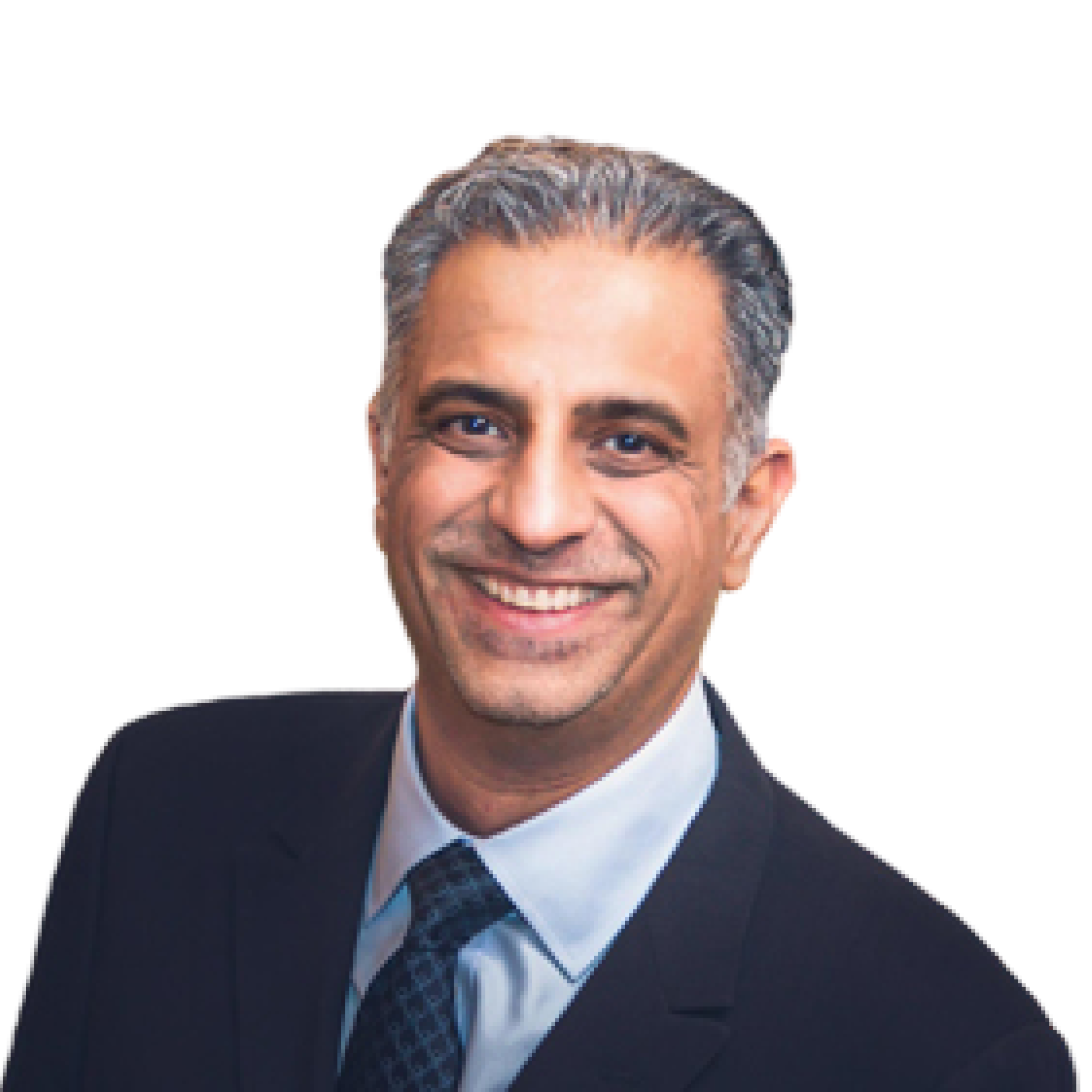
Dr. Nishan Dixit graduated from Guys Dental Hospital in 1994 and spent the first five years of his career as an associate in various practices across North-West London. In 2000, he founded Blue Court Dental in Harrow, Middlesex, where he provides comprehensive dental care while specializing in minimally invasive aesthetic dentistry. Dr. Dixit has been a member of the Invisalign GDP Advisory Board for over five years and is a past president of the British Academy of Cosmetic Dentistry (BACD), where he served on the board for 11 years, primarily as the scientific director. Additionally, he spent a decade on the Anglo-Asian Odontological Group (AOG) Committee in various roles. His commitment to advancing his skills has led him to train with leading clinicians both nationally and internationally.
Done learning and want to get started?
Book a demo