

Elevate Your Practicec
Incorporating Specialty Services for Patient Retention
Transcript
Okay. Welcome, everybody, and thank you for joining us on our webinar.
I am Sheela Roth, head of clinical education here at Pearl, and I am joined by a few team members I'm going to introduce you to.
So first, we're gonna start with our partner, Curve.
And today, we have, Cody Cadell.
Sorry about that, Cody. And she is the senior product specialist at Curve. And, Cody, I'd love to introduce you, just have you jump on in and, say a few words today. And, again, thank you so much for coming on and spending your time with us.
Yeah. Absolutely. I'm delighted to be here. And on behalf of Curve, we are very excited about our partnership with Pearl, and I'm delighted to be here to listen with all of you with, doctor Ru's story. So thank you for having us.
Absolutely. Kerr's been an incredible partner for Pearl. You're gonna hear a lot more about that, during doctor Wu's wonderful presentation.
We also have joining me tonight from Pearl is Kimberly Quieshen. She's the director of partner growth, and happy to have her tonight. We would like doctor Wu, I will introduce him in a moment, to go through this incredible slideshow, talk a lot about his experience. You're gonna love his story, and really how, I was so inspired by hearing how we can really serve our patients from keeping patients in our practice and all the additional things that doctor Wu does to make dentistry so much fun. So doctor Wu, is an incredible clinician, a wonderful speaker. He graduated from Tufts, did a residency at UCLA.
He's an author. He's a director of an additional, team for clinicians on-site as well as the owner of Emerson Dental, a multi special practice with two locations. How many doctors now, doctor Wu?
We're at nine now.
So Nine doctors.
Incredible. So he's also a guru in incorporating technology into his practice.
And so I'm so thankful to have you here, doctor Wu. I will turn it over to you, and we are looking forward to hearing from you tonight.
And thank you, Sheela. Thank you, Curve, and thank you, Pearl, for putting up this webinar.
I'm so excited to be here.
Of course, I would rather not compete with Thursday night football. I know that's what everybody's thinking. So for that reason, I'm going to, get started. And just like in football, I'm gonna have to call an audible, and we're gonna do a no huddle offense.
So I'm gonna have the scripted plays. So this is gonna be our our goals for today. I'm gonna introduce myself. I'm also gonna talk to you about my journey through dentistry and then talk about the different specialties and how I integrated them and some advantages and disadvantages of that.
And then I'd like to talk about some technology advances and some challenges and special considerations to think about. And finally, I'll leave some time for questions and some final thoughts.
So just like in football, when you're running plays, you're gonna set goals, crush them, and repeat.
So off we go.
Sheela already introduced me, so I'm gonna keep this very brief.
I've been both East Coast and West Coast trained, and I've integrated lots of different technologies through my practice over the years. Most recently, I've integrated Curve Dental software in two thousand twenty one going to cla going to the cloud. And, obviously, I actually just integrated Pearl dot ai second opinion four weeks ago. So it's fresh off the press here. So I'm gonna give you my honest to goodness from cloud software and, you know, how quickly I've done it and how my teams adapted to it very quickly here.
My goal for this is to entertain, educate, and inspire all of you. That's my main goal.
And what I'm always looking for when I'm look integrating technology isn't just about the technology. I'm looking to partner with companies that are always striving for continuous improvement. That is always the kind of partner I'm looking for.
So next, we're gonna go on to my dental journey.
And, again, we're gonna set the goals, crush them, and repeat.
So like Sheela said earlier, I graduated my AGD residency at UCLA.
And then in two thousand ten, as an associate, I actually purchased the practice. It was a single doctor practice. It was five dental chairs. It roughly had about a million dollars in revenue. And I was a solo practitioner for about a year and a half, and I really realized it was kinda lonely.
My friend there, had finished his pedo residency, and it really was an accident how he started with me.
I had to fly to Taiwan, unfortunately, for my aunt's funeral, and I needed someone to babysit my office because I had to fly across the globe.
And I had to take two weeks off, and I obviously, being a single doctor, I need someone to watch it for me. I just came back from that trip, and I looked at my schedule, and I said, why do I have a one year old in my schedule? And he said, oh, don't worry about it. I was watching and I they found out I'm on pediatric dentist, and they said that they were gonna bring their kids. And I tell I told them I'd come here once a month and see your kids for you.
Needless to say, fast forward, I added pediatric dentistry, and AI outgrew the five chair practice. I added perio. I added endo. And in two thousand fifteen, I expanded to eight chairs. We started doing about one point five million in revenue, and we kept growing because that's what that's what happens. And and from two thousand fifteen to two thousand nineteen, I outgrew the space again, and I said, you know, either I expand the space or I build a second location.
And that's where we we're at here. And then you guys all know what happened in two thousand twenty. We had a pandemic, and that obviously slowed some growth. But, currently, to this date, at two thousand twenty four, we're about four million, and I like I said earlier, nine doctors and twenty six employees now.
Integrating the specialties. I'm gonna go through each specialty, positives, negatives, pros and cons, endo, perio, oral surgery, ortho, and pediatrics.
Now ortho and oral surgery are the two specialities I did not integrate yet, partly because of space, and we'll talk about that here.
Now the journal of multidisciplinary care, this is in dentistry.
They had a they showed the graphs of different AI of specialty care provided in the growth areas out there. And thanks to patient demand and technology, multispecialty care adds revenue streams, but it also attracts new patients and marketing.
And, really, for many of you to think about this, the guaranteed way to make money is to do other do what others won't do or do what others can't do. And just think about that. So there are I mean, I was in dental school. Some people are like, you know, I don't wanna ever do pedo.
I get it. Some people are like, nope. You know, I never wanna do endo.
So to each their own. But if you really wanna expand and you want you want a easy way to revenue grow, you gotta do something that others don't don't do can't do or won't do.
And so for those of you who are solo GPs, you can either expand your procedures or you can expand and add specialists.
Like the African proverb here, if you wanna go fast, go a la go alone.
If you wanna go far, go together.
Obviously, I chose the latter. I'm like, I'm gonna go far, but we gotta go together. So me and my little elephants, we all gather together, and now there's nine of us. Now I like to kinda put things into segments. As I go through each specialty, I'm gonna talk about training versus recruiting and hiring, different CE opportunities for those of you who are gonna go to the solo GP route.
For me, obviously, I'm gonna talk about how I, expanded it and, the the things to consider. There's legal and referral considerations, a standard of care for coverage, equipment and supply costs, the barriers to entry. And then, obviously, each different specialty has different things. Some of them are heavy on space. Some of them are heavy on staffing.
And then the biggest thing is there's always growth opportunities for each specialty and how you're gonna market that.
So we'll start with endo. And now the X rays you see on the right are my father. And so I'm gonna say to you, there's no HIPAA with my family. So throughout this, all the X rays that you're gonna see of my family so anybody who's my family automatically, they already know. They AI up to be parts of my presentation.
So training for endo. For those of you who are gonna do it yourself, there is a awesome website called Eschool by Sonia Chopra if you want to do so.
One of the things with endo you have to consider is emergency coverage. People are gonna be in pain. People are gonna have post op pain. So if you're gonna integrate this into your practice, you gotta make sure that you you or your specialist have ways of how you're gonna cover the emergency coverage.
The equipment and supplies cost, it's about moderate. You're gonna have to consider CBCT AI, rotary, and a cadence locator.
Now capacity, it's minimal. You know, you're looking at one chair, one assistant, you know, and maybe a side book chair for follow ups.
The best growth opportunity, as you can see with my dad, is EndoCROWN same day treatment.
Like I like I said earlier, I'm a CEREC doctor, so we can do the endo, the CROWN, one visit. And nowadays, patients don't want to come back. That's the reality. If you can do same day dentistry, most patients will take a day off, and they can get everything done.
And it's great marketing, and it's also great profitability because you don't have to flip the chair.
So as you see, my dad, as you see in number nineteen here, had the endo done same day and and the crown same day.
Now, like I said, fast forward now, it's still my dad.
And about two thousand twenty three, last year, after seven years of that crown, it came out. And as you can see, there wasn't that much tooth left there. And so with oral surgery, now you can see he took that road of extracting the tooth. And now we didn't do same day, implant placement.
And but you can see we were able to restore it. Now considerations for implant and perio for those of you who are gonna go the slow low GP route, implant pathway is a great CEs for you to take. Similar to endo, you're gonna have to worry about emergency coverage and pain.
Equipment and supply costs are fairly high, especially if you're gonna be placing implants because you have to have rolling inventory. You're gonna probably spend about twenty thousand dollars of implants because you have to have the different size implants and the different skews, and there is a lot of inventory management. Something for you guys to consider because there is upfront cost.
Spacing and staff, you're gonna need at least two chairs, one working, chair, and then you'll obviously have, the second, like, for follow ups and consults.
And the growth opportunities, immediate implant placement, immediate ten crown. And, again, perio and oral surgery are best paired with endo.
They they all use CBCT as well. And so if you're already buying the CPCD for endo, you obviously can easily add perio, and your margin dollars, will be you know, you can actually utilize it so that you can cut down your costs.
Now we go into ortho.
Everybody obviously is doing Invisalign, and that's a popular thing. But, you know, you have to understand of cases that are gonna be harder out and out of your scope.
And Molus coaching through a line, great for those GPs that want to expand their knowledge. Now considerations for the for ortho is length of treatment, especially if you hire orthodontist, which I didn't, because of exactly that. Finishing cases. If you're gonna have changes in the orthodontist, you have to make sure that you have some sort of clause on how you're gonna finish cases.
Equipment and supply supply costs are low and moderate, but staffing and space is ginormous.
Now most orthodontists on a typical day see anywhere from eight to eighty to a hundred patients a day. So it can blow up your waiting room. So these are things that if you're gonna integrate the specialty, you either have to give them the whole office and shut it down, and you're gonna have ortho days, or you better ready be ready to expand and knock down walls and build out a whole wing of ortho.
Growth opportunities, it's best paired with pedo and oral surgery because they kinda go hand in hand.
And as you said as I said earlier, family doesn't have HIPAA, and there's my daughter, Scarlet. And she since we don't carry ortho, my good friend, Brian Ting and the AI, RTO, is doing our case as we speak.
Pediatrics.
It's all about fun. And here, you see my three girls, and my youngest one, baby Belle, that was her first visit.
And with pediatrics, it really is marketing, marketing, marketing, and it's all about patient management.
Legal and referral considerations, I I would say there's sedation and behavior management. Now similar to ortho, it's low to moderate supply cost. It also requires or requires staff and spacing, and it's high volume.
And kids, they just multiply. AI the growth opportunity growth opportunities is convenience to family. The the adults and the kids can be seen at the same time, and it's marketing marketing marketing.
And one of the analogies that my dear friend Jerry and I always say about pedo, it's like going to In N Out. It has a very simple menu. You either do prophy with X rays, prophy without X rays, prophy with fluoride, prophy without fluoride, or all three. So he always says, AI, In N Out.
Double double burger, double double burger with fries, double double burger with shake. That's it. There's not that much on the menu. So that being said, it's more about patient management, and it's also managing the flow.
That's the biggest, challenge.
And one of the lovely things about pedo, as you can see my daughter here, there's we make little bibs in my practice, and it says, I already have a dentist. Do you? The easiest patient for you to have is one that doesn't already have a dentist. And the easiest patient to get that is right when they are born. So in our practice, our rule is they start at age one or the first tooth, and it's all about relationship building. That's really the art of pediatrics.
And like I said, do what others can't do or they won't do.
Now the technology advances.
Boy, technology's changed.
Now we're really behind the desk. We're behind the computer just being on the Zoom call. It was not too long ago. I remember giving lectures in live, and I still prefer live. I'm gonna be honest with you. I'm still getting used to this whole Zoom, and there's technology challenges. If we were AI, obviously, we wouldn't have to worry about these technology challenges, but such is life.
Now there's me and Jerry.
We went to Washington DC, and him and AI, when we took this picture, I said to him, can you imagine at one point in our career, this was state of the art. This is probably a state of the art chair. And it really shows you how fast technology's changed. Even with our cell phones, you know, X rays, I just think about how much Dana Street's changed in the short career I've had.
I'm about actually, this coming May is my twentieth, dental school reunion. And I'm like, wow. In the last twenty years, how much has everything changed? Because I was of that generation that we use fixer and and developer, and we and they said, you know, oh, I remember when I was in dental school.
Oh, the traditional X rays is better than digital. The quality is better. Well, not so.
Now you can see with Pearl AI and how much it's developed.
And doctor Sui and I had done some, studies with Pearl, and we were both very impressed because him and I both looked at probably over ten thousand X rays. And one of the things that we said, we said it both to Sheela. We're like, you know what? AI is gonna win because our eyes are hurting. And even though we can probably diagnose better, single X-ray, you repeat ten thousand X rays, we're gonna lose. Because our eyes get tired, and we're gonna forget, and we're gonna make mistakes.
Even impressions. I remember there was a time when people were like, oh, impressions. It's it's so much more accurate than these scanners. Well, not so. I I would say, you know, how many of you guys are digital scanning? I mean, I've seen how quickly these technologies have gotten better and better and better every year.
To share that with you, in two thousand seventeen, I had the OmniCam. It was Christmas.
And how quickly from the OmniCam, I went to the PrimeScan, and I've seen the scanners keep getting faster and faster, more and more accurate.
If you look and check out my LinkedIn, I have videos about how we integrated CEREC and, obviously, Curve. And I hope to make some more videos with Pearl on how I integrate that.
So short time, everything keeps getting better and better. It's it's kind of a weird curve, and it's it's fast.
These are different technologies I've, integrated in my practice.
Curve cloud computing is getting better and better with with the two thousand twenty four curve is better than the two thousand twenty two curve. I integrated in two thousand twenty one, and I can tell you it's pretty impressive how many different things that they've changed. And they've been listening to their customers, and they're always committed to the same thing I've said. They're they're committed to continuous improvement.
The mobile app that came out last year has allowed for emergency calls, and all my doctors really love it because they have access to it mobilely.
And Pearl's second opinion is a great marketing tool for efficiency and also a sec as as it's called, a second opinion.
And Method is something I use for dental supplies. It's a great one platform to price compare and inventory management.
And for those who who like to perio chart and record everything, voice activated perio chart will save you not only AI, but also manpower. You don't have to go and bug your assistant for those hygienists out there. Oh, hey. Do you mind perio charting with me? Voice activated periochant. You don't have to go and drag somebody else to come in the room with you.
Now I can barely walk and chew gum at the same time. So but what I wanna do is give you a little video. I took a video because it would be easier for me to go through this with you AI, but this is Pearl's second opinion. And as you can see here, this patient here, as you you can see, it actually helps you to identify all of the areas where they see our problem areas. One of the great things that I love is it actually is a great education tool where we can show the patient how much of the caries or the cavity has gone through to the enamel and how much is in the dentin.
And then really highlighting it, you can see and you can show the patient where the bone levels are. And in the short time, like I said, I just integrated this four weeks ago. I can show the patient, look. The AI has identified all these problem areas. Hey. It's noticed that this margin is notable, and it's not as well sealed. And it really is a education tool to to for patient understanding.
I like that we can also colorize it. So rather than the fifty shades of gray that most patients see, they can actually actually understand what the issues are.
And for those of you who have used Curve, one of the great things is that you can actually measure it because curves software doesn't allow you this. But because of the partnership with Pearl, you can actually measure the the the length of the tooth. And there you can see the colorization.
I didn't think the colorization was such a big deal, but when I presented to the patient, it was all the difference. The patient's eyes lit up, and they're like, oh, that's what a tooth looks like. Because for them, they just look at it, and they're like, oh, it's just fifty shades of gray. And as you can see, you know, both the doctors and the patients were impressed what it can do, and who knows what the futures will hold. You may not want to be the first one to adopt technology, but what I'll say to you guys all is don't be the last.
Now we'll go to curve. I wanna give you a a brief overview. And AI I said, I I took videos on this because I have a hard time chewing gum and walking at the same time.
I logged it showed you log in, and, certainly, if you wanna refer a friend, you can get three hundred dollars with Curb. I I I didn't really notice that when I when I recorded this video. And I'm gonna show you kinda how Curl's software works. I love the Sidekick here. It's one screen in a mobile app. I put everything on HIPAA.
I have two locations. This is my Bedford office, and so you can see how the schedule I can go through one office, and I can look at the other. Everything's all navigate through this screen, and you they also have a mobile app. Curve Grow is their communication tool tool, and this is on a busy day.
You can see in the schedule there. That's my periodontist, and we're having surgery. You can see the green is the follow ups. The red the orange on the left is, is the surgeries.
And then, I mean, this is how busy my Westford location is.
This is a endo day, so you can see the endodontics is there. On the left is, pediatrics and then the general dentist and the hygiene.
We are a CEREC locate office, so you can see how everything's green. We're doing single visit dentistry.
And Curve really has a nice ecosystem because it integrates so seamlessly with Bola and Mango and Pearl that it actually seems like it almost seems like it's part of the software.
So, you know, this is my mother-in-law. And like I said to you, she doesn't get HIPAA. So, you know, I'm gonna show you her case. This is Bola.
It's voice activated, perio charting. You can have settings. There's a lavalier where you can actually talk right into it. I didn't do that for this because, I I don't have a patient to perio chart.
So but I wanted to show you a brief overview of how, the highlights of curve is. This is my mother-in-law.
She hadn't gone to the dentist regularly, and so I wanted to show you her X rays, and I wanted to also show you her full mouth case. One of my associates, did this case.
So and one of the nice things about curve is you can put different designs and templates that you can build yourself on how you wanna show off to the patients. Now my mother-in-law, she you can see that she is a little bit of a bruxer.
So she wore down her teeth a little bit here.
And, you know, as you can see, she's very happy, and we are able to show off her smile. Everything's in privacy, but you can have billing, and we can see the recare and claims. I'm not the expert at that. So for those of you guys who want to know more about the billing and all the other features, I'm sure Cody would be happy to elaborate on those things.
The quick buttons on it and then all the different procedures, really, curve is very simple, and it's very intuitive to use.
I've had new employees come in, and within days, they're really easily navigate through the software.
Also, our copias is synced together with curve, so, you know, you can easily launch into writing prescriptions. And I also do it you can also do it from your phone, which I like.
One of the things I'll also show you is, doctor Sui and I were actually so impressed with, with Pearl's second opinion.
I'm gonna show you this is his daughter, and his daughter well, you can see the little button there. Second opinion. It almost seems like Pearl's integrated or Pearl's in conjunction with curve, but one of the most impressive thing is how well it picked up all of her little incipient decay.
So he was very impressed. He said to me, he's like, yeah. All these little incipient decays, it just honed right into it. Now she's obviously the daughter of a pediatric dentist. So as a father, he was a little disappointed, but I think for the all my, dental colleagues out there, anytime it's your own family, you're like, you hate to see it, but I thought it was a great education tool for everybody to see how, second opinion really picked up on all the incipient decay and and the measurements on there.
Now me and Jerry went to we like I said, we work together, but we also go to on vacations together.
And we went to, Disney together.
And my him and I hope is one day that technology will advance that we'll have our own r two unit AI in Star Wars, and we can have it. The r two droid handle all the other analysis of X rays, optimize schedule, optimize health care results, ultimate AI all of our efficiencies and supplies.
So, really, curved cloud database has been great for us to coordinate the multi specialty con the multi specialty care and the communication.
Pearl's second opinion, and they are coming out with a capital liberation tool that I'm very excited to try very soon. And that's gonna be great for the nine doctors I have for us to calibrate ourselves on how we analyze X rays as well.
And Method has been a great way for us to streamline the procurement of our supplies amongst the different providers, suppliers, and all the different, to have it all on one single platform so we don't have to go through different logins and websites.
So now coming near the end here, challenges and special considerations.
Well, what are your challenges, especially if you're gonna grow?
Well, well, if you're gonna make more money, you have three options if if you're not gonna expand your procedures.
You gotta grow and make more or charge more. You either that or you AI cut your expenses and eliminate and start having the redundancies, or you're gonna increase your operational efficiency or decrease the pain.
And as with anything, location, location, location, and training people for any specialty that you're gonna integrate is probably you're gonna be your biggest challenge. Now Jerry and I, like I said, we always travel, and we always look at different dental offices, and we always take pictures in front of them. And one of the things that we always talk about when we see other offices, we really analyze, like, what do they do for their efficiencies and, you know, we always hope that one day that our two d two droids will really optimize that for everybody out there.
And so as the special considerations, as you grow your network and for those of you who are gonna go try to go down the same path of trying to network and get more specialists to join you, The growing the network goes through a path. It goes from accidents to acquaintances to associates to advocates and allies. And as I said earlier, Jerry and I went to dental school together, so we kinda met by accident. I mean, we didn't meet and say, hey. You wanna work together and grow this multi specialty practice?
And so accidents happen, for example, when you're seated on a plane in fourteen a and next to you is a fourteenth your your stranger's fourteen b, you meet by accident. And that's just kinda how things go. You know? An accident is a person that you'll never see again, but you make it happen.
You exchange contact and or you stalk them to get back in touch. In one study, twenty seven peep twenty seven percent of people develop a relationship with someone they met on a plane, pre flight entertainment, or, you know, they met by someone on by chance. Now acquaintances, that's usually your outermost circle. Imagine the word acquaintance.
It's a person that you could find again if you had to, but it's something that you have someone in common. You either went to school together or you met someone at a wedding, and these are people that you want to diversify your network. And so for those of you who are looking to add a specialist, go through your network and see if somebody knows somebody that you're gonna hey. I'm looking for an endodontist to join my practice.
Do you know of anybody? And go through your network to see if you can find people.
Now, obviously, as associates, the next inner circle, and that's someone who belongs to a group that you belong.
That's someone you're gonna see repeatedly. Someone at school, at work, at function, like a dental convention, someone in your spear study club.
Those they're gonna be easy come context for you to develop.
However, one of the biggest mistakes that you you do with networks is that you don't develop these relationships enough, and you really should act on these.
Now the next inner circle is advocates.
These are people that you when you make the relations make relationships to become more relevant.
What happens is your contacts will they're gonna be more out there to help you. And, really, there's someone that's gonna be an advocate of you, your business, and they're looking at the next steps with you.
Now, obviously, the biggest and ultimate goal for everybody is to have allies.
That's your inner circle, your circle of trust.
And these are these are allies like your personal board of directors. They know where you're headed. They will do all they can to help you reach your goals, and they actually seek out opportunities for you. This is what everyone wants.
But you can't get allies without accidents. And, really, my encouragement for all of you is to go that go that path. It's not luck. It takes time and effort to get to this level, but the results can be extraordinary.
And now questions and final thoughts. These are my two little puppies. Again, nobody in my family, not even my dogs are are the they even them, they don't get HIPAA.
Now we're coming towards the end here. And for those of you on the webinar, if you can give me a little vote and let me know. I'm of the gen x generation. So for those of you know, I used to have those choose your own adventure books. So I like to make this webinar, choose your own adventure for the next topic.
AI can do one with accident and allies where you can see in the picture there. That's where me and Jerry, when we were first marketing the practice, we were Mario and Luigi, and that's my good dear friend, doctor Saraf, who's our endodontist.
We were marketing and doing trunk or treat to the little kids, and that's how we marketed our practice. And so that's one topic. I'm happy to talk a little bit more in detail. And, I have talked to Sheela. I'll bring doctor Jerry on, and we can have a little Batman and Robin story. And I'll him and I can tag team on a on a webinar.
Number two is I'm happy to do cost versus AI.
My CPA by my side part two. I had done a webinar about five years ago with my CPA, and we talked about the numbers. And so I'm happy to do that.
Or number three, I can do more technology updates.
I love technology, so I'm happy to play with different toys. You tell me, you guys, what what you want.
Or number four, doctor Wu, your choices suck.
Would it really be revolutionary?
We'll be blank. That's my most favorite choice. So please send in the chat, send it into email, send in the survey, bombard Sheela's e inbox because it'll be really funny to see what we come up with here.
So I thank you for you guys all. Hopefully, I get you at least to the second half of Thursday night football.
Follow me on Instagram. You're welcome to message me. I will respond to you.
And on LinkedIn, the way of the woo is my nickname, and the I have a method QR code, and there's a QR code there here for curve. I have a state a case study for all of you. And, you guys can even mail out and tell everybody that you want the Way of the Woo combo package. You're gonna get Curve.
You're gonna get Pearl. You get Method. You can get it all. So thank you all.
Oh my goodness, doctor Wu. That was so entertaining. We're so thankful for your story. So very encouraging.
I have a question for you, actually.
If I'm sitting here through this incredible experience that I've just had so much information at me, and and I loved how you gave us kind of where to go with with each type of specialty you're looking to incorporate, some of the concerns to be mindful of, and really those next steps. You really kinda helped lay it out today. But if you were to redo it again and Jerry didn't slide into your office, what would you say would be that number one first thing you put into your practice? Would you say it would be specialty, pito, or specialty ortho? Or what would you say would be the number one specialty you would start with?
So I think based on ease, usually, endo is probably the easiest one because pain is the easy seller.
Now next, I would actually say pea pedo because it's there's not a lot of upfront cost, but it's pito. It grows fast, and it's great marketing tool, especially if you're trying to grow your practice.
Now I think perio or oral surgery is great, but there's a lot of upfront cost because you're gonna have to have rolling inventory for implants and all and all those things. But there isn't a perfect answer on that. So, you know, it kinda depends on how your practice is set up, how much space you have, and really AI what your interests are.
Excellent.
And AI guess another good question for me too to ask you would be for those of us watching is, what was the biggest struggle when you were moving your practice management software? You were saying Curve was super easy to use, but what was the the issue you felt like was the most challenging to overcome?
Well, change is not easy. It's it's always painful. So, you know, it's the bigger your office, the more wrinkles there are and the more impinges you have. And so when I integrated Curve, it was in two thousand twenty one. At that time, I think I had twenty two employees.
And, you know, it's like with anything. Some people in your group, it's a bell curve. Right? So some people pick up it really easily.
Some people are in the middle, and then there's the stragglers. And there's nothing wrong with the stragglers. They just need to help and work together as a team. And I would say that that was probably the biggest struggle, just getting everybody to roll at the same time.
For those of you who have smaller offices, it's I mean, I always say, small office, small problems, big office, bigger problems. Or AI kids. Small kids, small problems.
Bigger kids, bigger problems.
Yes. Absolutely.
So I kinda wanted to shift over to Pearl a little bit and then also on to curve. But, what is your experience when you and your team are looking at images as far as, you know, the second opinion side of things, the accuracy, how the images are coming in, not having to upload them. What are your thoughts there? And, what's something you would tell the doctors about the especially the doctors that are fearing AI? Like, what are your thoughts on that?
Well, it's one of the things I'll say is it's not you it's not doctor versus AI. Just get that out of it. It's doctor with AI.
Really, it's an enhancement tool, and it's only gonna make you better, and it's a marketing tool.
Every patient loves AI. I promise you that. Because they all know about it, and they're like, oh, this is great. The doctor has that.
We all use autocorrect. It's not perfect. We all use spell check. And so that's what I presented to the patients.
This is another tool for us to make sure that we are thorough with our exam, both clinically and diagnostically.
And it's a double check system that we're asking the AI to show us any anomalies in your mouth.
Not all of it do I agree with. Some of it's something that it's identifying early issues. Doesn't mean it's a treatment. It's just something that we're gonna know. And it really gives you a much more comprehensive and thorough exam.
Excellent.
I've heard And as I oh, sorry.
And as I said earlier, maybe you're not the first to adopt technology, but you don't wanna be the last. And so for all my doctors out there, I promise you you're not the you're not gonna be the first because there's always that person. I'm one of them.
So now what I'm saying to you is don't be the last. Because can you imagine that are you still taking impressions? Are you still doing developer and fixer for your X rays? Mostly, you should be digital by now. So most of you, maybe in the next five years, you're all gonna be integrating AI.
I do see that as well as far as that being the standard of care. And I think one thing I would say is, in being able to have such an incredible tool with AI, the fact that it's inside of Curve makes it so convenient. So the team still has all these capabilities that they're used to, and then they have Pearl to be able to be right in the center when they're reviewing radiographs. So it doesn't require them to go to an extra step, and it keeps the workflow to be very similar to what they're used to before using AI. So do you wanna talk a little bit about you know I know your team's already up and running and using it, and you haven't even had training yet. But the fact that it's just inside that curve workflow that you're currently used to, tell us a little bit about how it's been with working with your doctors and learning curves. I don't wanna say learning curves, but a lack of learning curve here.
Well, actually, I'll share this with you. I had a doctor friend of a friend of mine reach out to me. He actually thought Pearl came with curve because he it's it's it just integrated so seamlessly. It's like, oh, so you get curve and pearl together. I'm like, no. It's two separate softwares, but it looks so conjoined.
He didn't know it was a second it was another, you know, software. I'm like, no. It's two separate things. He's like, oh, it, like, just integrates like that.
That's what my team says. That's what my patients say. They're like, oh, it's part of it now. It's almost AI melded together.
I love that. And I think also on this, QR code for the curve, there was a case study that you had done. So that'll be very interesting for everybody to kinda click on that, read a little bit more, have your Instagram. I would encourage you to work, to reach out to doctor Wu. There's such an incredible amount of information. He's so helpful and willing to walk you through, moving into curve or using AI. Also, seems like you are the guru of technology, so all the other things you've incorporated.
Cody, do you wanna have any other closing thoughts for us before we wrap up tonight?
Well, I don't have any closing thoughts. This was amazing to be a part of, and, thank you for having us on here. That was, that was awesome.
Excellent. Okay. Well, we will hopefully see all of you soon. Doctor Wu, thank you again for coming AI, and, please feel free, all of you, to reach out to us. We'd be happy to share any more information with you. Thanks again for watching.
Meet Your Host
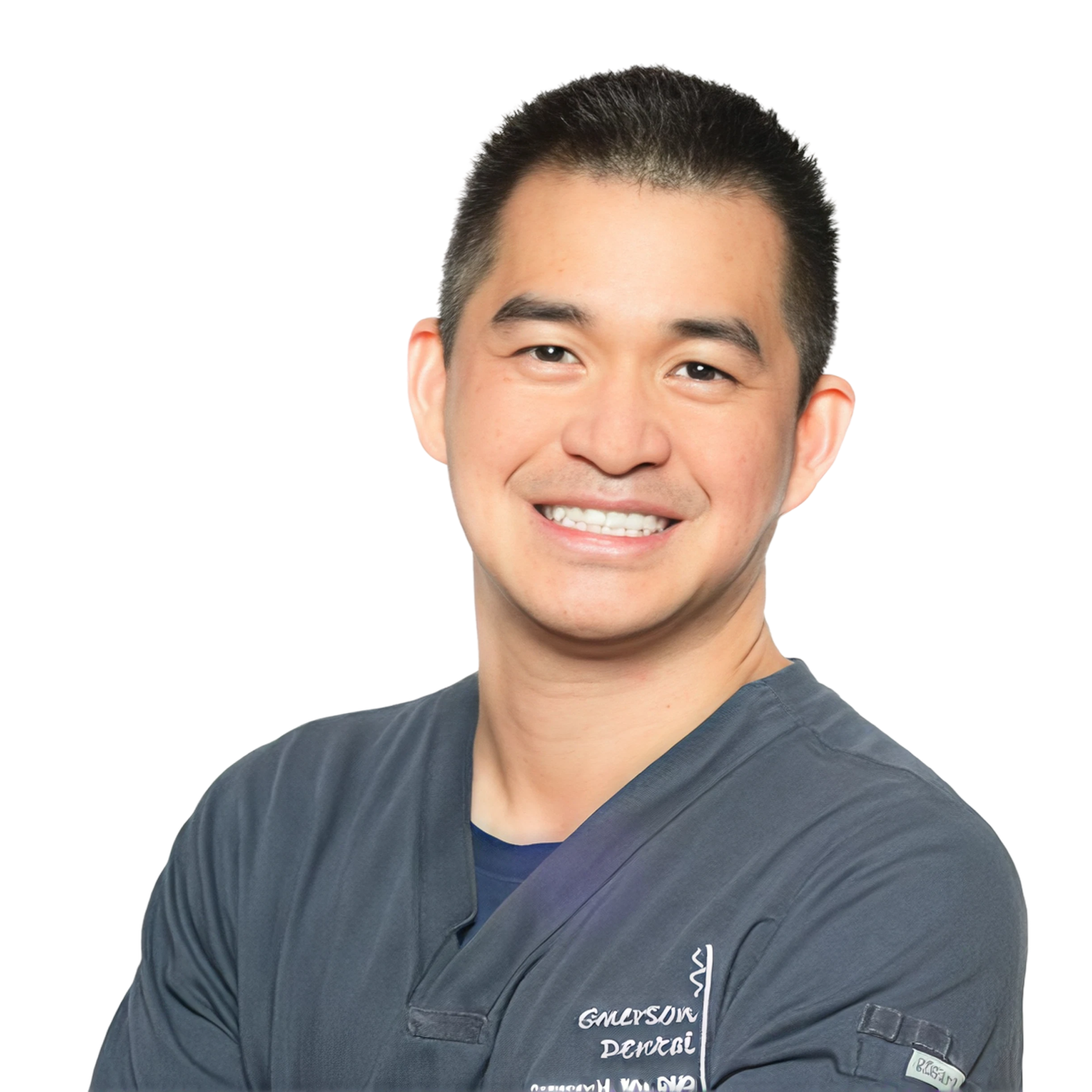
Dr. Wu earned his DMD from Tufts University School of Dental Medicine and completed an Advanced Education in General Dentistry Residency at UCLA, specializing in implants, veneers, and full mouth reconstructions. Since 2008, he has lectured at prominent dental conferences and was featured in a June 2019 Dentaltown Magazine article on business strategies in dentistry. As the clinical director of Onsite Dental Care, he provides mobile dentistry to assisted living communities in New England and owns Emerson Dental, a multi-specialty practice in Westford and Bedford, MA. He has integrated advanced technologies, including Sirona CBCT and CEREC Primescan, and collaborated with Pearl AI, Bola AI, and Method to enhance patient outcomes. Committed to continuous improvement, he transitioned to Curve Dental Software for future growth. His practice is recognized for its exceptional patient experience, receiving multiple awards and hundreds of five-star Google reviews.
Done learning and want to get started?
Book a demo