
Effortless AI in Pediatric Dentistry
Creating Smoother Visits, Clearer Conversations, and Stronger Trust
Transcript
So today we're going to hear how AI can seamlessly be integrated into pediatric workflows, how to explain the findings to parents in real time, build trust through visual communication, and create a smoother, more efficient experience for your whole team. We're proud to be partnering with Pearl today for this webinar, and I'm thrilled to introduce our panelists. I'm gonna introduce Sheela first — she's our co-host from Pearl, and a practice leader specializing in clinical operations, team development, and practice growth. She previously served as chief operating officer of a high-performing private dental practice, leading a team of over fifty members and supporting more than thirteen thousand active patients, and she continues to serve as an adviser.
Sheela is the head of clinical education at Pearl and former director of clinical operations, where she leads initiatives focused on practice transformation, clinical performance, and the adoption of dental AI. Known for her practical, results-driven approach, she helps practices improve efficiency, strengthen team alignment, and elevate the patient experience. She's also the founder of Absolute Dental Business Solutions, a graduate of Loma Linda University, and a registered dental hygienist. So thank you so much, Sheela, for joining us today, and I'll let you do the next introduction.
Thank you, Erin, it's great to be here — and same, very excited about our partnership with Patterson and Eaglesoft. Delighted, as always, to make anything effortless in dentistry — our integration is helpful for that, and we'll see it later today. I'm really excited about this webinar, because it's actually kind of funny when you think about "effortless" and pediatrics, because they really don't go hand in hand. In some sense, it's fun and great, and it's my favorite patient to work on, but "effortless" is probably the exact opposite word of what's really in alignment with pediatrics. So I'm excited to have Doctor Solomon here today to show us how to really make it effortless, while walking through such a high-quality practice serving multiple people throughout the day — we know those little squirmy guys aren't gonna sit around, and the parents, right, when you tell somebody their child has a cavity, we're all in shock the first time.
So, again, just a few teasers on how Doctor Solomon is going to share how he's made this seamless, effortless, and actually a fun place. Without further ado, let me introduce Doctor Solomon, our speaker today.
He's a second-generation pediatric dentist who's been practicing in Livermore, California for over twenty years. He earned his bachelor's in biological sciences, went to dental school at the University of the Pacific, and then completed his two-year specialty residency and a master's — as if he needed to do more at once — at the University of Texas in Houston. He's a Diplomate of the American Board of Pediatric Dentistry and a Fellow of the American College of Pediatric Dentistry. When he's not in practice — which I think is pretty much 7 AM to 7 PM, I could be wrong — he's an internationally recognized speaker and clinical instructor. He's the owner and director of his own Pediatric Learning Center and dental specialty training center, so we'd like to hear more about that, it's very exciting — what you're doing in your so-called "free time," right, Doctor Solomon?
Correct.
He'll also be working at those centers with pediatric information for general dentists, focusing on hands-on courses. So, another wonderful gift from our wonderful speaker, Doctor Solomon — thank you so much for taking the time to be here, we're honored to have you, and we'll turn it over to you.
Great, thank you so much, Erin, thank you so much, Sheela, for being here today. So I'll hit share and pop over — I'll let you guys get to know me here in a bit. As far as my relationship with Patterson, I've been an Eaglesoft customer since the first day I transitioned from paper charts to electronic health records — that was, I don't know, maybe eighteen years ago. And even before I knew about Pearl, before Pearl was in existence, I was a beta tester for Eaglesoft. It's been a great project for me — I believe we were the first office in the country to integrate Pearl into Eaglesoft, we helped with a lot of the testing, and we'll talk about why direct integration — while not required — is advantageous for the flow of your practice.
So if people have questions today, please enter them, and you'll have all my contact information when we're done. I try to be very reachable — if there's something we don't cover today, whether you're a general dentist or a pediatric specialist, if you have questions about integrating any of this, please reach out to me, I try to get back to everybody within twenty-four hours when I can.
So, the topic today is "Effortless AI in Pediatric Dentistry." As a pediatric dentist, I actually think pediatric dentistry is effortless — I don't know how people treat adults all day. I do have a lot of teens in my practice, but my hope is that all of you who treat children, teens, or young adults want things to be easier. Dentistry has not gotten any easier, and Sheela can attest to this post-COVID — our costs are higher, patient demands are higher, people look things up online and come to the office saying, "Well, what about this?" And I find that if, as a clinician and educator, I bring in tech I can integrate into my practice and use as a communication method and diagnostic tool, things get easier. I don't wanna just bring in technology to have fancy things with lights, to impress people with stuff I bought — I need everything I do to be part of my clinical diagnosis and my ability to communicate that to patients and parents.
So we have four takeaways today. First, workflow — and I think that's most apropos when talking about Eaglesoft and Pearl together, because in a pediatric practice we see fairly high patient volume, and I need everything to mesh — I need technology to speed me up, not slow me down. We're gonna talk about how we integrate this technology into our workflow for every single patient, every minute of the day, without getting stressed out having to turn things on and open programs.
Second, we're gonna talk about conversations with patients and parents, and how to increase our ability to communicate — because I spent a lot of years just using a light box, bringing up the X-ray and pointing things out to parents, saying, "Do you see that?" And they'd say yes — but they didn't see any of it. I need tools that not only help me diagnose, but help communicate, in a way any parent can understand, without needing a medical or dental background — to understand there really is a decay process in this tooth, and I'm not making things up, I'm just trying to help their child. If they don't buy into that, and I don't have that communication ability, things don't work out.
And that gets down to trust. I have a very high treatment acceptance rate in my practice, and I believe that comes down to trust. If parents, patients, grandparents — whoever brings that child in — trust I'm gonna do the right thing, then, yes, that first conversation may be a little more difficult, but by the second, third, fourth, fifth visit, they know I'm not just out for billable services, I really care about their child and want the best for them, I'm not trying to pad my pocketbook, I'm doing things to help their oral health.
Third, we want to talk about the patient experience, because it's gotten more competitive to be a dentist — every day a new office opens, large groups come in, and at the end of the day, I am running a business. Yes, my clinical competency, my ability to treat patients, my trust with parents, those are all important — but if I don't have a business to work in, none of those things are gonna be available to me.
Just quickly about me — I'm a second-generation pediatric dentist, I took over the practice from my father about twenty-three years ago. Two and a half years ago we moved into a much bigger facility — six thousand square feet, thirteen ops, and I've integrated a teaching center there. My email is joshua@pediatricdds.com — for course information or to contact me, you can go to pediatricdds.com as well, and there's a QR code if you just want all my info. I'm also on Facebook quite a bit, so I post all my courses and things like this — if you wanna friend me, you can always get updates on anything I'm teaching.
Just a view of my office — we're in about six thousand square feet, and I wanted an office that was open and bright, not a little kiddie-themed office — I wanted it to be comfortable for all ages, since I do treat some adults once in a while (I treated an eighty-year-old prosthodontist friend of mine not too long ago, I don't do that often, but I wanted the facility to be comfortable for everybody). We try to keep everything light, bright, and open — gone are the days, as we learned in COVID, of pushing everything together with everyone sitting two feet apart, that doesn't work. I needed enough space in a facility I'm proud of, where we can bring in all our patients and everyone's comfortable.
I wanted to give everyone on this webinar a little gift — this is a QR code to all my parent and patient handouts and instructions, twenty years of making handouts. I've made this available to everybody, and you have my permission to take my logo off and put your own on. "Over-retained baby teeth" gets downloaded quite a bit, but we have a lot of handouts available — actually, I should have handouts on Pearl and some things for Patterson on there, remind me — Erin, remind me to put my custom draw types and things on here, I'll do that. But if you want handouts for your patients, it's free, you don't have to register, just hop on and take anything you want.
So let's talk about the first key takeaway: seamless workflow. How do I integrate not just AI, but technology, into my daily workflow, improve quality of care, and make life easier for myself and my team? If you've been in practice a while, I'm sure, Sheela, you remember when the first laser came out, or the first intraoral camera — you needed to warm it up for five minutes, bring it in — and the question is, did it really speed up dental care? I'd love to spend all day with one person, but that's not gonna happen — especially in the hygiene world, there's more and more pressure to speed up appointments while delivering quality care, and that's not always easy to do. So anything I integrate into my practice needs to be seamless, fast, and efficient.
So we're gonna talk about these four S's: systems, staff, supervision, and speed — speed really means efficiency, I don't love that term, but it was an S word. I wanna be efficient without rushing — I don't want a practice where my hand's on the door and parents think I'm rushing, but I wanna be efficient in what I do.
This is kind of an average day in my practice — I'm not a large group with seventeen providers, it's just two pediatric dentists working, one assistant per column, typically one or two floater assistants, and a treatment coordinator running the day. We spend a lot of time with parents, I don't feel like we rush — we run on time, but we have buffers built into the schedule so we can work efficiently throughout the day. Let me give you some pearls — no pun intended, well, a little pun intended — on things not having to do with AI or treatment planning, but things I've learned over the last twenty years to increase scheduling efficiency.
One of my team members came up with this — I was always wondering whether parents wanted to come back with their child or not. It turns out a lot of parents would love fifteen minutes on Facebook or their phone, checking email, without hearing "Mommy, mommy, daddy, daddy" every fifteen minutes. So we ask every parent or caregiver at check-in: do you want to come back with your child right away, during the exam, or would you just like an update at the end? What I've found is parents feel listened to — we're not separating them from their child, gone are the days, like when my dad was working, where the patient went back alone and parents waited in the waiting room. It's completely up to them.
We mark our charts to note when a parent came back, and whether a doctor spoke with that parent — at least every other visit, I want one of our docs speaking to that parent. Unless the doctor specifically wants that parent back — and in the team huddle there may be parents I want to talk to — the team member will bring a parent back themselves if they notice a concern. So if mom, dad, or grandma is in the waiting room, my team automatically knows, based on one of the key metrics we follow for when we want a parent back, to go get them — I'm not waiting, and my associate doctors aren't waiting either.
So what have we done to help increase our staff and systems of supervision and speed? Number one, I think most people now have paperless medical history updates — we require those before the parent or patient comes into the office, so we're not waiting, like the old days, for people to handwrite things (happens once in a while, but rarely). Also, within Eaglesoft there's a lot of customization you can do in the chart — we have little alerts that pop up, so the second my front desk sees the day's schedule, they automatically know who sent in their medical history and who didn't, without having to look through every chart. That's a feature built into Eaglesoft, and it works very well.
One or two days before the appointment, either my office manager or my clinical lead goes through all the charts — they see who needs X-rays, we assign patients to chairs, and we discuss it in the morning huddle: "Okay, we have this patient coming in, they're kind of loud, so maybe we put them over here," or "This parent wants more privacy, let's put them in room X, Y, Z." I find this helps tremendously with flow — if you're not organized, a schedule like this will eat you alive. I want every parent and child to have the experience I'd want for my own kids, and you can only do that with these systems in place.
I know the CPA sometimes doesn't like it, given the amount of staff I have, but I have one assistant per column — that assistant is assigned those patients, and they know that if they call in sick, someone else takes over and has to take responsibility for those patients. Along with the doctors, they'll look at the medical history and be prepared for that column — then we also have a floater and a treatment coordinator.
Here's another big one: my team knows that if they see something significant — decay, pathology — they automatically hop in, take intraoral photos, and get that parent back. Little things like that can slow you down five or six minutes, and if that happens enough times during the day, it really slows down the exam process. One of my assistants came up with the term "holers" — a large hole in a molar. If they see a hole, or a tooth that looks like something's going on, they'll grab the camera, bring the parent back, and start documenting — they're not diagnosing anything, just starting the documentation. They might radio me and say, "Hey, Doctor Josh, do you want me to take a PA of this tooth?" and I'll say, "Absolutely, please do."
As I mentioned, parents are brought back for certain things, and that ties into Pearl Second Opinion — if they see things like a lot of pink and a lot of yellow, they automatically know what the next steps are, and we'll talk about that today. As important as the AI software itself is integrating it when possible. Pearl can live in two worlds — it can live online, and, Sheela, correct me if I'm not describing this right, as a web-based portal that works very quickly, you just open it and see all your patients for the day (I don't even know how they get it updated and the AI run that fast, but it's almost seamless). My suggestion, for anyone bringing in AI caries detection, is: if you can have it run within your practice software, it's always the most efficient. Online has more features, but for the vast majority of patients, what works for me is having it in Eaglesoft — X-rays come up and it's already there, you can toggle things on and off, but it's integrated, and that's where the real speed comes from. Viewing it online isn't a problem, but it's faster when integrated within the software.
I wanna go over this quickly for large group practices, or even if you're bringing on your first associate — or for you as a provider, any new dentist in my practice. When I bring on a new associate, we do time studies, because the question is, is a forty-minute appointment really a forty-minute appointment? You don't know how long each practitioner takes, or each clinical assistant. If Sheela comes into my office as a new hygienist, even with lots of experience, I don't know how long she needs to do an appropriate job for each appointment type. So we do time studies for everyone — you can take a screenshot, or email me and I'm happy to send it to you — and then we know exactly how long that practitioner, hygienist, dentist, or assistant takes for each procedure, start to finish, including room setup and cleanup. This can increase your production by thousands of dollars a day — and, just as importantly, you may find some appointments are too short, stressing your staff out because they don't have enough time.
I mentioned I bring a lot of technology into my practice, but only if it increases my clinical acuity, my ability to communicate, and the ease with which patients and parents understand. Number one, I've been a Pearl client for about two and a half years now — even before the Eaglesoft integration existed, I used this daily for every single patient. One quick story: back in December, Eaglesoft was doing an update, I needed to update all our computers, and Pearl wasn't running at that time — I just didn't find time to do the update, as we all get busy, and I went a couple weeks without Pearl. It was pandemonium in my head — I promise I'm not making this up — I lost the ability to show a parent this. I wished I could go back to holding things up on the light box: "Mom, do you see this?" No, they didn't see that. I lost the ability for a teenager to look at an image and understand I'm not making this up — right, when you're eating Cheetos and Takis at eleven o'clock at night and you've got holes in your teeth, buddy, number one, you've got holes in your teeth, they're gonna be there forever; number two, your parents have to pay for these things, you have to go through treatment — so how do we improve, so we don't have to keep fixing teeth? That, to me, can only really be effectively communicated with an image like this.
I use — this is KaVo's device, the DIAGNOcam, one of my favorite things to talk about and use — intraoral camera transillumination and fluorescence for diagnostics. I've also integrated intraoral scanning in my practice — a small, fast intraoral scanner, about the size of a curing light. These three tools allow me to have the most accurate and clinically relevant diagnosis possible. Everybody gets Pearl and radiographs, but if I can do all three — transillumination, intraoral scanning, and Pearl — I have the most complete documentation possible.
So let's talk about AI and how we integrate it into our practice. Everything is "AI" now, right — I went to the hardware store and there was something for sale that said "AI," and I don't know if my refrigerator really is AI, but they're calling it that. What we're gonna focus on today is diagnostic assistance — I like the term "automated interpretation," that's what it's doing. I need everyone to remember that the AI is not taking over your job — it is not going to make the final diagnosis for you, it's helping you not miss caries, helping you communicate, helping your team. It's not gonna tell you to do an MOD on number three — that's what you went to dental or hygiene school for. It's helping with diagnosis, but it's not making the decision for you.
Pearl also does a lot of other things — scheduling, insurance verification — and what I've just integrated, and am super excited about, I haven't had it long enough to talk about it fully, is Pearl Voice. Just last week I had a long consultation with a parent, fifteen minutes — a lot of medical history, a lot going on with the child and at home, the child needed sixteen out of twenty teeth restored, we had to do general anesthesia in-office. That's a fifteen-, twenty-minute conversation, and I timed myself — it was a fourteen-minute note after that parent left, because, as we all know, if you didn't enter it in the notes, it didn't happen. I could've talked about something for twenty minutes, but if it's not in the note, six months from now it never occurred.
What I'm excited about is now having the ability — I took my little mic off, let me put it back on, there it is — click Pro Voice as soon as I go into the treatment room, and it dictates as I'm talking with the parent and recording their responses. That fourteen-minute note? Done — and completely accurate, both my conversation and the parent's. Medical-legally, I cannot stress enough how important that is — before, when I was writing notes, it was, "Well, the parent said this," but did they really say that, or did I just put it in my notes? Now it's on AI. I won't go into a ton of detail, but I really believe this is the way of the future — even if you don't want to do this, it's gonna happen at some point. I go to my own doctor, and either they have a medical scribe or AI doing it for them — this is just part of what the world will be.
Let's talk about Second Opinion — it's really a second opinion on the diagnosis of radiographic and clinically evident caries. What does it do for us? I 100% believe I am more accurate with Pearl than without it — I know that for a fact. I've been doing this for twenty-three years, I think I have a good idea how to read X-rays — I started with digital radiography a long time ago, I put on a bunny suit in New York and watched them build my sensors. I've been around this a long time, but we all miss things — I don't care how good you are, you can miss things because of radiograph quality, or because you're going fast, or you just didn't see it. I don't want to perform supervised neglect — that word is so appropriate, and it kills me, because it happens. Are we gonna watch, watch, watch, or am I gonna miss something? That parent is putting their child in your hands, saying, "Please check my baby," and if you're not accurate, that's not so great. I want to lower the chances of missing things, improve my communication, have a high treatment acceptance rate, and build trust. If I build trust at first — and I mentioned this — by the second, third, fourth appointment, parents tell me all the time, "No, don't worry about it, I understand they need work done, great, no problem."
I also find this is an issue in my area — I'm close to Silicon Valley, and I get families from all over the world, people ten times smarter than I am, engineers who could probably program AI themselves — but a lot of those parents didn't have early dental care, because where they grew up, they mostly went to the dentist only when they had pain. Not everybody, but many parents have experienced that. What this allows them to see is a true second opinion — I'm not making this up, this is really what's going on with your child, let the computer show you.
So these are just some of the features Pearl AI detection helps with: enamel lesions, carious lesions, calculus, noble margins, periapical radiolucencies, bone level (not so apropos in a pediatric practice). But I don't care who you are or how good you are, you're not gonna see all these things, all the time, with every single X-ray, without fail. This is built in and comes up right within Eaglesoft — here's an example, a random patient, you can see all their X-rays over time, integrated into my Eaglesoft imaging. There's the X-ray, and I can turn caries on and off, turn on tooth parts, bone heights, noble margins, show where fillings are. It's integrated, comes up right away, and that's where the speed and efficiency come in.
Are computers gonna take over the world? Sometimes I think that, over time — I'm joking. I see this quote so often on Facebook groups that it frustrates me, and sometimes I just let it go: "I've been a dentist for X years, I don't need a computer to find cavities for me." Well, sir or ma'am, you miss stuff — okay? Our eye can only detect maybe thirty to sixty shades of gray at most (if I'm at the paint store with my wife, I can see two, and she can see a hundred — hypothetically). But the AI, through machine learning, is looking for patterns across thousands of gradations of gray. It's not taking over your job. There have been multiple studies, both within Pearl and outside, looking at clinical accuracy and repeatability — it's not just sitting down once with a set of bitewings and looking through them. If you gave all of us clinicians an hour to look through a set of bitewings, we'd probably diagnose pretty correctly — now do that five times, ten, twenty, thirty, forty, fifty times. Sometimes, over spring break, we might see sixty or seventy patients in my practice (not by myself, with associates) — that's a lot of patients, and I don't want anything missed for any single one of them.
If you think, as a practitioner, that you're gonna be 100% accurate all the time — calm down, let's sit down and do one of these studies, because we all miss things. You're not necessarily gonna miss large caries lesions — you're gonna miss what I call the opportunity for minimally invasive dentistry, that small therapeutic window, which is more relevant than ever now that we have things like Curodont, SDF, and fluoride varnishes. That chemotherapeutic window is very small — if you diagnose early, you might not need to tell a patient, "You need a restoration," you might be able to apply SDF and never drill a hole in the tooth. That's what I want people to understand — big holes in teeth, yes, you'll find those; but more incipient types of decay get missed. And you also have to base your exam on "garbage in, garbage out" — if you have an underexposed bitewing, am I gonna ask my team to re-snap that X-ray? And it's always on that patient or parent who doesn't want X-rays — those are always the ones that end up overlapped and underexposed.
So let's look at this clinically — I see some things here, some things here, but where's the decay? That's the Pearl diagnosis — incipient decay, and decay into the dentin. Not only is it showing where the decay is, it's now a legal medical record tracking progression of decay over time. It'll show the percentage of demineralization — is it E1, E2 in the enamel, or into the dentin — which is exponentially important now that we have more chemotherapeutics, the SDFs, the Curodonts, the varnishes. Even for bone loss — if you're placing antibiotics in that area, it's one thing to put your probe down there (I'm sure everyone's accurate with their probes, but angulation can be off) — but if you take the same angulation on that PA or bitewing every time, now you have a medical record of bone loss down to a tenth of a millimeter.
I don't know if everybody's gonna pick up seven lesions on a given X-ray, and I don't blame them — it's not an easy film to read — but machine learning will pick it up. And now we have the tooth parts display — I don't remember the last time I grabbed a pen and paper to draw little tooth diagrams, I'm sure many of us have done that — but parents, patients, grandparents, they need to understand, and if they can see the color differences, they can tell, "This is white, and this one's probably worse." Now I have the ability to say — I try not to say "watches," I say, "There are cavities, but thankfully we've caught these before they've progressed to the point I have to restore them." These may be great teeth for chemotherapeutics, increasing home care, more frequent SDF or topical visits. Now, not only do I have the ability to diagnose, I have a medical record of progression over time — essential with more of these chemotherapeutics on teeth, because I need to track whether something's actually getting bigger, and I don't trust my own eye from six months ago versus today the way I trust the AI's accurate measurement.
So, doctor, if you say you can tell cavities between teeth with the naked eye — fine, yes — but can you tell me, appointment to appointment, what percentage is in the dentin versus the enamel? If you can do that, you probably shouldn't be in dentistry, you should be an engineer. As a clinician, I can diagnose a bunch of things with my standard X-ray and light box and be confident in my head — "there are three watches and four teeth to treat" — but if the patient or parent doesn't buy into why these are important to monitor, increase hygiene for, or treat, that's only half the puzzle. I can diagnose all day, but if people don't come back for treatment, all I did was tell them they had problems, good luck. The circular loop is: what's the problem, what's the solution? I need that loop going backwards — here's your problem, but we caught it early, so now we can increase home care, maybe more frequent cleanings, more scaling and root planing, SDF in certain areas. I don't know a better way to explain this to a parent than showing them this. I talked to Sheela about this last week — I just don't know why people don't jump into tools like this, maybe they just don't know, and that's why I'm so passionate about talking about it. Those three weeks without Pearl were a whole lot harder to explain things in.
What else can I do with this? I'll show you in a bit — but I can take that Pearl image and, with one click, generate a PDF and send it to another parent, maybe in a divorce situation (I use this a lot — one parent shows up, they don't talk to the other), and I can at least send that Pearl image to the other parent, and there it is. I don't think there's a better way to diagnose and communicate than this.
Another example — how many areas of decay do we see? Yes, you may be able to see it as a clinician, but do you want to show that to a parent and try to convince them their child truly has caries? Do you want to work from this, or from that? I think the answer's obvious. These before-and-afters are amazing, because for the last twenty years I worked from the first kind of image, and I know my treatment acceptance rate wasn't as good, because I can track that — I have lots of tools and metrics to track it. This idea of having tools for case presentation and building trust is equally important.
I used to use a slide a lot, for almost everyone — "Here's what a cavity looks like on the X-ray, and here's what the decay looks like on the same two teeth" — and I'd go on a whole diatribe to discuss treatment with parents, because I wanted them to believe me. That worked pretty well, but it took a lot of time, and it didn't show where decay actually was on their specific child's tooth. Sometimes you can see things radiographically, and your brain, as a practitioner, is calibrated to estimate lesion size — but look at that difference. If I'd had a tool to pick these things up earlier, before the lesion cavitated, a surface chemotherapy treatment would've been enough — but once it's close to the dentin, topicals aren't gonna do much, I've missed that window. I want these tools early on — and, again, remember, it's diagnosis and communication that gets the patient to come back, closing that loop.
This is a pediatric webinar, so I wanted to show examples of what caries looks like — how much easier is it to explain to a parent why their child needs to floss? We may do SDF here, maybe need a Class II there, but even a layperson can look at this and see where the cavities are between the teeth, versus a standard X-ray, which just isn't as easy to read.
This next one is super cute — I'm glad Pearl came out with it. These are "sugar bugs" — you click a button (this isn't available through the Eaglesoft integration, you'd pull this up in Pearl online), and it shows little sugar bugs between the teeth, which is adorable to use with patients. If I want to talk to a five-year-old who's fighting their parents about flossing and running down the hallway at night, they're not gonna look at colors on a screen — but will they look at little sugar bugs? Absolutely. Many parents have told me, "I don't know what you did to talk to my child, but now they're concerned about these sugar bugs." I had one child draw a picture of a sugar bug and hand it to me — I wish I'd kept it. That's adorable, but what it really means is they listened — that five-year-old who was probably running around the operatory not paying attention, when they saw sugar bugs on screen, suddenly understood why they need their parents' help flossing at night. So there's your case presentation, with sugar bugs — I think it's adorable.
Let's talk about acceptance rate — it's that circular loop, diagnosis and then acceptance. This slide is from Pearl — a Gallup-type poll showing 64% of patients say they didn't understand their X-rays (I think that's probably even higher), and 40% say they distrust dentists — that number probably used to be lower, dentistry used to rank pretty high in patient trust, and some of that's eroded over time, I don't know why, but it has.
I want to show you — not to show off, but to illustrate — my treatment acceptance rate in my practice. We have a very high acceptance rate across a lot of patients seen — I believe this comes from a couple of things: leveraging technology, and increasing my ability to communicate, both with technology on the screen and as a practitioner. One thing I talk about when lecturing specifically on treatment planning and communication with parents is: stop. Don't just let the technology do the job — change your body posture, make sure there are no distractions. If I'm busy, that's when I slow down, put everything down, concentrate, make eye contact, and let that parent understand their child is the only one in the entire world, including my own kids, that I'm thinking about right then. You can do that, you can use body posture and communication methods — but if they're just looking at tiny grayscale on a screen, you don't have that ability. And as dentistry gets more competitive, it's hard to get patients in the door, so I need a high acceptance rate — I want my kids and teens getting treatment and coming back, and, at the end of it, for them to feel the money they paid was worthwhile.
One quick pearl — I stopped using the term "baby teeth" a while ago when discussing treatment with parents. If you asked all the parents in your practice, or just your friends, when baby teeth fall out, most will say six to seven years old, because they remember losing incisors. So the term I use now is "primary molar exfoliating at ten or eleven" or "at twelve." If I tell a parent with a three-year-old, "You have cavities in your baby teeth," even if they see the periapical image in Eaglesoft, they might go home and tell the other parent, "They've got cavities in the baby teeth, but they'll fall out soon." No — they have cavities in teeth that won't fall out until age ten or twelve, and here's the PDF showing exactly where all those lesions are — not me printing out a bitewing and scribbling notes on it, but the Pearl diagnosis, which we can email, and which sits in the chart. Medical-legally, I'm covered, because I've done everything humanly possible — my scan, my transillumination, my fluorescence, my intraoral scan, and my Pearl diagnosis. With today's technology, I don't think there's anything else I could integrate to have a more accurate diagnosis and communication ability with parents.
So, do we want to diagnose from a plain image, or from this? That answers itself — yes, everyone can see a cavity, but does it need to be treated or not? What about here? What about here? Occlusal radiographs aren't always great, but you can still see this clearly, and that's how accurate it is — even on a slightly underexposed image, it speaks for itself. That's why I love talking about this — even if I just showed you image examples, you'd see how well it works, and it changes my job from convincing someone to actually discussing treatment.
So let's talk workflow — and I mentioned this earlier, this isn't just a workflow improvement for the doctors, it makes everybody's life easier. My parents come up front already knowing what needs to be done — "Yep, I saw the little pink, I saw the little yellow," because my assistants have already gone over things. Here's the flow in my office: as soon as that bitewing comes up in Eaglesoft and my team sees the coloration, what do they do? We call it "yellow and pink, stop and think." I need my team members, if we're seeing seventy patients that day, to have an actual plan once the Pearl image comes up — not diagnosing, not deciding what gets restored, but writing down all the areas of concern. If I've marked something as a "watch," they've already noted, "Doctor Josh, I saw the watches in Pearl, they all look the same as six months ago" — because it takes me time to compare the current film to the tooth chart and decide if there are new watches. They can count, look at the chart, know the tooth numbers and letters, and essentially be my first or second pair of eyes on that image.
"Yellow and pink, stop and think" — do we continue with the cleaning? I don't want them spending half an hour cleaning teeth that have a bunch of holes in them. My rule is usually three or more lesions — if they see a lot of yellow and pink, it's time to get a doctor instead of spending half an hour cleaning when we could be talking about treatment planning. Do I need disclosing solution? Do I need to go over home care? Yes, to all of those. Do I get the doctor back right away — I'd rather spend the time diagnosing and heading off the problem before it happens. Do I need to bring the parent back — yes. Am I running behind for my next patient? If they see a lot of yellow and pink, they can intuitively know, "I'm gonna be here a while," and buzz the treatment coordinator at the start of the appointment, saying, "Hey, Shelby, I'm probably gonna run behind, I need someone else to cover my next patient" — doing that at the start, not with four minutes left and already behind. And do I need to tell the front desk, "We're running behind, the parent's in the waiting room, can you let them know it'll be another ten minutes?" — so they're not just sitting there wondering where their child is.
I mentioned this earlier, but we use it a lot — this is a PDF, from Pearl Second Opinion online, that we can download with one click. So if that parent isn't there, the patient still gets a kind of report card to bring to another parent, or for documentation and claims submission purposes — it's not gonna get any more accurate than this. If insurance companies fight this, I don't know what else I could do to show them treatment is necessary — it's all right there, and trackable over time.
Wisdom teeth — something we talk about a lot in pediatrics — parents can see these very easily. And sometime this year I may be integrating CBCT — to be frank, I only know a little about reading these myself, from having an orthodontist colleague with a CBCT, and unless you look at CBCTs all day, I don't want to miss anything, especially pathology. Having this tool in my back pocket is exciting — not about buying a CBCT, but about having a tool to help me read and diagnose.
Just a couple last things — shameless plug, this is my training center, if you want to come see me, I talk about Pearl and AI in every one of my courses, because it's integral to diagnosis and treatment planning. Go to pediatricdds.com to see all my courses — for the first time this year, we have an orthodontic course together, in South Carolina. I'm reachable, we teach a lot of treatment planning, aesthetic dentistry, and anterior-posterior relationships that I don't think I've seen anyone else teach. Again, my contact info is joshua@pediatricdds.com, or pediatricdds.com on the web. I'm happy to answer any questions, and we did great on time — I'm gonna turn things back to Sheela and Erin.
A Q&A follows, covering whether the patient printout includes intraoral photos (yes, this can now be selected — a feature Sheela notes is new); which Eaglesoft version supports the integration (the current one, 2025, with the 2024-to-2025 upgrade being a bigger step due to imaging driver updates); recommended consent language for Pearl Voice (embedding consent in new patient forms, or verbally asking permission when recording begins); and whether the integration works with Dentrix (yes, including a widget to open the patient record directly). Doctor Solomon and Sheela also discuss how showing patients color-coded AI findings, rather than grayscale X-rays, cuts down on over-explaining and lets patients ask the questions that actually move them toward scheduling treatment.
Well, that looks like all our questions, and we're just about at time — anything else you'd like to share before we close out?
I do — the important thing for people to understand is that one of the things I like about Pearl is there's no contract, and I don't get paid to say this, but I'd say just try it. It pays for itself in my opinion in the first day, and if you don't like it, cancel it — there's no long commitment required. I can't stand it in dentistry when you get signed up for expensive things with a year commitment. In my hands, this literally pays for itself in the first day of the month.
Excellent — amazing. We are so thankful to have you, Josh Solomon, it's a huge win when we can use technology to spend less time on mundane tasks and more time building relationships. Really thankful for you sharing your knowledge with us today — we'll see you back soon. And to the Patterson and Eaglesoft team, thank you for the partnership — look out for more webinars, and we'll see you all soon. Have a great week.
Thank you, everybody, take care — we love bringing these tools to our Eaglesoft customers, to make everything run more efficiently and build that patient trust. Thanks, everybody, enjoy the rest of your day.
Thanks so much.
Meet Your Host
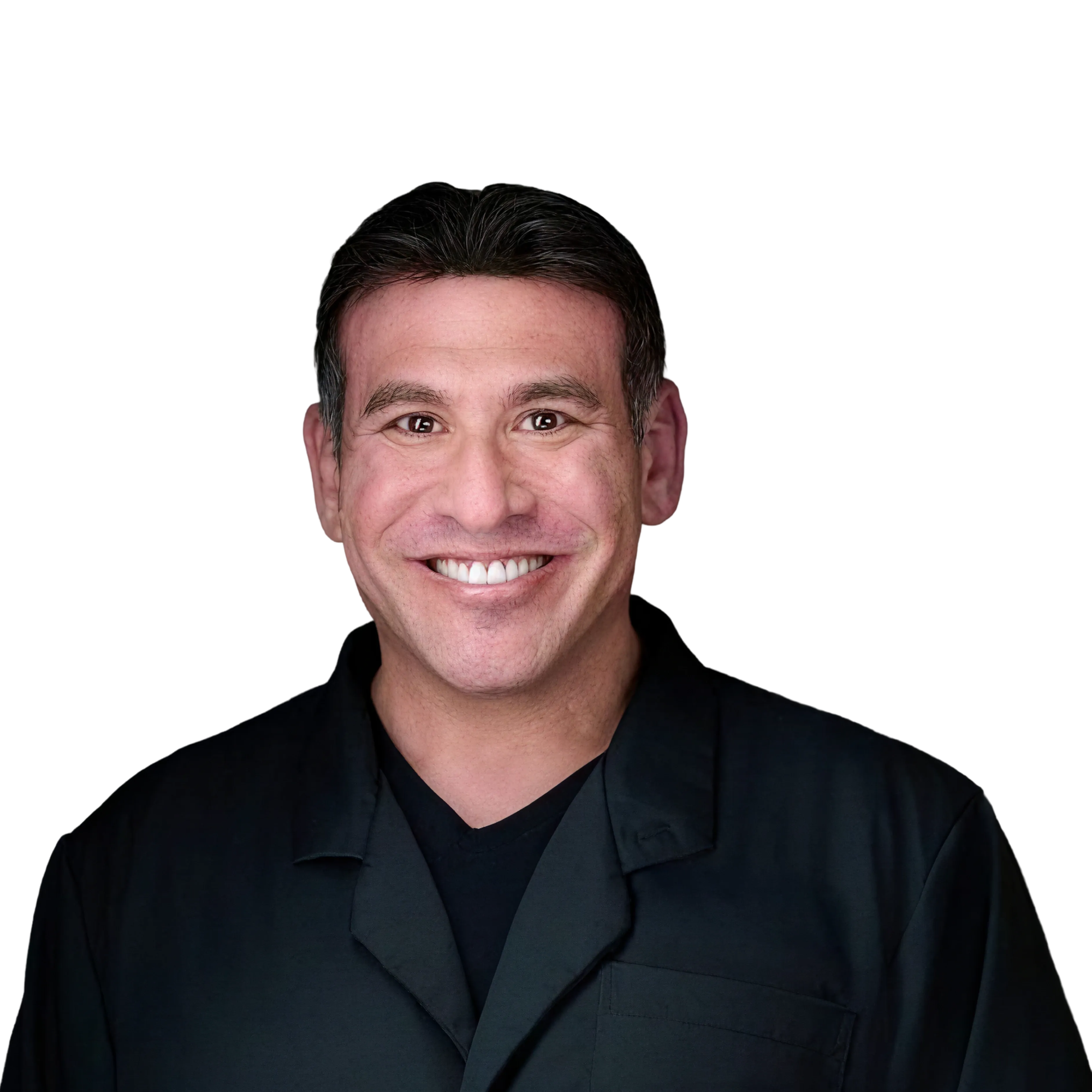
Dr. Joshua Solomon is a second-generation pediatric dentist with over 20 years of experience practicing in Livermore, California. He earned his DDS from the University of the Pacific and completed a pediatric specialty residency and Master’s program at the University of Texas Dental Branch in Houston.He is a Diplomate of the American Board of Pediatric Dentistry and a Fellow of the American College of Pediatric Dentistry. Dr. Solomon is also an internationally recognized speaker and clinical instructor. He leads hands-on training programs in advanced pediatric restorative techniques and serves as a key opinion leader and product evaluator for leading dental companies.
Done learning and want to get started?
Book a demo