
Diagnosis is the Key to Life
Transcript
Okay. I think we will jump in today.
Again, an incredible topic today on diagnosis, comprehensive cases, and how AI is going to assist with your ability to diagnose and move into presenting these comprehensive cases that we know are life changing for our patients.
AI Glasser, I'm honored to have her today. I'm not sure if I've learned more from her about dentistry or about the joy she's spreading in her life with her incredible passion and energy.
But she has, a lot to share with us today and is the owner of Revive Dental for, I think, over twenty years now, has an incredible holistic approach to dentistry Don't try to date me.
Okay. Go ahead.
Some postgraduate work, including, with the doctor of Baltimore magazine as well. She's a contributor to Maryland's Women's Journal on topics relating to comprehensive dentistry and also written for Black Enterprise magazine.
She was appointed as the spokesperson of oral health for American Heart Association of Maryland and sat on the legislative committee for the Maryland Dental Action Coalition.
So there are many things that doctor Glasper has blessed us with today, and we're looking forward to hearing from you and sharing how we can move through comprehensive case planning with AI. I will turn it over to you.
Okay. One thing I do wanna shout out, the recent article I, just put, was placed in dentistry today. So you guys check that out.
Excellent.
So we're going to talk about diagnosis is the key to life. Right?
I believe that it's the key to life because it's the key to the life of our patients as well as the life of our practice.
You are not just AI a hygienist, a team member, or a consultant, and we are not just dentists.
We are physicians of the oral cavity.
And just like any doctor, it is our responsibility to diagnose and treat disease.
Now it's a very common misconception that our work is limited to the treatment of teeth and gums.
In reality, we are trained diagnosticians who must identify systemic conditions. So we need to know that there are oral diseases that can manifest into systemic conditions, and there are systemic conditions that show up in the mouth. As a matter of fact, ninety five percent of systemic conditions show up in the mouth.
So being able to fully diagnose your patients is not only a technical thing. It's a critical thing to being doctors and being health care providers.
Now my career has been dedicated to comprehensive diagnosis. So what does that mean for me? It means that every single patient that I treat, I'm doing a visual examination on them. I'm doing a thorough review of their medical history.
I'm taking diagnostic test if needed.
This meticulous approach to dentistry or patient care has ensured that no condition goes unnoticed if I follow it and as well that my patient has the confidence that they're in excellent hands.
Now, about, I would say, twelve to fifteen years ago, I developed my own practice model. And that practice motto has come from my experience as an associate, my belief in dentistry, AI understanding of my role in medicine, as well as, you know, studying with some of the gurus out there in clinical dentistry.
And my focus is when I deal with a patient is not just on the treatment of teeth.
I treat every patient with the consideration of health function and aesthetics.
And what that has done for me over the years has it has an pre increased patient outcomes, and it has the added benefit of increasing productivity in collections.
So let's talk about what that looks like.
If we have two practice models, one is practice a, I'm practice b. Right? If we're both producing two million, in my practice, my production and collection is pretty similar because I don't have a lot of write offs.
When it comes to the active patient base, practice a might have twenty one hundred patients actively in the practice.
Now I think the industry average is about thirteen hundred.
In my practice, I'm seeing maybe, I have maybe four hundred and five hundred as an active patient base. That is significantly smaller than most practices.
So my practice model involves very low volume.
The new patient count in practice a could be between thirty to fifty patients a month. In my practice, it might only be between eight and fifteen.
But according to the metrics that is available out there, whether it's patient news, dental intel, some of the leading companies with providing metrics and surveying dental offices, my new patient value is over three times the top ten percent of dentist.
And my annual patient value is almost two times the top ten percent of dentists.
So what am I saying to you?
I'm saying that the practice model works.
Now back in twenty twenty twenty three, I'm talking to my buddy, Mike, and Mike is sharing with me that he has this new technology.
And Mike is telling me a little bit about the technology. Now, at the time in twenty twenty two, my office is pretty modern, very current on technology. Wait, I have to explain something before I go there.
So this is me hanging out with Mike in Utah. Right? We're fly fishing.
I'm the only chick, right, hanging with a bunch of handsome dudes here. You see it?
And I don't care if you ever heard about this trip or not. They are telling a fib if they say that I wasn't the only one who caught a fish that day.
I was the only one, the only girl, guys, that caught a fish in Utah that day. So let me go back to Mike. Mike is this is my point showing that Mike is a good friend of mine. So when he comes to me with this technology back in twenty twenty two, and I already have current and modern technology, I have to be honest with you about what kind of doctor I am.
I'm the type of doctor you give me an electric handpiece, my favorite burrs. If you give me, some great impression material and zero and one cord, I am good. I'm old school like that. I will take an impression of a tooth, a quadrant, and a full arch even though I have iTero.
But my team, they long for the they lust for the newest and greatest technology out there.
So I'm, I'm talking to Mike. I'm thinking this is, you know, this is good technology. It sounds brilliant. As a matter of fact, I wish I had thought about it. And and, again, I love the constant innovation in dentistry, but I'm thinking this has nothing to do with me.
It's for the new dentist, the inexperienced dentist, the dentist that's rushed, that's seen fifty new patients a month. It's not me.
As a matter of fact, when Mike kinda explained more about the tick technology, I was like, bruh.
You know how long I've been doing this?
And it really it AI felt like one of your friends back in college that breaks into like, a good friend, that breaks into the professor's office and steals the test, and now they wanna share the test with you. And you're like, I I don't need that test. I prepared for it. That's how that's how I felt dealing with Mike.
But this is Mike. This is my friend.
I know him. I trust him. I'm gonna support him. He knows me.
But, you know, AI wasn't around like that in twenty twenty two.
Maybe in other industries, not in dentistry, it was a new idea. So I had all these questions.
I wanna know, like, how accurate is it? Is there going to be any liability to me if I completely depend on the software to do it, which I wouldn't do, but I wanted to know that. I want to know how much it costs. What is going to be the ROA?
How is it going to act in my hands with a clinician being who I am?
So I jumped into it, and I jumped into it slowly. Right?
I'm telling you, I felt like I had a solid diagnostic strategy.
I take comprehensive images on every single patient. We do the intraoral imaging.
Take three views of every tooth.
I have always taken full mouth X-ray series on my patients, maybe even a Panarex or send them out for a CT scan.
My hygienist takes comprehensive periodontal assessments on every single patient. And if needed, I do salivary testing to figure out what's going on. So I couldn't really figure out how this could help me.
Hello, Pearl.
Hello, Pearl.
So AI, I'm going to talk to you about how my workflow has increased and the things I didn't know I needed as a clinician, as a comprehensive dentist.
So one of the first things that I didn't know I needed was help, support.
See, I coach dentists, and one of the things that they say to me all the time is AI love having another dentist to run this idea by or this information by. It makes me feel like I have another dentist present.
Now I've shared with you, I have a phenomenal team. They get all the comprehensive diagnostic, the objective data. But what AI has brought me is high level support, second opinion.
And I love it whether it's AI or I'm in my office in the privacy of my office developing full treatment plans.
The thing about AI is AI feel like when I'm presenting to my patients that I have the confidence that I've given them everything that's pretty much available in the industry to educate them and support them. So this is a seventeen year old young lady in the practice.
And when she came to me and I saw the extent of decay, and I'm gonna show that to you later.
This is the area I chose to show first because I thought it was the most extensive area. I wanted to go straight to the point. I wanted to educate her and her father on what was really going on in her mouth. So I pulled this up. I explained to the both of them. She's getting ready to go to school soon.
We need to get this done. Right?
AI sold that case.
Just this view.
That's huge for me. Right? Because I typically convert the majority.
I say seventy seventy and the seventy five percent of my cases, but AI showing this image quickly supported, gave a second confirmation that what I was saying to her and her father truly existed.
The the second thing that improve the flow is the conversion is quick.
Like, I'm sitting there with the patient chair AI. Her father is in the reception area.
AI is a software where you can easily see what's going on on the screen.
You can explain it to the patient.
The the language is clear.
Once you see the vibrant colors and once you see that, you can't unsee it.
Once they hear it, they can't unhear it. Right? So you're sitting there and you're showing them the circular area and you're saying AI below that is the nerve.
So we need to get on top of this immediately.
When it comes to the quick conversion, it's about having easy language.
The patient can follow.
They can understand.
They can take ownership of their condition. Because please understand it's their condition, not yours.
So you're educating them.
Now remember back in the day, and I'm hoping this yes. Here we go.
Back in the day, you would take this muted X-ray, the colors, and you're like, don't you see it? It's right between the teeth. It's right above the nerve. And you take my my DEXIS software.
I'm pulling the highlighter.
I'm pulling the magnifying glass, and the patient is squinting and saying, yeah. Yeah. Yeah. I see it. I see it.
Uh-uh.
They really see it with AI. And, again, once they see it, they can't unsee it. Okay?
AI sells cases.
Number three, onto three, more money, more faster.
What do I mean by that?
I'm telling you now oh, I gotta go back a little bit.
I forgot this one.
Now this young guy, fifteen or sixteen years old, was referred by his mom to the practice. She wasn't too happy with the where he was going. I told her I'd take a look.
And we took a full mouth X-ray series, and I decided to focus on this area, tooth number thirteen.
I knew that thirteen would promote this entire case, plus what she was going to see on AI, and he needed help.
He has this crown does that does not fit. I'm sure everyone sees that the open margin on the distal as well. So we have the notable margins.
We have build up material that's covering the margins. So we we have a tooth that needs to be addressed. Right?
But look at the, decay on the distal of the tooth in front of it, the mesial distal on the tooth behind it.
When his mom saw that, she was like, oh my goodness.
And then I explained to her what she was saying.
And, again, the language is clear. The diagrams are clear. She fully understood, and she immediately signed up for treatment.
But I wanna stick here for a second as a speaker.
One of the things that I enjoy about working with Pearl dot ai, but Pearl, Mike, is they think the way that I do. For years, I've been out coaching on how dentists we we look at things differently. We don't always look at things the same. Right?
Some of us might not touch that tooth. It was recently done. Like, they're like, let's just watch it and see what happens.
They understand that there are different philosophies and different practices, and they respect them all.
Now as a doctor, you know, I'm gonna talk a little differently with the doctors about certain things, but I like a company who is not just talking about AI, but they're also talking about when you have the diagnosis, there are other things to consider.
And that's very important to me as a speaker. So this is, this particular case, tooth number thirteen, there are doctors again who might watch it. There are doctors who might go and re mount that gutta percha, put a post in there.
There are doctors who might do some crown lengthening or something. I decided, let's extract that tooth, put a implant. I felt like the access for the endo was extremely large. I felt like, the the the the canal split right where I would wanna put a post. Right? So I'm looking at longevity, and I'm deciding, in this case, I'm in the sixteen percent.
I'm going to go ahead extract it, place an implant, and and finish that. And then in the meantime, work on the other teeth.
Okay.
So let's go to how Pearl has helped me promote promote cases, make more money, more faster, because I'm making money in my practice. Right? I showed you that earlier.
So but increase in productivity and collection for the health of your patient. Please understand where I come from. You only promote what the what the patient needs and you have evidence that the patient needs the work. And that's one of the reasons why I collect all these diagnostics.
So we have a patient here who comes to my practice when he chooses to.
Okay? So it had been, like, four years. He hadn't been to the practice.
We take some, you know, AI wings. We let him know that the scaling and root planing that we did some time ago needs to be done again. I'm looking at the radiographs here. There are things, you know, picking up. I'm seeing here. My hygienist has seen it as well.
And so we tell the patient, the hygienist, we're going to do scaling and root planing.
We probably will not get to the calculus that we are seeing on this radio graphs because your pockets are AI six millimeters.
Right? But we'll do the best we can because right now he's only consenting to the scaling and roof AI.
So she evaluated him in six weeks, and then we had to let him know You still have calculus that is attached to not only the root of the tooth, but to the bone.
We can't get to it as well.
It looks like some of the work that I did previously, you're getting root decay around it because you're not coming back on a regular basis.
You're not flossing. You're not using the aids that we've promoted to you.
You look on this side, you can see calculus here.
You can see root decay around tooth number three, show the patient.
So what was our recommendation to this patient? Our recommendation was to come back, see the periodontist who's in house, let's flap that tissue, have the hygienist come in, clean everything up, then the periodontist will come, we'll make sure no calculus is there, smooth the bone, probably not going to add any bone here because you can see the majority of the bone loss is horizontal, and then we're going to suture him up.
An hour and forty five minutes later, that was an eight thousand dollar treatment plan that the patient needed.
Okay. Let's go see that?
AI sold that case.
Okay. Here's the seventeen year old girl that we were talking about, the student. Not I I showed you the area of thirty and thirty one and twenty nine. Here's the upper left, the lower left.
She had extensive decay.
So I dealt with thirty and thirty one first.
Right?
And thirteen. Right? So here we are with the intraorals.
Now we just saw an AI. She had a mesial lesion and a distal lesion, and the distal lesion was into the dentin. We're looking right at it here. You can see the mesial lesion. You can see the occlusal caries, and we're gonna talk about, thirteen in a second. Here's tooth number thirty.
We saw the radiolucency.
We knew that the caries on the occlusal was deep.
Okay. Here's thirteen.
What I want you to know before I go to the next slide, she had, she wore braces, didn't really keep her teeth, as clean as I would have liked.
She had decalcification.
I'm a show it to you in a second. She had some soft deposits.
So I wrapped the buccal and made it a three quarter crown.
So here it is right now. It's a three quarter crown. Here is tooth number thirty and thirty thirty one. Thirty one is at the top.
I end up doing an e max onlay on tooth number thirty one. And mind you, I'm educating the patient the entire time on what I find in the mouth when I'm working. Right? This gives them added assurance that what I'm telling them is the truth.
I'm not making anything up here. This is the condition she's in. And if we had allowed it to progress, thirty ended up needing endo. So let me say that.
But, it's only going to get worse. So this is thirty one at the top and thirty at the bottom.
I ended up doing a three quarter crown on tooth number thirty.
So what are you saying, doctor Glasser?
I'm saying initially promoting the work in the lower right and educating her with all the diagnostics that are available to me, her treatment plan.
So here's the patient.
This is frontal view AI.
This is a retracted view. You can see tooth number thirty. You can see exactly what I was talking about when it comes to the enamel.
I talked told her she needed to get veneers, and that initial treatment plan turned into a two thousand dollar treatment plan here, a three thousand dollar treatment plan here, a twenty eight hundred dollar treatment plan here, a seventeen thousand dollar treatment plan.
And what I want you to all sit with, do you think that was needed?
Absolutely.
And as a physician of the oral cavity, not just a dentist, I am going to tell my patient every bit of it. I'm going to develop full treatment plans.
I'm going to educate, diagnose, and AI has given me the tools along with my other diagnostics to help my patients take ownership of the case and go ahead and get it finished.
One other thing that has improved my workflow as well as I didn't know I needed was my team needed support.
So we have a patient who came in, and my team knows that I love occlusal morphology.
They you know, I I think a tooth should look like a tooth in order for it to function like a tooth. That's my philosophy all day long. So when my hygienist who is taking the diagnostics, she is taking the advanced cancer screening. She's doing all these pictures. She's using the Florida probe and doing all the probing. She's giving me all the information.
She looks at this patient, and one of the first things she does after taking the radiographs because the results are immediate, she's looking at Pearl. And the and the computer her computer is behind the patient.
The patient's computer is on the chair. So she looks, she verifies what she thinks she sees, and then the last thing she shows that patient is Pearl. So it sticks right in their mind. So she runs to me and she says, doctor Glasser, you have to see the occlusal morphology on this patient. It is beautiful. And look at it. It is.
Now this is not a great occlusal shot, but you know where I'm going with it.
Look how beautiful this smile is. But even looking at how beautiful this smile is, we see problems.
We see problems with health, possible root decay on tooth number twenty nine. We see functional problems. We're looking at at fractions and malalignment, but here we go. Look at that.
This is a patient who's in his forties, who's been told all his life, your teeth are gorgeous.
Your teeth are beautiful.
But now we have to tell them, but you have extensive interproximal decay.
We have to tell them that, and it's on the screen, that the enamel is the hardest structure in the body.
Once it gets through the enamel, it gets to the dentin layer, and that's a softer layer.
So if you allow this to continue to progress, it can go to the nerve. You can start having pain.
You know, he told me you had me at Hello Pearl.
Okay?
Sign me up.
I'm telling you your ROI is there.
Then at the end, we anyone who doesn't schedule, we make a nice little package form. Right? We put together, we have a sheet that says you were diagnosed with perio. You were diagnosed with malocclusion.
You were diagnosed with fractured teeth.
You were diagnosed with decay, and we put this beautiful picture in there for them to look at, right, and take home.
We told them about incipient decay, progressed decay.
This is not going to stop.
It's going to to continue to progress.
So when they go home and look at it or we email it to them, they know what these vibrant, beautiful colors mean. Right? And they can share it with their significant other. Pearl, AI AI this case for me.
Now this patient.
So the other day, I'm getting ready to do cosmetic work on this patient, from five to twelve.
And before I'm doing anything, I'm gonna check AI. I think I see a little something here. I'm not sure.
I click on AI and look at that.
I'm getting ready to deliver some beautiful veneers on this patient, and she has a PAP on the root apex of number eight.
Like, I could have lost trust with this particular patient. I could have delivered the work and now have to send her to the endodontist, and I'm a get her to the endodontist because the canals are calcified. You can see it. I don't wanna do the endo.
Now the endodontist has to go through my brand new work and possibly fracture it, or I have a problem with it. And the patient is going to act like, you know, it's a brand new car that you purchased, and now you have to change the engine or the tires. They don't want it anymore, and that's the truth.
AI allowed me to catch it before I finalize this case.
What it does, I I I can't pick up everything as much as I thought I was picking up everything. Some things AI missing, and it intrigues me to investigate further.
Right?
Also, I've been talking to this patient forever about doing this work.
I love the fact can you see the fracture in number nine?
I want her to know because we waited so long.
I don't know if that fracture is going to go down to the root. We're going to end up losing the tooth. She's going to need root canal therapy. I need to put it back on her.
So I'm gonna print this for her and let her see that waiting for the amount of time we have has really compromised this case, and we both have to take responsibility here. I'm going to do the absolute best that I know, but you decided to wait this long. Here's the evidence, and take it home. Look at it as much as you like.
I'm a do my best, but if anything happens, that's on you, not me.
I'm gonna stop here by saying, I don't know how I well, Mike, thank you. Okay?
This technology, I can't live without.
And even though I'm a comprehensive, AI and so is my hygienist, it it gives us the high level of support that we need.
I have the support. She has the support. The conversion is quick.
Right?
My ROI is there every day, every month. It is well paid for by this technology.
I'm a control freak. I'm a tell you. I'm a tell you right now.
AI leaves the control where it belongs in my hands.
I'm never going to put the responsibility on AI. I'm going to accept the responsibility as the physician.
It's just like my other diagnostic tools.
And it allows you, and Sheela can confirm or you you can tell me yay or nay in a second.
It allows me to accept or deny to, you know, confirm, deny, or whatever.
I can participate in the diagnosis that I give my patients.
So I'll let her explain that. But I I'm a funny girl.
I will not align with companies.
I don't you know, I love Mike. I would have given it a chance. I would have said, you know, less fist bump on it and, you know, you go and do what you need to do, but it's not for me. I'm telling you that it has changed the way that I practice even as a comprehensive dentist.
That's all I got for you.
Wow.
What an incredible story you have. I'm so thankful that you were able to share all of that with us.
And I wanna open up for questions.
So I'm gonna give a couple minutes here for people. I'm sure there's some questions coming through about your approach to diagnosing, maybe even those of you that have some questions about presenting these larger cases and also anything, in regards to how AI can help complement those presentations. So I'm just gonna give it a couple minutes here. So I really love, doctor Glasper, how you said, once, you know, the patient can see it, they cannot unsee it. And I think that's extremely valuable.
More importantly, I really loved how you said that you promote what the patient needs, but you show the evidence.
And I think that's so crucial in our day and age for that that still that lack of trust that sometimes people go to the dentist and they have, you know, should I trust this dentist? And I think our best defense for that is doing what you're doing, which is providing the, the data behind what you're suggesting.
Here is a question for you.
How many times have you seen a false positive caries diagnosis?
Several.
Several.
Or, at times, it didn't pick up what I thought it should pick up. I mean, it's artificial intelligence, and and that goes back to, I have to be the principal person who's in control of this. And that's one of the fears that I was trying to share with you. You know, I was thinking how accurate, you know, you know, the the liability, all those things. And when I realized I had control of it, that the majority of the times the information is correct, that there will be times that I'm going to have to do more investigation. I might not agree, but it has given me so much more support than those few, false positives or misdiagnosis.
So, you know, it's my go to with almost every patient.
AI not answer that?
You did, and I answered it very well. And I think the important part here is to lean into the fact that it's deliberately called second opinion, and it is AI. So you are not going to have a hundred percent accuracy.
So that's very important to understand. And I think the the other part is showing that the AI can find shades of gray faster than the human eye allows us to practice more preventatively as well. You know? Those e one lesions really pop out when we have areas that have moved into the dent and maybe we're not focusing on or that periapical radiolucency.
We do have another question that says, I love this question. Do you think this would be a great tool for an associate who needs to be more confident in their treatment planning?
Like I said, you know, for the new, the inexperienced, dentist who is you remember dental school. You know? It was so much going on around us. So diagnosing is not as focused on as it should be, I believe, in dental schools.
So absolutely, as long as they understand, And I think this would give them more confidence that you're the doctor. Right? And this is an excellent tool for you to use to start noticing things that maybe because you're rushed or you feel you don't feel as confident that you might be missing.
So it is absolutely an excellent tool for the the newer, more inexperienced as well as the seasoned dentist.
Yeah. We have a lot of, feedback from our doctors who also have multiple associates if they're bringing somebody on, and they're using Pearl to help calibrate their diagnosis, right, throughout the practice because that's very key for retention.
There's another question here. I think this is more for Pearl.
Does Pearl keep learning as practitioners accept or deny a diagnosis?
And I think that's an important question to address.
We do have a feature built into second opinion that allows you to not only remove something if you're going to present it with the patient, but also comment that this is something you'd like us to look at, maybe a false positive, a false negative, and we collect that feedback.
So that is helpful. However, what you should know is that Pearl is working around the clock to ensure that the accuracy is always improving. So whether one clinician or a thousand clinicians reported, we are still always going to be working on that. But the additional information that the team submit is helpful for us to focus on specific image types.
So that's okay.
Can I jump in for a second?
So I was at Chicago midwinter, and I was at an affair.
And the owner of Pearl was there. And I grabbed my Chardonnay, sat next to him, and was like, this is what I think you should do. This is what I think. You know, I was going, going, going, and he was so receptive.
Yes.
So receptive and listened.
So, yes. It and and welcomed Yes. Welcomed the feedback.
Absolutely. And especially with, you know, our our CEO's father being a dentist. It's very dear to him as well. Mhmm.
And, you know, our entire mission statement really for me is kind of very exciting to be able to elevate the standard of care, but most importantly, positively impact billions of patients' lives.
And you saw in that very transparent case you showed with that periapical radiolucency that you were able to stop and avoid that concern that could have led to a very unfortunate, you know, circumstance after the fact.
So Absolutely.
Absolutely. Having to go and remember that we have radiographs that the patient can say, show me the radiographs from eight months ago. Right?
So I would rather tell her before she says, well, how long was it there? And now I have to go back and look, look, look, look and see that we missed it. Right?
So, it saved me in that particular case, and I was extremely grateful for her as well as for me. Mhmm.
So there's another question about perio here, and it's saying here, that Pearl measured the perio pockets from CEJ.
But realistically, we probe from a higher level, of course, giving the gum tissue in the mouth.
What perio levels, which is, the question is about numbered measurements, should we be looking for?
Such as, is there an estimate of gum tissue level plus CEJ measurement on Pearl that I would calibrate to accurate I would calibrate an accurate perio probe measurement. Okay. Do you wanna take that one, or do you want me to jump in on the Pearl side?
So I think that's a pearl question, but I do want to jump in. Okay?
Yes.
Because we take comprehensive periodontal assessments on every patient, we're measuring from the, you know, the top of the gingival tissue. I can't even think about it right now with this code down to the base of the pocket.
So we understand that there's going to be a difference.
You know, I look at it as educational AI for the patient that there has been bone loss.
I look at it from my clinical understanding and clinical proficiency of AI, AI depth with the patient at this point about what this particular measurements mean. This particular I'm going to give them an overview of what's really happening. Right?
Excellent.
And I think that's an important point is we are an enhancement of your existing workflow.
So it would be wonderful if, you know, we could remove perio charting by just looking at X rays. But, unfortunately, the tissue isn't going to appear on the radiographs anytime soon.
But I do think as a hygienist myself, it's crucial to be able to just like doctor Glassford showed the additional, you know, darker pink lesion or that periapical radicency, hygienists are very busy as well. And as we move through our patients, sometimes those yellow lines instead of a white line because in Pearl, as the bone measurement level increases from CEJ to bone crest, the colors will also alert the team. So it provides that second set of eyes from a periodontal perspective, hey. I should take a closer look at number thirty mesial today.
So I think that's the entire point of having those bone level measurements for the clinician. And then once again, turning that around to the patient allows them to understand just basics, the white versus the yellow. Okay. What do we need to do differently?
Do I need to come in more? Do I need more extensive cleanings? So I think that, is the best way to apply those bone level measurements from a clinical and case presentation side of things? These are excellent questions.
They are. They really are. Thank you, guys. Thanks.
Well, I just wanna have a couple more minutes here to see if there's any additional questions.
We do have on my screen here, you will see the other side. I have to learn how this works.
A little code for your team. If you'd like to hear a little bit more about Pearl and how we can help you, we'd love to spend some time with your team.
I also just wanted to really thank doctor Glasser for this very authentic story.
We're so thankful to have you share how your team is working with Pearl and really, like I started with, it's I think I've had more fun talking to her personally than even learning as much as I have about dentistry.
So I know.
You learned how anal I can be. Right?
I love it. I love it. That's what makes you so incredible.
Yeah. I I have enjoyed this. Like you said the other day, we're gonna have to start calling each other more. Right? Because, yeah, it it it was a a great great pleasure great pleasure working with you. You're gonna have to become a AI to me.
I would love that. I can't live that to Mike Buckner, but I would love to be the vice president of Mike Buckner here.
Yes. We'll end with one last question here. If we get an overlap in a bitewing, will AI be able to distinguish this, identify the caries, or is a new bitewing required?
So do you want to chime in there?
I do. Okay. I, I make them retake that absolutely.
Like, I can pick up that there's something possibly interproximal there, but, you know, I it's it it becomes an X-ray that is not usable for me for the purpose of, you know, interproximal decay and maybe even bone loss or anything like that. So I require my assistance to go ahead and retake that, especially if I think that there's a possibility of something being there.
Excellent. And I think, again, keeping that standard of care at the highest and serving your patients with what you would want for yourself is really the take home message here. With Pearl providing that highlighted area in between the teeth might remind you that, yes, we do need to take an additional radiograph to open that contact so that we can give that patient the best diagnosis.
Yes.
Well, I wanna thank everybody for attending today.
Hopefully, you have learned as much as I have with doctor Glasser. And Thank you. Thank you. Please feel free to reach out. We would love to hear from you. And, doctor Glassford, I hope you feel better, and thank you so much for your time and everything you shared with us today. We appreciate you.
And one last thing. I would I would go ahead and take a picture of that, What is it? Q I can't even think of it. The the code here, the QR code.
Learning about it, it took me a couple of sessions of learning about it and completely understanding how I could utilize it in my practice and then actually implementing for it to really improve my workflow and as well show me that I, I would only benefit from it and it would well pay for itself.
So anyway, thank you.
Thank you. Bye bye everyone. Have a great day.
Bye bye.
Meet Your Host
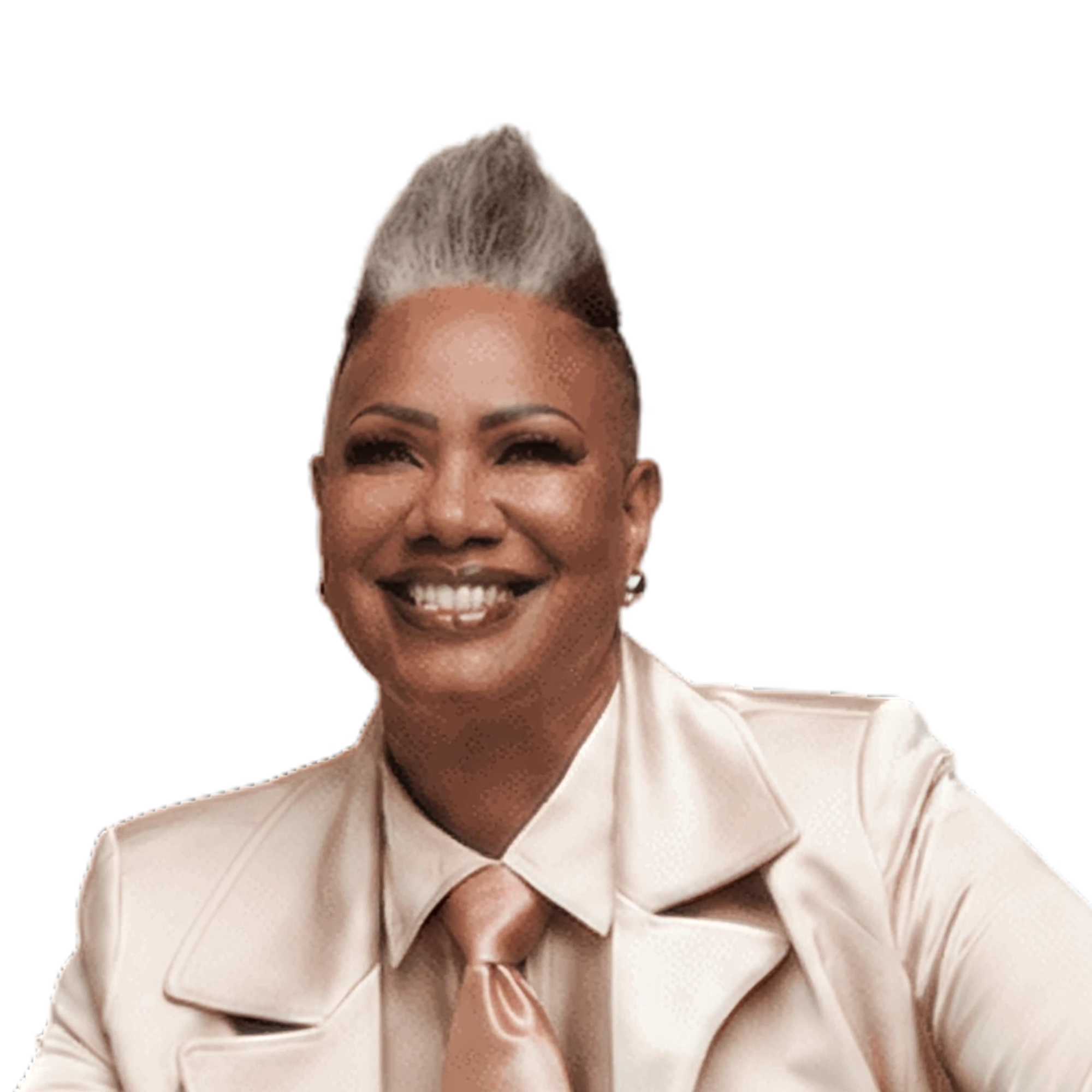
Dr. Glasper is redefining comprehensive dentistry. Committed to advancing the perception of oral health, Dr. Glasper is the visionary behind the national oral health campaign, Teach Me Dental and the CEO of The Comprehensive Dental Continuum, a consulting agency that prepares dentists for a new era in dentistry by implementing principles and practices that optimize both practice revenues and patient outcomes. She is a lead legislative member of the Maryland Dental Action Coalition and has been awarded a Fellowship by the International College of Dentists and The International Academy of Dental-Facial Esthetics. She is an advocate for American Academy for Oral Systemic Health (AAOSH) educators on the Oral-Systemic Connection and has partnered with the American Heart Association, American Cancer Society, and The National Kidney Association to bring oral health education to the masses.
Done learning and want to get started?
Book a demo