
Dental Billing Mastery
From Proper Documentation to AI-Powered Appeals
Transcript
Dental billing mastery from proper documentation to AI powered appeals. I remember writing those appeals, and they were very time consuming. And now we have lots to share today about how we can use assistive tools to make our day better.
And why do so many dental practices struggle to get paid for the work they do? Right? It's almost infuriating. And how can technology help change that? Right? It feels like every time we turn around, they're requiring another set of documentation.
So we're really happy that you are here today. We're gonna dive into one of the most critical and often overlooked areas of practice success, billing and insurance mastery.
I will tell you, I used to run a practice for twenty years. I just talked to the office manager yesterday, and she said, they're going back and looking at unbilled claims, and they found six on the first day.
So very interesting to know that this is really a blind spot that we we need to be really mindful of. And whether you're a practice owner, administrator, clinical team member, this is going to be an exciting webinar to really focus on creating that trust and, preventable claim denials. Right? Let's let's learn how to do that and really overwhelming burden of appeals and documentation.
So we brought Colleen here today because we know there's a better way.
Joining us today is Colleen, better known as the dental insurance coach in our industry with over thirty years, she said, of experience, starting from MetLife to multi location practices, leaving leading, hopefully not leaving, revenue cycle information across the country. She's also an author of Mouthful of Insurance, which is an incredible book I am reading right now, and a dynamic speaker who's helped thousands of dental teams, turn their billing into areas of confidence instead of chaos. So I will turn it over to you, Colleen. We are so thankful that you are here today, and we look forward to, hearing from you.
Two little things on housekeeping. This is recorded. And please stay at the end because we're gonna talk about, Colleen's book, her email, and a great offer for, for all of you that are on the call today. So thank you so much, Colleen.
I'll turn it over to you.
Thank you, Sheela, and thank you for that wonderful introduction. And for everybody who's here, so I can't see who you are or where you're from, but thank you for coming from all over the country.
And if you don't know who I am, I am the dental insurance coach, Colleen Huff. I've been doing this for thirty plus years.
Twenty seven of those years were in dental practices. I've only stepped out of a practice about four years ago to start teaching and, doing seminars and consulting full time. So I've been in the trenches up until four years ago, and I still am even in the trenches because I do help offices with cleanup. Because there's that side of me, those of you that are my insurance geeks know that we like a good, we like to clean it up.
We like to see that that satisfaction of getting things paid. But today, I wanna talk to you a little bit about documentation and where it's gone and some of the things that we need to think about, some of what's out there technology wise that can help us, and then what to do when you get those AI, because we get them, and some really interesting things that have happened technology wise that can help us with this. But I first wanna talk to you a little bit about some statistics that I found when I did some research for today's seminar and some marketing statistics that came out, fifteen percent of dental claims are denied on average, which doesn't sound terrible when you first look at it.
We all feel it AI it's so much more. But the other part that was interesting is this is up by four percent since twenty twenty two. Now I could not find the reasons behind it.
This was simply a statistical on what what the numbers are looking at. They are gonna be supposed to be doing a deeper dive into the why, and I'm wondering if some of that might be AI, if some of that is their you know, insurance companies are looking a little closer things, when it comes through. It could be any number of reasons. But the other interesting to statistic that came up for me was offices on average are only collecting eighty four percent, and that's disturbing to me.
I'm guessing anybody who's here, that is not your practice because you guys are here and you're learning. And, typically, those managers, insurance coordinators, anybody who's paying that close of attention to the industry and are willing to take webinars, we're also watching our numbers very closely. But that number is disturbing. If we're only collecting eighty four percent, we're not we're not maximizing. We should be on average at about ninety eight percent of collections.
But when we're talking about denials, why do they happen? Okay? And this is something that everybody we always wanna blame the insurance company, and that sounds great, but it's not always the case.
We have to make sure and look at what we're doing. So I'm gonna talk a little bit about what we can do on our end to cut down on that. But the same marketing's had that the number one of the top three reasons for denials was incorrect or incomplete information, and that's on us. We're not sending the right things.
But the main reasons for denials, and I have a list of I think I have seven total of those denials. And the first is insufficient documentation. That is typically the number one thing. Either we're not sending the right documentation, something's incomplete.
Another reason for denials, they lose the claim or there's lost X rays. And I know we've all had that frustration of, I have a number, I sent it, they can't find it.
And there sometimes is a glitch in technology. Technology works for us, and it's great when it works, but sometimes it doesn't. And so making sure that you're working with the company, whether it's AI or Dental Exchange, whoever it is, that you have a way to make sure that they are doing what they're supposed to be doing.
And if it's not going through, don't be afraid to ask questions of that clearing house as to the why.
Now a number of reasons also can be bad images or the wrong X-ray. So if you have someone who's working your claims and sending them in that's newer to the industry, they may pull a wrong X-ray because if we're not clinical background, we have to learn how to recognize them. And some of what I'm gonna talk about later is some of what Pearl does that can help alleviate this for us. I had to learn how to read X rays when I started in the industry. I had to take and figure out exactly what was tooth number three, what was tooth number two because they weren't always labeled. Now with it being typically digital, normally, they're labeling them better, but not always. So make sure your team are labeling things correctly for those that are sending the claims so they can attach the right information.
Number four is an area that happens, is your coding errors. And this is where we pick a wrong code, we attach a wrong code, wrong number of surfaces, and the, code for that, or we haven't done our updates on our coding and we're using something that doesn't exist anymore. So making sure you stay up to date. Theresa Duncan does a great job of AI a year. She does a once a year update on the new codes, but making sure that you're paying attention to that. And as the insurance coordinator, making sure that you tell your clinical team and your other admin team when you find this. Many times, we figure out what's wrong, but we're not always great at retraining the team on those things.
Another reason for denial is late submission, filing limits. These insurance companies have a filing limit. It might be the employer that set the filing limit, and we have to file within that time.
So make sure you're paying attention to that. If you're not doing claims follow-up, this could be an issue. But also know that there's ways to prove that you did send it, and we'll talk about that in a little bit if you feel you sent it and they didn't receive it properly, but you did send in the right amount of time.
Patient ineligibility.
If we're not checking that they're eligible the day of service or the day before, this can be an issue. So, again, we have to have our systems in place for our eligibility checks. This is so much easier nowadays than it used to be. It's not a phone call for every patient. You may not even need to go to a website depending on your software.
But the last reason that typically will happen a denial will happen is we've got the wrong date of birth and ID number.
None of us are perfect. Maybe we reverse the year. Maybe we put the sons and the daughters date of birth and vice versa because a big family came in. Maybe the mom entered it wrong.
There's any number of reasons that can happen, but making sure that patient information or ID information. Or we're not connecting the right ID. Maybe they need a social and we've connected that particular payer to an ID number. So making sure all of that information is correct is imperative.
So how do we either avoid these or handle denials? Okay? So the next section is gonna talk to you about ways to avoid them and some ways to handle them when they come through. And I like to call this my four d's, and this is document, detail, determination, and duplication.
So the key to start with is not on the admin staff, but it's on the clinical staff. Doctors and hygiene notes have got to be detailed.
And clinical charting, you have to have your perio charting within the last twelve months depending on for SRP.
We're gonna talk about paying attention before the claims go out, and that's in the detail.
And we tend to, in a lot of offices, you know, check a patient out and hit the send button, and we're gonna change that habit.
When you are the one in the seat that's doing the follow-up, you kinda have to be a little stubborn, and you have to be willing to push.
If you feel that you have done everything you're supposed to, don't always take that no.
But also know when it is a no because you don't wanna waste your time fighting for something that there is it's unfortunate.
These are those conversations of with the patient. I'm so sorry. The plan your employer has chosen does not cover x, y, or z.
Now you may want to hopefully find that out ahead of time, but we all get those surprises or bad information.
So ask for a supervisor if you're not getting an answer that you feel is accurate. And I'm hearing some some difficulty with this from some people lately, but still try your best to get through to somebody.
And then lastly, follow your systems.
We have systems in place to help these denials not happen. The minute one of these systems slips, then it's going to be a denial.
So let's get into some of the nitty gritty documentation.
If I have any doctors on here, this is for you, put, administrative team members. You're gonna tend to take this back to your doctors and your hygienists and your assistants, and, hopefully, they'll hear you. Okay? But their notes are imperative.
Okay? You need to have detail.
You need to have that clinical charting information. And we're gonna go through the type of notes that are going to make it so that you hit all the points that these insurance companies are looking for.
The other thing to know is narratives are on the out. We need to send a copy of those clinical notes. So all those lovely narratives that we spent years making kind of aren't aren't any good anymore. I think it's gonna come down to what the doctor, the hygienist, or the assistant has put into it.
So you also need to make sure when you're sending anything, you're sending any supporting documentations.
You have to have those X rays clear and properly labeled, your perio charting when it's necessary, and any intraoral pictures. So that documentation and then any of the supporting documents have to be sent with that initial claim.
So type of notes. We're gonna talk about SOAP notes.
And, you know, ten, twelve years ago, we really didn't have this discussion.
We talked about cleaner notes. We talked about having them clearer, but SOAP notes have really they're something that medical has used for years and dental really needs to get on board with. So they stand for subjective, objective, assessment, and plan.
So we're gonna talk about a little more detail in this than AI normally done in the past because I wanna give you a little bit of an example to maybe help your doctors if they're not familiar.
Highly recommend setting up templates in your practice also to help walk the team through these.
But the subjective is that patient's own words. So you're gonna need to ask questions, which your assistants and your hygienist are already doing, and then document it using their own words.
Patient calls up and tells you they have a toothache in a certain area is hurting. We as administrative need to put that in the notes too so that when the patient comes in, that's part of the conversation.
But you may have them put something AI, the pain started last night as a dull ache and then became constant this morning.
Have them write exactly what the patient said. It hurts when I bite down. It started a while ago, but I'm not sure when.
This is a subjective documentation.
Okay? This is what it why they're there.
Okay? Here's a note and a couple of different ways it can be done for an example of a buildup in crown.
Patient presents with a fractured upper right first molar, reports intermittent pain on biting and sensitivity to cold.
No spontaneous pain, medical history, noncontributory, patient desires to restore tooth for function and aesthetics, and that's a beautiful note. But recently, I listened to a friend of mine, Estelle, talk about putting it in quotes, quoting the patient directly, and I thought it was the most brilliant thing I've heard because that's true proof of what the patient said. So an improved note might have it, patient states, it hurts when I bite down some of the time and when I drink something cold. So adding those quotes, I feel can bring that subjective part of it up another level. But I wanna give that that's not my idea. I will tell that came from Estelle.
Objective documentation is the measurable data. So these are things like time ceded, time dismissed, blood pressure.
Yes. We need to start putting the time we ceded them and when we dismiss them.
Insurance companies are looking for this, whether we like it or not. And, again, we wanna be part of the medical we wanna be considered part of medical. This is part of medical. Medical writes all this information down all the time.
This is also where you do any observable AI, so probing, blood pressure, bleeding upon probing on certain teeth numbers, and then your diagnostic test results. This all goes in this area. Okay? Diagnostic test results.
It might say PA of number three shows radiology.
That is your objective documentation.
Next is your assessment, and this is where you want the doctor needs to be very precise.
This is your primary diagnosis. So the specific condition of the tooth, not just the tooth pain, cracked tooth syndrome, recurrent decay, anything specific of what they're finding, what their primary diagnosis is, what there might be a secondary, diagnosis or a secondary thing they can be doing for the patient.
And then this is also where they tie that back to the subjective patient's words and symptoms and the findings.
All of this goes into the assessment.
So this is what they've assessed that is needed, and then they write it into the plan. So the plan is the why, the reasons for the work, the next steps, a clear treatment plan, and follow-up of when to do the work. So, for example, recommend a core buildup and a full coverage crown on number thirty due to extensive loss of natural tooth structure from a large failing amalgam and recurrent buildup or decay. Buildup is necessary to provide adequate retention and support for the crown as less than fifty percent of natural tooth remains. NV, next visit, and what you're doing.
It sounds like a lot, but if you have a template set up and as your doctor gets used to it, they they can fill this in fairly quickly, your hygienist also.
So they've done a great note. Right? We've got all of our information.
What's in what's next? You've got everything you need.
Now I'm gonna set tell you something different that, again, is newer thought process in the last probably ten years, but I want you to pay attention to all of this detail before you send the claims out.
So this is where I'm gonna suggest you do what's called scrubbing the claims.
What do I mean by that? And I have a lot of people that say to me, what are you talking about scrubbing the claims? And this is where you're going to take and double check things. Do I have the right doctor? If you have more doc more than one doctor in the office, it can change who saw that patient. They may have been an originally scheduler. Somebody might have pulled the wrong doctor, so you need to make sure that information's correct.
What does what's charged out match what's in the notes?
Many a time, I've had a doctor come up to me over the years before I started doing this and go, ah, I forgot to tell you we did x, y, and z also, or I took a PA. How many times did your hygienist chase you down at the end of the day?
So before that claim leaves, you have to verify the notes.
And, yes, that means they have to write the notes for you before you can send the claim.
I had one doctor that I've been arguing with because he keeps trying to get them to send the claims out without him having his notes written because he's very bad at it same day. They're not sending them because they don't wanna have to send corrected claims.
And then this is where you double check all of your attachments.
And once you've sent it, I want you to keep a copy of that claim submission proof.
Depending on your software, there's a report that prints out after you send your claims, and we all just sorta half the offices don't save it. That's your proof of timely filing.
Save it as a as a into a folder, as a PDF, label it by month, day, and year, and now you can look it up. If you ever have to go back and say, I did send that. Something happened on your end.
You you it doesn't fall under a timely filing limit.
The other thing I wanna talk about is, and this is real quick, but if you give any credits to that patient, that has to be noted on the claim at this time. Before you send that claim, that money has to be corrected to what you're actually charging.
So what are my attachments? What do I need? I'm gonna run through these, not I'm not gonna take a super long amount of time because I do have you can do a screenshot and sign up to get a copy, or feel free to email me, and I'll send these to you. But these are put together with, a a woman that I've also worked with who does their a remote billing. And Alyssa did some of this. I've added some of my own notes to this, and this is kind of a combination of my stuff and her stuff of what we're seeing necessary over the years. But the biggest one I wanna point out is on this part, which is under the crowns, they're now looking for post op X rays, a post op PA of the crown after it's seated.
Now this is a change over the last few years. So we have to make sure this information is in there. So make sure you know what they're they're looking for to get your claim paid and you're attaching the right information.
I like to take and have a list on one page and attach it and put it up in all the rooms, and maybe do a review training every year with your team and make sure they know what they're looking for. Dentures and partials, they want a a Panorax over a full mouth. But if you only have the full mouth, that's what you send. And, again, what usually within the last two years.
Just because the insurance won't cover a new pan, again, be knowledgeable of that, but don't be driven by it. Explain to your patient, I'm very sorry, but your insurance company is going to ask for this, but the plan your employer chose will not cover that X-ray that is necessary for your treatment to get covered, and go over the cost.
So go through the different types and learn and have whoever is reviewing your claims know this stuff. Know what's needed to go through. For ortho, what do they want? They wanted the type of malcolusion, the number of months of treatment, and, also, they want a lot of them want a breakdown of cost.
How are you paying? How are you charging it out? What is their down payment? What is their monthly payments?
It sounds strange, but it is part of it. And one of the newest ones is they wanna have the clinical notes for a PA as to the reason the PA was taken.
So not just they took a PA. Why?
We have to start putting in the diagnostic, the diagnosis of the why into our notes.
So I'm gonna give this just a minute. And if you miss getting this, please, by all means, reach out to me, and I will email you. This is all of what we kinda went through on a a a simple sheet.
But the bottom line is regardless of what's on my sheet that I'm sharing with you, when in doubt or if you start seeing something denied on a regular basis, basis, instead of going to Facebook and saying, hey. Have you had a problem getting this paid?
I want you to go to your provider manual or that insurance company because these manuals change, things can change.
And as good as some people are that are answering things for you on social media, save your time and go to the manual.
I'm sure there's some of you out there AI myself that were the geeks that used to download these every year. Right? I'm sure if I could say raise your hands, I'd get a few hands up. Right? I used to go through and and download my main insurance companies and their manuals every year. But it gives you the information.
It's gonna tell you what they're looking for. Even on this one, it says under the twenty nine fifty, please do not substitute a Panarex radiograph to replace this periapical image.
They're giving you details of what they're looking for.
So if you see something coming through on a regular basis getting denied and you can't figure out why, go to your manual.
That's gonna help guide you into what you're doing maybe doing incorrectly.
I know a few years ago, people were getting very frustrated with Guardian for their SRP denials. Well, that's because their Guardian had changed some of their their policy and some of their requirements and what they considered payable. That doesn't mean what you're doing is wrong. It just means a different conversation with your patient.
Again, we wanna be insurance knowledgeable. I don't want you insurance driven. Okay? That doesn't mean that because Guardian says they're not gonna pay each other's five millimeter pockets, but your office policy is for with the bleeding and calculus and all the other information.
Don't change who you are. You just have to explain to your patient why their particular plan that their employer or that they chose through the marketplace is not covering something.
So you've gone through all of this. You have your documentation. You sent everything. You did the right codes. It still comes back.
This is where the stubbornness comes out. Right? So this is where, like I said, no does not always mean no. Ask for a supervisor.
But when you're doing that argument or when you're calling to talk to them about it, you have to know your rules. Okay? You have to know, have you got a copy of the manual? Does the team knows all of what was needed? Do you know the rules before you start to argue with the person on the other end of the line?
And then sometimes you do have to be a bit persistent.
Many of AI, I've had to sit on hold for for a supervisor just to get through and have them go, oh, yeah. That should have happened, or, oh, I don't know why that didn't go through.
So make sure that you are persistent. The other thing to know is you can also ask for the name, license, and state of the dentist that reviewed and denied something.
And I have heard some offices that are being told that they can't do that, but my understanding is you have every legal right to ask for that.
And the biggest thing I want you to do is keep records of everything.
Be detailed.
Who did you speak to? When?
Ask for a reference number when possible. Ask for email and proof that it was received.
And then as this happens, continue to do it all over again. Make sure you know that you're doing everything the same way. This is how we don't miss things.
Okay?
Before we move on to the AR part, I wanted to ask if there's any questions you wanna address right now or if I should just go on.
Colleen, we can't even take notes fast enough to get all of this incredible information down, so I'm thankful you have that QR code. Okay. Everybody wants this recorded. I do have a question coming in. Let's see here.
Oh, a comment.
Peer to peer review is best last resort for payments. So Mhmm. Great point there from, Michael. So, any questions, please feel free to drop drop those in the chat, and I will come on and make sure that we surface those questions for Colleen. I know some of you are at lunch hours you had commented, so we're happy to interrupt her while she's here and get your questions answered.
So let's Do our best.
Do one more here. Copy of the slides.
Yeah. I am more than willing to share that, Sheela, and you guys can send it out. I don't have an issue with that. Or reach out to me directly, however they wanna do it.
One more here is, have you experienced carriers not honoring peer to peer reviews?
I'm hearing that as a trend, and I would love for you to reach out to me and let me know who is doing that, because I wanna investigate it further. I have heard recently and only in the last few months, and I don't know which carriers.
But I also I'm part of the National Association of Dental Plans, which sometimes gives me access to people in positions that can look into it. So, if you want, I'd love for you to email that when I go give you my email at the end, send to me who's doing that because you're the second or third person I've heard that from, and that seems like a trend I don't like.
I love this. Here's a couple more.
Let's see. What if the payer refused to give you a name and license?
Again, I'd like to know what payer because my understanding is they legally have to tell you because I've been taught that it has to be reviewed by a dentist that's licensed in that state, or AI don't know if there's some exceptions, if there's knowledge of the rules of that state. So them denying that is to me a little bit of a bells and whistles of something's spunky.
Excellent. We're gonna extend this to an eight hour webinar. I hope everybody's Okay.
But I do, I think right now, we're okay. We'll let you keep going. And, again, just a heads up, Colleen is gracious enough to give you all of her information.
You you should reach out and have a conversation with her because she has so much to share.
This will be recorded on the Hello Pro website under webinars. We will send this recording, to all of you. So, just wanted you to know that we are here to help you, and, Colleen will share more about that as she gets closer to the end. But keep the questions coming, and, we look forward to hearing more questions.
Okay.
Alright. So now we're gonna get into technology. And I am gonna talk a little bit about Pearl itself because that's who's sponsoring this, but, also, because it's such amazing technology. For someone who goes back to the days of a darkroom with X rays, this kind of technology is beyond description.
So if you haven't seen what it can do, there's a number of things that it gives you that helps to get the claims paid. So the detail that you get from using something like Pearl, it's giving you your measurements. It's providing additional information that you then send to the insurance company, and that consultant gets that information.
But it also helps with the patient understanding what's happening in their mouth. Okay?
The so instead of seeing something like this and you're trying to explain to them where that filling is, we all get used to looking at it. But even myself, I didn't do a lot of clinical. So X rays depends on the X-ray of what I can and can't see. But if you can go from something like this to something like this and showing the patient what's going on, that's amazing.
Okay? This is gonna show them that. But the other cool part, if you're working with certain clearinghouses such as AI, and I got really excited the first time I heard this, it integrates with it. And if you have Pearl and you have Vine, it will automatically attach.
If you're paying for all of have those integrations together, it will automatically attach the right X-ray for you. And I don't know about you, but just to have to eliminate that cut and paste part of it, I thought this was the most exciting thing I'd ever heard. Plus, if you add the turnover that's happening in dentistry, we have all this turnover, we have all these new people, we have somebody that we're training, it's hard to learn what's the right X-ray. It's hard to learn what you should be attaching.
Whereas if the software is doing it for us, I just this is amazing to me. So from a standpoint of it makes it easier for you as to what you're doing for your claims. It makes it cleaner what you're sending into the dentist that they're looking at. I've talked to a number of the consultants, and it's really interesting because some of them have told me, and I'll be honest, some of them have said they still like the regular X-ray.
But most of them like this because what they're also finding is they're cleaner X rays and clearer for them to see what's happening. Now the other thing I wanna tell you is make sure that you are also sending a copy of the original X-ray with. Okay? They do wanna see and make sure that nothing's been manipulated in a negative way to try and make something look worse. And so there are some companies out there that are starting to require you send both the unaltered or the an AI X-ray along with the AI X-ray.
But I just find this part of the AI and how it can help us because it's giving so much detail, Add that to our clinical notes, add that to the information we're sending, add that to having proper coding because anyone on this webinar, I'm sure, is paying attention to the codes, and we are less likely to have a pile of AI, as I like to call it. We don't like to have a pile. We all have a pile. Anyone who ever's heard me talk before, I I'm getting people to raise their hands. We have that pile of denials that are sitting next to us that we look at and go, I don't wanna deal with them today.
The goal is to make it as less of a pile as we can. Okay? Because when we get to that pile, it's exhausting.
It's time consuming. So if you can have something like Pearl that is sending to the patient or sending to the insurance company details that are showing them exactly what is happening and where it is along with the doctor's notes in a situation like this that is showing in measurements for them of what's going on, then something along this line is gonna be helpful. If you don't have that, I want you to make sure that you're sending clean, clear, crisp X rays. If we do I recently was told, you know, we all like to have an FMX.
You wanna send the FMX. We send a whole big snapshot. Right? A screenshot of it.
But for that dentist on the other end, it's coming out as this little AI little thing he's trying to look at. So what's been recommended is, yes, send the FMX. But if you're also sending a pre Diana crown, send that PA also as additional individually with it blown up to a size that they can read it. Because trying to expand out a screenshot for FMX to look at one little X-ray is very difficult for the dentist.
So just some pointers I've heard from the consultants. And the other thing to keep in mind for anything when you're sending it out, The best advice I was given was from a gentleman who was new as a consultant at an insurance company. He had a retired he was a retired dean of a dental school, retired and got bored, and so he went to work as a consultant part time.
And he said for me to remind everyone that he's not looking to say no. He wants to say yes, but there are rules. There are regulations. That's what's in their their manual that he has to answer to. He has people coming back to him and looking at why he said yes.
Remember, he's not in the patient's mouth. So whatever information we can give him to be able to say yes is gonna help. So more is better.
Now the other thing I wanna talk about is once we get to an appeal or once we're fighting something, this is where the future is here, and this information is growing. I am by no means a hundred percent expert on this, but there's some information AI I talked with, Sheela and Mike about doing something that's of interest. I'm hearing a lot on this, and I'm helping offices implement some of this, and that's the AI and appeals.
And so some interesting statistics, I'm big on my numbers, eighty four percent of health insurers report using some type of AI and machine learning in their processing.
But ninety two percent of them still report having human oversight integrated. So don't worry that the increase in denials is due to AI reading things and reading it wrong.
There is still human oversight happening, but we can also use this to our advantage, okay, the AI that's there. So there's a number of companies, and I wanna talk about the ones that I use. So there is Perplexity, Jasper, Claude, ChatGPT, you're probably familiar with. Microsoft now has three sixty five Copilot, and Google has Gemini.
And there's more than these. These are the ones that I've seen or know people have utilized that you can use in your office, and most of them have a free version. Okay? Be careful what you put into it.
You cannot put any patient health information, any private PHI into this. Okay? You wanna be really careful what you punch into it.
But I get asked a lot, how is this gonna help me? What is this gonna do? How do I use it? And so I'm gonna walk you through step by step what it can do and show you how it can streamline AI those of us that that have done this fight, have written these appeals, have struggled over it, and it can make it so much easier on us.
So first step I wanna tell you is gather the information you need. So get a copy of your clinical notes, have that ready to go. Make sure you have any of your X rays and your intraoral pictures.
Have a copy of your provider manual when possible. This is the key to what you can do with it. So in the past, I'm gonna tell you what I did without AI, and then I'm gonna show you how I can do it in AI. When I was arguing with an insurance company and I had knew my information matched their provider manual, I would take a copy, literal copy, and then eventually a snippet of the provider manual.
And I would go back to my hygienist or my doctor with their notes and say, can you point out to me and show me point for point exactly that we hit everything here? If I couldn't tell for sure, or I would have the doctor help me write an appeal letter that stated, we you know, we're here. We've hit this point. We've hit this point.
Now you can have it AI do it for you. So you can go into something like perplexity and say, write me an appeal letter to an insurance company using the AI chart notes and information taken from the provider manual.
And then you copy and paste, again, not with any personal health information.
You put the notes from the patient's chart, and then you put a copy of that provider manual.
And you click the little button, and it comes out with an appeal letter that might look something like this. I am writing an appeal in the denial of coverage for a core buildup on number eighteen for the above named patient. This letter provides the required narrative and supporting documentation as outlined in your provider manual.
And it goes through point for point and shows all of it, and it's the most amazingly fun thing to do. I did this to start with when I was arguing with an insurance company over an FMX because when they took out the number of X rays and I I had an office send in two PAs and four bitewings, and they tried to say it was a full mouth. And I punched this in, and it doesn't appeal. It then goes on to do the information from Delta's own website and why it's in the processing and how come it works.
And then be nice at the end. Thank them for their time and tell them who they can talk to.
That took so much less time than it used to take me. I did the same idea, but I had to physically type it all up. I had to go back and talk to the doctor. I had to make sure I wasn't reading something wrong. And I always double checked my information because I don't wanna represent something wrong or figure out you know, double check that we're doing it correctly. But this is an amazing ability, and I tell anybody to play around with this. But just be careful, again, that nothing that is could breach HIPAA is put into any of these.
And then the other thing I'm gonna tell you is resend all X rays with that appeal.
Okay?
Now I know you're going, I've already sent them. I've already done the snipping. I've already done all of that. But what you have to understand is, especially if it's a Medicare Advantage Plan, but even traditional insurance companies, that appeal, not referral, that appeal letter is sent to a different consultant, and they can't always access the ones that were sent originally.
Okay?
So you may think they have all the information, so now you're frustrated because you send in an appeal and that appeal goes to the other to the person, but they can't access those X rays, so now they're asking for them. And everybody it's like a circle.
So know that. And AI I said, blowing up those original X rays for the consultant to see to make sure they can see it easier. But resending those X rays is is imperative or clinical charting or the all of that information. Send everything you said the first time with an appeal letter because you don't know who's gonna look at it. And, for example, I mean, I know it was a big mess, and I'm gonna bring up something that was painful for all of us, but the change health care breach.
Everything got lost. Nothing could be accessed.
So all that information got lost, and we had to resend it anyways. So I want you to think about making sure you send everything again with any appeal letter to the, insurance company.
Quick question for you.
Sure.
There's a question about the code d twenty nine fifty has been AI because it was completed on the same day. So we're talking about with the d, twenty seven forty. So do you have any insight into that? I think it's mainly referencing Cigna and in sixty those appeals.
Yeah. So there's two things that can happen. Number one, if that plan pays for the crown on seat date and you're not doing same day crowns, then you need to split those two. It has to be the buildup goes for the prep date, and the crown goes for the insert. If you're doing same day crowns, one of the things you can do if you're doing, like, a CEREC or something in office, they want to see a copy. They need proof that you're doing a same day crown.
And in some cases, you have to send them, like, a a copy of the I think it's the SKU number, the ID number of your machine.
And they from what I understand, this actually just came up recently in another chat I was on. And, I know the offices that I know that do this just got into the habit of making that that ID number part of their information that went out every time.
Rumor has it they're starting to learn the offices that are doing same day crowds, but you have to send the proof. The other thing is you have to make sure with the buildup, especially, that you're proving why it was done. You have to have fifty percent or more of the tooth structure missing.
I would pull up Cigna's, provider manual and make sure that in there, they don't state something AI the buildup can't be done the same day as the crown prep or the crown insert, things like that.
Great. Thank you so much for answering that.
That's okay. So we're I'm pretty much at the end. I wanna go through what we talked about, and then was gonna leave time to open it up for questions.
But we learned about denials, and I know I wish I could wave a magic wand and make them all go away, but they don't. They're gonna be here. But my goal is between scrubbing the claims, attaching more information, making sure it's detailed. We can have less of them. Okay?
Making sure our correct attachments are going, learning what are the correct attachments, looking at and taking the time to read through our provider manuals to see what's changed in January is gonna save a lot of headaches.
And then starting to utilize that that perplexity and all of that information, those things are amazing and can make our lives again so much smoother.
It to me, it's just it's it's like going from, you know, printing out the claims to paper to when I started sending them electronic. It's an amazing amount of of streamlining what we're doing. So take some AI, learn it, make sure that you have educated your team members on what the insurance companies need so that you're not trying to work backwards or prove something because that's the hard part. Okay?
So this is one of my favorite quotes. I put this in everything. Nothing is impossible. The word itself says impossible.
So you guys can do this.
She did talk about my book. It is called The Mouthful of Insurance.
I like to say proper training today will equal profits tomorrow. This book is the insurance's journey through the office and how everyone, clinical and administrative staff, sort of their responsibilities towards it.
And if you do wanna reach me, I have my website is easy. It's colleen huff dot com or dental insurance coach dot com.
I do have a few on-site or online courses. I'm building those up. I have a newsletter every month that if you sign up on my website, you can get.
Or if you have someone new, I my online course right now is just a jump start course. It's not as detailed as it's eventually going to be, but it's a good introduction for somebody who's new to the new to the field. So thank you.
Excellent, Colleen. Thank you so much. The the chat is going crazy.
I would encourage you to, again, reach out to Colleen. And at minimum, get on the the monthly newsletter.
And the book, I think it's extremely inexpensive, so I would definitely order that book. And on the first two pages, I learned something completely different. What I love about the newsletter is, Colleen's really an advocate for all of us. Right?
She's really making sure that she's in touch with all of the latest and greatest information, and having the newsletter is so helpful for us, in areas we're not thinking about checking out. So I don't know. She's like CSI, and she's able to get these little extra, important facts that we need to know that could save us a lot of time. So, we here at Pearl are here to help practices grow, and that's why we bring on incredible speakers to help your team really understand what's out there, how to streamline things.
We know staffing is crazy right now. Colleen, if you can write a chat GPT on where to find all the staff, that would be great.
Jeez.
I I would be a millionaire if I had that one. I know. Are you kidding?
So true. But, it's really incredible when we look back at what we all do on a daily basis to really complete that crown. And then you look back and you say, oh, it wasn't paid. And it's it's really kind of extremely frustrating to say the least.
Mhmm. So we're thankful you're here. Let's do a couple quick questions here. And then for those of you that are interested in Pearl, I'm gonna send, I'm gonna hold up a little, QR code as well.
Do you want me to stop share?
Were you gonna share the screen?
Yeah. I'll share that in just a second and make sure that you guys are able to grab a quick demo for your team to look at those radiographs.
Let me grab that real quick, and then we can jump into the questions.
I think it's valuable to have a tool that's really going to help decrease denials.
And by I mean, it was really interesting for us at Pearl to learn that the minute teams were submitting those radiographs I think I told you this, Colleen. Just having the bone level measurements was telling the peer review, whoever it was, that there's bone loss here.
Right.
I'm kinda thinking, well, we knew that, but I'm glad that those X rays showed that. So you have to resubmit, and resubmitting with bone level measurements from CEJ to bone crest has significantly reduced those denials. So that's been exciting for us to see.
Like I said, I just love the fact that I can it can auto pull it. Like, to me, I'd yeah. I you know, I was it's amazing, the technology.
And you are seeing my, second opinion AI? Okay.
So let's see here. In the chat, if an X-ray is taken before the crown placement for the buildup, will Pearl AI show the measurement at fifty percent?
So yes. Great question. So if you have an existing radiograph and you can see the reason I guess, what I'm what I'm guessing here is you're saying, what's existing on the tooth and what is, like, is there a cavity? Is there a filling?
Is that coronal portion of the tooth really having a fifty percent, you know, or more area of concern that would equate to a crown, that will show in pearl. And it actually we have a tool that is called affected tooth, and you hover over, and it will take into account how much of the tooth is actually broken down from that coronal surface. So it's just suggestive, but it'll tell you if there's cavity there and also if that fifty percent is going to be something that you can feel confident submitting to the insurance. So excellent question.
More questions about Let me just, jump on that too.
When it comes to your, which I AI, Pearl, if that can work, make sure your team knows how to use it that way. But the other thing is an intraoral picture on top of it all after the doctor preps the tooth is key to getting him paid. If you can get him to, which most dentists, they just they prep and keep moving, and the assistant has to pretty much shove him out of the way. But that's another key. So if you have all that information combined, you shouldn't have any problem getting him paid.
Absolutely.
I was talking to a doctor the other day, and and his assistant said, oh, I just add a PA to every single chart that has a crown now. And then that way, the assistants take them off if they don't need them. And I thought, oh, that's interesting. That's a good way to kind of right before you set it complete, well, that was one system we used.
Yeah. So that's a good way to to keep in mind. I remember I used to put a sticky note right as they exit the doctor's exit. Like, do you have a recent PA?
Yep. Like, got milk back in the day. Right? Yep.
So, there's some questions about Pearl and some integrations with AI.
We would encourage you to scan this code, set up a demo.
One thing that is interesting too for, those of you looking to save time is Pearl does have insurance verification.
So it does not remove a human. You'll still need to call. You'll still need to verify, those ones that are not online, but it is a great way to assist your team on one click knowing, let's start with who's unverified today and find out why. That does work in real time pulling the information directly from your practice management system. So we wanna make sure that if something was exciting to you, you would schedule that demo and also to reach out to Colleen because I'm sure one minute with her, would give you a lot of information that you could put right in your practice right away.
Any other questions will stick around for another minute or so. Again, housekeeping wise, we have recorded this. It will be sent out probably in the next three days, to all of you that registered. And, again, hello pearl dot com is where you're going to find under webinars. This will live there forever. So if you ever forget and you wanna go back to her code or her email, her website, feel free to know that that that will be on the website. And she's also joining us, coming soon again, I think, in the near future for another webinar, so please look out for that.
Lots of comments here about how fantastic the webinar was, helpful Thank you.
Instrumental. And we're so thankful to you, Colleen, for spending the time putting this together and really just being that advocate for all of us. So I wanna personally thank you so much for joining us, and we look forward to having you again in the near future. And all of you on the call, please, reach out if you have any questions for either one of us, and thank you for taking the time to, set your time aside. And we know you don't have a lot to join us today. Let's see if there's any last minute questions.
Lots and lots of thanks and smileys.
Well, thank you for being here. This is always fun for me.
Excellent.
I have one more question here. Let's see.
Getting a dentist on board has been challenging. Is there anything I can do to help eliminate the need for claims appeals? That is a wonderful
Mhmm.
Human right there.
Yeah. So one of the things I like to do when I'm gonna be I do I speak in depending on what part of the country you are, I tend to do I do a lot of one of the biggest topics for me when I go to conventions lately is my coding for the clinical and administrative team. And what that gives the clinical team an understanding, I talk about the codes themselves and what is necessary to be included for payments as well as to make sure you're coding properly. So I would guess that's probably what you're looking for. I don't have it up on my site yet because I'm trying to make it as, thorough and detailed as I can and kind of, deciding the best way to do it. But, I've done I'll be speaking on that. I'm trying to think of when I'm speaking on that next.
I think I might be doing that at Midcontinent.
I'm I'll have to look, and I'll have them on my site soon. If you email me that one, I can double check where I'm where I'm doing it. Or I also do one on one with offices, either in person or through the through, Zoom. In person is always better, just because the person who's not really listening can't hide in the background.
But if you think that's something your doctor would be willing to, you know, to splurge for or to to do, It gives you a lot of so you know.
My book also covers some of that, of what you and the clinical have to kinda be watching out for.
Excellent.
Well, please reach out to Colleen. And, again, we will let you get back to your day. Thank you so much for joining us, and feel free to reach out if you need anything. We're we're both here to help. Have a wonderful day, and thank you again, Colleen.
We are so thankful you today.
Have a great day, everybody. Bye bye.
Bye bye.
Meet Your Host
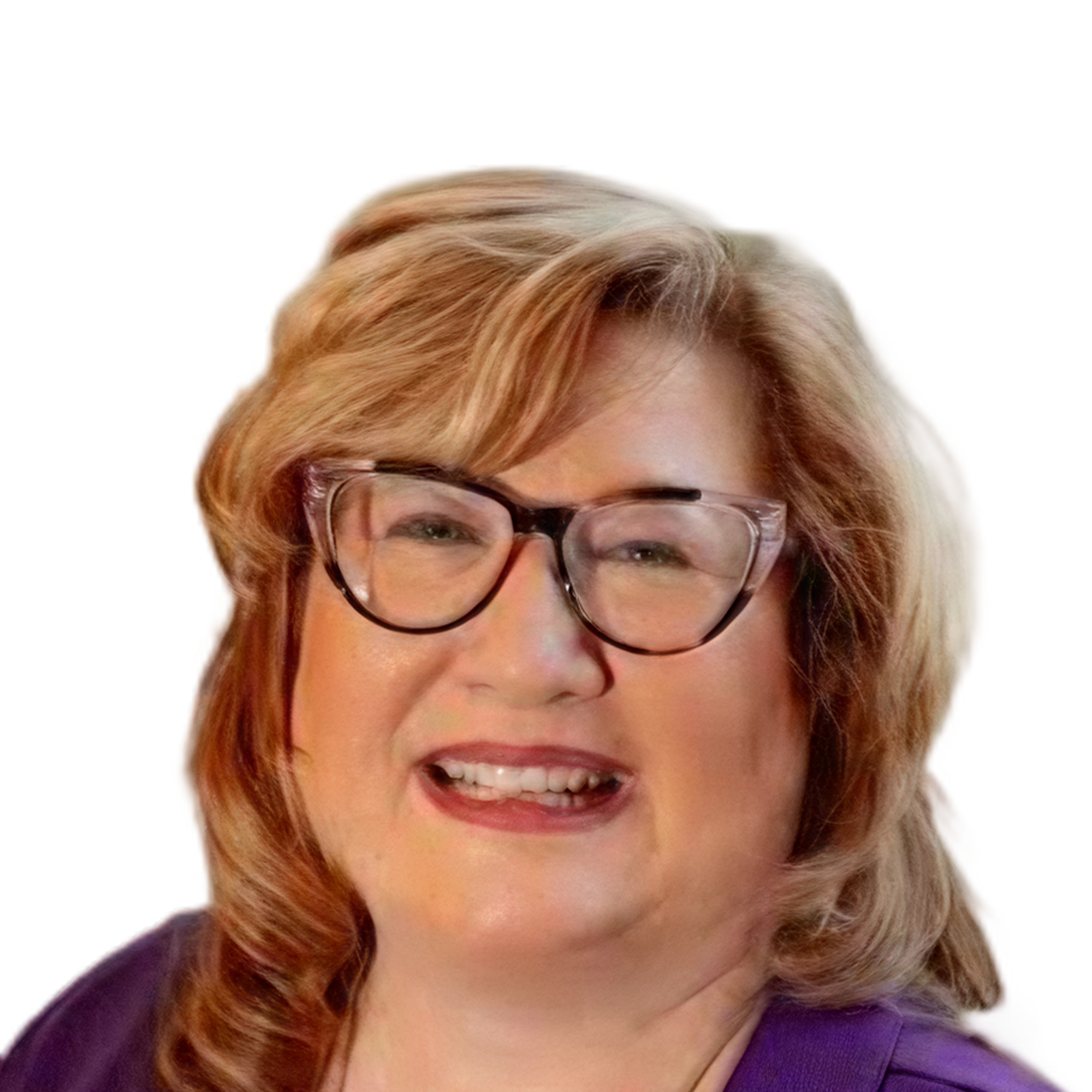
Colleen Huff, FAADOM has been in the dental field for 27+ years. Her dental career began as a Customer Service Rep for Metlife Dental in Utica, NY. From there a move to New Jersey introduced her to the world of dental offices and she has been there ever since. Colleen honed her office skills for about 7 years before taking on the world of Management in 2001.
Done learning and want to get started?
Book a demo