

Artificial Intelligence
Regulations, Concerns and its place within Healthcare
Transcript
Good evening, everybody, and thank you for joining. And we're very excited to have doctor Shamardi here tonight.
I am Sheela Roth, head of clinical education at Pearl, and I am joined by wonderful Kimberly. She's going to be our partner of strategic growth, so she's got all kinds of tricks for us tonight. We are also, happy to be hosting with Patterson.
Very happy that we're doing this together. And tonight's gonna be a very special evening.
For those of you just joining, I'll give you a little background on doctor Shamardi.
We were just discussing a minute ago that he was born in Malaga, Spain, raised very close here to me, in Southern California, ended up graduating from Tufts and then, did specialty work for perio in Pennsylvania, UPenn, and currently working as a clinical professor at Harvard, the periodontics program.
Still doing lots of lecturing. It's very hard to get doctor Shemardi. I'm very thankful that he decided to join us this evening.
And, also, I think the important thing here is how much he's going to contribute with all of his knowledge both AI, and then he has a special, kind of hands on course he's gonna be starting to also take kind of what's happening in this webinar and moving that into some that are a little more interested in focusing on mastering clinical confidence in surgical cases.
And then a couple personal things. He enjoys traveling and sports.
I had to learn tonight what Real Madrid was. So for those of you that are know all that, I'm embarrassed to admit I had to ask that question.
And, doctor Shomari, three languages you're fluent in. Share those with us.
Yeah. We've got English, Spanish, and Farsi.
Wow. Amazing.
Well, thank you again for joining us this evening. You've been wonderful for our dental space as well as Pearl.
We will let you take it away. We will be answering lots of questions at the end. And so those of you that have additional questions, feel free to put them in the chat, and, we will be by your side if you need anything. Thanks again, everybody.
Thank you so much. Let me go and start sharing my screen here.
Alright. And a big hello again to everybody. Thanks so much for tuning in.
As you can see, I'm gonna move my little picture of myself to the side. There we go. Perfect. So as you all know, tonight's lecture is on artificial intelligence, regulations, concerns, and its place within health care.
So really interesting topic, on a technology that, of course, has taken over the world as we know. And we're gonna learn a lot, not just from, within dental space, but within health care and outside. So have a really good broad understanding of where things have come from, where things are headed, and then also see from the dental space, of course, how we can apply this to our everyday lives and our jobs and just do better treatment and have better outcomes for our patients. So quite a bit to figure and get through.
We're gonna have a little under an hour of AI, so I'm gonna do my best, to get through a lot of info in a short period of time. And as mentioned, by all means, put as many questions as you want. As soon as we're done, we'll leave, time to stick around and go through that. So without further ado, thanks, Sheela, for the great, intro.
Don't need to go into any more background. And a big thanks not only to Patterson, but also, of course, to Pearl, who is hosting this along with them. So quick overview of what we're gonna do in this very brief AI, talk a little bit about the AI revolution as a whole, but really understand the bioethics and challenges. Again, a lot of people are concerned about some sides of AI, and we wanna understand what some of those concerns are and why.
Understand the regulatory controls. What actually is enforceable right now, and what's historically been there to help kind of manage and mitigate these fears that we all have? Then we'll, again, touch on how this is being, applied within health care and dentistry, and a few words at the end about what the future is going to bring. And if you imagine the last five or ten years, what AI was, just this idea and where it's become now, obviously, the the future is AI the limit.
So we'll discuss that.
So let's just jump right in. And first, some backgrounds about the AI revolution as a whole. So as we know, when we talk about AI, we're really looking at, term applied to a machine or software.
It's got this capability of simulating intelligent human behavior and instantaneous problem solving calculation, etcetera. We've all seen chat GBT.
The magic, it's able to spew out literally instantly.
And this is just a a quantum leap in in technology and the direction things are going. And, you know, we think about our cars now. Not only do we have cars that are battery driven, but they're all AI controlled. We've got now, you know, driving with no hands and and being able to have the the car with self driving features.
You look obviously, you know, not for good reasons, of course, when we think about wars today, but what the AI is doing in terms of drone technology, in terms of, you know, missile technology, tanks, etcetera, Everything is starting to shift. This is a literally a multibillion going to a trillion dollar industry in terms of where things are being applied with AI within the military. And, really, when you look at global businesses, what we're finding now is now over one out of three businesses that exist are using AI today, and these numbers are just exponentially growing. Forty two percent of businesses are exploring.
So imagine that basically tells us that three out of four businesses are either actively using or looking into seeing how they can actually make use of it for their business. And understand that these numbers are just gonna go up even more, and you can see the spread all through the world. This is really a unanimous thing, and some countries are adopting it a little bit more aggressively than others.
Now we look at the AI health care market as a whole globally.
North America has the biggest share, between Canada and Mexico and, of course, in the US. We've got almost a sixty percent revenue share. We're the largest market. Although, as you can see on this chart, the fastest growing is more towards the India and Asia side. So India and China, of course, huge technological companies, biggest populations in the world. But you think of Japan, Australia, Singapore, a lot of the other islands over there, you we're seeing a huge growth, in in this AI globally, but still biggest share is here in North America.
So, again, what's the big what's the big rub? Sure. We got chat GBT, and it can do stuff, but what else can it do? So not only are we thinking of the increased efficiency and automation of tasks, again, we think in chat GBT, but also data analysis and insights. One thing that's good, of course, about any AI related software or program is available twenty four seven. There's no work hours or AI where it can't do the job for us. So, again, efficiency is key.
We have increased personalization and accuracy. We'll talk about that a little little bit on the dental side of things. And at the end of the day, when applied right and in the right format, it can drastically reduce, risk issues, and we'll discuss that from the medical standpoint. So it's got a lot of purported benefits, but there are also some fears and downside.
Of course, the number one for everybody is job displacement. If now there are little, little robots and software that can do the job significantly better, quicker, more efficiently, and at twenty four hours, of the day, then there's gonna be certain jobs in the environment that are gonna be literally phased out. And, of course, that's creating a lot of anxiety. Right?
The big question as well are the ethical ones. How do we know that this software, these robots, so to speak, are not going to gather personal data and personal information? So we'll talk about the the regulatory stuff coming up. And then a big one for us as dental professionals, lack of creativity and empathy, and we'll describe how this plays really an important role for us as dental professionals in terms of helping secure our job moving forward with the AI, involvement.
Cost and complexity. You don't just implement AI into your business, like going to Burger King. Right? It it comes with a big cost, in some of the bigger, you know, medical manufacturing in different fields.
And overall, it's a trust issue. How do we know that things are gonna work out and the machines are literally not gonna turn literally and figuratively against us? Right? So there are some concerns with that.
And with that, one of the concerns comes from the bioethical side. So we always have to take ethics into consideration anytime, anybody's personal health data and information is being shared or accessible and at stake.
So look here in the US, and they did a Pew Research Center study. And what they found is that, you know, sixty percent of Americans are uncomfortable with a provider that's relying on AI. The standpoint and the thought to that is, well, if my doctor or clinician is not able to do the job well enough on their own and they're relying on, you know, some software or program or machine to do it, there's a little bit of apprehension behind that. And, certainly, as dental professionals, we are gonna know our job first and foremost, and we'll describe how we're gonna use, an incredible technology like Pearl not to go, in in contrast us, but to actually be synergistic and work with us.
But you look also from the other standpoint, fifty seven percent primary concern is the patient provider relationship arm. Like we said, there is a person to patient relationship as dental professionals, as medical professionals. There is the empathy side of things that, interpersonal side where, obviously, if things are going through a machine or a program or a software, that's suddenly gone. And at the end of the day, that takes away from that experience.
Right? So, as a result of this, you're seeing that even though this technology is booming, there still are questions. There still are concerns. It has not been universally adopted across the board.
And, of course, there's other big risks. Right? Perception versus reality. We see this a lot, of course, nowadays on social media.
You see photos that are generated that can look like somebody, but they really aren't. And so these things are being abused quite often and a lot of ways in the wrong, in the long, in the wrong way, I should say. Whether it's in news, whether it's in politics, whether it's generating stories that end up being fake, and we've seen this across the news all the time where, especially in the military, national security, there's images that, you know, might make us think we're at war. They might think there's some security breach going on, and these are just altered images.
Right? So there's a lot of things that AI does that's beneficial, but there's a lot of things that in the wrong hands and used the wrong way can create a lot of chaos. And, of course, this is where some of these fears and this bioethical side of things are coming in. So one good study looking at these ethical issues done in the Middle East found that in general, in health care, the current laws that are there are simply not enough to protect an individual's health data.
So, ultimately, an AI program is able to potentially in the wrong hands. This data that they're collecting can potentially be hacked, And we know how, cybersecurity is such a big deal now. So if we get these programs that are gathering this tremendous amount of information and those are now hacked, well, now that's our data, our personal left out in the open and at risk. So things like genetic testing and bio, bioinformation companies, they're not really, legally or closely monitored.
Right? They're selling our data to these pharmaceutical and biotech companies. So you set up these situations where potentially, again, there could be a lot of things that are going actually the opposite way. Right?
A lot of the data that's taken is not always done with our consent, and that that again is where these bioethical issues keep coming into play. So these questions and concerns that we all need to ask, regardless of what field we're on, is that for our patients, how are they gonna receive proper informed consent via AI?
What's that consent form gonna look like? We know what our one page extraction consent form is. Well, what are we gonna do for AI? Right? And how wide, how wide will this make the social gap and job replacement?
Ultimately, like we said, there are gonna be certain industries that this is gonna impact directly and significantly.
But what is this also gonna do for, economy, for the social gap? Is this gonna help more the, you know, more elite class, and what is it gonna do to, the lower class as well? Right? What again is it gonna do about empathy, which, again, we discussed in terms of how we relate our patient, and doctor relationship?
And like we said, how is this gonna reach these countries with less financial resources?
Right now, these these countries that we saw that are all adopting this technology in mass are those that have the most resources and the most money. So what about the other countries that would benefit from this way more, but simply don't have the resources to adopt it. So all we might be seeing as a result of this is a simple widening of that social gap. The rich countries continue to get infinitely richer, and the not so fortunate countries are just left even further behind than they are right now. So there are a lot of these bioethical questions and concerns. So to that point of these regulatory bodies and what is actually out there to help kind of enforce this, we can look in two different areas. One, across in Europe and one right here in the US.
And when you look across the the pond in Europe, they have a organization known as the General Data Protection Regulation Agency known as GDPR.
This had first started in twenty sixteen but entered full effect in twenty eighteen. And for those in Europe, they should be very happy because this is actually the toughest privacy and security law that exists in the world. Right? So this is really out there to protect any businesses in and even outside of the EU.
So they will even impose their obligations onto organizations that are outside of Europe as long as they are, targeting and collecting data to people that are within the EU. So they have created this really airtight regulation system with fines that are literally in the tens of millions of euros. So this is really the best kind of regulatory body that's out there. Now the history of this goes way back as early as nineteen fifty.
In fact, that photo I put you there is the actual photo from the meeting, the European Convention on Human Rights in nineteen fifty. And, basically, now going on seventy five years, they had, come to a conclusion that everybody has the right to respect for his private and family life, his home, and his correspondence. So these kind of basic kind of human AI, bill of rights, we can say, started seventy five years ago. And you as you can see, as time went on between banner ads, online banking, Facebook, we started getting into these areas where technology started to take off, but it started to create some friction with these convention on human rights because now some of this stuff in terms of respect for private life and your home and your correspondence are now kind of being put out there in the world.
And, of course, you look at social media now, and this is now going out there, and so much of your private information has become more public. And this is why these regulatory bodies are so important and why you're seeing so much more of a fight being put up, by these organizations.
Now what about us here in the US? This is a photo from George w Bush in two thousand eight when he signed the executive order for a organization known as GINA, which stands for the Genetic Information Nondiscrimination Act. Now this for the Americans who are on the call, they'll you'll see this is protecting US citizens from discrimination based on their genetic information in both health insurance, which we'll go through as being title one, and employment in title two. So, essentially, GINA is a two e, two tier protectionist, agency put in place for Americans that will make sure that genetic information is not going to be determinant of getting hired or fired.
What do we mean by that? We'll take a closer look at each. For title one, when we discuss health insurance, what basically happens that GINA is going to prohibit a health insurance from practicing discrimination. So a health insurance company that you apply to may not use your genetic information to determine whether or not you are eligible for insurance or not, whether that is for coverage, underwriting, or premium setting decisions.
So this is really important. So that, you know, health insurance protections of GINA, they extend to private health insurance, Medicare, Medi Cal, federal employee benefits, and the veteran health as well. So this is really important because imagine from a genetic AI, if you happen to have a precondition and, a health insurance company, before they decided whether or not they took you or not, could have access to your genetic information. Well, they could look at you and say, well, your genetic information says that you're more susceptible to, one or two of these possible diseases.
So you know what? You're a liability for us. We're not gonna provide you insurance. And next thing you know, you're out there in the wind.
So having this title one is protecting us all from the health insurance side. So that's tier, title one. Then, the second one is from the employment side, which has been around since two thousand and eleven.
This is implemented by the Equal Employment Opportunity Commission, and, basically, it does the same thing from the employment standpoint where an employer is not able to use genetic information to make, hiring and firing and promotion type decisions. So, again, if you're trying to bring in somebody into your office, you can't simply do a background genetic test and see whether or not that makes them a better or potential worse hire. Again, this is discriminatory, and so we have this JINA in place, policy to help protect that. So it's very reassuring to see that both in Europe and in the US that there are these regulatory bodies that do exist. So despite the fact that the concerns, of course, are what's gonna happen with our information, it's good to know that there is at least something there, to help kinda provide us a little bit of buffer and give us a certain level of protection.
So how does this all now evolve with AI in the health care world? And this is what we wanna take a quick peek at right now. Now there are essential AI technologies in health care, some of which we know, some of which we didn't even know about, that are literally booming. Things like machine learning, robotic process automation, you know, natural language processing.
So when we think of the technologies and and the cases in terms of early, early disease prediction, real time prioritization, imaging, drug discovery, there are so many different buckets and areas where AI is really starting to step in and being able to make a massive, efficiency and overall accuracy improvement that, again, it's it's almost kind of accuracy improvement that, again, it's it's almost kind of like this tidal wave that can't be stopped, but in a lot of ways for the better.
So as we saw even during COVID AI, in a lot of countries, and this was even adopted heavily in Europe, You know, during COVID when people were infecting other people and in a hospital and on a bed, obviously, those nurses and those frontline doctors and workers were getting exposed. And so those places that had these AI technologies in place were able to bring in robots that were able to monitor health, take temperatures, provide, you know, pills for medication, etcetera, without putting those doctors at risk. So there are a lot of areas that this started to become adopted and make a huge difference. One of the biggest things you'll see, across disease detection has been proven by the American Cancer Society. What they found is that one out of two healthy women are actually incorrectly diagnosed as having cancer.
Imagine that, guys. Fifty percent of women are being incorrectly diagnosed with different types of cancer. Obviously, on this photo here, the most commonly one that they refer to is breast cancer.
On the flip, using AI to help with detection, AI has been found to create a ninety nine percent accuracy, and it is able to do that accuracy and give us the results at thirty times the faster speed.
So not only does this result in less time waiting, it greatly reduces the need and the frequency and amount of biopsies. And, again, we're getting it wrong fifty percent of the time as humans, but the the AI machines softwares are getting it correct ninety nine percent of the time. So, again, when we look at this gigantic discrepancy, we can see why, in this situation, AI is so vital. And so now when they look at different, patient and doctor type of, approaches, what they're finding is that, yes, knowing this now, people are a lot more open to wanting to adopt AI.
So it's one of those things where on the front end, there's natural hesitation. It's something different. We don't know if we can trust it. We don't know if it's gonna work for us.
But then you see examples like this, and that obviously, especially for anybody that's had to, you know, deal with something like this, it's a no brainer in terms of what it's able to do, which segues us not in terms of everything that's going on from a health care standpoint within medicine, but now how is AI entering the world of dentistry. And so now we can focus on what's gonna be affecting us on a day to day basis.
Now what dentists are gonna be doing, they're gonna be using AI to improve clinical accuracy, strengthen case presentation, and build patient trust. So if the softwares that are there that we're about to dive into can help us diagnose better and help us have a better case presentation, you imagine case closure being such an important part, something I lecture on a lot. People think that they're in the seventy or eighty percent. The average case closure is around fifty, and for cases over fifteen hundred dollars is actually in the twenty to thirty percent range.
So having another AI tool that we can present to our patient guys just goes that much further in generating trust and helping us close cases. Now AI has been, in dentistry in some different forums. Some of you may have seen this at some dental trade shows. The Yomi machine and AI machine, which is actually, does the implant placements all by itself, the CT guide and the implant placement with the actual surgical handpiece is pretty wild how it works.
So AI has, already entered dentistry in different forms. But, of course, from our host at Pearl tonight, what we really wanna focus on in is what it is doing from the diagnostic side, specifically in the world of radiology. So why is this so important for us? Because when we look at the basic stats, what we find is that we are taking over one point four billion dental radiographs every single year here in our country.
And we compare that to other, medical fields, and, basically, guys, dentistry is taking eighty six percent of that kind of piece of the pie. Right? We're the field that relies on radiographs to do our job, to be able to diagnose properly, and then to be able to treat accurately. So our ability, to do a good job and and provide good treatment is incumbent on us being able to identify and diagnose things properly.
Right? And all all the all the AI, we think that we are really accurate at doing this, but we're gonna show how maybe that's not quite the case.
Now what's unique is that when you think about radiographs, all of the different radiographs that are out there are essentially different shades of gray. And to show just how big this discrepancy is between humans and AI, know that the human eye is only capable of seeing between thirty to fifty shades of gray. And don't ask me if that's why they wrote that book and that movie. I have no idea.
But the human eye can only see between thirty to fifty shades of gray, whereas the AI technology can see upwards of five hundred to over seven hundred and fifty shades of gray. So imagine both the AI software and our own natural eyes are looking at the same image, but our ability to discern those shades of gray in comparison to the AI is literally just not even in the same ballpark. Therefore, the AI technology that we're gonna talk about with Pearl, thanks to the ability of it to discern so much more, all that simply means it's a win for us because it means that we're gonna have a technology that's going to be able to discern, point out, and provide us with more information and data better than our human eye is gonna be able to see.
Now the first time I heard about this, I was a little hesitant, and I got almost a little offended because it's like, well, I was trained to read radiographs perfectly well. I think I do a pretty good job. I'm sure all of you on this call feel the same way.
But a couple tests help demonstrate why the AI software is a great additional set of eyes and tools for us. So what they did is they took a group of a hundred and thirty six dental professionals.
They introduced them to different radiographs on on an FMX, and they played a very simple game with them. They showed them, for example, this tooth number three. And the simple, question they asked is, do you see anything wrong with this tooth?
Sounds like a simple question. We all will say that, well, we we can read radiographs perfectly well, and I'm sure those of you looking at that image right now have already come up with your own answer. But what they found with that group of a hundred and thirty six of our colleagues was that there was absolutely no agreement. Half of the group said there was no decay.
The other half said there was decay. Sixty percent said there was recurrent decay. Forty percent said there was no recurrent decay. We're looking at the exact same film, but we're coming up with completely different responses.
In fact, when they looked at that patient's entire FMX with this group of a hundred and thirty six people, what they found is that there was a diagnostic concurrence of under fifty percent. So we are all looking at the exact same radiographs at the exact same FMX, yet less than fifty percent of the time did we even agree on the same image that we were looking at. And when they looked at the treatment cost in terms of saying in your hands, what would it take to treat this FMX patient from a to z, look at the range that they found. They found a range from as little as three hundred dollars to treat this patient to as much as thirty six thousand dollars.
So the point that's been trying to be made is that it's not that we can't individually see things well, but the fact of the matter is that we interpret things very differently. And in more clinical, practical senses, if we had all the time in the world to sit there and take a deep view and analyze every radiograph, we would probably do a better job. But what's the reality when we're at practice, guys? We've got one patient in the chair.
We've got two people in the waiting room. We've got the hygienist coming and saying that they need to do a check. We've got another guy pissed at the, at the checkout, and all we're doing is running back and forth room to room. So how much time are we as dental, clinicians, our hygienists, etcetera, really being able to have to sit and to go through a detailed view of all their radiographs and discern all of that?
The reality is we're so busy and jumping around so much that we're simply going to the numbers games show that we're simply gonna miss things. And that simply means that there's treatment that's out there that is not getting diagnosed. There's treatment out there that's not getting treated, which means production is going down. And, obviously, at the end of the day, it's the patient care and our overall practice revenue that is suffering.
Right? So know that the AI within this dental software is not there to do any diagnosis on our behalf. The diagnosis, the diagnosis is ultimately the job of you, the dental professional. It is simply there to do a act as an extra set of eyes to bring your attention to certain areas that may be of concern so that you're you will be able to actually take a look at that and be able to then go forward, make your AI, and treat.
So to show another example of this, just looking at a study that Pearl did with over, eight thousand and about eight hundred X rays reviewed by three different dentists, what they found, for their detection is that in only four point three percent of all of those almost nine thousand X rays and only four point three percent of those times were there a unanimous caries positive detection among these three dentists. So the point is we see things differently, we interpret things differently, And, again, what we're doing and what our opinions are actually not very concurrent. So why not get a program that's gonna help us discern things and be more accurate?
So the numbers prove this. Forty three percent of decay right now on on radiographs are undiagnosed.
Forty three percent. Think about this from a practice management and revenue production standpoint.
Twenty percent of caries that are diagnosed are actually not caries. And just as importantly, almost fifty percent of peria periapical radiolucency is on radiographs, guys, are undiagnosed.
So think about production. Think about patient outcomes and overall treatment. And, unfortunately, of course, for us, think about liability, guys. It's there.
But, again, because either we're not taking good enough radiographs or we're, again, in a rush and we're just not paying attention to the whole picture, these things are being missed. And these are all things that the AI software not only is gonna catch, but it's gonna bring directly into our eyes and to our attention to make us aware. And holy cow, you're right. That is a periapical radiolucency.
So when now we use, Pearl's software, we'll be able to, in real time, as soon as we take a radiograph or even accessing all of our patients' prior radiographs, regardless of the different type of, dental systems you have in your practice, you're gonna be able to look at an FMX view. You're gonna know which specific films have been earmarked by the technology for having potentially different types of lesions.
You're gonna get bone measurements to the hundredth of a millimeter.
The decay, as you can see, is going to be not only specified, but you're gonna see not only where it is, but how much of it is approximately indented and enamel.
And you can have other forms of imaging to help you visualize things better and identify the decay overhanging margins. And as you could see, the amount of detections the AI is able to provide us is just absolutely out of this world. Things like vacation involvement, calculus presence, overhanging margins, impactions, open open margins, root canals, you name it, a AI PDL.
The amount of information the AI is able to identify and, again, simply bring to our attention. We are still the doctor. We are still the ultimate decision maker and the person that needs to make the diagnosis. But having something be presented to us and brought to our attention is simply gonna help us do our job that much better and, again, lead to better all over quality of outcome.
We've seen this in the studies that have been done. When you combine both Pearl software and the dental professional, thirty seven percent more of disease is being detected. I can speak to this firsthand. I have been fortunate enough to have Pearl's technology, in my practice now for about two years.
And the difference having Pearl versus not, again, is night and day. I can tell you also for, you know, general practitioners that are in the practice, newer associates that are in there as well, their quality of work and their ability to identify and discern has also gone up simply because we've got this extra visual aid that's helping us simply do our job better. Now there's a couple other features outside of the clinical side itself which are really important to point out. One is the actual software platform itself.
You can see, very easy to see. You'll have the ability to look at your schedule for the day and every day moving forward. What's amazing about this is not only do you see your patients for the day, you can see those that the AI technology has made possible detections on. You can see those marked.
You can get your overview for the day and not only see who is due for updated radiographs, which is great. So it will color code specify who's due for an FMX and who's due for a bitewing. It will tell you who's overdue for things like perio charting, as well, which is great. And as you can see on that top bar, you'll also get more data in terms of specific potential opportunities for things like implants, restoration, scaling, root planing, etcetera.
So this is vital for me as a practitioner because before my days even started or as I'm looking at my week as a whole, I'm gonna be able to see this stuff before I've even come into the chair and seen the patient. So now I'm so much better prepared, not only for that individual patient, but for my day. And why this is so critical also is because this is a huge asset for your front desk. Because now your front desk, before your patients have even showed up for the day, have an idea of what possible options are out there.
And from a management standpoint, what's so critical is that they can actually print out a day sheet for the day. And on that day sheet, not only will it specify what, procedures your patients are coming in for, but with the software, you'll also be able to see what treatment plan work has not yet been scheduled, which is essential. So when they check out, we say, oh, we saw you came here today for your two restorations. That's great. But we can see here that you still have a scaling and root planning that's been, treatment plan but not yet been scheduled. How about we get you scheduled for that for your next visit? That is all gonna be in that software.
That's that's critical as well. And now new technology that they're also bringing in is gonna provide things even like taking care of the insurance, payment, process. So your patients will know instantly what their benefits are, what's gonna be covered, what's not. All of these things are able to be provided via this Pearl AI software.
It is a game changer. It's something that's gonna be valuable for your front office, for your back office, for your hygiene team, how much of a better job they're gonna be able to do in preparing you when you come in for that consult. It's just something that just helps the team all around. So the opinion, the the software of Pearl is known as second opinion.
As I said, it's not known as alternative diagnosis. You are the one doing the diagnosis. It is simply there to bring that to your attention.
To date, it is still the world's most comprehensive FDA cleared real time AI diagnostic aid. So, again, the proof is in the pudding. I've seen it firsthand, and it's making a remarkable impact on overall treatment and overall outcomes.
So we wanted to leave some thoughts, some parting thoughts in terms of the future of AI. Where are things actually headed, and what's gonna be going on in the future as we move forward?
Well, a couple things we gotta keep in mind. Some future applications globally for AI. One is gonna be using emotion AI for the early detection of things like mental health issues and things like autism. So, again, this is gonna be another big leap in the medicine field.
Personalized health care services, ambient intelligence, and the diagnosis of chronic disease. So some of these future scopes that we're identifying right now are really through the roof. And you look at the different industries that are starting to incorporate AI. We already talked about the auto industry, but now we look into banking.
We look into education, construction, manufacturing.
All the different fields that are out there are starting to see ways that they can make, their their basic platforms far more efficient, far more productive, and far less time. So, again, AI is something that's simply gonna be here to stay, but hopefully in a very, positive way. And, again, thanks to those regulatory bodies, we've got some level of protection and hopefully, it will remain, to stay that way. Now within the dental standpoint, thanks to our, friends at Pearl, some other things that are coming down the pipeline, all the radiographs, guys, that we showed are our typical two d radiographs.
So, taking a pen, taking an FMX, taking, you know, AI wings, etcetera, will automatically be incorporated into the software. But what's so incredible is that now Pearl's, technology is also going to start to apply to three d CBCT images. So what will happen is that you will have if you've got your CT machine in your office, you will be able to take your, CT image of whatever it is for your case that your treatment planning. That CT imagery will go at the same time onto Pearl's, software.
Now keep in mind to help explain this, let's say you have, what are the softwares out there? Patterson software. Right? Obviously, as our host.
You're using Patterson. You're taking your radiograph. You've got all of your software, your patient notes, everything on Patterson. You will still continue to use Patterson the same as you were before.
But what is gonna happen is on another screen, you're gonna also have Pearl software open at the same time. So what's gonna happen is that within Patterson, as you take your, image, right, you take your, digital radiograph, the exact same time it comes up on your patient's chart via your Patterson, Patterson software, it is also going to come up instantaneously on Pearl. So you're gonna be able to see it on the regular view and on what Pearl is gonna show you, which is great because now when I'm doing an exam, I'm in the room, I'm I'm looking at the radiograph, I'm describing what I see to the patient as always, but then I'm also bringing in that AI image on the other screen and saying, not only is this what I'm seeing, but look at what the AI technology is finding as well.
And I do the contrast with the colors. I show them that specific. So for those patients that are maybe not sure, hey. Is this guy trying to fudge me into doing a crown or whatever is going on?
Right? You've got this extra layer that's helping and being so important for case closure. Well, again, with the CBCT technology, same exact thing. You would take your CT scanning image with whatever, CT machine you happen to have, But then that image can also be, automatically uploaded through the Pearl software instantaneously.
So it will also help you in the, ability to read those images, whether it be, again, for those same types of things as you can see on here, pathology, detection, which is huge on CBCT, radio opacities, where the nerve is located, missing teeth impactions, the whole nine yards. Right? So bringing this up to now, not just a two d, but now elevating that into the this three d world. Again, this is yet another leap, and this is happening in a dramatically quick and short period of time.
So this is another, big jump in a positive direction in terms of where things are headed. So really excited to see that coming down the pipeline.
Now, also, what we're finding is that there's gonna also be leaps in large language models. So, basically, that means that this software, VuPro, and AI as a whole within dental is gonna help take over a lot of things and be more efficient. Things like appointment scheduling, frequently asked questions, pre and post op instructions. We're gonna be able to get those in a far more efficient way.
This also makes a big deal, guys. I talk about this in a different lecture. About eighty five eighty to eighty five percent of new patients that call an office. They're office hunting.
They're they've moved to a new city. They wanna find a new dentist. Eighty to eighty five percent of those patients that call a practice, guys, are being either put on hold, sent straight to voice mail, or never even pick up the phone. So you imagine now if we've got a, AI software that is gonna also help communicate with patients, get appointments set up, and get that, new patient in the door for you to see for the first time, that's also gonna have a big impact on overall, you know, practice management and numbers.
So that's something from the patient side. And, again, for us as practitioners, we're gonna get additional layers of diagnostic assistance with things like medical records and patient history, generation of clinical notes. God. Nothing's more annoying than finishing the day and knowing you've got a whole host of notes to go.
I like to do mine after each procedure, but it doesn't matter if you do it right after the procedure at the end of the day. If you're seeing twenty patients that day, those are twenty notes that you gotta go and write all out. But now if you've got AI that you can literally set up templates that you can speak to, that it can do all of this stuff for you ahead of time, and and following proper HIPAA guidelines and, you know, proper liability, standpoints. Again, that's another big jump forward.
Time, efficiency, and energy from our end is gonna be, significantly saved, as well.
So, again, a lot of positive things with this type of technology that are slowly working their way, down the pipeline. Now when we look at outside of dentistry and health care, when we look at the globe, overall, you can see the direction that AI is going in the health care market. You can see region by region. Obviously, key players in the market.
Everybody's probably heard of NVIDIA. We know companies like Philips and Micron and Siemens, and Google, of course. But what you can start to see now, is that as this, tends to grow now, the growth rate between now and the next decade, they're expecting a growth rate of over forty five percent. So this is gonna peep, keep growing that much more.
You look at the global market analysis by twenty thirty three. You can see the breakdown between virtual assistant clinic, lab, and hospital settings about where this AI is going to go. The the significant drivers is gonna be, the the gradual decline of the number of physicians, but then, again, this lack of skilled workforce is gonna be another way in which this AI is gonna be able to start filling in the gaps. So there's a lot of positive things that are coming, and this is really like I said earlier on, this is a tidal wave that is literally coming through one way or the other and hopefully in the right way.
And fortunately for us within the dental world, this is something that's working to our benefit rather than to our detriment.
In closing, a couple of things I wanna say which are really good. This was, at a dental conference. A colleague of mine was at sent me this photo. This conference was simply, specifically on AI in the more of the manufacturing, manufacturing world.
But what did they have a slide on? This was great. Made me feel very good. The least likely jobs likely to be replaced by AI in the coming twenty years.
Look at the number two and the number one. Number two being priest. Number one being dentists. And the thought is, why on earth?
But it goes back to what we spoke about earlier in regards to empathy, guys. So there is such a deep rooted, obviously, fear and anxiety between the dental world as we all know. However, the only thing that a dentist trust less than the dentist they spend years getting to know is now going to another one and having a robot take over. So this is really working in our favor.
So as I like to close when I gave this lecture, it proves two things, the two things people are afraid of the most in the world. You've got religion and you've got the dentist. Obviously, that's a joke, but you can see that it looks like we are in, safe hands overall. So in conclusion, wanted to mention a couple quick things.
First, from what we said in our talk, as we said, AI is a growing, industry at an exponential rate. It's gonna be projected to just expand further. Despite the, the trust and job displacement fears in the general workforce within health care, AI, again, is proving to aid to do a simply better job in diagnostics. Don't ever forget that breast cancer example. That is a shocking example and overall treatment outcomes.
Regulatory bodies do exist, so we don't have to be afraid of the fact that our genetic information is out there and AI might be, you know, able to violate that. However, with this exponentially booming growth, we also have to increase security protection, right, to help as this grows that we continue to have security backing us up as well. Now thanks to Pearl and our, amazing software known as Second Opinion, we've we found AI's great use within dentistry within the imaging standpoint. It can help provide and integrate all phases of our treatment from both administrative and clinical care. And at the end of the day, it everybody wins. Our patients get better treatment. We get, better diagnostic abilities, better outcomes, and, obviously, better revenue and production for our practices.
So with that being said, from the city of Boston, again, stay for those of you on the East Coast. Thank you for staying up. As Sheela mentioned, before I go to questions, I did want to, introduce to you a coaching program being launched in two thousand twenty five. As she mentioned, my program is called mastering clinical confidence, in surgical cases.
So the basic overview for this real quick, guys, is gonna be, the the challenge right now for those of you who are starting to go after doing more surgical cases and try and get more involved with, perio implants, whatever it might be at the end of the day. There's limited experience in a lot of these techniques. A lot of times, you gotta go take a lot of weekend courses that last one day. You have no feedback.
You have no follow-up. There's a lot of uncertainty about best practices and workflows and, again, patient expectations. So we're introducing a six month, mastermind type of clinical training program. They're gonna be, two coaching calls per month over six months, be access to sponsors, best practices, technologies.
At the end of the day, guys, as a specialist practicing for fifteen years, there's a lot of lessons I've had to learn the wrong and the hard way. I have a lot of scars, and the goal is to try and provide all of you with, best practice to help you avoid those pitfalls, be introduced to the best technologies AI Pearl, of course, that could be implemented into that. So for those of you who are general practitioners or even, specialists who are looking to really raise your bar and have more information, this is really going to be, of of pertinence to all of you. So we're gonna be launching that program, March first.
We already got a lot of sponsors on board and people registering for so for any of you who are interested in more information on that, please, send me a direct message on Instagram. You can see my Instagram, QR code here.
And, again, I look forward to hopefully connecting with you guys, in in more detail on that coaching program. But, again, thanks both to Patterson, and to Pearl. Here you're seeing my my info. Please, again, reach out with any questions, DMs, whatever you need. And, again, I will stick around right now, to answer any questions that you guys have relative to tonight's course. Thanks so much.
Thank you so much, doctor Schmarty. Wow. Like, there's a bunch of, thank yous in the chat, so I wanna make sure that you were you heard that. And I do have a couple questions for you, so thank you for hanging around.
In the meantime, what I'm gonna do is just get this up for everyone if they're wanting to see how it can look in their own practice. But while we're chatting, we'll leave that up for them. Question for you. What would a consent form for AI look like?
Do you have a sample? Have you grabbed that for your patients? Patients? What's your been experience as you implemented it?
Yeah. It's it's a great question. They there really is not a set one yet. So I I impose, you know, right now for consent, we're not using AI to actually do the physical treatment yet.
So there is not a consent form per se, AI, when I do an extraction and I have to give a consent form for that and a patient needs to know the risks. So right now, since this is simply a diagnostic tool, right, this is simply gonna be something that we're using to help aid us. So it isn't something we're giving our patients in terms of, you know, their actual treatment work. So there isn't anything for that yet.
As AI potentially starts getting a bigger role, it's going to start going into more of the treatment phase, and then I imagine we're gonna start seeing those. And, again, what the plan is is that the AI technology is not so much you're gonna have a form for the AI, but the AI is gonna help generate those consent forms for a lot of these procedures. So as of now, there is not an AI specific consent that I'm seeing, that's out there. It's more just how we're putting that to use.
Okay. Perfect. Thank you. I hope that answers the question. You can type it back in if you needed more information.
Sure.
And a couple questions about, accuracy, as you can imagine. Lots of questions about what about when you can see it even with the naked AI. You could see some carried on one radiograph, not on the other, add into that because there was another question that touches on this. What about the quality of the image, elongation, whitewashing, cone cutting, that sort of thing. How does how does all of that fit into accuracy, if you could just speak to that?
Yeah. So a couple things that are really important, guys, to note with that is that, first of all, at the end of the day, the image on the CT, excuse me, on the AI via Pearl is only going to be able to give you a good result based on your image. So in other words, it doesn't take away our need to take a good image. It's not like, you know what?
I can just take a really poor image, very poor. You know, it's it's too dark. It's completely the teeth are completely crossing over each other, and the AI is just gonna magically figure it out. Ultimately, guys, the the actual quality of the image itself is gonna be the key.
So if you happen to take an image where there's a lot of very poor angulation, for example, and it's muddling things together, well, just like you would for yourself without any AI, your first thought is gonna be, you know what? I need to take another image at a different angulation so I can see it clearer, and that's your decision to make. Right? So, again, the better the image, obviously, the better the result overall.
Understand that with the proper imagery, again, what you're seeing is that the accuracy of the technology not only is extremely high, but as it learns and as the technology keeps getting better, it's simply gonna keep getting better and better. So you're gonna see more and more accuracy.
The bottom line, though, to keep in mind at the end of the day, everybody, is that you are still the doctor. You are still the one diagnosing.
So it's not very common, but every now and then, Pearl may point something out and say, hey. Potentially, this might be some kind of an open margin, or this may be the beginnings of decay, but it's up to you ultimately ultimately to go and look and make sure that maybe it isn't that or maybe it's something else. So the accuracy is extremely high, but at the end of the day, you have to keep in mind that it's still not taking the responsibility out of our hands. We still have to do our job.
So the key is that it's able to give you, that added set of eyes and bring your attention to that, and then you can confirm, deny, or or review that further.
Yeah. Exactly. And I think also to add to that, you know, we talk a lot about that quick, in and out, you know, hygiene exam and having two patients in the room. We're not gonna take a detailed look of that radiograph, in that FMX. But if it points it out, now when I enter that room, I can look and say, okay.
There's four things that have been pointed out right there. I may have missed two or three of those. So now it's bringing my attention to it. I can go look at it, confirm or deny whatever it might be, and now I can have that discussion.
So it's streamlining that process and, again, helping me have more of that information in a better, better in a better sense.
Yeah. Exactly. And the only thing I wanna add to that, if I may, is, I've heard reports of practices not unlike when you first using when you first start using, intraoral scanner to take your digital impressions. And you start looking at your preps differently. Your teams start looking at their radiographs differently, and they'll end up Yes.
Naturally just they're paying more attention to those bitewings than they ever you did before.
Great question here too about when the patient is given a copy of their radiograph, do you include the AI information? So we know that it's possible to do printouts with the detections, and there's a great use case for this when it comes to, sending into benefit plans.
But what are you doing, doctor AI?
Yeah. I I I think you hit it on the head. You you have the ability, which is really nice because you can actually, AI you said, you know, print that screenshot out, and provide that. So you're simply able to say, you know, not only is this what I'm seeing, but here's also what the AI is seeing. So it gives you that added layer if you wanted to, which for me is very valuable in the in the treatment planning consulting, visit, to be able to show. But, certainly, with that software, you have the ability to not only, you know, print that out, but, you know, it has that detail on there. So so, certainly, that's just one other layer that, that helps even even more, I find.
Yeah. For sure. And it helps helps that decision for the patient, and if they take it home, it's not just them trying to explain it to the family. Like, hey. I went to the dentist, you know, somewhere out of state because I'm in university and has has a bunch of suddenly detections. Where did this come from? It helps the whole family make the decisions about what they're going to do for their treatment too.
Absolutely.
One more quick question, it looks like, about what sensors work with the software, and you spoke to it a little bit, and you spoke about how, you know, the sensors themselves. Yes. I mean, I Pearl works with most of them. Yeah.
But if you have, for example, if you have Eaglesoft, you're not even having Pearl second opinion in another window. It's going to be already there. So your current workflow is not even gonna change. So it's gonna be natively integrated in there, which is really wonderful and perfect.
That was the question just that came in.
Is it still a standalone, or does it integrate into your already software?
Yes. So, Pearl is natively integrated in it's between twenty and thirty imaging system softwares, PMS systems. So definitely, take out your phone, scan this code so you can be able to see that, available.
However, it might already be internal of what you you already have, and you can just turn it on. So, for example, like in Eaglesoft, it's there. It just needs to be turned on. So the whole process for your team doesn't change at all, so you can really see it for yourself.
Correct. Correct. And, again, that's that's what's so useful is that a lot of the, softwares, it's already integrated. The other one's no big deal. You have it screen right next to it. And, again, as time has gone on, I've even seen in these two years, through you AI, how many more of these programs are are are adopting this and implementing this. So this is something that you're just seeing go up that much more.
Perfect. Perfect.
Well, we're seeing you right on time. And, any final final thoughts, doctor Schomarti? Any there's been lots of comments in the chat about people just so grateful and where can they find more information from you.
So we'll make sure you get all the information.
Yeah. No. I I really appreciate that. For anybody if you wanna reach out via Instagram, it's just at doctor Sam Schumardi.
Again, would love to connect with everybody on that. And, again, as far as the lecture, like I said, these are exciting times. Being able to have the software has really been a big game changer for the practice.
And, you know, we've seen, or I've seen how much is done within radiology. And I'm sure as time goes on, we're gonna just see more, adoption of AI technologies, not just within, radiology, but we're gonna start seeing it in other areas. So, ultimately, I think we can have a little bit of reassurance as a field that our job is not being taken over as we saw in that last slide. So I think there was this natural fear AI everybody does that well, what's gonna happen to us?
But, fortunately, you know, our job is gonna be there, and what the AI is simply gonna be doing, it's just gonna be helping us do our job better. So at the end of the day, I think this is a big victory, all around, and and really, I encourage everybody, even if you're not with us, to go take a look at it. Do a run through. See it for yourself.
Obviously, guys, the proof is in the pudding. Once you have a chance to at least take a peek at it, you know, at least you'll have a better understanding and, you know, I I can't, speak enough about what what it can do.
Oh, thank you so much. The only thing I wanna add before you pick off is if you're gonna when you scan that code, be sure to mention to the representative that you speak to that you were here on this webinar. They'll know, and you'll be able to, activate a first month free. So risk free, try it for yourself, see how it works, See how you feel. See how your team reacts.
So I'm gonna encourage that. But thank you so much, everyone. We're really happy, that you're here, and thank you.
Thanks so much, guys. Everybody have a great AI, and and, again, hope, to be in contact with everybody. So have a best again at doctor Sam Sharmarti, and, have a great AI, and hopefully see you guys again.
Meet Your Host
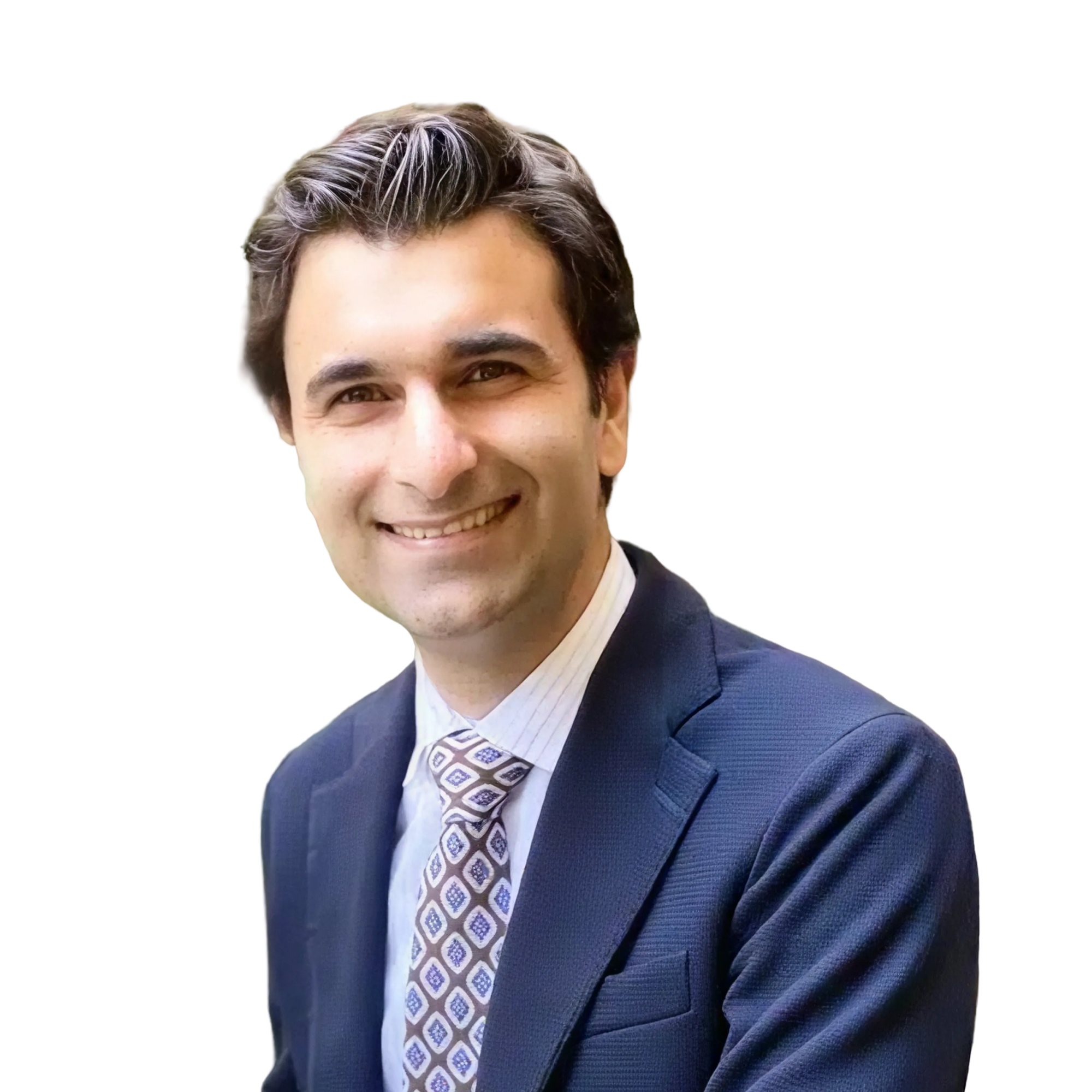
Born in Spain and raised in southern California, Dr. Shamardi earned his DMD at Tufts University School of Dental Medicine. While at Tufts, he was elected class president for all four years by his peers. Dr. Shamardi received his Periodontal certificate from the University of Pennsylvania. He is a Diplomate of the American Board of Periodontology and Implant Surgery and practices full-time while teaching part-time as a Clinical Instructor at the Harvard Dental Division of Periodontics. Dr. Shamardi is the founder of Dental Innovations LLC, a company aimed at providing novel solutions to unaddressed issues within dentistry. He lectures nationally and internationally in topics within periodontics and hearing loss in dentistry and has published multiple articles while being recognized as a dental entrepreneur for his revolutionary EarAid product.
Done learning and want to get started?
Book a demo