
The Mental Dental Connection
Secrets to being a better clinician & leader
Transcript
Well, I'm gonna go ahead and get us started.
Again, for those of you just joining, thank you for spending your evening with us.
My name is Sheela Roth. I am head of clinical education at Pearl dot ai, and I'm honored to have doctor Austin with us tonight.
Doctor Austin has been practicing for the last sixteen years. He is in Austin, Texas and I'm sorry. San Antonio, Texas.
Messing up your name, doctor Austin. Apologies.
Also a director, writer, monthly columnist for Dental Economics Magazine where you're talking about products and technology, a lecturer. We were just talking about how he does dentistry a couple days a week and then jumps over to an airplane for the weekend and travels all around and and shares all kinds of interesting information with the dental space.
We're really thankful to have you with us, doctor Austin. I'll let you take it away.
Thanks again for being here.
Thank you so much, Sheela. Love you. Love Pearl AI just the best. We'll talk about it a little bit later and how it fits into my whole approach to building my practice around my mental health.
But it all starts here. It all starts with my dad. And I show my dad before every program I do because I'm proud of him. Probably what he did for dentistry, practiced for twenty five years in Amarillo, Texas, which is in a small town up in the Panhandle of Texas.
In nineteen eighty three, he sold his practice in Amarillo. We moved to San Antonio where he began teaching at the dental school. Now I don't know why you guys got into dentistry, but for me, it was my dad. And I know that many people become a dentist or get into dentistry because one of their parents is also a dentist. It's a super common pathway of entry into the dental field.
It's around ten percent. Ten percent of dentists are second generation dentists. We're even announcing third generation dentists. I did a lecture in Saint Peter, Minnesota in January of last year, and there was a fourth generation dentist in the room, which is really crazy to think about.
And in fact, my patients ask me all the time sort of apropos of nothing if my dad was a dentist, which I honestly find kind of insulting because in my head, I automatically translate that question into AI on earth would you wanna do this all day if you weren't pressured into it by a helicopter parent? And I certainly wasn't pressured into this by my dad, but he is a reason that I became a dentist. And today, it's clear to me that I wanted my dad's approval. I became a dentist because I wanted to make my father happy. I wanted to hear he's proud of me. AI mean, that's something that probably everyone wants to hear from our parents, the people that are supposed to love us the most. Like, we're hardwired to seek out and desire that kind of approval, but there's just one problem.
I'll never get get that kind of approval from my father because he died when I was ten years old. I've been chasing his ghost for the last thirty four years.
In fact, I never even got the chance to tell him I wanted to become a dentist. And now as an adult, I realize that it sounds crazy to try to work to get his approval without him even being around. But it took me a long time to figure that out, and there's always been an emptiness. There's always been, like, a void. There's always been something missing, like, right here. And I've tried to fill this void with all kinds of stuff in my life, stuff that's bad for you. Stuff like cocaine, stuff like escorts, stuff like base jumping.
I'm obviously kidding, guys. I mean, come on.
Do I really look like the kind of guy who goes base jumping?
Achievements. I'm kidding. I'm kidding. Achievements is what I've tried to fill that goal fill that void with.
Ever since I was ten years old, I've tried to fill that void with achievements, but never build that emptiness. Ever since I was ten, I tried to do things that I thought would make my dad proud because I thought it would make me feel better. When I was in dental school, I ran for him and became dental school class president. Didn't make me feel any better.
I was picked to give a speech at dental school graduation. Did not make me feel any better. AI, one time, was going through my dad's stuff and found a, lapel pin that was a twenty five year member pin to the Texas Dental Association.
So I decided to run for the board of directors for the Texas Dental Association, and I won the damn election.
And I had to go to three ten meetings a year for three years.
I didn't wanna do that. It was terrible.
What an insane thought process looking back on it. I mean, look at this picture. This is the least diverse group of human beings that has ever existed.
Look at me on the bottom left hand corner like Benjamin Button aging backwards. What am I doing here? In the in the agenda book for every meeting at ten thirty in the morning, it would say, reminder board members, take your Lipitor. I'm like, bro, I listen to Kanye driving over here.
What am I doing in this room?
What an insane thought process to think that this would make me feel better. I mean, the equivalent of this would be finding a Dallas Cowboys cheerleader calendar in my dad's stuff and then trying out to become a Dallas Cowboys cheerleader. And making it are you kidding me? I can't fill this outfit out.
I'm a b cup on a good day. Okay? I can't do leg kicks and high heeled boots like that. I'm gonna fall on my butt.
Alright? What an insane thought process. There is no way that I can continue to live my life that way because none of it ever filled the emptiness. And what I didn't realize is that I started to resent dentistry for not filling the emptiness that can never be filled the way that I wanted it to anyway.
It was unfair to ask dentistry to do that. But I didn't realize that I started to wear that resentment more outwardly.
And I couldn't tell, but the people around me could, and I don't just mean my team members. So we use a software for patient reactivations.
And what happens is it will send, like, an email or a text message to somebody who hasn't been in for a a recall visit in, like, eighteen months trying to get them to come back in. And they can opt out, and they can unsubscribe if they want. But if they do that, it's gonna ask them, like, exit interview. Like, why are you leaving the practice?
And there's a pull down menu, and they can select all sorts of things. Like, the standard answers would be AI, my insurance changed or I moved, or I saw a picture of you dressed as a Dallas Cowboy cheerleader, and now I had to confront some questions about my own sexuality. Any of the standard things like that. Right?
And, then it sends us an email so that we can archive the patient. We don't have to keep bugging them. Right? So one day, I get to the office early.
I open up the office email, and I'm greeted by this email from our software from Chris.
And, Chris is seeking care elsewhere because, and I quote, doctor Austin just seems so angry all the time. And this shocked me because I thought I was a great actor. I thought I was Daniel Day Lewis putting on a great show every day for my patients, and I thought they loved it, and I thought they loved me. And it turns out they could tell.
Turns out I wasn't such a great actor. Patients could sense it. They could sense my unhappiness. I could not continue to let that happen.
And, literally, as I looked up from this email across my private office, I saw the wall opposite of where my computer was, and I saw this.
Maybe Chris is right. Maybe I do have an anger problem because this is one of the walls in my private office that I punched a hole through the sheetrock.
I can't even remember what set me off enough whatever day this was that I punched a hole through the wall. This helped me realize AI I needed help, that I needed to talk to somebody professionally, but I was scared because I felt alone.
Was I alone?
You know you know, you hear all the time a dentist having the highest rate of suicide, which means a high rate of depression and mental disease. So maybe I wasn't actually alone. So I just started to think about it. Like, is it true is it true that dentists have such a high rate of suicide and whatnot? And so as I thought about, like, what's contributing to all of this stress, I realized that dentistry is just not easy. It's never been more difficult than it has been since twenty twenty. I think that took it to a whole another level.
All of us had staffing issues during the pandemic. Every one of us every one of us are usually consistently operating a person short. Like, I think for the first time in a long time, I'm not short staffed at the office.
And it's I don't even know what to do. It's AI, somebody calls in sick, and it's AI, not the day's gonna be insane. Like, we're we're actually okay. It's the weirdest thing.
But it took like, it's taken since COVID. AI, it's taken it's four years later. And it took me that long to, like, find the last person on my team, you know, to fill out that that roster, you know, which is just so hard. I was never taught to be a leader in dental school.
We didn't even have a course in leadership. Maybe we did. It could have been taught by Tony Robbins himself, but it wasn't on my state board exam, so I didn't care. So even if we did have great leadership education in dental school, wouldn't matter because we don't care at that AI.
And we get out into practice and we get thrust into a leadership position. We don't know how to handle Clinical failures are absolutely something that I take with me and take them home. I know you're not supposed to, but I do. Social media and our access to it twenty four seven is a problem.
Feel like patients are more demanding than ever.
You know, it's crazy to me to do, like, an Invisalign case on somebody who has really crowded, messed up teeth, and we get them, like, ninety percent of the way, and twenty four is rotated mesial out by one point five degrees. And they're like, look at that. It looks terrible. And it's like, do I need to show you your teeth from where we started? Like, come on. Are you kidding me? This looks amazing.
And then finally, financial concerns. You know what's crazy? Like, the one nice thing about the second half of twenty twenty is we're all coming back from the pandemic. The people had money to spend and then a desire to do dentistry. They weren't going on vacation.
They, you know, they weren't, going on any any scripts or anything like that. Like, they were home. They had to wear a mask all the time. So I was like, if we're gonna do dentistry, let's do it now. And so I I started so many veneer cases.
I started so many, you know, Invisalign cases, comprehensive cases, full mouth cases, full arch cases during that AI, and it doesn't seem like that's happening now. AI not gonna, you know, get into, like, PhD level of dissertation about the economy. I think the economy is actually pretty good right AI.
But it depends on who you ask. You know? If you ask, somebody who voted red, they think one thing. If you ask somebody who voted blue, they think another thing.
Right? It's more about who your your person is in the White House. It's that's more than the actual economic factors and what the the data shows about the economy. But regardless, a lot of people are spending less money now on dentistry.
Doesn't mean we don't have dentistry to do. We certainly do. We have broken teeth, We have perio. We have caries.
We have all that stuff, and I'm still doing Invisalign cases. Maybe I'm doing Invisalign in four veneers and seven Invisalign in ten veneers. You know? Stuff like that.
So or maybe I'm staging treatment out a little bit more. But at the end of the day, you know you know what the biggest problem in my practice is?
The biggest problem is me.
It's absolutely me. That AI the biggest problem in my practice. Everyone on my team will agree. At tee time, everybody agrees.
And now you're thinking to yourself, like, is this really a forty five year old straight white man who's into Taylor Swift? Yes. I am absolutely a huge Swifty. This is me and my wife, Paris, night two, going to see the queen, Taylor herself.
Had such a great AI.
Had to see the show again. So three weeks later, we got on a plane back to Europe, went to Amsterdam to go to night one. But you know what? Night one wasn't enough.
We went to night two as well. And I'm like a strict, like, single bag guy. Like, I I don't check a bag when I go to Europe. So roller roller bag only that we carry on.
No checked bags. So we don't have space for costumes and stuff like that. But, you know, we do have space for friendship bracelets. Still wearing one right now.
Song says you are in love. It's from nineteen eighty nine. Great song. Deep cut.
And you know what? Guess where I was a couple weeks ago. That's right. New Orleans night too.
That's the night Sabrina Carpenter came out. Okay? I'm a huge Swifty. Alright? Brings me joy.
Okay? I know you're judging me. I know you're saying that a forty five year old white straight man shouldn't be in Taylor Swift. She's amazing.
She's so amazing. She's so amazing. She's right. It's me. I'm the problem. It's me. I'm the biggest problem in my practice.
And I can get over my stuff. My practice runs a lot better. Right? And if I can trust and delegate to the people that I brought into my practice to do their jobs, things run a lot better.
So when I was feeling all of that apprehension, when I was feeling all of that anxiety, when I was facing myself about what Chris has said about us and why he left my practice, you know, I had questions about whether or not it's true about dentists and mental health. So I decided to do some research. So I found this study done by the CDC. This is actually just job data study.
The dentists are two and a half times more likely to die by suicide than the general population. This just comes straight out of the CDC data on death and occupations. It's like OSHA stuff. It's kinda crazy.
That wasn't even the biggest number I found. This was from the Journal of Deviant Behavior, which really step aside journal of prosthetic dentistry. I have a new favorite journal I read every month. Would you rather read about, feral effect on endodontic treated teeth or deviant behavior?
I think I know which one I'm picking. Being a dentist increased one's risk of suicide by five hundred and sixty four percent.
Let that number sink in. Five hundred and sixty four percent. AI I wasn't lying when I said that the Journal of Deviant Behavior has become my favorite journal. I actually subscribe to it. I get it in paper because I like to have it and hold it in my end.
And, it's the it's AI the journal that comes in. It goes on the top of the journal stack every month. It's the first one I read, and I don't wanna brag. I hate bragging, but I was named the deviant of the year for two thousand twenty three.
This is a list of every dentist who I have to know personally or I could find on Google News who's taken their own life in the last three years.
A lot of some of these people I know. I knew Jonathan Shinken.
I knew, Scott Methvin. I knew Brian Schwab. I knew Jawan Lee.
It's heartbreaking. It's heartbreaking. It's hard to talk about, but we gotta start talking about it because I gotta I'm tired of adding names to this list. And since I started doing this lecture, like, three years ago, I've had to add four names to this list.
It's it's brutal. It's brutal. It's because we don't wanna talk about it. It's because we're so programmed to just put our nose to the grindstone and push through until something happens.
And what happened is this. It's just absolutely absolutely terrible. This is from the ADA. This is, a study that was done that dentists have doubled the rate of diagnosed depression, anxiety attack, and panic attacks in the general population.
Two things about the study. Number one is it was done pre COVID, and number two is it was self report.
As we all know, you know, if you're having to self report these things, you're way less likely to tell the truth. So it's at least double, if not more. Right?
This also comes from the ADA. Thirty eight percent of dentists are frequently or always worried. Thirty four percent of dentists are frequently or always physically or emotionally exhausted.
Physically or emotionally exhausted. Let that number sink into your head for just a little bit. More than a third of us are walking around every day, and we would describe our outlook on life as physically and or emotionally exhausted.
It's not a great way to live life. Part of the reason is that ninety percent of us report musculoskeletal pain at least three out of seven days a week, if not more. And the problem with being in mus in musculoskeletal pain is when you're in pain, you can't regulate your mood. So you're way more likely to be sus to be subject to anxiety, panic attacks, and depression when you're in musculoskeletal pain, and it's because we don't take care of our body.
I'm not feeling twenty two anymore. I'm forty five, and after a full week of of dentistry of AI dentistry, I feel like I'm sixty two. Okay?
Our bodies break down. Our bodies break down. When our bodies break down, our minds break down. Our bodies break down because we don't take care of ourselves.
This is from the CDC website. This is risk factors for suicide. First red arrow there, history of mental disorders, particularly with clinical depression. Remember, dentists are at least twice as likely to suffer from clinical depression than the general population.
History of alcohol and substance abuse. Seems like something I hear a lot about from Dennis. Every state in this country has a, every state board, original board, has a peer assistance network, where, basically, if you're having alcohol and substance abuse issues, you can self report to the state board. And as long as you're undergoing treatment, rehabilitation, prediction, you won't, face risk of losing your license if you self report.
The numbers of that are always kept sequestered, like how many people are in those programs.
But I can tell you with secondhand knowledge that it's a staggering amount of dentists. And the reason is a simple word.
The reason is access. Dentists have access. You know, I've got a a a safe in my office that's got benzodiazepines in it. It's got Versed.
It's got, Halcyon. It's got fentanyl. Right? And so, you know, it seems like a big jump to say AI, oh, I've had a crappy day.
Let me jump into that safe.
And I don't think it starts like that. I think it starts with just AI, oh, there's, like, a little bit of there's, like, a half a pill of Halcyon left.
Oh, it's like, AI can't gotta throw it away anyway. AI as well take it, you know, whenever AI, and I think it just like, it's a slippery slope, and it's just a a a problem with drugs. With alcohol, it's a whole another deal. Alcohol comes goes back to dental school.
In dental school, the first big exam that we had was gross anatomy, and we studied our asses off for it for days. And the first thing we did when the exam was done is we had a huge blowout AI keg party. Right? Huge blowout keg party, that was, you know, a just a AI, did my, AI sorry about that. Did my, slides change over, Sheila?
We have, we're seeing the trees right now, but they were fine before.
Okay. Sorry. I don't know what happened with that. No problem. AI must have knocked my slides off.
Give me one second here. Let me get reshared.
Let me get reshared.
The people laughing with all the emojis that you're doing. It's really funny.
How about how AI got unplugged?
My m must have gotten so animated that I, that I kicked everything off. Here we go. Okay.
There we go.
You guys seeing that now?
Share again.
Let's see here. Maybe when did I learn how to use Zoom?
Yeah. I'm the same way.
There we go. Better? Can you see the trees now?
See the trees.
You see the trees? Yes. Now you see CDC?
Yes.
I do.
Great. Okay.
So post girls' party in dental school. Right? We started our ass off work for days and days and days. And the next thing you know, it's over, and so we have a huge keg party.
And then the next test is gross anatomy. And or is the next test is histology?
And then, you know, we go through that, and we binge drink. And that's just how we learn, you know, is that we work hard and we binge drink. Well, then we get out of dental school, and then, you know, we don't have to we don't have to, we don't have, like, tests to take anymore, so we can drink on weekends. And then, more than weekends, it gets to be, like, you know, Tuesday and then Wednesday and then Monday and then Friday.
You know? It just, like, goes on and on and on and on. So, you know, it's it's a huge problem. It's a huge problem, and it's something that we need to look at.
Feelings of helplessness. Remember, thirty four percent of us walk around physically or emotionally exhausted every day. Huge problem, and I think something that we need to work on.
One, two, three, fourth one down there, isolation.
I'm not talking about rubber dams. I'm talking about the fact that most of us are, working alone. We're the only dentist in our office, and it's a huge problem. Physical illness, remember the AI, percent of us that, are in musculoskeletal pain at least three days a week and, can't regulate our mood, and then AI unwillingness to seek help because the stigma attached to mental health, such a huge problem, something that we absolutely need to work on and make things better. Right?
Finally, as we get into, talking about, and, Sheila, are you seeing the thing that just says brain health? Is that what you're seeing there?
Yep. Absolutely.
Okay. Good. You know, when we talk about these diseases, you know, it's not uncommon for somebody with depression to say, or to hear, from friends or loved ones, like, oh, man. It's alright. Like, turn that frown upside down. Like, you get to choose what kind of mood you're gonna be in today. Right?
And that's not true. It's not true at all. You know, you can't choose not to be depressed. It's not a decision that you can make because it's a chemical disease. It's a disease that has a basis in in chemistry. Right?
You would never have a patient who has diabetes, and, like, go up to them and put your hand on their shoulder and say, like, oh, it's alright. You know? You turn that a one c of eleven point five upside down. You know, you can you can choose to be a a one c of five point five today.
Right? Like, of course not. We would never do that because we understand the the risk or we know we understand the, we understand the pathogenesis of disease. Right?
We it's not it's not a diabetes isn't a choice. It's a chronic long term inflammatory disease. This is just like hypertension. It's like hyperlipidemia.
And depression is the same thing. Anxiety is the same thing. All of these diseases have a chemical basis in them, and that chemical basis is neurotransmitters.
And these are all the neurotransmitters that you see here that are that have, you know, AI, a a role in our mental health. And so you see, like, all the opportunities there are for something to go wrong. You see things like GABA. GABA is a brain's primary inhibitory neurotransmitter you set up on the upper left under amino acids. GABA is, like, if your if your brain has a stereo system, GABA turns the volume down. So, that's where, benzodiazepines work. Things like Versent, things like Valium, things like Halcyon, things like Ativan.
That's that's where those things work. Well, in people with anxiety, GABA is at low levels. Right? GABA is is not at the right spot at the right time, and and, we don't have enough of it to turn the volume of the brain down. So we have anxiety, and that leads to panic attacks. Right? In the middle on the left, you have monoamines.
Things we're really used to working with dentistry, like epinephrine, norepinephrine, and histamine. Right? We all we inject epinephrine in a patient every day, but that's part of our sympathetic neuro nervous system along with norepinephrine plays a role in fight or flight.
And there's a lot of people who are walking around living in their sympathetic nervous system all the time, because they're just so stressed out. Right? That's obviously gonna lead to panic and burnout. Dopamine under the monoamines is what makes us feel good.
Right? That's the feel good chemical. If you post something on Instagram and it get a butt gets a bunch of likes, you get a hit of dopamine. If someone tells you you look you look good, they like your outfit, you look look like you lost weight, whatever, hit a dopamine.
Right?
We like to do things that, releases dopamine. So if we learn a a habit of doing something releases dopamine, then we're gonna keep doing it. Right? And so, if that's a good thing, like exercise, great.
If it's a bad thing, like drug use or binge eating, or alcohol, then it's a bad thing. Right? And so that's, heavily favors into, addiction issues. Serotonin regulates our mood.
It's the big daddy neurotransmitter that keeps our mood modulated and regulated so that we don't have huge ups and huge downs. You know, when we have depression, we have bipolar disorder, things like that. That's where those come into play.
Peptides on the up upper, right hand side. Things like oxytocin. Right? Oxytocin is known as the love hormone. It's what's responsible AI you feel love in your life comes from a release of oxytocin.
Oxytocin, is, also used, when we need to induce labor, in the name of pitocin, which is synthetic oxytocin.
And it's probably responsible for the reason that humans exist. Right? Because oxytocin is part of what sets off the birthing process. And, of course, when you have a baby, you gotta love that baby in order to care for that baby. And without oxytocin, that wouldn't be possible, but oxytocin is also what kicks off the effects that lead to contractions and the birth. And so it's all, like, linked together, which is just beautiful and amazing.
And so oxytocin is super important. Every human needs to feel that love and and feel love and be loved, and that's where oxytocin comes into play. You can't have brain health and mental health without the the feeling of love in your life.
Endorphins, two great ways to get endorphins. You might take that back. One great way, one okay way. The okay way to get endorphins is exercise.
The great way to get endorphins is sex.
Absolutely. If I had my choice between the two, I know which one I'm picking. Right? And I just don't always have the choice.
But both of those, acts, exercise, or, sex lead to a reduce of endorphins, and endorphins stabilize your mood almost immediately.
The problem with endorphins is they have a short half life around twelve to fourteen hours.
And so whatever it is that you did to release the endorphins, you gotta keep doing again.
And so those things are super duper important.
But, like, all these have all these neurotransmitters have to be in the right concentration at the right time. So all these diseases, depression, panic, anxiety, these are all chronic long term inflammatory diseases. The same way that hypertension, hyperlipidemia, diabetes are. It's all it's all the same thing.
It's just a different part of your body. Steady your, endocrine system into your nerve nervous system. Right? Same thing.
And so I I I'm afraid about how we look at it sometimes. I'm afraid about grind culture, rise and grind culture. Right?
I think that rise and grind culture, is a problem, especially amongst our our our millennials who who think that they just need to put their feelings aside in order to work harder.
I think that can be a a huge issue. And so, you know, disrespecting the fact that these are chemically based diseases, I I think, is a huge problem. Again, we've already talked about the stressors in dentistry. Huge problem.
Dentistry is hard. It's not getting easier. It feels like it's only getting in tar in getting harder and harder. And so we have to come up with ways to deal with this.
And so I'm gonna share with you mine. This has kinda been my plan for dealing with all those stressors. And I'm gonna we've I'm gonna go through each one of these kind of a little bit, and talk about about them. The first one I wanna talk about is tools for overwhelm and a second one from the bottom there, because overwhelm is something that we all experience day to day in our practice.
It happens to all of us. And one of the things, that happens is just patient flow. You know, there are just multiple times that we have to be seeing multiple patients at a time during a day, and all of us can read radiographs. There's no problem with that. I I relate it to, an NFL quarterback. You know, the Patrick Mahomes is the best quarterback in the league. Everyone knows that.
Patrick Mahomes can throw a twenty yard out pass on a dime in practice. No big deal.
And hit their backup. I think it's Carson Wentz. I'm not a hundred percent sure, but I'm pretty sure it's who it is. Their backup can do the same thing.
In practice, he can throw the same twenty yard out pattern like Patrick Mahomes. And anybody who's an NFL quarterback, starter, second string, third string can all make the same throws. It's not about the throws. We can all read radiographs.
What separates Patrick Mahomes from the second or third string quarterback is that he can do it when there's the puck is collapsing on him, when there's people falling at his feet, when there's fifteen other things going on. We can all read radiographs when we have the time to sit and look at read radiographs. We can all read radiographs when we have fifteen things going on, and that's what I love about Pearl. Pearl helps me find things that, yes, if I have the time to sit down and look at my radiographs and had five minutes to sit down and go through a set of of of a full masters of radiographs, I have no problem catching any of it. But a lot of times, I don't have five minutes. I have forty five seconds, and Pearl helps me not miss things. So I talk about tools for managing overwhelm.
That's what I mean. And Pearl is one of those great things. It's a great thing that's added to my practice.
I wanna talk about yoga briefly because I think yoga is really important. This was a study that was done in the Journal of Dental Hygiene. This was from some years ago, where they tracked dental hygienists who did yoga one hour a week. And what they found is that dental hygienists who did yoga one hour a week had longer careers than dental hygienists that didn't.
That's true for any chairside dental personnel, dentist assistant, therapist, hygienist. If you're working chairside, you need to be doing something to work your body, and yoga is one of the best things that a dentist could do because it helps the mind and it helps with the body. Yoga is really just stretching and breathing. I used to think that yoga had to do with spiritualism, with chanting and incense and essential oils and that kind of crap, and it doesn't.
This is my yoga instructor, Sarah. Sarah also happens to be my physical therapist. She's a doctor in physical therapy as well. She does both, and she does yoga with a very specific physical therapy tilt in mind, so that she make sure that, like, we're doing things scientifically based.
So we don't chant. There's no incense going. There's no new age music or anything like that. Like, we stretch and we breathe, which is what yoga is.
And if you go to Sarah's yoga website, you will see this image here, of me doing child's pose. And Sarah did give me a twenty five dollar Starbucks gift card, in order to be able to post this on her office or her, yoga website or yoga studio website. So that does mean, technically, I am a professional yoga model. So I do need to update my Instagram bio and my LinkedIn account to show that I am a professional yoga model.
So I highly recommend that if you're working AI dentistry, do an hour of yoga week. Just it'll make your life better. I promise. It will make your life better both mentally and also physically.
Exercise, super important. Now we typically think about exercise for two things. One is cardiovascular fitness.
Whatever.
Fine. I guess it does that. I don't know.
The other one is for weight loss. And, of course, like, the vast majority of Americans who exercise will never lose an ounce of weight from exercise.
You know, Abs aren't made in the gym. Where are abs made?
With Ozempic, people, it's twenty twenty four. What are we doing? That's all you need. That's all you need.
You know, you you don't lose weight by exercising.
You lose weight by eating right. Right? What exercise? Exercise isn't for here. It's not for your gut.
It's for here. This is what exercise is for. And I think we get into our minds that, like, oh, if I'm not exercising, like, if I'm not doing a CrossFit hour workout where I'm bleeding and sweating in a a puddle at the end, I've wasted my time, and that's not right. Even if it's a twenty minute walk around your neighborhood at the end of the day, I think it's it's a beneficial thing to do.
It's about your mind.
It releases endorphins. Endorphins absolutely stabilize your mood. They do so quickly. They do so very effectively. I want you to think about how many times in your life you didn't wanna exercise and then force yourself to exercise.
For me, it's, like, every time in my life that I've ever exercised. Would you ever regret it afterwards? Like, no. Of course, I always feel great. Right? That's because of endorphins.
I'm a big Peloton guy. You can find me on Peloton at Joshua Austin d d s if you're a Peloton user.
If exercise and sex are the best way to get endorphins released in your body, like, just combine them both together by doing a workout with the hottest Peloton instructor you can find. And for me, it's Jess King. Love her. Love her. This is, like, double endorphin release for me when I work out with Jess King.
Meditation.
Super duper important. Super into meditation because meditation has science behind it. And I don't mean, like, transcendental meditation where you're, like, sitting for an hour. I basically just mean, like, five minutes of mindfulness breathing.
Breathing makes everything better. And if I would have simply just taken five minutes to breathe, I would not have punched the hole in the wall. Right? Breathing makes everything better.
Probably, then I wouldn't even need five AI. It would take him thirty seconds to breathe. Would've made everything better. So plenty of studies that show that meditation lowers the physiologic signs of psychological stress, meaning it lowers blood pressure.
It lowers heart rate. It lowers cortisol release. Like, it's an amazing thing. So I highly recommend five minutes a day of a guided meditation.
I need a guided meditation because I'm not very good at, like, turn turning my brain off.
But, some people can meditate on their own, so I use the Calm app. They have a free version. They also have a paid version. Both of them work well. I have a sleep mask, and I have AirPods. And I will, at some point during my day, close the door of my office, do a five minute guided meditation.
And I'll just listen to the person and go through the guided meditation. I always feel better at the end. I always feel better. Yeah. Now the great thing about the guided meditation is the people that they pick for guided meditation are always, like, very soothing voices.
They're always British because British people sound so much better than us. British people are better at everything that they do, including having a soothing voice like this. Breathe in and breathe out.
Breathe in and breathe out. Like, no one wants to listen to Gilbert Gottfried do guided meditation.
No one wants to listen to Donald Trump do a guided meditation. A lot of people are tucking in that gate in meditation.
Let me tell you, it's tremendous, tremendous guided meditation. A lot of people are saying we're the best in guided meditation. People are saying it. People are saying nobody's ever meditated like we have.
That's how good we are in meditation. We're gonna keep doing it. We're gonna keep doing meditation better than anybody else because we're the best in meditation. Taylor, you wanna be a winner?
Guided meditation AI you wouldn't believe. Like you wouldn't believe. Right? No one wants to hear that.
In retrospect, fifty point nine percent of this country wants to hear that, and it blows my mind. But regardless, you won't find Donald Trump doing any guided meditations on here. You'll find very gentle speaking British people who'll make your day better. So five minutes. That's all I ask. Do it in your private office. What if you don't have a private office?
Do it in the storage room, in the supply closet. Do it in the break room. Do it in your car. Do it in your bathroom.
I don't care. Is everyone on your dental team gonna think you're doing a Tuesday when you're in the bathroom for five minutes? Yes. We are.
Who cares? Do it at the same time. I don't care. Multitask. Okay?
Five minutes is all it takes, and I'll guarantee you it'll make your life better.
Absolutely think you should take a social media vacation. Take a couple weeks off social media. Deactivate your accounts. Get them off your phone, and you will see how many times you reach for your phone, and you, don't need to just to fill the little bit of silence in your life.
I'm a big fan of using an app limiter on my phone, so just how long I can use the app. So I'm gonna show you how to do it on an iPhone because that's what I have. I don't have an Android, so I'll have to walk you through it on an on an Android. So first step, if you have an Android, you wanna set an app limit on your phone, and limit on the amount of time you can spend on an app on your phone, is go to the Apple Store and buy an iPhone.
Okay? The rest of us are judging you in the office group chat because you turned our group chat green. Okay? It was blue before you got there, and now it's green.
Alright? Everyone like, AI I'd only even wanna have a group chat with somebody unless they have an iPhone. Okay? That's where I'm at.
So screen time. Go to settings, screen time. You're gonna turn this on. You are going to click okay.
Click continue. You're gonna set this up for you. However, you should absolutely set this up for your teenagers for sure. Then you're gonna set an app limit.
After app limit, you're gonna select the apps that you wanna set this up for. For me, it's Instagram. That's what it is. Totally Instagram.
Hour a day. Shouldn't be on Instagram more in a day than I exercise. I think that's reasonable. I think that's something that we should all do.
Last thing I wanna talk about that was on my list there of things to do was therapy because therapy has been really beneficial, and I think it's really important. Am I saying that everyone needs therapy? Of course not. Just everyone who works in the dental office needs therapy.
But, seriously, just having a safe space to talk about the events of your life and your feelings with someone, that can give you honest feedback, I think, is really important. I think everybody who works in dentistry could benefit from this mainly because we're all givers. That's why we got into dentistry because we give of ourselves and to others. And most of us give too much until there's nothing left. When we go home at the end of the day, the people that are really important, there's nothing left. What I want you to do is stop giving everything you have to those people and save some for the people that count, the people that are home. And therapy helps you do that, helps you set boundaries.
For me, it helped me develop healthy coping skills. Super duper important. Dentists, by and large, have terrible coping skills, drugs, alcohol, gambling. I mean, gambling now with apps is insane.
I can put a five leg parlay on AI the results of the election with the over under on the bills and Chiefs game this weekend in addition to some sweet college basketball action, like, all from my DraftKings app or whatever, anywhere in in the country, it's it's a problem. Right? Like, the amount of of gambling addicts have have have supremely gone up. So drugs, alcohol, gambling, sex, and junk food. Those are the coping skills that a lot of dentists use.
And it helps therapy helps you develop coping skills that are are healthier than those things.
Process previous traumas. We're gonna talk about traumas. We're gonna close with a little talk about trauma in just a minute or two, so you'll get some more definition on that. Going to therapy has made me more empathetic, It's made me a better leader, and it's helped my relationships.
And it's made me more profitable. And I think the reason behind that is because, I think people say yes to treatment plans when they feel better connected with somebody. So I think that's just the, you know, where that comes from. Don't do therapy to be more profitable, but it's a hell of a nice side effect.
This is a great book.
The only book I'll recommend on the on the subject of mental health is this called The Body Keeps a Score. It's written by Bessel van der Kolk. He's a psychiatrist at Tufts University in Boston. He's the world's leading expert on psychological trauma. And, Bessel's thesis of this book, is that if you don't deal with your psychological trauma, your trauma will deal with you. It will come out of your body and will come out of your body in ways that are really unhealthy. And it's based on this study called the Kaiser ACE study, which basically is done in the Kaiser health system.
And they took people who had been in their entire life in the medical system of the Kaiser health system. And they found kids that had ACEs. ACE stands for adverse childhood experience. They follow those kids who had ACEs throughout their entire life in the, health care system. And what they found is that kids who had ACEs were more likely to have chronic long term inflammatory disease, like diabetes, like hypertension, like hyperlipidemia.
They were more likely to have drug and alcohol abuse issues.
They were more likely to have autoimmune issues, things like, lupus, rheumatoid arthritis, fibromyalgia. Like, explain that. And they're more likely to die an early death. So if you don't process your previous traumas, your traumas will process you, and they will do so in a way that's very unhealthy for your body. And a kind of therapy that's specifically designed this is called EMDR. It's fascinating.
But it's specifically designed to help people, reprocess their traumatic memories so that they, don't have the negative psychological spiral of effects that can happen from remembering one of those traumatic memories. And so trauma has all kinds of shapes and sizes. Right? There's two kinds of trauma.
There's big t trauma. Big t trauma is AI the terrible things that happen in your life. You know? Divorce, bankruptcy, parent dying, sibling dying, all assault, rape, terrible things, abuse, all those things, terrible things.
Those are big t traumas. This is me. I'm in the orange hat on the right hand side of the screen. This is at my tenth birthday. And this is my dad in a wheelchair, right before he died. My dad in health was six foot seven, two hundred and sixty pounds, played division one college basketball at the University of Tennessee.
And right before he died, he was a hundred and forty pounds in a wheelchair.
That's a big t trauma to be ten years old and see your dad go through that. Those are big. We gotta process those. We gotta process those.
We all have those in our AI. We gotta process them before they process us. We also have little t traumas. Little t traumas are a little bit different.
They're like the cringeworthy thing that you've said to somebody at a party that you still think about when you go to bed that happened fifteen years ago, and you're still thinking about it. Right? Those are little t traumas, and those can be just as pathologic as big t traumas. We gotta deal with those two.
So I have a little t trauma I'm gonna share with you.
All of this actually happened, and this is a cartoon that kinda animates everything. So, hopefully, you get an idea of how cringeworthy this is.
Do you guys get a lot of spam calls on your phone? I know I do. Every day, it seems like I get a few. It got so bad that I never wanted to answer my phone. This was a tech problem, so I went looking for a tech solution. And I found this app called RoboKiller.
It's supposed to alleviate this problem in the background of your phone so that your phone number rings when a spam caller is calling. And there's two kinds of spam calls though. The first kind are robot calls. Those are just like the, we are calling to tell you about your car warranty calls and RoboKiller just zaps those without your phone ever ringing, which is great.
The other kind of calls are call center calls. Those are harder to deal with, but RoboKiller has a method. It has these prerecorded conversations to try to keep the call center on the phone for as long as possible, thinking that they're talking to a real person. Meanwhile, it's just the app.
The longer they're on the phone with you, the less time they can be calling other people. It's kinda like answering machines. You guys remember answering machines? Such a relic of the past.
Everyone had a dumb friend that had an outgoing answering machine message that just said, hello, and you'd always fall for it saying, like, hey, Greg. We're going to beat up for the game about seven thirty. Gotcha. Leave a message.
You're like, damn it. I hate that guy. I hate Greg. I fall for it every time.
Why do we even invite him to the game? You guys remember that? You guys have a friend like that? Well, that's what RoboKiller does to call centers.
It has these prerecorded conversations that it plays, and it records all of it and saves it in the app so you can go back and listen to it later. Well, one day, my car needed an oil change. AI dropped it off at the dealership at, like, seven AM, and I took the shuttle back to my office. And I'm working away on patience AI finally get back to my desk and look at my phone around eleven forty five in the morning.
My phone says RoboKiller intercepted a spam call from this phone number, And I recognized the phone number, which meant it wasn't a spam call. So I was pretty terrified. I opened up the app, and this is the recording of the call that it handled.
Hello?
AI, Austin? Yes. Hey, miss Austin. It's Rosie at NorthPark Lexus. Are you here at the dealership?
Yes. Okay. I was trying to page you, so I thought I'd call you. Your car's ready.
Okay.
I'll come to you at the cashier's office.
Hold on one second. No worries. Here's the deal.
Uh-huh.
You just call me in a vocal training exercise mode. I have been training for six months to go on to America's Got Talent because I wanna be a singer. And I'm looking for, like, unbiased people to listen to me sing and give me their honest and, like, heartfelt opinion.
So, like, this could be kinda like The Voice where you can't see me, but you can hear me and, like, give me and you don't know me, so you can, like, give me, like, an honest opinion on whether you think my voice is nice or not.
Are you cool with that? AI and Sure.
Just hear me, like, sing for, like, thirty seconds, give me your opinion, and then I'm all game to what to what you need from me.
Still? Oh, I thought that you were doing that already when you were doing that all. Yeah. Ready or not?
AI I go. Okay.
A key.
And it seems to me you lived your life like a candle in the wind, never knowing AI. I was a little hoarse there, but can you just, like, give me your honest opinion about what you thought of that?
I would tell you. I would I would vote for you. I would give you a chance.
I need a little more feedback than that. Come on. Give me the good.
What do you think?
Do I have the heart? Do I have am I gonna win a million dollars on America's Got Talent?
Honestly, I would say you will probably win me win the million dollars, but you probably go a couple of rounds.
That's a little rude.
Well, you wanted my honest opinion.
Okay. You sound good. I mean, you know I mean, you sound good. That's why I said that's why I said you'll probably go a couple of rounds. I mean, come pick up your car.
Your car's ready.
Okay. You know what? I have to go gargle some eggs, so I'm gonna cut this conversation short. But thanks for listening.
So, yes, that actually happened. That is totally real. I remember listening to that and just thinking, like, you know what? She can just eat my car.
It's fine. I don't need it. I'll get another one. I'll continue to make payments on it.
It's fine. I AI I had to go pick it up. So I waited in line thinking she'd already be gone. And, of course, waiting in line with the cashier, person says, next, please, and it is Rosie.
So come to Rosie. I'm like, Rosie, I need to pick up my car. She says, what's your name? I was like, it's a white r x three fit.
And she was like, I need your name. I was like, I can actually see it through the window. It's AI third one in on the second row. It's like, I need your name, please.
I can't look it up without your name.
It's like, Josh Austin.
And Rosie says, oh, the singing guy. And I was like, oh my god. So I start trying to explain to Rosie what happened, and it was an app and yada yada yada.
And And I realized, like, no one's home. The lights are on, and no one's home. She's not understanding it. It's all going overhead.
She was like, what am I doing? Why am I arguing with this woman? Like, you know what, Rosie? Here's my credit card.
I want you to run my card. No big deal. I'll get out of your hair. Great.
Turns my card.
She's like, hey.
They're gonna pull your car around in circle drive. Great. Thanks, Rosie. Appreciate it. Have a good day.
Walking away.
Get about five steps away. Rosie says, mister Austin. AI turn to look at her, and she says, it's gonna be a no from me, dawg. And I was like, you still think it was me? You still think that was me? That's a little t trauma, and I relive it here. We've actually done EMDR on that memory with my therapist.
And so you probably have some of those in your life if you're like me, have some of those cringeworthy moments.
And those can be traumatic too. The hard part about therapy is, like, where do you find a therapist? Right? It's easy to ask them, like, where do they get their hair done?
Where do they get their nails done? What gym do they work out at? It's much harder to go up to a friend of yours and be like, oh, you're crazy. Where do you go?
So it's hard to find somebody. Right? A great place to find somebody is the AAMFT, American Association of Marriage and Family Therapists. They have a very nice find a provider tool, find a therapist tool in there where therapists can list their core values and beliefs, and that works really, really well and, works great to, you know, find somebody that lines up with your beliefs. I see a therapist named Holly. Holly is amazing.
She's in Dallas. I'm in San Antonio, so we're five hours apart. I've never met her in real life. We've only ever done virtual before, and she's was per she's perfect. And I found her on AAMFT. She's licensed in two states, California and Texas. She lives in Texas, but she runs her calendar on California time. So my five thirty PM is her three thirty PM. So I don't even have to miss patient care.
Like, every Monday at five thirty is when our session is.
And it works great. It works absolutely great. So you just need somebody licensed in your state. Other than that, most of what's happening virtual now, which makes it way easier. You can do it from your home, your office, your car. I've done it from the car before.
And this gives me less excuse to miss this. Now when I started doing this lecture, this was the original title, Sanford AI. And you're probably wondering what that even means. And the truth is is that I just thought it sounded cool.
When I came up with the title of this, I just hit an edible pretty hard and thought it sounded neat. And, I'm obviously kidding a little bit. The truth is is that we spend so much time in dentistry focused on minutiae. We refine our margins with red stripe diamonds until they are perfect chamfers.
We polish our interior composites until we can see our double chins reflected back in s and m. We root plane that cementum until it's so clean, we could eat a plate of chicken wings off of it. We could just spend a fraction of the time that we spend on our margins or our polishing or our root planing on ourselves, our happiness, and our mental health, we'd be better. Our teams would be better.
Our patients would be better cared for, and most importantly, our families would be better.
It used to be my life's goal to be the best restorative dentist possible, and I've come to realize that that goal is incredibly unhealthy for me because it's completely one-sided. It totally ignores the other and even more important parts of my life. So I changed that goal. It's now my goal to put in the work to be a good restorative dentist, but also put in the work to keep me centered as a p[...] those awful preventable statistics, and that, my friends, is something I think my dad would definitely be proud of. Any of you can reach out to me anytime at the contact information you guys see here. If you've ever had any feelings of burnout, stress, depression, anxiety, panic attacks, I just want you to know you're not alone.
I'm one of you. You're with me. We're all in this together. You are not broken, and I'm here with all of you.
Thank you guys so much, and be well.
Wow.
Thank you so much, doctor Austin. I learned so much myself, and I just really appreciate your honesty in making this topic so real as so many clinicians, especially dentists, are suffering with all of these things as we see these staggering statistics.
So it's also helpful to have your humor aside. So that's been really kind of fun entertaining.
But we have a couple questions in the chat.
I have one question for you. With all of the solutions that you're recommending, and we know they're all equally important, which do you feel is the most important for you?
I think I mean, it's therapy. It's it's AI far therapy. I mean, it's been a a huge part of it. The other things are all important, but therapy is just so vitally important.
Because what you learn when you go through therapy is, that the reason that you react certain ways, the reason that your brain work works the way that it is is because of, like, what happened to you when you were a kid. Your your brain learns how to deal with stuff, and it keeps doing that. It started when you were a kid, and it keeps going. Because you gotta learn some of those things.
And, honestly, like, the insights that Holly has given me are things that, like, I, like, know deep down in my heart, but would have never put two and two together. That the way that I reacted to this whatever thing, that happened to me is because of something that happened when I was a kid. And just helping you learn those things and then doing the EMDR work, like, it's just it's just been vitally important. And so that's why I don't think you don't help if you don't have, like, a partner to help you in this AI, like, a therapist, it's just it's just it's just really hard. And I like I I love I noticed there was some hygienists that were here from the chat, and, hygienists oftentimes become de facto therapists for patients. I'm sure that every hygienist on here can, like, imagine fifty times in their career where some patients told them, like, the deepest, darkest thing about them because they feel so comfortable with them. And, like, that's great and all.
I'm so glad that patients feel that connection to hygienists. The problem is is that hygienists receive little to no training at all in in psychological matters. And so, like, they're not qualified to do that, whereas therapists are. Right?
And so that's what therapists do. Therapists learn how to do that. And so and that's the number one thing. If you've ever experienced depression, stress, burnout, anxiety, like having a a therapist, even if it's every other week — you addressed it is AI the hygienist.
What are they dealing with? And we are spending a lot more time. I remember treating patients, and they would come in and tell me these horrible stories. And you're with them for, like, twenty five minutes, which is incredible amount of time to be with them.
But you do feel like I don't have the skills when they're I don't know what to tell you.
Yeah.
Because they have that you're so close to them physically that they really open up to you.
Yeah. Esther Wilkins never taught us about, like, umien, personality types. Right? Like, just didn't didn't exist.
Right, Esther? Esther, god bless her. Yes. Didn't you know, she she teach you how to scale the decimal number eighteen with the thirteen, fourteen, but, not how to not how to help somebody through their personal crisis.
Yes. For sure.
Well, I know we have a couple minutes. There are some questions, so I'd like those of you to stick around.
The one of the questions, and this is up to you if you have any medication recommendations.
I know you're not really a pharmacist. No. Absolutely. So I, I in in the longer program, I I spend a good amount of time talking about pharmacology because it's important, especially for us as clinicians who treat patients with a mental disease. Right? So it's, you know, twenty percent of adults in this country take a, SSRI medication, selective serotonin reuptake inhibitor, antidepressant.
Things like Celexa, Lexapro, Prozac, Paxil, Zoloft, really popular drugs.
And, they all have oral sequela. Right? And so, they work great, for a lot of people.
There is a placebo effect for some. So they're about they're they're effective for about thirty five percent of people, SSRIs are. SSRIs have a lot of side effects or they can have a lot of side AI, and a lot of them related to the oral, oral cavity, one of them being bruxism, and one of them being dry mouth.
And so we see this a lot. About twenty percent of people who are taking SSRI have bruxism, and twenty percent of the US population are on these patients. We gotta be asking patients, are they taking these drugs? And then we gotta be screening them.
AI started taking Celexa last year, and I noticed a couple of things. First off, I started grinding my teeth like crazy. So I wear Vivera retainers, which are AI Invisalign's retainers.
And I look at my Viveras every morning when I wake up, and I swear to god when I started getting Celexa, there were no marks on those retainers. None. And then afterwards, within, like, two weeks, I started seeing, like, friction marks on them.
And so that's a a a a difficult thing. Right? It just seemed like I was always like it's always like this for no reason.
And then dry mouth, partially, although AI think we see that more in patients who take other medications as well.
So the thing about antidepressants is they are, a little less effective than EMDR, and EMDR has no side effects. The problem is is that EMDR is work. When you go to do it, you gotta sit, you gotta do it. And I'll be honest, like most people, if they could do heart block for twenty minutes a day, wouldn't need to take their blood pressure medicine. It's easier to take a pill than it is to do the work. And so, I think that's that's kind of kind of the issue.
So, yeah, I I think there are plenty of people who need a medication and therapy. I think there's a lot of people who take a medication and have AI effects and have these other things that could get off their medication if they just did some time in therapy or did EMDR, and I think that would would really, really help. So, yeah, medication's part of the deal, and a lot of people need it. And it can work really well, but it's not without side effects.
And the side effects almost always affect the mouth, unfortunately.
Oh, I think you're on mute.
I was saying, wow. That's an interesting connection with bruxism.
So that's something for us to It's crazy.
Yeah. It's, AI, a neurologic thing. And it's all SSRIs.
It's it's not AI one over others. It's not AI Lexapro over all of them. It's all of them — well, I am going to jump in and share my screen for just a moment, the pearl plug. But in reality, we've have heard a lot of clinicians talking about pearl and that radiograph review that doctor Austin was discussing.
On having that second set of eyes and having that little bit of breath of fresh air when we have that diagnostic fatigue and we're moving from rubber dams AI you were saying to four exams or whatever the case may be, and having just x rays to be able to give you that opinion and have that x-ray to share with a patient. Right? To be able to let them know that there's a built in, you know, second opinion there. If you are interested in anything with Pearl, we'd love to do a custom demo with you.
So you can click on that QR code. Also, with, one of the questions, doctor Austin, was, also, are you doing additional webinars? So I think there's some interest there. And where can people go next to hear you speak again?
Yeah. So, you know, I do a lot of dental meetings. So I'll be remiss if I didn't bring up my favorite ones. Edmund's a good one.
And then, I do a lot with Invisalign. So I'm frequently in people cities, with, local Invisalign reps and things like that. And then, there are there's a portal for CE called CE Zoom, CE Zoom dot com. It's actually one of my patients who runs it.
She's a hygienist, and she has set up this AI of portal for CE. And so I think I have, like, four or five courses on CE Zoom, where people can can find that. So it's kinda like oh, what's that what's that website that, like, Steve Martin is on and, like, Thomas Keller shows you how to cook eggs, like Steph Curry shows you how to shoot a free throw? Yeah.
Master class. It's AI master class. But so there's a bunch of dentists on there that have classes and stuff like that. So it works really well. So, yeah, check out CEZoom.
Well, thank you again. Such an important topic, and I love that you said, you know, you're not alone because there's always people here — We really appreciate you.
Thank you. Thank you, Sheela. Thanks, Mike. Thanks, Kyle Stanley. Love all you guys.
Take good care, everyone. Have a great night.
Meet Your Host
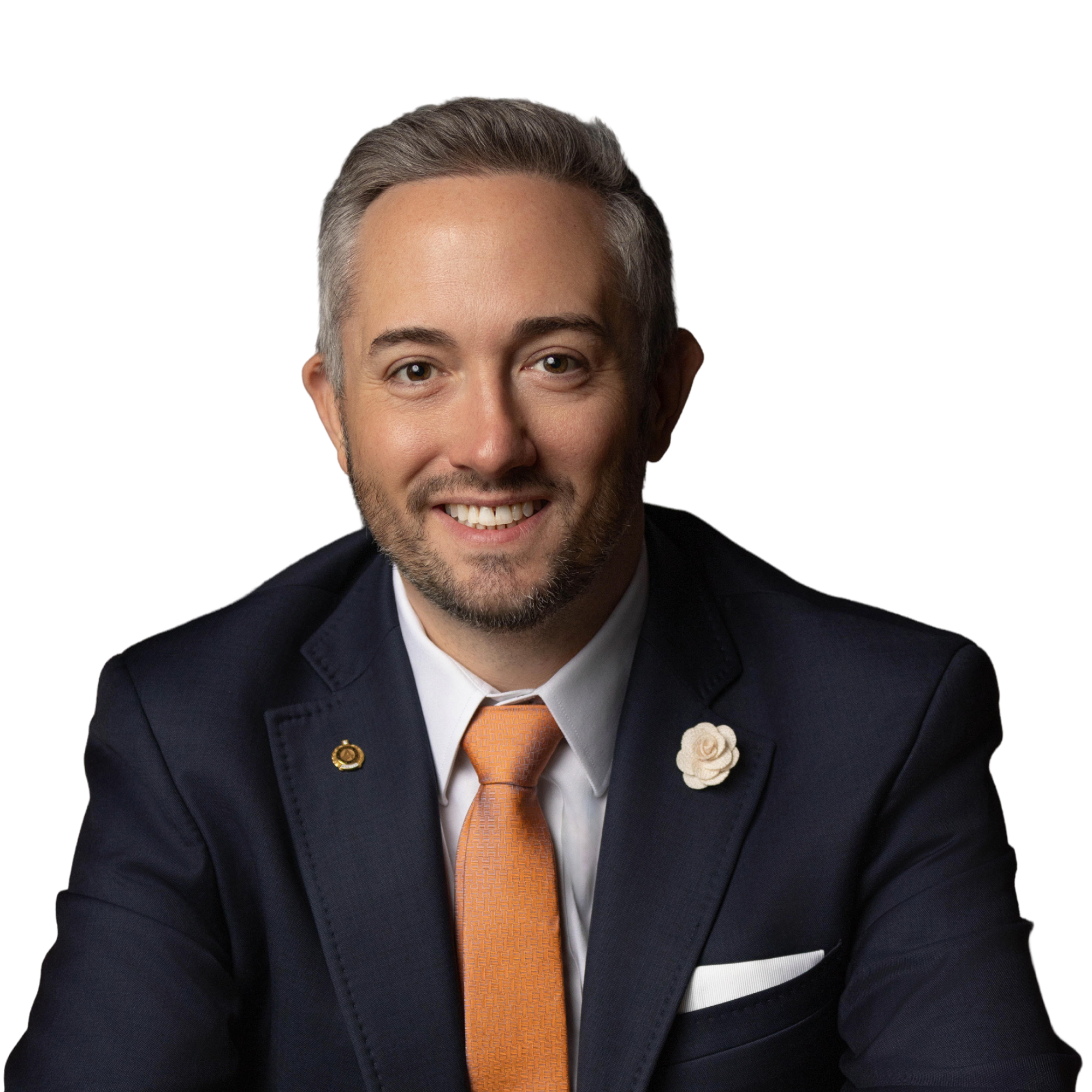
Dr. Joshua Austin, DDS maintains a full time restorative dentistry practice in San Antonio, Texas. He is an editorial director and monthly columnist for Dental Economics magazine focusing on dental products and technology. Dr. Austin lectures around the country to study clubs and dental meetings about these topics along with digital marketing and mental health. Dr. Austin is a graduate of the UT Health School of Dentistry and spent five years post graduation in the Department of Restorative Dentistry.
Done learning and want to get started?
Book a demo