
AI for the Modern Dental Group
Elevating Endodontic and Restorative Care
Transcript
Then I'm gonna start webinar. Are you happy helping me to to start it now?
Yep. Let's go for it.
K.
K. So it said once you click start, attendees can join this webinar. So AI, the manager is AI or or people to join?
AI we get started, Assad? Should we, get cracking?
We're through it.
Okay. Great stuff.
So,
hello, everyone. Thank you very much for joining our webinar tonight. So I'm Jack Lovett from Pearl. I'm based in London, and Pearl provides AI detections for dental X rays, and we have been doing so since two thousand and nineteen.
So to introduce you to our speaker tonight, doctor Asad Rahman, qualified from the University of Leeds in two thousand fifteen.
Since then, he's gone on to study from four different universities, undertaking, postgraduate, education in dental sedation, restorative dentistry, endodontics, and, most recently a master's in business business administration.
So Asad is currently the clinical director at AI Dental, where he sits on the board to ensure that all their thirty eight clinics across the UK are providing the highest standard of care of clinical care across, the UK whilst remaining, at the forefront of dental innovation.
So clinically, his practice is limited to, endodontics, and he will still work in the clinic two to three times a month.
As Assad will also explain, AI in general and specifically us, Pearl AI, how it's been crucial to his clinical, work throughout the past few years.
Outside of dentistry, Assad is also involved in the world of sports, where as director of operations for the Scandinavian stock listed company, Accentagroup, this is really cool AI the way, he has helped to develop and implement the strategy around growing sports sort of paddle in the UK and Ireland.
So we definitely have to get a game under our belts there, Assad, if you're up for the challenge.
Now before we start, if you have any questions, please pop them in the chat, and we'll go through through them at the, at the end of the webinar. And, hopefully, we we do get through, most of them anyway, but we'll go through that. So, yeah, without further ado, I'm delighted that Asad can join us AI. So I'll hand it over to the man himself, Doctor Asad Rahman. Over to you.
Thank you. Thank you for the kind introduction, Jack, and thank you and hello everyone joining.
I'm delighted to so many of you could join us tonight. So as Jack mentioned I've been a dentist now for ten years and I like to think in that time I've kept myself busy, enhanced my career in this ever changing dental world that we're all part of and I suppose when I reflect back to my career to date there were three real moments which have caused a huge shift in my working life and pattern.
Firstly was when AI decided to, after spending thousands on postgraduate education in restorative dentistry and sedation, I decided that the only thing I really liked was endodontics.
So as Jack mentioned AI decided to practice limited endodontics and I realized I then had to spend thousands more on on doing some further training which went down well with my family at the time.
Secondly was when I started my first non clinical role at a previous dental group and having worked as an associate my whole life I suddenly realized that a dental practice has to make money for us as associates to sit there and offer the best treatments in the world and the best care in the world.
So that was a real eye opening thing kind of obvious thing but real eye opening thing to see it from the other side the business side of dentistry.
Thirdly was a particular week a few years ago when I was in my first year of my MBA and I was doing my module in AI and at the same sort of time I was introduced to Doctor Karl Stanley, he's a prominent dentist in the States, some of you may know of him and he was a real AI of early champion of Pearl and all things and still is all things AI and digital and that was a real kind of hard hitting moment for me where I was able to see in my own eyes not just the technologies and endless possibilities of AI in the world as I was learning on my MBA but then also the direct kind of implementation of it with a company that was already at the forefront in dentistry.
So I've done some loose kind of aims for tonight's webinar that we'll look at but I hope will cover a lot more than that so very simply we'll kind of look at understanding how AI can streamline diagnostic accuracy and clinical decision making within multi location dental groups.
So when we have that appreciation how can it support us as clinicians?
Secondly we'll look at identifying practical applications of AI and a lot of the things I touch on tonight a lot of the applications are already out there so often I kind of go go to these talks and learn a lot on AI. You may see things in the future out there where people often talk about futuristic, a black mirrored AI of world where where things may be coming down the line but all the companies and and all the products I touch on tonight are already out there. A lot of them I'm utilizing, a lot of them maybe you're already utilizing but it's about how we can fit that into our workflows.
And then finally I'll touch on kind of my day job, AI non clinical role where I've helped implement AI across groups of practices, across groups of clinicians and really how it can benefit us and and be an adjunct to us as clinicians.
So always like to start whenever I talk about AI with some definitions.
Now artificial intelligence refers to the simulation of human intelligence by machines particularly computer systems. So in simple terms it's about getting computers to perform tasks that typically require human intelligence such as problem solving, learning from data, decision making etc.
Now AI comes in different forms, so the kind that we see in healthcare a lot at the moment and a lot of the applications is narrow AI. Essentially this means that it's AI designed for it to perform a specific task like interpreting radiographs with PIRR which we'll touch on. It it doesn't mean that it it's kind of an advanced theoretical concept where AI can perform cognitive tasks.
We're not there just quite yet especially in healthcare.
It's also important to remember and clear up some misconceptions.
AI is not conscious, it's not self aware, it doesn't think for itself and crucially it's not infallible so it will make mistakes and AI systems are only as good as the information and data that we input into them and it's important that we have that kind of understanding at this moment in time as well.
So what is out there?
Like I said I'll start off by touching on some of the products which you're you're all probably using at home, and and these as time passes will just more and more kind of implement into our daily lives. And then when I touch on dentistry and healthcare in a moment you'll realize why it's important that we also follow suit in dentistry.
So Google Maps, for example, already using AI to give us the best routes, real time traffic data, making sure we get, use the fastest route. OpenAI, the company behind, products such as ChatGPT which I'm sure you've all used and I'll show a fun application of this in a minute. I mean I use ChatGPT daily as a lot of you already do but I'll show a fun application of this that I used a little while back. Netflix uses AI to personalize our viewer preferences. Amazon for your preferences.
So you can see really just becoming a part of our day to day lives. And I mentioned on kind of a fun example, I'm sure some of you have used chatgpt like this but a little while back AI my son, I've got a six year old son, he was bored over his holidays and he wanted to do an escape room and within minutes ChatGPT was able to give me riddles suitable for a six year old at home and I was able to make him a little escape room around the house and something which just would have taken me hours to do myself wouldn't have been as entertaining but with the technology out there you know it's amazing what we can do.
So coming on to healthcare what are the kind of the wide ranging uses? Well again it's AI revolutionizing healthcare so as time passes we're going to end up with a point where we're going to be able to predict and prevent disease outbreaks. So we all went through that time in COVID and nowadays the World Health Organization uses AI tools to predict epidemiological models and monitor the spread of infectious diseases, so hopefully preventing or at least at best predicting a future outbreak earlier.
As time passes we'll also get to the point where drug treatments will become AI and and medical treatments in general become AI. So again the care that we'll receive, for our health will be AI for us, again using AI data throughout the previous trials and medical trials that have been done for years and years.
And an interesting one I read is that our NHS is also starting to use AI to optimise resource allocation and monitor AI beds and waiting AI.
AI always make a joke about this but next time when we're in a and d and we're having to wait eighteen hours well it's not the fault of a hospital manager it's now AI fault because they've mismanaged the resources there. So again amazing to see the the other applications and I'll touch on some of these at the end with what we can do in dentistry especially if you're part of a big group. So coming on to dentistry there's five kind of real areas where I believe AI will will make a massive change and we'll touch on each of these individually. So firstly diagnostics and patient communication, record keeping, treatment planning, predictive analysis and robotics. I'll touch on that right at the end and again I'll share some real world examples for all these kind of products that are out there already.
So coming on to diagnostics and communications, patient communication, for me there's only one real kind of product which is leading the way and that's Pearl AI, a system I use every time I'm in practice, I've used for a couple of years now.
Essentially AI, and Jack will be doing a demo in a few moments time, uses deep learning algorithms, uses AI data from having analyzed hundreds and thousands, effects rates, probably more than that now, Jack, as AI passing, and can identify conditions such as caries, bone loss, periapical lesions to such a high degree of accuracy that in some studies it's been shown to outperform humans.
Also providing us with faster and more accurate assessments.
So you may be thinking well what what what AI is that important?
Well as I touched on a few moments ago because AI is implementing into our daily lives we and we're all using in our daily lives, patients are also expecting dentistry to follow suit. So this recent survey of a thousand dental patients in the US found that sixty three percent are uncertain if the dentist is reading the x rays accurately and are we surprised there?
Again I always think we'd there's the old adage if you show an x ray to ten different dentists you'll get ten different treatment plans and it's no surprise that patients are picking up on this where we're looking at shades of grey and everyone's kind of giving them different opinions.
They could be showing their friends who are in the dental field and they're getting different opinions.
So without AI we're kind of not gaining the patient's trust that we could be gaining by utilising AI.
Fifty five percent would feel more confident if their dentist verified their x rays and eighty two percent would prefer the dentist to use the most advanced technology and AI technology if possible.
And again they probably don't even AI that there is this technology out there now but with Pearl dot ai it's amazing what we can do and I'll show some examples in a few moments of where it really helps me in my day to day role. But that survey clear as day feedback from our very own patients that they want dentistry to evolve and uptake AI.
So to touch on PEARL more specifically and the few general benefits that I and many other users around the world AI.
Firstly as I touched on the enhanced accuracy and diagnosis.
So after years and years of postgraduate education, years as a dentist, AI really thought that I wouldn't or shouldn't miss anything when looking at radiographs and we're all human and we know that's just not the case. I mean my variability changes in times of day as well. Evidence will say this whether you're first thing in the morning, getting close to lunch when you're a bit more hungry, your diagnostic variability just changes and AI, specifically Pearl AI, prevents that.
We're also able to detect caries and pathology a lot sooner and a lot earlier, and again extremely beneficial in prevent in preventing disease, preventing even restorative care, because we're able to tell patients about early caries lesions which they can then monitor and improve their oral health. Thirdly, AI workflows. So I'll hand over to Jack at this point because he'll explain how important and how amazing Pearl AI can be in terms of streamlining and entering your workflows.
So I'll stop sharing my screen there, Jack.
Okay. Thank you. Great stuff so far, sir. Okay. Can you see my screen okay, sir? Is that showing?
Yep. Hold on screen there.
Perfect. Okay. So what we're doing, we are looking at all two d imagery. So you've got your bitewings, PAs, OPGs, panels.
And what you'll see here are these little circles here. This is where it gets exciting in terms of reading radio crafts now. So when we click on this image here, what the AI is doing is it's instantly highlighting our attention towards the talking points or the important parts of that radiograph you're looking at. So what we're looking out for, our AI is all these, pathogens on, on the right hand side here.
So you've got, calculus, very good for bringing hygienists into that conversation. Same bone levels here as well and highlighting the severity. And if you look closely here as well, we're also showing two hundredth of a millimetre, the distance between the the crown and anal junction and the bone crest.
We also show caries, and when you hover over it, we're also showing you, how far the decay is going into the tooth. And you'll see the two different colors here. So we have incipient lesions and, obviously, the progressed caries here.
So where this works very well as well is if you have a, perhaps a remineralization product, it's it's very good to to talk to the patient about that. Or, you know, you you could say to them, we've seen this, etcetera.
We can keep an eye on that. We also show periapical radiolucency here as well. So, again, where Assad mentioned, we can have times where we can be busy, tired, distracted, creating pirate games for our six year old kids and, you know, maybe miss things. So the AI is here to essentially be that assistant to you, that second set of eyes. Again, we might be very drawn towards this, whereas you might miss the the carries here on the upper right six. So it's working very well as that clinical point of view for you being that system.
Where it also comes in incredibly well is for that patient communication.
Again, as as as I mentioned there that when you're showing patients, this gray black and white X-ray, oftentimes, they're just nodding at you and AI, and you know that they don't understand what you're pointing out, which is often when we have to get a pen and paper out and draw a incredibly bad picture of a tooth. Whereas now what we're able to do is click on the tooth parts right here, and that'll make it abundantly clear to the patient exactly what you are seeing and why you want to put x, y, and zed in their treatment plan. So just to give an example here, you know, we can say, okay.
We've seen this. This is the decay, this little pinks, pink splotch here. It's going through your enamel, the hard bit of the tooth, into the dentine, this green area here, the more sensitive area. So this is why we want to do x, y, and zed.
So, again, it's just making that that communication line much, much clearer for them. So, essentially, the AI is here to be an assistant tool for you and an educational and communication tool for your patients.
So, yeah, back over to you, Assad.
Thank you, Jack. I'll just reshare my screen there. I think you can all see that there.
Brilliant. So thank you for that Jack because it's always good at that point for everyone especially people who are new to Pearl dot ai to actually see the system in progress before I jump into some examples. So Jack's done a really nice job of showing the system but let's dive into some real life real world examples where Pearl AI has saved me. So as Jack mentioned AI practice is nowadays limited to endodontics. A lot of these cases are endo related however some of them because I've been using Pearl AI for a while now for patients when I was still doing some general dentistry.
So here's a case of a forty nine year old patient who presented me complaining of discomfort on her right hand side. She'd seen a couple of previous dentists, no one was really able to pinpoint AI of the reason to her pain.
Now these radiographs were taken by her GDP who had referred to me and because AI couldn't seem to get a diagnosis, they had no real working diagnosis and they were questioning the upper right eighty seven region which on first glance a lot of you may also be doing. So I took a detailed history and as is classic in these kind of circumstances it came back inconclusive. So the patient was still describing sharp pain lasting for minutes, occasional painkiller use, not worsened particularly by heart or colds, not worsened particularly by eating, just inconclusive kind of mixed signals.
Upon examination, a relatively healthy diagnosis, conducted special tests, came back normal to sensibility testing, no TTP.
Top AI, lower right, radiographs.
So because I had Perl AI at the time I was able to put these x rays into my compute system, put them into Perl AI and we were able to showcase straight away caries on the upper right six.
And crucially the point here is no PA pathology was highlighted which again did match with some of the special tests that are conducted and extremely useful and inclusive. So this patient after seeing two three dentists now because I'm able to show them this and get a diagnosis of reversible pulpitis upper right six where we can simply restore the upper right six, resolve their issues but they're confident in our diagnosis.
So a nice simple case to start off with there but perfect example highlights how when patients are questioning AI, when we're sometimes questioning our own diagnosis, in modern dentistry we now have this tool available to use.
Second example, this is a thirteen year old patient, new patient to the practice, who visited the dentist every six months and the patient and the mother's AI of almost presenting complaint was that every time they visited the dentist they needed another filling.
They'd never had any x rays before so first thing obviously I do AI whole work digital AI workflow give the patient exceptional experience, clinical photographs, x rays, intraoral images and then sit down to discuss with the patient. Now bear in mind I've just said that their presenting complaint is almost that every time they visit the dentist, the reason that they're looking for a new dentist is they're almost looking for someone to to back them up and say they don't need any fillings. Well, what do the x-ray show even without per hey. I some of these are quite obvious. But how do we explain that to the patient and how am I going to gain their trust simply by showing them black and white images?
Well, not an issue with Pearl AI because I can quickly highlight, everything on the screen.
Now the best thing here as Jack was touching on because of the depth perceptions that Pearl dot ai can give and and it can clearly clear as day show that the caries on the lower right seven for example is larger then we can easily explain to the patient why we're making clinical decisions. So for example the upper left six AI we're going to be monitoring that lower left seven why we're going to be monitoring that with a fissure sealant the lower left five why we're going to be monitoring that for maybe a cup a little while because again it's within the enamel. So you can now start to explain to patients, the depth of the caries but also the treatment decisions that you're going to make for them.
You can also explain the lower right seven, for example, there's no way we can monitor that. The caries lesion is just too large. Probably need some follow-up radiographs there in terms of a PA but you're able to explain why that restoration will also be close to the pulp and why in the future there may be post operative complications.
You're You're also able to explain the upper right cervid as well, for example, where you can see a previous restoration has been done and there's some slight caries underneath. Well you can potentially explain that the dentist is looking to maybe preserve the pulp there, leave some caries at the base of the cavity and then restore occlusally.
So now you can not only show the caries, gain you know effective consent but also gain effective consent for the treatment that you're proposing.
So next example, this is going to be an endo example.
Patient was referred to me for endo on the lower right five.
Pretty obvious, sensitivity testing, TTP showed and also the PA pathology shows up on the the x-ray.
The lower right six was responsive as normal. This patient AI referred to me for the end of lower right six and lower right five.
So after doing my test, the special test in the lower right six, it was responsive as normal, no TTP, vital. How am I going to explain to the patient that their dentist potentially has has got the diagnosis slightly wrong and they only need one endo, the lower right six could be restored. How am I also going to kind of liaise with the dentist and explain that? Well again, AI IECS clearly highlights PA pathology on the AI, caries lesions AI on the five extending to the pulp, the the six we can see the extent of the caries lesion and we can easily show show them it's far away from the pulp so they're able to to gain that understanding and the treatment that we're proposing.
So we go ahead fill the five and then refer back to the dentist to restore the six, again providing the correct treatment the patient needs AI AI.
Next example, here's a a a case where there's an an obvious issue on the upper f AI. And and, actually, this patient presented having not been to the dentist for many years, and this restoration that you see here is actually a restoration they did themselves by using AI kit from a pharmacy.
We all know those kits that they can get and they kind of just thumb a filling into their tooth and surprisingly it lasted for a long while until it started causing them some pain so they decided to come and get some dental treatment.
Well first of all, again unable to gain their trust, show them the PA pathology, show them that they need a root canal but also interestingly AI able to show them the differences in the bone levels and the the fact that they've because they've done some DIY dentistry at home, they've left an overhanging margin which has obviously been trapping food and they've had some bone loss distal to the five. So again I'm able to show the kind of the damage that they've caused and the potential future issues they may even have now relating to the six for example, which would have otherwise been a perfectly healthy tooth because of the the treatment that they've done.
So we go ahead restore, do the endo on the five, restore and again off to a dentist to provide a crown there. So again nice and easy example to show where Pearl AI kind of comes into its own in in explaining treatments, and, diagnosis to patients.
And here's the final example I'll go on before I touch on, other things.
This is a patient this time around was referred, for end of the lower right five, and when I do my special tests and, and take x rays unable to see this PA pathology on the six as well. So this time how am I explaining to a patient who's coming in been referred to me for one crown, one endo and a crown that they now need two endos and two crowns?
Well again Pearl AI easily highlights it there on the right hand side shows level of caries extending to the pulp shows the PA pathology and the patient is able to to unable to gain the patient's trust with the treatment plan. So again we go ahead do the endo in both the five and six and then back to the dentist for the crown.
So some great examples there of where I utilize Pearl AI day to day, gain, explain diagnosis to patients, gaining patients trust with treatment plans and this is obviously focused solely on an endo and restorative but there's a whole host of applications out there in terms of explaining periodontal treatments, bone loss, part of which I touched on there.
So we'll move on. If you remember a few moments back I'd said there's five things I'd touch on where I feel AI will change dentistry and the second of these things is is record keeping.
So again I'll explain some brief examples of companies that either I use or are out there for you all to use. I'll only touch on these very briefly but in terms of record keeping the product that I have used before is KOROKU. So again KOROKU, I'm sure some of you have come across this system out there, allows you to personalize your records AI AI.
Nowadays you can even use your voice to record patient notes and within seconds it develops your notes which are fully CQC compliant far more contemporaneous than we would do using a template and far more accurate because they're AI our our verbal cues.
So again an example of a product that's out there where you can utilize straight away from tomorrow in terms of implementing this into your workflows.
And the other point I want to mention here is if you are a dentist that's forward thinking and starting to use these technologies in your day to day life what effect do you think that will have on your patient base?
Well they won't have often seen things like this before so straight away be able to realize that you're at the forefront of dentistry and providing a different standard of care to them and implementing these new workflows will definitely change your career and again we'll touch on some of the metrics that we can see when people start to implement AI into their daily lives in a few moments.
Next aspect in terms of treatment planning, a company that I've come across here, utilized a couple of times before, is Chairside where they use AI tools to develop videos.
So Pearl AI gives you the view on your x rays, allows your patients to see your view on the x-ray in terms of diagnosis and explain the treatment.
Chairside will allow you to send them three d videos using AI technologies, for them to view and understand the treatment that they're going to be accepting.
And, again, when you utilize this, it will completely change the way that you're able to communicate with patients and completely change the way your workflow and your new patient journey in specific works.
Moving on to predictive analysis, there's companies, such as Dental Monitoring and this is an interesting one because orthodontics for years and years has kind of, I don't know if there's any orthodontists watching they they might come back to me on this, but has kind of been the same principles.
With dental monitoring we've got the opportunity now to change the patient journey AI if we're providing AI systems to patients they're having to come and see the orthodontist far less and often that can be a big barrier to patients up taking orthodontic treatments, any longer term orthodontic treatments.
So with dental monitoring AI AI tools patients are able to take images off their treatment, send it to the to the to the dentist or orthodontist and have fewer visits so completely changes their patient journey. And for me technologies like this where they're using AI to predict your AI and allow dentists to view images whilst patients are in the comfort of their own home have the potential to really change dentistry because are we going to get to a time in the future where patients are doing this as part of a pre checkup and then when they come into the dental practice their their journey throughout the dental practice is a lot smoother, they're able to obtain the treatment that they require a lot faster.
So this is a really exciting one used in orthodontics but I really see the application of predictive analysis in a lot of aspects of dentistry as time passes.
So AI deliberately paused in the fifth aspect of robotics because I'll touch on that at the end and I want to start delving into AI at an organisation level and AI from my perspective where in my role as clinical director of a dental group how we can implement these technologies into our daily practices into our workflows.
There's a few kind of things to focus on here. The main thing for me is that we live in a complex litigious world. We also live in a world where dentists, as clinicians, we're self employed and I certainly wouldn't want a technology being implemented or imposed on me. So what we're going to touch on over the next few moments is if you are part of a dental practice or a dental group or an owner how you can AI AI and bring your clinicians on a journey with you to implement these newer technologies in a way where you'll get a massively different and improved uptake to their use and obviously this is Jack's day job trying to help clinicians uptake Pearl AI for example and I'm sure he'll have some thoughts to share on this at the end.
So at AI, we're happy to say that we'll be partnering with Pearl, across three sites to to run a pilot phase over the coming months.
Now as I mentioned it's important that we bring our clinicians on this journey with us and having implemented Pearle AI and similar AI technologies across large dental groups before, I know that pilot phases are the way to go. And you may also, if you even if you have one practice, you may want a AI phase amongst a few clinicians where you feel you can utilize those clinicians to AI this new technology. And once they're comfortable with it they can almost become champions to try to expand it across your practice or your group of practices.
So that's why we've gone with this three phase approach we'll have a pilot phase for for three AI, we'll then go on to a cohort step two where there's cohort one where we'll have ten additional sites and by step three we're hoping all remaining sites go on board with PERL.
So I touched on a few of the reasons why we've gone with that approach and apart from the obvious that as I mentioned I've seen a pilot phase work before, what are the specifics that we're looking for in terms of our AI, if you're part of a large dental group and what AI of sites Pearl AI is best to be implemented on. Well firstly we're looking at a mix of sites so two of the sites that we'll be trialling are specialist only referral centres. At Gensma we're proud to have five specialist only referral centres across the group and we feel the specialists in this practice will really give in a funny sort of way Jack a hard time and really trial Pearl AI to the maximum and give us feedback on on on the system.
The third site that we'll be using is a large general dental practice AI, thirteen chair AI, where we have a mix of general dentists and incoming special interests and specialist dentists and again we feel it's good to compare the sites between a specialist site and a general dental practice site.
Secondly we want a few practicalities in there so we want to make sure we've got sites where there's sufficient internet speeds so that per layer can be utilized maximum and where there's practice management systems. I know Jack didn't touch on this earlier, but systems like SOE Dentali are great for Pearl AI. It really seamlessly embeds into the system. So we've gone with, three of our sites that have these in place.
So what are we trying to track when we look at Pearl dot ai and what we're hoping to kind of achieve throughout the trial period and then hopefully expanding?
Well very simply we want our treatment conversion rates to go up.
We want to see does Pearl AI help that?
Hint it does and I'll touch on that in a few moments, I've seen it before and seen it with myself.
Secondly we want to see does the treatment value for new patient treatment plans increase.
And then some softer metrics we want feedback from our clinicians, from our patients, because as I touched on at the start it's important our clinicians are fully on board with this system if if we are to implement it across the estate.
So as I touched on what are we hoping for after twelve months and after a trial period and what have I seen before?
Well I've seen having implemented this across a AI dental group before AI to Pearl AI, we found that there's always an increased treatment acceptance rates and I'll touch on some of the the numbers on this in a minute.
We also found standardized clinical outcomes are better. Some practices ended up with high double figure increases in in revenue and this was compared to the twelve month directly prior to the practice having Pearl AI. Now I can't go on specific numbers and and it's not fair to share numbers when from a group perspective when we talk about these things but I'll share my own example.
In the time that I started to use Pearle AI my role in my previous job was changing so I was doing more and more non clinical work and less and less clinical work so I was having to change from three three and a half days in practice to two days and as time passed I was able to see completely no change in my income now working on two days because the treatment acceptance of my patients was far greater AI Pearl AI and these were patients I'd serviced, I'd seen them for three four years. I felt I'd gained their trust. They trusted me, but that final little piece was missing where they were able to almost independently verify treatment utilising AI and the treatments I was proposing.
Now that they could see it they were going for that treatment. So a massive benefit to my own personal career and I said I'd touch on some numbers and these are numbers that Pearle AI themselves have from across the world implementing Pearl AI. You can see some of the figures there, percentage of fillings, acceptance of fillings goes up nineteen percent. That's always a real interesting one for me.
Scaling route planning goes up thirty seven percent. Again, another interesting one because these are treatments which patients have always needed, but why are they holding off on these treatments? It's simply because do they not trust the dentist? Do they not trust the treatment being proposed?
AI Pearl AI as we said it completely takes it out of the way. Look at some of the other figures, implants goes up eighteen percent. If you're a practice owner and your implants go up even five percent year on year you're AI, and look at some of those figures. So all of a sudden you're serving your patient base from a completely different clinical perspective, providing them the treatment that they need and they're accepting it, and then on top of that you're also benefiting financially.
So absolutely incredible what it can do.
I suppose I'll turn on my light Jack, I wasn't expecting it to go dark so soon as I AI I'm sitting in the dark there.
So to move on AI thought we as we're wrapping up close to the end and as Jack touched on if there are any questions AI be happy to take some questions at the end. I wanted to touch on AI at an organization level and the responsibility that we all have when implementing AI. Now it's a new technology and there's always kind of scaremongering in the press in terms of where are we heading, are robots coming in and I'll touch on that in a few minutes. But just in terms of newer technologies AI feel the main things that we have to all bear in mind is we have to keep our patients, our patients data and our fellow professionals safe.
So the term responsible AI has actually been coined and it involves considering the impact of AI on people and society. It's about creating AI technologies that are aligned with human values.
So if we are to implement AI as time passes in healthcare and dentistry in specific we must do so in line with the ethical principles set out by the GDC and as I mentioned before ensuring patients are safe and gaining their trust by being transparent about how their data is being used. And if we focus on those three things I think we won't go too far wrong but only time will tell what the future holds.
Talking of the future and this is where I'll kind of wrap up tonight and this is getting really innovative you may have seen last year this new story came out where a robot dentist completed the first dental procedure from the point of AI a patient, preparing cavity, filling the cavity The first question I had when I saw this and I'm sure some of you are having is what's the UDA rate and what's the UDA target for a robot dentist?
AI mean wouldn't it be incredible if robots were just working across the country, Obviously I'm joking, but it would certainly help to solve the NHS dental crisis we're all facing.
Now this robot dentist was developed by a US based company called Perceptive, who were backed by a dentist known by called Doctor Ed Zuckerberg and as the surname gives away he's the father of meta founder Mark Zuckerberg.
So you can see we're not too far off from robots being implemented into dentistry.
So the question is then what happens to the dental workforce?
Well AI other industries AI, where AI may entirely replace certain careers as time passes, recent surveys in the US have found that dentistry is very low down on the list of careers which could be entirely replaced by AI.
And I mean are we surprised that who even out of versus dent professionals would want a robot dentist to do a filling even if we could say it's going to provide a far greater accuracy, we still want that human connection, we still want that empathy from a human dentist.
And ultimately the goal and and to wrap up tonight ultimately the goal of AI should be to use it as an adjunct to improve our case acceptance, to detect disease early, to show patients and gain their trust, obtain more valid consent and free up us free up us as clinicians to spend more time with patients and less time on admin. And if we think about technology in that way, if we're responsible with AI as we implement it throughout dentistry, then we won't go too far wrong.
Thank you very much for listening, and I'll stop sharing.
And then back to Jack.
Fantastic. Thank you so much for that, Sad. That was, super insightful. Love the figures that you're able to present as well. And, one thing I didn't touch on well, two things I didn't touch on during that demo was the fact that we have that seamless integration with Exact and Dental Vision AI as you mentioned, but also the time saving element of it all. Yeah.
The fact that you are able to clearly explain to the patients exactly what's going on, it can it can, save lots of time in terms of getting that pen and paper out and trying to draw a, a rubbish picture of a tooth. So we do have one question here, which is probably a good sign because it meant that you were very detailed in your your webinar there.
So we got through most things. But, I don't know if you can see it here or AI, but it says Yes.
I can.
Yeah. As an endo, how do you balance, Bitewings, I guess, AI product like Pearl versus CBCT? I think that's a really good question, actually.
Yeah. I was probably gonna butt that back to you because as we know, Pearl AI at the moment is on two d radiographs. So utilizing it for for two d radiographs, PAs, AI wings as I've shown tonight. It's not just there and OPGs as well but it's not just there yet on on three d imaging such as CBCTs but we're getting closer, Lee, Jack.
We are indeed.
I always AI to be careful about when we say it's ready.
But, we yeah. So AI, I'm gonna refrain. I'm gonna really hold back from trying to say that. We we we, have our team working on it. We believe it's ready, but then, as you also talk touched on there, I said, about the responsible AI. You have to get all sorts of approvals, whether it be GDPR, FDA, CE Mark, MDR, which we do have, of course, for two d. So we're just going about, obtaining that for three d.
As to when it's ready, I I don't know. If you're going to really, really push me, I would say sort of maybe second quarter next year. So, yeah, that's that's all to come as well. So second opinion is just one of many products Pearl has, but, it's as as Sarah has spoken about there, it's it's super helpful for both internal and external with patients.
Yeah. So I mean, yeah, just to maybe answer that question in a different way as well. So when I'm doing endo CBCTs, for for certain cases or, from in my mind are indicators if there's any re retreatment I want to do. If there's something I I can't visualize on a two d image then obviously I'll get to CBCT and the whole point there is this is getting very technical on endo now but the more you know you can't have enough information before you start a case especially if it's a referral case for a retreatment for example the more information you have the better and and again that's where Pearl AI helps with that.
Yeah.
I also like this comment this this question as well.
AI, Asad. And and this is from anonymous as well. Probably a good thing to put yourself like that. So Hi, Asad. I'm part of GenSMILE and looking forward to having this implemented. How quickly do you think to push it?
Are you also gonna support us with internal training?
This this is a great question on internal training because, again, I'll pass over to Jack in a minute. But, yes, on a wider point of view, I I know it's anonymous who shared that, but if you want to get reach out to me, then then we can discuss it. Like I said, there's no set time frame on it at the moment.
We want to do this trial phase first. We want you know AI I said it's important we bring our collisions in those sites along. With support we get some champions across those sites apart from just myself and then we can slowly then it becomes a lot easier to implement it across other AI.
So if everything goes to plan you know we'd be talking months not years but we have to see how the pilot phase goes etc.
In terms of internal training, I'll touch on my example and hand over to Jack but it's another reason why we've chosen AI AI. There are the radio radiograph systems out there doing similar sorts of things, in my opinion, not as good as the quality that Pearl AI gives even in terms of imaging etcetera, but the best piece is the support that Jack and his team will give.
So, our teams are going to have kind of one to one support, lots of training, not just from AI, but mainly from the Pearl team. And if there are any teething issues, I I personally, again, Han and I had never had any teething issues, but I knew if there were teething issues, I could reach out to Jack, and his team straight away to to improve that. But do you want to touch on that more as well, Jack?
Yeah. Absolutely. And, we put a big effort and a big push in expanding the UK team here. So we've got many people on board.
And, so there's there's always that support on our hours as opposed to US hours or European hours perhaps. And, so we provide that that training, just giving you best practices of of, how it's worked in other clinics, but we do also like to be specific to the certain groups that they're working with. So as I said, as you know, we had our deep dive session as we call it, where we like to really understand the group, what you're about, perhaps where you found difficulties, and then, tailor our training to how we would, do that training with your your clinicians. But, honestly, I couldn't think of anyone better for doing internal training than USAD.
You obviously gone through it today in terms of how you speak with your your patients and how you AI it, to work alongside it. So, yeah, I'm I'm, excited for this, sponsorship we have with GenSMile.
Definitely. Yeah. Yeah.
I, I think that's it in terms of questions.
But so then, I guess, all that's left to do is, give you a massive thanks again. AI said, honestly, that was truly AI, and, I hope, all the attendees found that helpful. And, of course, if you have any, further questions, you can reach out to either Sad or myself.
It's just jack at hello pearl dot com. And I'll be happy to take any questions of yours. And, yeah, we, look forward to hearing from you.
Thanks, Jack. Thanks, everyone. Take care.
Thank you, everyone. Bye bye.
Meet Your Host
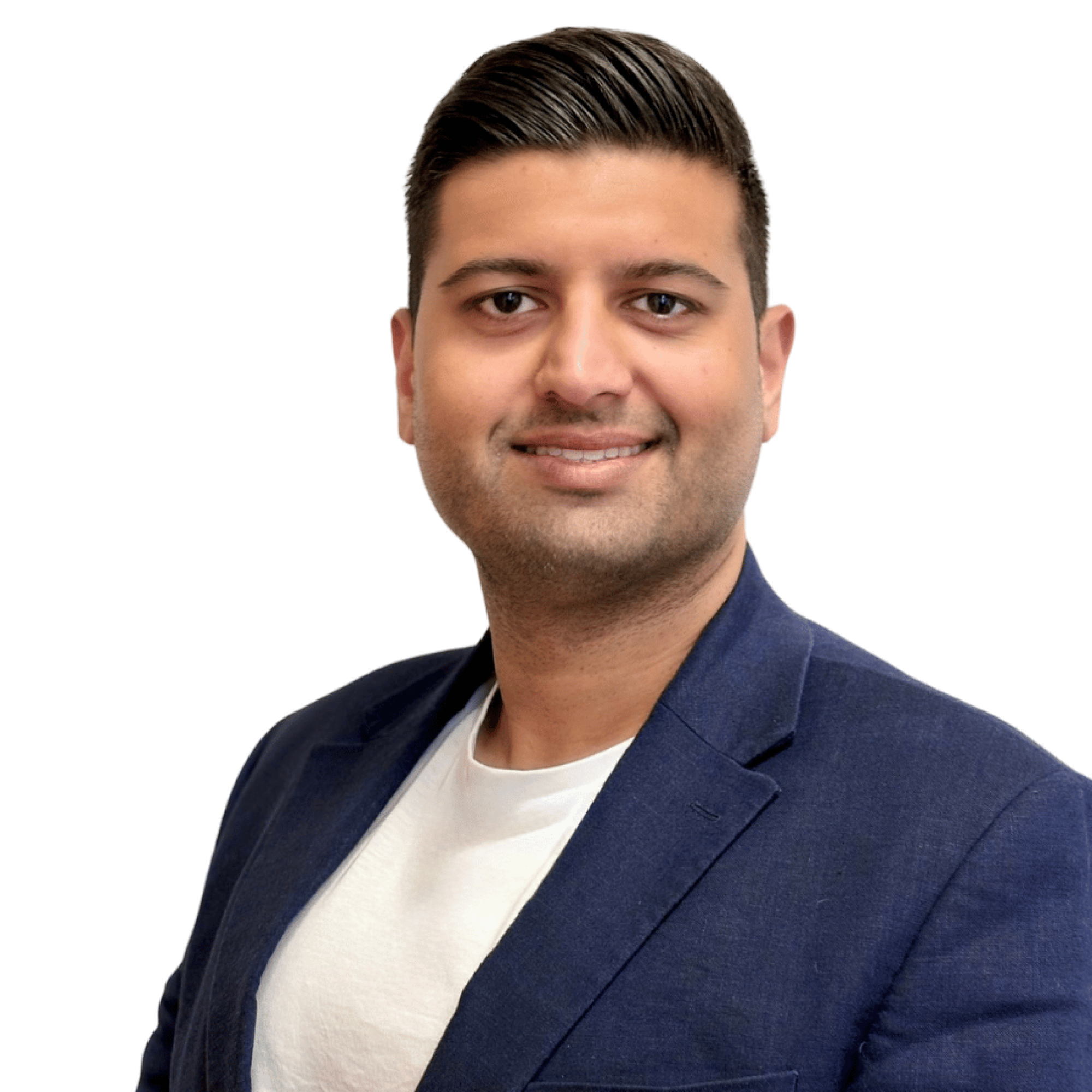
Asad qualified as a dentist in 2015, but his career has extended well beyond clinical dentistry. His experience spans clinical dentistry, leadership, organisational change, business strategy, commercial growth and high-performing teams. That combination gives him a valuable perspective when working with dental practice owners. He understands the clinical environment. He understands the demands of leadership. And he understands what is required to build and grow a successful organisation.
Done learning and want to get started?
Book a demo