

AI Advantage in Action
Increasing Treatment Confidence and Case Acceptance
Transcript
Hello, everyone, and welcome to our Pearl webinar. We are very excited today to have everybody here with doctor Alderman, and we're gonna give everybody just a few minutes to jump in.
Again, some of you joining us from the the West Coast just getting started and on the East Coast, probably lunchtime and in the middle of the US. Right? You're right in the middle of your day. So thank you again for joining us. Happy to have you here for this very exciting conversation.
We would love to hear where you're joining us from.
Doctor Alderman, where are you joining us from?
I'm actually in Fort Lauderdale, Florida today.
And I'm exactly on the other side of the United States.
I am in California, and I know Kimberly who's joining us today. She's also, in Arizona. So, again, we are going to try out the, q and a section or the chatbot with you guys. We're gonna have a lot of time to ask doctor Alderman some questions at the end. Feel free to jump in the chat and let us know, where you're coming from. And, also, if you'd like to let us know if you're a dentist, hygienist, assistant, front office, We'd love to get to know the audience. We're gonna do some interactive games and such, so we'd love to, make this a little more interactive if possible.
Alright. I'm gonna go ahead and jump in and get started here.
I am Sheela Roth, head of clinical education at Pearl, and welcome you to today's webinar, AI in communication and dentistry.
We are proud to bring this event to you in partnership with Patterson Dental. I'm also joined today by my colleague, Kimber Liquitian, our director of partner growth here at Pearl. Together, we're passionate about helping practices thrive by combining clinical excellence with smart, scalable technology.
Let me start with a question.
What if improving how we communicate with patients could not only reduce team stress, but also significantly increase treatment acceptance using the power of AI?
That's exactly what we're here to explore today. In this session, while we're together, we're gonna talk about how you don't have to do a lot of different things here. Everything you're doing is great and how small tips with modern AI tools will transform communication and dentistry, making it easier for teams to educate patients, buy back some time. And, also, you're gonna hear about practical examples, tools you can implement right away, and really interestingly enough, get behind the eyes of what the patient is seeing. Right? They're now able to see what we see as clinicians.
Now to guide us through this exciting topic, we are honored to welcome an incredible guest speaker today, doctor Catherine Alderman, a seasoned dentist, entrepreneur. I probably need a half an hour to introduce you, but I'm gonna try to keep it short. An AI advocate with over twenty years of clinical and business experience. Very unique because after scaling her own practice into a successful network of over seven practices, she earned an MBA and then went on to complete an AI product design training at MIT. So I don't know much more, what else you could do here, but she is also the founder of Intelligent Care Alliance and the creator of, tell me how to say this, doctor Alderman, Yekaterian?
It's a actually, catarina. It's my first AI product that I created, while I was in, MBA school, and it's after my grandma.
So that's Oh my goodness.
That's actually my full name. My name in Russian, but nobody can say it including me.
So Including me.
Including me.
So that's why and it's really, really difficult to find, names for AI products. So one day, I woke up, and I thought I will do it in honor of my grandma.
Oh, I love that. That is so, so great. Well, we are so honored to have you today. I will turn it over to you and, let you take it away, and thanks again for joining us.
And I love to say thank you, Sheela. Thank you. Sheela has been just a very wonderful person to work, visit Pearl, and we really we end up talking a lot, and she really helps me to prepare for presentations.
And what I love about Sheela is that she understands, as a former hygienist, what it's like to talk to hygienist, what it's like to talk to dentist, and what it's like to have a patient in front of you that has dental needs and yet may not believe the urgency of needing to fix it. So, Sheela, thank you so much for making this happen. Thank you for connecting with me, and I'm excited to talk about, very important topic today, how to help patients to hear us. Can you hear me well? Can you hear my value well? Absolutely. We can hear you great.
So let's do it. Before I start, I want to say thank you. Thank you to Tarixson Dental for bringing this webinar to you. I want to, of course, AI big thank you to Pearl.
The future of dentistry is powered by AI, and Pearl is, one of the leaders in this area. I also want to tell thank you to ChargeGTP for helping me to create QR codes and, content. And, I want to thank GammaAI for making this presentation to be much easier much easier projects than it used to be. And I want to thank Leechat images for helping me to create images.
I love that, to create images. And I want to, thank my team at Intelligent Care Alliance for helping me to deliver this content and to help me, for helping me to support dental offices, not just in United States, but globally. So thank you to everybody. This is not just a product of my work. This is a product of, many humans and the AI products working together.
So I wanted to so when people ask me what I do, it's, it's a lot to say. But, really, what I have been doing for the last twenty years is helping grow in dental practices, training dental teams, training hygienists, training dentists, training business coordinators, and, seeing patients.
I have been a very busy full time working mom, a business person, And, I have three kids, but I have, my two girls plus, my dog here. So I have my three girls here. And, so I am a very busy mama. I know what it's like being busy.
I know what it's like working full time and, then needing to go home and being with my kids and wanting to be with my kids. So so my passion for AI is really is really has a good reasons that for twenty years, I don't know how I did it. I honestly don't know how I did it. Grow in multiple dental locations, doing marketing, dealing with a hygiene shortage, dealing with a COVID, challenges, and building dental startups.
And it's it's AI I don't know how I did it. Honestly, I don't know how I did it while being a wife and a mother and a friend.
I I but but so when AI came out, I absolutely fell in love with the AI.
I found an AI to be more helpful and a better assistant than I ever had in my AI, and I didn't have to pay for that. So, obviously, I didn't just fall in love. I became absolutely passionate about AI to support myself as a mother, as a business owner, and support dental offices as well.
So my agency what we do at my agency, we implement AI, we create custom agents, and we really help dental offices to bring AI to the offices and make it easy.
So, again, I love it. I love it. I do have to say AI feel better.
I look better, and I have a better life since AI has entered my life because I don't feel as overwhelmed as I used to for twenty years of running businesses and being a mom before AI, came in. So I do feels that every day I wake up, and if I have a challenge and if I have a big project and I start getting that feeling inside, how am I gonna get it done?
Then I then I remember, hey. Can AI help me today? And the answer is always always, always, almost always, yes. It can help me. So today, I'm gonna talk about how AI can help you in a patient interaction.
Before I do that, I want to, say, who do you think is my favorite girl? I just showed three of my girls, and, I cannot say I have a favorite child, favorite girl, but there may be signs.
There may be signs.
I just had to share it. So let's talk about case acceptance. So we're talking about AI and a case acceptance today.
Really, case acceptance is a big word. Case acceptance is about trust, communication, and showing value to our patients. Case acceptance in dentistry, when patients will say yes AI expensive treatment or despite any objections that they have. But, sadly, case acceptance as dentistry is really low. We usually have forty five percent average rate for case acceptance. What it means that if hundred patients come to see us, only forty five patients will complete the recommended treatment, which means there is twenty to seventy percent of untreated disease that impacts overall health.
The good news that we have hundred percent potential to change this.
How do we change it? Number one, we have to understand AI is there such low case acceptance in dentistry.
Number one, people don't like dentistry.
They just don't like being in our chair.
They're fearful.
They have a bad perception about dentistry.
But, also, they may lack symptoms.
Most dental disease and most grand disease doesn't have any symptoms. So most a lot of patients perceive that, there is no urgency. There is no pain. They don't see those problems unless it's a broken tooth or something is really hurting them.
They don't suck the symptoms.
We also have to remember there is too many distractions.
Disney's competing for our patient's attention.
Cruise lines competing for our patient's attention.
Car commercials, new buying a new home, and on and on and on. Everybody is competing for our patients' attention. So, our and life is very expensive. So that brings us to the next point, cost of treatment.
Financial concerns create delay, and our patients don't want to spend money.
AI that they don't really want to do, sometimes they don't think they may need.
Our patients just don't want to pay for the industry.
On top of it, most patients don't have a good insurance coverage, so there is a very limited or no insurance coverage for treatment.
So that makes dentistry not a desirable service to pay for and, for patients, to have a low acceptance rate.
So let's talk more about attention spans.
Everybody's competing for our patient's attention. Everybody's competing for that. And, really, our attention spans of our patients, really short. So, we do have to talk about social, social media reality and, communication challenges.
A lot of times when a patient's sitting in front of us, we already have a low case acceptance. But on top of it, attention spans are short.
So they our patients want visuals. They want something bold. They want something visual. They want they really they really trained. Their mind is trained something to get the attention.
So how do we do that? Today, we will talk about how to overcome the five barriers to case acceptance, how to overcome with barriers to low case acceptance in dentistry inspired by Instagram and TikTok.
How do we do that? Today, I will talk about five rules to increase treatment conference and case acceptance using a advantage.
What steps have been tested and proven to be golden rules by working with over six hundred dental professionals?
So what is the rule number one? And I will go over in details. What is the rule rule number one? We have to explain the problem first and the consequences and a solution to the patients. Rule number two, we have to use visuals.
Number three, we have to use human nonverbal communication.
Then we number four, we have to keep our presentation simple, short, just like an Instagram style. And then finally, we have to work with our financial team on scheduling patience and really talking about was, finances with a conference. So let's go through this. Let's go through this.
We can overcome barriers to low case acceptance by following those five rules. We can do it. And we can do it in any office regardless of experience or how long we have been in the industry. If somebody understands those five rules, they can have a higher case acceptance starting today.
So let's go over it. Number one. Rule number one. Explain problem, consequences, and a solution.
Imagine if you're a patient and if you're sitting in front of me and I'm your dentist. And if I tell you, miss Sally, you have a cavity that you need to fix versus if I say this. Miss Sally, most cavities don't hurt.
They just start out as a space in enamel. But as that cavity grows, that cavity reaches into the nerve space.
And once that happens, most peep most patients end up having pain and need root canal or removing the tooth.
In your case, miss Sally, that cavity has not reached the nerve yet, So we can fix it with a dental filling, and you should be good. That's it. That's it. I explained the problem in general. I explained the consequences, and then I personalized it by telling Sally where her category is, and then I gave her a solution.
Saying it in this pattern increases case acceptance and a patient's understanding dramatically.
So that's rule number one, to explain a problem, consequences, and a solutions as a step one.
Notice that I use the visual because seeing is believing. And number one way to increase case acceptance is by catching the scroll happy mind by using visuals.
So So what is the second second rule AI of a blend with the rule number one? Use visuals every time.
Seeing is believing.
If you're talking about a bone loss right here, well, if you're talking about cavities, the best is to show visuals.
Attention spends are short. Using visuals is a great way to increase it.
By increasing attention span, you build trust and increase that case acceptance automatically.
And it makes a case presentation day and night.
This is what most of us had, and this is what you can have by using a diagnostic AI such as Pearl.
Again, I love the colors.
I love the colors, and patients love it too. When you pull it up, that is so colorful, so visual that patients will pay attention automatically. Just the colors, just how great its looks and how visual it is. Patients will pay attention to that.
Talking about calculus, this is not just about cavities. This is about calculus as well. Honestly, I don't see the calculus here. My eyes, I can see it right here, but, AI don't see every spot.
So I love help of AI showing it to me and pointing out what I'm not seeing.
The patients feel the same way.
And it's not about just cavities. It's not just about, cavities or calculus.
Pearl AI has an ability to show more, than just talking about cavities or gum disease. It's actually allows you to utilize CBCT segmentation as well. And it allows you to talk to patients about orthodontic cases, airway treatment, and even, talking about root canal treatment as well. And, to talk about potential implant placement or a bone health for those patients that do need dental implants. So this is so much more.
You can use it for so many more treatment options. And, again, there is so you can do it for oral surgery. You can do it for orthodontics, airway management, failed root canals, AI pure perapical radiolucency, bone level. So this is, this is just amazing how much visual we can provide to patients to increase that confidence in near treatment and increase that case acceptance.
What is rule number three? Despite using visuals and really having that power of a visual presentation, we still humans working with humans.
We have to remember importance of human nonverbal communication.
For example, when we present the treatment, I always tell my hygienist and my doctors, sit your patient up, presented eye to eye. Because if a patient leaning back and we're sitting above the patient, the patient feels that the patient may feel that we feel superior to them, and, that will decrease the case acceptance. So I always remind my human teams that it's great to use the visuals, but we really want to remember those AI manners of a healthy nonverbal communication. So CT patients up at the eye level. You know, watch your body language because, really, people, people will see if you relax then, how was your body language. So make sure your body language, represents positive communication.
And facial expressions, I always, I always remind my, you know, younger female doctors and a hygienist, when you're talking about something like a gum disease and, cavities, make sure you don't wrinkle your forehead and you have neutral calm demeanor because we're talking about, you know, some dental treatment and, showing pictures. And if you start wrinkling our forehead, patients may perceive that we are, you know, disgusted with them or we don't like them. So it's very important to watch our facial expressions and to keep a neutral calm demeanor.
So, again, it's great to use visuals. It's great to use AI. But don't forget that human, healthy, nonverbal communication.
Rule number four. Again, coming back to Instagram and TikTok. Keep it simple and short. Think about the social post you never read.
Think about it. You go to your Facebook feed or Instagram feed late at AI. And if there is a long social post, you don't read them. You really scroll and skip them because we don't want to read a long text.
We want engaging, fast, and easy for our brain to process.
So that's why when we talk to patients, try to keep your sentences short and really use everyday language. Don't use don't use words like, periodontal probing or, endodontic treatment or periodontics.
Use the words that patients can understand and avoid filler words AI stop or and really skip the dental jargon. So keep it simple, professional, and short.
And rule number five, schedule next appointment and present finances confidently.
Because when we schedule appointment, we actually commit patients to join the treatment.
So when we educate and use visuals and really convince the patients that the treatment is needed, we want to make sure we schedule the patient.
And while after scheduling them, we always want to make sure we discuss payment options and give payment options to our patients as well. And if they have insurance, we really want to make sure we use those insurance benefits.
I do have to say I love claim check with Pearl because it allows you to get those insurance claims optimization and, get with insurance breakdown very quickly. So this is a great service to rely on in the days of where you have to call on was, insurance benefits are over. So this is a great way to help you to have that financial discussion prepared quickly by relying on Pearl insurance verification.
So we can close an attention gap. Obviously, we have barriers to treatment.
We have, patients in our chairs that needs a treatment but may not be you know, they have barriers. They have a short attention span. So it's really comes back to five rules you can implement for yourself and for your team to increase treatment confidence and case acceptance using a advantage. And the reason I say using a advantage because I used these rules for years.
And now with the AI, it just makes it so much easier and so much better and so much more powerful. So I do say five rules plus AI advantage. So so rule number one again, explains a problem and a consequences and a solution only at the end. Use visuals every time every time.
Use human positive nonverbal communication.
Keep new explanations simple and short, and present value first. Schedule this conference. Always schedule your patience for the next statement.
But case acceptance is a team sport. It's really the team sport. If you get excited and you go back today and you really say, okay, people. I'm gonna be doing a really good job in the case acceptance.
Just doing things that I described will help you to increase case acceptance for your patients.
But case acceptance is a team sport. You can literally go from forty five percent of average case acceptance to seventy, ninety percent if you work as a team. So how do we work as a team? We work together with a hygienist, dentist, assistants, and admin team. And I will show it to you really quickly how.
So, again, with the clinicians, we can use AI in the back. And with admin team or business team, we can use AI upfront. We can actually, print out those treatment plans. We can use AI to help us with insurance benefits So we can communicate finances quickly and confidently, and we can use, we can use AI to help us to know who needs to be scheduled for uncompleted treatment. We can use it, in a clinical, and we can use it, in a business area as well.
So I will show you. Again, five rules and five blocks. I want to remind you that really high case acceptance comes down to is using visuals. It's true. If you can do one thing after today, use visuals.
And AI visuals using AI is the best.
So that's really if you can remember one thing today, if you say, okay. I don't quite remember what the five rules. Just remember one rule. Visuals and use an AI. Before I had a AI, I would use intro cameras, atlases, pictures.
AI is so much more powerful because, number one, it is great visual, but also more and more patience, things that AI knows better. So that's really psychological, AI, a psychological belief that patients things that AI knows better than a dentist or a hygienist, and they trust AI, often more, because AI is neutral. So, again, not every patient, but as we progress to the AI errors, that's gonna be more and more the case. So if you remember one thing, use visuals and AI.
Again, let's talk about the team sport.
I love hygienist. So I always talk about hygienist. I always talk about hygienist. I always said that if I can rule the world, hygienist would be by my side, and here's why. They're super intelligent.
They go to school for a long time. They care about their AI they they care about their patients, and patient trust hygienist often more than they trust me as a dentist.
So I love working with a hygienist. So I feel that the heart of every successful practice is a hygiene department. So I feel that hygienist should be using AI. And, again, hygienist cannot diagnose, but hygienist should and can educate. So by using AI, hygienist become a powerful educators saying this is what I see here, but, the doctor will come in and confirm, but this is what AI is showing me today.
Again, using AI empowers hygienist with any experience, any amount of experience. Maybe they're just newly graduated from hygiene school or maybe they have been doing hygiene for a long, long time.
AI allows them to see things regardless of their, experience. So this has really becomes a powerful tool for hygienists to use.
I love it.
Again, it helps hygienist. Hygienist are very busy. They're very busy. There is a high demand on hygiene schedule.
So it's very nice to have AI tool that helps us to know if there is any patients without a dated periodontal chart. And because periodontal health is super important for overall health, and it's extremely helpful to have an AI assistant hygienist. And Pearl AI does it. So this is really wonderful.
Also, this is not just about a clinical team. Again, case acceptance is a team sport. So when patient goes upfront, it's very nice for administration team to utilize Pearl for print to print out a summary of a treatment presentation to get insurance breakdown, and to really submit those insurance claims so they don't get denied and the the office, doesn't have to spend extra time and energy dealing with denied claims. So this is really wonderful. Again, Pearl AI is really not just for the clinical team, but to support administration business team as well.
And, really, I believe everybody should be using, insurance verification.
I worked upfront.
I know how long it's takes, and it's it's really should not be happening that there's a human calling an insurance anymore unless it's a specific case that cannot be, verified by AI. Really, that's that's that's that's can that's needs and should go because, insurance verification takes a long AI, in each office and every office. And it's just so much easy for AI to do that and to support us so we can actually focus on a patient care. I love I if I ever had to work up front again, I that's that's would be my must for AI to do insurance eligibility.
And, again, remember is that AI love to talking about AI, but insurance is using AI. So we really need to have a new way to submit those claims so they don't get denied. And, again, if our claims get denied, it does affect case acceptance because a lot of patients will get upset with our dental offices, and they will blame us. So the best way to keep patients coming back and trusting us and have that high case acceptance is really even after they leave the office and making sure that, those claims don't get denied. Because if a claim gets denied, most insurances will send a letter to the patient saying that the treatment, was not approved, and then a patient thinks that we misdiagnosed an overtreatment plan. So it's very important to submit claims correctly and prevent those denials to make sure our patients are keep coming back, trusting us, and have a high case acceptance for the treatments that we AI to them.
And, again, this is really every day when you start the day, you can go through the schedule and the, AI can help you to identify and schedule treatment, AI and diagnose treatment, patients that need X rays, and identify patients with overdue hygiene. This is amazing. This is AI, I wish I had it when I was practicing every day for somebody to help me, for an AI to help me instead of me clicking on every chart. And, sometimes between three to four hygienists, I had over seventy to eighty hygiene patients and plus my patients. So sometimes the practice had eighty to ninety patients per day. So this is just a wonderful tool to have.
Again, seeing is believing. When we allow patients to see, going back to case acceptance, case acceptance is a team sport. And while we all work together and it comes back to seeing as believing.
If we show patients what they need, we can actually help them to increase treatment conference and increase case acceptance using AI advantage.
And, again, it's a team sport, but it's very important to remember that we still work with humans. And, really, humans respond really well if we use five rules to increase case acceptance. And, again, with humans, most humans have common barriers to dentistry. They don't want dental treatment.
They don't think they need dental treatment because of a lack of symptoms or they don't see the problem.
Most dental treatment is expensive, and insurance coverage is very low.
Plus, patients have patients are bombarded with messages. Everybody's competing for our patients' attention, which is already very short. Our patients' attention is very short, and everybody's competing for their attention. So here we are.
We have to use the rules to make sure we approach our human patients' understanding that if we use those rules, we can help them to hear us and complete the needed treatment for the dental and overall health. So, so AI want to test your eyes. Seeing is believing. I want to and guess what?
Good sweet benefit from you for you guys. Anybody that will win, you actually, you will play game. And if you win, you actually will get a fifty dollars to Amazon. So this is really easy to do.
Scan this QR code, and it's very easy. This next screen will come up. I will leave it up. So scan this QR code.
And after you scan it, you it's very easy.
You will click you will click add cavities, add perio, and then, you will see it's really doesn't take long, and it's very easy to do. And the highest score will get fifty dollar gift card to Amazon, and you can put it in a chat. I I guess we will know who is, who gets that high score.
So I will is everybody doing it, Sheela?
Yeah. I think we're getting people logged in.
So we're gonna play live, guys. If you can just scan this real quick, enter your email so we know the top winner, and it'll take a couple minutes. You just play right along on your phone, and we'll announce the winner at the end.
Feel free to, click on those areas of concern, and you can also delete if you if you click the wrong one. So it'll probably give you just a couple minutes here. But, yes, make sure you're scanning the QR code, because that will be the best way to jump in there.
And that's very easy to do. You can add carries, and I will play with you because it's really let me just make it little smaller so I can I'll play with you just because I think so if you add caries and I have to say, I've been practicing dentistry now for over twenty years, and sometimes my eyes get really tired at night. So as a seasoned dentist as a seasoned dentist, many of you can relate and say, I know how to detect caries. I agree. You can, and I can as well. But AI, if I wear my big loops AI I see so many patients and I have to do hygiene checks and my eyes are really tired by one o'clock and two o'clock in the afternoon AI.
And sometimes I miss cavities. I cannot tell you the amount of days where AI pointed out to a cavity, and I said, oh, thank you. Like, thank you. Just thank you.
I am blind at this point. So, again, I can obviously see these, but there is so many times where I do may miss a cavity because I'm tired, or I'm just bombarded by the busyness of my schedule. And, obviously, calculus, and our margins are always hard to to see AI. So I really appreciate noticing the failing margins.
And I do appreciate noticing that preapical redilucency. But what I appreciate the most, again, is that visuals that helps me, to see, but then I show it to patients, making that presentation visual and very powerful.
How's everybody doing with that?
This is a really hard X-ray. This is would be a really hard X-ray, especially for a hygienist that maybe have not been practicing for a long time. And if I want my hygienist to, you know, to go over this visual with the patient, it would be really helpful for my hygienist to know that, hey. There is a cavity.
And, I don't see the calculus here. So, again, that would be super helpful even for me as a dentist to see that calculus.
And, for margin, that would be really good to show the failing margins.
And for pediatric AI, obviously, it's here, and it's here as well. But, also, is this one is failing as well. So, really, this is really important because, again, we are busy professionals, and we are humans. So it's nice to have a AI to point to all of us differences quickly and really to back me up. And then when I come in to the patient when I come in to do an exam with the patient, it's so much easier pulling up a visual and pointing this AI. And especially if my hygienist already have done it, or even maybe my clinical assistant showed those areas using AI.
So I'm gonna go back to presentation. I don't, you know, I'm gonna go back to presentation.
And, again, you guys can scan it. So what am I working on next? You know, obviously, I implement AI. Talk about AI.
I love Pearl because Pearl has my trust, score. What it means that, at, Intelligent Care Alliance, we work with a lot of AI companies, but we really only work with the AI companies that have a trust a high trust AI score. What does it mean? It's scary to bring AI company to your office and, to your patients.
So we really help offices to bring AI companies to that have a high trust score. And Pearl has that high trust AI score. How did they earn it from, my agency?
Number one, accuracy of AI.
How long they have taken to train the AI and how much they work on getting that AI better every single month. The pearl is, constantly working on teaching and improving the AI abilities.
They have new features coming out, regularly to support dental teams. And because of that, they do have a high trust score from Intelligent Care Alliance and, from, my company.
If you're not sure how to bring an AI to your office, my book is out, and you guys can scan a QR code. And it's really quick way to show you how to choose AI and how to bring AI to your practice today. It's actually really funny too because it was really hard to write a book about AI, and I didn't want everybody to fall asleep AI they're reading it. So I made it really funny too, but professionals.
So you guys will enjoy it. It's short. It's sweet. It's to the point, and it's funny.
And it's really there is no fluff on it. There is what you need to know about AI as of today.
And, again, I want to thank again Pearl and Patterson Dental for bringing this webinar to you.
And, again, I want to thank some of my AI helpers to help me.
ChartGTP, gamma AI, Leechart for making images. And, again, my amazing team at Intelligent AI, they're much smarter than me. I just have to tell you that. They're much smarter than me, and they're all guys except one girl. I have one girl that is a implementation specialist, and the rest of them are guys. So we need more girls on my team at some point. But, anyway so thank you so much, and we have some time left for come for questions.
Thank you so much, doctor Alderman. That was so wonderful to have you walk us through all of that, and just can't thank you enough for making it so simple.
You know, we all present dentistry every day, and and we're we're all pretty good at it until we look at another type of image that has colors on it, which is very simple and think, wow. This can be even easier, not only for ourselves, but for our patients. Right? So they can I remember in hygiene AI I would take that kinda similar to that image you showed where there's so many interproximal areas, and I would be thinking, this is a Gatorade soccer player, right, where they're just drinking Gatorade all day long?
And and my worry wasn't how are we going to, you know, talk about the treatment, but fast forward two years. We don't want them coming back in two more years with, you know, four more interproximal lesions. And, you know, moms and dads that are looking at kids with areas of decay too, they're concerned. Like, well, how do I believe you?
Right? There's ten cavities. What are you talking about, especially if it's a new patient? So I love how you walked us through really the, those five steps, and they're great reminders for our teams that patients it's it's as if we need to talk to our patients as we would talk to our friend at dinner.
Well, you have two cavities. They're in between your teeth. You you need to think about getting a filling while they're small. You know?
And that that was a reminder for me when I was learning about case acceptance from one of my mentors.
I know we have a winner, so we'll announce the winner.
Tell us a winner.
Who is the winner? Is that a high key? Who is that? I want to know.
I'm going to keep it secret for just a minute, but I do wanna make sure we answer some questions.
I do wanna make sure we spend some time on this QR code too. I think this would be a really fascinating book to be able to really, have somebody who's gone through and and been looking at all different companies, understanding AI, and really seeing how it works in a dental practice. So I encourage you to think about, scanning that code and reading this book. As you can see, doctor Alderman makes AI very fun.
And then, also, in just a moment, I'm gonna put a QR code up for you. If you're interested, I would invite you to set up a demo with your team and Pearl to be able to see, you know, hey.
Would this be a great a great way to to ensure.
If AI code's accepted. To stop sharing AI screen.
Just a couple minutes. I just wanna make sure they have some time to scan your code. But, yeah, we'd like for you to set that up to bring your whole team and bring your hygiene team, your front desk team, and, I'll share in just a moment. I know Kimberly's gonna be joining us in just a second here with some questions.
So we're thankful to have Kimberly even though she's a little under the weather today. Thank you, Kimberly, for joining us.
And It's good to remote work.
Feel free to, let us know what questions the teams have for doctor Alderman or pearl questions.
Yeah. Perfect. Thank you so much.
Lots of, people saying amazing information. They can't wait to share it. So that's great news. Thank you for that.
Interesting question right out of the gate. How do we compare Pearl features versus other AI providers?
Great question. Ask me.
That's and here's why. Because when I just had that conversation with every company, every diagnostic AI company, I don't exclusively represent Pearl. I AI work with all AI companies. My Intelligent Care Alliance, we work we are ecosystem with all AI companies.
So we really work with, all AI companies, and it's all about getting you that AI trust score. And, again, I mentioned the AI trust score and the, Pearl has earned that AI trust score based on years of developing the product and and still developing and training it. And where is my AI trust score comes from? I don't just I don't just talk about AI.
I create AI, and I went to MIT AI school, so I understand how's the AI created. I understand how robots work and what language they speak and what does it take to speak to an AI and how to create AI. I am as geek as they come.
That's, you know, that's really so ask me. And, really, you can always take energy and time to look and demo all of the products, but, truly, you don't know how to demo it unless you test each one of them for a period of AI, and it's expensive, it's time consuming, and your team may not have time or energy or desire to do that. So, again, if you Pearl is a great company to use, and there are other good companies too. But, really, ask me. That's that's my answer to you.
That's what I'll ask. Is see it for yourself. Click the QR code and and and test it out for yourself as well.
Yeah. For sure.
Company. And, again, and I always say, you know, read read my book, because, really, when we talk about AI and I get that question every single day. How do I choose AI, and what AI bring to my office? And my number one question, what problem are you trying to solve today? What problem are you trying to solve? So then I'm gonna talk about what AI you should bring, but most dental offices have one common problem, lowercase acceptance based on the barriers I described.
Almost every single dental office has a lowercase acceptance unless they're really good and being proactive about using the rules I described.
And, because of that, for most dental offices, bringing AI diagnostic is always helpful because it's immediately increases case acceptance and a patient's conversion from, you know, treatment plan to completed treatments. So, anyway, longer answer. I'm sorry.
No. That's okay. That's okay. So following up on using it with case acceptance, there's been a couple questions about specifically the the dental team and how dental teams, whether they're clinical or not, how has that been for the team to adapt and have there been benefits to them, you know, especially if they don't have a dental background? Can you speak to a little bit of how that can help?
I have this question. I love that question. And I always say is that no matter what AI technology you decide to bring, work with your team first.
You may be super excited about bringing this AI technology to your office.
You may attend this webinar and say, doctor Catherine Alderman got me excited about bringing this technology, yet you will meet resistance from your team.
And here's why. How do you change that? First of all, AI the solution that you or AI the problems that you're trying to solve, then show how easy it can be and how can it help patients, how can improve your workflow in a dental office, And always, always bring one technology at at a time. Don't do more than two or three AI products.
Only start with one. Start slowly.
Talk to your team. Explain why you're doing it. And I promise you that will stick. That will be used, and your team will start, using it and loving it. But so start with one product only.
And, again, before you even brings a product, sit down with your team, order pizza. Everybody loves pizza.
Everybody. Everybody. Oh, order Starbucks and say, hey. Can we talk about AI today?
Have a lunch and learn.
Talk to your humans. Your humans want to be communicated to. Talk to your humans. Sit them down.
Buy some food. Everybody wants food. Everybody wants food. So buy food. They will listen to you. They will listen to you. And sit down and talk to them AI you want why you're thinking about bringing something.
And then show how easy it is. And, again, the change with the AI is the biggest thing with the AI. You don't need training to use it. I always tell my clients, AI does not require training.
If AI requires a lot of onboarding and training, that's a problem. We're bringing AI to support and decrease the workload instead of increasing learn, increasing the workload. So in regards to your question, regardless of experience, AI can be helpful because AI is very easy to implement. But, again, you have to have your team on board and excited about it, and that's how you do it.
So get food.
Tell them why you're doing it. Tell them you what's the benefits of doing it, and bring one AI product at a time. You will win. And the moment you do that and your team sees the benefits, then you can bring another AI product three months later. Three months later. And then three months later, you can bring another AI product. And before you know, your team is feeling so much more supported in your AI office.
Love it. Any more questions, Kimberly?
No. All good. I I was hoping I was wondering if you had any insight also in the way, you've worked in in teams and and watched and worked with many teams adopting this technology. Can you speak to your experience as well, Sheela?
Absolutely. I think we all have, especially as owners, fear of change, and we've all experienced going to a convention or a webinar and purchasing something, and we're all excited. And then we bring it to the team, and it's, you know, oh, boy. What do I need to do?
I need more time. How is this gonna help me? And I think the the best thing about AI, doctor Alderman was speaking about, is it really does help everyone on the team and, most importantly, saving time. And what I mean by that is we're all struggling right now just to complete what we need to do in an hour or half hour and being able to have simple technology audit charts for you or identify cavities on radiographs or verify AI.
In insurance, in that product, you're going to get time back that you can spend with your patients.
I think that's really crucial.
As far as a learning curve, I always, love the fact that we're already taking X rays and we're already showing X rays to patients.
So I think, to to go back to the first question about Pearl and competitors, it's important to know that Pearl is embedded, not just integrated, but embedded in a bunch of different imaging systems. So we're proud to say that not only are we in over a hundred and twenty countries, but we are in over thirty different imaging systems and integrations. So that makes your workflow very seamless, and I think that's a huge advantage to going with Pearl. So we would love to invite you to see how Pearl can, make your day easier, make your patients accept more dentistry, and allow you to do what you love best, which is spend time with your patients.
I think we're ready to announce the winner.
I'm excited. I want the seasonal winner.
Kimberly, do you want to do the No.
Let it be all you, Sheela.
Okay.
So let's see if they're still around.
I don't wanna mess up the name, so let me just double check here and say it correctly.
We have Michael Landry.
So, Michael, are you still here?
Michael's here. Hi. Congratulations, Michael.
Michael, are you a dentist, or what position are you in?
I'm really curious because it's I love on hygienist to win and the clinical assistants. I love it.
AI, I just there you go.
A dentist?
Really good job. Good job. Excellent.
I love that. Well, thank you so much for playing the game.
Please join us for future webinars with Pearl. We will have doctor Alderman back as well probably in an evening so we can spend some time doing kind of after hours with doctor Alderman and go into more in-depth about AI. We would love to have you join our website at hello pearl dot com, either for a demo or also to see all of our on demand webinars, and our future, CE study club will be coming your way as well. So thank you all for joining us.
Thank you, doctor Alderman, for spending time with us. We know how busy you are. It was such an honor to not only have you today, but, again, to work with you over the last couple weeks. And I know this is not the end.
So thank AI. Back to you.
Thank you to everybody for attending and taking your time. Thank you, Kimberly, and thank you. Thank you, Sheela. I really appreciate you all. Thank you so much, everybody, and I will see you around. I'm everywhere on on socials.
Bye bye. Cheers.
AI, everyone. Bye.
Meet Your Host
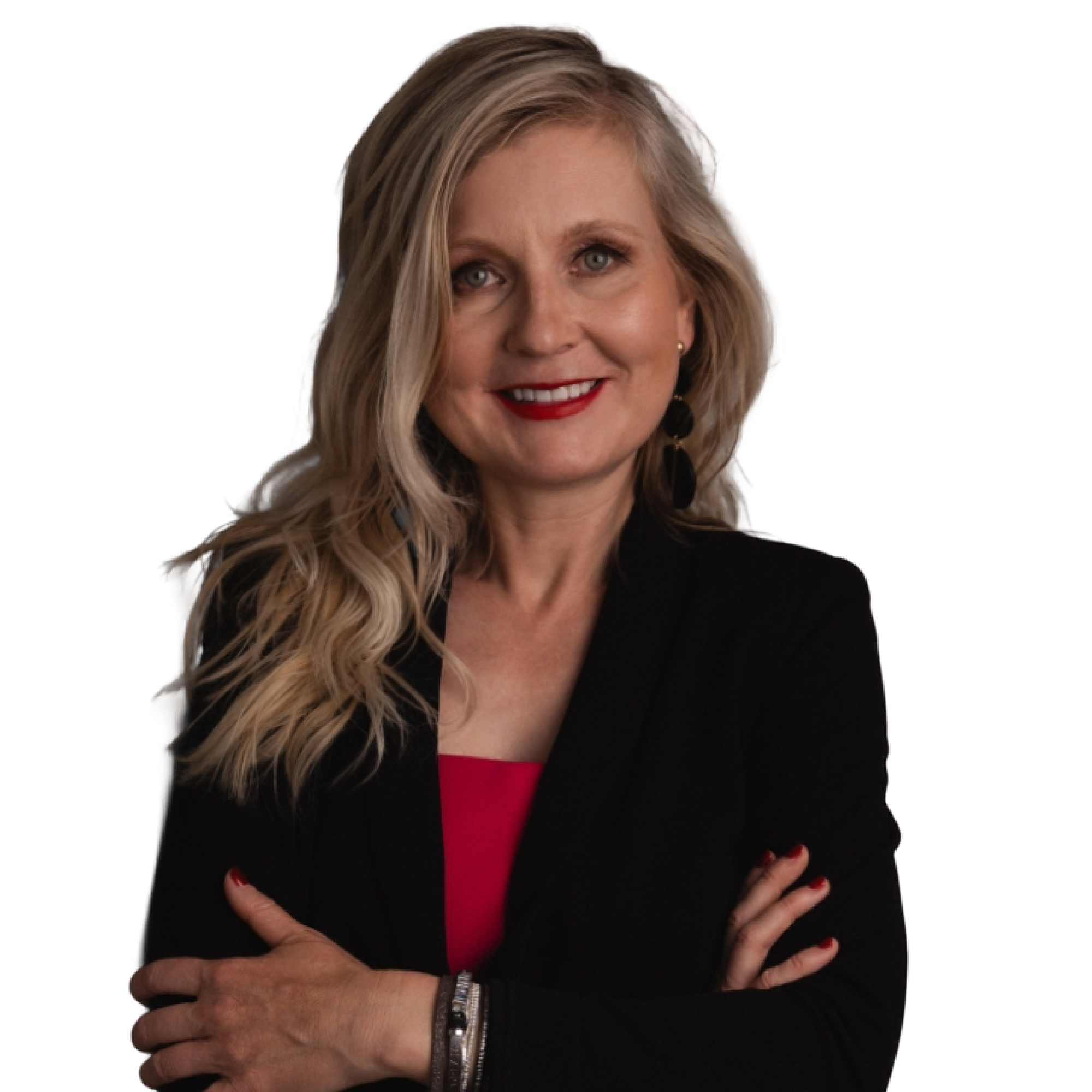
Dr. Kathryn Alderman is a seasoned dentist, entrepreneur, and AI advocate with over 20 years of experience in clinical care and practice growth. Her work focuses on helping dental professionals integrate AI to improve patient care, reduce stress, and boost efficiency. Dr. Alderman is known for her compassionate approach to innovation and commitment to transforming modern dentistry.
Done learning and want to get started?
Book a demo