


The Challenge
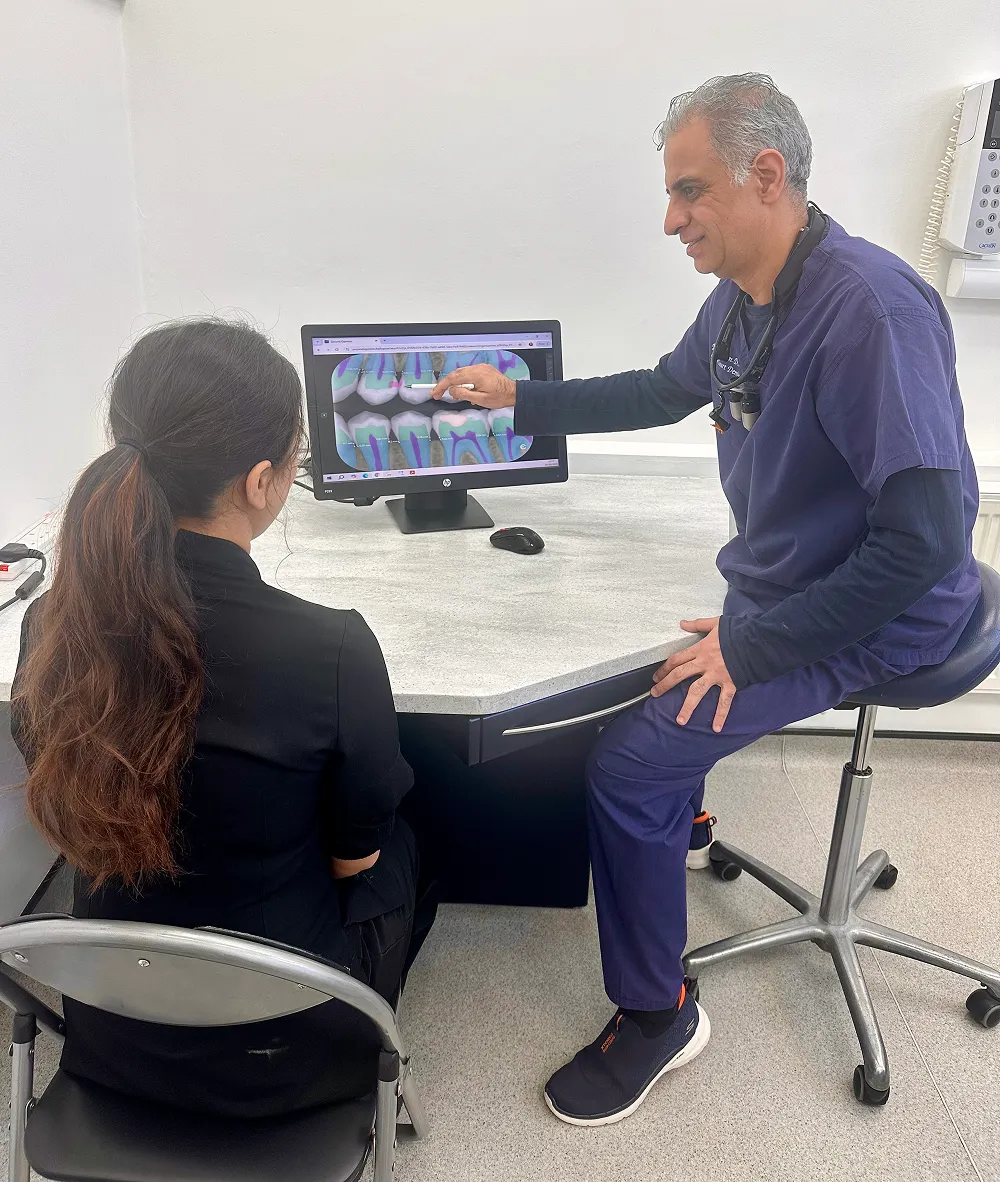
Dr. Amanda Bassey-Duke, an associate dentist at Clyde Munro Dentistry, said traditional treatment presentations used to feel a bit like performing “dark arts.” The screen displaying x-rays sat behind the patient, invisible to them, while she explained conditions they couldn’t see.
“We’d tell them what we saw, and they just had to trust us,” Dr. Bassey-Duke recalls. “Many patients here used to feel dentists just filled their teeth unnecessarily. They didn’t know the signs or the need.”
That dynamic shifted dramatically when the six-surgery practice in Perth, Scotland, integrated Pearl into their patient-facing workflows more than two years ago. What followed wasn't just a technological upgrade—it was a transformation in patient relationships, treatment outcomes, and professional satisfaction.
When Patients Become Partners
The results speak volumes. When Dr. Bassey-Duke surveyed her patients about their AI-enhanced appointments, the response was overwhelmingly positive.
- 86% found the AI visuals helpful in understanding their oral health condition
- 77% reported increased trust in their dentist's diagnosis after seeing AI results
- 94% expressed satisfaction with their appointments overall
Perhaps most encouraging, 77% agreed or strongly agreed that seeing their X-rays on AI influenced them to book treatment appointments.
"This adds a layer of transparency," Dr. Bassey-Duke explains. "You saw what I saw, and we agreed on this together."
The visual impact is immediate and powerful. Pearl's bright pink highlights make it impossible to overlook disease—even areas of early decay that might remineralize with proper care become teaching moments rather than missed opportunities.
"Patients who are on the fence go ahead with treatment more often after reading and understanding their X-rays," she notes. "They'll show the printout to a partner, who then says, 'Go get your teeth filled.'"
The Human Impact of AI Assistance
While patient satisfaction soared, Dr. Bassey-Duke discovered an unexpected benefit: Hello Pearl transformed her own professional experience. The AI assistance saved her an average of 9 minutes and 22 seconds per exam, time that proved invaluable for both practice efficiency and personal well-being.
"Dentistry is solitary. Most dentists here take their own X-rays. The workload is intense.” Bassey said she often stayed late at the office, reviewing the day’s scans for missed pathologies. “Now, I’m more confident during appointments.”
Those recovered minutes add up to meaningful change. Longer, healthful lunch walks. Earlier departures from the office. Fewer end-of-day backlogs. For a profession with high burnout rates, these improvements matter deeply.
Consistency in Care
Dr. Bassey-Duke is refreshingly honest about human limitations: "I'm about 87% accurate. Pearl is 95–99%. Amanda at 9 AM is different from Amanda at 5 PM."
Pearl's consistency becomes a professional safeguard. "It doesn't get tired or distracted," she observes. "Pearl highlights what I might overlook. It's not replacing my judgment—it's focusing it."
This reliability extends to patient education. Where she once drew diagrams to show problem areas, Pearl's visual highlighting creates instant understanding. "I can say: 'That's where you're not flossing. Bacteria builds there. You're losing bone.' Now patients see it instantly."
The Modern Practice Advantage
Patient feedback consistently highlights the practice's advanced approach. Comments like "This is quite an advanced practice" and "This is the dentistry of today" reflect not just satisfaction with technology, but appreciation for transparent, collaborative care.
In an era where technology can feel impersonal, Dr. Bassey-Duke’s story demonstrates the opposite: the right AI tools can make care more human, more transparent, and more satisfying for both patients and providers.