What is the D6010 dental code? (Endosteal implant)
4
minute read
•
July 20, 2026
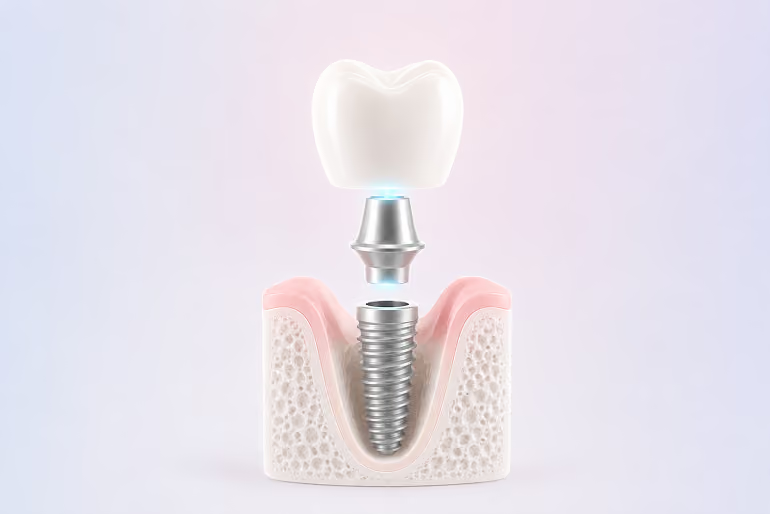
D6010 is the dental code for the surgical placement of an endosteal implant body. In practical terms, it refers to the procedure of placing the implant fixture, usually made of titanium or zirconia, directly into the jawbone to serve as the root-form foundation for a future implant restoration.
This code applies specifically to the surgical phase of implant treatment. That includes opening the soft tissue, performing the osteotomy, placing the implant body, and closing the site. D6010 covers only implant body placement. It does not include the abutment, crown, or any other restorative component placed later.
D6010 can be used whether the implant is being placed for a single missing tooth, as part of a multiple-implant case, or in support of a larger full-arch treatment plan. The key point is that the code represents the placement of the endosteal implant body itself, not the full implant case from surgery through restoration.
When does D6010 require additional codes?
Implant treatment usually involves several stages, which means D6010 is often only one part of the overall case.
D6010 covers the surgical placement of the implant body. Other parts of treatment are coded separately. For example, D6040 applies to an eposteal implant, a type of implant placed on top of the bone rather than within it. D6056 and D6057 apply to the prefabricated or custom abutment placed later to connect the implant body to the final restoration. Implant-supported crowns are also reported separately under codes D6065-D6067, depending on the restorative material.
Additional procedures performed during the surgical visit may also require separate coding. If alveoloplasty is performed, codes such as D7310 or D7320 may apply. If bone grafting is completed at the same time, that is also coded separately when appropriate.
This matters because D6010 is only for implant body placement. Trying to fold the abutment, crown, or grafting into this single code creates coding problems and often leads to undercoding or claim confusion.
Benefits of using the D6010 code in your dental practice
Using D6010 correctly helps the practice document implant surgery more accurately, support cleaner claims, and keep multi-stage treatment organized from the start.
Accurate procedure classification
D6010 allows the record to show that the implant body placement was a distinct surgical procedure. That is important because implant treatment usually unfolds across multiple visits, and the surgical phase needs to stand clearly on its own.
When documented well, D6010 helps establish the surgical baseline for the case. It supports charting details such as the implant site, implant system, fixture dimensions, and other surgical details that may be important later during restoration or maintenance.
Streamlined insurance claims
Correct use of D6010 also helps claims move more smoothly by clearly separating implant surgery from the restorative phase that follows.
That distinction matters. Implant body, abutment, and crown placement are not the same service, and they should not be coded as though they are. Using D6010 properly helps the submission reflect the actual treatment stage and supports cleaner preauthorization or claim review when plans require it.
Appropriate staging and complexity documentation
D6010 also helps document the true complexity of implant care. It shows that the patient has completed the surgical implant placement phase, which then becomes the foundation for future abutment and restorative codes.
That is helpful clinically as well as administratively. It creates a clearer treatment history and supports associated procedures, such as grafting or site development, when they are completed during the same surgical appointment.
Enhanced revenue and practice efficiency
Proper use of D6010 helps the practice bill accurately for the surgical skill, time, and clinical resources involved in implant placement. It also keeps the case organized across phases, rather than collapsing the entire implant treatment into a single, vague, or incomplete submission.
When surgery, restorative work, and related procedures are coded separately and correctly, the practice usually sees less rework and better overall revenue accuracy.
FAQs
What does D6010 cover, and what does it not cover?
D6010 covers the surgical placement of the endosteal implant body into bone. It includes the surgical placement step itself.
It does not cover the abutment, crown, or other restorative components placed later. It also does not automatically include separately reportable procedures, such as grafting or alveoloplasty, when they are performed.
Is D6010 covered by dental insurance?
Sometimes, but it depends entirely on the patient’s plan. Implant benefits vary widely, and some plans may cover part of the surgical phase while others exclude implants altogether.
That is why it is important to verify benefits and use clear, phase-specific coding.
What codes are used alongside D6010 for a complete implant case?
That depends on the treatment plan, but common related codes include abutment codes such as D6056 or D6057, implant-supported crown codes such as D6065 through D6067, and separate grafting or alveoloplasty codes when those procedures are performed.
The key is that D6010 is only one part of the case, not the full treatment from surgery to final restoration.
What is the difference between D6010 and D6040?
D6010 is for the placement of an endosteal implant body, which is placed within the bone.
D6040 is for an eposteal implant, which is a different implant type placed on top of the bone rather than inside it. They are different procedures and should not be used interchangeably.