SDF dental code: Silver diamine fluoride billing
5
minute read
•
October 7, 2026
Key Takeaways
- SDF applied to arrest an active carious lesion is billed with D1354, per tooth.
- D1354 is often confused with fluoride varnish codes D1206 and D1208; the right code depends on clinical purpose, not the material.
- D1354 can be reapplied to the same tooth over time, with each application documented separately.
- Coverage varies widely, and many state Medicaid programs now cover SDF.
- The expected black staining of arrested lesions should be discussed and documented before treatment.
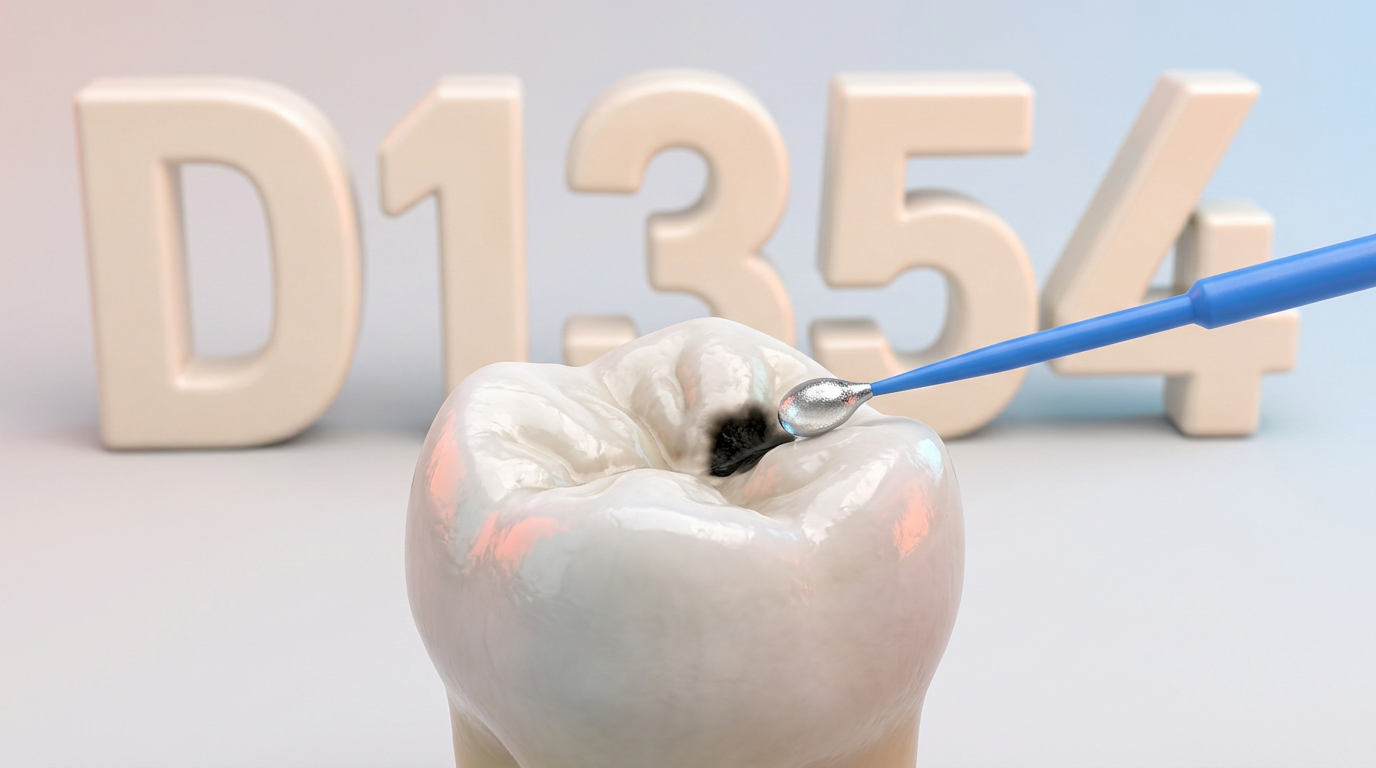
Silver diamine fluoride is billed using CDT code D1354, an interim caries arresting medicament application. It's the primary code for documenting and billing SDF when the goal is to arrest an active carious lesion, whether restorative treatment is being deferred or caries arrest is the planned approach.
The clinical detail that drives the code: D1354 applies when SDF is placed on an active carious lesion to stop decay from progressing, not when a fluoride varnish is painted over intact surfaces for prevention. That distinction, therapeutic arrest versus preventive coating, decides whether D1354 or a fluoride code is correct.
D1354 vs. fluoride varnish codes: Understanding the distinction
D1354 is frequently confused with fluoride varnish codes D1206 and D1208, but the correct code depends on the clinical purpose of the application, not the material. SDF contains fluoride, yet it's clinically distinct from a preventive fluoride varnish.
D1354: Interim caries arresting medicament application
D1354 applies to a caries-arresting medicament, including SDF, placed on an active carious lesion for therapeutic arrest. Per the ADA's CDT code set, it's correct whenever SDF is applied to a lesion rather than to intact surfaces. It's billed per tooth, so the documentation must identify the specific tooth treated. Four lesions on four teeth means four units of D1354, each with its own tooth number.
D1206: Topical application of fluoride varnish
D1206 applies to fluoride varnish on intact or minimally compromised surfaces as prevention, not to an active lesion. Reporting it for an SDF arrest application is miscoding. That said, a genuine full-mouth varnish and an SDF lesion application are separate procedures and can sometimes be billed at the same visit when both are truly performed and documented.
D1208: Topical application of fluoride excluding varnish
D1208 applies to preventive fluoride in a non-varnish formulation, so, like D1206, it doesn't fit SDF caries arrest. Some plans restrict same-day billing of D1208 with D1354, so check the plan's rules. One related distinction: if SDF is placed on intact surfaces purely to prevent decay, with no active lesion, the per-tooth preventive code D1355 may apply instead.
When is D1354 the appropriate code?
D1354 is correct when SDF is applied for therapeutic caries arrest rather than prevention. The presence of an active carious lesion as the target, documented in the chart, is what justifies it over a fluoride code.
A few situations account for most applications: active lesions in pediatric patients when restorative work is deferred for cooperation, medical complexity, or access reasons, often alongside routine preventive care like the D1110 dental code for prophylaxis; root-surface caries in elderly or medically compromised patients; lesions managed within a caries-management-by-risk-assessment protocol; and lesions in patients whose anxiety or medical history makes immediate restoration too risky.
The boundary to hold: D1354 should not be used for SDF on intact surfaces with no active lesion, and documentation of the lesion being treated is the first thing a reviewer looks for.
Insurance coverage for SDF procedures
Coverage for D1354 varies significantly between plans. Some cover it as a preventive benefit with frequency limits, some only for specific populations like pediatric or high-risk patients, some specifically when SDF replaces conventional restoration, and some don't cover it yet, which means discussing cost through a clear treatment plan before treatment.
Medicaid is where coverage has moved most. Following the addition of D1354 to the CDT set, many state Medicaid programs have expanded SDF coverage, so verify status with the state program rather than assuming it matches commercial plans. Verifying benefits before treatment begins saves an unwelcome surprise later.
Documenting SDF applications for insurance claims
Complete documentation supports reimbursement and builds the clinical record of caries management. Most claims call for the same elements: the tooth number and lesion location; a description of the lesion, including its presentation (active, soft, cavitated) and approximate size; the indication for SDF rather than restoration; the number of applications delivered; and a note that the expected black discoloration of arrested lesions was discussed with the patient or caregiver.
That last point matters more than it looks. The dark staining SDF leaves on arrested decay is predictable, and recording the consent conversation protects the practice from esthetic-dissatisfaction disputes later. A consistent clinical documentation routine keeps every SDF claim defensible.
SDF in a caries management protocol: Coding considerations
SDF is increasingly used within a structured caries-management protocol, so it helps to know how D1354 interacts with other codes in the same visit. It can be billed at the same appointment as a preventive fluoride application on intact surfaces, provided the two are distinctly documented and applied to different surfaces.
It doesn't prevent billing a restorative code later when the lesion is ultimately restored, since the SDF application is a distinct therapeutic procedure at the time it's delivered.
And it can be billed more than once for the same tooth when the protocol calls for reapplication, as long as each application is documented separately with a note confirming the lesion was still active. Tracking those patterns across a patient population is the kind of signal Pearl's Practice Intelligence is built to surface.
Benefits of correct SDF code usage in your practice
Coding SDF correctly with D1354 keeps your clinical record true to the therapeutic procedure performed rather than misclassifying it as preventive fluoride, which supports cleaner case categorization.
It cuts the rejections caused by code-procedure mismatches and routes claims into the correct benefit category, one of the more reliable ways to reduce denials and improve collections.
Coding per tooth supports accurate tracking and captures appropriate compensation for the therapeutic service rather than absorbing it into a bundled preventive visit. Pearl AI supports the clear, timestamped records that accurate coding depends on.
FAQs
What is the dental code for silver diamine fluoride?
The primary code is D1354, interim caries arresting medicament application, billed per tooth, used when SDF is applied to an active carious lesion. If SDF is applied to intact surfaces purely for prevention, the per-tooth code D1355 may apply instead.
What is the difference between D1354 and D1206?
D1354 is therapeutic, for arresting an active lesion with a medicament like SDF. D1206 is preventive, for fluoride varnish on intact surfaces. The difference is clinical purpose, not material, so SDF on a lesion is D1354.
Does dental insurance cover SDF?
Coverage varies widely. Some plans cover D1354 with frequency limits or for specific populations, some as an alternative to restoration, and some not yet. Many state Medicaid programs now do. Verify benefits before treatment.
Can D1354 be billed multiple times for the same tooth?
Yes, when the protocol calls for reapplication. Each application must be documented separately, with a note confirming the lesion was still active. Some plans impose frequency limits or require supporting documentation.