Night guard dental code: Insurance billing guide
5
minute read
•
September 25, 2026
Key Takeaways
- Night guards are billed with D9944 (hard, full arch), D9945 (soft, full arch), or D9946 (hard, partial arch).
- The code follows the appliance actually delivered, not the clinical indication behind it.
- D9940, the old generic occlusal guard code, was removed and is no longer valid.
- Coverage usually depends on a documented bruxism or TMJ diagnosis, and guards are often a major-service benefit.
- Thin documentation of medical necessity is the most common reason these claims are denied.
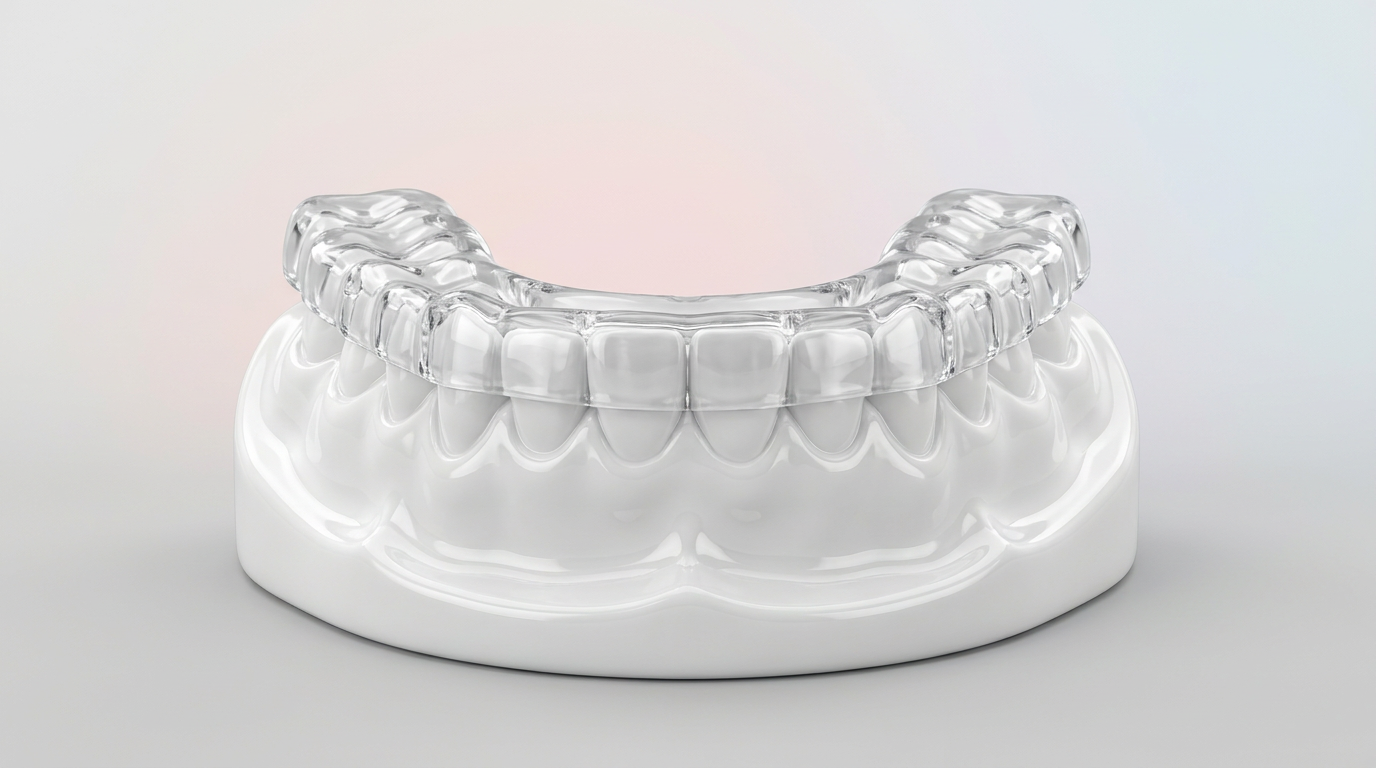
Night guards, also called occlusal guards, are billed using CDT codes from the D9900 adjunctive general services category, and the specific code depends on two things: the appliance material (hard or soft) and the arch coverage (full or partial).
In practice, the two codes you'll reach for most are D9944 and D9945, because a full-arch design is the standard night guard build. D9944 covers hard, full-arch appliances; D9945 covers soft, full-arch ones. A third code, D9946, exists for hard, partial-arch appliances, but it comes up far less often, since most patients are fitted for full-arch coverage.
Night guard CDT codes: Which code applies to which appliance?
The CDT library includes a small set of occlusal guard codes, and choosing correctly means matching the code description to the appliance you actually delivered:
- D9944 is an occlusal guard, hard appliance, full arch, the code most commonly billed for a standard custom night guard.
- D9945 is an occlusal guard, soft appliance, full arch, used for thermoplastic or other flexible full-arch devices.
- D9946 is an occlusal guard, hard appliance, partial arch, covering devices like anterior deprogrammers that protect only part of the arch. This is a less common design for a night guard specifically, since most are full-arch.
The distinction between full and partial coverage, and between hard and soft material, is determined by the appliance delivered, not by the clinical indication. One more thing worth checking in your own software: D9940, an older generic occlusal guard code, was removed from the CDT set and is no longer valid.
If your system still defaults to D9940, update the mapping to D9944, D9945, or D9946 as appropriate. These are distinct from routine codes you bill every day, like the D1110 dental code for adult prophylaxis, so keep the appliance codes cleanly separated in your workflow.
When does insurance cover a night guard?
Coverage varies significantly between plans, so knowing the conditions that trigger reimbursement helps you submit claims that get approved rather than denied. Most plans look for a documented diagnosis of bruxism, supported by clinical findings like tooth wear facets, muscle tenderness, or fractured restorations.
Some require evidence of a temporomandibular joint disorder where the plan includes TMJ benefits, and many impose prior authorization before delivery or frequency limits that cap how often the code can be billed per benefit period.
Keep in mind that many plans categorize occlusal guards as a major service rather than preventive or basic, which usually means a higher patient copayment and sometimes a separate waiting period before the benefit is available. Confirming the benefit category before delivery avoids an awkward balance-billing surprise later.
Documenting medical necessity for night guard claims
The most common reason night guard claims are denied is thin documentation of medical necessity, so a complete clinical record before submission makes approval far more likely and protects you in an audit.
Support the claim with an ICD-10 diagnosis code that fits the clinical picture:
- G47.63 for sleep-related bruxism, the code most applicable to a standard night guard.
- K07.6 for temporomandibular joint disorders where TMJ is the indication.
- F45.8 for psychogenic or daytime-related bruxism where sleep-related bruxism has been ruled out.
Note that G47.63 and F45.8 are mutually exclusive under ICD-10 rules and shouldn't both appear on the same claim.
Beyond the diagnosis code, include clinical notes describing the findings that support it: wear patterns, occlusal analysis, and reported symptoms like jaw pain, morning headaches, or tooth sensitivity. Record any prior conservative treatment or patient education, the specific appliance delivered (material, coverage, and arch), and any prior authorization number the plan required. Building this into a consistent clinical documentation routine keeps every claim defensible.
Benefits of correct night guard code usage in your practice
Using the correct D994x code for the appliance delivered keeps your clinical records accurate, distinguishing hard from soft and full from partial coverage for proper case categorization and reliable recall and replacement tracking.
It also cuts the rejections that come from code-appliance mismatches, supports prior-authorization requests with a clearly identified code and indication, and removes the audit risk of defaulting to a single night guard code regardless of what you actually delivered. Reducing that kind of mismatch is one of the more dependable ways to reduce denials and improve collections.
There's also a medical pathway worth checking. When the indication is a diagnosed TMJ disorder, the appliance may fall under the patient's medical plan, which can reimburse occlusal guards using HCPCS codes where dental benefits exclude or limit them. Identifying that pathway means coordinating your documentation with the right coding rather than defaulting to dental insurance alone.
Finally, correct coding captures appropriate compensation for the lab costs, chair time, and patient education involved, and it keeps your billing accurate across your parafunctional and TMJ patient population, the kind of pattern a platform like Pearl's Practice Intelligence is built to surface. Pearl AI supports the timestamped clinical records that accurate coding depends on.
FAQs
What dental code is used for a night guard?
D9944 for a hard full-arch guard, D9945 for a soft full-arch guard, and D9946 for a hard partial-arch guard. The code follows the appliance delivered, not the diagnosis.
What is the difference between D9944 and D9945?
Material. D9944 is a hard, full-arch occlusal guard, the standard rigid night guard. D9945 is a soft, full-arch guard made from thermoplastic or another flexible material. Both cover the full arch; the difference is what the appliance is made of.
Is a night guard covered by dental insurance?
Often, but usually as a major service with a higher copay, and frequently subject to prior authorization, frequency limits, or a waiting period. Coverage typically depends on a documented bruxism or TMJ diagnosis, so verify benefits before treatment.
Is D9940 still a valid billing code for night guards?
No. D9940 was removed from the CDT code set and replaced by the more specific D9944, D9945, and D9946. If your software still defaults to D9940, update the mapping to the current codes.
Can a night guard be billed to medical insurance?
Sometimes, when the indication is a diagnosed TMJ disorder. Medical plans may cover an occlusal guard under HCPCS codes where dental benefits fall short, provided the documentation supports medical necessity.