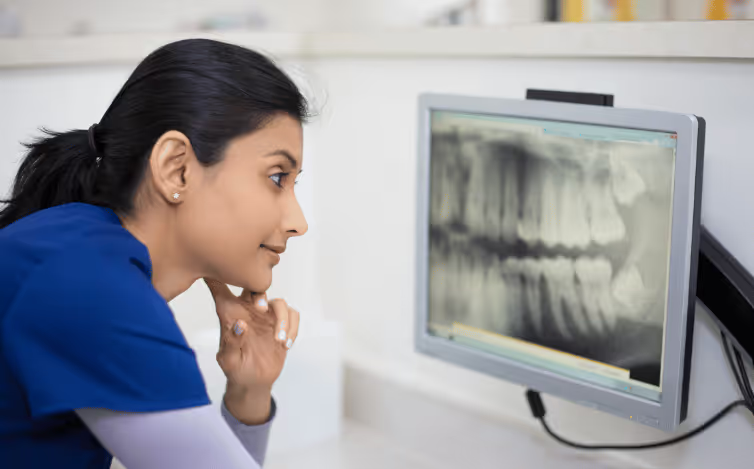
AI is revolutionizing the dental industry by reducing hygienist burnout
3
minute read
•
March 22, 2022

Key Takeaways
- Hygienists play an integral role in providing excellent care to improve patients' oral health.
- Several factors, such as staffing shortages and rigid appointment times, can lead to increased pressure and feelings of burnout.
- AI-assisted technology can ease pressure on hygienists by streamlining workflows and automating time-consuming tasks, leaving them with more time to spend with patients.
Most dental practices are reliant on hygienists to achieve success, and during the many years I’ve worked in dentistry, I’ve experienced the various ups and downs of the job. There are few things that compare to the feeling of providing excellent care and knowing that your persistence has resulted in better oral health for patients.
The ups and downs of being a hygienist
Though the job is incredibly rewarding, it necessitates that we take on a variety of responsibilities that all require different skills. This fast-paced nature isn’t uncommon across the healthcare industry. However, burnout has become commonplace and has only been accelerated by the pressure and relentlessness healthcare workers have felt as a result of the COVID-19 pandemic.
In fact, a substantial majority of healthcare workers and first responders report experiencing clinically significant psychiatric symptoms, including post-traumatic stress disorder (38%), depression (74%), and anxiety (75%). The dental industry has not been left unscathed – according to the Journal of Dental Hygiene, 8% of dental hygienists have left the industry since the onset of the pandemic.
Dental hygienists leaving the field at an increasing rate begs the question – is burnout the only contributing factor to this mass exodus, or are there additional challenges to consider?
AI technology can provide a solution to burnout
Dental hygienists play an integral role in the patient experience and clinical workflow. There are many factors that can limit hygienists, however, including staffing shortages that contribute to patient overload, and regimented appointment times that can cause hygienists to feel as though they don’t spend enough time with patients.
These compounding factors can all lead to increased pressure on hygienists that ultimately drives burnout and leads to them leaving the field. Still, there are ways that dental practices can help support hygienists to alleviate this pressure.
Implementing technology solutions that streamline internal processes and enable hygienists to spend more time doing what’s most important to them – spending time with patients.
Artificial intelligence, in particular, is something I believe can help. AI-enabled technology is already proving effective in identifying where practices can improve operational efficiencies, assisting with patient outreach, prioritizing recall by patient need, increasing same-day treatment, and automating key aspects of chart auditing.
It can also help identify patients who may have unmet treatment needs and facilitate specialist care.
These clinically-minded AI tools that can detect signs of pathologies and other treatable conditions commonly found in dental radiographs are particularly advantageous, because they introduce a higher level of assurance to patient consultations, alleviating practice-wide stress around clinical care and liability.
That, in turn, fosters a healthier and more satisfying work environment for practice team members––even in understaffed offices.
As the field of dentistry continues to contend with personnel burnout, staff shortages, and heavier than normal patient loads, these AI technologies can give us the support we need not only to ensure that we don’t lose that special feeling of providing great care, but actually to elevate the greatness of that care and its benefit to patients.

About the author
Sheela Roth is a veteran dental practice management expert, thought leader and public speaker. As Head of Clinical Education for the dental AI company Pearl, Ms. Roth is responsible for developing and delivering strategic training programs that educate dental offices, staff and partners on AI and its successful application in dentistry. Previously, Ms. Roth founded and led the practice management consultancy Absolute Dental Business Solutions. She earned her BS and RDH from Loma Linda University..